


[ARCHIVED THREAD] - Colt Python... (Page 1 of 2)
Posted: 6/21/2009 4:03:38 PM EDT
| So, this elderly gentleman asked me at the range to help him set up his target. For my surprise, there it was; a beautiful 357 Colt Python in front of me. I complimented him on his revolver (it was a very well maintained one) and he offered me to shoot a few rounds. I never had shot one before, but was surprised with the quality and the amazing looks of it. Never seen any revolver like that. Too bad its price is unrealistic high. Probably be saving for a while, but really want one now! |
|
They are beautiful revolvers.
If you do get one, be very modest in the amount of full power .357 ammo you shoot in it. As nice as they are they have a rather delicate lockwork. Full power ammo can knock it out of time. Pain in the ass and expensive to fix. Stick with moderate .38 loads and you're GTG. |
|
Quoted:
Quoted:
i guess if you consider ~1k "unrealisticly" high then so be it. mor like ~$1500 Or even more. $1200 looks like the floor for a dinged up one anymore. A nice early 70's Royal Blue is anywhere from $1500 up to $2000. Beautiful revolvers but I finally gave up on them. |
|
Quoted:
i guess if you consider ~1k "unrealisticly" high then so be it. Exactly. What did the final iteration of the Python sell for? 1994-2004 range when they were all custom shop orders.... 
Even before that, they were pushing $1,000. When a premium S&W is pushing $1,000 NIB in today's money, what is another $200 for a LNIB python? Considering the premium on ANYTHING with a horsey on it, they are not bad at all. All guns are overpriced right now, and Pythons are just maintaining their historic premium over S&W. Besides, just think of the look on your grandkid's face when you let him shoot it for the first time 50 years from now.
|
|
Quoted:
My cousin picked up a 2.5" blue Python a few days ago for ~$700 with the original stocks on it. I don't understand the obsession with them. Shoot a few lesser guns. 
This tends to put the differences into contrast. Also, the sun must not have been out that day
|
|
My wife and I took this one to the range this morning. Put 50 rds. of Independence 158 gr. jsp and 50 rds. of Fiocchi 142 gr. fmjtc thru it.
I take it out of the safe 3 or 4 times a year to get some air. We both felt like our groups could have been better, but we shoot semi-autos on a regular basis. Not so much with revolvers. However, the Python is truly a sweet shooting revolver and an awesome handgun. 

|
| Check out some of the pythons here: http://www.takdriver.com/showthread.php?t=393 |
|
Quoted:
Quoted:
My cousin picked up a 2.5" blue Python a few days ago for ~$700 with the original stocks on it. I don't understand the obsession with them. Shoot a few lesser guns.
This tends to put the differences into contrast. Also, the sun must not have been out that day If they were that good, they'd still be in production. 
|

|
Quoted:
Quoted:
Quoted:
My cousin picked up a 2.5" blue Python a few days ago for ~$700 with the original stocks on it. I don't understand the obsession with them. Shoot a few lesser guns.
This tends to put the differences into contrast. Also, the sun must not have been out that day If they were that good, they'd still be in production. You're a machinist, how do you not understand this? It's not possible for Colt to make them and not charge an obscene amount of money because the whole damn thing is hand fitted and assembled.
|
|
Quoted:
Quoted:
Quoted:
Quoted:
My cousin picked up a 2.5" blue Python a few days ago for ~$700 with the original stocks on it. I don't understand the obsession with them. Shoot a few lesser guns.
This tends to put the differences into contrast. Also, the sun must not have been out that day If they were that good, they'd still be in production. You're a machinist, how do you not understand this? It's not possible for Colt to make them and not charge an obscene amount of money because the whole damn thing is hand fitted and assembled. exactly. More to it than just that as well. Colt was also running out of people that could make them too. Colt was also emerging from the dark ages and had investors intending to go all "Smrt gun" on the place, and the Clinton era lawsuits were scaring anyone from making anything with less than four independent safety systems. Old-school DA revolvers went, the Python was actually the last Colt DA to survive. |
| Why is it that guns in production for 50+ years are too expensive to make all of a sudden? We have CNC for crying out loud! The problem is that everyone wants to make $100 an hour nowadays. They have no skill, no talent, but they wan the $$$. Why is it that US Firearms can make a better SAA than Colt for 30% less? |
|
It's not possible for Colt to make them and not charge an obscene amount of money because the whole damn thing is hand fitted and assembled.
That is what got the fine SIG P210 discontinued but Korth is still ( barely ) alive and their revolvers cost about $ 6,000 now. I have a Korth and a Python, and a P210, and for what it is worth, I prefer the Korth over the Python and my other revolvers. I am a S&W guy and prefer their trigger characteristics to the Python and Rugers, despite the glamorous looks of the snake which I had to buy 25 years ago for $400 plus tax when a really nice S&W M27 next to it was $ 229. That said, I do not regret having bought it - and owning a legend and a milestone in wheelgun history. And here is a photo that might explain why I fell for it: 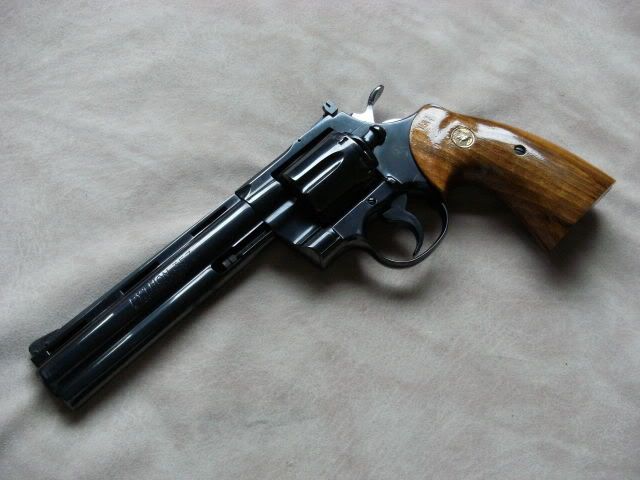
|
|
Quoted:
Why is it that guns in production for 50+ years are too expensive to make all of a sudden? We have CNC for crying out loud! The problem is that everyone wants to make $100 an hour nowadays. They have no skill, no talent, but they wan the $$$. Why is it that US Firearms can make a better as good SAA than Colt for 30% less? Fixed it. Seriously though, UAW labor rates and a lot of hand fitting. On one hand means the Colt is put together in the same manner it always has been. On the Python though, there is a lot of hand work that goes into one, that is what makes it special. Hand tuned action alone is labor intensive. A taper bore is no small feat either. I don't think either are processes that can be made cost effective with CNC. |
|
Pythons are one of my all time favorite revolvers. They aren't cheap but most things worth having aren't cheap..... and not likely to become any cheaper in the future either. Here are mine.
My all stainless polished 6" shooter 
and my 3-digit S/N '56 vintage blued 6" Python 
|
|
Quoted:
Quoted:
Why is it that guns in production for 50+ years are too expensive to make all of a sudden? We have CNC for crying out loud! The problem is that everyone wants to make $100 an hour nowadays. They have no skill, no talent, but they wan the $$$. Why is it that US Firearms can make a better as good SAA than Colt for 30% less? Fixed it. Seriously though, UAW labor rates and a lot of hand fitting. On one hand means the Colt is put together in the same manner it always has been. On the Python though, there is a lot of hand work that goes into one, that is what makes it special. Hand tuned action alone is labor intensive. A taper bore is no small feat either. I don't think either are processes that can be made cost effective with CNC. Why not? CNC is fire and forget. It makes parts more precisely without much labor involved. US Firearms are better revolvers than Colt, especially those made between WW2 and Y2K. Hold them together, side-by-side. look at the finish, the screw holes, the way the grip-frame fits, etc. |
|
Quoted:
Quoted:
Quoted:
Why is it that guns in production for 50+ years are too expensive to make all of a sudden? We have CNC for crying out loud! The problem is that everyone wants to make $100 an hour nowadays. They have no skill, no talent, but they wan the $$$. Why is it that US Firearms can make a better as good SAA than Colt for 30% less? Fixed it. Seriously though, UAW labor rates and a lot of hand fitting. On one hand means the Colt is put together in the same manner it always has been. On the Python though, there is a lot of hand work that goes into one, that is what makes it special. Hand tuned action alone is labor intensive. A taper bore is no small feat either. I don't think either are processes that can be made cost effective with CNC. Why not? CNC is fire and forget. It makes parts more precisely without much labor involved. US Firearms are better revolvers than Colt, especially those made between WW2 and Y2K. Hold them together, side-by-side. look at the finish, the screw holes, the way the grip-frame fits, etc. Agreed with you on the USFA being nicer than Colt in the SAA dept. Hell, even their 1911 is probably nicer. That being said, USFA is using ex-Colt employees, used to be housed in the old Colt building, and I think they even have a few of Colt's old tools even. But, USFA is NOT venturing into the DA revolver business for a reason. I'm sure they have looked into it, and are probably capable of doing it too. I'm guessing that at some point in the DA revolver manufacturing process there are some things that result in the "feel" of the gun that cannot be boiled-down to an equation or set of coordinates. I bet they could get close to the feel, but will never replicate it. I am sure that Colt wants to keep their rights also, or only share at a substantial cost. I know that may change now that contracts are up and the State of CT (who own the Colt name and are a big investor in the company) are all hurting for money. On the other hand, if USFA ever got ahold of Colt's DA line, USFA would essentially end up being what Colt never was in many regards. I think they will eventually get the rights, and be able to sell a CNC machined, but hand-fitted revolver profitably and competatively. I think that USFA is just holding back for now as they are cautious to over-leverage themselves and put themselves in a position where their management and decisions would be subject to other principals in the company. Korth can do what they do because they are a very small company. They can expand and contract with the economy and stay profitable in their niche. They don't have the union. They don't have the retirees. They don't have the debt that Colt has. Colt is only now emerging from a really shitty 20-30 years of their history, and they are operating a nicely streamlined operation where consideration to the best use of their resources and their position in the market is maximized. I don't think they will try anything new until they have obvious troubles in selling what they sell now. (maybe 1911-mania will die down a bit.) |
|
Quoted:
Quoted:
Quoted:
Why is it that guns in production for 50+ years are too expensive to make all of a sudden? We have CNC for crying out loud! The problem is that everyone wants to make $100 an hour nowadays. They have no skill, no talent, but they wan the $$$. Why is it that US Firearms can make a better as good SAA than Colt for 30% less? Fixed it. Seriously though, UAW labor rates and a lot of hand fitting. On one hand means the Colt is put together in the same manner it always has been. On the Python though, there is a lot of hand work that goes into one, that is what makes it special. Hand tuned action alone is labor intensive. A taper bore is no small feat either. I don't think either are processes that can be made cost effective with CNC. Why not? CNC is fire and forget. It makes parts more precisely without much labor involved. US Firearms are better revolvers than Colt, especially those made between WW2 and Y2K. Hold them together, side-by-side. look at the finish, the screw holes, the way the grip-frame fits, etc. I did hold them side by side and bought the Colt. The quality was equal and I wanted the horse. Folks that think you can CNC a Colt DA, esp a Python do not understand them. Colt add just a smigion of pressure by the hand against the bolt at the last second before the hammer drops. Smith and Ruger don't even try that. My SAA 
My other old ladies 
|
|
Quoted:
Quoted:
Quoted:
Why is it that guns in production for 50+ years are too expensive to make all of a sudden? We have CNC for crying out loud! The problem is that everyone wants to make $100 an hour nowadays. They have no skill, no talent, but they wan the $$$. Why is it that US Firearms can make a better as good SAA than Colt for 30% less? Fixed it. Seriously though, UAW labor rates and a lot of hand fitting. On one hand means the Colt is put together in the same manner it always has been. On the Python though, there is a lot of hand work that goes into one, that is what makes it special. Hand tuned action alone is labor intensive. A taper bore is no small feat either. I don't think either are processes that can be made cost effective with CNC. Why not? CNC is fire and forget. It makes parts more precisely without much labor involved. US Firearms are better revolvers than Colt, especially those made between WW2 and Y2K. Hold them together, side-by-side. look at the finish, the screw holes, the way the grip-frame fits, etc. CNC isn't nearly that simple.  The company I work for thinks it is, though. The engineers walk by when giving tours and tell people shit like "we bought these machines because they can make the tight corners on these parts" The company I work for thinks it is, though. The engineers walk by when giving tours and tell people shit like "we bought these machines because they can make the tight corners on these parts"  and "as long as that green light is on, we're making money" . Nevermind the fact that inserting an exact stop G code on older machines will accomplish the same thing...or the fact that I can write a simple three line program that keeps the green light on all day but doesn't cut a single chip. and "as long as that green light is on, we're making money" . Nevermind the fact that inserting an exact stop G code on older machines will accomplish the same thing...or the fact that I can write a simple three line program that keeps the green light on all day but doesn't cut a single chip.
If you think CNC is as simple as loading a program, tools, and material, please step into your CNC local machine shop for more education. |
|
Quoted:
Quoted:
Quoted:
Quoted:
My cousin picked up a 2.5" blue Python a few days ago for ~$700 with the original stocks on it. I don't understand the obsession with them. Shoot a few lesser guns.
This tends to put the differences into contrast. Also, the sun must not have been out that day If they were that good, they'd still be in production. You're a machinist, how do you not understand this? It's not possible for Colt to make them and not charge an obscene amount of money because the whole damn thing is hand fitted and assembled. I understand it perfectly. S&W made a quality product at a lower price, via less labor intensive methods(and AFAIK, no union, fuck the UAW). Colt products didn't offer any advantages significant enough to justify the additional cost to the consumer. They also weren't built to the same quality level as something like a Korth revolver. Additionally, they were more prone to timing problems. Another factor was transitioning from the older training style of one handed SA shooting at bullseye targets to more of a "train as you'll fight" style making use of the DA. The Colt couldn't keep up with the S&W in DA shooting. |
|
Quoted:
Quoted:
Quoted:
Quoted:
Why is it that guns in production for 50+ years are too expensive to make all of a sudden? We have CNC for crying out loud! The problem is that everyone wants to make $100 an hour nowadays. They have no skill, no talent, but they wan the $$$. Why is it that US Firearms can make a better as good SAA than Colt for 30% less? Fixed it. Seriously though, UAW labor rates and a lot of hand fitting. On one hand means the Colt is put together in the same manner it always has been. On the Python though, there is a lot of hand work that goes into one, that is what makes it special. Hand tuned action alone is labor intensive. A taper bore is no small feat either. I don't think either are processes that can be made cost effective with CNC. Why not? CNC is fire and forget. It makes parts more precisely without much labor involved. US Firearms are better revolvers than Colt, especially those made between WW2 and Y2K. Hold them together, side-by-side. look at the finish, the screw holes, the way the grip-frame fits, etc. CNC isn't nearly that simple. The company I work for thinks it is, though. The engineers walk by when giving tours and tell people shit like "we bought these machines because they can make the tight corners on these parts" and "as long as that green light is on, we're making money" . Nevermind the fact that inserting an exact stop G code on older machines will accomplish the same thing...or the fact that I can write a simple three line program that keeps the green light on all day but doesn't cut a single chip.
If you think CNC is as simple as loading a program, tools, and material, please step into your CNC local machine shop for more education. So you're saying that CNC isn't more efficient than making the parts by hand? Are you saying that CNC does not make tighter tolerance parts more consistently? Are you saying that a CNC produced Python would be more expensive or less expensive? |
|
I don't think anyone is playing down CNC technology. I do believe you can use CNC to make a Dick Specal or Police Positive or a Trooper. But even with that, The Colt is more complicated than a Smith, period. I know in my heart it is a better mechanism but to compair with a J-frame or Mod 10 Smith, 99% of the shooters will never even see the difference. But being the Colt system is more complicated it will never be able to get the upper hand with a Smith price wise.
Now step it up even further to a Python. You are talking about Swiss watch quality lock work. A tune on a Python and a 586 tune up are worlds appart. I don't know a human could program the CNC to the point it was a drop in job. It isn't the CNC, it is the human element running the CNC that would still require final fitting. |
|
I didn't say it was a swiss watch. I said it was swiss watch quality in the fitting. And I have seen the side plate off.
Lets put it this way. Typical trigger job for a 1911 involves polishing the track for the trigger bow and the bow itself, tuning the sear spring and main spring, then work on the hammer and sear surfaces. This will run you 100 to 300 easy depending on how far you go with it and who does it. Now for a Python, working the sear and hammer for a crisp single action is just the start, then tuning and polishing the trigger, hand, bolt, hammer and their springs so there is no stacking or binding, and remember it locks up solid on the last bit of the trigger pull on both single and double action. Then fit the cyl gap to half what Smith or Ruger does (.003 min vs .006). Then bore sight it and ship the target with the gun. The Python is just a lot more than people realize. |
|
Quoted:
Quoted:
Quoted:
Quoted:
Quoted:
Why is it that guns in production for 50+ years are too expensive to make all of a sudden? We have CNC for crying out loud! The problem is that everyone wants to make $100 an hour nowadays. They have no skill, no talent, but they wan the $$$. Why is it that US Firearms can make a better as good SAA than Colt for 30% less? Fixed it. Seriously though, UAW labor rates and a lot of hand fitting. On one hand means the Colt is put together in the same manner it always has been. On the Python though, there is a lot of hand work that goes into one, that is what makes it special. Hand tuned action alone is labor intensive. A taper bore is no small feat either. I don't think either are processes that can be made cost effective with CNC. Why not? CNC is fire and forget. It makes parts more precisely without much labor involved. US Firearms are better revolvers than Colt, especially those made between WW2 and Y2K. Hold them together, side-by-side. look at the finish, the screw holes, the way the grip-frame fits, etc. CNC isn't nearly that simple. The company I work for thinks it is, though. The engineers walk by when giving tours and tell people shit like "we bought these machines because they can make the tight corners on these parts" and "as long as that green light is on, we're making money" . Nevermind the fact that inserting an exact stop G code on older machines will accomplish the same thing...or the fact that I can write a simple three line program that keeps the green light on all day but doesn't cut a single chip.
If you think CNC is as simple as loading a program, tools, and material, please step into your CNC local machine shop for more education. So you're saying that CNC isn't more efficient than making the parts by hand? Are you saying that CNC does not make tighter tolerance parts more consistently? Are you saying that a CNC produced Python would be more expensive or less expensive? I do not know about CNC and revolvers. I do know a little about CNC and building guitars. With a guitar you can make many of the parts but assembly is still skilled and some parts, like the tops, still have to be finished by hand. Makes it better/cheaper/faster, but a CNC machine cannot build a reasonable end guitar without a lot of human involvement. Metal is more consistent than wood of course, but I suspect there are some of the same issues in fit and feel. |
|
Quoted:
I didn't say it was a swiss watch. I said it was swiss watch quality in the fitting. And I have seen the side plate off. Lets put it this way. Typical trigger job for a 1911 involves polishing the track for the trigger bow and the bow itself, tuning the sear spring and main spring, then work on the hammer and sear surfaces. This will run you 100 to 300 easy depending on how far you go with it and who does it. Now for a Python, working the sear and hammer for a crisp single action is just the start, then tuning and polishing the trigger, hand, bolt, hammer and their springs so there is no stacking or binding, and remember it locks up solid on the last bit of the trigger pull on both single and double action. Then fit the cyl gap to half what Smith or Ruger does (.003 min vs .006). Then bore sight it and ship the target with the gun. The Python is just a lot more than people realize. Not if you reduce the tolerances of the parts. The tighter the tolerances, the quicker and easier they are to fit. Python cylinder gaps are right at where S&W and Ruger sets them- .008" not .003" |
|
Quoted:
Quoted:
I didn't say it was a swiss watch. I said it was swiss watch quality in the fitting. And I have seen the side plate off. Lets put it this way. Typical trigger job for a 1911 involves polishing the track for the trigger bow and the bow itself, tuning the sear spring and main spring, then work on the hammer and sear surfaces. This will run you 100 to 300 easy depending on how far you go with it and who does it. Now for a Python, working the sear and hammer for a crisp single action is just the start, then tuning and polishing the trigger, hand, bolt, hammer and their springs so there is no stacking or binding, and remember it locks up solid on the last bit of the trigger pull on both single and double action. Then fit the cyl gap to half what Smith or Ruger does (.003 min vs .006). Then bore sight it and ship the target with the gun. The Python is just a lot more than people realize. Not if you reduce the tolerances of the parts. The tighter the tolerances, the quicker and easier they are to fit. Python cylinder gaps are right at where S&W and Ruger sets them- .008" not .003" I am not sure why you are not getting it. Lets take the hammer and strut. CNC will come pretty close enough on engagement surfaces and cutting the part out that it will fit. But from what I understand of CNC, it is not going to polish a part and fine tune the sear engagement surface. Just like a 1911 you can buy a EDM or CNC sear that will get you a nice trigger. But if you want a trigger below 3.5 lb or so, you have to involve a human that knows what he is doing. Same way with the Python, except the Python involves a lot more parts and is a lot more complicated. Other companies are using CNC including Smith and Ruger, why are they not building Python like pistols. Why are the top of the line Smiths from the custom shop where they are built by hand?? Min gap on a Python is .003 and max is .008. In fact that was one of the complaints about the the snake, dirty wad cutters will make it drag. |
|
Quoted:
Quoted:
Quoted:
I didn't say it was a swiss watch. I said it was swiss watch quality in the fitting. And I have seen the side plate off. Lets put it this way. Typical trigger job for a 1911 involves polishing the track for the trigger bow and the bow itself, tuning the sear spring and main spring, then work on the hammer and sear surfaces. This will run you 100 to 300 easy depending on how far you go with it and who does it. Now for a Python, working the sear and hammer for a crisp single action is just the start, then tuning and polishing the trigger, hand, bolt, hammer and their springs so there is no stacking or binding, and remember it locks up solid on the last bit of the trigger pull on both single and double action. Then fit the cyl gap to half what Smith or Ruger does (.003 min vs .006). Then bore sight it and ship the target with the gun. The Python is just a lot more than people realize. Not if you reduce the tolerances of the parts. The tighter the tolerances, the quicker and easier they are to fit. Python cylinder gaps are right at where S&W and Ruger sets them- .008" not .003" I am not sure why you are not getting it. Lets take the hammer and strut. CNC will come pretty close enough on engagement surfaces and cutting the part out that it will fit. But from what I understand of CNC, it is not going to polish a part and fine tune the sear engagement surface. Just like a 1911 you can buy a EDM or CNC sear that will get you a nice trigger. But if you want a trigger below 3.5 lb or so, you have to involve a human that knows what he is doing. Same way with the Python, except the Python involves a lot more parts and is a lot more complicated. Other companies are using CNC including Smith and Ruger, why are they not building Python like pistols. Why are the top of the line Smiths from the custom shop where they are built by hand?? Min gap on a Python is .003 and max is .008. In fact that was one of the complaints about the the snake, dirty wad cutters will make it drag. CNC will not polish engagement surfaces, but that is not a labor intensive task. Cutting steel is. CNC would get you close enough to where the gun would assemble without any fuss with only minor stoning necessary. I have Kuhnhausen's book and have disassembled my Pythons completely as well as my S&W. While fitting Python parts is more labor intensive, it is not THAT much more labor intensive. It is not $1000 more labor intensive. Look at STI. S&W PC revolvers are not built by hand anymore than the production revolvers are. A couple of inner parts are polished on a stone, and the hammer and trigger are forged instead of MIM, but the gun still costs $1000. |
|
$1400 for mine. Worth every penny to me. Heck, it costs that much or more for a lot of 1911 variants these days. The new S&W TR revolver lists for $1200 in comparison also ––––- i'll take a Python with a 2 shot handicap for that price. I also have a 4" Colt Lawman (fixed sight Trooper basically) –– difference in trigger and action feel is like night and day–– hard to believe they are from the same factory. That said, i like the Lawman for a durable, ride it hard and put it away wet pistol, but for a really special day, this big daddy comes out of the safe! 
|
| As a side note. CNC and all, When USFA first came out they were about the same price as a Colt SAA. Then they had to drop the price to 8 bills and some change. They just raised their price to just under a grand... putting it within 2 bills of the Colt I bought.... |
|
Pythons are gorgeous pieces of machinery bar none. I,though, would have no use for one
other than as a collectable or safe queen. Nothing against Colts- I have 2 Police Positives in very good condition, one of which was given to me by my father. But, a friend of mine has one and when we go shooting he can only get about 50 rounds of cast reloads through it before the cylinder starts to bind––no probs with jacketed. The tolerences are very tight on these––which is good for accuracy with jacketed. That dog won't hunt for me, I shoot home brewed cast boolits almost exculsively through my revolvers. But to each his own. |

|
Quoted:
As a side note. CNC and all, When USFA first came out they were about the same price as a Colt SAA. Then they had to drop the price to 8 bills and some change. They just raised their price to just under a grand... putting it within 2 bills of the Colt I bought.... But they were always better made. |
|
Quoted:
Quoted:
As a side note. CNC and all, When USFA first came out they were about the same price as a Colt SAA. Then they had to drop the price to 8 bills and some change. They just raised their price to just under a grand... putting it within 2 bills of the Colt I bought.... But they were always better made. Uh no, you are flat wrong. |
| They are not as well put together. Colts SAA are nicer today that they were 30 years ago, but USFA are like Freedom Arms revolvers. put them side by side and you'll see. USFA has correct chamber dimensions in all calibers. Colt is still putting out .455" throats in their .45 Colt cylinders. |
|
OK I have put USFA and Colt in MY hand, and yes USFA is a fine gun, better than any other clone hands down but the Colts were just as good. And a Freedom arms is a whole diff animal.
The complaint you mention, is a little off. Colts for a long time had .454 throats, which actuall is correct. The org spec 45 Colt round was .454 conical slug over 40 gr of powder at about 900 fps. At a time about after WWII somehow the spec on 45 Colt got slipped to .452 because it was in line with 45 acp and made it less expensive. So a .454 throat is actually correct. This is much better than what Ruger did for years which was too tight on the throat that squeezed the bullet then let it slop down a .452 barrel. My throats are .452 It just so happens I shot mine yesterday and was cleaning it so I snapped some pics. Here she is all dirty 
Here is the cyl. on the left is an unsized Keith 255 out of the mold prob .453 maybe .454. On the right is a .452 sized same bullet that is just tight enough to sit in the throat under friction. Looks like .452 to me. 
I am not trying to talk anyone out of buying a USFA, they are great guns, mostly due to Doug Turnbulls work. But people spout stuff they have read in gun rags that is just not true. Colt doesn't pay advertising so they get little love from those guys. |