


Posted: 4/6/2022 11:31:56 PM EDT
|
As with my previous 2021, 2020, 2019 and 2018 threads, the purpose of this thread is to provide a catalog of this years reviews and articles, give you a behind the scenes look at what I am working on as it is worked on, and provide a place for your input and comments. In the past, some years reviews have had themes, such as 2021's focus or ~$2k scopes. Other years, such as 2020, have featured collections of individual product reviews with no theme uniting them. This year looks to be without a unifying theme. 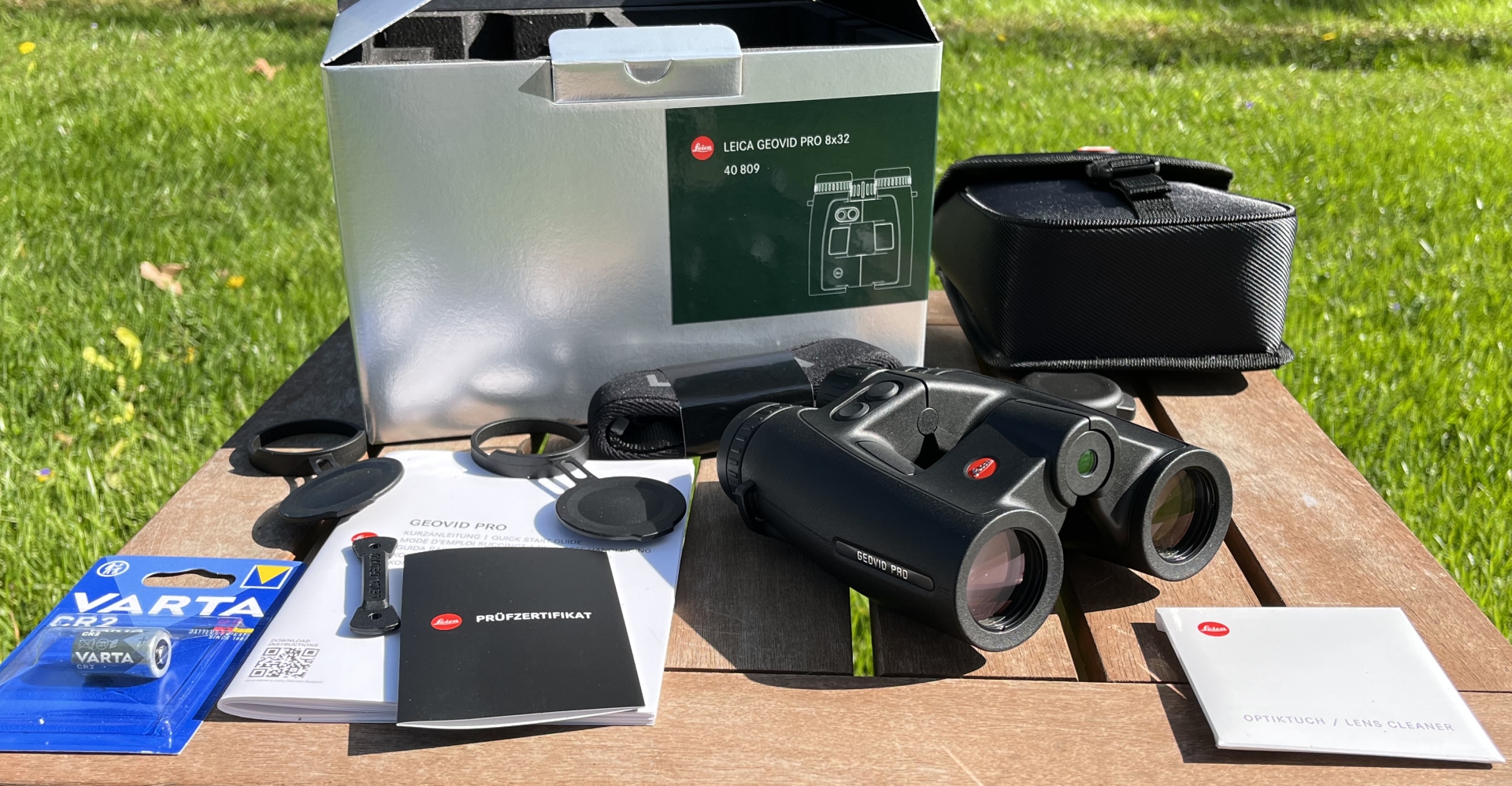 The Geovid Pro's unboxing. Leica 10x32 Geovid Pro Rangefinding Binoculars What we really want from ideal range finding binoculars is frankly asking a lot. We want to be able to replace our current field glass, replace our laser rangefinder, and ideally also have our firing solution displayed in the glass so that we don't have to type our values into a solver, consult our phone, or consult a printed dope sheet. It is a lot to ask, but the benefits are obvious. We would gain a tremendously faster and less error prone shot routine, and less gear to carry. Over the years, rangefinding binos have gotten better at most of these things we want them to do. That being said, most, if not all, have had at least one major shortcoming whether that be glass that really isn't really up to quality bino standards, a heavy bulky uncomfortable package, limited laser range, range limitations on the ballistic solver, or a downright poor ballistic solver. With the Geovid Pro's, Leica is essentially trying to be the complete solution. The Pro's are compact open hinge birdwaching style binos that aim to be as optically good and comfortable as the quality birdwatching binos your probably using for field glass. The Pro's can be paired with AB via Kestrel or your phone to provide non EU-neutered long distance ballistic solutions that are the quality you would expect from AB and can integrate the Kestrel wind sensor. The binoculars contain onboard temp, pressure, and angle sensors that integrate with AB. Leica has also created a GPS map integration feature they are calling ProTrack that you can use to tag the map location where you ranged an animal to help you navigate there and actually find the prize after the shot. I'm quite interested to try this feature out. I think it might be useful for a good bit more than just tracking game. This feature also works with or without cell signal as you are likely to be using it mostly in places without any cell reception. Mantis X10 Elite training system The Mantis X10 review was started late last year and is actually finished at this time and awaiting response / comments from the Mantis folks. Mantis is a smartphone based training system company. They produce a variety of Laser indicator training systems as well as an accelerometer based product. Regarding the laser systems, they have both a laser training system based on the Pink Rhino laser training bullet (a cartridge sized laser that goes where a cartridge would go), and a second system for the AR-15 that replaces the bolt carrier group and actually resets the trigger itself so you can rapid fire. The Mantis system I will be reviewing is the Mantis X10 Elite. This is an accelerometer based training system that attaches to the pic rail on you firearm and records its movement throughout the shot process. It can be used for both dry fire and live fire and can be used with various adapters for firearms not possessing a pic rail. The MantisX is also a software product. You interface with it through a smartphone app which automates and archives your training and provides tips for improvement. In addition to the base unit, I have obtained a few adapters for the mantis to try it out on various different platforms such as handgun, shotgun, and precision rifle. My initial thought it that it is probably most useful in the context of handgun but I'll be interested to see what else it can do. Sightron SIII PLR FFP 6-24X50 Zero Stop Due to Covid / collapse of the global supply chain issues last year, Sightron delayed the FFP version of their new PLR scope until mid 2022. The SIII PLR FFP is a more full featured version of the SIIISS624X50LRFFP/MH scope a reviewed 3 years ago. This new scope has the same optical design that I have continued to appreciate even more over the past 3 years but adds 10mil / turn, a zero stop, illumination, more elevation adjustment range (29.1mil), a tree reticle, even closer focus (20M). It retains fairly light weight (28oz). Sig Kilo 10K-ABS HD Rangefinding Binoculars Since entering the optics business a few years ago, Sig has been big into Rangefinding products and also into the integration of electronic functions into optics. This was apparent in the integration of an electronic level in their flagship precison rifle scope, the Tango 6 5-30x56 I reviewed last year. This year they introduced a few new rangefinding products, the flagship of which is this Kilo 10K-ABS HD binocular. The 10k's biggest selling point is, of course, the 10,000 yd maximum reflective target ranging distance, a number far in excess of anything other consumer level product. Other features of note are: the integrated AB elite ballistic calculator, multi-line OLED display, 1.5x.06 mil beam divergence, 30 profile onboard storage, multi-mode ranging, included weatherflow wind meter, a zero-able reticle for laser aiming, BDX 2.0 system compatibility, and BaseMap remote point drop functionality. As with the Leica Geovid Pro 32's I reviewed earlier this year I expect the 10k to be a hit product and I'm interested to test it out, especially it's juicy laser. It's a big year for laser rangefinders for sure. 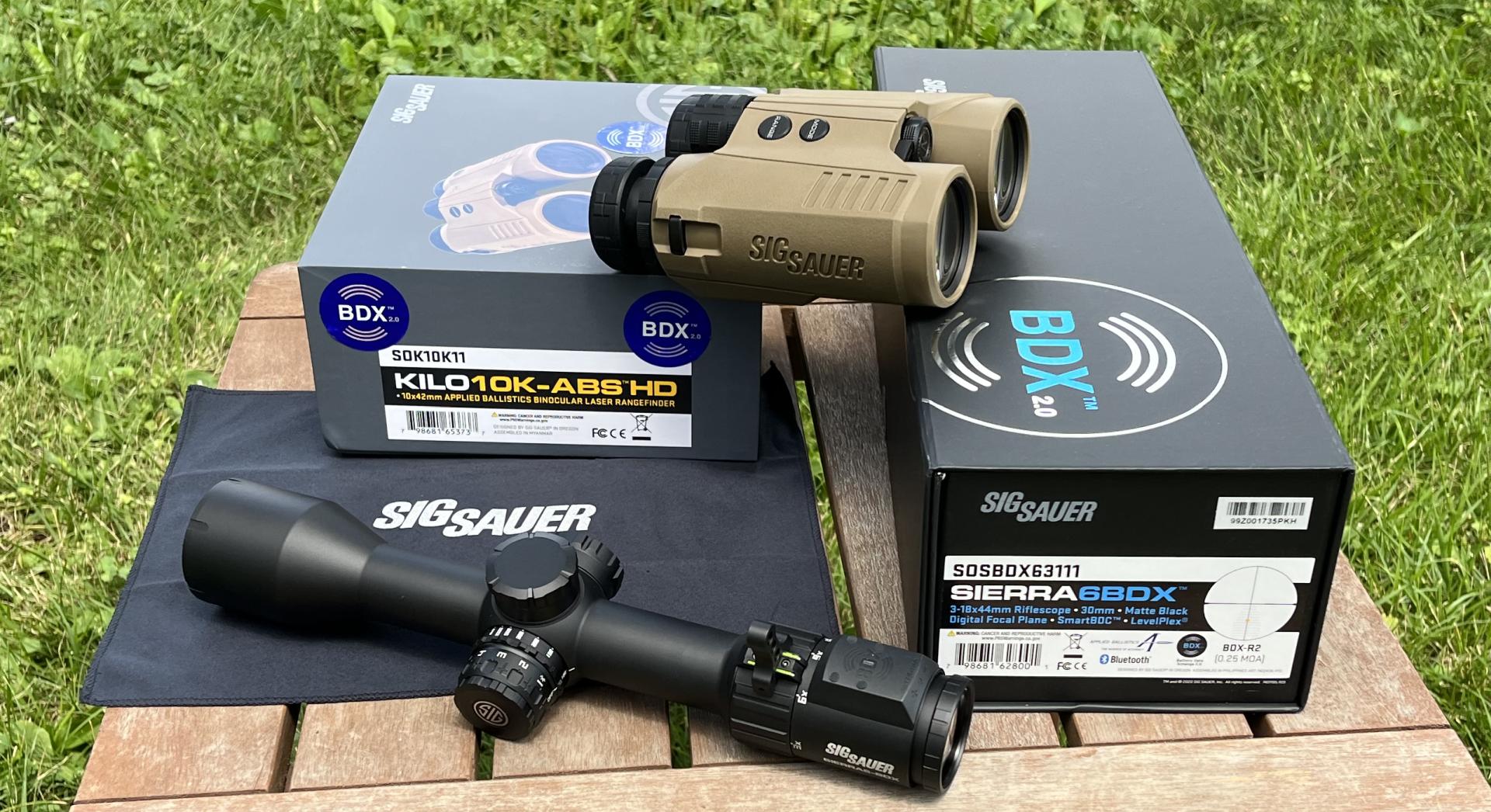 Sig Kilo 10K- ABS HD binos and a Sierra 6BDS 3-18x44mm rifle scope to pair with it. Sig BDX 2.0 System and Sierra 6BDS 3-18x44mm rifle scope While taking a look at the Kilo 10K binos I also thought it would be really interesting to examine Sig's BDX 2.0 system. This is their system wherein you pair ballistic calculator equipped LRF binos with a scope capable of illuminating the reticle at the point calculated to be the correct aiming solution for a target ranged by the binos. There have been a number of products over the years that provided this sort of automatic, reticle shows you where to shoot, functionality. Most have been scopes with a rangefinder and calculator built in such as the Burris Eliminator series, Swarovski dS, and the much hyped TrackingPoint system. Sig's BDX concept is an ecosystem instead of a single all in one unit. With BDX, the user can pair any in a range of rangefinding products with any in a range of rifle scopes. I think the system will be interesting to examine. I want to see both what an experienced precision rifle shooter can get out of it and also what performance a novice going down the instruction sheet might expect. That is all I have scheduled so far for this year. I'm kicking around a couple straight up articles such as the how to quantify precision article that has just never gotten done, one about 3d scanning and printing for precision shooting, and maybe a few others. We will see if any of that gets done. For now this is the roundup though. |
|
Initial Leica Pro 10x32 LRF bino thoughts The first impression I had when handling the new Leica Pro 32 binos is that the really feel like a nice set of bird watching binos. They are smaller and lighter than other laser rangefinding binos I have used and the open bridge form factor favored by most high end mid size binos. This is a long way from the size and shape of the Bushnell Fusion 1 Mile ARC binos I reviewed back in 2013. Incidentally, I have just resurrected that review as it was apparently lost in the Scout.com exile period and, unlike most other reviews of that period, I did not seem to have uploaded it to either OpticsThoughts or AR15.com so it was truly not available. The only things that did not strike me as high grade birdwatching bino in either quality or design on these Leica Pro's are the lense caps and the diopters. The lens caps retain nicely when they are closed but when open they are held to the bino body only with what amounts to a stretchy rubber band. This band does not ride in any groove on the binocular barrels and so slips off easily. If you walk around with your lens caps open and dangling, you will loose them rather quickly. As for the diopters, the Leica Pro 32's feature one on each eye right in front of the eye cups instead of a single. These are not locking and move quite easily. At the very least they should be stiffer and, ideally for an optic of this cost, would be locking. I have not had time to fully evaluate the Leica Pro 32's optically yet, but I have had them on a few nature walks and have also put them side by side with both Swarovski's EL Range 10x42's and also their NL Pure 10x42's. Thank you to the manager at my local Cabela's for providing some time and flexibility in these observations. 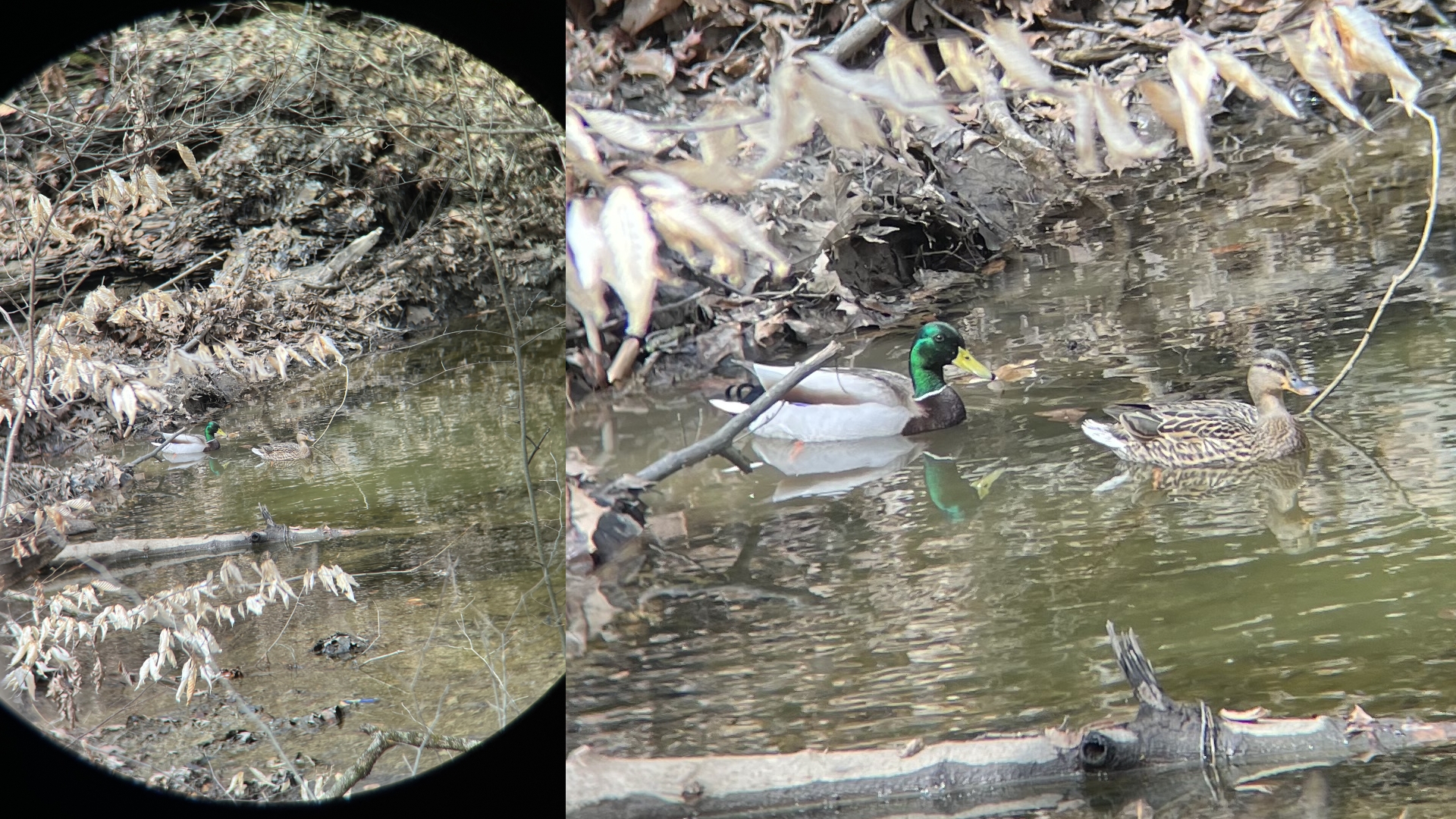 Through the lens photos are typically a poor measurement of optical performance and often come out poorly but this one through the Leica Pro 10x32 LRF bios sure came out well In general I am quite pleased with the optical performance of the Pro 32's. On their own they look great. Bright, clear, sharp, they again leave you thinking your using a nice set of birdwatching binos and not a laser rangefinder. When compared optically to the Swarovski EL rangefinders, the Leica Pro's strike me as roughly equivalent though not the same. Outside, in overcast ideal conditions, both binos do seem very close to the same. However, in brighter conditions of direct sunlight, the Leica's show less chromatic aberration than the Swarovski's and were therefore preferable in those conditions. Inside, in lower light conditions, the Swarovski's were brighter and had better contrast making them preferable in those conditions. The color rendition is likewise a little different between the two sets of binos. Swarovski has a reputation for providing even, true to life, color rendition and that is what I saw in them. The Leicas in contrast really made the greens and reds pop. 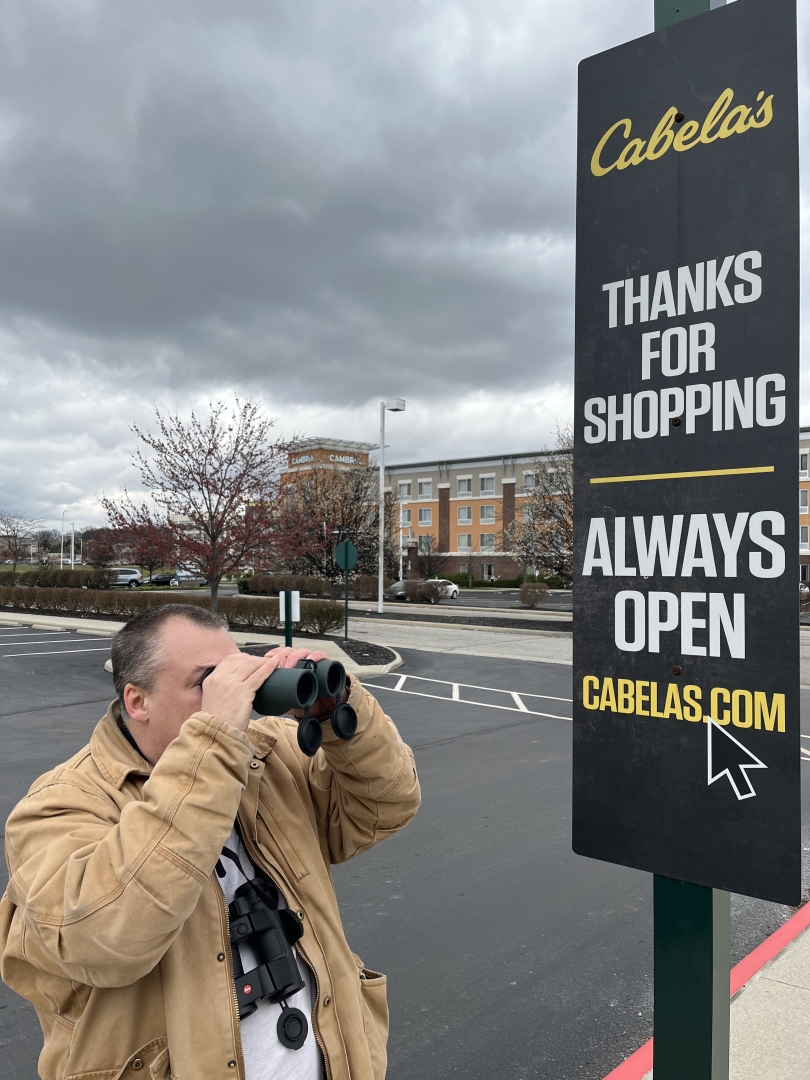 Spending a little time with the Leica Pro 10x32 LRF binoculars side by side with the Swarovski EL Range 10x42 rangefinding binoculars When either set of rangefinding binos was compared to the NL Pures I was reminded that no matter how good the top rangefinding binos get you are always going to give up a bit when comparing them to top binos without rangefinders. The NL's were plainly better than either rangefinding set. Remember that even if you take the laser and receiver out of the lens assembly, as Leica wisely has, allowing you to use the best optimized lens coatings and arrangements for optical performance, you still have a display in there. That display requires a degree of reflectivity and this inescapably lowers your optical performance. Speaking of that display, it has evidently been brightened since the early pre-production samples as I had no difficulty making out readings in bright sunlight. As for the laser and software performance. I really haven't had a chance to stretch the laser much yet. Ohio is flat and tree covered so testing a laser requires going somewhere special to do so. A high building, a lake, train tracks, somewhere you can actually sight a significant number of different targets at varying large distances. I just haven't done this yet. Part of the reason for this is that I just received the ballistic software a couple days ago. I think this may also still be beta software as well. The link I received seems to indicate this and my test binos included no information on that aspect of function so I expect it probably has a separate manual of it's own not yet finalized. It will be probably be a couple weeks before I can really dig into the software and evaluate it's ease of use and customizability. My work schedule the next few weeks is particularly slammed. With respect specifically to Kestrel pairing as Ed asked, I do not actually have a Kestrel to test it with. Here in Ohio average wind velocity is not particularly high but the trees and other near ground structures cause it to eddy quite ferociously and unpredictably. As such, I don't see much of an edge in having a wind meter at my location. The other functions Kestrel does I have done with either an app on my smart phone or old fashion printed dope sheet. |
|
Update 7-1-2022 The Leica Geovid Pro 32 review is now live. Laser rangefinding binoculars have quite a number of aspects on which they must be evaluated. Optics, laser performance, atmospheric sensors, and software to name a few. As a result, it's a long review and includes a good deal of background on a number of different technologies. A bit of something for everyone. You have been warned though. It's a chapter book. Leica Geovid Pro 32 Unboxing |
|
Update 7-15-2022 As I finished up the Leica Geovid 32 Pro review, I got to thinking it might be interesting to take a look at the Sig Kilo 10K-ABS HD this year as well. It seems like this is a big year for LRF binos. The timing is right for one thing. Field style matches seem to be gaining popularity for one thing. But perhaps even bigger is the number of makers partnering with Applied Ballistics for their software development and ballistics solver. Both the Leica Geovid Pro's and the Sig Kilo 10k's can of course run AB elite from the device. Despite running the same software though, I think these two binos will prove quite different when it comes to the areas of performance in which they most excel. I have already seen the exceptional optical performance and superbly comfortable ergonomics of the Leicas and I expect the Sig to show some unique strengths when it comes to it's laser as well as it's display and menu system. I think the compare and contrast will make for some excellent analysis of these two products each of which I expect to sell well have many happy customers. Sig Kilo 10K- ABS HD binos and a Sierra 6BDS 3-18x44mm rifle scope to pair with it. While taking a look at the Kilo 10K binos I also thought it would be really interesting to examine Sig's BDX 2.0 system. This is their system wherein you pair ballistic calculator equipped LRF binos with a scope capable of illuminating the reticle at the point calculated to be the correct aiming solution for a target ranged by the binos. There have been a number of products over the years that provided this sort of automatic, reticle shows you where to shoot, functionality. Most have been scopes with a rangefinder and calculator built in such as the Burris Eliminator series, Swarovski dS, and the much hyped TrackingPoint system. Sig's BDX concept is an ecosystem instead of a single all in one unit. With BDX, the user can pair any in a range of rangefinding products with any in a range of rifle scopes. I think the system will be interesting to examine. I want to see both what an experienced precision rifle shooter can get out of it and also what performance a novice going down the instruction sheet might expect. Given the length the Geovid review got to, and the fact I expect the 10K review to be essentially the same length, the 10k review will be a separate article from the BDX 2.0 analysis. Oh, and the products arrived yesterday, as you probably guessed from the pic. |
|
Update 8-11-2022 I've been playing a good deal with the Sig Kilo 10k-ABS HD rangefinder and I thought now might be a decent time to throw in a little teaser as I am most of the way done with the testing. This has been pretty interesting living in central Ohio as it is basically flat and tree covered for a hundred miles or so in any direction. This Sig can range so far you have to get pretty creative to test it around here. The manual, and advertising material, lists the 10k as having the ability to range: reflective targets at 10,000yds, Trees at 4,000yds, and deer at 3,000 yds. They are getting this with a 905nm class 1M laser essentially though the combination of an unusually flat beam pattern of 1.5 x .06 mrad and a special, longer duration, XR ranging mode. Although there is really no way for me to test a claim of 3k yds on a deer, I have been examining the other claims as well as the interesting effects of the unusual beam shape. I came quite close to the 10k number tonight ranging the iconic Budweiser factory tower from a parking garage across town. Yea, across town is what your dealing with trying to test these things max range. For my amusement, I left a .22lr ballistic profile active while doing this. It's funny, for most of the 6k+ ranges I did, the binos just returned zeros for the ballistic solution. .22lr, of course, simply cannot go that far at any solution. However, for whatever reason when I got to this crazy distance of 9545 yds the binos returned a solution of 5101.4 mils drop and inf mils wind. For those keeping track, 5101 mils is almost the whole way around a circle (6,283 mils) so, you would actually be pointing a bit down, not up. Incidentally, ranging the same thing again yielded 3744.0 mils for the same distance so clearly we are just getting programming static at this point. I was both amused at this return and at the fact the Kilo 10k's actually ranged this far though. I have also been able to test the tree line range claim, rather thoroughly in that case. On an overcast day, the Sig 10k's will do a tree line out to 3,700yds but not further. At night, they exceeded 5k yds on what appeared to be tree lines so far as I could tell. 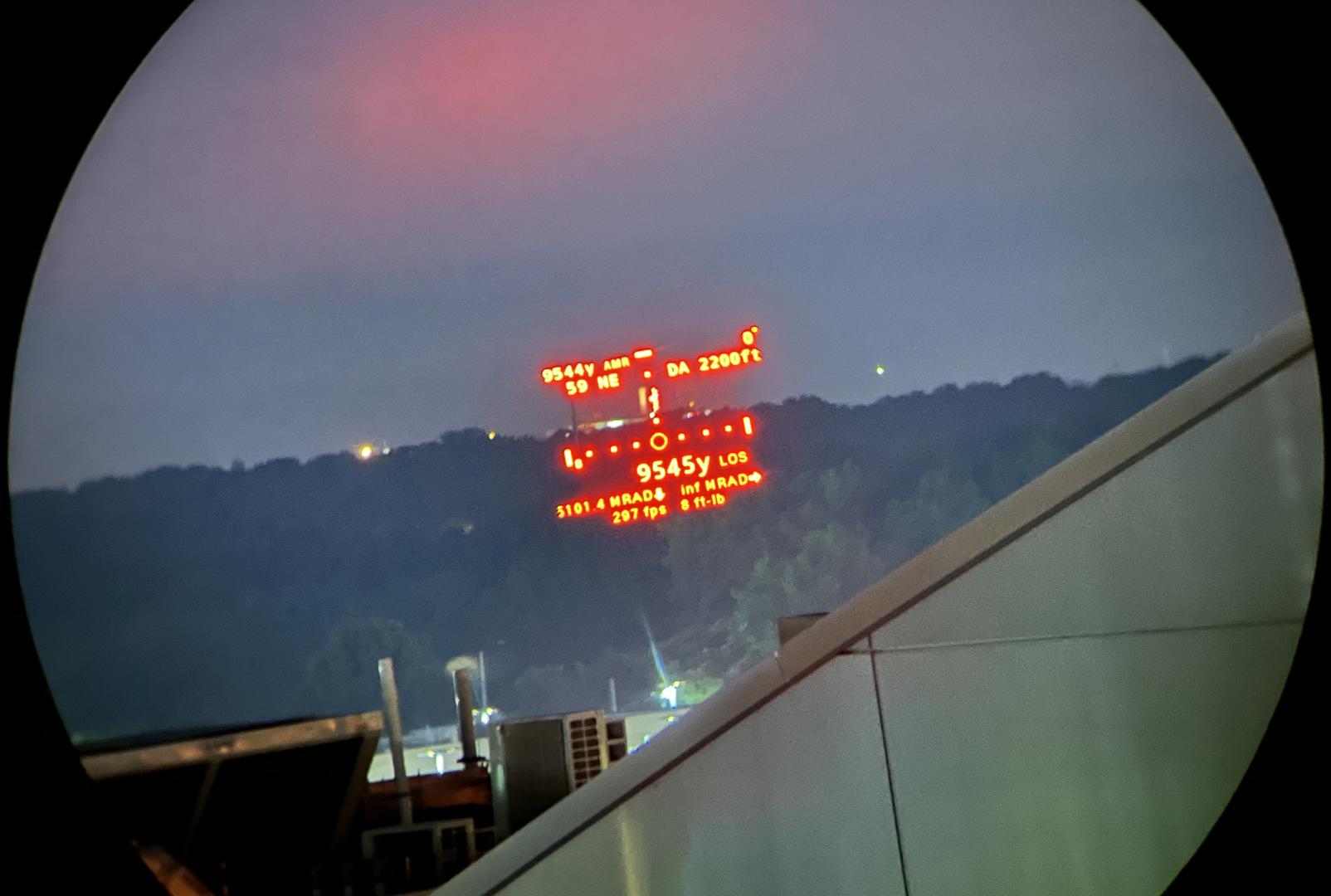 Budweiser factory tower @ 9,545 yds through the Sig Kilo10k-ABS Laser Rangefinding Binoculars |
|
Update 8-22-2022 Leica has released the Ballistics 1.1 update along with an associated firmware update for the binoculars themselves. This update fixes the potential for an incomplete ballistic profile transfer when the profile is changed in the app at a time the binoculars are not active. With this fix I am unaware of any current glitches in the software for the Geovid pro binos. I should also note that this update wipes out all your current ballistic profiles in the app. Actually, it defaults them all to the 175gr .308 app that AB really, really, thinks everybody needs. Also, The software update for the older .com models to using the newer Ballistics app has been delayed. They are thinking maybe October or so on that. Since updates are boring without pics, here is a pic from the Sig 10k review I'm working on. That review is close to done by the way. Though I don't have a firm idea how much longer it will be because of.... software, what else. 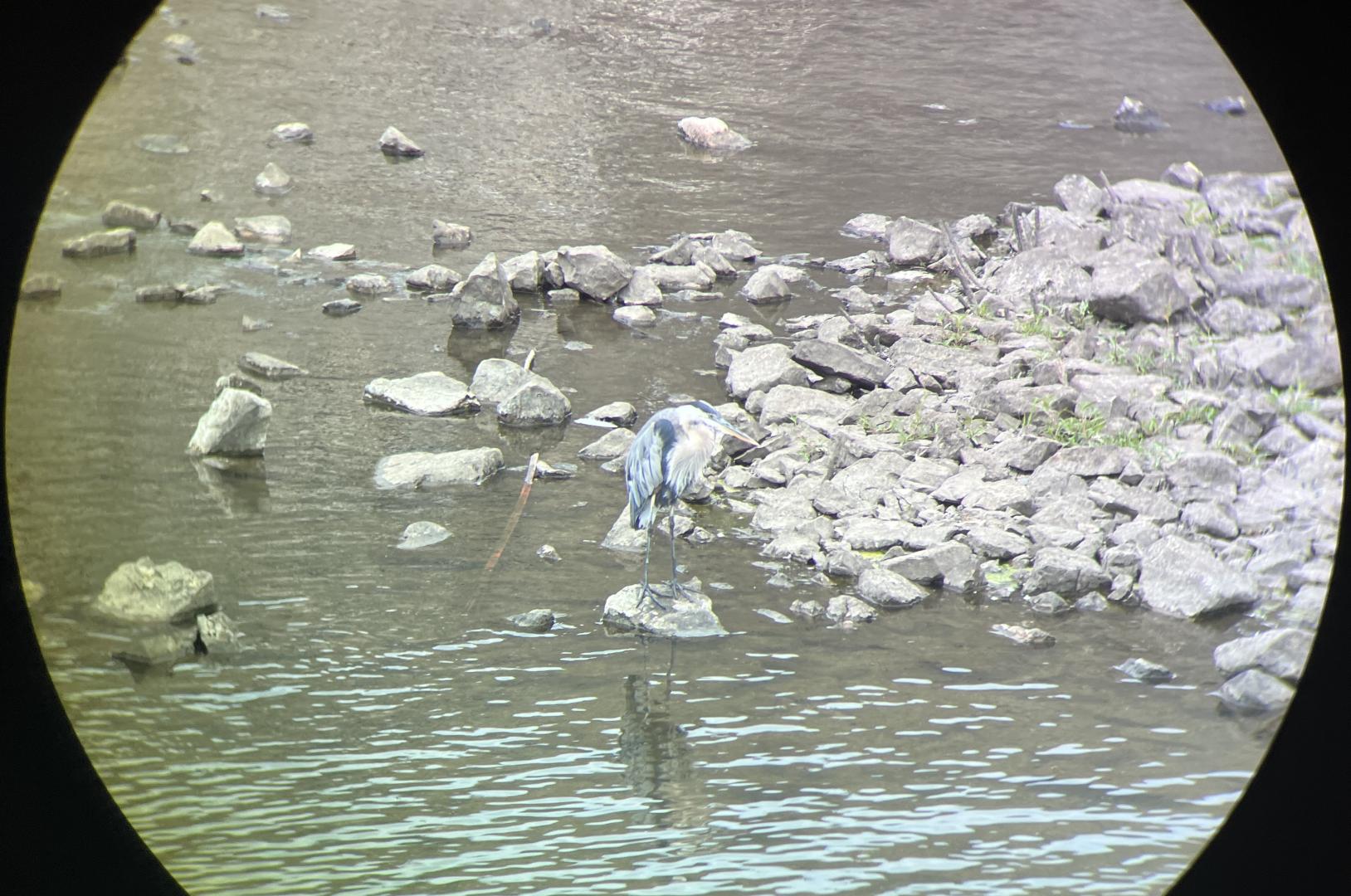 Great Blue Heron through the Sig Kilo 10K-ABS HD Binoculars |
|
Update 9-1-2022 The Sig Kilo10k-ABS HD laser rangefinding binoculars review is done and posted. Good heavens these things range a long way. I managed to range a not so heavy person out to 2,100yds. That is just crazy. I may write a short comparison between the Leica Geovid Pros and these Sig 10k's in the next week or two. A lot of folks are interested in both of these seem to be looking for a little direction. They are both spectacular rangefinders and probably the bulk of people would be well served by either. A few folks with this or that specific use or uses in mind would be well served by such a write up though. 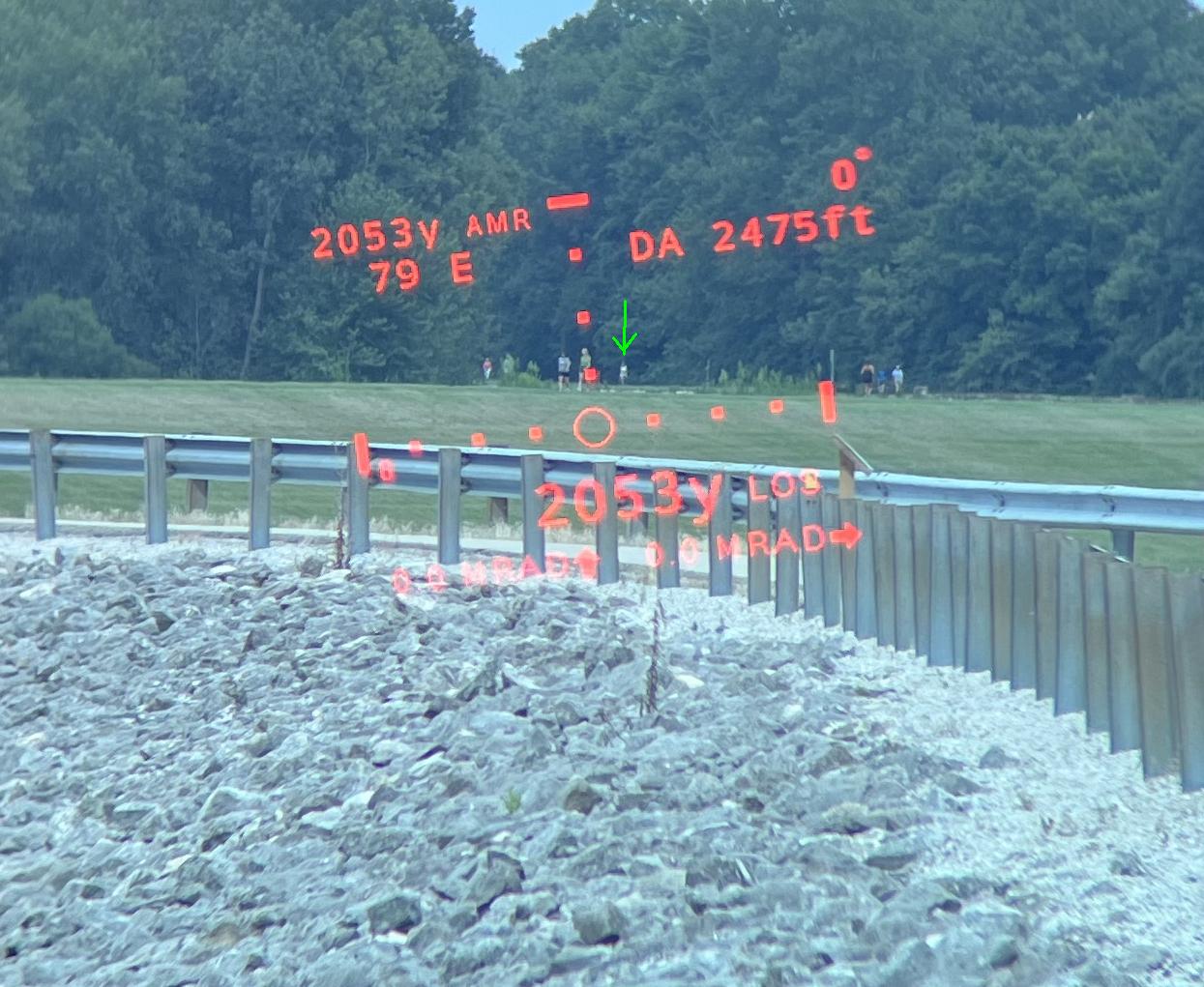 Sig Kilo 10K-ABS HD ranging a person at >2k yards Next, I'll be looking at this rangefinder in conjunction with the Sig Sierra6BDX scope in order to take a look at Sig's BDX 2.0 system and concept as a whole. I've always found these reticle shows you where to shoot with no math systems pretty interesting so it should be fun. Lastly, I heard today the Sightron SIII FFP Mil/Mil PLRs should be headed my way next week so I'll be able to get started on that long delayed review. Not bad timing in the end as I need to use some of the same optics test stuff on that as I will when testing the BDX system and some of that stuff takes a long time to set up and tear down. |
|
A Short(ish) discussion of the merits of Leica Geovid Pro 32's vs Sig Kilo 10K - HDs A number of folks have been interested in comparing the Sig Kilo 10k's with the Leica Geovid pro's since the release of these two new flagship products. Quite frankly, I think the consumer is right here in looking to make this comparison. I also find this amusing as neither company actually seems to view the other as a primary competitor in the marketplace. The crux of the comparison comes partially down to the aspects of performance in which both binoculars equally satisfy the basic needs of most users and at a similar price point and partially to how wildly different the two are outside of satisfying those core needs. I believe these core needs are ranging reliably out to 1,000yds, and providing excellent ballistic solutions onboard. Both binos do these two thing remarkably well, and they not terribly far apart in price. Currently, the Sig's are being advertized for $2,499 at most web retailers with the Leicas at 2,899 (+$150 for AB elite). I should add here that I recommend buyers generally call retailers and ask if they can get a better price as often retailers are willing to sell below MAP. Lets start with how each of these binos is actually quite similar when it comes to the performance of the basic things I think most shooter is looking for in them. This comes down to mid distance ~1,000yd ranging and ballistics. Under the hood, both of these binos are running the same software (we will assume for the purposes of this comparison all Leica users upgraded to AB Elite as all long range shooters already dropping that much coin really should). Not only are both binos running the same AB formulas, but the same app developer, the one AB uses, actually did the software on each. The skin looks different, but the numbers are the same and I'm really impressed with those numbers. The custom and personal ballistic models AB is putting out are really good models, much better than the G7 based models I have used in the past. Several times now I have been surprised to not need to true one of these AB elite models. It was correct right out the gate to the tenth mill all the way until the bullet reached transonic. I have not seen this before with ballistic models and therefore I see a huge appeal in going with LRF binos that have this baked in. Both of these do, and both are usable in this fashion, unteathered from the smartphone app. Out to around 1,000 yards both rangefinders are also quite similar in ranging performance. They both have pretty tight, if slightly different beam divergence and in practice, they perform quite similarly at these distances. Both are having no trouble ranging near everything here and when they can't catch a plate because it is too small they have no issue ranging the ground at the base of post hanging it. There are probably a few situations where the ranging modes of the sig might be able to catch something that the Leica can't, but in practice, I haven't actually encountered any of those situations. Both basically ranged everything out to 1k yds. Now, if both of these rangefinders, due to the afore mentioned factors, meet your basic needs, which should you choose? Both the Sig 10k's and the Leica Geovid pro's offer some unique areas of excellence. 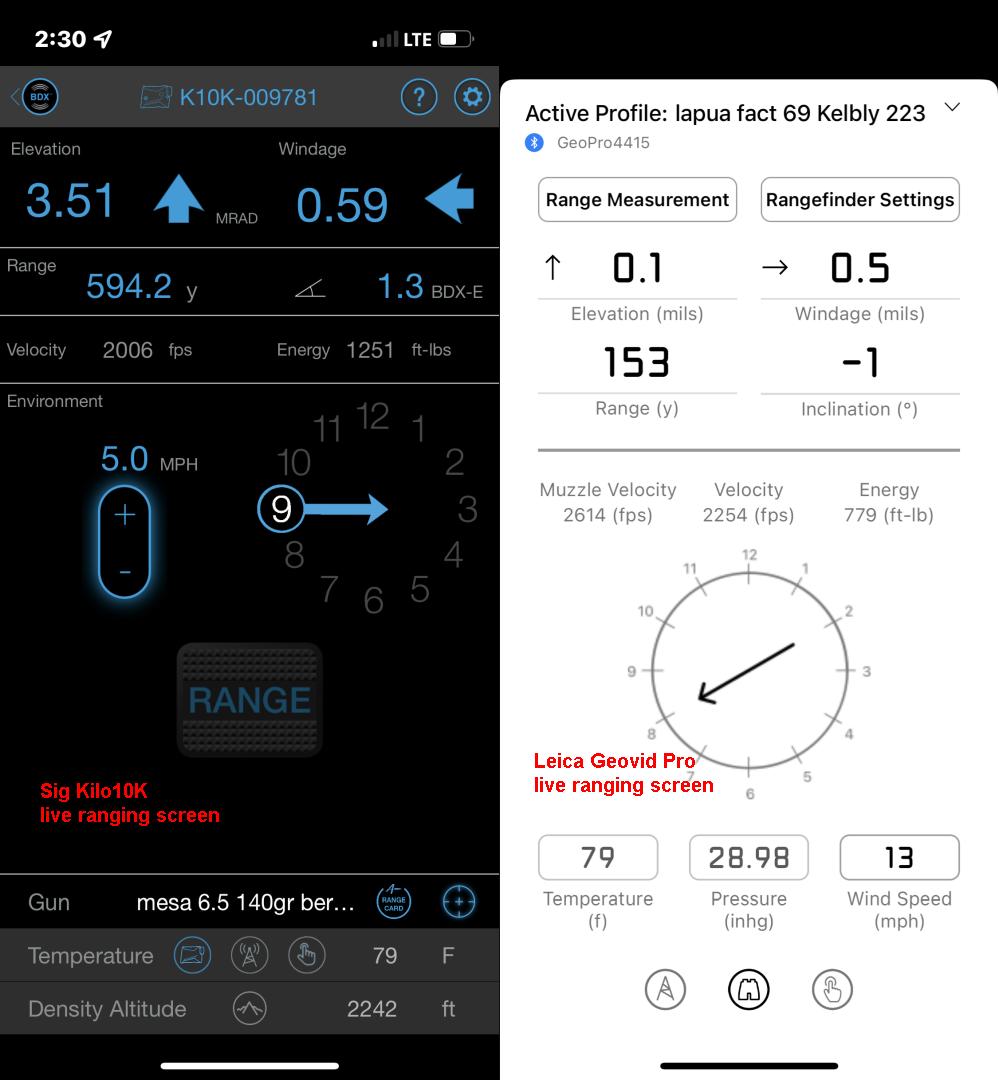 Sig Kilo 10K vs. Leica Geovid Pro live smartphone ranging screens. I'll start with the areas in which the Sig 10k's uniquely excel. As you go out beyond 1,000 yards, the 10k's increasingly are able to range more targets than not only the Leica Geovids, but also any other rangefinder anywhere near their price. These things can range a person at more than 2,000 yards and will hit a tree line at 4,000. If your usage involves ranging targets, really, really, far away, you probably don't need me to tell you this though. You probably already have 10k's because they are currently pretty much standing alone as the only 905nm ranging product that is reliably ranging actual targets beyond a mile. They are an obvious ELR choice. Also of interest to the competitive shooter is the Sig 10k's unique pixel based display. Most rangefinders use a segmented display similar to older digital clocks. Sig is using a 304x256 pixel AMOLED display that allows lots of stuff to be able to be simultaneously displayed. The post range display includes the yardage, compass bearing, DA, inclination, drop, drift, terminal velocity, and terminal energy. It is all right there the moment you range. This display also gives you a robust menu system that is easy to navigate without three letter acornyms you will forget. This makes it easy to change ranging mode or to switch between the 30 ballistic profiles you can store onboard. Other plusses for the 10k are the BDX system, nice extras such as a wind meter that is included and can communicate directly with the binos, and a nice carrying harness. It's has the downside, that due to the constraints of the coatings required for the excellent display, things look blue through the 10k's. This is mostly cosmetic, but it is quite noticeable. The biggest thing that the Leica Geovids excel at outside of meeting those basic rangefinding and ballistic needs is performance as binoculars. These things look, feel, and perform like high end bird watching binoculars. Their open frame and general shape is super comfortable. Their controls are butter smooth, and the image they deliver is excellent. If you want to use your rangefinding binoculars a good deal outside of rangefinding duty, these are the obvious choice. In this way they would be in the vein of the Swarovski EL ranges or Zeiss Victory RF's except that they are significantly cheaper, and, when you add AB Elite, they have better ballistic software. The Leica Geovid Pros are also currently in 32mm, though 42's are coming next year. You have, or will soon have, a lot of choices in both magnification and size. The 10k's only come in 10x42mm with no other options planned. Lastly, when compared to the Sig's, Leica currently gives you a lot more access to AB's functions when not connected to the binoculars. You can true the muzzle velocity and DSF using existing data and access range cards and target cards unconnected. So, you can easily spitball loads or compare ballistics on different calibers you might be looking into. You can also true muzzle velocity at distances below 300yds, I must for slower cartridges such as .22lr. Hopefully Sig will open this stuff up in the future. Software can change, and I've pushed for it, but right now, only Leica lets you easily muck about. So, there you go, a quick comparison of the Sig 10k's with the Leica Geovid pros. I think both of these binos will meet most long range shooters most central needs and each sure offers some unique, different, and excellent characteristics beyond that. |
|
Update 9-15-2022 The Sightron SIII 6-24x50 PLR FFP scope arrived yesterday. I'm excited about this as the previous SIII 6-24x50 ffp that I reviewed three years ago has continued to impress me, optically since that time. It has proven particularly resistant to having any issues in poor lighting conditions where stray light becomes an issue for many scopes. This has even been the case when not using the sunshade included with it. I have also found the SIII to be a particularly comfortable scope to be behind for long periods of time, with no eyestrain. In short, I like it even more than I did when initially testing it. Unfortunately, that scope did not have great features to go with it's glass. It had only 5 mils per turn, no zero stop, some odd choices in labeling (clicks, not mils labeled), and it's adjustments were not as true to magnitude as they should have been. This new SIII PLR version is essentially a feature updated iteration of the optical platform that was in the previous SIII FFP. It has 10mils per turn, is properly labeled, has a zero stop, and I am told the adjustment magnitude standards have been improved. They also added illumination, a tree reticle, and changed the styling a bit. It is still light, at 28oz, but not quite as light as the previous version was at 23.8oz. As with the previous version, the PLR is a Japanese manufactured scope. 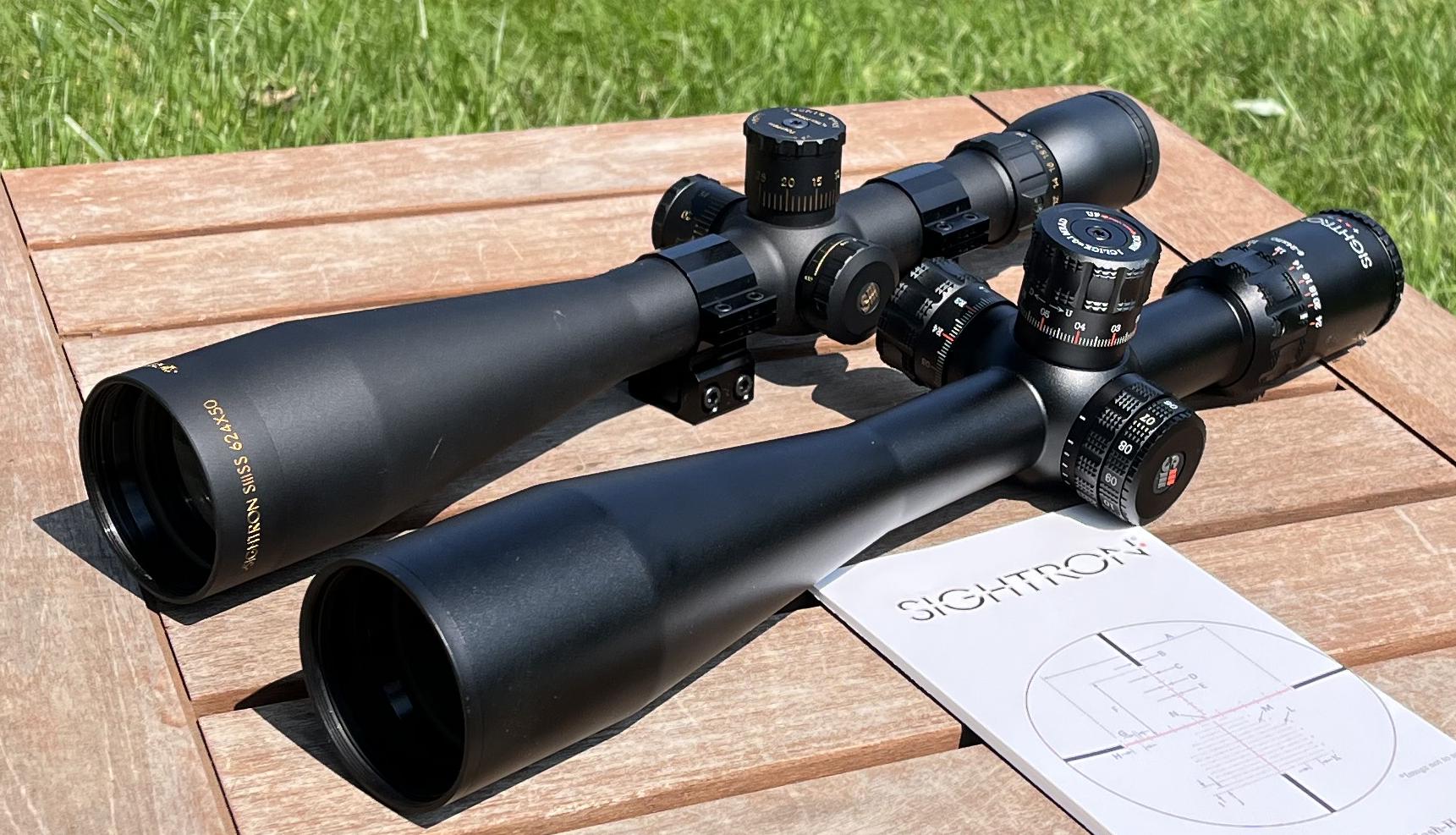 Sightron SIII 6-24x50 PLR FFP vs. the now discontinued SIIISS624x50LRFFP/MH that preceded it. |
|
Update 10/4/2022 The bug in the Muzzle Velocity truing function in the Sig BDX app has been corrected. Note: On existing ballistic profiles you must trick the binos into genuinely updating the profile for the fix to work. This means changing something major in the profile, syncing it, changing back, and syncing again. What I changed was the bullet itself and this worked. Also of interest, the BDX 2.0 system review is done and being checked for errors. It will be up in a few days. |
|
Update 10/10/2022 I was doing some writing today on the Sightron SIII FFP 6-24x50 PLR review and noticed it is currently on sale for $350 off making it $1,119.99. It seems unlikely to me that it will still be on that sale at the time the review is posted as the review is sitting behind another in que and shouldn't be up until late Novemember or early December. Most of the testing on the SIII is done though and I think it performs a good deal better than the $1.1k price point it's on sale for. So, I figured I would give folks a heads up in case you want to jump on that price. Sightron pricing has always been a bit erratic, with things occasionally going on substantial sales. 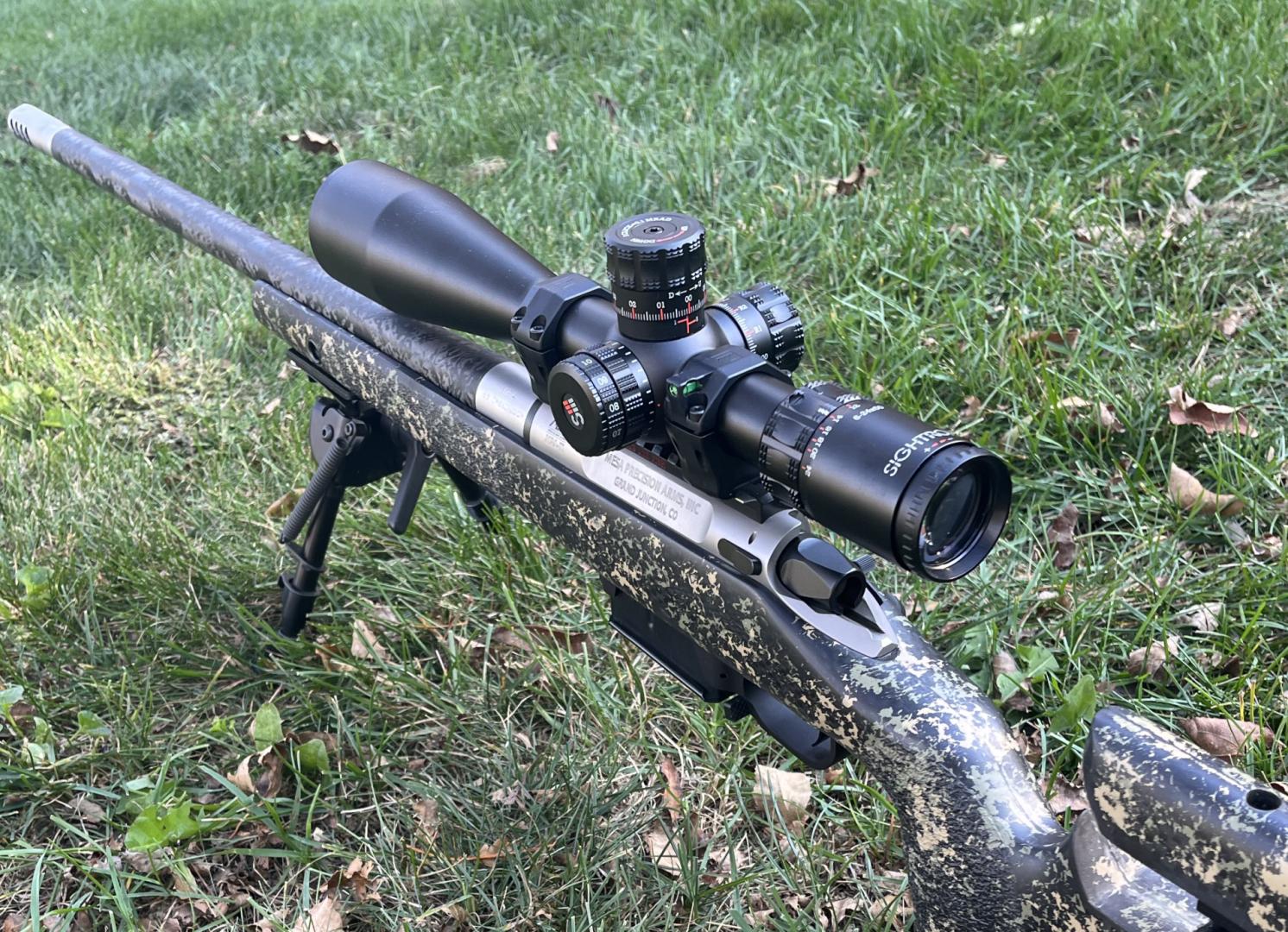 Sightron SIII PLR 6-24x50 FFP on Mesa Precision Arms Crux The highlights from the testing so far are the new 10mil per turn adjustments are tracking 100% in my sample. This was one of the big focuses Sightron had with the PLR and what is essentially a new feature set on the same SIII 6-24x50mm platform they have used for years. The feel of these adjustments is also excellent. A little on the easy to turn side but really nice clicks. They did a great job on those. The reticle in this example is canted clockwase .18 mils in 10 mils (1.03 degrees.) I'm not thrilled with that but it's not particularly uncommon when testing scopes to see it. Optically, the SIII has resolution closer to a $2k scope than to other $1k scopes. Super sharp. It's field of view and depth of field are poor though. In other words, you can the optical platform was originally designed for F-class shooting. Other aspects such as chromatic aberration and eyebox are good at the price but not spectacular. Having spent a lot of time behind the last version of this scope over a few years I can tell you it's performance holds up in all conditions. Really good stray light handling even without the included sunshade. Of course, the SIII is quite light at 28oz and so would do well with the new weight limited competition stuff. It also focuses super close for .22lr. As with other SIII's, the PLR is made in Japan. Anyhow, the e-mail from Sig with their comments on the BDX 2.0 review came in as I wrote this so I'm going to get to that now and should have that review up today or tomorrow. |
|
Update 10/11/2022 Sig BDX 2.0 system and Sierra6 BDX 3-18x44 review is up. This review also contains some background on the SmartScope concept in general. I am pretty impressed with how effectively this system can get a user without significant knowledge of ballistics on target using just the information off the ammo box. The ease of use was quite remarkable and the technology works as advertised. The entry price point for the system is also quite low at ~$550 though the particular units I was using run more like ~$3,500. 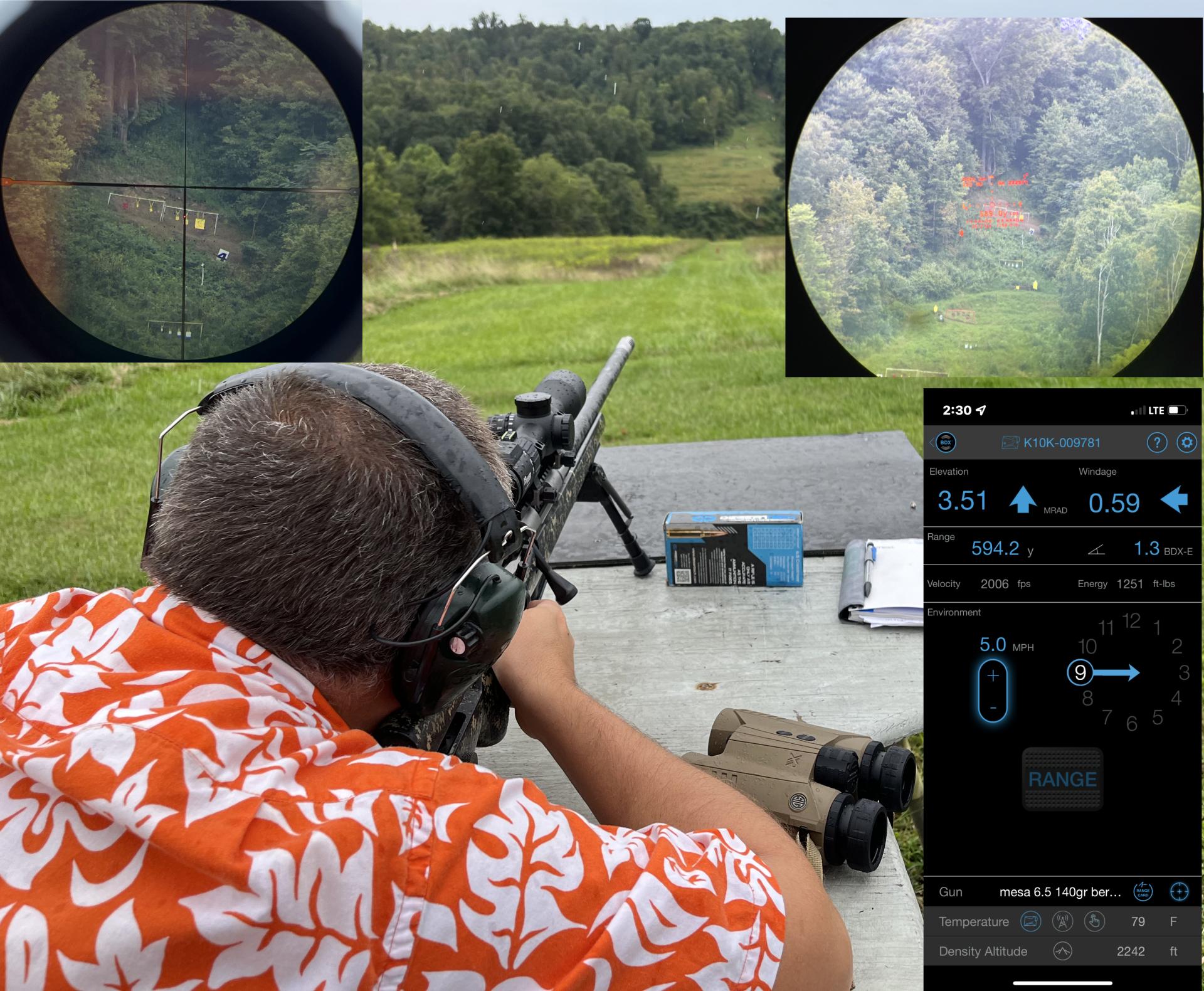 Demonstrating Sig BDX 2.0 System with the Mesa Precision Arms Crux 6.5CM |
|
So, went on an epic all day range day with a couple friends last week. In total we zeroed something like ten scopes and backup iron sights combined. We also did some long range work with both high powered rifles and .22lr. It was an unbelievable amount of stuff to get done in one day. A couple thoughts from range day and generally: First off, the Sightron SIII PLR review is done. The draft is off for comment from the Sightron folks and I plan to post it in about 2 weeks. The sale they are running on the PLR for $1.1k evidently lasts until Jan 1. Hell of a scope for that price. I picked up a few different bubble levels over the last couple months. I've been experimenting with different mounting locations and types. At this point I have most major types that exist. I may do a sort of how to article on level types, advantages and disadvantages of each, how to set them up, and what to expect. I'll be visiting NVisti sometime next month. These are the guys who do the software for the Applied Ballistics integration into devices. This includes both the Leica Geovid Pro's and the Sig 10k's reviewed this year. Should be an interesting visit. Might find out about some upcoming features or any number of other interesting things to write about. Or, maybe it will all be NDA. Who knows. I'll tell you what I can though. Shot the Optisan prestige 6Z 1-6x with the mudskipper 3 reticle I designed a number of years ago for the first time in a long while. Still really like that reticle concept. A shame it didn't catch on. Probably a good bit my fault for getting so much more interested in precision rifle stuff than AR stuff, having a kid around the time it came out, and not doing much promotion. 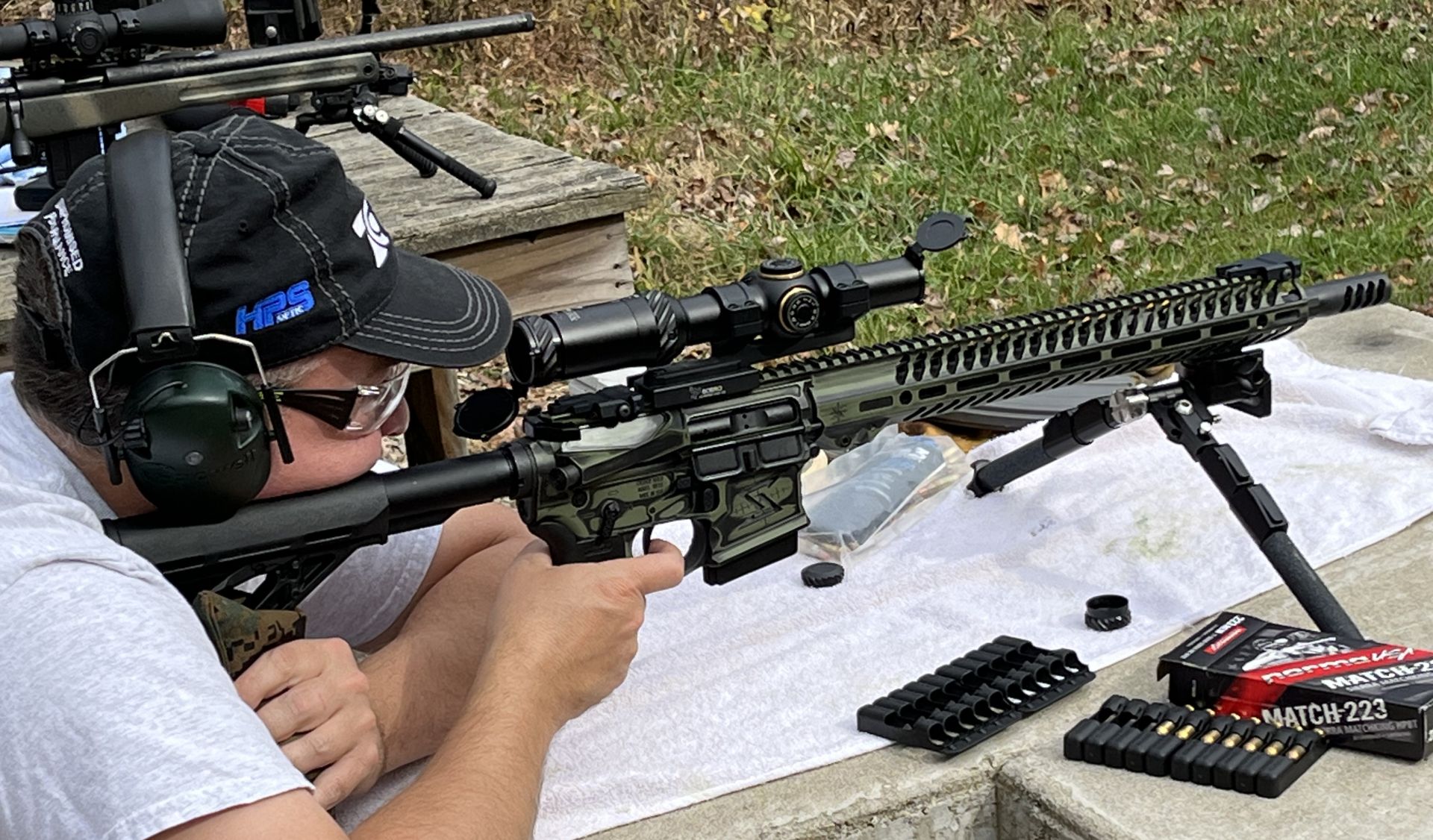 Optisan 6Z 1-6x with my mudskipper 3 reticle on Seekins AR with those Bobro BUIS and Ckyepod double pull I mentioned A couple of the rifles we zeroed were new Seekins ARs. The first group down the pipe with the 20" one with Norma's 77gr match ammo was 3/4". Good stuff. Of course, both have Seekins brakes on them. They are so quiet relative to other brakes. Really great balance of recoil reduction and not blowing out your ears. One of the other AR's had some short little ear spitting abomination on it. Fuck that noise. 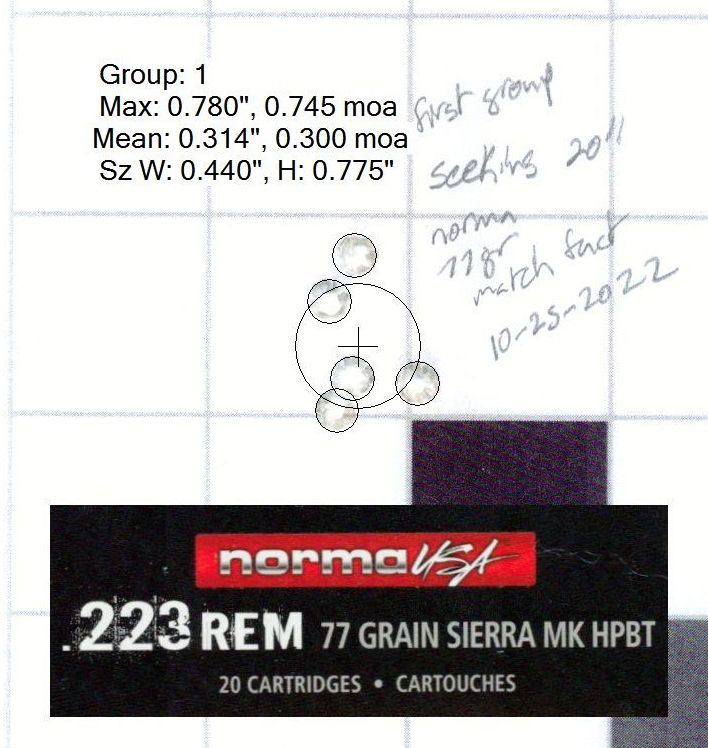 First groups from the Seekins 20" AR Bobro flip down BUIS are BIS. So low profile, so light. For a while now I've been playing with an MDT double pull CkyePod I bought during the MDT black friday sale last year. I don't do PRS, but when it comes to bipods I don't believe in buying a bunch of the same thing. I believe in swapping them around and having a big variety. I figured what the heck, i'll try one and sell it if I hate it. Honestly it's felt rock solid on both the bench and ground despite it's millions of adjustment points. I can't say I'm using it to it's fullest but it is getting the job done anyway. How do they seriously not make other feet options for it though. WTF on that, how about some rubber feet already. With me on this range trip was a more novice shooter. We played some more with the Sig BDX 2.0 full system. Man, he loved that. That system really delivers a lot of rounds on target without a lot of knowledge. |
|
Update: 11/11/2022 I just posted the review of the Sightron SIII PLR 6-24x50 FFP Zero Stop. This is a full featured FFP, Mil/Mil adaptation of Sightron's long running SIII design popular with F-Class shooters. I have been pestering them for quite some time to do this scope and am quite happy with the results. Especially, at the $1,120 sale price they are doing until Jan 1, 2023. 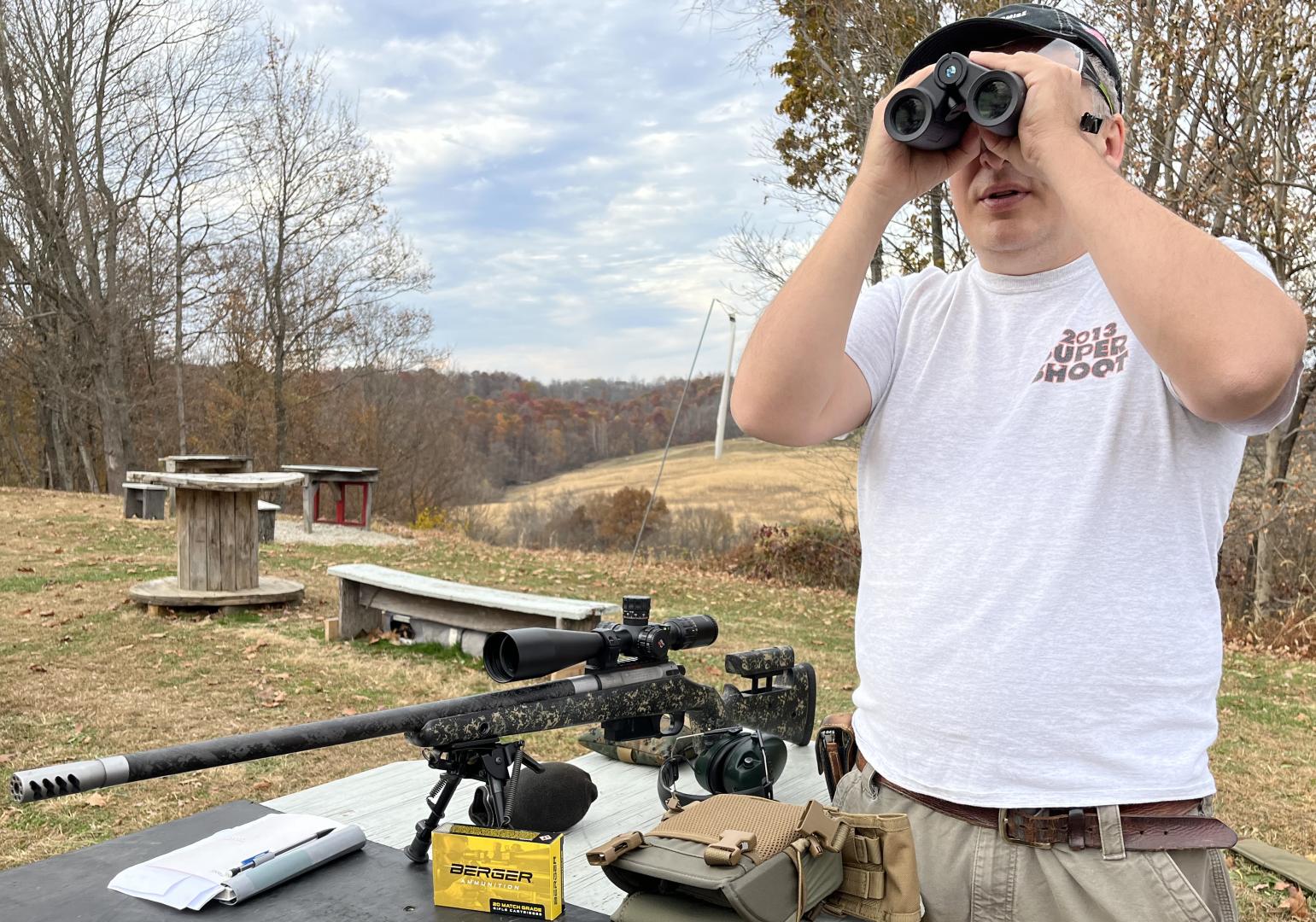 Setting up at the 1k yard line with the Sightron SIII PLR 6-24x50 FFP Zero Stop scope. |
|
Update 12/26/2022 The update to the Leica ballistics app and Applied Ballistics Ultralight (sort of) from the Leica Hunting app for the .com products is now live. Last week I also visited the nVisti guys who wrote the new app. I will be doing a write up on that visit that contains the full details of the .com upgrades as well some cool details on how the software for laser rangefinding works. There will also be some stuff on wind in ballistic apps, and lidar wind readers. Hopefully I can get that all out before heading off to Shot this year. |
|
Update 1/14/2023 Well, I was hoping to get the nVisti laser rangefinding article up before ShotShow but obviously I didn't get it written quickly enough and so it fell into the pre-Shot vortex when I sent it back to nVisti for them to look at it and have their partner companies do so to make sure I didn't reveal anything I shouldn't. So that is just going to have to wait until after the show. My apologies for not getting it done earlier. Anyhow, Here is the link to my ShotShow 2023 coverage. |
|
Update 1/27/2023 I was able to get a hold of the Mantis folks at ShotShow and talk to them about the review I wrote a while back but never heard from them on. A lost e-mail was the culprit. Than the years other reviews getting rolling the Mantis review got put on the back burner. It’s up now though. In a way, it ended up both the first and last review for the year 2022. 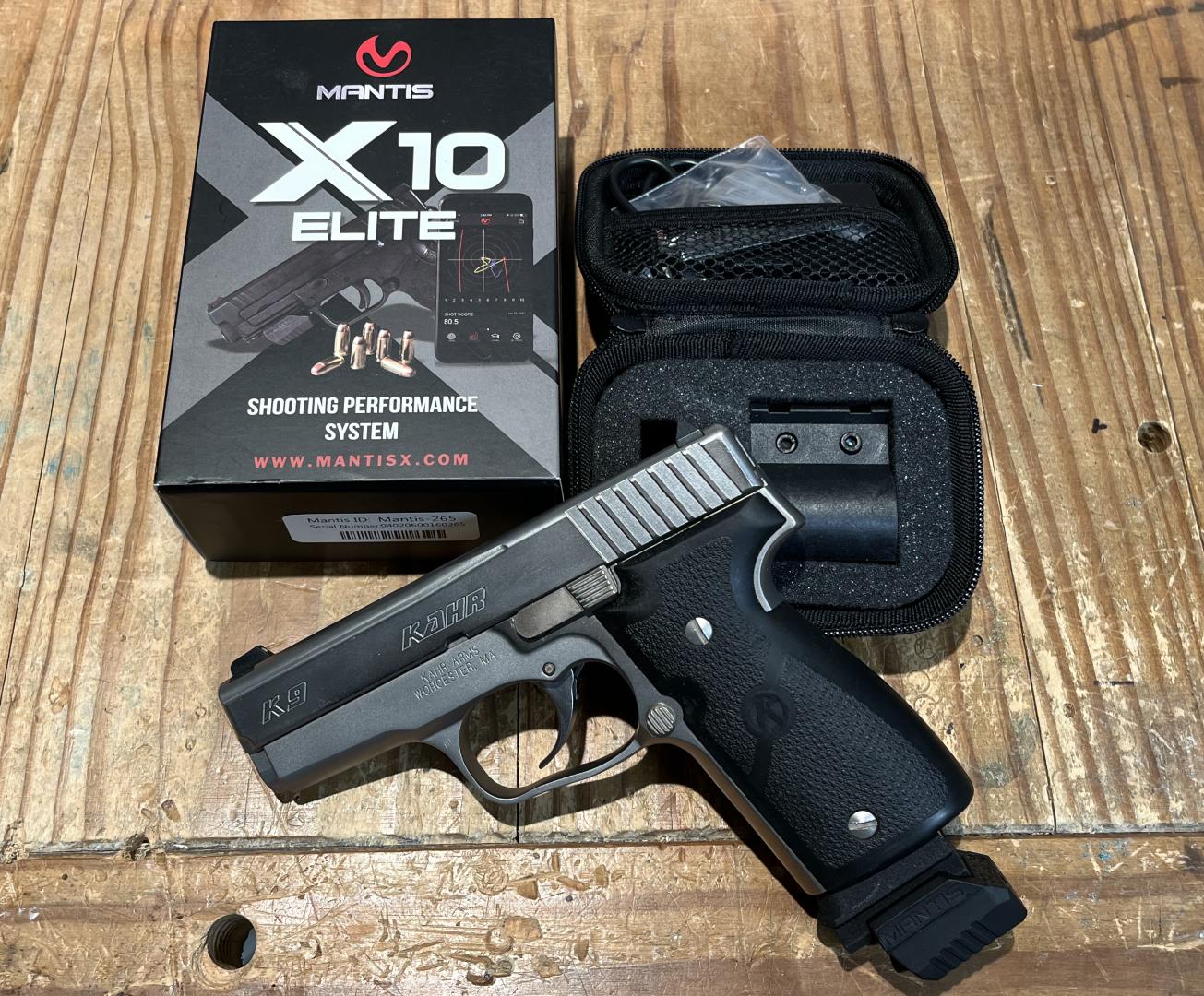 Speaking of, I should be moving on to a new 2023 review / article thread any day now so keep a look out for that. So far expect a series of sub $1k long range scope reviews, an article on bubble levels for long range shooting, a look at the Sightron S6 5-30x56, and perhaps something on long range .22lr ammo. Wow, that sounds like a lot. Not sure how I’m going to get that all in. |