


[ARCHIVED THREAD] - Video of an overhauled Pratt & Whitney R-4360-20 - first start - 28 cylinders of pure win! (Page 1 of 2)


|
Quoted:
That made my dick harder than Chinese arithmetic. What is it about the sound and sight of an engine like that?!?!? I show that to my GF and and she gets up and walks away after 10 seconds with a perfunctory "cool". I watched it 3 times. Which is like 2x more than most porn... |
|
Nice! Quoted: And, to hear that type of engine in a Corsair, tuned, timed, and in full glory...  http://www.youtube.com/watch?v=FQxb-V-rZqA http://www.youtube.com/watch?v=FQxb-V-rZqA CJ Do believe that one is an PW R-2800 |
|
I had a professor in college that flew those things in WWII. He was with a squadron that flew along with Boyington's squadron. Baa Baa Blacksheep was on TV at the time. I had his class the day after an episode ran the night before. I did the best I could to get him to talk about it every class after an episode . . . and what stories he would tell.
Those planes are sweet and that Pratt & Whitney is pure music! |
|
Quoted:
Actually a pretty reliable engine(some B-377's had hollow props,which tended to break apart,once Pan American went to solid props....that problem went away.)
Very neat! It intrigues my mind as to how them things work. So, how do they work? Unreliable were the Curtis-Wright 3350s,with Turbo-Compounding,very prone to overheating. |
|
Quoted:
And, to hear that type of engine in a Corsair, tuned, timed, and in full glory... http://www.youtube.com/watch?v=FQxb-V-rZqA
CJ I hold that video responsible for the drool that has accumulated on the floor in here. 
|



|
OMG, that is fooking awesome!
What's going on during startup when the prop is turning slowly? Is it pressurizing the oil? And is that designed to be a slow turn followed by a fast turn that makes it start? Or is it a slow turn without spark, then the spark is turned on and it fires? I've always wondered about the startup sequence. |
|
Quoted: And, to hear that type of engine in a Corsair, tuned, timed, and in full glory... http://www.youtube.com/watch?v=FQxb-V-rZqACJ In flight, that makes the sounds my brain has always imagined for a plane zooming overhead. Always, like since I was about 2 years old. |
|
Turn 16 blades and hit it.
I used to go to the airport and watch my uncle come in, unboard passengers, board new ones and start the engines on DC-3s, Convair 240s and 440s. Then he'd taxi out and takeoff. What a show, I got to see it up close and ride in the jump seat sometimes. The DC-3s he flew used R-1820 engines, Wright Cyclones, like the B-17s he bombed Europe with. American Airlines came in with DC-3s but theirs used R-1830s. The cowls on the 1830s looked better. Convair 240s and 440s both used R-2800s. Sometimes there was a lot of drama in starting the 2800s. Especially when the mechanics were going to go on strike. Those were the days. |

You guys do realize that the R4360 (The engine on the test stand in the first video) was not a Corsair engine right? They just said they are going to put it in one. 
The Corsair used the R2800 normally. Only the Super Corsair used the R4360 and it was never actually accepted for service or produced in any quantity. The R4360 was used in the B-36, B-50, and in many tankers and transports. The B-36 used 6 R4360s and the Spruce Goose used 8! 
|
|
Quoted: You guys do realize that the R4360 (The engine on the test stand in the first video) was not a Corsair engine right? They just said they are going to put it in one. The Corsair used the R2800 normally. Only the Super Corsair used the R4360 and it was never actually accepted for service or produced in any quantity. The R4360 was used in the B-36, B-50, and in many tankers and transports. The B-36 used 6 R4360s and the Spruce Goose used 8! Four hours late. |
|
Quoted:
Quoted:
You guys do realize that the R4360 (The engine on the test stand in the first video) was not a Corsair engine right? They just said they are going to put it in one.
The Corsair used the R2800 normally. Only the Super Corsair used the R4360 and it was never actually accepted for service or produced in any quantity. The R4360 was used in the B-36, B-50, and in many tankers and transports. The B-36 used 6 R4360s and the Spruce Goose used 8! Four hours late.
Indeed... Must have missed your post! Good catch! |
|
Quoted:
I had a professor in college that flew those things in WWII. He was with a squadron that flew along with Boyington's squadron. Baa Baa Blacksheep was on TV at the time. I had his class the day after an episode ran the night before. I did the best I could to get him to talk about it every class after an episode . . . and what stories he would tell. Those planes are sweet and that Pratt & Whitney is pure music! Would that have been at NAU? |
|
Quoted:
What's going on during startup when the prop is turning slowly? Is it pressurizing the oil? ... Or is it a slow turn without spark, then the spark is turned on and it fires? I've always wondered about the startup sequence. you have it correct above: leave magnetos off, engage starter, get oil pressure, turn magnetos on, engine starts. ar-jedi |
|
Quoted:
You guys do realize that the R4360 (The engine on the test stand in the first video) was not a Corsair engine right? They just said they are going to put it in one.
The Corsair used the R2800 normally. Only the Super Corsair used the R4360 and it was never actually accepted for service or produced in any quantity. The R4360 was used in the B-36, B-50, and in many tankers and transports. The B-36 used 6 R4360s and the Spruce Goose used 8! 6 turning 4 burning or as the flight engineer would some times call out "2 turning 2 burning 2 smoking 2 joking and 2 unaccounted for!" |
|
Quoted:
And, to hear that type of engine in a Corsair, tuned, timed, and in full glory... http://www.youtube.com/watch?v=FQxb-V-rZqA
CJ Gull-Winged Death.
|
|
My Dad was a B-36 bomber mechanic when he was in, 1950 to 1954. Loved the plane and SAC. Was very proud to serve.
He had a "saying" just prior to engine start........"stand by fire guard, something blades for liquid lock, etc" Wish I could remember that "saying", but they said "something" before starting the engine to make sure everything was in order before the actual ignition took place. vmax84 U.S.A.F. 1983-1987 But to the OP, kick ass video. Never seen that one. 
|
|
Quoted:
When I was a kid I used to hear these being run up all the time several blocks away. 
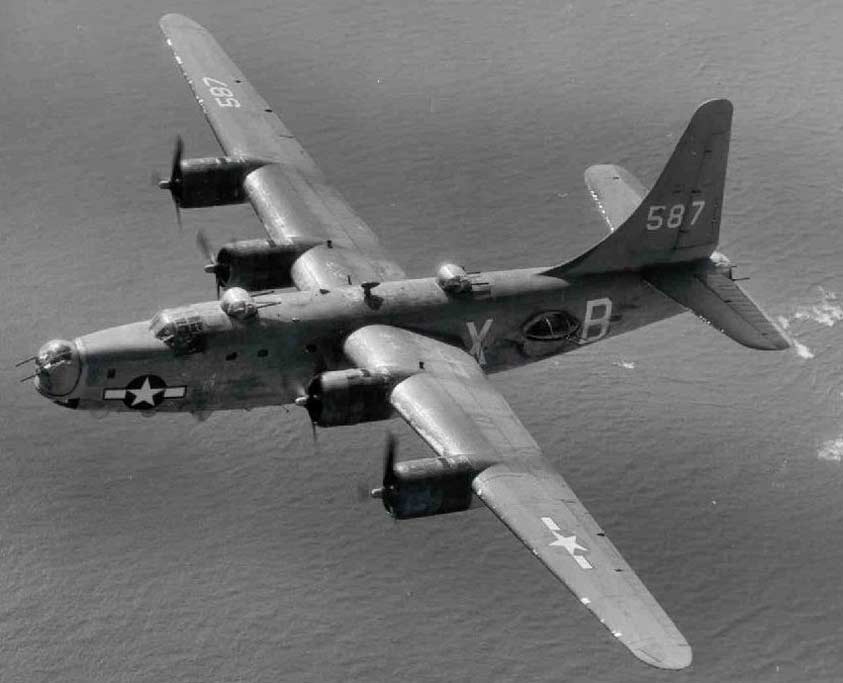
They weren't flown operationally any more, but were used to train Navy A&P mechanics. They had to frequently test out their work. http://images38.fotki.com/v1218/photos/4/43185/6425924/1404USNAVYPB4Y2Privateer-vi.jpg http://www.liberatorcrew.com/15_Gunnery/Turrets/Privateer.jpg http://www.liberatorcrew.com/15_Gunnery/Turrets/Nose/PB4Y-2.jpg My dad had some hours in those. |
|
would someone explain how the induction system on such a large radial engine works? the wiki page states (link), Fuel system: Stromberg four-barrel pressure carburetor i don't understand, since there is no "central point" to distribute from, how you ensure that the nearest cylinders/banks aren't rich and the farthest aren't lean. it seems very difficult to envision how to do this across a range of RPMs. i realize the engine is supercharged –– and the forced induction has to help with fuel distribution –– but still... ar-jedi 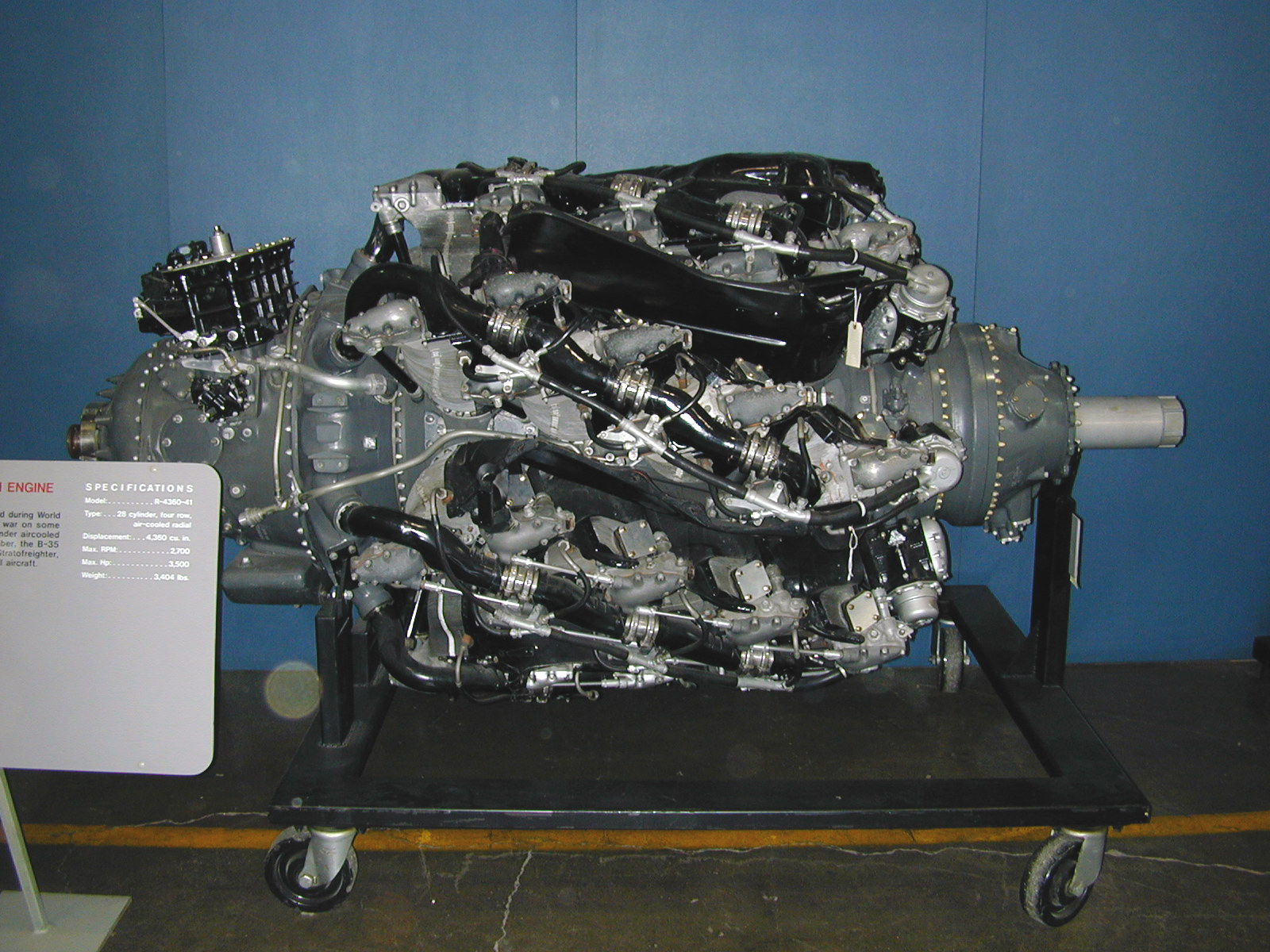

|
|
Quoted: A friend of mine has one of these http://img.photobucket.com/albums/v453/KTM520guy/seafury.jpg It's been out of service for a couple of years now. Only needs $50K for a new motor. Nothing like a 3K hp flyby.  If it's the same one I think it is I've driven past it a ton of times at the Mckinney airport. |
|
Quoted:
Quoted:
So, how do they work? Suck, squeeze, bang, blow. Pretty simple. *snort* Hell Im almost as jealous of the test stand. Im rebuilding a little aircraft engine and wish I had a stand to run it on because the airplane wont get done for a while afterwards. |