


Armory Sponsor

Posted: 11/29/2012 10:39:41 AM EDT
|
Helped a shooting buddy load up some 7mm Rem Mag this morning. He has a Rock Chucker, the Lee Deluxe Die Set, Varget, primers, etc and of course the rifle. Buddy is an experienced reloader for shotshells and pistol calibers, not yet for rifle, so I answered the call for assistance  The issue is most of the brass he had wasn't shot through his rifle, but so is most of my brass I reload with for the first time. First thing we did was consult the reloading guide that came with the 7mm Rem Mag die set. Had a starting charge of 53 grains and max of 57 grains. Then took a piece of printer paper and made a 5x5 grid: goal is to make 5 loads each of 53, 54, 55, 56, 57 gains Projectiles were 120 grain softpoints. Session went like this: 1. First step is to lube then size the cases which decaps the spent primer. Cases were already clean. 2. The Lee Deluxe set comes with a full length resizing die and a neck only sizing die. The neck only sizing die is sort of combination regular sizing die and Lee Factory Crimp Die. Never used those dies before, after determining the brass to be resized wasn't shot in his rifle, we'd use the full length resizing die and not the neck only sizing die. 3. Read the instructions on the Lee full length resizing die and lubed 25 cases using a RCBS lube pad and a brush for the inside the case mouth. I hate RCBS lube and pads. Suggested using Dillon spray lube or equivalent in the future. 4. Instructions basically say to adjust the die so it touches the shell holder then turn down 1/2 turn or so to cam over. Camming over on belted magnums is sort of worthless. The belt can't be shoved any deeper into the sizing die by camming over, it just stops the lever on the Rock Chucker from a full downstroke. 5. So sized a couple cases and wiped off the lube and fed them into the rifle. They fed and he was able to close the bolt on them and then eject the case. Good, so we sized the remaining 23 pieces of brass 6. Next step was to use a rag to remove the RCBS lube from the case bodies and then a Q-tip for the lube inside the case mouths. 7. I suggested getting a LE Wilson case gage but he didn't buy one yet, so we used calipers to determine the OAL of the 25 sized cases. Max length was 2.50" inches, out of the 25 we had about 9 cases that needed to be trimmed. 8. I suggested getting a Lee case trimmer for the 7mm Rem Mag but he had a RCBS Trim Pro instead. Wonderful, I hate lathe type trimmers. Used a known under 2.50" case to adjust the trimmer, then trim the 9 cases, then a deburring tool to debur. I hate lathe type trimmers in case I didn't mention that. 9. At this point we had 25 sized, trimmed or under max length 7mm Mag cases. I suggested before going "hot" to see if the sized cases will cycle through the rifle. To my shock and horror, about 1/3 of the cases weren't able to be chambered. Hmm. Well that means the case wasn't sized enough or the OAL was over max. Again this was just sized brass, no primer power or projectile yet. 10. We took the brass that wouldn't chamber and adjusted the sizing die down another 1/2 turn and resized the bejesuz out the cases, until the the bench top flexed. What more can you do? About 4 of the 9 cases this time chambered, the remaining 5 didn't. At this point only recourse is to try another 7mm Rem Mag die set and see if it resizes the case more, and to set the 5 not fitting pieces of brass aside. 11. Made a dummy round, a case with just a projectile and no primer or powder. 12. Lee Deluxe die set has something called a dead length bullet seater or something. Just a bullet seater, no roll crimp built into it. A roll crimp would of been useless anyway since the projectiles didn't have a cannelure. 13. Showed shooting buddy how to set the seating die by using a factory round as a starting point - just put the factory round into the shell holder, screw down the bullet seater until it stops, then bingo, if you use the same settings for your sized cases and the projectile you're seating, it should be pretty much the same OAL as the factory round. Ended up the dummy round was just a few thousandth's more in OAL than the factory round, both of which was under the max OAL for the cartridge. 14. Now came the cycle the dummy round through the rifle test, it passed. 15. Now came the test the bullet tension test. We got a piece of 2x4 wood and proceded to try to push the tip of the bullet into the case. It did. Ooops. WTF? This sucks. 16. Used the calipers on the expander ball (not really a ball on the Lee die) and found it to be .282-.283" in diameter. The projectile was .284". I needed either a) more neck tension or b) a taper or Lee Factory Crimp Die. 17. Not having a Lee FCD I explained one way to get more neck tension on the bullet is to decrease the diameter of the expanding ball. The inside neck diameter will be exactly the diameter of the expander ball. The ball was too big, we needed to make it smaller. 18. So put the decapping rod with expander ball in a drill and used sandpaper to get it down to about just under .282". 19. Slapped some more lube on a case, resized it, wiped off the lube, swapped the sizing die with the dead length Lee seating die, and seated a projectile and did the bullet tension test. 20. This did the trick. Pressing the dummy round into the 2x4 resulted into the projectile not being pushed back into the case. Yay! About 3 1/2 hours passed. At this point left shooting buddy with following tasks:
Only thing that comes to mind is to try another set of dies until using one results in a case that can be chambered. |
|
Quoted:
16. Used the calipers on the expander ball (not really a ball on the Lee die) and found it to be .282-.283" in diameter. The projectile was .284". I needed either a) more neck tension or b) a taper or Lee Factory Crimp Die. I had a similar problem with a set of 30-06 dies from Lee. Could not get neck tension even with the ball apparently .001" under bullet diameter. I found this strange since there _should_ be some spring back and the neck ID should end up even slightly smaller than the expander ball. Two things I noted: 1) The neck sizer portion was really squeezing the neck down farther than necessary as compared to an RCBS die I checked against. IIRC it was about .005" +/- smaller out of the Lee die than the RCBS. I was wondering whether this was overworking the brass and causing it to harden and not be "springy" (for lack of a technical term) enough to hold a bullet properly. and 2) The Lee expander ball had a VERY rough machined finish. It was not clear to me that it could be properly measured due to many visible raised machining ribs. I wondered whether this caused it to actually be bigger than I could actually measure and/or whether this roughness caused some other vodoo than prevented proper neck tension. At the end of the day I had a spare RCBS die so I figured no use beating my head against a wall too much and just used the other die. |
|
Quoted: Teach him how to headspace the case of the shoulder and not the belt. The brass will last longer. per http://www.leeprecision.com/cgi-data/instruct/RM3508.pdf Full Length Sizer COMPLETE INSTRUCTIONS FOR LEE RIFLE DIE SETS Screw the full length sizer in until it touches the shell holder. Then lower the ram and screw the die in 1/4 to 1/3 turn more. Raise the ram and tighten the lock ring finger tight So the instructions were wrong? Never reloaded belted rounds before, everything I knew before was based on non-belted cases, e.g. 223, 308, 762x39, if the case doesn't chamber then it's not sized enough. Every 7mm Rem Magnum case was checked for OAL and then trimmed to 2.50" or below if it already wasn't 2.50" or below Since the headspace is controlled by the belt, doesn't make sense that setting the shoulder back like a boss would affect the headspace. Not setting it back would make sense since a longer than usual shoulder position would affect the chambering, counteracting the belt Oversizing, e.g. pushing the shoulder back too much would affect headspace but wouldn't affect chambering, problem we encountered was sized 7mm Rem Magnum cases not chambering even after trimming to under max OAL |
|
Quoted:
Quoted:
Teach him how to headspace the case of the shoulder and not the belt. The brass will last longer. per http://www.leeprecision.com/cgi-data/instruct/RM3508.pdf Full Length Sizer COMPLETE INSTRUCTIONS FOR LEE RIFLE DIE SETS Screw the full length sizer in until it touches the shell holder. Then lower the ram and screw the die in 1/4 to 1/3 turn more. Raise the ram and tighten the lock ring finger tight So the instructions were wrong? Never reloaded belted rounds before, everything I knew before was based on non-belted cases, e.g. 223, 308, 762x39, if the case doesn't chamber then it's not sized enough. Every 7mm Rem Magnum case was checked for OAL and then trimmed to 2.50" or below if it already wasn't 2.50" or below Since the headspace is controlled by the belt, doesn't make sense that setting the shoulder back like a boss would affect the headspace. Not setting it back would make sense since a longer than usual shoulder position would affect the chambering, counteracting the belt Oversizing, e.g. pushing the shoulder back too much would affect headspace but wouldn't affect chambering, problem we encountered was sized 7mm Rem Magnum cases not chambering even after trimming to under max OAL Modern magnum cartridges headspace off of the shoulder, like most other bottleneck carts, not the belt. 300WM and 7RM headspace off of the shoulder. The belt is mostly for show, unlike the 375 H&H, which does headspace off of the belt. I've reloaded the 7RM for a long time and I've had some case head separation from earlier cases, notwithstanding the fact that I've had a Wilson 'floating' case gage. 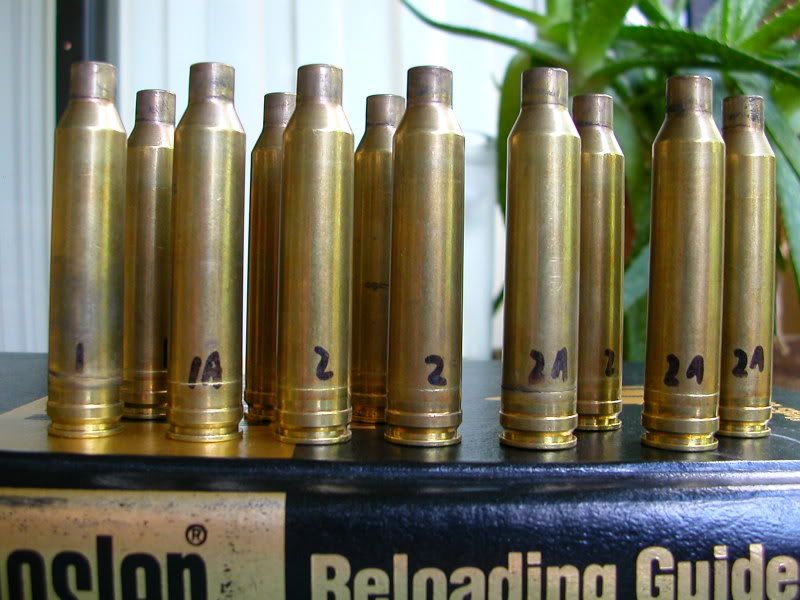
Live and learn. They're not 308, or 223 cases and you'll not get the same life out of them, IME. Chris |
|
Quoted: Quoted: per http://www.leeprecision.com/cgi-data/instruct/RM3508.pdf Full Length Sizer COMPLETE INSTRUCTIONS FOR LEE RIFLE DIE SETS Screw the full length sizer in until it touches the shell holder. Then lower the ram and screw the die in 1/4 to 1/3 turn more. Raise the ram and tighten the lock ring finger tight So the instructions were wrong? Never reloaded belted rounds before, everything I knew before was based on non-belted cases, e.g. 223, 308, 762x39, if the case doesn't chamber then it's not sized enough. Every 7mm Rem Magnum case was checked for OAL and then trimmed to 2.50" or below if it already wasn't 2.50" or below Since the headspace is controlled by the belt, doesn't make sense that setting the shoulder back like a boss would affect the headspace. Not setting it back would make sense since a longer than usual shoulder position would affect the chambering, counteracting the belt Oversizing, e.g. pushing the shoulder back too much would affect headspace but wouldn't affect chambering, problem we encountered was sized 7mm Rem Magnum cases not chambering even after trimming to under max OAL Modern magnum cartridges headspace off of the shoulder, like most other bottleneck carts, not the belt. 300WM and 7RM headspace off of the shoulder. The belt is mostly for show, unlike the 375 H&H, which does headspace off of the belt. I've reloaded the 7RM for a long time and I've had some case head separation from earlier cases, notwithstanding the fact that I've had a Wilson 'floating' case gage. http://i35.photobucket.com/albums/d183/Flyingsqir/ThingsThatGoBang/002-1.jpg Live and learn. They're not 308, or 223 cases and you'll not get the same life out of them, IME. Chris Thanks for the useful information. Still, the initial problem was not being able to close the bolt on the sized brass using Lee's instructions. Oversizing or pushing the shoulder back too much would aid not hinder chambering, no? There's no way to further push the shoulder back on this brass because the sizing die has a hard stop which mates up with the belt to keep the brass from being sized any further as far as I can tell. Screwing the die down farther just makes the handle the press stopping at a shorter distance from a full stroke Glad I dont have 7mm RM rifle  |
|
Quoted:
Quoted:
Quoted:
per http://www.leeprecision.com/cgi-data/instruct/RM3508.pdf Full Length Sizer COMPLETE INSTRUCTIONS FOR LEE RIFLE DIE SETS Screw the full length sizer in until it touches the shell holder. Then lower the ram and screw the die in 1/4 to 1/3 turn more. Raise the ram and tighten the lock ring finger tight So the instructions were wrong? Never reloaded belted rounds before, everything I knew before was based on non-belted cases, e.g. 223, 308, 762x39, if the case doesn't chamber then it's not sized enough. Every 7mm Rem Magnum case was checked for OAL and then trimmed to 2.50" or below if it already wasn't 2.50" or below Since the headspace is controlled by the belt, doesn't make sense that setting the shoulder back like a boss would affect the headspace. Not setting it back would make sense since a longer than usual shoulder position would affect the chambering, counteracting the belt Oversizing, e.g. pushing the shoulder back too much would affect headspace but wouldn't affect chambering, problem we encountered was sized 7mm Rem Magnum cases not chambering even after trimming to under max OAL Modern magnum cartridges headspace off of the shoulder, like most other bottleneck carts, not the belt. 300WM and 7RM headspace off of the shoulder. The belt is mostly for show, unlike the 375 H&H, which does headspace off of the belt. I've reloaded the 7RM for a long time and I've had some case head separation from earlier cases, notwithstanding the fact that I've had a Wilson 'floating' case gage. http://i35.photobucket.com/albums/d183/Flyingsqir/ThingsThatGoBang/002-1.jpg Live and learn. They're not 308, or 223 cases and you'll not get the same life out of them, IME. Chris Thanks for the useful information. Still, the initial problem was not being able to close the bolt on the sized brass using Lee's instructions. Oversizing or pushing the shoulder back too much would aid not hinder chambering, no? There's no way to further push the shoulder back on this brass because the sizing die has a hard stop which mates up with the belt to keep the brass from being sized any further as far as I can tell. Screwing the die down farther just makes the handle the press stopping at a shorter distance from a full stroke Glad I dont have 7mm RM rifle
I only have two (40/10mm and 45acp) Lee pistol dies and I use Redding/Hornady for most of my rifle sizing needs, so I can't say exactly what the issue is, but crunching the shoulder back 'just far enough' would aid in chambering, at the expense of going too far and inviting case head separation after a few cycles. It's possible that he has a tighter/shorter chamber and that the Lee die (with his particular press/shellholder) isn't able to push it back enough. There's also the issue of not squeezing the case body in enough, down by, but above the belt. They make a special collet style die--Whittington?--that addresses this issue, but in my Rem LA M-700, I've not run into that problem before. Your issue could be due to the case head area being too wide and not the shoulder being pushed back down, far enough, but measurements would be needed to figure this out. My cases that separated were a bit surprising, but they had a good 5-6 cycles on them, so that's what I chalked it up to. You're not going to get 10-20 cycles out of most magnum carts, I figure. Chris |
| I borrowed a set of lee dies from my uncle once...I promptly returned them...immediately ordered a new set of other dies from midway...never had any more problems with catridges not chambering in that specific caliber since...no point in details...moral of the story? everyone drops a turd occasionally...try a different set of dies and see if things stay the same or clear up... |
|
The inside diameter of the case neck will NOT be the same as the outside diameter of the expander ball. It never is. The brass will always spring back. Polishing the expander ball in my opinion was not needed and probably should not have been done. At least not until it could be compared to either spec. or another expander for the same caliber/diameter.
Pushing a bullet tip against a block of wood is not a very scientific way of testing neck tension. |
|
Here is another thing to look for.
My brother has a .300 Win mag that has a long chamber. If you did not try to reload for this rifle you would never notice. The extra length is between the bolt face and the belt rim. When fired the case stretches and very slightly bulges right in front of the belt. It is impossible to size this case and make it fit back into the chamber as it's supposed to. I even tried to neck size only and still no go. It is possible that the once fired brass you got was fired in a long chamber and now because of the belt can not be sized down correctly to fit your friends rifle. Look for a small ridge directly in front of the belt. It may even look like a radius or chamfer. The 7mm Rem Mag is a awesome cartridge and is very versatile. My teenage son took to buck with his this year. One is a big 8pt that scores in the 120's Boone&Croket. Both were taken with my hand loads.
|
|
Quoted:
Here is another thing to look for. My brother has a .300 Win mag that has a long chamber. If you did not try to reload for this rifle you would never notice. The extra length is between the bolt face and the belt rim. When fired the case stretches and very slightly bulges right in front of the belt. It is impossible to size this case and make it fit back into the chamber as it's supposed to. I even tried to neck size only and still no go. It is possible that the once fired brass you got was fired in a long chamber and now because of the belt can not be sized down correctly to fit your friends rifle. Look for a small ridge directly in front of the belt. It may even look like a radius or chamfer. The 7mm Rem Mag is a awesome cartridge and is very versatile. My teenage son took to buck with his this year. One is a big 8pt that scores in the 120's Boone&Croket. Both were taken with my hand loads. He can buy one of these collet sizing dies. It works on ALL belted magnums, not just a single cartridge. 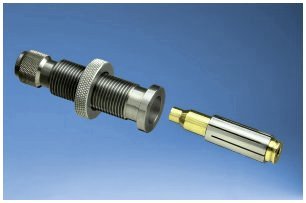
Belted magnum collet sizing die Chris |
|
Quoted: Pushing a bullet tip against a block of wood is not a very scientific way of testing neck tension. What's the scientific way? This way works, the bullets were easily pushed into the case before the expander ball was polished and not able to be pushed after it was polished |
|
Quoted:
Quoted:
Pushing a bullet tip against a block of wood is not a very scientific way of testing neck tension. What's the scientific way? This way works, the bullets were easily pushed into the case before the expander ball was polished and not able to be pushed after it was polished I've got different 'batches' of Winchester 308. On most, I need a .334" bushing to achieve proper neck tension, however on a batch of 50 that I have from some of their hunting ammo, the necks are so thin, that I need a .331" bushing. Using my .332" bushing, I could easily twist the bullets back into the case. Don't assume that all brass from the same manufacturer, has the same neck wall thickness. They don't. Chris |
Armory Sponsor
Join the Community
Your next conversation starts here.
Create your free account to join discussions, share your experience, save topics, and connect with the AR15.COM community.
- Join discussions
- Follow topics and replies
- Connect with fellow enthusiasts
Already a member? Sign in
Stay informed by subscribing to our Newsletter