


Armory Sponsor


Posted: 8/4/2012 8:49:51 PM EDT
|
I just had this Shooter Grade Reising Model 50 get transfered to my dealer. What is the best way to repair this stock? I would like it to look good, but it must be strong. 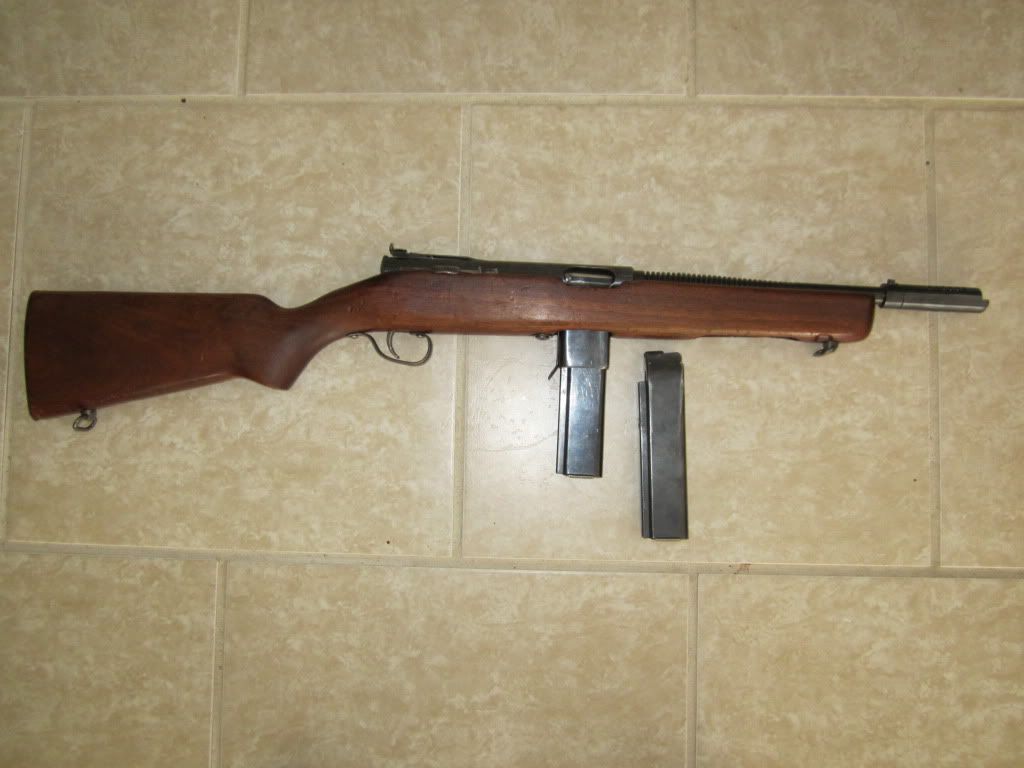   |
|
Quoted:
I'd spread the crack as much as you can and inject glue. Then in 2-3 spots I's drill all the way through and use threaded brass rod cut and polish the ends. Not sure about US military, but the Brits fixed stocks this way. For glue, use Gorilla Glue. Follow the directions about wetting the wood. It will expand so better keep the stock tightly wrapped in surgical tubbing as the thing sets up. Excess glue will easily scrape away. The addition of some screws also good idea. File the head flush with the stock. |
|
Quoted: Quoted: I'd spread the crack as much as you can and inject glue. Then in 2-3 spots I's drill all the way through and use threaded brass rod cut and polish the ends. Not sure about US military, but the Brits fixed stocks this way. For glue, use Gorilla Glue. Follow the directions about wetting the wood. It will expand so better keep the stock tightly wrapped in surgical tubbing as the thing sets up. Excess glue will easily scrape away. The addition of some screws also good idea. File the head flush with the stock. 1) Is Gorilla Glue the current best glue? (I have used it before, I know its good) 2) should I spread the crack, clean, glue, clamp, dry/cure,.............................. then screw? This way the stock in settled in a stable orientation? Or spread the crack, clean, glue, screw, then clamp, and dry/cure? This way might be safer because the stock will be mechanical held in place along with the claps. |
| Take a look at the "Stock Repair Pin Kit" from Brownell's. I've had good luck with those pins. I use Gorilla Glue instead of ACUGLAS. Basically, I spread the crack carefully, apply the glue per instructions, and tighly wrap the area with para-cord or something similar. The next day I drill the pin holes with the cord in place, when possible. Then, coat the pins with glue, run a wet pipe cleaner in the hole, and slowly drive the pin through the stock with a drill. A couple of hours later I cover the area with tape and grind and file the pins flush. The ends will be very bright and can be dulled with Aluma-Black. Good luck. |
|
The US Ordnance used the brass threaded pins.
The way Ordnance did it was to drill a hole smaller than the outer diameter of the threads on the pin, about the size of the bottom of the threads. The screw itself actually pulls the crack tightly together so clamping etc isn't needed. Just drill a hole across the crack and apply some epoxy to the pin and into the hole. Use a drill on SLOW SPEED or do this by hand to run the screw into the hole and slightly out the other side. The pin will pull the crack closed very tightly. Allow the epoxy to cure, cut off the pins and file them flush with the wood. I've found this is better than trying to spread the crack and try to get glue into it. Usually if you try to put glue into the crack, you only get very little penetration unless you're using one of the wood-type Super Glues which are very thin liquid. Most other glues are so thick they only penetrate a very slight amount. Trying to spread the crack to get more penetration often causes the crack to spread farther or even breaks the wood. Due to this, and the quality of wood glues back then Ordnance didn't use glues, just he pins. Everyone has different experiences, but I didn't like Gorilla Glue. You have to wet the area to activate the glue, and it foams out of the joint making a mess. On a normal wood job that's going to be sanded and finished that's not too bad, but it will make a mess of a gun stock you don't want to have to sand and refinish. http://www.brownells.com/.aspx/pid=617/Product/STOCK-REPAIR-PIN-KIT |
|
I used Gorilla Glue to mount an ornament to my front door for the wife. Lasted about 3 years and fell off. The glue had crystalized and crumbled. I've had a couple other failures too, which leads me to believe that while it may start out strong, it doesn't age well, at least not in 90 degree Florida humidity. So I quit using it. YMMV. 
|
|
Quoted: The US Ordnance used the brass threaded pins. The way Ordnance did it was to drill a hole smaller than the outer diameter of the threads on the pin, about the size of the bottom of the threads. The screw itself actually pulls the crack tightly together so clamping etc isn't needed. Just drill a hole across the crack and apply some epoxy to the pin and into the hole. Use a drill on SLOW SPEED or do this by hand to run the screw into the hole and slightly out the other side. The pin will pull the crack closed very tightly. Allow the epoxy to cure, cut off the pins and file them flush with the wood. I've found this is better than trying to spread the crack and try to get glue into it. Usually if you try to put glue into the crack, you only get very little penetration unless you're using one of the wood-type Super Glues which are very thin liquid. Most other glues are so thick they only penetrate a very slight amount. Trying to spread the crack to get more penetration often causes the crack to spread farther or even breaks the wood. Due to this, and the quality of wood glues back then Ordnance didn't use glues, just he pins. Everyone has different experiences, but I didn't like Gorilla Glue. You have to wet the area to activate the glue, and it foams out of the joint making a mess. On a normal wood job that's going to be sanded and finished that's not too bad, but it will make a mess of a gun stock you don't want to have to sand and refinish. http://www.brownells.com/.aspx/pid=617/Product/STOCK-REPAIR-PIN-KIT I will probably get those brass rods Thanks |
|
"I will probably get those brass rods Thanks"
You might want to check the drill that comes with the rods or buy rods without the drill. Again, Ordnance used a drill smaller than the outer diameter of the threads. If the outer diameter of the brass rod is 1/8" and you use a 1/8" drill the threads can't pull the crack together. If the threaded portion of the rod is larger then 1/8" you can use a 1/8" drill. By using a drill slightly smaller then the threads the rod will pull the crack together very tightly, and permanently. You can use some epoxy in the holes as insurance. |
|
Quoted:
Quoted:
The BEST way to get the glue DEEP into the split is to use a air compressor set at enough pressure to blow the glue deep inside. I saw a youtube video guy do that and it was stick.. air compressor to blow epoxy into the crack and use Brownell's Acra-Glas for epoxy. I'm not sure what use Gorilla glue has, but it's not gunstocks. I've seen that crap crystallize and just fall apart so many times over the years. I've used Acra-Glas for over 25 years to fix cracked/broken stocks. it works everytime. the threaded brass pins work very well to pull the wood up tight. |
|
I've got two cracked lever gun stocks. Both are cracked at the tang (shipping damage in both cases) and the damage is very similar on both. The crack does not go all the way through and is fairly difficult to spread apart at all.
I would like to use a syringe type injector to get down into the crack without having to open it up any more than necessary. I'm thinking about using Titebond III glue, but am not sure if it is thin enough to inject thru a needle? Has anyone ever tried this method? This one is the worse of the two 

|
|
Quoted: It would be easier to buy a new butt stock I think? The way that stock is cracked there is not much room to fix it properly, that is a Marlin?I've got two cracked lever gun stocks. Both are cracked at the tang (shipping damage in both cases) and the damage is very similar on both. The crack does not go all the way through and is fairly difficult to spread apart at all. I would like to use a syringe type injector to get down into the crack without having to open it up any more than necessary. I'm thinking about using Titebond III glue, but am not sure if it is thin enough to inject thru a needle? Has anyone ever tried this method? This one is the worse of the two http://i.imgur.com/WC4tP.jpg http://i.imgur.com/BR1Yq.jpg |
|
Quoted:
I've got two cracked lever gun stocks. Both are cracked at the tang (shipping damage in both cases) and the damage is very similar on both. The crack does not go all the way through and is fairly difficult to spread apart at all. I would like to use a syringe type injector to get down into the crack without having to open it up any more than necessary. I'm thinking about using Titebond III glue, but am not sure if it is thin enough to inject thru a needle? Has anyone ever tried this method? This one is the worse of the two http://i.imgur.com/WC4tP.jpg http://i.imgur.com/BR1Yq.jpg that stock is an easy fix. use Brownells Acr-Glas, mix per instructions and add a little dab of brown dye. dribble it into the crack and use an air nozzle on a compressor(squeeze the handle to just barely get air coming out) and blow epoxy down into the crack as far as you can get it. you'll have to use little wedges to open up that crack a little. clamp it up tight and clean off the excess that squeezes out. let it cure for two days and you're done. I've fixed several lever action stocks this year already that were split like yours. |
Armory Sponsor