


Armory Sponsor


Posted: 12/3/2016 2:08:07 PM EDT
|
I have some training at precision instruments and I know that temperature has a noticeable effect on measuring in the thousandths.
A few months ago I ran a batch of brass through my 550 and used my headspace comparator and my digital caliper to sort the sized brass. 1.452, 1.453, 1.454, and 1.455. I stopped about half way through the bunch and just came back to it last night. Sat down to sort and of course, battery is dead in caliper. Wish I had bought a nice dial caliper, but anyway... Sorting through the brass and most of it is coming up 1.456 and 1.457. So I thought, that's strange... I was getting mostly 1.455 in my last session. I went over to the bins and did some spot checks. Sure enough, every single bin had grown by 0.001 Not surprising since my heat is on now and it seemed extra warm upstairs last night. It got me thinking though. Do you guys write down the ambient temp or metal temp when you are sizing, or do you just sort based on what it is at the time? Do you factor temperature in when you are measuring fired cases and setting your bump back on the sizing? For example, my RRA NMA4 had most fired cases coming out at 1.459 and my RRA Entry Tactical had most cases coming out at 1.457. So I set my press to resize in the 1.454 to 1.455 majority. Now those cases are 1.455 and 1.456. (Of course, they are still bumped back 0.002 - 0.004 from what those Wylde chambers were throwing out). My readings on factory ammo were 1.453+/- 0.001 for 5.56 and .223. Just curious if anyone was out here in the weeds with me... |
|
The digital calipers of the Chinese type will very often read different with measuring a known peice of anything.
Repeatability less than .001 is futile, irrelevant to temperature with these type of calipers. Extreme temperature swings may have an effect on percision calipers, but for reloading is isn't going to make a difference. Get a decent dial vernier caliper, don't have to be expensive. |
|
Quoted:
The digital calipers of the Chinese type will very often read different with measuring a known peice of anything. Repeatability less than .001 is futile, irrelevant to temperature with these type of calipers. Extreme temperature swings may have an effect on percision calipers, but for reloading is isn't going to make a difference. Get a decent dial vernier caliper, don't have to be expensive. Dial and vernier calipers are two completely different things. ETA: Sorry, wrong room, but for your edification... Dial Calipers 
https://en.wikipedia.org/wiki/Vernier_scale Vernier Calipers 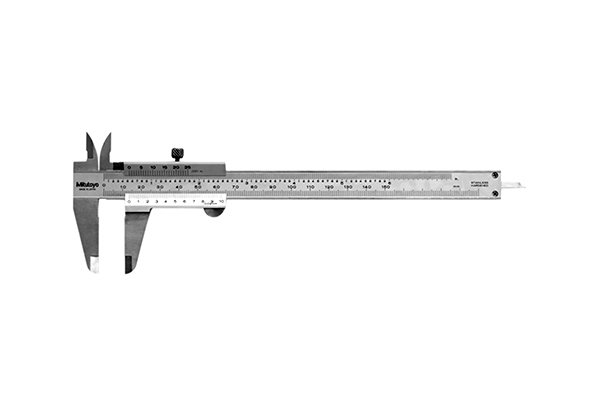
|
|
Quoted:
The digital calipers of the Chinese type will very often read different with measuring a known peice of anything. Repeatability less than .001 is futile, irrelevant to temperature with these type of calipers. Extreme temperature swings may have an effect on percision calipers, but for reloading is isn't going to make a difference. Get a decent dial vernier caliper, don't have to be expensive. Just to be clear, all of the bins were still the same size collectively. Each bin was just 0.001 bigger. So 1.452 were all 1.453, 1.453 were all 1.454, 1.454 were all 1.455, and 1.455 were all 1.456. I don't see accuracy or repeatability being a problem with this caliper. |
|
Quoted:
You will get more variation in shoulder bump from differences in brass hardness. Measuring with calipers is *just a suggestion*. Bumping a shoulder back. 002" at 100 degrees temp may measure shorter at 50 degrees, but it will have been bumped .002" regardless. That's what I was thinking. I think that the 1.452 and 1.453 that I initially measured had a lot of spring back to original sizing, which is why there aren't as many at that size in my brass run. I think my press is set pretty consistently at what was 1.455+/- 0.001. That's the one problem with running single stage operations on the 550. Variations in the weight on the shell plate can cause very small inconsistency. Not that I will notice in my groups when I shoot through an AR. |
|
Hmmm,...
The CTE of brass is about 10 ppm.deg F. In order for a 2" long piece of brass to grow by0.002", you'd have to raise it's temperature by 100 def F. Even then, have to warm the case to that temp. My hands are not that hot. the object is large (Lo is big) or the delta T (temperature change) is large, then you can get a few thousandths of linear strain. <danger, math ahead> 
delta L = CTE * delta T * Lo <warning, recommendation ahead> 
For what we do in reloading, forget about it. |
|
a small temperature change would not have that big of an effect on your length. It would be changes in the ten thousandths at the most. What you're seeing is caused by error in your measuring device between now and then.
I think there is different formulas for different materials, but IIRC the formula we use in our shop is 6 millionths per inch per degree. When you start to try hiiting +/- .0005 on a 20" or bigger diameter temperature makes every bit of difference in an accurate measurement. |
|
Quoted:
a small temperature change would not have that big of an effect on your length. It would be changes in the ten thousandths at the most. What you're seeing is caused by error in your measuring device between now and then. I think there is different formulas for different materials, but IIRC the formula we use in our shop is 6 millionths per inch per degree. When you start to try hiiting +/- .0005 on a 20" or bigger diameter temperature makes every bit of difference in an accurate measurement. Different materials have different CTE values but they all use the formula I posted above. The strain (the change in its dimensions) is proportional to the objects size. Steel has a low CTE (1 - 7 ppm/degF; actual value depends upon the alloy), Aluminum and brass have higher CTE (11 - 13 ppm.deg F). |
|
I think my Mitutoyo Calipers are only good for plus/minus a thou per Mitutoyo. I use them on a daily basis at work, they are closer than that but I seriously doubt the cheap ones are better than that. Good thing with them is you don't have to rezero them every time you turn them on.
You can buy a nice set of 6" Brown and Sharpe dial Calipers for less than $100 if you shop it out. Swiss made and I don't think anyone makes a better set. |
|
Quoted:
a small temperature change would not have that big of an effect on your length. It would be changes in the ten thousandths at the most. What you're seeing is caused by error in your measuring device between now and then. I think there is different formulas for different materials, but IIRC the formula we use in our shop is 6 millionths per inch per degree. When you start to try hiiting +/- .0005 on a 20" or bigger diameter temperature makes every bit of difference in an accurate measurement. I run into the same thing at work, tool & die maker here. 80% of our parts have a .0002" tolerance, so we have to keep the parts and our measuring tools (mostly micrometers) at the same temperature. Holding either the mic or the part for too long causes false readings.j |
|
Quoted:
Hmmm,... The CTE of brass is about 10 ppm.deg F. In order for a 2" long piece of brass to grow by0.002", you'd have to raise it's temperature by 100 def F. Even then, have to warm the case to that temp. My hands are not that hot. the object is large (Lo is big) or the delta T (temperature change) is large, then you can get a few thousandths of linear strain. <danger, math ahead>
delta L = CTE * delta T * Lo <warning, recommendation ahead>
For what we do in reloading, forget about it. Interesting. So I googled that and found an engineering website with that equation and a ton of Linear Thermal Expansion values. Plugging them into their calculator (the same equation you used) says that an initial length of 1.455 times a yellow brass value of 11.3x10^-6 (or simply 0.0000113) times [80degrees minus 70degrees] (a 10 degree change) makes a change of +0.0002, for a new final length of 1.4552 So now I am curious why my batches are measuring so consistently, but changed by 0.001. Maybe it's just the calibration tolerance, or maybe the battery was already going low last time I used it? This brings up a new question. How many thousandths do you resize your brass, and what do you base it on? |
| If you wanted to dig into it better, you could buy a standard to check your calipers against. That'd tell you if your calipers are actually measuring different or if you have a temperature issue. Closer in range to what you're measuring is better, i.e. don't use a 5" gauge block to check them if you are measuring 1.5" most of the time. |
|
Quoted:
If you wanted to dig into it better, you could buy a standard to check your calipers against. That'd tell you if your calipers are actually measuring different or if you have a temperature issue. Closer in range to what you're measuring is better, i.e. don't use a 5" gauge block to check them if you are measuring 1.5" most of the time. You don't really have to buy anything. Just find some environmentally stable objects (not wood), measure them and set them aside (keep them) for re-checking. |
|
Quoted:
If you wanted to dig into it better, you could buy a standard to check your calipers against. That'd tell you if your calipers are actually measuring different or if you have a temperature issue. Closer in range to what you're measuring is better, i.e. don't use a 5" gauge block to check them if you are measuring 1.5" most of the time. this, you need to keep them calibrated. the error is most likely in the tool and not the brass. |
|
Quoted:
I resize to push shoulder back about 0.002" - 0.003". I base it on measurements of distance from case head to shoulder datum made using using a caliper. I use a headspace gage on my caliper to do the same measurement. I guess my question was more what measurement you use to make sure your bumping back enough. I fired a bunch of rounds through my AR and then measured those. Some had a lot of spring back, others were longer. I used the longer measurement as my starting point, which is where I got the 1.457 and 1.459 numbers. Then I measured 3 types of factory loads which is where I got my factory specs of 1.453+/- 0.001. That's why I try to maintain my sizing at 1.455. I have seen different specs for Wylde chambers, .223 chambers, 5.56 chambers, etc. I was curious how many people used these specs, vs measuring their actual chamber headspace, vs measuring their fired brass. |
|
Measuring factory ammo that have "short" headspace is not ideal to set your sizing die.
Factory ammo has "short" headspace so it will chamber in any 223 chamber. Use your chamber as your standard by measuring factory ammo fired in your chamber. Not unfired factory ammo. Unknown times fired mixed cases should not be used as your standard. |
|
Quoted:
If you wanted to dig into it better, you could buy a standard to check your calipers against. That'd tell you if your calipers are actually measuring different or if you have a temperature issue. Closer in range to what you're measuring is better, i.e. don't use a 5" gauge block to check them if you are measuring 1.5" most of the time. A gauge block set is your friend. You can use them to check the caliper across its range. Just keep wringing more blocks onto the stack. You can also use them to set a caliper to a single very precisely known value and then lock the slider. |
|
Funny I just ran into this 20 minutes ago. I have 3 digitals and 2 dial.
Doing some case trimming I by chance grabbed one of my other digitals and it was a different size. So I grabbed another digital and it was different as well. Grabbed my dial and got the REAL reading and I have decided to basically ditch all the digital ones. Even my older Fowler wasn't reading right. None of the measurements were critical to what I'm doing, but I was wondering why I was chasing my tail on some measurements. |
Armory Sponsor