


Armory Sponsor


Posted: 3/2/2016 6:18:22 PM EDT
|
Hello all. I have been reloading for a few years now with great success. I take it slow, pay attention to detail, and follow all the sensible protocols.
Recently, I have been loading heavier bullets for 223 rem (never had any chambering problems before). I size as usual, then trim and do case prep. I check headspace in a Wilson case gauge. Everything is power to the people. After loading both 69gr Barnes Match and 75 Hornady bthp, I had failure to chamber issues. I had to morter some live rounds out as well. I have never had this issue before with the dies set up the exact same way. I use the Lee FCD for a light crimp, and dont crimp with the seating die. Is the addition of the heavier bullets changing some geometry where I am on the outside of the headspace tolerance? Why would my brass be GTG in the Wilson Gauge, but then a no go once loaded? Do I just need to FL size more? Thank you for your time, I am trying to load heavier bullets to shoot at an upcoming gas rifle shoot. |
|
Ensure a sized case will chamber and extract easily before blaming the bullets and seating. It's possible you are using a different headstamp than what your dies were set up for? Using mixed headstamps? Different cases can have different amounts of spring back and your sizing die may need adjustment. Also it's possible to pull the shoulder out if you are not lubing the inside of your case necks. |
|
That is really strange. You covered the most common reasons already. The only other one is OAL and in the AR platform that is usually not an issue because the magazine dictates the OAL.
Even if you are loading for an AR though its not impossible for you to have one with a shorter than usual lead. Take a ink marker and paint up one of the bullets then chamber it slowly so you don't have to mortar it out. Then un-chamber it and look for marks on the bullet from being jammed into the rifling. Motor |
|
Thanks for the responses. I am using mixed headstamped brass. That may be causing an issue, but according to the case gauge it checks out.
I lube with one shot into the case neck when sizing to avoid mis-shaping the brass on the downstroke. I still am at a loss about the case gauge, and why it checks out post sizing, but not after seating a bullet (though I am no blaming bullet seating as the problem, but possibly exacerbating a symptom). I think it just comes down to my relative novice level of understanding the minutia associated with setting up the FL die. I did order a small base die to experiment with. I will try the sharpie technique. Thanks again for the responses. |
|
Quoted:
Hello all. I have been reloading for a few years now with great success. I take it slow, pay attention to detail, and follow all the sensible protocols. Recently, I have been loading heavier bullets for 223 rem (never had any chambering problems before). I size as usual, then trim and do case prep. I check headspace in a Wilson case gauge. Everything is power to the people. After loading both 69gr Barnes Match and 75 Hornady bthp, I had failure to chamber issues. I had to morter some live rounds out as well. I have never had this issue before with the dies set up the exact same way. I use the Lee FCD for a light crimp, and dont crimp with the seating die. Is the addition of the heavier bullets changing some geometry where I am on the outside of the headspace tolerance? Why would my brass be GTG in the Wilson Gauge, but then a no go once loaded? Do I just need to FL size more? Thank you for your time, I am trying to load heavier bullets to shoot at an upcoming gas rifle shoot. Maybe you over crimped by accident (even without tring to crimp) and buckled the case at the shoulder base. |
|
Are the Hornady 75 gr of the Amax variety?
If you are loading them to mag length, the ogive will be below the case mouth and may cause a problem. You may also be heavily compressing the powder. Not sure about the Barnes, never used them, but maybe the same applies? Chamber the sized brass as stated to see if the bolt closes. Make a few dummy rounds of each (no powder or primer) to see if the bolt closes on them. Don't release the bolt using the release latch (slamming the round into the chamber) . Use the charging handle to let the bolt slide forward slowly. |
|
Quoted:
Remove your firing pin if you are checking a live round. Just a easy way to be a little safer. Good way to permanently lock your rifle together, too. The firing pin keeps the cam pin aligned, which if it rotates will cause unbelievable havoc. A shortened pin is a better solution. |
|
Quoted:
Good way to permanently lock your rifle together, too. The firing pin keeps the cam pin aligned, which if it rotates will cause unbelievable havoc. A shortened pin is a better solution. Quoted:
Quoted:
Remove your firing pin if you are checking a live round. Just a easy way to be a little safer. Good way to permanently lock your rifle together, too. The firing pin keeps the cam pin aligned, which if it rotates will cause unbelievable havoc. A shortened pin is a better solution. That is correct. Thanks. |
|
Quoted:
Good way to permanently lock your rifle together, too. The firing pin keeps the cam pin aligned, which if it rotates will cause unbelievable havoc. A shortened pin is a better solution. Quoted:
Quoted:
Remove your firing pin if you are checking a live round. Just a easy way to be a little safer. Good way to permanently lock your rifle together, too. The firing pin keeps the cam pin aligned, which if it rotates will cause unbelievable havoc. A shortened pin is a better solution. That is correct. Thanks. |
|
Quoted:
Are the Hornady 75 gr of the Amax variety? If you are loading them to mag length, the ogive will be below the case mouth and may cause a problem. You may also be heavily compressing the powder. Not sure about the Barnes, never used them, but maybe the same applies? Chamber the sized brass as stated to see if the bolt closes. Make a few dummy rounds of each (no powder or primer) to see if the bolt closes on them. Don't release the bolt using the release latch (slamming the round into the chamber) . Use the charging handle to let the bolt slide forward slowly. I will lighten up on the LFC die, albeit it was light to begin with. Good idea Happy2shoot. The Hornady bullets were not the A-max variety as you cannot load the 75 gr A max bullets to mag length. They were the HPBT (essentially the same minus the poly tip). Compressed loads was not an issue with the powder I was using. Good advice on how to chamber dummies. |
|
Did you adequately Chamfer and deburr the case mouths after trimming??
Take it in stages. 1)Size a piece of brass, trim, chamfer and deburr. Check to see if this "empty" case chambers and extracts with ease in your rifle. If so, move on. If not, adjust your sizing die until it does. 2) Seat a bullet to desired OAL Check to see if this dummy round chambers and extracts with ease. If so move on. If not, check (again) to see if your seating die is over crimping. 3) apply your crimp with the LFCD. Check to see if the round chambers and extracts with ease. Are the offending rounds of the same head stamp? Can you walk us through the steps you used to set up your Sizing die and your seating die? |
|
Quoted:
I will lighten up on the LFC die, albeit it was light to begin with. Good idea Happy2shoot. The Hornady bullets were not the A-max variety as you cannot load the 75 gr A max bullets to mag length. They were the HPBT (essentially the same minus the poly tip). Compressed loads was not an issue with the powder I was using. Good advice on how to chamber dummies. Quoted:
Quoted:
Are the Hornady 75 gr of the Amax variety? If you are loading them to mag length, the ogive will be below the case mouth and may cause a problem. You may also be heavily compressing the powder. Not sure about the Barnes, never used them, but maybe the same applies? Chamber the sized brass as stated to see if the bolt closes. Make a few dummy rounds of each (no powder or primer) to see if the bolt closes on them. Don't release the bolt using the release latch (slamming the round into the chamber) . Use the charging handle to let the bolt slide forward slowly. I will lighten up on the LFC die, albeit it was light to begin with. Good idea Happy2shoot. The Hornady bullets were not the A-max variety as you cannot load the 75 gr A max bullets to mag length. They were the HPBT (essentially the same minus the poly tip). Compressed loads was not an issue with the powder I was using. Good advice on how to chamber dummies. I was thinking that you accidentally crimped while seating and crushing the case. |
|
steve4102: Good idea. I will run through and check every stage of the process to see if I can figure out what stage I am getting a problem from.
I both debur and chamfer the cases after trimming. I set my dies up per instructions. In this case I am using Lee dies. I will look and see if there is a pattern with headstamp and the issue. Happy2shoot: I do not apply crimp during the seating stage, and the lee dies I use say they wont crimp while seating anyway. But, these symptoms seem like that is what is going on. Do you think the LFCD can push something/ crush the case somehow? Come to think of it, I never had issues before I started using the LFCD... |
|
Quoted:
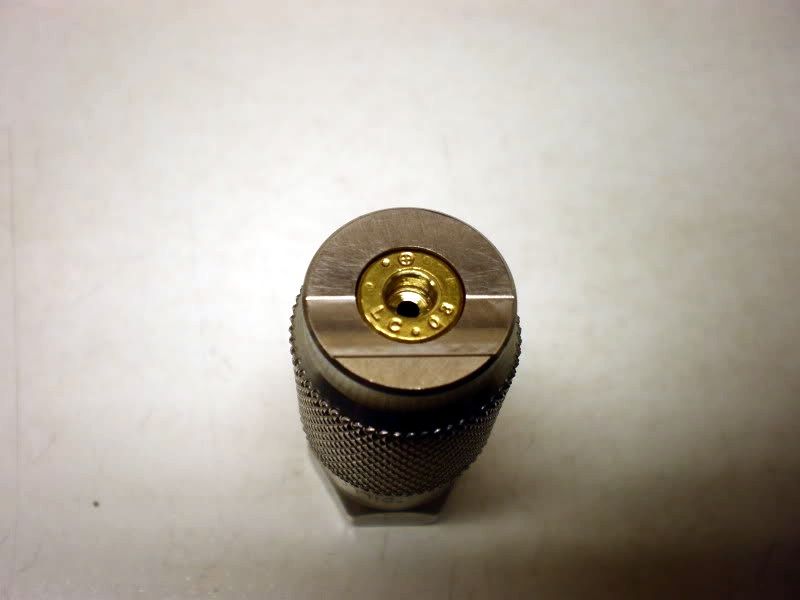
No, I have never seen or heard of a LFCD crushing the case. Please give a detailed description of how you set up your FL sizing die, sorry, but saying according to instructions is less than helpful. Gotta picture of an offending round and the amount of crimp. I am setting up the FL sizing die by raising the ram, and screwing the die in until it touches the shell holder. I then lower the ram and screw the die in another quarter turn, than lock it down. COL depends on load. 2.260 for the 69gr barnes hpbt, and 2.250 for the 75 gr. Hornady bthp. I am using mixed headstamp/ military range brass. So as Dryflash recommended, I used my chamber to adjust the die and found that the batch of brass I had previously sized and loaded with was having problems chambering/extracting cases without any bullets being seated. Sometimes a case would chamber, but I could not extract it without mortaring it out. Some went in just fine. I took a problem piece of brass, and incrementally lowered my die until the problems went away. Is this OK? Is it unheard of to have your die a couple of rotations below where it first touches the shell holder? Should I worry less about what the Wilson Case Gauge says, and more about my specific chamber. Is this a symptom of military brass in the relatively tight chamber of this specific rifle? Will the small base die help? Are Lee dies not on the minimum spec for FL sizing, causing issues with a tight chamber? I am kind of bummed out about this as I have not had issues in the past, and it is making me second guess all my other previous reloading (though successful). |
|
Quoted:
I am setting up the FL sizing die by raising the ram, and screwing the die in until it touches the shell holder. I then lower the ram and screw the die in another quarter turn, than lock it down. COL depends on load. 2.260 for the 69gr barnes hpbt, and 2.250 for the 75 gr. Hornady bthp. I am using mixed headstamp/ military range brass. So as Dryflash recommended, I used my chamber to adjust the die and found that the batch of brass I had previously sized and loaded with was having problems chambering/extracting cases without any bullets being seated. Sometimes a case would chamber, but I could not extract it without mortaring it out. Some went in just fine. I took a problem piece of brass, and incrementally lowered my die until the problems went away. Is this OK?d of t Is it unhearo have your die a couple of rotations below where it first touches the shell holder? Should I worry less about what the Wilson Case Gauge says, and more about my specific chamber. Is this a symptom of military brass in the relatively tight chamber of this specific rifle? Will the small base I'd say it's kinda of unheard of but it depends on your press I guess. I've been reloading since 1985 and have never used or needed a case gauge. I've always used the chamber that I was loading for. Is this the first time sizing this brass? Sometimes military brass is "difficult" on the first sizing. Some guys do use a small base die for this initial sizing. Then revert back to full length for all subsequent sizings. die help? Are Lee dies not on the minimum spec for FL sizing, causing issues with a tight chamber? I am kind of bummed out about this as I have not had issues in the past, and it is making me second guess all my other previous reloading (though successful). Quoted:
Quoted:
No, I have never seen or heard of a LFCD crushing the case. Please give a detailed description of how you set up your FL sizing die, sorry, but saying according to instructions is less than helpful. Gotta picture of an offending round and the amount of crimp. I am setting up the FL sizing die by raising the ram, and screwing the die in until it touches the shell holder. I then lower the ram and screw the die in another quarter turn, than lock it down. COL depends on load. 2.260 for the 69gr barnes hpbt, and 2.250 for the 75 gr. Hornady bthp. I am using mixed headstamp/ military range brass. So as Dryflash recommended, I used my chamber to adjust the die and found that the batch of brass I had previously sized and loaded with was having problems chambering/extracting cases without any bullets being seated. Sometimes a case would chamber, but I could not extract it without mortaring it out. Some went in just fine. I took a problem piece of brass, and incrementally lowered my die until the problems went away. Is this OK?d of t Is it unhearo have your die a couple of rotations below where it first touches the shell holder? Should I worry less about what the Wilson Case Gauge says, and more about my specific chamber. Is this a symptom of military brass in the relatively tight chamber of this specific rifle? Will the small base I'd say it's kinda of unheard of but it depends on your press I guess. I've been reloading since 1985 and have never used or needed a case gauge. I've always used the chamber that I was loading for. Is this the first time sizing this brass? Sometimes military brass is "difficult" on the first sizing. Some guys do use a small base die for this initial sizing. Then revert back to full length for all subsequent sizings. die help? Are Lee dies not on the minimum spec for FL sizing, causing issues with a tight chamber? I am kind of bummed out about this as I have not had issues in the past, and it is making me second guess all my other previous reloading (though successful). |
|
Quoted:
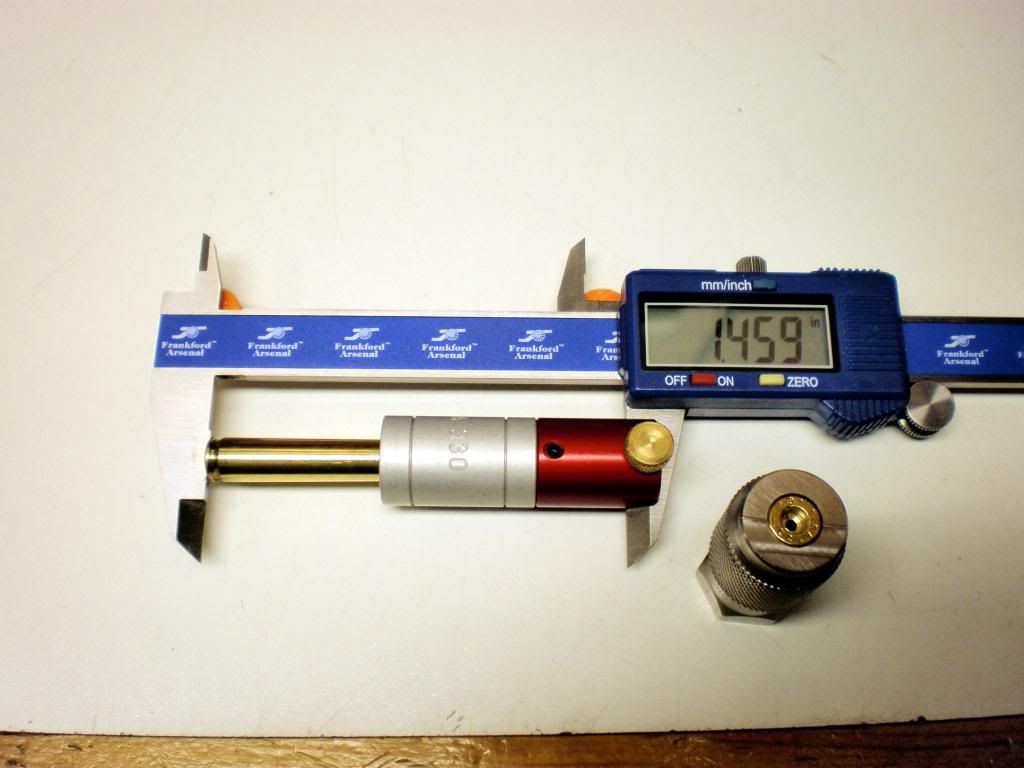
You have to adjust your dies for your dies, shellholder, press and chamber. They all have tolerances. Sometimes you luck out and the die instructions work out. This time they did not. Keep adjusting sizing die down 1/16 th of a turn until all cases chamber/extract. Then go 1/16 turn more. I'm thinking you may not know how to correctly read your case gauge. <a href="http://s250.photobucket.com/user/dryflash3/media/Case%20Gauge/PB290317.jpg.html" target="_blank">http://i250.photobucket.com/albums/gg272/dryflash3/Case%20Gauge/PB290317.jpg</a> This is a Dillon gauge, Wilson's work the same exact way, I have some of both. End of case is below the end of your gauge, but above the cut. Nothing wrong with you sizing die, you just have to adjust it correctly for your shellholder, press and chamber. People buy SB dies when all they really need is help adjusting their FL sizing die. Don't waste your money. Your having issues because your probably using different headstamp of brass from the ones you set up your dies for. Every reloading session should start with ensuring your sizing die is adjusted for the headstamp of case you are using. Different headstamps can be different brass alloys, fired a different number of times and will have a different amount of springback. This is what bit you. Good luck Quoted:
Quoted:
I am setting up the FL sizing die by raising the ram, and screwing the die in until it touches the shell holder. I then lower the ram and screw the die in another quarter turn, than lock it down. COL depends on load. 2.260 for the 69gr barnes hpbt, and 2.250 for the 75 gr. Hornady bthp. I am using mixed headstamp/ military range brass. So as Dryflash recommended, I used my chamber to adjust the die and found that the batch of brass I had previously sized and loaded with was having problems chambering/extracting cases without any bullets being seated. Sometimes a case would chamber, but I could not extract it without mortaring it out. Some went in just fine. I took a problem piece of brass, and incrementally lowered my die until the problems went away. Is this OK? Is it unheard of to have your die a couple of rotations below where it first touches the shell holder? Should I worry less about what the Wilson Case Gauge says, and more about my specific chamber. Is this a symptom of military brass in the relatively tight chamber of this specific rifle? Will the small base die help? Are Lee dies not on the minimum spec for FL sizing, causing issues with a tight chamber? I am kind of bummed out about this as I have not had issues in the past, and it is making me second guess all my other previous reloading (though successful). You have to adjust your dies for your dies, shellholder, press and chamber. They all have tolerances. Sometimes you luck out and the die instructions work out. This time they did not. Keep adjusting sizing die down 1/16 th of a turn until all cases chamber/extract. Then go 1/16 turn more. I'm thinking you may not know how to correctly read your case gauge. <a href="http://s250.photobucket.com/user/dryflash3/media/Case%20Gauge/PB290317.jpg.html" target="_blank">http://i250.photobucket.com/albums/gg272/dryflash3/Case%20Gauge/PB290317.jpg</a> This is a Dillon gauge, Wilson's work the same exact way, I have some of both. End of case is below the end of your gauge, but above the cut. Nothing wrong with you sizing die, you just have to adjust it correctly for your shellholder, press and chamber. People buy SB dies when all they really need is help adjusting their FL sizing die. Don't waste your money. Your having issues because your probably using different headstamp of brass from the ones you set up your dies for. Every reloading session should start with ensuring your sizing die is adjusted for the headstamp of case you are using. Different headstamps can be different brass alloys, fired a different number of times and will have a different amount of springback. This is what bit you. Good luck Thanks Dryflash. I totally understand how to read the case gauge, but I was mistaken that I could set the FL die to one piece of brass, and then have it work properly for all the others. As this is mixed brass I guess I should discriminate by headstamp. I put too much faith in the ability of the FL die to take care of all the differences between brass. How do people size large batches of brass that is mixed headstamp and avoid problems? This explains why some brass plunked in the gauge and others did not (though all pieces of brass were sized with the same die setting). What should I do with brass that has already been sized? Can I resize them with adjusted settings? Thanks again for everyones input. |
|
Quoted:
Thanks Dryflash. I totally understand how to read the case gauge, but I was mistaken that I could set the FL die to one piece of brass, and then have it work properly for all the others. As this is mixed brass I guess I should discriminate by headstamp. I put too much faith in the ability of the FL die to take care of all the differences between brass. How do people size large batches of brass that is mixed headstamp and avoid problems? This explains why some brass plunked in the gauge and others did not (though all pieces of brass were sized with the same die setting). What should I do with brass that has already been sized? Can I resize them with adjusted settings? Thanks again for everyones input. Quoted:
Quoted:
Quoted:
I am setting up the FL sizing die by raising the ram, and screwing the die in until it touches the shell holder. I then lower the ram and screw the die in another quarter turn, than lock it down. COL depends on load. 2.260 for the 69gr barnes hpbt, and 2.250 for the 75 gr. Hornady bthp. I am using mixed headstamp/ military range brass. So as Dryflash recommended, I used my chamber to adjust the die and found that the batch of brass I had previously sized and loaded with was having problems chambering/extracting cases without any bullets being seated. Sometimes a case would chamber, but I could not extract it without mortaring it out. Some went in just fine. I took a problem piece of brass, and incrementally lowered my die until the problems went away. Is this OK? Is it unheard of to have your die a couple of rotations below where it first touches the shell holder? Should I worry less about what the Wilson Case Gauge says, and more about my specific chamber. Is this a symptom of military brass in the relatively tight chamber of this specific rifle? Will the small base die help? Are Lee dies not on the minimum spec for FL sizing, causing issues with a tight chamber? I am kind of bummed out about this as I have not had issues in the past, and it is making me second guess all my other previous reloading (though successful). You have to adjust your dies for your dies, shellholder, press and chamber. They all have tolerances. Sometimes you luck out and the die instructions work out. This time they did not. Keep adjusting sizing die down 1/16 th of a turn until all cases chamber/extract. Then go 1/16 turn more. I'm thinking you may not know how to correctly read your case gauge. <a href="http://s250.photobucket.com/user/dryflash3/media/Case%20Gauge/PB290317.jpg.html" target="_blank">http://i250.photobucket.com/albums/gg272/dryflash3/Case%20Gauge/PB290317.jpg</a> This is a Dillon gauge, Wilson's work the same exact way, I have some of both. End of case is below the end of your gauge, but above the cut. Nothing wrong with you sizing die, you just have to adjust it correctly for your shellholder, press and chamber. People buy SB dies when all they really need is help adjusting their FL sizing die. Don't waste your money. Your having issues because your probably using different headstamp of brass from the ones you set up your dies for. Every reloading session should start with ensuring your sizing die is adjusted for the headstamp of case you are using. Different headstamps can be different brass alloys, fired a different number of times and will have a different amount of springback. This is what bit you. Good luck Thanks Dryflash. I totally understand how to read the case gauge, but I was mistaken that I could set the FL die to one piece of brass, and then have it work properly for all the others. As this is mixed brass I guess I should discriminate by headstamp. I put too much faith in the ability of the FL die to take care of all the differences between brass. How do people size large batches of brass that is mixed headstamp and avoid problems? This explains why some brass plunked in the gauge and others did not (though all pieces of brass were sized with the same die setting). What should I do with brass that has already been sized? Can I resize them with adjusted settings? Thanks again for everyones input. I think this is where differences in equipment come into play. Unlike many others on this forum I load on a RCBS single stage press. This press"cams over" when there is solid contact made with the shell holder. Caming over on the shell holder is how all my full length rifle dies are adjusted. I have sized many thousands of mixed head stamp casings in the past 30+ years and the lock rings have never been moved since the first time they were set. I don't ever have chambering issues and I never have case life issues. I know this doesn't work with all presses but I'm also sure I just didn't get lucky. 
Motor |
|
Quoted:
Under sized brass, lube and resize. <a href="http://s250.photobucket.com/user/dryflash3/media/Case%20Gauge/P3030544_zps10acbd9b.jpg.html" target="_blank">http://i250.photobucket.com/albums/gg272/dryflash3/Case%20Gauge/P3030544_zps10acbd9b.jpg</a> If you want to load mixed cases, then get a headspace gauge. Measure several fired cases to get your chambers headspace. Then set the shoulder back .003 (precession load) .004 for blasting loads measured with the Hornady headspace gauge. http://www.midwayusa.com/product/479704/hornady-lock-n-load-headspace-gage-5-bushing-set-with-comparator Thanks Dryflash. I should not have been sizing so many cases without using more than just the Wilson Gauge. I will pick up the headspace gauges. Thanks for the help. I will report back. -RM |
|
Quoted:
I think this is where differences in equipment come into play. Unlike many others on this forum I load on a RCBS single stage press. This press"cams over" when there is solid contact made with the shell holder. Caming over on the shell holder is how all my full length rifle dies are adjusted. I have sized many thousands of mixed head stamp casings in the past 30+ years and the lock rings have never been moved since the first time they were set. I don't ever have chambering issues and I never have case life issues. I know this doesn't work with all presses but I'm also sure I just didn't get lucky.
Motor Quoted:
Quoted:
Quoted:
Quoted:
I am setting up the FL sizing die by raising the ram, and screwing the die in until it touches the shell holder. I then lower the ram and screw the die in another quarter turn, than lock it down. COL depends on load. 2.260 for the 69gr barnes hpbt, and 2.250 for the 75 gr. Hornady bthp. I am using mixed headstamp/ military range brass. So as Dryflash recommended, I used my chamber to adjust the die and found that the batch of brass I had previously sized and loaded with was having problems chambering/extracting cases without any bullets being seated. Sometimes a case would chamber, but I could not extract it without mortaring it out. Some went in just fine. I took a problem piece of brass, and incrementally lowered my die until the problems went away. Is this OK? Is it unheard of to have your die a couple of rotations below where it first touches the shell holder? Should I worry less about what the Wilson Case Gauge says, and more about my specific chamber. Is this a symptom of military brass in the relatively tight chamber of this specific rifle? Will the small base die help? Are Lee dies not on the minimum spec for FL sizing, causing issues with a tight chamber? I am kind of bummed out about this as I have not had issues in the past, and it is making me second guess all my other previous reloading (though successful). You have to adjust your dies for your dies, shellholder, press and chamber. They all have tolerances. Sometimes you luck out and the die instructions work out. This time they did not. Keep adjusting sizing die down 1/16 th of a turn until all cases chamber/extract. Then go 1/16 turn more. I'm thinking you may not know how to correctly read your case gauge. <a href="http://s250.photobucket.com/user/dryflash3/media/Case%20Gauge/PB290317.jpg.html" target="_blank">http://i250.photobucket.com/albums/gg272/dryflash3/Case%20Gauge/PB290317.jpg</a> This is a Dillon gauge, Wilson's work the same exact way, I have some of both. End of case is below the end of your gauge, but above the cut. Nothing wrong with you sizing die, you just have to adjust it correctly for your shellholder, press and chamber. People buy SB dies when all they really need is help adjusting their FL sizing die. Don't waste your money. Your having issues because your probably using different headstamp of brass from the ones you set up your dies for. Every reloading session should start with ensuring your sizing die is adjusted for the headstamp of case you are using. Different headstamps can be different brass alloys, fired a different number of times and will have a different amount of springback. This is what bit you. Good luck Thanks Dryflash. I totally understand how to read the case gauge, but I was mistaken that I could set the FL die to one piece of brass, and then have it work properly for all the others. As this is mixed brass I guess I should discriminate by headstamp. I put too much faith in the ability of the FL die to take care of all the differences between brass. How do people size large batches of brass that is mixed headstamp and avoid problems? This explains why some brass plunked in the gauge and others did not (though all pieces of brass were sized with the same die setting). What should I do with brass that has already been sized? Can I resize them with adjusted settings? Thanks again for everyones input. I think this is where differences in equipment come into play. Unlike many others on this forum I load on a RCBS single stage press. This press"cams over" when there is solid contact made with the shell holder. Caming over on the shell holder is how all my full length rifle dies are adjusted. I have sized many thousands of mixed head stamp casings in the past 30+ years and the lock rings have never been moved since the first time they were set. I don't ever have chambering issues and I never have case life issues. I know this doesn't work with all presses but I'm also sure I just didn't get lucky.
Motor Gotcha Motor! Ya, my single stage Lee does not cam. Once you hit the top of the up-stroke, that is it. So I have always adjusted dies at that zenith. The more I have been reading about reloading issues, the more I have found so many different variables, solutions and nuances (most of which are not covered in my three up to date manuals). Thanks for the help, RM |
|
Quoted: Thanks Dryflash. I should not have been sizing so many cases without using more than just the Wilson Gauge. I will pick up the headspace gauges. Thanks for the help. I will report back. -RM Quoted: Quoted: Under sized brass, lube and resize. <a href="http://s250.photobucket.com/user/dryflash3/media/Case%20Gauge/P3030544_zps10acbd9b.jpg.html" target="_blank">http://i250.photobucket.com/albums/gg272/dryflash3/Case%20Gauge/P3030544_zps10acbd9b.jpg</a> If you want to load mixed cases, then get a headspace gauge. Measure several fired cases to get your chambers headspace. Then set the shoulder back .003 (precession load) .004 for blasting loads measured with the Hornady headspace gauge. http://www.midwayusa.com/product/479704/hornady-lock-n-load-headspace-gage-5-bushing-set-with-comparator Thanks Dryflash. I should not have been sizing so many cases without using more than just the Wilson Gauge. I will pick up the headspace gauges. Thanks for the help. I will report back. -RM Glad to help.  |
|
Quoted: I think this is where differences in equipment come into play. Unlike many others on this forum I load on a RCBS single stage press. This press"cams over" when there is solid contact made with the shell holder. Caming over on the shell holder is how all my full length rifle dies are adjusted. I have sized many thousands of mixed head stamp casings in the past 30+ years and the lock rings have never been moved since the first time they were set. I don't ever have chambering issues and I never have case life issues. I know this doesn't work with all presses but I'm also sure I just didn't get lucky. Motor Quoted: Quoted: Quoted: Quoted: I am setting up the FL sizing die by raising the ram, and screwing the die in until it touches the shell holder. I then lower the ram and screw the die in another quarter turn, than lock it down. COL depends on load. 2.260 for the 69gr barnes hpbt, and 2.250 for the 75 gr. Hornady bthp. I am using mixed headstamp/ military range brass. So as Dryflash recommended, I used my chamber to adjust the die and found that the batch of brass I had previously sized and loaded with was having problems chambering/extracting cases without any bullets being seated. Sometimes a case would chamber, but I could not extract it without mortaring it out. Some went in just fine. I took a problem piece of brass, and incrementally lowered my die until the problems went away. Is this OK? Is it unheard of to have your die a couple of rotations below where it first touches the shell holder? Should I worry less about what the Wilson Case Gauge says, and more about my specific chamber. Is this a symptom of military brass in the relatively tight chamber of this specific rifle? Will the small base die help? Are Lee dies not on the minimum spec for FL sizing, causing issues with a tight chamber? I am kind of bummed out about this as I have not had issues in the past, and it is making me second guess all my other previous reloading (though successful). You have to adjust your dies for your dies, shellholder, press and chamber. They all have tolerances. Sometimes you luck out and the die instructions work out. This time they did not. Keep adjusting sizing die down 1/16 th of a turn until all cases chamber/extract. Then go 1/16 turn more. I'm thinking you may not know how to correctly read your case gauge. <a href="http://s250.photobucket.com/user/dryflash3/media/Case%20Gauge/PB290317.jpg.html" target="_blank">http://i250.photobucket.com/albums/gg272/dryflash3/Case%20Gauge/PB290317.jpg</a> This is a Dillon gauge, Wilson's work the same exact way, I have some of both. End of case is below the end of your gauge, but above the cut. Nothing wrong with you sizing die, you just have to adjust it correctly for your shellholder, press and chamber. People buy SB dies when all they really need is help adjusting their FL sizing die. Don't waste your money. Your having issues because your probably using different headstamp of brass from the ones you set up your dies for. Every reloading session should start with ensuring your sizing die is adjusted for the headstamp of case you are using. Different headstamps can be different brass alloys, fired a different number of times and will have a different amount of springback. This is what bit you. Good luck Thanks Dryflash. I totally understand how to read the case gauge, but I was mistaken that I could set the FL die to one piece of brass, and then have it work properly for all the others. As this is mixed brass I guess I should discriminate by headstamp. I put too much faith in the ability of the FL die to take care of all the differences between brass. How do people size large batches of brass that is mixed headstamp and avoid problems? This explains why some brass plunked in the gauge and others did not (though all pieces of brass were sized with the same die setting). What should I do with brass that has already been sized? Can I resize them with adjusted settings? Thanks again for everyones input. I think this is where differences in equipment come into play. Unlike many others on this forum I load on a RCBS single stage press. This press"cams over" when there is solid contact made with the shell holder. Caming over on the shell holder is how all my full length rifle dies are adjusted. I have sized many thousands of mixed head stamp casings in the past 30+ years and the lock rings have never been moved since the first time they were set. I don't ever have chambering issues and I never have case life issues. I know this doesn't work with all presses but I'm also sure I just didn't get lucky. Motor I do all of my resizing on a Rockchucker also. Very few of my sizing dies is adjusted down enough to cam over. Our presses are at opposite ends of the tolerance spectrum I suspect. |
Armory Sponsor