


Armory Sponsor


Posted: 3/7/2013 1:16:48 PM EDT
| I have been working on tighten up the groups of my reloads. I have the OAL guages and have read that decreasing the depth of the bullet in the cartridge increases chamber pressures. Is this increase in chamber pressure significant enough to require reduction of the powder charge when comparing accuracy from different bullet seating depths? thanks |
|
If your original 222 load is max or near max you are correct to be cautious. Study some of the loading books where they talk about pressure signs and gradually shorten up your loads watching for signs.
The books are just a guide,not recipes. Any time you change anything -Primers,bullet brand or style (even with the same weight)powder lot case brand you have to watch out. A load in one rifle with a certain chamber and throat will not necessarily be the same as another rifle. Some powders are temperature sensitive , a load might test out ok on a cool spring day but be pushing the line on a hot day out in the sun. You likely have read all this stuff and I have generally found most newer books to be fairly conservative but it bears repeating for the folks just starting out |
|
Quoted:
Quoted:
pistol, rifle, caliber ? Triple duece, 222 Remington The answer is NO! Decreasing OAL in a bottle necked rifle round REDUCES pressure it does NOT increase it. From John Barnsness of Rifle and Handloader Magazines. It decreases peak pressure, for two reasons. The longer "jump" of the bullet to the rifling results in a lower peak pressure, since the bullet engraves more easily the faster it's going when it hits the rifling. Also involved is the "progressive" burning of almost all modern rifle powders. This means the pressure increases relatively slowly from the time of ignition. Thus peak pressure occurs when the bullet beyond the barrel throat, with very slow-burning powders as much as 3-4 inches. Handgun powders are much faster-burning, and even regressive, meaning pressure peaks when they're first ignited. Thus seating them deeper allows more time for initial pressure to build. This effect is slightly exaggerated in revolvers. The initial, quick pressure rise is relieved somewhat when the bullet passes the cylinder gap, allowing some gas to escape. When bullets are seated deeper it takes them longer to pass the cylinder gap, giving pressure more time to rise. _________________________ John A few charts to illustrate the point. 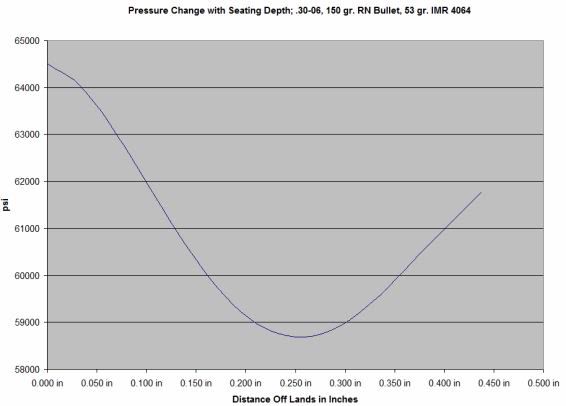

|
|
Quoted:
Quoted:
Quoted:
pistol, rifle, caliber ? Triple duece, 222 Remington The answer is NO! Decreasing OAL in a bottle necked rifle round REDUCES pressure it does NOT increase it. From John Barnsness of Rifle and Handloader Magazines. It decreases peak pressure, for two reasons. The longer "jump" of the bullet to the rifling results in a lower peak pressure, since the bullet engraves more easily the faster it's going when it hits the rifling. Also involved is the "progressive" burning of almost all modern rifle powders. This means the pressure increases relatively slowly from the time of ignition. Thus peak pressure occurs when the bullet beyond the barrel throat, with very slow-burning powders as much as 3-4 inches. Handgun powders are much faster-burning, and even regressive, meaning pressure peaks when they're first ignited. Thus seating them deeper allows more time for initial pressure to build. This effect is slightly exaggerated in revolvers. The initial, quick pressure rise is relieved somewhat when the bullet passes the cylinder gap, allowing some gas to escape. When bullets are seated deeper it takes them longer to pass the cylinder gap, giving pressure more time to rise. _________________________ John A few charts to illustrate the point. http://i2.photobucket.com/albums/y17/steve4102/seatingdepthvpressure.jpg http://i2.photobucket.com/albums/y17/steve4102/pressuregraph.jpg Excellent reply. |
|
Quoted:
Quoted:
Quoted:
pistol, rifle, caliber ? Triple duece, 222 Remington The answer is NO! Decreasing OAL in a bottle necked rifle round REDUCES pressure it does NOT increase it. From John Barnsness of Rifle and Handloader Magazines. It decreases peak pressure, for two reasons. The longer "jump" of the bullet to the rifling results in a lower peak pressure, since the bullet engraves more easily the faster it's going when it hits the rifling. Also involved is the "progressive" burning of almost all modern rifle powders. This means the pressure increases relatively slowly from the time of ignition. Thus peak pressure occurs when the bullet beyond the barrel throat, with very slow-burning powders as much as 3-4 inches. Handgun powders are much faster-burning, and even regressive, meaning pressure peaks when they're first ignited. Thus seating them deeper allows more time for initial pressure to build. This effect is slightly exaggerated in revolvers. The initial, quick pressure rise is relieved somewhat when the bullet passes the cylinder gap, allowing some gas to escape. When bullets are seated deeper it takes them longer to pass the cylinder gap, giving pressure more time to rise. _________________________ John A few charts to illustrate the point. http://i2.photobucket.com/albums/y17/steve4102/seatingdepthvpressure.jpg http://i2.photobucket.com/albums/y17/steve4102/pressuregraph.jpg I appreciate your response. Once I re-read my original question, I realized I had written the opposite of what I intended. I know that decreasing OAL in a bottle necked rifle round REDUCES pressure it does NOT increase it. I have done this before--state something and it comes out wroing!! Thanks for info. |
|
Quoted:
Quoted:
Quoted:
Quoted:
pistol, rifle, caliber ? Triple duece, 222 Remington The answer is NO! Decreasing OAL in a bottle necked rifle round REDUCES pressure it does NOT increase it. From John Barnsness of Rifle and Handloader Magazines. It decreases peak pressure, for two reasons. The longer "jump" of the bullet to the rifling results in a lower peak pressure, since the bullet engraves more easily the faster it's going when it hits the rifling. Also involved is the "progressive" burning of almost all modern rifle powders. This means the pressure increases relatively slowly from the time of ignition. Thus peak pressure occurs when the bullet beyond the barrel throat, with very slow-burning powders as much as 3-4 inches. Handgun powders are much faster-burning, and even regressive, meaning pressure peaks when they're first ignited. Thus seating them deeper allows more time for initial pressure to build. This effect is slightly exaggerated in revolvers. The initial, quick pressure rise is relieved somewhat when the bullet passes the cylinder gap, allowing some gas to escape. When bullets are seated deeper it takes them longer to pass the cylinder gap, giving pressure more time to rise. _________________________ John A few charts to illustrate the point. http://i2.photobucket.com/albums/y17/steve4102/seatingdepthvpressure.jpg http://i2.photobucket.com/albums/y17/steve4102/pressuregraph.jpg I appreciate your response. Once I re-read my original question, I realized I had written the opposite of what I intended. I know that decreasing OAL in a bottle necked rifle round REDUCES pressure it does NOT increase it. I have done this before--state something and it comes out wroing!! Thanks for info. OK, so then lets revisit the original question. If you are fine tuning for accuracy by adjusting seating depth (OAL), then you do not alter the powder charge. One thing at a time. I always start load development with the longest OAL I plan to use. The when the time comes for me to fine tune the load by adjusting OAL I only have one direction to go, Shorter. Shorter decreases pressure so the charge stays the same without the worry of excess pressure. |
Armory Sponsor