


Armory Sponsor

Posted: 11/2/2010 7:41:13 AM EDT
| I was successful starting my reloading career with .308 WIN, didn't blow anything up and the results have been good. This weekend I'll be loading up some 45 Auto for the first time on a single stage press. I'll probably just load up 100 rounds. Anyway, just wanted to know if there's anything not obvious that I should look out for before loading these up. Since straight-wall pistol cartridges are simpler to reload than necked rifle I think I'll do fine. |
|
Just remember to bell/flare the case mouth ever so slightly, especially if you're seating lead or plated projectiles.
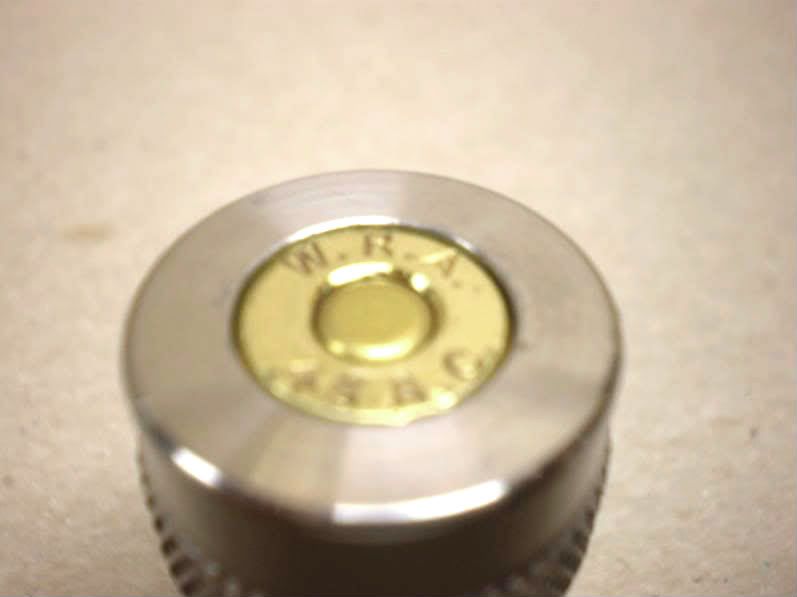
Not too much, just enough to allow the case to accept the bullet without shaving the sides. The bell should be barely visible. Crimping...well, it's more "bell removal" than "crimp". The mouth of the case should be between .469"-.471" after you've crimped...I mean removed the bell. Just like in rifle reloading, a case gauge is good to have. Dryflash will post the pics shortly. 
|
|
Quoted:
Just remember to bell/flare the case mouth ever so slightly, especially if you're seating lead or plated projectiles. Not too much, just enough to allow the case to accept the bullet without shaving the sides. The bell should be barely visible. Crimping...well, it's more "bell removal" than "crimp". The mouth of the case should be between .469"-.471" after you've crimped...I mean removed the bell. Just like in rifle reloading, a case gauge is good to have. Dryflash will post the pics shortly. Watch the crimp and you'll be fine. Pistol is much easier/faster to load then rifle. |
|
Quoted:
Just remember to bell/flare the case mouth ever so slightly, especially if you're seating lead or plated projectiles. Not too much, just enough to allow the case to accept the bullet without shaving the sides. The bell should be barely visible. Crimping...well, it's more "bell removal" than "crimp". The mouth of the case should be between .469"-.471" after you've crimped...I mean removed the bell. Just like in rifle reloading, a case gauge is good to have. Dryflash will post the pics shortly. Thanks, that bit helps. The "crimp" was something I didn't really get. "Bell removal" makes more sense. |
|
Quoted: Quoted: Just remember to bell/flare the case mouth ever so slightly, especially if you're seating lead or plated projectiles. Not too much, just enough to allow the case to accept the bullet without shaving the sides. The bell should be barely visible. Crimping...well, it's more "bell removal" than "crimp". The mouth of the case should be between .469"-.471" after you've crimped...I mean removed the bell. Just like in rifle reloading, a case gauge is good to have. Dryflash will post the pics shortly. Thanks, that bit helps. The "crimp" was something I didn't really get. "Bell removal" makes more sense. The general rule is: ((case wall thickness x 2) + bullet diameter) - 0.003) to crimp/remove the bell. After you've seated and crimped just measure the diameter and see where it falls. You should be at 0.469 (lead/plated) or 0.468 (FMJ) depending on the bullet you use. |
| In case it has not been said enough. The trick is not too much crimp. The 45 head spaces on the case mouth. I use a lee factory crimp die. Set up to leave the case mouth right at .469. The nice thing about the lee is it will "iron out" for lack of a better term any case irregularity's. I than drop every round thou a case gauge. You can use your barrel for a gauge. I did for years. If using lead bullets you may scrap a few case's till you get the belling thing down. Jacketed you can use less bell. The 45 is real easy to load for. Lots of data available. |
|
I just realized that I can't find any exact reloading data for the bullets I'm using for this project. I tried to get the most "standard" bullets I could find and ended up getting some Remington 230 grain FMJ (.451") round nose bullets.
Remington doesn't seem to publish reloading data and the powder manufacturer (Alliant) doesn't have that bullet listed in their data. I read it's bad to substitute similar projectiles? |
It's bad to substitute data without doing research and using caution. It can be done safely as long as you check several publications, for similar bullets of similar construction. Then ALWAYS start with the lowest listed load for a similar bullet and work your way up, checking for pressure signs along the way. If these are plinking loads, you can use a fairly light load while still attaining good accuracy and have the gun function 100%. But I'm sure someone like AeroE will be along to punch holes in my advice like swiss chesse 
Best of luck and let us know how your loads turn out. |
|
Make sure the cartridges are loaded short enough to work through the magazine. Load at least 5 in the magazine to get them well down in the body to make sure they will feed okay.
Then check a loaded round in the chamber of the barrel for your gun. Take the barrel out of the gun. It should go in and out easily and headspace against the case mouth. Use load data for bullets similar to the ones you have. Use as many sources as you can find. Using loads for the exact components you have is a nice idea, but it's not practical and we would load very little ammunition by following that as a hard and fast rule. I crimp .45 ACP cases to 0.470 inches diameter at the case mouth. When loading LSWC's, check the length in the gun before committing to loading a pile of cartridges. I have loaded 200 grain LSWC's that look identical, but the ogives were very slightly different, so little that it could not be seen, and the longer bullet hung up hard in the rifling lands when loaded to the length used for the shorter bullet. If the bullet gets jammed up into the lands far enough, the gun is effectively locked up. 3.8 to 4.2 grains of Bullseye with a 200 grain LSWC makes a very nice plinking and target load. |

|
Well, I loaded up 50 rounds over the weekend. The first time takes forever because I'm getting everything calibrated. Anyway, you were right that the crimp is the tricky part. Took me awhile to get the crimp to what I thought would be the right amount only to find that 20 or so wouldn't "plunk" into my barrel that I was using as a case gauge. I thought I perhaps didn't crimp enough so I gave them slightly more and it made the problem worse, so they must have had too much to begin with.
I'm also thinking that in the expanding process I may have gone too far with it making the crimp more difficult to get right. After you expand, what do you think the cases should measure at the mouth? I fired the 30 that did fit into the barrel and all fired and fed with no issues. I did notice that there was more soot on the outside of the cases than usual (too low pressure?) I was using 5.2 grains Unique with a 230 grain FMJ seated at 1.260" Also - got a pistol rotor assembly for my Hornady powder drop, it measures Unique perfectly, within 1/10 of a grain. I'm liking that, too bad I can't get it to do that with Varget. |
|
Quoted:
Well, I loaded up 50 rounds over the weekend. The first time takes forever because I'm getting everything calibrated. Anyway, you were right that the crimp is the tricky part. Took me awhile to get the crimp to what I thought would be the right amount only to find that 20 or so wouldn't "plunk" into my barrel that I was using as a case gauge. I thought I perhaps didn't crimp enough so I gave them slightly more and it made the problem worse, so they must have had too much to begin with. I'm also thinking that in the expanding process I may have gone too far with it making the crimp more difficult to get right. After you expand, what do you think the cases should measure at the mouth? I fired the 30 that did fit into the barrel and all fired and fed with no issues. I did notice that there was more soot on the outside of the cases than usual (too low pressure?) I was using 5.2 grains Unique with a 230 grain FMJ seated at 1.260" Also - got a pistol rotor assembly for my Hornady powder drop, it measures Unique perfectly, within 1/10 of a grain. I'm liking that, too bad I can't get it to do that with Varget. For jacketed bullets the bullet should just sit inside the case mouth. Lead is a little touchier. If you are going to use lead you should get a Lyman M die. They are easier on the brass while providing a better flare for lead bullets. |
|
Quoted:
Quoted:
Well, I loaded up 50 rounds over the weekend. The first time takes forever because I'm getting everything calibrated. Anyway, you were right that the crimp is the tricky part. Took me awhile to get the crimp to what I thought would be the right amount only to find that 20 or so wouldn't "plunk" into my barrel that I was using as a case gauge. I thought I perhaps didn't crimp enough so I gave them slightly more and it made the problem worse, so they must have had too much to begin with. I'm also thinking that in the expanding process I may have gone too far with it making the crimp more difficult to get right. After you expand, what do you think the cases should measure at the mouth? I fired the 30 that did fit into the barrel and all fired and fed with no issues. I did notice that there was more soot on the outside of the cases than usual (too low pressure?) I was using 5.2 grains Unique with a 230 grain FMJ seated at 1.260" Also - got a pistol rotor assembly for my Hornady powder drop, it measures Unique perfectly, within 1/10 of a grain. I'm liking that, too bad I can't get it to do that with Varget. For jacketed bullets the bullet should just sit inside the case mouth. Lead is a little touchier. If you are going to use lead you should get a Lyman M die. They are easier on the brass while providing a better flare for lead bullets. Plus - - Check an expanded case in the seater die. If it scrapes, the case mouth is expanded too far. A bullet will seat in a case with surprisingly little flare, but you'll need to hold onto the bullet longer while starting it into the seater. |
|
Quoted:
Quoted:
Quoted:
Well, I loaded up 50 rounds over the weekend. The first time takes forever because I'm getting everything calibrated. Anyway, you were right that the crimp is the tricky part. Took me awhile to get the crimp to what I thought would be the right amount only to find that 20 or so wouldn't "plunk" into my barrel that I was using as a case gauge. I thought I perhaps didn't crimp enough so I gave them slightly more and it made the problem worse, so they must have had too much to begin with. I'm also thinking that in the expanding process I may have gone too far with it making the crimp more difficult to get right. After you expand, what do you think the cases should measure at the mouth? I fired the 30 that did fit into the barrel and all fired and fed with no issues. I did notice that there was more soot on the outside of the cases than usual (too low pressure?) I was using 5.2 grains Unique with a 230 grain FMJ seated at 1.260" Also - got a pistol rotor assembly for my Hornady powder drop, it measures Unique perfectly, within 1/10 of a grain. I'm liking that, too bad I can't get it to do that with Varget. For jacketed bullets the bullet should just sit inside the case mouth. Lead is a little touchier. If you are going to use lead you should get a Lyman M die. They are easier on the brass while providing a better flare for lead bullets. Plus - - Check an expanded case in the seater die. If it scrapes, the case mouth is expanded too far. A bullet will seat in a case with surprisingly little flare, but you'll need to hold onto the bullet longer while starting it into the seater. My seater die does the crimping as well, so I'm not sure this would apply to me? It would scrape no matter what since the crimp is being applied, unless I backed the crimp adjustment out. |
|
Quoted:
Quoted:
Quoted:
Quoted:
Well, I loaded up 50 rounds over the weekend. The first time takes forever because I'm getting everything calibrated. Anyway, you were right that the crimp is the tricky part. Took me awhile to get the crimp to what I thought would be the right amount only to find that 20 or so wouldn't "plunk" into my barrel that I was using as a case gauge. I thought I perhaps didn't crimp enough so I gave them slightly more and it made the problem worse, so they must have had too much to begin with. I'm also thinking that in the expanding process I may have gone too far with it making the crimp more difficult to get right. After you expand, what do you think the cases should measure at the mouth? I fired the 30 that did fit into the barrel and all fired and fed with no issues. I did notice that there was more soot on the outside of the cases than usual (too low pressure?) I was using 5.2 grains Unique with a 230 grain FMJ seated at 1.260" Also - got a pistol rotor assembly for my Hornady powder drop, it measures Unique perfectly, within 1/10 of a grain. I'm liking that, too bad I can't get it to do that with Varget. For jacketed bullets the bullet should just sit inside the case mouth. Lead is a little touchier. If you are going to use lead you should get a Lyman M die. They are easier on the brass while providing a better flare for lead bullets. Plus - - Check an expanded case in the seater die. If it scrapes, the case mouth is expanded too far. A bullet will seat in a case with surprisingly little flare, but you'll need to hold onto the bullet longer while starting it into the seater. My seater die does the crimping as well, so I'm not sure this would apply to me? It would scrape no matter what since the crimp is being applied, unless I backed the crimp adjustment out. First, I recommend you crimp in a step separate from seating. You'll find adjusment is a thousand times more simple. As for my recommendation about flaring, what I am describing is scraping of the die wall when the case enters the die, not when it contacts the crimp ring. Put a case in a shell holder, back the sizer die body out, raise the ram, then slowly lower the die body. When you start feeling resistance, the crimp ring has started to contact the case. Before that, the crimp ring is not in play. |
|
Quoted:
5.2 grains is a light charge for the Rem 230 FMJ in 45ACP. Work up to 6.0-6.1 grains and you'll get better results. Above 6.3 grains you'll need to use caution. Your overall length for that bullet works fine for me in different 45's. I figured as much, considering the soot on the outside of the cases. I was working at the low end of the book since this is my first go at pistol rounds. Since they functioned fine I'll work them up so I'm getting around 850 FPS, probably about 6 grains like you say. |
Armory Sponsor