


Armory Sponsor


Posted: 4/2/2009 1:01:32 PM EDT
|
I was making my first batch of ingots today just to see how it goes..I only did about 20 lbs of lead which was mainly old pipe.
I melted it down and skimmed what I'm guessing was the dross. Powdery dirty crap. So I keep stirring and skimming but it seemed like a skim would constantly form. Do I keep skimming? What color should I be looking for before pouring into ingot molds? Purple or straight silver? |
|
Quoted:
I was making my first batch of ingots today just to see how it goes..I only did about 20 lbs of lead which was mainly old pipe. I melted it down and skimmed what I'm guessing was the dross. Powdery dirty crap. So I keep stirring and skimming but it seemed like a skim would constantly form. Do I keep skimming? I would consider temp. Cause, it's been said that too high heat can actually be more of a problem. Then, I don't know how you do things............but, I was constantly adding more lead to the pot to regulate the level. So, I could keep going with hot lead. Thus, I'd be adding lead, mixing, fluxing, and skimming constantly as I was working throughout the session. There was no "set in stone" way of doing it, for ME. Some lead was just more dirty. What color should I be looking for before pouring into ingot molds? Purple or straight silver? When it's melted "hot enough" it gets poured. Simple. You're only making an ingot............so, who cares? But, when making bullets.....IF the mold isn't filling out......it's too cold. HTH. Aloha, Mark PS.......check this out..........Cast Lead Bullet Making......... http://www.ar15.com/forums/topic.html?b=8&f=15&t=344435 |
|
Quoted:
Quoted:
I was making my first batch of ingots today just to see how it goes..I only did about 20 lbs of lead which was mainly old pipe. I melted it down and skimmed what I'm guessing was the dross. Powdery dirty crap. So I keep stirring and skimming but it seemed like a skim would constantly form. Do I keep skimming? I would consider temp. Cause, it's been said that too high heat can actually be more of a problem. Then, I don't know how you do things............but, I was constantly adding more lead to the pot to regulate the level. So, I could keep going with hot lead. Thus, I'd be adding lead, mixing, fluxing, and skimming constantly as I was working throughout the session. There was no "set in stone" way of doing it, for ME. Some lead was just more dirty. What color should I be looking for before pouring into ingot molds? Purple or straight silver? When it's melted "hot enough" it gets poured. Simple. You're only making an ingot............so, who cares? But, when making bullets.....IF the mold isn't filling out......it's too cold. HTH. Aloha, Mark PS.......check this out..........Cast Lead Bullet Making......... http://www.ar15.com/forums/topic.html?b=8&f=15&t=344435 Thanks for the info. I already was aware of the above link. Lots of good info there. It was my first time ever smelting lead so I just did a small batch in a 4 qt cast iron dutch oven over my MSR whisperlight stove. Temperature may have been the issue. Even before I fluxed it, the dirt and crud (dross?) was obvious and i removed it. This was all powdery and non-metallic. I fluxed a few times and was constantly stirring the mix. The stuff I skimmed after I fluxed appeared to be powdery but when it cooled it was a different color (silver) and was sort of metallic. I think that I may have removed a bunch of tin from my lead? I |
|
Yes, I've heard that if you got too much heat and/or too much fluxing and mixing.....that could happen.
I admit it, I didn't use a thermometer............ I just didn't worry too much about things. Cause, I was only making bullets for .45 ACP and .38 Special rounds. And, I wasn't gonna be launching them at +1000 fps. Aloha, Mark PS.............most of my lead was free dug up bullets and wheel weights. So, I always expected "the worst." |
|
Quoted:
Sounds like you got the good stuff out, too. Get the temperature up, flux, and scrape the sides of the container with a spoon to get the junk off. I wouldn't try to be too perfect with ingots of material that you'll probably need to alloy later. So you're saying raise the temperature and that "good" stuff will probably melt? What do you think it was? Tin? ETA-here's a pic of the stuff that kept forming after I fluxed...It's a crappy pic. 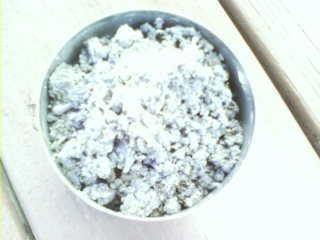
|
|
It is a common misconception that because they are less dense than lead, antimony and tin may undergo gravity separation from the melt. Nothing could be further from the truth. In the absence of oxygen or oxidizing materials, melted lead alloys will remain stable and mixed virtually forever. And from Lyman, [3]Perhaps the single most significant error in all the bullet casting literature is the misconception that lead-tin-antimony alloy melts gravity segregate.
and.... Molten lead alloy exposed to air soon oxidizes (this is NOT gravity separation). This oxidation affects all the constituents, including the lead. (The chemistry of tin and antimony dictates that they oxidize at a higher rate, which accounts for their gradual depletion from the melt.) Thus, the scum which forms on the surface of the melt is a mixture of metal oxides, not tin or tin oxide only. Fluxing returns much of the oxidized metal to the melt. Oxidation occurs only at the surface of the melt (and in the flow stream from bottom pour pots), however, within the pot of melted alloy there are thermal currents, the coolest alloy at the surface sinks and hotter alloy (mostly from near the sides of the pot where the heating element is) rises to the surface. The entire volume of alloy in the pot is subject to oxidation. (Tin helps reduce, not eliminate oxidation up to a max of 750o.) The bottom line, oxidation occurs wherever, whenever the molten alloy is in contact with air and thus the need for fluxing (fluxing returns metal oxides to the alloy).
taken from: http://www.lasc.us/CastBulletAlloy.htm Aloha, Mark PS........reading further.......... Dross forms in a pot of molten metal by oxidation of the metal from exposure to heat, air, impurities, and dirt, and from running the alloy below its liquidus. As the metals melt, dross's (oxides of the metals) appear on the surface of the molten metal. They must be returned to the melt by fluxing, or else their removal as dross seriously depletes some of the important constituents of the alloy. Additionally, running the alloy too hot causes metal loss through oxidation and more frequent fluxing to return dross to the melt.
Do not allow the level of alloy in the pot to get below about half full so that proper temperature can be maintained, the temperature of some pots will rise as the level of alloy in the pot falls. Be cautious of the temperature falling below the liquidus point. Do not run the pot temperature any higher above its liquidus temperature than necessary, about 50o - 75o F. Solidus and liquidus temperature. The solidus temperature is easy to determine (the alloy begins to melt) but what is the liquidus temperature, the point where there are no crystalline structures and all of the constituents of the alloy are completely melted? To be honest I don't know, it would depend on the metals in your alloy and the percentages of them. To play it safe my practice has always been simply to wait until casting temperature is reached before fluxing or adding alloy. I cast wheel weight alloy at 700o and this is the temperature that I add alloy (even rejects or sprues) and flux. Once I have fluxed I do not add anything to the pot through the entire casting session, not even rejects or sprues. This is a simplified method of how the metals industry maintains quality when blending alloys. In the industry, metals are added to an alloy at a very specific temperature that is based on the metal being added and the metals already in the alloy. This would be quite an excessive degree to take bullet casting, as long as metal is added and fluxing is done after liquidus temperature (casting temperature) is reached we can maintain the integrity of our alloy. |
Armory Sponsor