


Armory Sponsor


[ARCHIVED THREAD] - Which 22 can (Page 1 of 2)
Posted: 3/5/2014 5:29:51 PM EDT
| Looking at a rimfire can from Silencershop. needs to be 17hmr capable. I'm liking the Silencerco SS Sparrow or Spectre or Tacsol Axiom. Really like the Sparrow design but it's $40 more than the second priced option. Is it worth it? going to put in the order this week, so I would really like some feedback from you guys. Thanks! |
| The Sparrow and Spectre II are highly regarded. Don't know too much about the Axiom, but I'm not a fan of the single split tube design between the baffles and the outer tube. $40 is nothing when you factor in the $200 stamp, multi-month wait and that this is pretty much going to be your suppressor forever. |
|
Quoted:
The Sparrow and Spectre II are highly regarded. Don't know too much about the Axiom, but I'm not a fan of the single split tube design between the baffles and the outer tube. $40 is nothing when you factor in the $200 stamp, multi-month wait and that this is pretty much going to be your suppressor forever. Isn't that what the Sparrow is, except that the inner tube is cut in half? Not truing to be argumentative, but I was just wondering |
|
Quoted: Check out hunter town arms .. They are made in Indiana, Seem to be very descent I'd pass on HTA. Since their new Guardian cans aren't out yet, the only can with enclosed stainless core is the Kestrel 22. The Kestrel, at 8.4 ounces on my scale, is a bit portly compared to the Sparrow (6.6 oz) and Spectre II (6.9 oz) and the Spectre and Sparrow are all stainless steel while the Kestrel has an aluminum tube. Also, HTA can't seem to cut a proper thread relief in their endcap (left: SS Sparrow, middle: Spectre II and right: Kestrel 22):  I won't even talk about the burrs that were left on my baffles. |
|
Quoted: Isn't that what the Sparrow is, except that the inner tube is cut in half? Not truing to be argumentative, but I was just wondering Quoted: Quoted: The Sparrow and Spectre II are highly regarded. Don't know too much about the Axiom, but I'm not a fan of the single split tube design between the baffles and the outer tube. $40 is nothing when you factor in the $200 stamp, multi-month wait and that this is pretty much going to be your suppressor forever. Isn't that what the Sparrow is, except that the inner tube is cut in half? Not truing to be argumentative, but I was just wondering If there's a bunch of buildup, the tube has to be pulled pretty far apart to get the baffles out - and I'm not sure how flexible the single split tube is. Also, two half pipes that pull completely away are much easier to scrub than a split tube. I'd say similar concept but the Sparrow's design is more elegantly implemented.
|


Go with the SWR Spectre II, quiet every shot and easy to clean. Actually you can run multiple bricks through it, no difference in 500 and 2500rds as far as ease of disassembly. Just a little longer soak in the sonic cleaner. 


I still love my Outback IID, 2.5ozs but a 150 MRBC |
|
Quoted:
 http://youtu.be/gbnOWrJqkAQ http://youtu.be/gbnOWrJqkAQ
Go with the SWR Spectre II, quiet every shot and easy to clean. Actually you can run multiple bricks through it, no difference in 500 and 2500rds as far as ease of disassembly. Just a little longer soak in the sonic cleaner. http://i44.photobucket.com/albums/f49/postban/Suppressors/SWR%20Spectre2/1378831553_zps19c6a251.jpg http://i44.photobucket.com/albums/f49/postban/Suppressors/SWR%20Spectre2/1378831533_zps712097b0.jpg http://i44.photobucket.com/albums/f49/postban/Suppressors/SWR%20Spectre2/20130910_174011_zpsff21a056.jpg I still love my Outback IID, 2.5ozs but a 150 MRBC What are you cleaning the baffles with in the ultrasonic cleaner? |
|
Quoted:
The spectre II is MUCH easier to clean than the Sparrow... just saying. Also, First Round Pop is less, IIRC. But then again, I did all my research about a year ago. I went with the SPECTRE II. more parts maybe but it was the quietest by 3-4 DB over the Sparrow using a Pistol. I've heard or read that the Sparrow is slightly better on the rifle. Parts to keep up with? You won't be disassembling this thing that often. Sparrow also had a first round pop. I don't think it matters but I personally didn't want this. I heard you can spit into it and it won't happen. I also have ordered the Octane 45, so the SPECTRE has similar construct. I plan on tumbling my parts in stainless steel media, just like I do with my reload brass. |
 's!
's!
|
Quoted:
If there's a bunch of buildup, the tube has to be pulled pretty far apart to get the baffles out - and I'm not sure how flexible the single split tube is. Also, two half pipes that pull completely away are much easier to scrub than a split tube. I'd say similar concept but the Sparrow's design is more elegantly implemented. Quoted:
Quoted:
Quoted:
The Sparrow and Spectre II are highly regarded. Don't know too much about the Axiom, but I'm not a fan of the single split tube design between the baffles and the outer tube. $40 is nothing when you factor in the $200 stamp, multi-month wait and that this is pretty much going to be your suppressor forever. Isn't that what the Sparrow is, except that the inner tube is cut in half? Not truing to be argumentative, but I was just wondering If there's a bunch of buildup, the tube has to be pulled pretty far apart to get the baffles out - and I'm not sure how flexible the single split tube is. Also, two half pipes that pull completely away are much easier to scrub than a split tube. I'd say similar concept but the Sparrow's design is more elegantly implemented. Just to clarify, the Sparrow has two half-tubes that interlock to enclose the core, while the Axiom has a single tube that has a split down one side. I think that was the sources of the OP's confusion. |
|
Quoted:
ok, so Spectre or Sparrow it is. And I think the Sparrow wins this one because fewer parts for me to lose  I love my Sparrow on a Savage 17 HMR. Excellent suppression and easy to clean. I'm going to try to pick up a Spectre II also this year. I think the first round pop is a bit less than the Sparrow, and it seems like it would work just as well on the 17 HMR. |
|
Quoted:
Dang, this may be the best thread I ever started. Thanks to all for the great info. But dammit, now I am undecided between the Sparrow and Spectre again! In true AFRCOM fashion, get BOTH!!! I already own the SS Sparrow. I'll be getting my Spectre II in the next month or so. |
|
Quoted:
In true AFRCOM fashion, get BOTH!!! Quoted:
Quoted:
Dang, this may be the best thread I ever started. Thanks to all for the great info. But dammit, now I am undecided between the Sparrow and Spectre again! In true AFRCOM fashion, get BOTH!!! The truth, this man speaks it. 
|
|
Just to make your decision harder...
http://thunderbeastarms.com/products/22l-1 4.1oz :) http://thunderbeastarms.com/products/22s-1 3.2oz :) Both 17HMR rated. 100% titanium. Similar cost to the sparrow. |
|
Quoted:
Just to make your decision harder... http://thunderbeastarms.com/products/22l-1 4.1oz :) http://thunderbeastarms.com/products/22s-1 3.2oz :) Both 17HMR rated. 100% titanium. Similar cost to the sparrow. Unfortunately, both are sealed suppressors and personally, I would avoid anything sealed on a rimfire can. |
|
Quoted:
Unfortunately, both are sealed suppressors and personally, I would avoid anything sealed on a rimfire can. Quoted:
Quoted:
Just to make your decision harder... http://thunderbeastarms.com/products/22l-1 4.1oz :) http://thunderbeastarms.com/products/22s-1 3.2oz :) Both 17HMR rated. 100% titanium. Similar cost to the sparrow. Unfortunately, both are sealed suppressors and personally, I would avoid anything sealed on a rimfire can. 100% titanium... clean with sonic cleaner. No big deal. If it was made of crappy materials that aren't easily cleanable, you'd have a real reason to avoid it, but you can clean a sealed 100% titanium can easily. Shitty quality aluminum cans...not so much. http://thunderbeastarms.com/forum/threads/do-i-need-to-clean-my-suppressor-how-often.4/ |
|
Quoted:
100% titanium... clean with sonic cleaner. No big deal. If it was made of crappy materials that aren't easily cleanable, you'd have a real reason to avoid it, but you can clean a sealed 100% titanium can easily. Shitty quality aluminum cans...not so much. http://thunderbeastarms.com/forum/threads/do-i-need-to-clean-my-suppressor-how-often.4/ Quoted:
Quoted:
Quoted:
Just to make your decision harder... http://thunderbeastarms.com/products/22l-1 4.1oz :) http://thunderbeastarms.com/products/22s-1 3.2oz :) Both 17HMR rated. 100% titanium. Similar cost to the sparrow. Unfortunately, both are sealed suppressors and personally, I would avoid anything sealed on a rimfire can. 100% titanium... clean with sonic cleaner. No big deal. If it was made of crappy materials that aren't easily cleanable, you'd have a real reason to avoid it, but you can clean a sealed 100% titanium can easily. Shitty quality aluminum cans...not so much. http://thunderbeastarms.com/forum/threads/do-i-need-to-clean-my-suppressor-how-often.4/ Even so, sometimes the ultrasonic doesnt get everything out. I'd stay away from sealed too. I have a Sparrow SS, FWIW. |
|
A dirty suppressor is generally quieter than a brand spanking new shiny one. It doesn't need to get 'everything out' and make your baffles shiny, it needs only to get the lead buildup off so that you aren't adding weight and removing notable airspace from the can's internal volume. Vinegar/peroxide, ultrasonic cleaner on a can that doesn't have any aluminum is quite effective. All the worry about sealed cans is perfectly valid if those cans are aluminum because you can't sonic clean them and you can't use truly vicious solvents on them; but that's not the case if you aren't buying aluminum.
Sure, it may tickle your OCD bone some to have every single part of your suppressor visually shiny, but it's just not necessary; it just makes you feel better about it. Personally, I'd rather save the weight and minimize POI shift from suppressed to unsuppressed fire. Everyone's got their priorities but having a shiny internal to your can is a strange one to place at #1 in your list when you're buying something like this. http://www.silencerforum.com/forum/showthread.php/825-22-Silencer-Tutorial-and-quot-The-Dip-quot From above link
Now I’ll explain: The Bad News: .22 Rimfire is a very dirty round. If left unchecked, your silencer WILL eventually fill up with a carbon/lead mixture, and stop working. Usually at about 15K rounds. That’s not as much shooting as it sounds like, in a .22, if you shoot a lot. And it doesn’t suddenly go from working, to full and not working. Once it starts to fill up, It gets a little louder each time you shoot it. Don’t believe me ? Read this link: http://www.silencertalk.com/forum/viewtopic.php?t=34007 The Good News: You can soak your silencer in “The Dip” (more on that later), and it will remove ALL fouling, including lead. Yes it will dissolve lead. I’m not talking about a thin film of lead like in a pistol barrel, I’m talking about Ounces of lead. The “Dip” also EATS ALUMINUM and carbon steel. See where I’m going with this ? People have tried every solvent imaginable, and the “Dip” is the ONLY one that will effectively clean a .22 silencer. “What about Carbon Blaster, Hoppes, Simple Green, etc., etc., etc., “ you ask ? Let me repeat: The “Dip” is the only one that will effectively clean a .22 silencer. It won’t hurt stainless or Titanium. |
|
Quoted:
100% titanium... clean with sonic cleaner. No big deal. If it was made of crappy materials that aren't easily cleanable, you'd have a real reason to avoid it, but you can clean a sealed 100% titanium can easily. Shitty quality aluminum cans...not so much. http://thunderbeastarms.com/forum/threads/do-i-need-to-clean-my-suppressor-how-often.4/ Are these baffles 100% titanium or alloyed with aluminum? I guess I had always assumed the titanium used in suppressors were alloyed (and you know what they say about assuming)... There was a thread on NFA talk where Liberty put one of their titanium Essence endcaps in the dip and you can see an adverse reaction occurring and SRI also made a comment about not using ultrasound on Ti baffles because of the Al content. Here's the link, but I think you have to be registered on their board to see it: http://nfatalk.org/forum/showthread.php?t=8349 Interesting discussions in this thread... |
|
Quoted:
Are these baffles 100% titanium or alloyed with aluminum? I guess I had always assumed the titanium used in suppressors were alloyed (and you know what they say about assuming)... There was a thread on NFA talk where Liberty put one of their titanium Essence endcaps in the dip and you can see an adverse reaction occurring and SRI also made a comment about not using ultrasound on Ti baffles because of the Al content. Interesting discussions in this thread... Quoted:
Quoted:
100% titanium... clean with sonic cleaner. No big deal. If it was made of crappy materials that aren't easily cleanable, you'd have a real reason to avoid it, but you can clean a sealed 100% titanium can easily. Shitty quality aluminum cans...not so much. http://thunderbeastarms.com/forum/threads/do-i-need-to-clean-my-suppressor-how-often.4/ Are these baffles 100% titanium or alloyed with aluminum? I guess I had always assumed the titanium used in suppressors were alloyed (and you know what they say about assuming)... There was a thread on NFA talk where Liberty put one of their titanium Essence endcaps in the dip and you can see an adverse reaction occurring and SRI also made a comment about not using ultrasound on Ti baffles because of the Al content. Interesting discussions in this thread... 100% titanium construction; it's right there on the product descriptions. I also posted a forum post directly from the manufacturer above where zack @ TBAC advises using "the dip" or ultrasonic cleaners for their cans. http://thunderbeastarms.com/forum/threads/do-i-need-to-clean-my-suppressor-how-often.4/ I feel like a lot of the commonly accepted 'facts' about sealed .22 cans are incorrectly interpreted or not fully investigated; many people repeat things that they heard without paying attention to the details. If you bought yourself a cheap aluminum sealed .22 can back in the day, you no doubt have horrible reservations about sealed .22 cans...but that doesn't mean that "all .22 cans should be disassemble-able by the end user"...just means that if you buy one where aluminum is a major component that it damn well should be user disassemble-able for cleaning. Solution? Don't buy aluminum cans. JUST DON'T DO IT. |
|
Quoted:
Are you really advocating that we go back to sealed .22 cans? Why would I want to go through the hassle of "dipping" a sealed can when every one else makes user serviceable cans that are easier to clean? Quoted:
Quoted:
...snip Are you really advocating that we go back to sealed .22 cans? Why would I want to go through the hassle of "dipping" a sealed can when every one else makes user serviceable cans that are easier to clean? ...I really don't know what you mean by hassle; soaking a part isn't difficult and there's no chance to damage anything in the can during dissasembly/re-assembly. To each his own I guess. :) If you find the dip to be a hassle but not manual cleaning to be a hassle, then go for it. Clean away. My reality is, I shoot maybe 10k .22LR in a year on a damn good year, and less than that lately..so my can requires very infrequent cleaning anyway, (once every year or less, really) and soaking in the dip isn't a hassle or a big deal for me at all. Taking a can apart, then having to clean it anyway with brushes etc. would actually be way more effort for me than just dropping the can in the dip, then removing it later. The thing about most disassemble-able cans is that you must to clean it way more often IF you want to retain the ability to take it apart easily. For example, SilencerCo specifically states for the sparrow, disassemble and clean every 1k rounds - not because the suppresor is in any way diminished in it's effectiveness after only 1,000 rounds through it - and certainly not because it's got a huge build-up inside it adding unwanted weight - but because if you don't, taking it apart becomes very difficult. So now...Instead of dipping your can once every 10k-15k rounds, you will need to clean it fairly well every 1k rounds to avoid difficulty taking it apart. That's 10-15 times more often you will be cleaning your suppressor EXCLUSIVELY to allow you to keep the ability to take it apart and put it back together.. How can you see that as less of a 'hassle' than dipping the can once every 10-15k rounds? To each his own; I find the idea of being forced to clean it repeatedly just to keep that ability to disassemble it to be more of a hassle. Plus, every time you do disassemble that suppressor after shooting it *at all*, you need to fully clean it so that it goes back together since tolerances are fairly close. It forces you to be super anal retentive about cleaning, and re-assembling the device. If you don't clean on a regular schedule, and it's a PITA to disassemble, then the chance of damaging or causing premature wear to the parts is increased; I've seen several people say that they had to knock the baffles out of their cans after shooting with a dowel. I've seen multiple posts where people indicate the baffles on their cans get 'looser fit' after repeated re-assembly. It's another set of parts to wear, and it creates required mainenance. The idea that a sealed can is a bad can is only true if you can't easily clean the sealed can. I'd say dipping the can in something readily available at any grocery store is easy. :) Like i mentioned; if you have an aluminum can, this entire situation reads very differently. |
|
Quoted:
...I really don't know what you mean by hassle; soaking a part isn't difficult and there's no chance to damage anything in the can during dissasembly/re-assembly. To each his own I guess. :) If you find the dip to be a hassle but not manual cleaning to be a hassle, then go for it. Clean away. My reality is, I shoot maybe 10k .22LR in a year on a damn good year, and less than that lately..so my can requires very infrequent cleaning anyway, (once every year or less, really) and soaking in the dip isn't a hassle or a big deal for me at all. Taking a can apart, then having to clean it anyway with brushes etc. would actually be way more effort for me than just dropping the can in the dip, then removing it later. The thing about most disassemble-able cans is that you must to clean it way more often IF you want to retain the ability to take it apart easily. For example, SilencerCo specifically states for the sparrow, disassemble and clean every 1k rounds - not because the suppresor is in any way diminished in it's effectiveness after only 1,000 rounds through it - and certainly not because it's got a huge build-up inside it adding unwanted weight - but because if you don't, taking it apart becomes very difficult. So now...Instead of dipping your can once every 10k-15k rounds, you will need to clean it fairly well every 1k rounds to avoid difficulty taking it apart. That's 10-15 times more often you will be cleaning your suppressor EXCLUSIVELY to allow you to keep the ability to take it apart and put it back together.. How can you see that as less of a 'hassle' than dipping the can once every 10-15k rounds? To each his own; I find the idea of being forced to clean it repeatedly just to keep that ability to disassemble it to be more of a hassle. Plus, every time you do disassemble that suppressor after shooting it *at all*, you need to fully clean it so that it goes back together since tolerances are fairly close. It forces you to be super anal retentive about cleaning, and re-assembling the device. If you don't clean on a regular schedule, and it's a PITA to disassemble, then the chance of damaging or causing premature wear to the parts is increased; I've seen several people say that they had to knock the baffles out of their cans after shooting with a dowel. I've seen multiple posts where people indicate the baffles on their cans get 'looser fit' after repeated re-assembly. It's another set of parts to wear, and it creates required mainenance. The idea that a sealed can is a bad can is only true if you can't easily clean the sealed can. I'd say dipping the can in something readily available at any grocery store is easy. :) Like i mentioned; if you have an aluminum can, this entire situation reads very differently. You make some reasonable points. I would counter simply by disagreeing on the round count before difficult disassembly on the Sparrrow (I think it is higher) and by suggesting that the dipping of a sealed can still creates issues in removing all the build up (debris gets left behind and stuck in crevaces after the soak). Good discussion though. |

|
Quoted:
How are you disposing of the lead acetate residue/dip after you soak your can? There's a scheduled hazardous waste pickup about 2 blocks away from my house, once a month, provided as a city service. I take it down there and let them deal with it (along with any fluids from working on my car, old batteries, etc.). If i felt like doing it 'on demand', I'd have to take it about 5 miles away to the local landfill, where they have a permanent hazardous waste facility. Treat it like an old car battery, used motor oil, etc, basically. I've read that you could take it to the local autozone/etc. where they dispose of lead acid batteries...haven't tried that. |
|
Quoted:
You make some reasonable points. I would counter simply by disagreeing on the round count before difficult disassembly on the Sparrrow (I think it is higher) and by suggesting that the dipping of a sealed can still creates issues in removing all the build up (debris gets left behind and stuck in crevaces after the soak). Good discussion though. Quoted:
Quoted:
...I really don't know what you mean by hassle; soaking a part isn't difficult and there's no chance to damage anything in the can during dissasembly/re-assembly. To each his own I guess. :) If you find the dip to be a hassle but not manual cleaning to be a hassle, then go for it. Clean away. My reality is, I shoot maybe 10k .22LR in a year on a damn good year, and less than that lately..so my can requires very infrequent cleaning anyway, (once every year or less, really) and soaking in the dip isn't a hassle or a big deal for me at all. Taking a can apart, then having to clean it anyway with brushes etc. would actually be way more effort for me than just dropping the can in the dip, then removing it later. The thing about most disassemble-able cans is that you must to clean it way more often IF you want to retain the ability to take it apart easily. For example, SilencerCo specifically states for the sparrow, disassemble and clean every 1k rounds - not because the suppresor is in any way diminished in it's effectiveness after only 1,000 rounds through it - and certainly not because it's got a huge build-up inside it adding unwanted weight - but because if you don't, taking it apart becomes very difficult. So now...Instead of dipping your can once every 10k-15k rounds, you will need to clean it fairly well every 1k rounds to avoid difficulty taking it apart. That's 10-15 times more often you will be cleaning your suppressor EXCLUSIVELY to allow you to keep the ability to take it apart and put it back together.. How can you see that as less of a 'hassle' than dipping the can once every 10-15k rounds? To each his own; I find the idea of being forced to clean it repeatedly just to keep that ability to disassemble it to be more of a hassle. Plus, every time you do disassemble that suppressor after shooting it *at all*, you need to fully clean it so that it goes back together since tolerances are fairly close. It forces you to be super anal retentive about cleaning, and re-assembling the device. If you don't clean on a regular schedule, and it's a PITA to disassemble, then the chance of damaging or causing premature wear to the parts is increased; I've seen several people say that they had to knock the baffles out of their cans after shooting with a dowel. I've seen multiple posts where people indicate the baffles on their cans get 'looser fit' after repeated re-assembly. It's another set of parts to wear, and it creates required mainenance. The idea that a sealed can is a bad can is only true if you can't easily clean the sealed can. I'd say dipping the can in something readily available at any grocery store is easy. :) Like i mentioned; if you have an aluminum can, this entire situation reads very differently. You make some reasonable points. I would counter simply by disagreeing on the round count before difficult disassembly on the Sparrrow (I think it is higher) and by suggesting that the dipping of a sealed can still creates issues in removing all the build up (debris gets left behind and stuck in crevaces after the soak). Good discussion though. How often do you clean your sparrow to avoid difficulty in taking it apart? I don't own one, so I am basing my information on documentation from the manufacturer. I expect it'd vary depending on the cleanliness of the ammunition you're shooting through it. If there were notable deposits remaining in the can after 'the dip', they'd be easily detectable by weighing the can...must say I haven't done this. My next new can i'll weight to the 10th of a gram and do some testing with. ;) |
|
Quoted:
How often do you clean your sparrow to avoid difficulty in taking it apart? I don't own one, so I am basing my information on documentation from the manufacturer. I expect it'd vary depending on the cleanliness of the ammunition you're shooting through it. If there were notable deposits remaining in the can after 'the dip', they'd be easily detectable by weighing the can...must say I haven't done this. My next new can i'll weight to the 10th of a gram and do some testing with. ;) The Sparrow could be packed completely full and there would still be no difficulty in taking it apart. That's the beauty of the half-pipes with the monocore. 1,000 is specified in the owner's manual but that seems like a fairly conservative number. |
|
Quoted:
A dirty suppressor is generally quieter than a brand spanking new shiny one. It doesn't need to get 'everything out' and make your baffles shiny, it needs only to get the lead buildup off so that you aren't adding weight and removing notable airspace from the can's internal volume. Vinegar/peroxide, ultrasonic cleaner on a can that doesn't have any aluminum is quite effective. All the worry about sealed cans is perfectly valid if those cans are aluminum because you can't sonic clean them and you can't use truly vicious solvents on them; but that's not the case if you aren't buying aluminum. Sure, it may tickle your OCD bone some to have every single part of your suppressor visually shiny, but it's just not necessary; it just makes you feel better about it. Personally, I'd rather save the weight and minimize POI shift from suppressed to unsuppressed fire. Everyone's got their priorities but having a shiny internal to your can is a strange one to place at #1 in your list when you're buying something like this. http://www.silencerforum.com/forum/showthread.php/825-22-Silencer-Tutorial-and-quot-The-Dip-quot From above link
Now I’ll explain: The Bad News: .22 Rimfire is a very dirty round. If left unchecked, your silencer WILL eventually fill up with a carbon/lead mixture, and stop working. Usually at about 15K rounds. That’s not as much shooting as it sounds like, in a .22, if you shoot a lot. And it doesn’t suddenly go from working, to full and not working. Once it starts to fill up, It gets a little louder each time you shoot it. Don’t believe me ? Read this link: http://www.silencertalk.com/forum/viewtopic.php?t=34007 The Good News: You can soak your silencer in “The Dip” (more on that later), and it will remove ALL fouling, including lead. Yes it will dissolve lead. I’m not talking about a thin film of lead like in a pistol barrel, I’m talking about Ounces of lead. The “Dip” also EATS ALUMINUM and carbon steel. See where I’m going with this ? People have tried every solvent imaginable, and the “Dip” is the ONLY one that will effectively clean a .22 silencer. “What about Carbon Blaster, Hoppes, Simple Green, etc., etc., etc., “ you ask ? Let me repeat: The “Dip” is the only one that will effectively clean a .22 silencer. It won’t hurt stainless or Titanium. Interesting. So a sealed stainless can might be a good buy for someone who doesn't plan on cleaning their can often. |
|
Quoted:
Interesting. So a sealed stainless can might be a good buy for someone who doesn't plan on cleaning their can often. Quoted:
Quoted:
A dirty suppressor is generally quieter than a brand spanking new shiny one. It doesn't need to get 'everything out' and make your baffles shiny, it needs only to get the lead buildup off so that you aren't adding weight and removing notable airspace from the can's internal volume. Vinegar/peroxide, ultrasonic cleaner on a can that doesn't have any aluminum is quite effective. All the worry about sealed cans is perfectly valid if those cans are aluminum because you can't sonic clean them and you can't use truly vicious solvents on them; but that's not the case if you aren't buying aluminum. Sure, it may tickle your OCD bone some to have every single part of your suppressor visually shiny, but it's just not necessary; it just makes you feel better about it. Personally, I'd rather save the weight and minimize POI shift from suppressed to unsuppressed fire. Everyone's got their priorities but having a shiny internal to your can is a strange one to place at #1 in your list when you're buying something like this. http://www.silencerforum.com/forum/showthread.php/825-22-Silencer-Tutorial-and-quot-The-Dip-quot From above link
Now I’ll explain: The Bad News: .22 Rimfire is a very dirty round. If left unchecked, your silencer WILL eventually fill up with a carbon/lead mixture, and stop working. Usually at about 15K rounds. That’s not as much shooting as it sounds like, in a .22, if you shoot a lot. And it doesn’t suddenly go from working, to full and not working. Once it starts to fill up, It gets a little louder each time you shoot it. Don’t believe me ? Read this link: http://www.silencertalk.com/forum/viewtopic.php?t=34007 The Good News: You can soak your silencer in “The Dip” (more on that later), and it will remove ALL fouling, including lead. Yes it will dissolve lead. I’m not talking about a thin film of lead like in a pistol barrel, I’m talking about Ounces of lead. The “Dip” also EATS ALUMINUM and carbon steel. See where I’m going with this ? People have tried every solvent imaginable, and the “Dip” is the ONLY one that will effectively clean a .22 silencer. “What about Carbon Blaster, Hoppes, Simple Green, etc., etc., etc., “ you ask ? Let me repeat: The “Dip” is the only one that will effectively clean a .22 silencer. It won’t hurt stainless or Titanium. Interesting. So a sealed stainless can might be a good buy for someone who doesn't plan on cleaning their can often. Sealed 100% TITANIUM can :) Go light, bro. :) |
|
Quoted:
So who produces sealed stainless and/or titanium rimfire cans? Thunderbeast produces 2 sealed rimfire Titanium cans. Handled them both on Sunday and they are damn light. Still happy I bought my Spectre II though just for the simplicity of cleaning and the customer service Silencerco provides. |
|
I'd been pretty much dead set on buying a Silencerco Spectre II from the Silencer Shop.
By chance I spoke to Paul and asked him if there were any other suppressors he would recommend. I figured that since he handles and shoots with more suppressors that I'll ever be able to, he'd have some good experience and some insight that I don't have. I was surprised when he recommended the YHM Stinger He said it was remarkably quiet, and for the money, one of the best buys out there. He also pointed out that the Stinger's baffles are numbered and there is a line on them. Therefore, they cant be installed incorrectly, causing more noise. Paul stated that one of the most common issues he sees with suppressors is the baffles being installed incorrectly. He recommended others that were more expensive, and quieter, but also explained that they were only marginally quieter than the Spectre II, the Sparrow, or the YHM Stinger. You reach a point of diminishing returns, much like anything else..... Anyone have any experience one way or the other with the YHM Stinger, or any YHM can? |
|
Quoted: I'd been pretty much dead set on buying a Silencerco Spectre II from the Silencer Shop. By chance I spoke to Paul and asked him if there were any other suppressors he would recommend. I figured that since he handles and shoots with more suppressors that I'll ever be able to, he'd have some good experience and some insight that I don't have. I was surprised when he recommended the YHM Stinger He said it was remarkably quiet, and for the money, one of the best buys out there. He also pointed out that the Stinger's baffles are numbered and there is a line on them. Therefore, they cant be installed incorrectly, causing more noise. Paul stated that one of the most common issues he sees with suppressors is the baffles being installed incorrectly. He recommended others that were more expensive, and quieter, but also explained that they were only marginally quieter than the Spectre II, the Sparrow, or the YHM Stinger. You reach a point of diminishing returns, much like anything else..... Anyone have any experience one way or the other with the YHM Stinger, or any YHM can? I haven't seen the YHM Stinger baffles other than the photo that is floating around the net, but to me it looks a lot like the Gemtech Alpine design:  I do have an Alpine and the one weakness I have found with this design is that even though crud is shielded from the tube, you still have to pull back the baffles and break any built up debris to get them out. I made up this diagram awhile back: 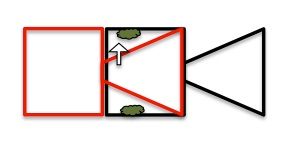 You can see where debris exits the mousehole (arrow) and builds up behind the cone of the baffle and on the wall of the baffle in front of it. When you pull the baffles apart:  you have to dislodge all that buildup. Wait too long and it becomes a pain in the neck. My disclaimer is that I haven't seen the Stinger baffles by themselves and if they aren't like the Alpine baffles, then what I said above doesn't apply. |
|
Thanks for that information.
I'm a total newbie when it comes to suppressors and I'm trying to learn the pro's and con's with each design/manufacturer. What is an average round count before cleaning? I realize it varies from suppressor to suppressor, and it also varies with ammo used, but figure using Federal ammo which in my experience tends to be a bit cleaner than others....if only marginally. Thanks for all the information guys.... ETA- Spelling |
[ARCHIVED THREAD] - Which 22 can (Page 1 of 2)
Armory Sponsor