


AR Sponsor

Posted: 8/20/2016 8:18:16 PM EDT
|
Ok fellas, I need help from the gurus.
I have the following: 14.5" 1/7 twist Colt 5.56 barrel wearing a brownells brand low profile gas block and brownells gas tube. I went to the range to sight it in and after exactly 12 rounds the gun stopped cycling. Specifically: I could discharge a round, the bolt would cycle, eject, but NOT re-chamber a new round. Happened three times. I then changed magazines. The gun continued to discharge a round, the bolt would cycle, eject, but NOT re-chamber a new round. Happened another three times WITH A DIFFERENT MAGAZINE. The gun was put together by a qualified gunsmith and the ammunition used was Winchester 55 gr FMJ ammo. Anybody have any ideas? I have had this issue with this gun before it was broken down and configured the way it is now. I thought that I was having a gas leak before, now im having the same issue. |
|
Hand it back to the smith to correct the problem.
Hence most of the time, just locking the gas block set screws with Loctite is enough to keep the gas block in place and the set screws tight, but to make dam sure that the gas block is not going move, once the block has been aligned with the barrel gas port, then barrel is dimpled where the set screws will contact the bottom of the barrel instead. Simply, with the barrel dimpled for the tips of the set screws to engage, and the set screws loctite in place, the block is not going to lose it index, nor the set screws come loose as well. As for the loctite set screws, if the block needs to be removed, then an old allen wrench is inserted into the set screw head, it glowed with a blow torch to transfer heat to the set screw to break down the loctite bond (will smell a sweet smell when the loctite bond breaks down), then the now heat softened Allen wrench is changed out to a new one to spin the set screw out. As for if the gas block did not more to lose index with the barrel gas port, and the set screws are still tight, then suspect that you have either had a jam to mix index the gas tube with the carrier key (you can pull the bolt off the carrier and dry fit the carrier with key in the upper receiver to check the alignment of the two), or you have a primer blow out of a spent case, and a piece of it has found it way into the carrier key to block it instead. Or, depending on the B/C, could have just snapped a key bolt or one of the bolts came loose, and now the key is leaking where it makes contact to the top of the carrier (should have zero leaks at this connection point). To sum it up, if the rifle is correctly stroking, you should be able to load a single round into a mag, lock the mag in the well, charge the round, fire the round with the empty mag still in the well, and the bolt should lock back on the bolt catch (catch in front of the bolt face, and not just under the carrier to hold it that way back instead). |
| Okay great. I will take it back to the smith and have him check alignment. I also noticed that the barrel gas port had a large amount of blue/greenish fouling inside the port prior to his rebuilding the upper for me. I wonder why this fouling was occurring. Maybe this could be part of the problem as well. All I know is I have a heavy single shot club, and need a rifle! lol |
|
Quoted:
Okay great. I will take it back to the smith and have him check alignment. I also noticed that the barrel gas port had a large amount of blue/greenish fouling inside the port prior to his rebuilding the upper for me. I wonder why this fouling was occurring. Maybe this could be part of the problem as well. All I know is I have a heavy single shot club, and need a rifle! lol Semi normal on the Blue/green fouling, since it's the color that copper turns when being cleaned with a solvent. Hence too long of a time between the bore was cleaned and the rifle fired, with the solvent sludge in the gas port dried before the rifle was fired again to blow it out in a semi liquid state isntead Hence for most cleaning, all goes as normal, but if the rifle is going to be put up for storage for any lenght of time, or about every 5 cleanings, will spray CLP down the gas tube from inside of the upper receiver and allow it to run into the bore before I start cleaning the rig. CLP has a cleaner in it, and will dissolve the old copper slug that was not removed during last cleanings, not blow out of the works during live fire when still in a liquid/plyable state isntead. As for the CLP in the gas tube and block passages, just leave it alone to do it thing, and when you fire the rifle, it's just going to be blow out of the block passage/tube and into the carrier gas chamber section, where it can be removed with ease isntead. Note, always keep the bore dry, so although you not cleaning the tube and gas tube passage from the CLP sprayed in it, make sure to run a dry patches to remove the CLP in the barrel bore before the rifle is fired again. As for the two solvents that I use to clean the AR, Sweets is used to clean just the bore to begin with, since it does not require a lot of scrubbing to remove the copper build up. 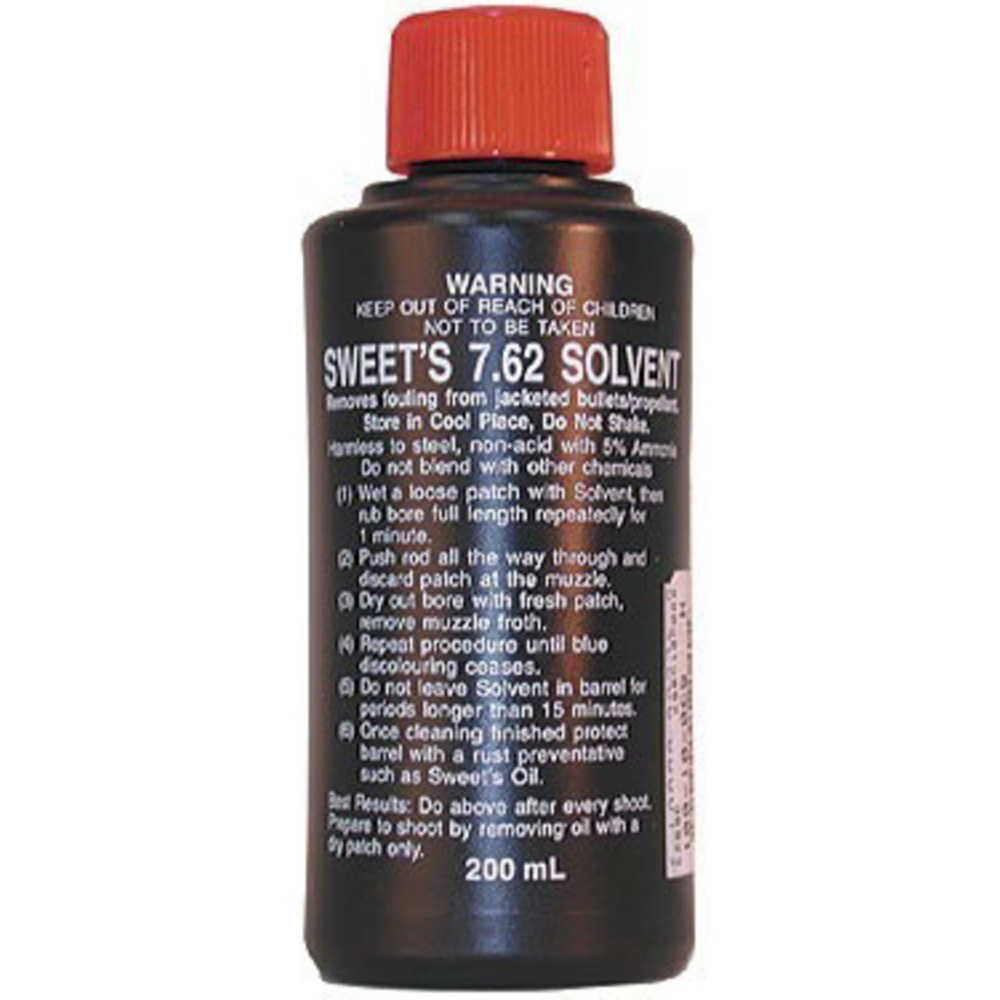
Then CLP is used to not only clean, but to lube everything else (including CLP with a chamber brush to scrub the chamber by hand once the bore has been cleaned with Sweets). Which means when the chamber is being cleaned, good time to give a the gas tube a good shot of CLP as well. Hence as your pushing the fouled chamber CLP out of the bore to get it dry, your also pushing out the CLP in the bore from the blast down the gas tube. Hence short of the barrel bore, the rest of the rifle is just getting a CLP lube change, since CLP has a cleaning agent in it, and will disolve the fouling you missed during cleaning. 
|
AR Sponsor