


AR Sponsor


Posted: 12/12/2010 10:34:39 AM EDT
|
AR is a 16" standard gas system rifle / bolt from a Del-Ton kit.
Background: This is my suppressor host, so it does get dirty but is mostly used without it. Rifle has over 1000 rounds through it, all being brass cased factory new or my reloads. Never shot any .22's through it Recently, it started having issues leaving ejected brass in the ejection port, stovepiped. Next round feeds in normally. Empty brass drops into a pile right next to the gun, very weakly. I did find the gas key was loose several weeks back, it was tightened and swaged into place. Gas rings were indexed correctly. Found it still had soft ejection and stovepiping. I replaced the extractor spring and added an o-ring, cleaned chamber very thouroghly. Took it out today and same thing 
Ammo I have been using is factory xm193, cases look pretty dirty after firing. Is it possible that the gas tube is clogged to a degree from suppressed fire? Is my extractor spring/o-ring installed correctly? Something else? mfn 


|
|
1- Replace your ejector spring. Its not pushing the empty casing out off of the bolt face.
2- Lube the bolt group. It needs the lube to keep going. 3- Think about replacing the extractor insert (blue thing) with the black colored insert. Just swap out the spring & insert with a replacement from Bravo Co. You will get proper extraction tension without the o-ring. 4- The extractor looks worn. Is it still sharp on the edge? The extractor groove looks like it needs a cleaning..........If not swap it for a fresh one from Bravo Co. |
|
Get two new key bolt, pull the key while throwing the old bolts away, and this time before you re install the key, lap the mating surfaces of the key to carrier in against each other.
As for lube, you are running the upper bearing areas way to dry. Lean hard into the CLP after you have fully cleaned the rifle (read chamber looks like it has never seen a chamber brush cleaning by hand). Lastly, when the rifle is suppressed, it will create more back pressure through the gas system (bolt unlocks sooner/too fast), and in the photo's you post, the third case from the right is showing either signs of of over pressure, or a chamber so dirty that the bolt is having one hell of a time pulling the spent case out. When suppressed, you may need to run a heaver buffer to slow down the unlock so the barrel pressure has time to bleed off before the spent case is pulled. |
|
In addition to the great info previously posted...
After reassembly check the installation of your extractor spring. The wide end needs to be seated in the extractor, with the black insert inside the spring with the wide end down. If you run an o-ring, that goes over the spring. It might be hard to see in this photo, but you get the idea. This one shows a D-Fender ring in place. With the increased pressures created by the suppressor, you need an H2 or maybe an H3 buffer. 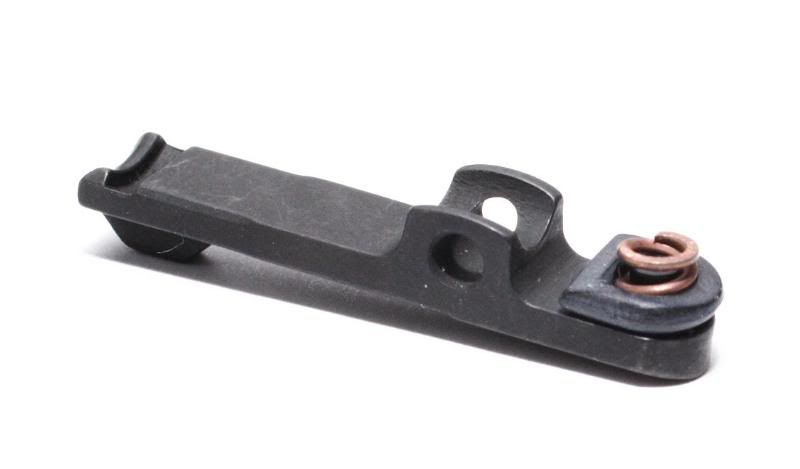
|
|
Like Dano said ... that chamber looks pretty dirty and really dry.
Get yourself one of these.... 
...they are 3.99 at Brownell's then after cleaning CLP .... but you still might need a heavier buffer when running it suppressed. |
Those pics were taken after shooting. I can assure you the carrier was lubed (not wet) and chamber bright and shiny, and yes, chamber brush was used. That is kind of why I listed the ammo I have been using, it seems pretty dirty. I haven't put any through a chrony but it doesn't seem to be sealing the case to the chamber. No extreme extractor marks however. That is kind of why I listed the ammo I have been using, it seems pretty dirty. I haven't put any through a chrony but it doesn't seem to be sealing the case to the chamber. No extreme extractor marks however.
I may have had the extractor spring upside-down with fat end on the bolt body. I ordered new springs, ejector, extractor to be on the safe side, they are the originals. Honing the key to carrier sounds like a pretty slick trick, thanks Dano. Thanks for the replies. |
|
Standard military approved M-193 ammo will push a round to around 3250 through a 20" barrel.
Now having said that, and the fact that some M-193 ammo does have Crimped in primers to prevent them from blowing out, what Fed is using for powder to produce the XM-193 may be different than the LC plant powder. If the XM-193 is being produced with slower burning powder than say Mil-Spec M193 from the LC plant, then that could explain why this batch of ammo is producing more sooty spent casings, and more fouled chamber than before. Although ATK (how is currently running the lake city plant), and Fed are really one and the same in regards to over-all ownership, the fact remains that the LC plant only produces ammo for the military alone by contract, and we have always wondered the connection between the two ammo's. Has it been the that the XM-193 and XM-855 are ammo's that did not meet government standards, and being sold off to the public from the LC plant (would think that it would require such defective ammo to be pulled down before leaving the plant), or some other case with the ammo not having any connection with the LC plant at all from the start. Now having said that, I will say that the sooty cases, and even the residue left behind in the chamber are not common for mil spec M-193, but we are not dealing with that ammo, but XM-193 instead. If the weapon was suppressed at the time of shooting, over function could explain some of it, but if not, then we are back to slower burning powder being the cause here (it too will cause over function since the dwell peak burn of the powder will be closer to the barrel gas port than faster burning powder, causing the action to open faster as well). You would think that Fed resolved the problem of slow burning when they ran into the fiasco with Fed match ammo, so maybe that is not the cause here at all, but maybe the ammo was just loaded with more dirty burning powder from the start. As stated, XM-193 does not have to be submitted to the government for testing, and if Fed/ATK did just happen to get a smoking deal on some gun powder that they could not use over at the LC plant, in the XM-193, it could find a home instead. Enough babbling, See if a heaver buffer helps the problem, and do run the upper bearing areas more on the wetter side with CLP to help the rifle deal with the fouling in the long run as well. |
|
Dano, thanks again. As for the heavier buffer, would a pistol buffer work? I happen to have one in a unfinished pistol lower that I can scavenge.
I also have all new parts for the bolt coming except for the dang gas rings, forgot all about them boogers 
I'll update sometime this week, got the parts coming with my new eotech 
mfn |
|
Buffer length has to match the receiver extension length it is going in to.
So a fixed stock receiver extension needs a full length buffer, a Telescoping butt stock needs a carbine length buffer, and on some of the pistol kit since they have even a shorter receiver extensions (tubes), a buffer even shorter than a carbine buffer. If the buffer is too long for the tube, then the bolt will not come back far enough for a round to be correctly loaded. If the buffer is too short for the tube, then instead of the B/C being limited correctly rearward, the back of the key crashes into the back of the lower receiver at the tube thread area, and cracks the receiver. So lets just assume that you have a telescoping stock, and have a standard carbine weight buffer in play. Without going to after market buffers, lets just say that a H-3 buffer is the other side of the coin in regards to buffer weight of a standard weight carbine stock. The difference between the two buffers are the 3 discs inside the buffers that are all the same size. In the case of the standard buffer, 3 steel discs, and in the case of the H-3 buffer, 3 tungsten discs instead. Why is this important between the two buffers? You can create just about any combos you want from the two. Swapping just one of the discs between the two gives you a H1 and H2 buffer if the extremes between the two in stock form are not enough to run the rifle both suppressed, and unsuppressed (read just swap the buffers to the needed one with the can is either in use or not). |
|
Got the rifle out and shot it today. New gas rings, ejector+spring, extractor+ spring. Ejection is about 3-4' out at the 2 o'clock position. Plenty of brass kisses on the deflector. No jams, no ftf's, brass is still coming out looking dirty. After perusing the other thread on 1 -3 o'clock vs. 3-5 o'clock, do I need a heavier buffer to get it to the 3-5 position?
mfn |
AR Sponsor