


AR Sponsor


Posted: 11/21/2009 12:11:46 PM EDT
|
whats your guys opinions on the angled mount, has there been issues with sighting since its so off to the side?
Also Ive read that guys really look down on the t1 as a primary optic, that it should only serve as a backup.... seems stupid to me, seems to suit fine... your opions and experience would be nice. |
|
Quoted:
whats your guys opinions on the angled mount, has there been issues with sighting since its so off to the side? Also Ive read that guys really look down on the t1 as a primary optic, that it should only serve as a backup.... seems stupid to me, seems to suit fine... your opions and experience would be nice. Really? I havent heard that yet. Why do they say it's not suitable for a primary optic? |
|
I think the Micro is good for a primary, its less weight and doesnt take up a whole lotta room on your weapon, it does the same thing as its bigger brothers (C3, M4, ML2, etc.)
as far as the angle mount goes, they have been doing that with iron sights at some 3 gun matches, its proved to do well with iron sights so i dont think an optic would differ. Its great if your running a magnified optic like an ACOG for example, you can engage targets at long ranges, but if you need to switch to CQB all you need to do is angle the rilfe a bit. |
|
I run a T1 as a primary optic for my work gun. Most of the guys I work and train with do too (and these are all dudes who know what they are doing). The Micro is a fantastic primary. I also have an M4s that sees some use, but when you are lugging around a rifle for hours in the heat with body armor, ammo, other crap, etc., ounces equal pounds and pounds equal pain. Size has nothing to do with red dot optics. The Micro has the field of view as any other red dot because you shoot with both eyes open. If you use a red dot correctly, the body housing of the optic "disappears" and your eyes focus on the dot.
As for strength, I have no doubts about my T1's. I've banged them up and abused the hell out of them for a while and they are none the worse for wear. I've watched the Aimpoint guys do repeated demos where they shoot a 5 shot group from 50 yards with an AR, remove the optic and mount and chuck it 50 feet onto gravel or concrete. They reattach the optic/mount and shoot the same group. I've seen an AR dropped on its' T1 on concrete and still work fine. Then, there is the batter life, constant on. Can't argue with that. TNVC and Aimpoint have a great relationship and one of my buddies over there sent me the following: The Unlikely Winner August 2, 2009: Most U.S. combat troops have been carrying primary optics (scopes) on their weapons for well over 10 years. In that time, a couple of different optics have emerged been modified and standardized. The first, Aimpoint, a Swedish Optics company retains the honor of having supplied more military optics worldwide than any other manufacturer. For the U.S. this comes in the form of the red dot M68 Close Combat Optical (CCO) This design has gone through several refinements over the years and is now standard issue as the M4S. Second, is EOTech Holographic Weapons Sight (HWS). This has gained ground in recent years, and its 553 version was selected as the primary sight of Special Operations Command (SOCOM). Recently, a poll was taken from soldiers in the field about which optic was preferred. The winner is neither the M4S nor HWS, but the Micro T1. A design introduced by Aimpoint in 2008. Featuring a 2.4 length, 1.6 inch diameter and 2.4 inch height with mount, and weighing a mere 3.7 ounces, the sight can be mounted not only on rifles and carbines but pistols as well. Its diminutive size and weight quickly won over users carrying weapons typically mounting a laser/infra-red designator and flashlight. Such a collection of gear, with standard scope and full magazine, tops out at over 9 pounds. With the Micro T1, up to 7 of those ounces are lost. The Micro T1 boasts many features commonplace with its larger brethren, such as a 5 year battery life, extreme durability, waterproofing to 80 feet and compatibility with all Picatinney rail systems. Other mount designs have emerged including one enabling use of a bullet drop dial when used in the 5.56mmm or 7.62mm weapons. Two civilian versions called the H1 and R1 are designed for hunting and pistol matches respectively. EOTech isn’t resting. It recently introduced a miniaturized version of its HWS with a 600 hour battery life while maintaining all the hardiness and user interface as its full size derivatives. –– Mike Perry Source Anyway, whoever is looking down on the T1 has, obviously, never used one in real life. BTW, here is my primary: 

As for the offset mount; we have been working with some folks in the military to develop an offset solution for a mini red dot. As it turns out, a lot of guys do not like the top-mounted red dots because they force you to use a chin weld (or in some cases, you can't even achieve that). The purpose of a cheek weld is to put your eyes in line with your sights or optic. When you break that, you lose stability in your shooting platform and have to search for your red dot. It can take seconds to acquire your dot, and on a two-way range, you are under enough stress. Add in the fact that the transition to your red dot is supposed to allow you to engage close threats quickly, and you can see why some units started looking for a new solution. Offset mounts originated in the competition world with the 3-gunners. However, most of them required a 45 degree angle for the mini red dot. This causes the shooter to roll the gun significantly to acquire the dot, thus breaking the cheek weld. Because of the immense popularity of our SAR Series, TNVC was approached to design an offset mount for use with ACOGs. The result was the MURLM. The MURLM (Multi Use Rail & Light Mount) incorporates a lot of research into a very efficient package. Numerous prototypes, refinements, and input from professionals lead to the final product. The MURLM features the most refined angle for an offset mount and, was designed with the Aimpoint Micro T1 in mind. When looking down your optic, the MURLM requires only a 5 degree cant to acquire the dot. This is barely noticeable and has a very shallow learning curve. In fact, the newer shooting styles, which teach you to center the butt stock more in your chest than the shoulder pocket so you're squared to the threat, has an even greater advantage for the MURLM. In this position, the shooter only needs to shift his eyes from one optic to the other. The weapon doesn't even need to cant. The MURLM's angle is even being borrowed by another company for their throw-lever offset mount. 
Another advantage of an offset is that it keeps the shooter's head down, behind his gun, instead of popped way up where it can catch a bullet. In close quarters, those precious inches can be life or death. 


Anyway, hope that helps. |
I can't say enough good things about the T-1 micro. At first I thought it looked kinda out place because it's so small, but it's awesome. I had the T-1 in my SPR in a Daniel Defense 1 o'clock mount and decided to try it on my shorty for a firearm instructor class. It's the best red dot IMO. It does everything any larger red dot does without the size. I really liked the fact that it doesn't block your vision because it's so small.

|
|
Quoted:
I run a T1 as a primary optic for my work gun. Most of the guys I work and train with do too (and these are all dudes who know what they are doing). The Micro is a fantastic primary. I also have an M4s that sees some use, but when you are lugging around a rifle for ours in the heat with body armor, ammo, other crap, etc., ounces equal pounds and pounds equal pain. Size has nothing to do with red dot optics. The Micro has the field of view as any other red dot because you shoot with both eyes open. If you use a red dot correctly, the body housing of the optic "disappears" and your eyes focus on the dot. As for strength, I have no doubts about my T1's. I've banged them up and abused the hell out of them for a while and they are none the worse for ear. I've watched the Aimpoint guys do repeated demos where they shoot a 5 shot group from 50 yards with an AR, remove the optic and mount and chuck it 50 feet onto gravel or concrete. They reattach the optic/mount and shoot the same group. I've seen an AR dropped on its' T1 on concrete and still work fine. Then, there is the batter life, constant on. Can't argue with that. TNVC and Aimpoint have a great relationship and one of my buddies over there sent me the following: The Unlikely Winner August 2, 2009: Most U.S. combat troops have been carrying primary optics (scopes) on their weapons for well over 10 years. In that time, a couple of different optics have emerged been modified and standardized. The first, Aimpoint, a Swedish Optics company retains the honor of having supplied more military optics worldwide than any other manufacturer. For the U.S. this comes in the form of the red dot M68 Close Combat Optical (CCO) This design has gone through several refinements over the years and is now standard issue as the M4S. Second, is EOTech Holographic Weapons Sight (HWS). This has gained ground in recent years, and its 553 version was selected as the primary sight of Special Operations Command (SOCOM). Recently, a poll was taken from soldiers in the field about which optic was preferred. The winner is neither the M4S nor HWS, but the Micro T1. A design introduced by Aimpoint in 2008. Featuring a 2.4 length, 1.6 inch diameter and 2.4 inch height with mount, and weighing a mere 3.7 ounces, the sight can be mounted not only on rifles and carbines but pistols as well. Its diminutive size and weight quickly won over users carrying weapons typically mounting a laser/infra-red designator and flashlight. Such a collection of gear, with standard scope and full magazine, tops out at over 9 pounds. With the Micro T1, up to 7 of those ounces are lost. The Micro T1 boasts many features commonplace with its larger brethren, such as a 5 year battery life, extreme durability, waterproofing to 80 feet and compatibility with all Picatinney rail systems. Other mount designs have emerged including one enabling use of a bullet drop dial when used in the 5.56mmm or 7.62mm weapons. Two civilian versions called the H1 and R1 are designed for hunting and pistol matches respectively. EOTech isn’t resting. It recently introduced a miniaturized version of its HWS with a 600 hour battery life while maintaining all the hardiness and user interface as its full size derivatives. –– Mike Perry Source Anyway, whoever is looking down on the T1 has, obviously, never used one in real life. BTW, here is my primary: http://i53.photobucket.com/albums/g64/clasky/TNVCsl_0569.jpg http://i53.photobucket.com/albums/g64/clasky/DD_T1mnt_1.jpg As for the offset mount; we have been working with some folks in the military to develop an offset solution for a mini red dot. As it turns out, a lot of guys do not like the top-mounted red dots because they force you to use a chin weld (or in some cases, you can't even achieve that). The purpose of a cheek weld is to put your eyes in line with your sights or optic. When you break that, you lose stability in your shooting platform and have to search for your red dot. It can take seconds to acquire your dot, and on a two-way range, you are under enough stress. Add in the fact that the transition to your red dot is supposed to allow you to engage close threats quickly, and you can see why some units started looking for a new solution. Offset mounts originated in the competition world with the 3-gunners. However, most of them required a 45 degree angle for the mini red dot. This causes the shooter to roll the gun significantly to acquire the dot, thus breaking the cheek weld. Because of the immense popularity of our SAR Series, TNVC was approached to design an offset mount for use with ACOGs. The result was the MURLM. The MURLM (Multi Use Rail & Light Mount) incorporates a lot of research into a very efficient package. Numerous prototypes, refinements, and input from professionals lead to the final product. The MURLM features the most refined angle for an offset mount and, was designed with the Aimpoint Micro T1 in mind. When looking down your optic, the MURLM requires only a 5 degree cant to acquire the dot. This is barely noticeable and has a very shallow learning curve. In fact, the newer shooting styles, which teach you to center the butt stock more in your chest than the shoulder pocket so you're squared to the threat, has an even greater advantage for the MURLM. In this position, the shooter only needs to shift his eyes from one optic to the other. The weapon doesn't even need to cant. The MURLM's angle is even being borrowed by another company for their throw-lever offset mount.
Another advantage of an offset is that it keeps the shooter's head down, behind his gun, instead of popped way up where it can catch a bullet. In close quarters, those precious inches can be life or death. http://i53.photobucket.com/albums/g64/clasky/EE/MURLM/MURLM_8.jpg http://i53.photobucket.com/albums/g64/clasky/EE/MURLM/MURLM_prod_AR12.jpg http://i53.photobucket.com/albums/g64/clasky/TNVCsl_0427.jpg Anyway, hope that helps. Clasky, Is it true that Aimpoint is going to release a 2moa version of the T1? I read that somewhere, but didn't know if it was fact. |
|
Quoted:
Quoted:
I run a T1 as a primary optic for my work gun. Most of the guys I work and train with do too (and these are all dudes who know what they are doing). The Micro is a fantastic primary. I also have an M4s that sees some use, but when you are lugging around a rifle for ours in the heat with body armor, ammo, other crap, etc., ounces equal pounds and pounds equal pain. Size has nothing to do with red dot optics. The Micro has the field of view as any other red dot because you shoot with both eyes open. If you use a red dot correctly, the body housing of the optic "disappears" and your eyes focus on the dot. As for strength, I have no doubts about my T1's. I've banged them up and abused the hell out of them for a while and they are none the worse for ear. I've watched the Aimpoint guys do repeated demos where they shoot a 5 shot group from 50 yards with an AR, remove the optic and mount and chuck it 50 feet onto gravel or concrete. They reattach the optic/mount and shoot the same group. I've seen an AR dropped on its' T1 on concrete and still work fine. Then, there is the batter life, constant on. Can't argue with that. TNVC and Aimpoint have a great relationship and one of my buddies over there sent me the following: The Unlikely Winner August 2, 2009: Most U.S. combat troops have been carrying primary optics (scopes) on their weapons for well over 10 years. In that time, a couple of different optics have emerged been modified and standardized. The first, Aimpoint, a Swedish Optics company retains the honor of having supplied more military optics worldwide than any other manufacturer. For the U.S. this comes in the form of the red dot M68 Close Combat Optical (CCO) This design has gone through several refinements over the years and is now standard issue as the M4S. Second, is EOTech Holographic Weapons Sight (HWS). This has gained ground in recent years, and its 553 version was selected as the primary sight of Special Operations Command (SOCOM). Recently, a poll was taken from soldiers in the field about which optic was preferred. The winner is neither the M4S nor HWS, but the Micro T1. A design introduced by Aimpoint in 2008. Featuring a 2.4 length, 1.6 inch diameter and 2.4 inch height with mount, and weighing a mere 3.7 ounces, the sight can be mounted not only on rifles and carbines but pistols as well. Its diminutive size and weight quickly won over users carrying weapons typically mounting a laser/infra-red designator and flashlight. Such a collection of gear, with standard scope and full magazine, tops out at over 9 pounds. With the Micro T1, up to 7 of those ounces are lost. The Micro T1 boasts many features commonplace with its larger brethren, such as a 5 year battery life, extreme durability, waterproofing to 80 feet and compatibility with all Picatinney rail systems. Other mount designs have emerged including one enabling use of a bullet drop dial when used in the 5.56mmm or 7.62mm weapons. Two civilian versions called the H1 and R1 are designed for hunting and pistol matches respectively. EOTech isn’t resting. It recently introduced a miniaturized version of its HWS with a 600 hour battery life while maintaining all the hardiness and user interface as its full size derivatives. –– Mike Perry Source Anyway, whoever is looking down on the T1 has, obviously, never used one in real life. BTW, here is my primary: http://i53.photobucket.com/albums/g64/clasky/TNVCsl_0569.jpg http://i53.photobucket.com/albums/g64/clasky/DD_T1mnt_1.jpg As for the offset mount; we have been working with some folks in the military to develop an offset solution for a mini red dot. As it turns out, a lot of guys do not like the top-mounted red dots because they force you to use a chin weld (or in some cases, you can't even achieve that). The purpose of a cheek weld is to put your eyes in line with your sights or optic. When you break that, you lose stability in your shooting platform and have to search for your red dot. It can take seconds to acquire your dot, and on a two-way range, you are under enough stress. Add in the fact that the transition to your red dot is supposed to allow you to engage close threats quickly, and you can see why some units started looking for a new solution. Offset mounts originated in the competition world with the 3-gunners. However, most of them required a 45 degree angle for the mini red dot. This causes the shooter to roll the gun significantly to acquire the dot, thus breaking the cheek weld. Because of the immense popularity of our SAR Series, TNVC was approached to design an offset mount for use with ACOGs. The result was the MURLM. The MURLM (Multi Use Rail & Light Mount) incorporates a lot of research into a very efficient package. Numerous prototypes, refinements, and input from professionals lead to the final product. The MURLM features the most refined angle for an offset mount and, was designed with the Aimpoint Micro T1 in mind. When looking down your optic, the MURLM requires only a 5 degree cant to acquire the dot. This is barely noticeable and has a very shallow learning curve. In fact, the newer shooting styles, which teach you to center the butt stock more in your chest than the shoulder pocket so you're squared to the threat, has an even greater advantage for the MURLM. In this position, the shooter only needs to shift his eyes from one optic to the other. The weapon doesn't even need to cant. The MURLM's angle is even being borrowed by another company for their throw-lever offset mount.
Another advantage of an offset is that it keeps the shooter's head down, behind his gun, instead of popped way up where it can catch a bullet. In close quarters, those precious inches can be life or death. http://i53.photobucket.com/albums/g64/clasky/EE/MURLM/MURLM_8.jpg http://i53.photobucket.com/albums/g64/clasky/EE/MURLM/MURLM_prod_AR12.jpg http://i53.photobucket.com/albums/g64/clasky/TNVCsl_0427.jpg Anyway, hope that helps. Clasky, Is it true that Aimpoint is going to release a 2moa version of the T1? I read that somewhere, but didn't know if it was fact. I have not personally heard anything about it, but that is not to say that it isn't true. The 4MOA dot is very versatile. I was not a huge fan of the 2MOA dot on the CompM3 only because it seemed to get lost under really bright light (1200 in the desert). The 4MOA dot is great for these applications and very fast to acquire. If you want a smaller dot, all you have to do is dial down the intensity. You just have to remember to do this. Otherwise, you will throw your shots at the 100 yard line. Ask me how I know this... 
|
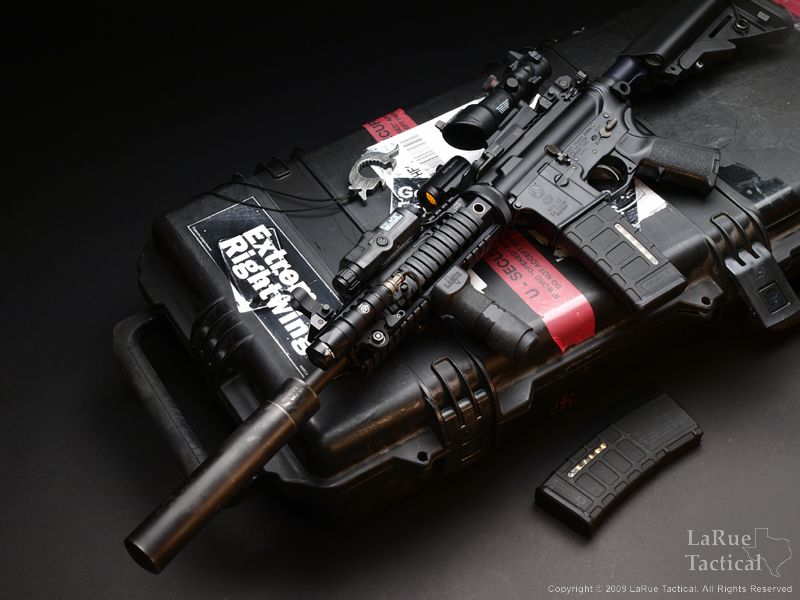
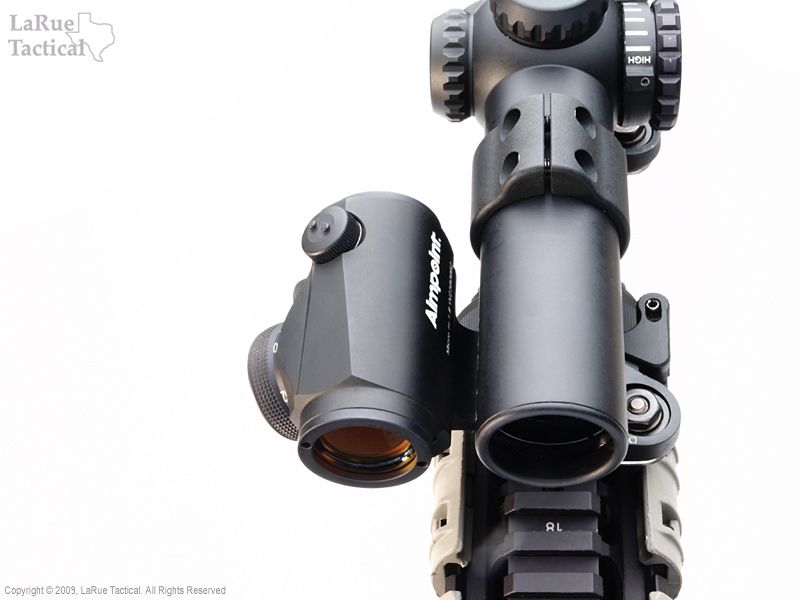
|
Quoted: T-1 Link H-1 Link http://i2.photobucket.com/albums/y44/mfingar/RW_Case.jpg http://i2.photobucket.com/albums/y44/mfingar/PB062122.jpg The T-1 / LT724 mount is one of our most popular items. I can't seem to find the mount on your site. I see the package deal with the optic - but I already have one. Can I just buy the mount? If so, link? |
|
Quoted:
Quoted:
Quoted:
I run a T1 as a primary optic for my work gun. Most of the guys I work and train with do too (and these are all dudes who know what they are doing). The Micro is a fantastic primary. I also have an M4s that sees some use, but when you are lugging around a rifle for ours in the heat with body armor, ammo, other crap, etc., ounces equal pounds and pounds equal pain. Size has nothing to do with red dot optics. The Micro has the field of view as any other red dot because you shoot with both eyes open. If you use a red dot correctly, the body housing of the optic "disappears" and your eyes focus on the dot. As for strength, I have no doubts about my T1's. I've banged them up and abused the hell out of them for a while and they are none the worse for ear. I've watched the Aimpoint guys do repeated demos where they shoot a 5 shot group from 50 yards with an AR, remove the optic and mount and chuck it 50 feet onto gravel or concrete. They reattach the optic/mount and shoot the same group. I've seen an AR dropped on its' T1 on concrete and still work fine. Then, there is the batter life, constant on. Can't argue with that. TNVC and Aimpoint have a great relationship and one of my buddies over there sent me the following: The Unlikely Winner August 2, 2009: Most U.S. combat troops have been carrying primary optics (scopes) on their weapons for well over 10 years. In that time, a couple of different optics have emerged been modified and standardized. The first, Aimpoint, a Swedish Optics company retains the honor of having supplied more military optics worldwide than any other manufacturer. For the U.S. this comes in the form of the red dot M68 Close Combat Optical (CCO) This design has gone through several refinements over the years and is now standard issue as the M4S. Second, is EOTech Holographic Weapons Sight (HWS). This has gained ground in recent years, and its 553 version was selected as the primary sight of Special Operations Command (SOCOM). Recently, a poll was taken from soldiers in the field about which optic was preferred. The winner is neither the M4S nor HWS, but the Micro T1. A design introduced by Aimpoint in 2008. Featuring a 2.4 length, 1.6 inch diameter and 2.4 inch height with mount, and weighing a mere 3.7 ounces, the sight can be mounted not only on rifles and carbines but pistols as well. Its diminutive size and weight quickly won over users carrying weapons typically mounting a laser/infra-red designator and flashlight. Such a collection of gear, with standard scope and full magazine, tops out at over 9 pounds. With the Micro T1, up to 7 of those ounces are lost. The Micro T1 boasts many features commonplace with its larger brethren, such as a 5 year battery life, extreme durability, waterproofing to 80 feet and compatibility with all Picatinney rail systems. Other mount designs have emerged including one enabling use of a bullet drop dial when used in the 5.56mmm or 7.62mm weapons. Two civilian versions called the H1 and R1 are designed for hunting and pistol matches respectively. EOTech isn’t resting. It recently introduced a miniaturized version of its HWS with a 600 hour battery life while maintaining all the hardiness and user interface as its full size derivatives. –– Mike Perry Source Anyway, whoever is looking down on the T1 has, obviously, never used one in real life. BTW, here is my primary: http://i53.photobucket.com/albums/g64/clasky/TNVCsl_0569.jpg http://i53.photobucket.com/albums/g64/clasky/DD_T1mnt_1.jpg As for the offset mount; we have been working with some folks in the military to develop an offset solution for a mini red dot. As it turns out, a lot of guys do not like the top-mounted red dots because they force you to use a chin weld (or in some cases, you can't even achieve that). The purpose of a cheek weld is to put your eyes in line with your sights or optic. When you break that, you lose stability in your shooting platform and have to search for your red dot. It can take seconds to acquire your dot, and on a two-way range, you are under enough stress. Add in the fact that the transition to your red dot is supposed to allow you to engage close threats quickly, and you can see why some units started looking for a new solution. Offset mounts originated in the competition world with the 3-gunners. However, most of them required a 45 degree angle for the mini red dot. This causes the shooter to roll the gun significantly to acquire the dot, thus breaking the cheek weld. Because of the immense popularity of our SAR Series, TNVC was approached to design an offset mount for use with ACOGs. The result was the MURLM. The MURLM (Multi Use Rail & Light Mount) incorporates a lot of research into a very efficient package. Numerous prototypes, refinements, and input from professionals lead to the final product. The MURLM features the most refined angle for an offset mount and, was designed with the Aimpoint Micro T1 in mind. When looking down your optic, the MURLM requires only a 5 degree cant to acquire the dot. This is barely noticeable and has a very shallow learning curve. In fact, the newer shooting styles, which teach you to center the butt stock more in your chest than the shoulder pocket so you're squared to the threat, has an even greater advantage for the MURLM. In this position, the shooter only needs to shift his eyes from one optic to the other. The weapon doesn't even need to cant. The MURLM's angle is even being borrowed by another company for their throw-lever offset mount.
Another advantage of an offset is that it keeps the shooter's head down, behind his gun, instead of popped way up where it can catch a bullet. In close quarters, those precious inches can be life or death. http://i53.photobucket.com/albums/g64/clasky/EE/MURLM/MURLM_8.jpg http://i53.photobucket.com/albums/g64/clasky/EE/MURLM/MURLM_prod_AR12.jpg http://i53.photobucket.com/albums/g64/clasky/TNVCsl_0427.jpg Anyway, hope that helps. Clasky, Is it true that Aimpoint is going to release a 2moa version of the T1? I read that somewhere, but didn't know if it was fact. I have not personally heard anything about it, but that is not to say that it isn't true. The 4MOA dot is very versatile. I was not a huge fan of the 2MOA dot on the CompM3 only because it seemed to get lost under really bright light (1200 in the desert). The 4MOA dot is great for these applications and very fast to acquire. If you want a smaller dot, all you have to do is dial down the intensity. You just have to remember to do this. Otherwise, you will throw your shots at the 100 yard line. Ask me how I know this... Ok, so even if they did come out with 2moa you would still recommend the 4moa? Faster taget aquisition? Makes sense, think I will place an order for one with the Laure QD mount. |
|
Please note what Clasky stated about turning the dot brightness down, this is key here. As for the 4 MOA dot, in the configuration we're talking about here; the T1 is in a back up type CQB role that will be used for quick target acquisition away from your primary optic, so a larger MOA does help in these scenarios. Hope this helps .
Vic |
|
Quoted: Ok, so even if they did come out with 2moa you would still recommend the 4moa? Faster taget aquisition? Makes sense, think I will place an order for one with the Laure QD mount. I'm a LaRue fan, too but you owe it to yourself to check out the MURLM and SAR as well (if you haven't already) http://tnvc.com/categories/weapon_mounts_rings.html. Back in the day I seem to remember TNVC did some package deals too. Worth checking out... |
|
Ok, so even if they did come out with 2moa you would still recommend the 4moa? Faster taget aquisition? Makes sense, think I will place an order for one with the Laure QD mount.[/quote] It's worth noting that we at TNVC sell Aimpoints as well. If you are looking for the T1, we offer it in a package deal with the Daniel Defense Micron Mount shown in the photos above. This mount is awesome and gaining a lot of attention from the pros. We even received the 2008 Aimpoint New Military Dealer of the Year award at SHOT Show last year. Just saying.
Aimpoint sold here |
|
Quoted:
Please note what Clasky stated about turning the dot brightness down, this is key here. As for the 4 MOA dot, in the configuration we're talking about here; the T1 is in a back up type CQB role that will be used for quick target acquisition away from your primary optic, so a larger MOA does help in these scenarios. Hope this helps . Vic So you wouldn't recommend the T1 as a primary optic? |
|
Quoted:
Quoted:
Ok, so even if they did come out with 2moa you would still recommend the 4moa? Faster taget aquisition? Makes sense, think I will place an order for one with the Laure QD mount. I'm a LaRue fan, too but you owe it to yourself to check out the MURLM and SAR as well (if you haven't already) http://tnvc.com/categories/weapon_mounts_rings.html. Back in the day I seem to remember TNVC did some package deals too. Worth checking out... Those look nice too, but im actually considering one as my primary optic. Without an offside mount. |
|
Quoted: Quoted: Please note what Clasky stated about turning the dot brightness down, this is key here. As for the 4 MOA dot, in the configuration we're talking about here; the T1 is in a back up type CQB role that will be used for quick target acquisition away from your primary optic, so a larger MOA does help in these scenarios. Hope this helps . Vic So you wouldn't recommend the T1 as a primary optic? He's referring to the T1 mounted at an angle as a close-up supplement to a magnified optic, where a larger dot is better. I didn't catch anything in that about the T1s suitability as a primary. |
|
Quoted:
Quoted:
Quoted:
Please note what Clasky stated about turning the dot brightness down, this is key here. As for the 4 MOA dot, in the configuration we're talking about here; the T1 is in a back up type CQB role that will be used for quick target acquisition away from your primary optic, so a larger MOA does help in these scenarios. Hope this helps . Vic So you wouldn't recommend the T1 as a primary optic? He's referring to the T1 mounted at an angle as a close-up supplement to a magnified optic, where a larger dot is better. I didn't catch anything in that about the T1s suitability as a primary. Oh ok, so 4moa optic is good to go for a primary optic? |
|
Quoted:
Quoted:
Quoted:
Quoted:
Please note what Clasky stated about turning the dot brightness down, this is key here. As for the 4 MOA dot, in the configuration we're talking about here; the T1 is in a back up type CQB role that will be used for quick target acquisition away from your primary optic, so a larger MOA does help in these scenarios. Hope this helps . Vic So you wouldn't recommend the T1 as a primary optic? He's referring to the T1 mounted at an angle as a close-up supplement to a magnified optic, where a larger dot is better. I didn't catch anything in that about the T1s suitability as a primary. Oh ok, so 4moa optic is good to go for a primary optic? Yes. It is great for both roles and use one on a pretty regular basis for both applications.
|
|
Optima 2000/FastFire/JPoint or the Docter sight as a primary sight without a protective mount is a broken miniature sight in the making, the T1 has no such issues, or we would have seen protective mounts for it already.
There is a host of themes and variation of T1 offset mounts and long range scope secondary T1 mounts, while none takes the same forms, many owe homage to the TNVC SAR and MURLM. My AR10 with TNVC SAR (immediately ahead of the turrets) 
|
| i just bought the larue qd angled mount and t1 mount combo... Im very excited. It should be here on tuesday. I bought the acog rco mount, and it was awesome... there customer service was great the first time so i bought another product. I will post before after pics and a review |
|
Quoted:
i just bought the larue qd angled mount and t1 mount combo... Im very excited. It should be here on tuesday. I bought the acog rco mount, and it was awesome... there customer service was great the first time so i bought another product. I will post before after pics and a review Here's something to get you by. 
click on photo, for larger image 
|
|
I am a lefty and currently have a T-1 mounted on a Daniel Defense offset mount (left side). I would like to change mounts to the Larue but from looking at the pictures posted it seems like the electronic control knob would get in the way of the ACOG's field of view.
mfingar: Have you tried mounting the T-1 on the left side? MadDog 
|
AR Sponsor