


Posted: 11/30/2008 10:07:55 PM EDT
|
Hey,
Don't know anything about welding. Wanting to do a little hobby welding. I am getting a bender & some stock & I'm going to make a D guard for a bowie knife, then I'll weld it on. What kind of welder should I get. There is stick, arc, tig, mig, gas w/ AC or DC power??? The knife does have a baked on finish right now. Can remove it in the area if i have to. This is a larger chopping type knife so I have to be extra careful to avoid ruining its temper; which type of welder would have lower heat &/or temp? I might consider a high strength solder too, at least on the forward part of the guard to preserve the temper... Thanks. |
|
From the reading that I've done, and out of what you listed, I personally consider TIG to be the best, and MIG to be the second best, with the others relegated to stuff that I have no use for in my garage. I have never used a TIG welder, but from what I've read, you have a lot more control over the weld puddle when working with one, but it is slower than MIG and appears to require more technique. An advantage of a lot of MIG machines is that you can switch over to flux-core wire and weld without using a shielding-gas setup. However, this tends to result in a messier, and perhaps lower-quality, weld.
ETA: From what I understand, the electric welders tend to concentrate the heat into the weld area, whereas gas welders can have a tendency to heat up the entire piece of metal. However, AFAIK, by definition, ALL of the welders are going to heat the metal up to red hot in the area that is being welded, so the heat-treat in that area is probably going to be affected. |
|
So MIG welding arcs a roll of wire which is used as filler material in the bead.
Stick/ARC arcs across a stick which melts & becomes the bead. TIG welding uses a non-consumable tungsten torch to melt the two pieces together directly or to melt a rod of filler materiel into the joint. It sounds like TIG welding requires a gas tank (Argon) to blow across your work. TIG also sound like it take some skill. Looks like stick or MIG welding would be the way to go, or perhaps high temp solder on the top part of the guard. |
|
Arc welding is ugly for what you want, its basicly a commercial construction deal.... mig welding looks better then Arc welding..... and Tig welding will be your best looking welds
now those little 120v mig things you see at like walmart and what not, are junk, they can't penetrate worth a dem on real metal, and its ugly cause its a gasless system tig welding requires more practice and time to get use to, but is the best form of welding out there, you can do anything with a tig welder. mig welders are a little more limited in there use but are still great for a hobby welder now i'm assuming that your talking about Stainless steal too if your talking a knife.... so make sure you get the right wire, or filler rod pending what form you go with..... but all in all welding is not hard, just takes time to learn it, so practice and learn what your working with before you touch something that you want to look nice...... and none really have a lower heat...... Tig you can control the heat better with it.... but when welding its going to get red hot regardless..... they all use electricity flowing through the metal to heat it up to the point of melting, once it reaches this point the 2 pieces of metal bond.... the higher the heat the deeper the pentration, the better the bond.... too much heat you get big nasty holes. too little heat and the parts won't bond correctly resulting in a crappy weld that breaks thats all i can think off the top of my head right now...... if you have questions that need more detailed answers let me know..... i was a welder for a construction company till my boss retired and shut down the shop..... and i have a degree for it |
|
Quoted:
So MIG welding arcs a roll of wire which is used as filler material in the bead. Stick/ARC arcs across a stick which melts & becomes the bead. TIG welding uses a non-consumable tungsten torch to melt the two pieces together directly or to melt a rod of filler materiel into the joint. It sounds like TIG welding requires a gas tank (Argon) to blow across your work. TIG also sound like it take some skill. Looks like stick or MIG welding would be the way to go, or perhaps high temp solder on the top part of the guard. mig requires a gas tank too if you want it to look nice, and yes Tig takes a lot of skill, its awesome when you get it down the point of the gas, is to keep contamnits out of your welds.... once you get that junk in there you get nasty bubbles and pockets which mess up the weld |
|
For that application you want to solder the guard on as to not alter the temper of the blade.
For small delicate operations where the heat affected zone needs to be as small as possible the TIG is the way to go. However it is expensive to get into and has a steep learning curve but once setup and going its a thing of beauty. Welding aluminum especially thinner pieces with it will take time to learn, but steel is fairly easy. You may not able to lay that perfect stack of dimes on your first day but you will be able to lay a structurally suitable weld within a few hours of trying. You can use MIG but it will not be as neat larger heat affected zone, less control over the weld, but it is significantly cheaper and easier to learn. Stick is used in windy field conditions or where thick pieces need to be welded quickly and in odd places/positions. Not recommended for this or any home shop. Steel will be welded with DC |
|
How much do you want to spend and what kind of power will you have access to?
I have a 115v mig welder. Mainly b/c I don't have the means to run 220 out to my garage. It works for the little that I use it for. However, a nice 220v machine would make everything a lot easier. |
|
TIG (GTAW) is the best for small stuff with limited heat. It will be the better choice on medium carbon too.
Stick (SMAW) is also great, it is far easier, cheaper and depending on the electrode (rod) choice, will work great on medium carbon. Either a 7014 or 7018 rod will give smooth, stable arcs, minimal splatter and controlled penetration on thinner work. 7018 will penetrate far less, giving a greater depositation rate with proper joint geometry. I like the 7014 for general work. It is much cleaner that the 60nn series which spatter and sputter. These are best on dirty steel where the 70nn are low hydrogen, better for harder steel but proper prep of the metal and joint are required. MIG? Hate it. Easy to learn but you must have gas, no getting around it. And FCAW? Great with gas BUT without it, it is like SMAW with 6011 rods, minus the deep penetration. With 6011 rods, you can cut steel...although for that, get an arc gouging torch for the SMAW welder, it uses copper coated carbon rods and air from the air compressor, it will cut ANYTHING, rather crudely but faster than a grinder. Oxyfuel? Great for hobby, jewelry and small stuff. Better for brazing and cutting. It will teach you the skills for GTAW, puddle control and filler addition. The temperature of the flame is in the 4600 F range, GTAW is in the 7000 F range. Higher temps, faster weld. But I have welded thick stuff with gas and while slow, it gets the job done for short welds. Forget any welder using 120, 15 amp service. These peak out at 120 amps (voltage is much lower) and at high currents, their duty cycle can be as low as 10%. Weld for a minute, cool for 10. A good Lincoln or Miller SMAW set with leads and a good helmet should be $300 with chipping hammer and instructions. These will go to 180 amps and use the bigger rods. They can be turned down to do the fine stuff. Read up on weld preparation, this is the key. Joint design will require different positions of the rod. For example, a simple "T" would require the rod to be directed more to the base than the intersecting piece because the heat will flow in both directions on the base. But if the intersector is vertical with the base flat on the bench, the weld metal will not flow up to the intersector, so you have to direct the arc down but metal up... Remember, metals expand when they get hot. No clamp will resist this, tack welds are a must. Tack in at least 2 places. If the tack pops while welding, things will move. Learn to tack sufficiently. And it can still warp. TIG is not for beginners. Especially on small stuff. Older style "scratch start" units are limited heat adjustability. Arc length is the only method. Better are the high frequency start units. These impose a HF on startup, causing an arc to form while the stinger is a bit off the metal. Tungstens stay cleaner and break less. Dirty tungstens cause all sorts of arc goofy behavior. Yes, you have to grind them...got a bench grinder? And the HF unit is left ON for aluminum as it cleans the oxide layer which forms a "skin" on the aluminum, preventing good flow...Al welding is an art. |
|
Quoted:
So MIG welding arcs a roll of wire which is used as filler material in the bead. Stick/ARC arcs across a stick which melts & becomes the bead. TIG welding uses a non-consumable tungsten torch to melt the two pieces together directly or to melt a rod of filler materiel into the joint. It sounds like TIG welding requires a gas tank (Argon) to blow across your work. TIG also sound like it take some skill. Looks like stick or MIG welding would be the way to go, or perhaps high temp solder on the top part of the guard. Metal inert gas(mig) is the way to go. With 100% argon I can lay a weld that looks as good as a tig would do in half the time,get paid and move on. Keep in mind the GAS part. You could get a cheap mig that will run flux core only but it's a waste of your money. Get your self good Miller or Lincoln and at least a 40lbs bottel. Work on getting the hang of it before welding something you want to keep. The gas will shild the weld and your work will come out much better. Trust me,you will not be happy with the splatter from inerflux. Most stick welders would blow right though thin stuff. The only time I drag one out to weld on a tractor or something like that, I would stay away from it. |
| a 110v mig wleder will do you fine. If you buy a gasless one now you can buy a adapter later on to make it use gas if you deem it necessary. Mig welding isnt as pretty as tig, but it will still work. One word of caution though, once you get a wleder you will look around at anythign made of metal and think "hey i could build that" |
|
IMHO, you'd probably be better off $$ wise, and have a better looking knife, if you just pay an experienced welder to do the job. I've been toying with it for a while, even took a 48 hour class, and i still wouldn't call my welds "show-quality".
buy a cheap wire feed and practice, practice, practice. unless you are some sort of prodigy, 30 minutes of screwing around will not enable you to do a quality job on a project you want to look really nice. |
|
MIG welding can look very nice. I have some stuff that was welded by robots to prove it. I have some (I wish I could say all) of my own welds to prove it. As for TIG, try walking, patting your tummy, and rubbing your head. If you can do all those for a length of time then you can probably TIG weld. It definitely is an art.
The key to welding with any device is practice. I have seen people lay down beads on the crapiest metal using the crapiest equipment that looked like works of art. These guys had probably laid down more miles of weld than most of us have driven cars though. |
|
Go to your local Community College or Local Adult Ed program and take a welding class.
Learn all you can and then make a decision. My take? for what you want get a TIG machine a quality Miller or Lincoln or Hobart machine. It will likely cost a bit initially but the results are vastly superior to the budget machines. If it plugs into a 120/15 wall outlet RUN AWAY. http://www.hobartwelders.com/products/tig/tigmate/ http://www.millerwelds.com/products/tig/dynasty_200_series/ http://mylincolnelectric.com/Catalog/equipmentdatasheet.aspx?p=39581 Any of these machines will serve you well. Look for HF start and AC TIG for aluminum |
|
Quoted:
TIG (GTAW) is the best for small stuff with limited heat. It will be the better choice on medium carbon too. Stick (SMAW) is also great, it is far easier, cheaper and depending on the electrode (rod) choice, will work great on medium carbon. Either a 7014 or 7018 rod will give smooth, stable arcs, minimal splatter and controlled penetration on thinner work. 7018 will penetrate far less, giving a greater depositation rate with proper joint geometry. I like the 7014 for general work. It is much cleaner that the 60nn series which spatter and sputter. These are best on dirty steel where the 70nn are low hydrogen, better for harder steel but proper prep of the metal and joint are required. MIG? Hate it. Easy to learn but you must have gas, no getting around it. And FCAW? Great with gas BUT without it, it is like SMAW with 6011 rods, minus the deep penetration. With 6011 rods, you can cut steel...although for that, get an arc gouging torch for the SMAW welder, it uses copper coated carbon rods and air from the air compressor, it will cut ANYTHING, rather crudely but faster than a grinder. Oxyfuel? Great for hobby, jewelry and small stuff. Better for brazing and cutting. It will teach you the skills for GTAW, puddle control and filler addition. The temperature of the flame is in the 4600 F range, GTAW is in the 7000 F range. Higher temps, faster weld. But I have welded thick stuff with gas and while slow, it gets the job done for short welds. Forget any welder using 120, 15 amp service. These peak out at 120 amps (voltage is much lower) and at high currents, their duty cycle can be as low as 10%. Weld for a minute, cool for 10. A good Lincoln or Miller SMAW set with leads and a good helmet should be $300 with chipping hammer and instructions. These will go to 180 amps and use the bigger rods. They can be turned down to do the fine stuff. Read up on weld preparation, this is the key. Joint design will require different positions of the rod. For example, a simple "T" would require the rod to be directed more to the base than the intersecting piece because the heat will flow in both directions on the base. But if the intersector is vertical with the base flat on the bench, the weld metal will not flow up to the intersector, so you have to direct the arc down but metal up... Remember, metals expand when they get hot. No clamp will resist this, tack welds are a must. Tack in at least 2 places. If the tack pops while welding, things will move. Learn to tack sufficiently. And it can still warp. TIG is not for beginners. Especially on small stuff. Older style "scratch start" units are limited heat adjustability. Arc length is the only method. Better are the high frequency start units. These impose a HF on startup, causing an arc to form while the stinger is a bit off the metal. Tungstens stay cleaner and break less. Dirty tungstens cause all sorts of arc goofy behavior. Yes, you have to grind them...got a bench grinder? And the HF unit is left ON for aluminum as it cleans the oxide layer which forms a "skin" on the aluminum, preventing good flow...Al welding is an art. +1 |
|
Quoted:
Yes, you have to grind them...got a bench grinder? When grinding TIG electrodes, you need a dedicated griding wheel, you can't grind anything else with that wheel or you'll contaminate the electrode. That being said, there are "chemical" sharpeners that work exceptionally well. Essentially it's nothing more than sodium nitrate in a little jar, you either heat the electrode by shorting it against a plate until it glows then repeatedly dip it in the powder until it points or heat it with a propane torch (best method) then dip. Miller makes some decent 110V "pack" style TIG welders that are suitable for small work, sheet metal etc.. |
|
A couple of years ago, I wanted to do some gun work that required welding. Rather than pay someone to do it for me, I bought a cheap DC TIG welder from Harbor Freight. I've seen the price for this welder fluctuate between $200 and $300, so wait for it to be on sale if you can. To be sure, it is an extremely limited unit (scratch start, only good for carbon steel, no foot pedal current control etc.), but for small, infrequent projects it works well. The price is much lower than you will find for other TIG welders, though you will also need to spend about the same again on accessories such as protective equipment and an argon tank/regulator, plus you need to run a 220V circuit.
Welding is a skill you can develop, at least to a rudimentary level, by reading a book - I did. My welds are not the prettiest, but they clean up OK and are functional. So far I have done a lot of work on magazines and mods for my MAX-11 subgun, gaining a significant competitive advantage. Mags: 
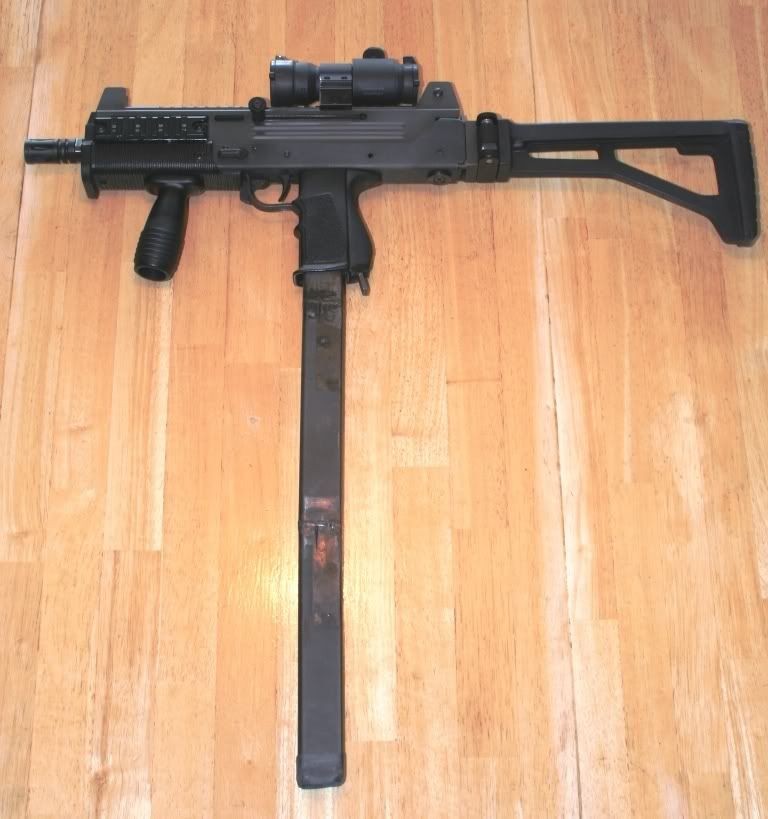

Riser Rail and Vertical ForeGrip: 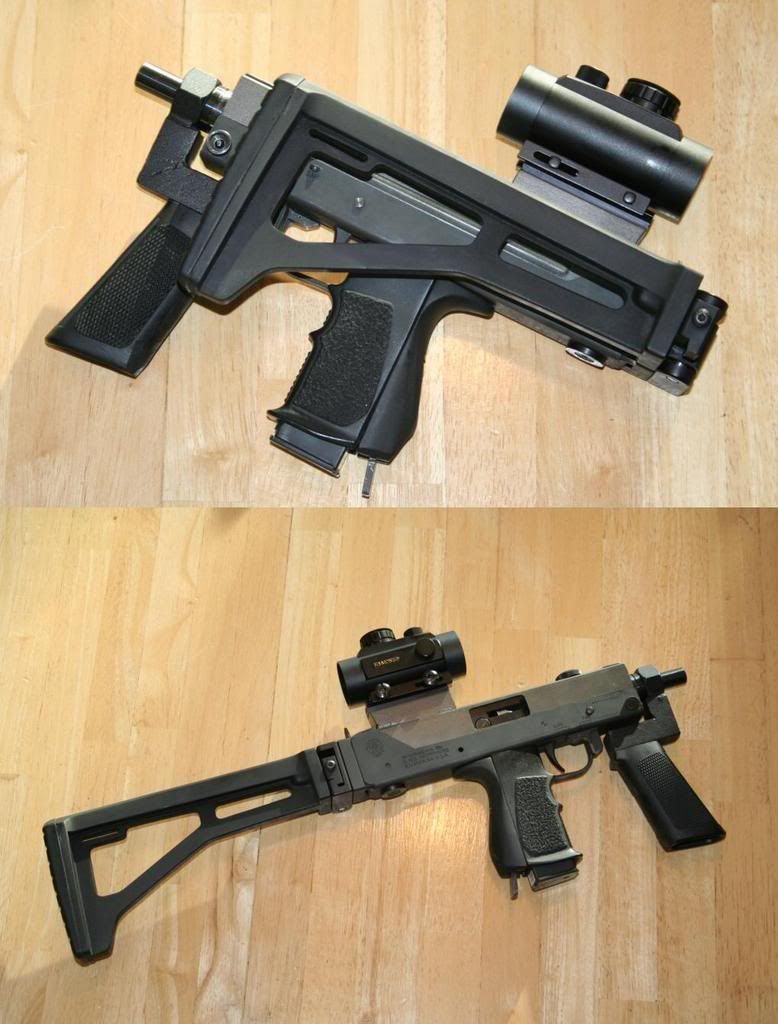
TableTop Mortar  : :
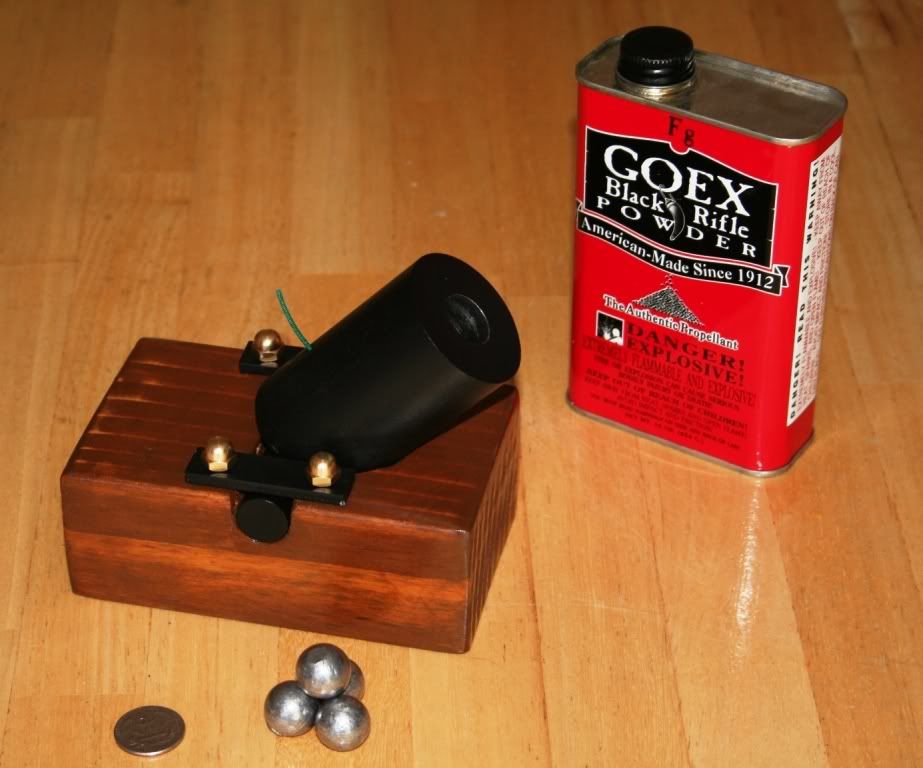
I've also done numerous other projects (gun related and not)... once you have a welder, you find all sorts of uses for it where otherwise you would have used glue, solder or fasteners with less satisfactory results. I'm not sure I would use welding for the knife project, due to heat treatment issues, but I would not be without this welder. |
|
MIG will have the lowest heat input, TIG generally the greatest.
If you weld on your knife it is definitely going to mess up the heat treatment. Soldering would have the slightest impact, but I would still not advise it. Any of this is going to screw up your finish. I was certified in TIG, MIG, and Stick for 8 years on nuclear & steam plant systems and structural welding. Most welds involved pre and post weld heat treatment. |
|
Quoted:
I was in the same boat a while back, I found for these applications a mig welder with flux core wire is the way to go!! Sounds like a 110v welder would do you just fine for what you need I got a decent reconditioned one for $80 off the Harbor Freight online store, I've been happy with it for hobby work. ETA: this is the one I got, but it was only $80 last summer. http://www.harborfreight.com/cpi/ctaf/Displayitem.taf?itemnumber=55167 |
|
Quoted:
My welds are not the prettiest, but they clean up OK and are functional. So far I have done a lot of work on magazines and mods for my MAX-11 subgun, gaining a significant competitive advantage. I use a stick welder and a junk gasless MIG. I stay away from the junker MIG because it puts out horrible welds. The stick puts out beautiful welds if you're precise. I grab the rod near the bottom with a glove and direct it like a pencil. You can always turn down a stick welder to work on just about anything that brazing won't do. Here's whats important: ––-Setup––- Rod selection - I'm no expert. I'd ask your local welding shop Current - more for thicker metal, less for thinner. ––-During––- Speed - how fast you are traversing the joint Height - how high off the metal is the end of the rod Temperature - as you weld the part heats up. Start slow then quicken the speed as you run down the joint Pattern - Somewhat similar to speed... Draw a figure 8, or a C or some other tecnique as you traverse in order to drip material off the rod and onto the joint. The pattern you move the rod in will make or break your weld. Angle - The rod will have to be angled at a certain angle to perfect the joint Did i miss anything? What I would do is buy a stick welder then some scrap metal to figure out each step above. |
|
If you ever plan to do auto body, then buy a small 115volt MIG. Both the Lincoln Power MIG 140 or Millermatic 140 are top choices
One downside of MIG is that for Aluminum these hobby machines are not the best choice. You need to spend some more $$ The best part with TIG is that you can weld anyting weldable with the same setup ( unlike MIG which requries different gases for different materials ) BTW - I assume you are not trying to weld on the blade of the knife . Reason for that it typically carbon steel knife material ( 1090 , D2 etc ) and stainless steel knife materials ( martensitic stainless such as Type 440 ) can be very crack prone when welding. |
|
Start reading.
Take a class at the nearest tech school, don't try to learn on your own. Even after the school you'll probably need to practice the exact joints used in your work. I learned on oxy-acetylene. That develops hand eye control that pays off with TIG. I have a lightweight torch handle used for welding airplane fuselages, and tips from roaring huge to tiny; I can make very delicate gas welds on very thin materials. If I ever build another airplane with a tube fuselage, it will be welded with TIG and stress relieved with gas. The soot from oxy-acetylene is a killer and I have to wear a filter mask if I weld for long periods. Airplane work is done inside in still air. TIG is wonderfully clean, and I've never set myself on fire  with that process. with that process.
For your knife project, you're past the point where welding is an option, particularly if you don't know how. Use solder and be done with it. TIG or MIG can work, but you're months away from that process unless you hire someone. Once you learn how to weld, you'll look at projects with a different eye. Your friends will accuse you of wanting "to fix everything with fire"! |
|
Thanks so much everyone for all you input. I think that I might should avoid welding this knife. Again it is a large chopping knife so its temper is very important.
I think soldering the gaurd on will be fine. It doens't have to be totally bullet proof, I just want some protection for knuckles. It would be nice to have a little unit to do little things though. That was the most ridicoulous magazine I have ever seen  I really respect your ingenuity. Its cool to see how far you can take something. I really respect your ingenuity. Its cool to see how far you can take something.
|
|
Quoted:
Start reading. Take a class at the nearest tech school, don't try to learn on your own. Even after the school you'll probably need to practice the exact joints used in your work. I learned on oxy-acetylene. That develops hand eye control that pays off with TIG. I have a lightweight torch handle used for welding airplane fuselages, and tips from roaring huge to tiny; I can make very delicate gas welds on very thin materials. If I ever build another airplane with a tube fuselage, it will be welded with TIG and stress relieved with gas. The soot from oxy-acetylene is a killer and I have to wear a filter mask if I weld for long periods. Airplane work is done inside in still air. TIG is wonderfully clean, and I've never set myself on fire with that process.
For your knife project, you're past the point where welding is an option, particularly if you don't know how. Use solder and be done with it. TIG or MIG can work, but you're months away from that process unless you hire someone. Once you learn how to weld, you'll look at projects with a different eye. Your friends will accuse you of wanting "to fix everything with fire"! When I build my house I am going to use Rectangular Chromoly tubing with Round cross bracing and armored steel cladding! All TIG welded and stress relieved... I hate working with wood! |
|
Quoted:
Quoted:
Start reading. Take a class at the nearest tech school, don't try to learn on your own. Even after the school you'll probably need to practice the exact joints used in your work. I learned on oxy-acetylene. That develops hand eye control that pays off with TIG. I have a lightweight torch handle used for welding airplane fuselages, and tips from roaring huge to tiny; I can make very delicate gas welds on very thin materials. If I ever build another airplane with a tube fuselage, it will be welded with TIG and stress relieved with gas. The soot from oxy-acetylene is a killer and I have to wear a filter mask if I weld for long periods. Airplane work is done inside in still air. TIG is wonderfully clean, and I've never set myself on fire with that process.
For your knife project, you're past the point where welding is an option, particularly if you don't know how. Use solder and be done with it. TIG or MIG can work, but you're months away from that process unless you hire someone. Once you learn how to weld, you'll look at projects with a different eye. Your friends will accuse you of wanting "to fix everything with fire"! When I build my house I am going to use Rectangular Chromoly tubing with Round cross bracing and armored steel cladding! All TIG welded and stress relieved... I hate working with wood! Ever price it? And CrMo isn't the easiest thing to weld...better done with ER309L |
|
Quoted:
Quoted:
Quoted:
Start reading. Take a class at the nearest tech school, don't try to learn on your own. Even after the school you'll probably need to practice the exact joints used in your work. I learned on oxy-acetylene. That develops hand eye control that pays off with TIG. I have a lightweight torch handle used for welding airplane fuselages, and tips from roaring huge to tiny; I can make very delicate gas welds on very thin materials. If I ever build another airplane with a tube fuselage, it will be welded with TIG and stress relieved with gas. The soot from oxy-acetylene is a killer and I have to wear a filter mask if I weld for long periods. Airplane work is done inside in still air. TIG is wonderfully clean, and I've never set myself on fire with that process.
For your knife project, you're past the point where welding is an option, particularly if you don't know how. Use solder and be done with it. TIG or MIG can work, but you're months away from that process unless you hire someone. Once you learn how to weld, you'll look at projects with a different eye. Your friends will accuse you of wanting "to fix everything with fire"! When I build my house I am going to use Rectangular Chromoly tubing with Round cross bracing and armored steel cladding! All TIG welded and stress relieved... I hate working with wood! Ever price it? And CrMo isn't the easiest thing to weld...better done with ER309L Of course I never priced it, but I bet it would be storm proof! Hell I could just use Mild steel and it would work just as well, but then I would be scraping and painting like the squids all the time. Has more to do with the "Fix it with Fire" comment... And I have welded a LOT of CrMo... Still do! Just not on them Aero thingies... |
|
Quoted:
Quoted:
Quoted:
Quoted:
Start reading. Take a class at the nearest tech school, don't try to learn on your own. Even after the school you'll probably need to practice the exact joints used in your work. I learned on oxy-acetylene. That develops hand eye control that pays off with TIG. I have a lightweight torch handle used for welding airplane fuselages, and tips from roaring huge to tiny; I can make very delicate gas welds on very thin materials. If I ever build another airplane with a tube fuselage, it will be welded with TIG and stress relieved with gas. The soot from oxy-acetylene is a killer and I have to wear a filter mask if I weld for long periods. Airplane work is done inside in still air. TIG is wonderfully clean, and I've never set myself on fire with that process.
For your knife project, you're past the point where welding is an option, particularly if you don't know how. Use solder and be done with it. TIG or MIG can work, but you're months away from that process unless you hire someone. Once you learn how to weld, you'll look at projects with a different eye. Your friends will accuse you of wanting "to fix everything with fire"! When I build my house I am going to use Rectangular Chromoly tubing with Round cross bracing and armored steel cladding! All TIG welded and stress relieved... I hate working with wood! Ever price it? And CrMo isn't the easiest thing to weld...better done with ER309L Of course I never priced it, but I bet it would be storm proof! Hell I could just use Mild steel and it would work just as well, but then I would be scraping and painting like the squids all the time. Has more to do with the "Fix it with Fire" comment... And I have welded a LOT of CrMo... Still do! Just not on them Aero thingies... Cor Ten would be far better. CrMo still corrodes like any carbon steel. Cor Ten is not only stronger but corrosion limited. If forms a tight oxide layer, then weathers slowly. Welds nice too. Used all the time for things like sheet and corrogated pilings, bridge spans and the like. |
|
Quoted:
Keith_J is right. (I know, shocking, right? Cor Ten would be far better. CrMo still corrodes like any carbon steel. Cor Ten is not only stronger but corrosion limited. If forms a tight oxide layer, then weathers slowly. Welds nice too. Used all the time for things like sheet and corrogated pilings, bridge spans and the like.  ) )
COR-TEN is the trademarked name (and common industry term, like Xerox) for a family of high-strength, low-alloy (HSLA) steels originally manufactured by US Steel. These are more generically known as ASTM A242 (the original COR-TEN) and ASTM A588. A242 is available in 42, 46 and 50 ksi yield strengths; A588 is all 50 ksi. For hollow sections (round and rectangular) the correct specification is A847, which is 50 ksi. There is no weathering HSLA specification for pipe. |
|
Quoted:
Forget any welder using 120, 15 amp service. These peak out at 120 amps (voltage is much lower) and at high currents, their duty cycle can be as low as 10%. Weld for a minute, cool for 10. A good Lincoln or Miller SMAW set with leads and a good helmet should be $300 with chipping hammer and instructions. These will go to 180 amps and use the bigger rods. They can be turned down to do the fine stuff. If you are going to stick weld a knife is not what you want to be welding on, instead I would recommend a pipe fence, a bridge or an ocean going vessel. There are plenty of Miller and Lincon inverter style HF TIGs that are DC (steel not AL)- great units that will work either on 115v or 220v. My shops primary business is precision exotic metals welding and there are about 9 of them lying around here. We use them for smaller jobsite work. |
|
Quoted: Hey, Don't know anything about welding. Wanting to do a little hobby welding. I am getting a bender & some stock & I'm going to make a D guard for a bowie knife, then I'll weld it on. What kind of welder should I get. There is stick, arc, tig, mig, gas w/ AC or DC power??? The knife does have a baked on finish right now. Can remove it in the area if i have to. This is a larger chopping type knife so I have to be extra careful to avoid ruining its temper; which type of welder would have lower heat &/or temp? I might consider a high strength solder too, at least on the forward part of the guard to preserve the temper... Thanks. Forget welding on a hardened knife blade the (HAZ) heat affected zone would weaken the knife at the critical juncture. Use a good quality silver bearing solder, tinner's fluid, and a very small torch tip for a propane torch. With good fit-up a 45,000 PSI joint is obtainable. Everdur and proper fluxing would also work well but would require more heat input. kind |