


Posted: 3/27/2008 6:10:57 PM EDT
|
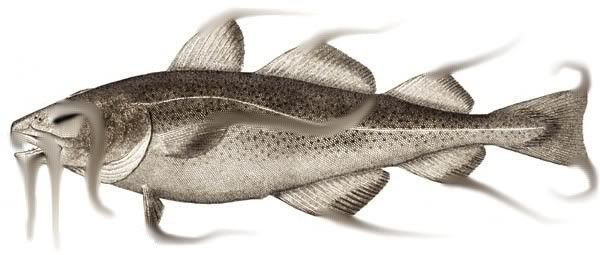
when did they start this crap? I ask the butcher why its a 'product of china?' He shrugs his shoulders. I want North Atlantic Cod not crap farmn raised in china. I ask if they're raised in frigid waters. He don't know, but they do keep it frozen. 
|


Not cod, but cusk which is in the same family as cod:     The other morning was pretty sunny   I put my lines in again today and plan on leaving them in until March 31rst, the last day of ice-fishing. No Chi-Com cod for me.
|
What lake? We've got practically nothing but fucking Red-Eyes (Rock Bass) now here at Sunapee... |
Just about fished out yes. Also, the smaller boats going for cod have been so over regulated they are rotting at the piers. No fresh North Atlantic cod for the OP unless he catches them himself. |
| I will be self sufficent in fish if things go right in a year. I have a good 1/4 acre pond that I just stocked with bluegills and channel catsfish. Of course I can go and catch wild catfish 2 min. from my house. I can go for a bushel of crabs right now. Things should pick up in a month or two. |
Winnepesauke. I feel sorry for you guys about the Rock Bass. Apparently some shithead from MA introduced them into Sunapee so his kids could catch them. At least that's what I heard. I grew up on the St-Laurence River in Canada and we had quite a bit of Rock Bass. But we had so many predatory fish like Largemouth, catfish, pike, muskie, etc. that they never had a hope of overpopulating. The only place you could find Rock Bass was around boathouses but you could find a lot of them there. Too bad they are terrible to eat. The meat looks nice, but it is unpalatable and there are a million bones in them. At least pike you can fillet the bones out. No chance of that with Rock Bass. |
| The only way to actually eat food that is not from China is to do everything yourself. Pick up the beef at the local butcher , buy your vegetables and fruits from the market and cook it all yourself. Otherwise you are pumping who knows what into you are your family. |
I tell you, those Rock bass are dumb motherfuckers... Me and my brother about 5 years or so ago made a spear out of a nail, a piece of wood, and a shoelace... and with flippers and a mask we killed about 20 of them in no time...  The ones around our dock eventually smartened up though, and some had some pretty serious battle scars... The ones around our dock eventually smartened up though, and some had some pretty serious battle scars...
|
I swear I speared a couple as a kid too.  They nest in shallow water and sit on the nest so it's very easy to get them. They nest in shallow water and sit on the nest so it's very easy to get them. I fed them to our cats so it didn't go to waste. I fed them to our cats so it didn't go to waste.
|
 Oh lawdy! |
|
The water the fish are raised in is so polluted they add antibiotics to keep the fish alive until they can grow large enought to send over to us...yummie www.webmd.com/food-recipes/news/fda-blocks-some-fish-from-china |
Funny related story: I was just up in Maine on buisness last week and went into a lobster restaurant. We all ordered lobster and when it came we were all like WTF!!!!  The smell of ammonia was strong. We got up and left as the waiter told us it must have spoiled or something. Ironically, all 4 of us are chemists and were like, "No, ammonia is not given off from spoilage." We talked to a guy the next day at the lab and he mentioned that lobster fisherman use ammonia as a freezing agent. Well, apparently some leaked. 
|
Country of origin is not always listed. If it isn't I toss it back because it is likely Chicom. This probably also goes for all that breaded mystery food that Sam's Club sells. Anyone that complains about gooberment regulation of the environment should consider that some regulation is good. Not that gooberment can't go overboard - for example asbestos boondoggle. |
Try and catch the oil/chemical sheen on the water. We got all tingly when our local market put in a larger seafood section. When we read the COO sign we were right back to good ol' US pond fed catfish. 
BTDT. I can't remember the brand, pretty well known (Krause??). Anyway, they have two grades. The one with concentrates added has chicom juice. Their "Premium" brand is all-US juice. Apparently there isn't enough domestic juice, so they "extend" their lower priced variety with whatever the commies are dumping that day.
|
I think the FDA would be in line with what the Founding Fathers had imagined the .gov presiding over. The ATF on the other hand...
|

ALL fish from Wal-Mart is from CHINA. The mercury is just a bonus. I now only eat fish that I catch. I still have plenty of Mahi, Marlin, Halibut, and loads of Walleyes from various fishing trips. Shipping takes quite a few $$$. F- China .......... With little kids now all the toys we bought seem to have lead recalls. A-HOLES.
|
Yes, should have added some other alphabet agencies as well but was trying to stay with the environmental theme. |
|
This is the only story from the NYT that was published about the PRC food industry, I can't seem to find the stories anymore. Export seafood is one of "the" major PRC industries, there is very little if any regulation or quality control of the PRC seafood industry. The US FDA does what it can, but the amount of food products imported in the US from the PRC is tremendous. ================================================ December 6, 2007 China Cracks Down on Food Safety Violators By DAVID BARBOZA SHANGHAI, Dec. 6 — China said today that it had demolished the facilities of more than 2,800 rural food makers as part of its effort to crack down on shoddy, fake or substandard food, according to the official Xinhua news agency. Beijing has been moving aggressively in recent months to complete a six-month long campaign to root out fake and substandard food, drugs, toys and other consumer goods, after a year of scandals involving product safety. While the government has insisted through much of the year that the country’s products are safe, the government has acknowledged uncovering tens of thousands of problem or dangerous operations over the past six months. Yesterday, regulators said that this year more than 20,000 tons of substandard products were removed from shelves in rural markets and stores, and that they had closed more than 47,000 food factories that were operating illegally. Last month, the State Administration for Industry & Commerce said that during a four-month period ending in October, the government had banned nearly 9,000 pork production facilities from operating. The moves come at a time when China is suffering from some of its highest inflation in a decade, partly because of dwindling supplies of pork following an outbreak of several highly contagious diseases. The government is trying to bolster pork supplies but also assure the public that meat supplies are safe. Earlier in the year, the government moved to stop pork producers from selling diseased pigs into the market. Regulators have blamed many of the food safety problems on rural or small-town food makers, many of whom are operating illegally. “We hope to spend one to two years clearing the rural food markets to solve the main problems and greatly increase food quality,” Liu Fan, an official at the State Administration, said in the Xinhua release. But with scrutiny over Chinese goods intensifying, regulators are struggling to counter all the negative publicity. Just yesterday, a face and body paint set was withdrawn from the market in Hong Kong after tests suggested it could poison children. The product was made in China. Not long before that, there were reports from Hong Kong about banned preservatives being found in meat, including the banned substance Nitrofuran. Hong Kong food safety experts say they are also investigating cosmetics that may contain toxic substances. Beijing regulators, however, have been announcing their own findings in an effort to show they are moving swiftly to wipe out such problems. Last week, Beijing regulators published a blacklist of problem products made here but sold in western supermarkets, such as Wal-Mart and French supermarket chain Carrefour. The blacklist was made up of substandard toys, shoes and markers. And two days ago, the State Food & Drug Administration in Beijing said it had shut down 300 drug and medical equipment makers for producing bad quality products. The agency also said that through October it had closed down 900 companies that were involved in making fake drugs. Even Chinese scientists fear what they are eating. “I’ve worried about seafood safety for many years,” says An Taicheng, a professor of environmental science and engineering at the Guangzhou Institute of Geochemistry and a specialist in seafood production. “But I still eat it. I have no choice.” Now, Beijing is drafting legislation that could mete out the ultimate punishment for drug companies or others whose products harm or kill large numbers of people — the death penalty. Last July, Zheng Xiaoyu, the former head of the State Food & Drug Administration suffered just such a fate. He was executed for accepting bribes and failing to properly supervise the food and drug market. Copyright 2007 The New York Times Company |
|
Here is another story from the LAT. =========================== http://www.latimes.com/news/nationworld/world/la-fi-fish29jun29,0,1411063.story?coll=la-home-center /From the Los Angeles Times/ TRADE FDA says Chinese fish tainted Five types of seafood join a growing list of questionable products from that country. Imports are blocked. By Ricardo Alonso-Zaldivar Times Staff Writer June 29, 2007 WASHINGTON ? The list of quality-compromised goods from China got longer Thursday as federal authorities slapped a highly unusual hold on shrimp and certain fish from that country after tests showed contamination from potentially harmful drugs. The Food and Drug Administration said it would block all shipments from China of farm-raised shrimp, catfish, eel and two other kinds of fish until importers can produce independent test results showing the items to be free of drugs banned in U.S. fish farming. Agency officials said there was no immediate threat to human health. An industry expert said he didn't expect shortages of shrimp because of the FDA action, because there was more than enough available on the world market. Thursday's hold came just days after federal transportation officials ordered the recall of as many as 450,000 tires made in China after some lost their treads on the road. Toothpaste from China that was recalled because of contamination with an antifreeze chemical now turns out to have been distributed not just to a few discount stores but to prisons and mental hospitals in Georgia. This year, a pet food manufacturer recalled massive amounts of its products because of contamination from an ingredient imported from China. Federal authorities haven't done enough to prevent shoddy and even dangerous goods made in China from reaching American consumers, said Sen. Charles E. Schumer (D-N.Y.). "There is no question that too many Chinese manufacturers and food producers put the bottom line ahead of safety," Schumer said in a statement. "We need stricter standards, more thorough inspections and harsher penalties for Chinese companies and American shippers that turn a blind eye to safety." Separately, two senior Democratic lawmakers ? Sen. Richard J. Durbin of Illinois and Rep. Rosa DeLauro of Connecticut ? called for the government to negotiate a food safety agreement with China that would raise standards in that country. " 'Made in China' is rapidly becoming a warning label for American consumers," Durbin said. Food industry experts say the FDA rarely issues an import detention order covering a product from an entire country. The sanction is usually used against individual companies that have failed to correct problems. A similar import hold is in place for cantaloupes from Mexico because of salmonella contamination. Dr. David Acheson, the FDA's recently appointed assistant commissioner for food protection, said the agency acted after finding "a continued pattern of violations [with] no sign of abatement." Three Southern states, however, beat the FDA to the punch: Alabama, Louisiana and Mississippi banned sales of catfish from China this year after finding traces of an antibiotic in the fish. "It begs the question of why [the FDA] didn't act sooner," said Caroline Smith DeWaal, food safety director for the Center for Science in the Public Interest, a consumer group. "They are taking corrective action today, but they really need more resources and authority to prevent the problems from occurring." The FDA is responsible for ensuring the safety of imported seafood and produce, but it is widely acknowledged to be seriously short of funding to carry out its mission. As a result, only about 1% of food imports are inspected. The agency also lacks legal authority to compel foreign producers to adopt U.S. food safety standards. Critics say that has made it into a regulatory weakling when compared with the Agriculture Department, which has the authority to impose such standards and uses it to safeguard meat imports. FDA officials said they recently had begun to inspect a larger share of food imports from China. Since October, the agency has tested 89 samples of shrimp, catfish, eel, basa and dace. Basa is similar to catfish, and dace is related to carp. The testing showed that 22 of the samples ? about one-fourth ? contained drug residue. The drugs included three antimicrobials and a type of antibiotic, the FDA said. The antimicrobials are known to cause cancer when fed in large quantities to laboratory animals. The antibiotics belong to an important class of germ-fighting drugs, called fluoroquinolones. Introducing them into foods can result in people building a resistance that would diminish the effectiveness of the drugs in treating infections. All the drugs are banned from use in fish farming in the U.S. China bans the antimicrobials but not the antibiotics. "The FDA is taking this action to protect the public health of the American people from unsafe substances in imported Chinese seafood," Acheson said. FDA officials, however, said the small quantities of the banned chemicals found in testing were not enough to pose an immediate threat to human health. "We are not asking for this product to be withdrawn from the market or for people to take it out of their freezer and throw it away," said Margaret Glavin, head of the FDA's enforcement branch. "This is a long-term health concern ? not an acute concern." The U.S. imports more than 80% of the shrimp consumed in restaurants and at dinner tables. Major retailers here set their own safety standards and hire independent testing firms to monitor compliance, said William R. More, director of one such firm, Aquaculture Certification Council Inc., based near Seattle. "Most U.S. buyers are checking every single container from China," More said. "They used to check about 3%, but now anything being brought out of China in terms of seafood, that container is being checked." China is the second-largest supplier of shrimp to the American market, well behind Thailand but gaining ground. The FDA's action might cause the Chinese suppliers to stumble, but American consumers probably won't see higher prices or shortages. "There is an excess supply of shrimp in the world today," More said. "Other countries will fill the gap, so I don't think it would have an immediate impact." -- / [email protected] |