


Posted: 8/16/2015 3:35:23 PM EDT
|
Had a friend talking to me about 80% lowers the other day, but I've never cared to get one. I guess my biggest concern is having all of the newly cut metal, on the inside after completing the lower, exposed. I'd rather have it protected from rust and degeneration, like how most lowers are hard anodized throughout.
I know there is a process to do it yourself, and it interests me like a science experiment, but if I had the time, I'd be worried about all of those chemicals and what to do with them. Could someone shed some light on this or am I overthinking it here? Eta, ok, aluminum doesn't rust. Got it. What about deteriorating/ needing protection? I'll be the first to admit, chem isn't my thing, but I did know AL doesn't rust, just misspoke. Does everyone leave the cut metal exposed? |
|
It is aluminum, it oxidizes but doesn't rust. The oxide on 6000 and 7000 series alloys of aluminum is self-protective. Anodization is just a thick oxide layer. Hard anodization is done with sulfuric acid, this can be neutralized with baking soda (sodium bicarbonate) and safely disposed of down the sink. Sodium sulfate, the reaction product (a salt) is naturally occurring in the ground. It also is a food source for anaerobic bacteria in a septic system. Chemophobia is pure ignorance. |
|
Quoted:
aluminum does not rust its all good Right, but it does deteriorate right? Otherwise why bother coating the outside at all? I would think the extra protection would be better. I'm not saying they should be illegal, and would defend their use, but I can't see the benefit over completed lowers that are currently so cheap. Like I said, I'd be interested in the aspect of actually being involved in the manufacturing process, kinda why we made home made jam the first time. But home made jam tastes so much better, so we keep doing it. Can't see the benefit other than its interestingl. Sounds like it's just something you live with though? Figured if there was an answer, someone here would have it 
|

|
Right, but it does deteriorate right? Otherwise why bother coating the outside at all? I would think the extra protection would be better. The AR started life as a military weapon. The military wouldn't want a bare aluminum finish on their weapons, it doesn't look professional. It also stands out visually in many environments. I have seen other guns worn down to the bare aluminum, either intentionally, or through long use. They still work. |
|
Quoted:
It is aluminum, it oxidizes but doesn't rust. The oxide on 6000 and 7000 series alloys of aluminum is self-protective. Anodization is just a thick oxide layer. Hard anodization is done with sulfuric acid, this can be neutralized with baking soda (sodium bicarbonate) and safely disposed of down the sink. Sodium sulfate, the reaction product (a salt) is naturally occurring in the ground. It also is a food source for anaerobic bacteria in a septic system. Chemophobia is pure ignorance. As I said in another thread, they don't actually teach chem in public schools anymore... Guess where I went to school 
Thanks for the insight though. |
|
Quoted:
My only problem with them is that they usually cost more than a finished receiver. Amusingly enough, right under your post, I saw an ad from Brownells for a stripped receiver. $42.99 So I think you have a good point. If some one wants the challenge of an 80% receiver, I understand that. Economically speaking, they are not a good choice. |
|
Quoted:
Amusingly enough, right under your post, I saw an ad from Brownells for a stripped receiver. $42.99 So I think you have a good point. If some one wants the challenge of an 80% receiver, I understand that. Economically speaking, they are not a good choice. Quoted:
Quoted:
My only problem with them is that they usually cost more than a finished receiver. Amusingly enough, right under your post, I saw an ad from Brownells for a stripped receiver. $42.99 So I think you have a good point. If some one wants the challenge of an 80% receiver, I understand that. Economically speaking, they are not a good choice. It doesn't make any sense, it should be cheaper to make them but no one can seem to get them to market below the price of bargain bin fully machined lowers. |
|
Quoted:
Amusingly enough, right under your post, I saw an ad from Brownells for a stripped receiver. $42.99 So I think you have a good point. If some one wants the challenge of an 80% receiver, I understand that. Economically speaking, they are not a good choice. Quoted:
Quoted:
My only problem with them is that they usually cost more than a finished receiver. Amusingly enough, right under your post, I saw an ad from Brownells for a stripped receiver. $42.99 So I think you have a good point. If some one wants the challenge of an 80% receiver, I understand that. Economically speaking, they are not a good choice. This was kinda my point... But overshadowed by my stupidity
If I don't laugh, who will
|
|
Quoted: Right, but it does deteriorate right? Otherwise why bother coating the outside at all? I would think the extra protection would be better. I'm not saying they should be illegal, and would defend their use, but I can't see the benefit over completed lowers that are currently so cheap. Like I said, I'd be interested in the aspect of actually being involved in the manufacturing process, kinda why we made home made jam the first time. But home made jam tastes so much better, so we keep doing it. Can't see the benefit other than its interestingl. Sounds like it's just something you live with though? Figured if there was an answer, someone here would have it Quoted: Quoted: aluminum does not rust its all good Right, but it does deteriorate right? Otherwise why bother coating the outside at all? I would think the extra protection would be better. I'm not saying they should be illegal, and would defend their use, but I can't see the benefit over completed lowers that are currently so cheap. Like I said, I'd be interested in the aspect of actually being involved in the manufacturing process, kinda why we made home made jam the first time. But home made jam tastes so much better, so we keep doing it. Can't see the benefit other than its interestingl. Sounds like it's just something you live with though? Figured if there was an answer, someone here would have it  . You need to see the latest Bill Whittle video posted here in GD.. . You need to see the latest Bill Whittle video posted here in GD..Anyhow, the only aluminum component needing HA is the upper receiver due to the sliding motion of the carrier rails. Most uppers also have a coating of MoS2 on the inside to further protect the carrier from undue wear since the HA is harder than the carrier. Makes for an excellent sliding bearing combination that doesn't need liquid lubrication. Now, for more chemistry..why MoS2? Why not graphite? Graphite is carbon and carbon promotes corrosion on aluminum. MoS2 is at best, a semi conductor where graphite is a pretty good conductor. The process is called galvanic corrosion. In your safe, a naked lower will not corrode. Unless you safe is damp, then the barrel, trigger package, springs, bolt, carrier, screws, barrel nut, sights..would corrode first. Hard anodized aluminum reduces scuffing damage like an AR being thrown down the driveway. Or banging around in the back of a military vehicle. |
|
It is perfectly fine to leave cut aluminum exposed. The anodizing is there for abrasion/scratch resistance. Really, the only practical reason to anodize in this case is cosmetic. I cerakote mine, but I have one that I haven't bothered to do anything to past the custom engraving I put on it.
|
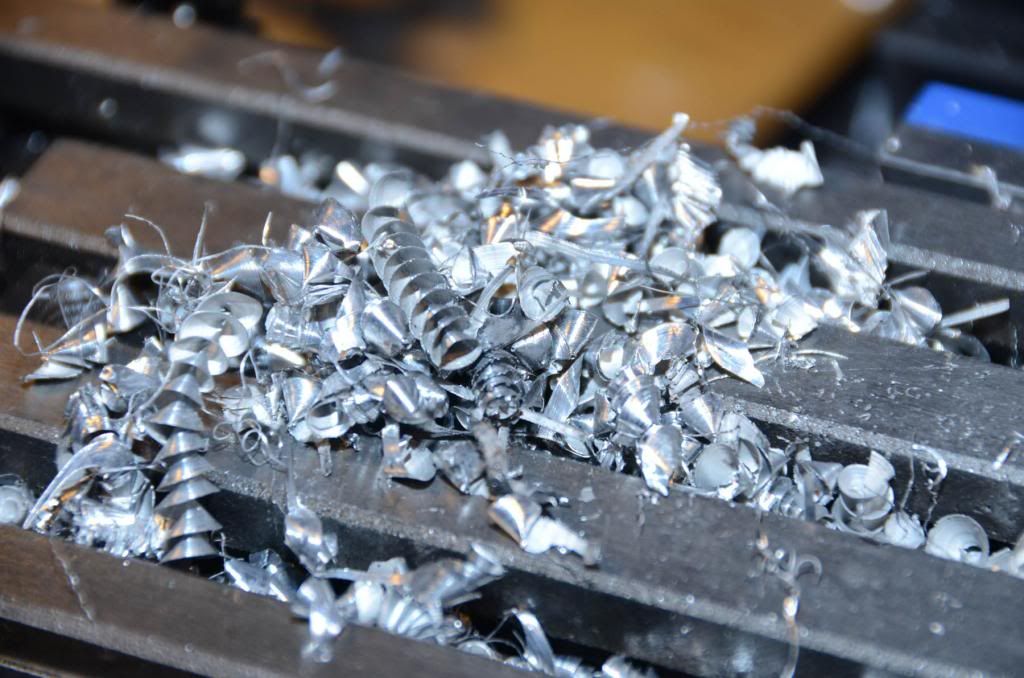
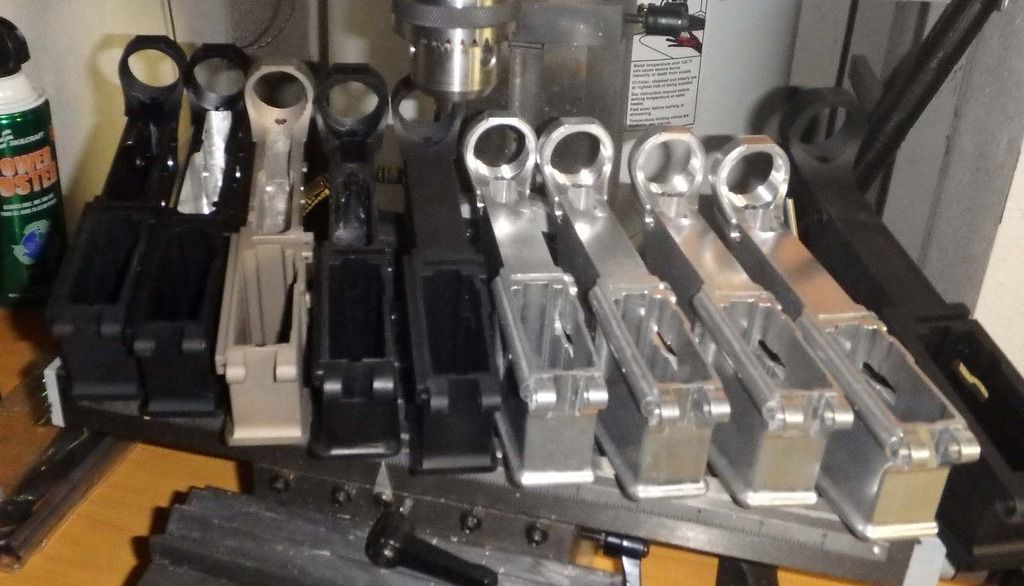
|
Aluminum will corrode similar to iron. Except Iron rusts orange/red and aluminum rusts white. Also iron rust doesn't protect the underlying iron. Aluminum oxide does protect the underlying unoxidized material. Anodizing is controlled "rusting" of aluminum. http://www.clihouston.com/knowledge-base/aluminium-and-corrosion.html aluminum on its own is way more reactive than iron but alloys can change reactivity quite a bit for instance surgical stainless steel vs elemental iron. |
|
Bare aluminum forms a thin lay of aluminum oxide when exposed to air. It won't continue to oxidize. That layer of aluminum oxide protects the aluminum underneath from further oxidation.
Anodizing aluminum is an electrochemical process that intentionally forms a somewhat thicker layer of aluminum oxide. Same effect. Just thicker and stronger. And you can add a dye to it for looks (usually black for ARs). If bare aluminum look bothers you, just spray paint it. |
|
Quoted:
Hard anodization makes for a durable finish, it is harder than tool steel. As hard as..wait for it..aluminum oxide sandpaper . You need to see the latest Bill Whittle video posted here in GD..
Anyhow, the only aluminum component needing HA is the upper receiver due to the sliding motion of the carrier rails. Most uppers also have a coating of MoS2 on the inside to further protect the carrier from undue wear since the HA is harder than the carrier. Makes for an excellent sliding bearing combination that doesn't need liquid lubrication. Now, for more chemistry..why MoS2? Why not graphite? Graphite is carbon and carbon promotes corrosion on aluminum. MoS2 is at best, a semi conductor where graphite is a pretty good conductor. The process is called galvanic corrosion. In your safe, a naked lower will not corrode. Unless you safe is damp, then the barrel, trigger package, springs, bolt, carrier, screws, barrel nut, sights..would corrode first. Hard anodized aluminum reduces scuffing damage like an AR being thrown down the driveway. Or banging around in the back of a military vehicle. Quoted:
Quoted:
Quoted:
aluminum does not rust its all good Right, but it does deteriorate right? Otherwise why bother coating the outside at all? I would think the extra protection would be better. I'm not saying they should be illegal, and would defend their use, but I can't see the benefit over completed lowers that are currently so cheap. Like I said, I'd be interested in the aspect of actually being involved in the manufacturing process, kinda why we made home made jam the first time. But home made jam tastes so much better, so we keep doing it. Can't see the benefit other than its interestingl. Sounds like it's just something you live with though? Figured if there was an answer, someone here would have it . You need to see the latest Bill Whittle video posted here in GD..
Anyhow, the only aluminum component needing HA is the upper receiver due to the sliding motion of the carrier rails. Most uppers also have a coating of MoS2 on the inside to further protect the carrier from undue wear since the HA is harder than the carrier. Makes for an excellent sliding bearing combination that doesn't need liquid lubrication. Now, for more chemistry..why MoS2? Why not graphite? Graphite is carbon and carbon promotes corrosion on aluminum. MoS2 is at best, a semi conductor where graphite is a pretty good conductor. The process is called galvanic corrosion. In your safe, a naked lower will not corrode. Unless you safe is damp, then the barrel, trigger package, springs, bolt, carrier, screws, barrel nut, sights..would corrode first. Hard anodized aluminum reduces scuffing damage like an AR being thrown down the driveway. Or banging around in the back of a military vehicle. A lot of AR uppers use a baked on teflon brew for the inside of the receiver... Just throwing that out there. |
|
Quoted:It doesn't make any sense, it should be cheaper to make them but no one can seem to get them to market below the price of bargain bin fully machined lowers. I don't remember who had the sale but there was a 3/$100 sale near Christmas last year. An 80% lower is $33-$100 (.308) A mill and tools can run $1500 and up. Having an AR-15 or AR-10 without a serial number is priceless. 


|
|
Quoted:
Use paint. A real paint store might have alodine; use that on the bare aluminum if you want, then paint. Or just paint, and repaint as needed. Will powder coating work on aluminum? A lower is small enough, I bet you could fit one in one of those cheap toaster ovens. |


|
Quoted:
Will powder coating work on aluminum? A lower is small enough, I bet you could fit one in one of those cheap toaster ovens. Quoted:
Quoted:
Use paint. A real paint store might have alodine; use that on the bare aluminum if you want, then paint. Or just paint, and repaint as needed. Will powder coating work on aluminum? A lower is small enough, I bet you could fit one in one of those cheap toaster ovens. Powder coat is paint. It will work fine. |
|
Quoted: Will powder coating work on aluminum? A lower is small enough, I bet you could fit one in one of those cheap toaster ovens. Quoted: Quoted: Use paint. A real paint store might have alodine; use that on the bare aluminum if you want, then paint. Or just paint, and repaint as needed. Will powder coating work on aluminum? A lower is small enough, I bet you could fit one in one of those cheap toaster ovens. Now, a low temp epoxy cure might work. As long as you are under 150 F. |

|
Quoted:
Hard anodized aluminum is technically coated with the same aluminum oxide allotrope as...SAPPHIRE!!! Now you dun it.. Quoted:
Quoted:
Quoted:
Transparent Aluminum I think a sapphire lower would be fragile... Now you dun it.. I was theorizing a solid sapphire lower.
Millions of shattered watch crystals and phone transparencies can't be wrong. |
|
Quoted:
I don't remember who had the sale but there was a 3/$100 sale near Christmas last year. An 80% lower is $33-$100 (.308) A mill and tools can run $1500 and up. Having an AR-15 or AR-10 without a serial number is priceless. http://i104.photobucket.com/albums/m168/AR-15_Paul/Rifles/308withzeroserialnumber_zpsbcd8fc3e.jpg http://i104.photobucket.com/albums/m168/AR-15_Paul/Rifles/PistonCarbine03_zps78aadeb1.jpg http://i104.photobucket.com/albums/m168/AR-15_Paul/Rifles/80PistonCarbineClose_zps9dd120e1.jpg Quoted:
Quoted:It doesn't make any sense, it should be cheaper to make them but no one can seem to get them to market below the price of bargain bin fully machined lowers. I don't remember who had the sale but there was a 3/$100 sale near Christmas last year. An 80% lower is $33-$100 (.308) A mill and tools can run $1500 and up. Having an AR-15 or AR-10 without a serial number is priceless. http://i104.photobucket.com/albums/m168/AR-15_Paul/Rifles/308withzeroserialnumber_zpsbcd8fc3e.jpg http://i104.photobucket.com/albums/m168/AR-15_Paul/Rifles/PistonCarbine03_zps78aadeb1.jpg http://i104.photobucket.com/albums/m168/AR-15_Paul/Rifles/80PistonCarbineClose_zps9dd120e1.jpg very nice |

|
Quoted:
I don't remember who had the sale but there was a 3/$100 sale near Christmas last year. An 80% lower is $33-$100 (.308) A mill and tools can run $1500 and up. Having an AR-15 or AR-10 without a serial number is priceless. http://i104.photobucket.com/albums/m168/AR-15_Paul/Rifles/308withzeroserialnumber_zpsbcd8fc3e.jpg http://i104.photobucket.com/albums/m168/AR-15_Paul/Rifles/PistonCarbine03_zps78aadeb1.jpg http://i104.photobucket.com/albums/m168/AR-15_Paul/Rifles/80PistonCarbineClose_zps9dd120e1.jpg Quoted:
Quoted:It doesn't make any sense, it should be cheaper to make them but no one can seem to get them to market below the price of bargain bin fully machined lowers. I don't remember who had the sale but there was a 3/$100 sale near Christmas last year. An 80% lower is $33-$100 (.308) A mill and tools can run $1500 and up. Having an AR-15 or AR-10 without a serial number is priceless. http://i104.photobucket.com/albums/m168/AR-15_Paul/Rifles/308withzeroserialnumber_zpsbcd8fc3e.jpg http://i104.photobucket.com/albums/m168/AR-15_Paul/Rifles/PistonCarbine03_zps78aadeb1.jpg http://i104.photobucket.com/albums/m168/AR-15_Paul/Rifles/80PistonCarbineClose_zps9dd120e1.jpg Nice pics. Tactical Machining is still selling the blem for $29 for one. link Or get three of the regular 80% for $29 each. link |
|
Quoted: I was theorizing a solid sapphire lower. Millions of shattered watch crystals and phone transparencies can't be wrong. Quoted: Quoted: Quoted: Quoted: Transparent Aluminum I think a sapphire lower would be fragile... Now you dun it.. I was theorizing a solid sapphire lower. Millions of shattered watch crystals and phone transparencies can't be wrong. |
|
Quoted:
Sapphire is TOUGH. Just making a single crystal of that size without crystalline defects is impossible. Sapphire whiskers grown in labs are some of the toughest materials known, outside of diamonds. Every crystal has defects. Quoted:
Quoted:
Quoted:
Quoted:
Quoted:
Transparent Aluminum I think a sapphire lower would be fragile... Now you dun it.. I was theorizing a solid sapphire lower.
Millions of shattered watch crystals and phone transparencies can't be wrong. Lab grown diamonds have come a long way in the past 10 years. There's even research going on to parlay it into diamond based semi-conductor manufacturing. |
|
Quoted:
Sapphire is TOUGH. Just making a single crystal of that size without crystalline defects is impossible. Sapphire whiskers grown in labs are some of the toughest materials known, outside of diamonds. Every crystal has defects. Quoted:
Quoted:
Quoted:
Quoted:
Quoted:
Transparent Aluminum I think a sapphire lower would be fragile... Now you dun it.. I was theorizing a solid sapphire lower.
Millions of shattered watch crystals and phone transparencies can't be wrong. It's the defects which act as the failure points on watch crystals and phone transparencies, right? Giving them their fragility to violent impacts that sapphire should in theory survive. |