Posted: 10/8/2014 9:15:11 PM EDT
|
Been researching a good DIY potting compound, but I can't seem to find a simple compound that is easily removed in a chemical that won't damage the electronics. Any ideas? |
|
I hate potting compound. Never had a potted connector that would come apart to allow repairs and never managed to not make an Hellacious mess anytime I tried to re-pot a connector after repair. It got so that anytime I had to work on a potted connector I simply ate the extra hours and replaced it with a matching Amphenol connector.
My suggestion is to do the same if you can. |
|
Quoted: I hate potting compound. Never had a potted connector that would come apart to allow repairs and never managed to not make an Hellacious mess anytime I tried to re-pot a connector after repair. It got so that anytime I had to work on a potted connector I simply ate the extra hours and replaced it with a matching Amphenol connector. My suggestion is to do the same if you can. I'm worried about internal components on PCBs and pin headers. I would have thought they made a magic potting goo by now.  Module will live in a high vibration environment. Just a fun little project I'm working on. |
|
You could fill it with 30 minute epoxy, adding carbon black also helps stop basic reverse engineering.
You can also spray it with plasti-dip for an unreliable but somewhat removable coating that holds things together, or put hot glue on parts that have enough mass to pull loose from the vibration. |
|
Quoted:
I'm worried about internal components on PCBs and pin headers. I would have thought they made a magic potting goo by now.
Module will live in a high vibration environment. Just a fun little project I'm working on. Quoted:
Quoted:
I hate potting compound. Never had a potted connector that would come apart to allow repairs and never managed to not make an Hellacious mess anytime I tried to re-pot a connector after repair. It got so that anytime I had to work on a potted connector I simply ate the extra hours and replaced it with a matching Amphenol connector. My suggestion is to do the same if you can. I'm worried about internal components on PCBs and pin headers. I would have thought they made a magic potting goo by now.
Module will live in a high vibration environment. Just a fun little project I'm working on. Go on.... 
|
|
I've worked in aerospace electronics my entire career and have used most potting compounds out there. None of them are designed to be removed after they have been applied. There are many different potting compounds depending on what sort of temperature and elastisity you want. Component conformal coating is something different and is not what I think you are talking about.
|
|
Making potting compound removable kind of defeats the whole purpose of using it in the first place...
2-part marine epoxy makes a decent permanent potting compound. If you don't want the innerds to be visible after the epoxy cures, add black toner from a copy machine or laser printer to the uncured mixture. When mixed, 2-part epoxy is exothermic, and can get hot enough to smoke, crack, bubble, melt the container it's in, etc. if not used carefully: 1. Mix in small quantities. Large quantities concentrate the mass, and thus concentrate the exothermic heat. 2. Go easy on the hardener. Using too little is better than using too much. 3. Use a "slow" hardener, if available. 4. Be prepared to pour it immediately after mixing. The curing time can be as short as a few minutes, particularly when mixed with a lot of hardener. 5. Have supplemental air cooling available (i.e., electric fan) if the mixture gets too hot while curing. 6. Hot weather accelerates the curing speed, and also increases exothermic heat production. You get the best results at approx. room temperature. |
|
Quoted: If it weren't for potting compound, the voltage regulator assembly on .mil truck alternators could be easily and cheaply repaired. Fuck potting compound.  |
|
Quoted:
If it weren't for potting compound, the voltage regulator assembly on .mil truck alternators wouldn't last one round trip outing..... Quoted:
Quoted:
If it weren't for potting compound, the voltage regulator assembly on .mil truck alternators could be easily and cheaply repaired. Fuck potting compound. They practically last that long anyways. 
|
|
Quoted: They practically last that long anyways. Quoted: Quoted: Quoted: If it weren't for potting compound, the voltage regulator assembly on .mil truck alternators could be easily and cheaply repaired. Fuck potting compound. They practically last that long anyways.  |
|
Quoted:
I'm worried about internal components on PCBs and pin headers. I would have thought they made a magic potting goo by now.
Module will live in a high vibration environment. Just a fun little project I'm working on. Quoted:
Quoted:
I hate potting compound. Never had a potted connector that would come apart to allow repairs and never managed to not make an Hellacious mess anytime I tried to re-pot a connector after repair. It got so that anytime I had to work on a potted connector I simply ate the extra hours and replaced it with a matching Amphenol connector. My suggestion is to do the same if you can. I'm worried about internal components on PCBs and pin headers. I would have thought they made a magic potting goo by now.
Module will live in a high vibration environment. Just a fun little project I'm working on. Deal with the susceptible parts with hot melt glue, and go on with your life. A general potting adds potential problems. ETA: if it can be moved by a simple push on the component, it needs glue. |
|
BTW, real epoxy potting compound isn't that much more expensive than using generic epoxy adhesive. Get the mixing nozzles ftw btw.
3M Epoxy Potting Compound |

|
I have some sensor boards in a greenhouse that kept failing. I've tried clear Krylon and some aerosol silicon conformal coating that worked alright the first time, then solidified in the nozzle and became completely unusable.
Primarily, one capacitor on the board would corrode off. I finally called the manufacturer and inquired if there was anything I could put on it. They said their new boards had silicone on the base of the capacitor, specifically GE Silicone II. I ordered new boards, sure enough. I rework the old boards with the same stuff. But note, it's just a dallup on one large capacitor. Not sure what it would do in the whole board or on something more sensitive. |
|
Quoted: I have some sensor boards in a greenhouse that kept failing. I've tried clear Krylon and some aerosol silicon conformal coating that worked alright the first time, then solidified in the nozzle and became completely unusable. Primarily, one capacitor on the board would corrode off. I finally called the manufacturer and inquired if there was anything I could put on it. They said their new boards had silicone on the base of the capacitor, specifically GE Silicone II. I ordered new boards, sure enough. I rework the old boards with the same stuff. But note, it's just a dallup on one large capacitor. Not sure what it would do in the whole board or on something more sensitive. |
|
Quoted:
That stuff is GREAT for moisture/humidity - not so much for vibration reduction... Quoted:
Quoted:
I have some sensor boards in a greenhouse that kept failing. I've tried clear Krylon and some aerosol silicon conformal coating that worked alright the first time, then solidified in the nozzle and became completely unusable. Primarily, one capacitor on the board would corrode off. I finally called the manufacturer and inquired if there was anything I could put on it. They said their new boards had silicone on the base of the capacitor, specifically GE Silicone II. I ordered new boards, sure enough. I rework the old boards with the same stuff. But note, it's just a dallup on one large capacitor. Not sure what it would do in the whole board or on something more sensitive. |
|
Quoted:
100% Silicone II glue. It can be removed from most electronics with small tools and has outstanding dielectric properties. Quoted:
Quoted:
Quoted:
I have some sensor boards in a greenhouse that kept failing. I've tried clear Krylon and some aerosol silicon conformal coating that worked alright the first time, then solidified in the nozzle and became completely unusable. Primarily, one capacitor on the board would corrode off. I finally called the manufacturer and inquired if there was anything I could put on it. They said their new boards had silicone on the base of the capacitor, specifically GE Silicone II. I ordered new boards, sure enough. I rework the old boards with the same stuff. But note, it's just a dallup on one large capacitor. Not sure what it would do in the whole board or on something more sensitive. Not sure about the GE II stuff, but many garden-variety silicone sealants produce acetic acid while curing - smells like vinegar. Acetic acid is corrosive to electrical conductors and contacts. |
|
Quoted:
Not sure about the GE II stuff, but many garden-variety silicone sealants produce acetic acid while curing - smells like vinegar. Acetic acid is corrosive to electrical conductors and contacts. Quoted:
Quoted:
Quoted:
Quoted:
I have some sensor boards in a greenhouse that kept failing. I've tried clear Krylon and some aerosol silicon conformal coating that worked alright the first time, then solidified in the nozzle and became completely unusable. Primarily, one capacitor on the board would corrode off. I finally called the manufacturer and inquired if there was anything I could put on it. They said their new boards had silicone on the base of the capacitor, specifically GE Silicone II. I ordered new boards, sure enough. I rework the old boards with the same stuff. But note, it's just a dallup on one large capacitor. Not sure what it would do in the whole board or on something more sensitive. Not sure about the GE II stuff, but many garden-variety silicone sealants produce acetic acid while curing - smells like vinegar. Acetic acid is corrosive to electrical conductors and contacts. That's actually the beauty of GE Silicone II. Unlike most silicones, it evolves methanol as it cures instead of acetic acid. |
|
What components are external? Do you have them soldered to a protoboard or are you using an etched PCB?
What are the connectors? The 0.1" standard servo type connector that comes with most "off the shelf" sonar units isn't very reliable, you'll want something that is gold plated and has good springy fingers on both sides with a lock tab. Get a crimper for $80 and you can make most any connector you'd like for far cheaper than buying pre-made cables. I guess I'd ask for a photo at this point and also ask how long it would be in service, if it is in testing/rough prototype stage, or "tested and will use until it fails" stage. Components DO matter. Nearly all of them are sold as "consumer", "military", and "automotive/expanded range". The .mil and automotive (especially capacitors) are constructed differently to cope with vibrations and massive temperature swings. Consumer grade (what most are unless you specifically order differently) are meant to be in a home environment. In addition to temperature swings and vibration in a vehicle, the power supply is still very nasty (but improved in the past 10 years), having spikes upward of 100V, tons of noise, and random sags. You can't get by with a 7805 regulator (onboard Arduino) for long, they do not respond fast enough. Maybe put a pi filter in front of one along with a fast clamp for overvoltage conditions. |
|
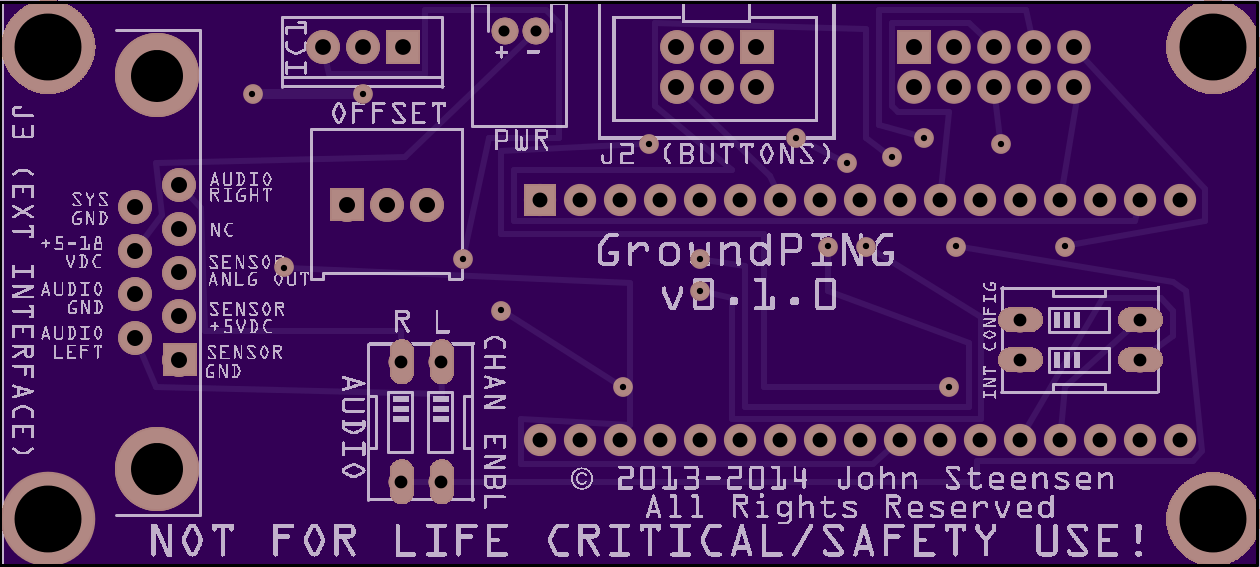
Quoted: What components are external? Do you have them soldered to a protoboard or are you using an etched PCB? What are the connectors? The 0.1" standard servo type connector that comes with most "off the shelf" sonar units isn't very reliable, you'll want something that is gold plated and has good springy fingers on both sides with a lock tab. Get a crimper for $80 and you can make most any connector you'd like for far cheaper than buying pre-made cables. I guess I'd ask for a photo at this point and also ask how long it would be in service, if it is in testing/rough prototype stage, or "tested and will use until it fails" stage. Components DO matter. Nearly all of them are sold as "consumer", "military", and "automotive/expanded range". The .mil and automotive (especially capacitors) are constructed differently to cope with vibrations and massive temperature swings. Consumer grade (what most are unless you specifically order differently) are meant to be in a home environment. In addition to temperature swings and vibration in a vehicle, the power supply is still very nasty (but improved in the past 10 years), having spikes upward of 100V, tons of noise, and random sags. You can't get by with a 7805 regulator (onboard Arduino) for long, they do not respond fast enough. Maybe put a pi filter in front of one along with a fast clamp for overvoltage conditions. no photo yet. Still in design. Effectively, it will have a brain box with a 3.5 TRS connector for audio (pulsed tones as objects get closer until it turns solid at .50 feet.) Will have a 16x2 OLED daylight readable character display. Has several MIL-spec switches for control and adjusting volume. Sensor will be mounted remotely. It is a rugged sensor, with no additional environmental concerns, other than the cable exit, where I will use adhesive-lined heatshrink for water/dustproofing. Power supply is protected by a 18-5vdc to 5vdc dc-dc converter. Internal connectors will be polarized/locking pinheaders....at least to start. Not completely married to them. The audio, incoming power, and remote lines will interface via IP67 DB9. |