


Posted: 9/13/2014 8:33:09 PM EDT
|
Looking through some older material and noticed that seldom is the term " hertz" used to describe frequency. "Cycles per second" seemed to be the prefered term. Now frequency is almost exclusively described in hertz. Was there some sort of convention that decided the term should be changed in honor of Mr. Hertz?
Yeah, stupid thread about a random thought and all that, but hey, ain't that what GD's for? 
|
|
Google is your friend....
https://en.wikipedia.org/wiki/Hertz#History History The hertz is named after the German physicist Heinrich Hertz (1857–1894), who made important scientific contributions to the study of electromagnetism. The name was established by the International Electrotechnical Commission (IEC) in 1930.[6] It was adopted by the General Conference on Weights and Measures (CGPM) (Conférence générale des poids et mesures) in 1960, replacing the previous name for the unit, cycles per second (cps), along with its related multiples, primarily kilocycles per second (kc/s) and megacycles per second (Mc/s), and occasionally kilomegacycles per second (kMc/s). The term cycles per second was largely replaced by hertz by the 1970s. |
|
Quoted:
Google is your friend.... https://en.wikipedia.org/wiki/Hertz#History History The hertz is named after the German physicist Heinrich Hertz (1857–1894), who made important scientific contributions to the study of electromagnetism. The name was established by the International Electrotechnical Commission (IEC) in 1930.[6] It was adopted by the General Conference on Weights and Measures (CGPM) (Conférence générale des poids et mesures) in 1960, replacing the previous name for the unit, cycles per second (cps), along with its related multiples, primarily kilocycles per second (kc/s) and megacycles per second (Mc/s), and occasionally kilomegacycles per second (kMc/s). The term cycles per second was largely replaced by hertz by the 1970s. GD is more fun
|
|
Everything on the electromagnetic spectrum has it's own frequency band, from sound, to light, to gama rays. They have a 'wavelength' measured in meters, nano-meters and trillionths of a meter - and the frequency measured in Hertz to Giga-Hertz (cycles per second).  |
|
I love how timely topics like this come up on ARFCOM.
I was given an oscilloscope the other day to use with my ham radio gear. Tonight I got a chance to play with it. I noticed that the inputs are marked in Hz but the measurements are seconds. Kind of cool given the scope is probably 1970s vintage. |
|
Quoted:
I love how timely topics like this come up on ARFCOM. I was given an oscilloscope the other day to use with my ham radio gear. Tonight I got a chance to play with it. I noticed that the inputs are marked in Hz but the measurements are seconds. Kind of cool given the scope is probably 1970s vintage. All scopes are marked like that. 
One should be measured in time, the other in voltage. |
|
The localizer I used to maintain (AN/GRN-30 if memory serves) used two horizontal lobes modulated at different frequencies with an overlap in the middle, which corresponded to runway center line. The right was modulated at 90 Hertz, the left side 150 Hertz. The inside joke was that if pilots had to crash on final, then they should crash on the right, because the left hertz more. |
|
Quoted:
All scopes are marked like that.
One should be measured in time, the other in voltage. Quoted:
Quoted:
I love how timely topics like this come up on ARFCOM. I was given an oscilloscope the other day to use with my ham radio gear. Tonight I got a chance to play with it. I noticed that the inputs are marked in Hz but the measurements are seconds. Kind of cool given the scope is probably 1970s vintage. All scopes are marked like that.
One should be measured in time, the other in voltage. I did not say it was wrong. I think it was cool that the OP wrote about something I was actually experimenting with. My wording was probably confusing. My first scope was an early 60's .mil unit that did not have Hz markings that I remember. |
|
Interesting question OP; I never thought about it until now-
Early generation jets used "cycles per second" on their frequency gauges. This is from a Boeing 727 (early 1960s). The lower gauge is the frequency gauge labeled "CPS". Aircraft electrical systems run at 400 Hz, which is why 400 is at the top. 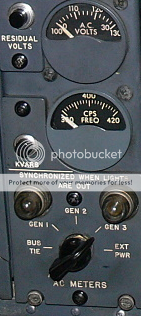
Modern aircraft are usually labeled "Hz" or just "FREQ". |
|
Quoted:
The localizer I used to maintain (AN/GRN-30 if memory serves) used two horizontal lobes modulated at different frequencies with an overlap in the middle, which corresponded to runway center line. The right was modulated at 90 Hertz, the left side 150 Hertz. The inside joke was that if pilots had to crash on final, then they should crash on the right, because the left hertz more. 
|
|
Quoted:
I did not say it was wrong. I think it was cool that the OP wrote about something I was actually experimenting with. My wording was probably confusing. My first scope was an early 60's .mil unit that did not have Hz markings that I remember. Quoted:
Quoted:
Quoted:
I love how timely topics like this come up on ARFCOM. I was given an oscilloscope the other day to use with my ham radio gear. Tonight I got a chance to play with it. I noticed that the inputs are marked in Hz but the measurements are seconds. Kind of cool given the scope is probably 1970s vintage. All scopes are marked like that.
One should be measured in time, the other in voltage. I did not say it was wrong. I think it was cool that the OP wrote about something I was actually experimenting with. My wording was probably confusing. My first scope was an early 60's .mil unit that did not have Hz markings that I remember. |
|
Looking at a NASA publication from 1968.
Kind of funny, they mention 115 volt, 400 CPS, 3 phase power coming in on an umbilical for engine ignition system and heaters. Then in another part of the same publication they show telemetry frequencies rated in MHZ. I guess engineers from different departments had written the different sections. Some apparently had adopted the new standard while others used the older term! |
|
Quoted:
Looking at a NASA publication from 1968. Kind of funny, they mention 115 volt, 400 CPS, 3 phase power coming in on an umbilical for engine ignition system and heaters. Then in another part of the same publication they show telemetry frequencies rated in MHZ. I guess engineers from different departments had written the different sections. Some apparently had adopted the new standard while others used the older term! primarily what you are seeing is the difference in a power guy vs an RF guy. as an engineer i don't have any issue with either term; it's no different than inches vs millimeters, just two different ways of expressing the same thing. old gear will have schematics/design documents annotated with CPS or kilocycles, and new gear annotated with KHz, MHz, or GHz. in some disciplines the Hz-based nomenclature gets cumbersome and you simply use the wavelength for expression: 1530nm for the optical C-band, for example. same same in amateur radio: 20m band, 40m band, etc. http://en.wikipedia.org/wiki/Fiber-optic_communication#Transmission_windows ar-jedi |
|
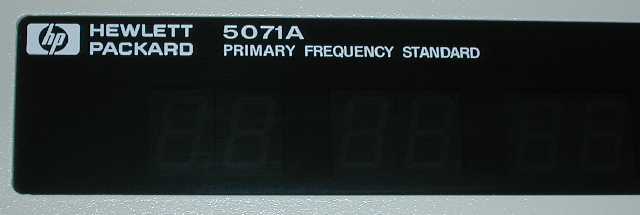
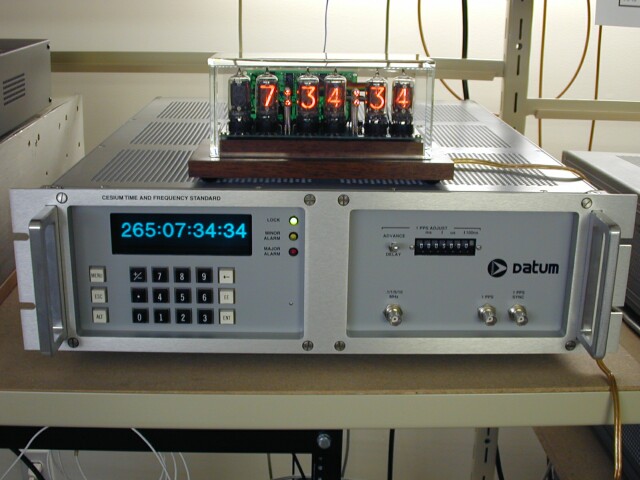
anyway, the guy you want to talk to is here: http://www.leapsecond.com/ Background Ten years ago I wanted to build a LED digital analog clock that would be accurate to better than one second per year -- so I would have the fun of adjusting it when a leap second occurred. This simple goal resulted in a most interesting journey into electronics, horology, astronomy, test equipment, quartz oscillators, rubidium and cesium atomic clocks, hydrogen masers, frequency counters and phase comparators, GPS, Loran C, GOES, and WWV / WWVB radio receivers. That makes me one of the Time-Nuts. By now I've exceeded that goal by a factor of a million: the best clocks in my collection (active hydrogen masers) are accurate to better than one microsecond per year. Excluding national government laboratories, my home time lab now has the most accurate clock in the world. Perhaps you've heard: A man with one clock knows what time it is. A man with two clocks is never sure. But I would add further: A man with three clocks is more sure than a man with two clocks. And so the clock collection started... ps this is an excellent article: http://www.leapsecond.com/pages/mains/ ar-jedi 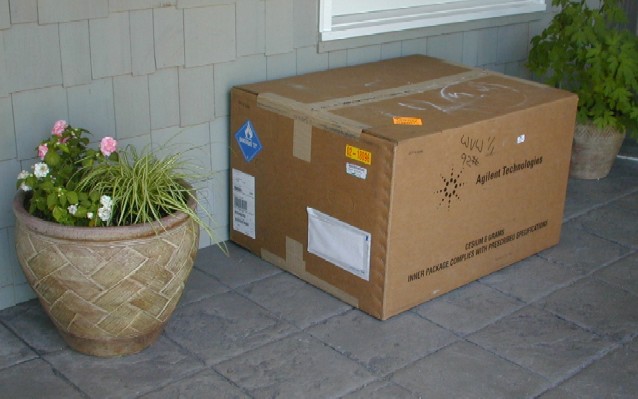



|
|
You know I am just going to blame you anyway. I was looking at server racks this morning before work. Portable, water resistant, wheels, green... damn expensive. Glad I am getting some of my toys free. |
|
Quoted:
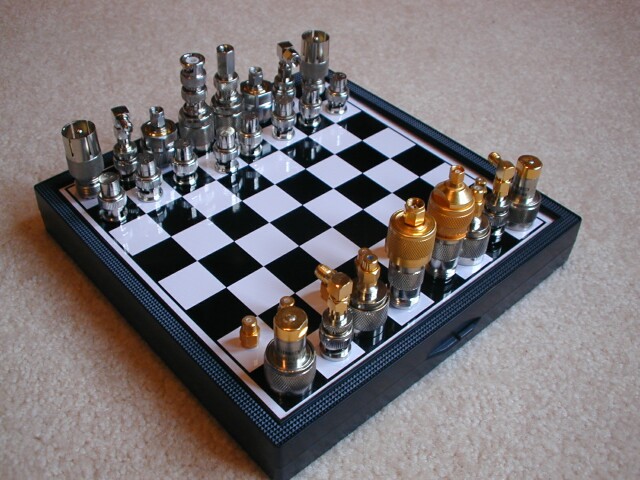
anyway, the guy you want to talk to is here: http://www.leapsecond.com/ ps this is an excellent article: http://www.leapsecond.com/pages/mains/ ar-jedi http://www.leapsecond.com/hp5071a/porch.jpg http://www.leapsecond.com/hp5071a/HP5071A.jpg http://www.leapsecond.com/images/LabJan2001r.jpg http://www.leapsecond.com/pages/atomic-nixie/cesium2.jpg http://www.leapsecond.com/pages/atomic-nixie/maser3.jpg http://www.leapsecond.com/pages/chess/Chess1.jpg http://www.leapsecond.com/pages/chess/Chess2.jpg Quoted:
anyway, the guy you want to talk to is here: http://www.leapsecond.com/ Background Ten years ago I wanted to build a LED digital analog clock that would be accurate to better than one second per year -- so I would have the fun of adjusting it when a leap second occurred. This simple goal resulted in a most interesting journey into electronics, horology, astronomy, test equipment, quartz oscillators, rubidium and cesium atomic clocks, hydrogen masers, frequency counters and phase comparators, GPS, Loran C, GOES, and WWV / WWVB radio receivers. That makes me one of the Time-Nuts. By now I've exceeded that goal by a factor of a million: the best clocks in my collection (active hydrogen masers) are accurate to better than one microsecond per year. Excluding national government laboratories, my home time lab now has the most accurate clock in the world. Perhaps you've heard: A man with one clock knows what time it is. A man with two clocks is never sure. But I would add further: A man with three clocks is more sure than a man with two clocks. And so the clock collection started... ps this is an excellent article: http://www.leapsecond.com/pages/mains/ ar-jedi http://www.leapsecond.com/hp5071a/porch.jpg http://www.leapsecond.com/hp5071a/HP5071A.jpg http://www.leapsecond.com/images/LabJan2001r.jpg http://www.leapsecond.com/pages/atomic-nixie/cesium2.jpg http://www.leapsecond.com/pages/atomic-nixie/maser3.jpg http://www.leapsecond.com/pages/chess/Chess1.jpg http://www.leapsecond.com/pages/chess/Chess2.jpg Built a nixie tube clock myself a couple years ago 
I remember you had posted the clock pics in my thread on it http://www.ar15.com/forums/t_1_5/1316977_My_first_nixie_tube_clock.html It loses a few seconds a month. |
|
"08-12-2010, 12:12 PM #1
Cole D. Website Contributor Join Date Apr 2010 Location Florida Posts 1,844 Hertz vs Cycles In the 1970s, the electrical term Hertz (Hz) had largely replaced Cycles. They both mean the same thing, but I find it interesting that it seems that the dates that manufacturers changed their terminology varies greatly. I noticed a 1972 blue Galaxy oscillator says Cycles on the bottom, as does Duane's mid 1970s green Sears oscillator. General Electric fans never seem to deviate from Cycles, even the 1970s ones still say CPS (cycles per second). However, I've seen an early 1970s Westinghouse box fan that says Hz on the label! You would think that this would have been more of an across-the-board change, but it's not. I would not be surprised if some fans even from the early 1980s still have the term Cycles. Bests, Cole D. Reply With Quote 08-12-2010, 05:51 PM #2 John M I'm New Here Join Date Jul 2010 Location Waynesboro, Pa USA Posts 39 I think they started phasing in the term Hertz in the late 60's or so. Hertz was one of the few things that actually did get changed when they looked to convert America to the metric system. Hertz is an SI unit and likely became common since Hertz meant cycles per second. I actually like the older term cycles and actually use it even though I was born after people started saying Hertz though. What was really strange was the some RCA literature stated Gigahertz as kilo-Megacycles (thousands of millions of cycles per second). Reply With Quote |
|
Quoted:
"08-12-2010, 12:12 PM #1 Cole D. Website Contributor Join Date Apr 2010 Location Florida Posts 1,844 Hertz vs Cycles In the 1970s, the electrical term Hertz (Hz) had largely replaced Cycles. They both mean the same thing, but I find it interesting that it seems that the dates that manufacturers changed their terminology varies greatly. I noticed a 1972 blue Galaxy oscillator says Cycles on the bottom, as does Duane's mid 1970s green Sears oscillator. General Electric fans never seem to deviate from Cycles, even the 1970s ones still say CPS (cycles per second). However, I've seen an early 1970s Westinghouse box fan that says Hz on the label! You would think that this would have been more of an across-the-board change, but it's not. I would not be surprised if some fans even from the early 1980s still have the term Cycles. Bests, Cole D. Reply With Quote 08-12-2010, 05:51 PM #2 John M I'm New Here Join Date Jul 2010 Location Waynesboro, Pa USA Posts 39 I think they started phasing in the term Hertz in the late 60's or so. Hertz was one of the few things that actually did get changed when they looked to convert America to the metric system. Hertz is an SI unit and likely became common since Hertz meant cycles per second. I actually like the older term cycles and actually use it even though I was born after people started saying Hertz though. What was really strange was the some RCA literature stated Gigahertz as kilo-Megacycles (thousands of millions of cycles per second). Reply With Quote Sears used to sell everything. |
|
Quoted:
I love how timely topics like this come up on ARFCOM. I was given an oscilloscope the other day to use with my ham radio gear. Tonight I got a chance to play with it. I noticed that the inputs are marked in Hz but the measurements are seconds. Kind of cool given the scope is probably 1970s vintage. I've got an 80's something Tektronix scope (150MHz) and a newer Owon (60MHz) scope. The sweep rate for the Tek is 500ms-10ns. The Owon is 100s-5ns. Here's the Tek looking at a square wave @ 1ms sweep 
Here's the same waveform (different frequency) @ 200ns showing more detail. 
Here's the Owon looking at a 1KHz sine wave 
Here's the Owon with the probe in my hand. It's reading the mains power induced in my body. 
|
|
@ 1ms/div the scope display has 10 horizontal divisions; at 1ms/division, you have a 10ms "window" into the signal. ar-jedi eta ok, possibly your statement of "Here's the same waveform @ 200ns showing more detail" is what is confusing me. it's not the same waveform. note that the 2445A's calibrator output frequency is a function of the timebase setting. hence when you change the timebase setting, the calibrator is "following along" to present 5 cycles on the screen. the calibrator output frequency is going up as you reduce the timebase per/div setting. see http://www.mit.edu/~jhawk/tek2445.pdf page 3-4, item 21. the "detail" you see at 200ns/div is the fact that at higher frequencies the probe response starts to play a factor in your measurements. the risetime/falltime (slew rate) of the measurement itself is dependent on the capacitance of the probe and several other aspects. you can see nice square edges at a low frequency (your 1ms/div setting = 500Hz) but not so square edges at a high frequency (your 200ns/div setting = 2.5MHz). there are several methods (on both the probe itself and the scope) to compensate for the probe response at a given frequency. the end result is needing to use an expensive FET probe for accurate measurements at frequencies above about 200MHz. |
|
Quoted:
@ 1ms/div the scope display has 10 horizontal divisions; at 1ms/division, you have a 10ms "window" into the signal. ar-jedi eta ok, possibly your statement of "Here's the same waveform @ 200ns showing more detail" is what is confusing me. it's not the same waveform. note that the 2445A's calibrator output frequency is a function of the timebase setting. hence when you change the timebase setting, the calibrator is "following along" to present 5 cycles on the screen. the calibrator output frequency is going up as you reduce the timebase per/div setting. see http://www.mit.edu/~jhawk/tek2445.pdf page 3-4, item 21. the "detail" you see at 200ns/div is the fact that at higher frequencies the probe response starts to play a factor in your measurements. the risetime/falltime (slew rate) of the measurement itself is dependent on the capacitance of the probe and several other aspects. you can see nice square edges at a low frequency (your 1ms/div setting = 500Hz) but not so square edges at a high frequency (your 200ns/div setting = 2.5MHz). there are several methods (on both the probe itself and the scope) to compensate for the probe response at a given frequency. the end result is needing to use an expensive FET probe for accurate measurements at frequencies above about 200MHz. Quoted:
@ 1ms/div the scope display has 10 horizontal divisions; at 1ms/division, you have a 10ms "window" into the signal. ar-jedi eta ok, possibly your statement of "Here's the same waveform @ 200ns showing more detail" is what is confusing me. it's not the same waveform. note that the 2445A's calibrator output frequency is a function of the timebase setting. hence when you change the timebase setting, the calibrator is "following along" to present 5 cycles on the screen. the calibrator output frequency is going up as you reduce the timebase per/div setting. see http://www.mit.edu/~jhawk/tek2445.pdf page 3-4, item 21. the "detail" you see at 200ns/div is the fact that at higher frequencies the probe response starts to play a factor in your measurements. the risetime/falltime (slew rate) of the measurement itself is dependent on the capacitance of the probe and several other aspects. you can see nice square edges at a low frequency (your 1ms/div setting = 500Hz) but not so square edges at a high frequency (your 200ns/div setting = 2.5MHz). there are several methods (on both the probe itself and the scope) to compensate for the probe response at a given frequency. the end result is needing to use an expensive FET probe for accurate measurements at frequencies above about 200MHz. Yeah, it's sec/div. I called it sweep rate. You are right about the square wave distorting at higher frequencies. |


|
Quoted:
ps that FET probe is roughly the cost of a nicely equipped Honda Accord. and the 32GHz x 4ch scope... well, there are no current production cars that i can use as an example. 
even Ferrari prices pale in comparison to what Agilent asks for those scopes. ar-jedi About the probe, wow, I could buy a lot of guns and ammo! 
At any rate, the most I do with mine is just basic R&D, trouble shooting looking at ripple on a power supply and etc. 6GHz is waaaay beyond my needs
|
|
Quoted:
S-J, some pics for you... http://wopr.losdos.dyndns.org/gallery2/d/57793-2/CameraRoll+008.jpg http://wopr.losdos.dyndns.org/gallery2/d/57798-2/CameraRoll+003.jpg http://wopr.losdos.dyndns.org/gallery2/d/57811-2/CameraRoll+141.jpg http://wopr.losdos.dyndns.org/gallery2/d/57810-2/CameraRoll+142.jpg http://wopr.losdos.dyndns.org/gallery2/d/57806-2/CameraRoll+019.jpg http://wopr.losdos.dyndns.org/gallery2/d/57800-2/CameraRoll+017.jpg http://wopr.losdos.dyndns.org/gallery2/d/57813-2/CameraRoll+145.jpg http://wopr.losdos.dyndns.org/gallery2/d/57796-2/CameraRoll+009.jpg ps "my scope won't boot"
http://wopr.losdos.dyndns.org/gallery2/d/57807-2/CameraRoll+015.jpg 
I used to be into electronic tinkering, very, very amateurish. My dad came upon an oscilloscope, I think a customer gave it to him as partial payment for a job he did. I couldn't figure out how the fuck to use it so I sold it on eBay for $100.
|
|
Quoted:
I did not say it was wrong. I think it was cool that the OP wrote about something I was actually experimenting with. My wording was probably confusing. My first scope was an early 60's .mil unit that did not have Hz markings that I remember. Quoted:
Quoted:
Quoted:
I love how timely topics like this come up on ARFCOM. I was given an oscilloscope the other day to use with my ham radio gear. Tonight I got a chance to play with it. I noticed that the inputs are marked in Hz but the measurements are seconds. Kind of cool given the scope is probably 1970s vintage. All scopes are marked like that.
One should be measured in time, the other in voltage. I did not say it was wrong. I think it was cool that the OP wrote about something I was actually experimenting with. My wording was probably confusing. My first scope was an early 60's .mil unit that did not have Hz markings that I remember. They still don't have markings in Hertz. The markings refer to sweep speed, not frequency. 1 millisecond per division, 10 milliseconds per division, etc. Divisions are almost always centimeters. |
|
I studied and got a degree in Electronics Engineering in the 90s. A few of my instructors were old school guys (one worked on the IBM team that made the first transistor calculator) that used "cycles per second" instead of Hertz.
They are effectively interchangeable terms. One reason for the change is you can't really use metric orders-of-magnitude as a short expression.... "mega-cycles-per-second". Well, you can, but it's a bit long! |