


Posted: 12/13/2008 3:55:33 AM EDT
|
I want to get into some soldering projects. I was recommended at least a 30-40 watts tool to buy, but........ Does any one know if the "Cold-Heat" product on T.V. is better?
THX |
|
Quoted:
I want to get into some soldering projects. I was recommended at least a 30-40 watts tool to buy, but........ Does any one know if the "Cold-Heat" product on T.V. is better? THX Cold Heat did not work for me. (soldering electronics) What kind of soldering will you be doing? |
|
Cold heat is a waste of money. I bought it to throw into a tool kit but I could never get solder to flow with that POS.
I use a Weller 8200 140w/100w gun that I've had for at least 15-20 years. You can get flow on some pretty heavy connections and you can do fine work too if you are careful not to overheat your work. BTW, I was soldering some microphone cables last night! 
|
|
Get a temp controlled soldering station if you are going to do electronics.
Weller makes some decent ones. Soldering guns are to large for electronics, but can be useful for electrical items that need soldering (pretty rare nowadays), and other non-electrical soldering work. You also will quickly need a binocular microscope with the fine lead pitches and small component sizes used today. 0.025 inch pin pitch (and even finer) is very common. |
|
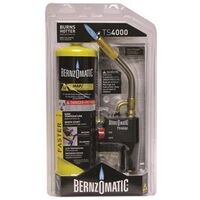
I have several soldering irons, but my favorite is a butane torch/iron
it gets hot quick and has no cords to tangle http://www.hardwaresalesinc.com/Shop/Control/Product/fp/SFV/32362/vpid/6042815/vpcsid/0/rid/127067 |
|
Quoted:
Cold heat is a waste of money. I bought it to throw into a tool kit but I could never get solder to flow with that POS. I use a Weller 8200 140w/100w gun that I've had for at least 15-20 years. You can get flow on some pretty heavy connections and you can do fine work too if you are careful not to overheat your work. BTW, I was soldering some microphone cables last night! Amen brother! I wasted my money at that also! Use a good quality electric gun or a butane torch. I like using butane if I'm soldering outside, like on an underground splice. |
|
Will y'all say what KINDs/Brands of guns you get? And for what reasons?
We don't own a soldering iron, and we need one––actually we need one RIGHT NOW just to solder the new motor into uxb's cordless drill. But I went to Lowes and Home Depot and saw these "soldering kits" for about $10-20 and they looked kind of lame so we haven't bought one. Maybe they're NOT lame. I just don't know. I figure there are all kinds––useless to excellent. We tend to buy good tools, contractor grade, and buy them ONCE––ones that will cover as many applications as possible. For instance, uxb needs to solder the motor into his drill. I might need to solder a clasp back onto a silver necklace. Does one iron accomplish all the tasks? Maybe we don't need a fancy soldering iron, but if I'm gonna pay twenty bucks for a lame one, or thirty five for a really good one, I'll go for the thirty five immediately. If it's $135 for a good one, I'll think twice about that.  Cuz I dunno how much we'll use it. Cuz I dunno how much we'll use it.
I can actually WELD, but I've never owned a soldering iron/gun. It's actually a little weird, all the house stuff we've done/tools we own, and neither of us has ever owned a simple tool to solder.
|
|
Quoted:
Will y'all say what KINDs/Brands of guns you get? And for what reasons? We don't own a soldering iron, and we need one––actually we need one RIGHT NOW just to solder the new motor into uxb's cordless drill. But I went to Lowes and Home Depot and saw these "soldering kits" for about $10-20 and they looked kind of lame so we haven't bought one. Maybe they're NOT lame. I just don't know. I figure there are all kinds––useless to excellent. We tend to buy good tools, contractor grade, and buy them ONCE––ones that will cover as many applications as possible. For instance, uxb needs to solder the motor into his drill. I might need to solder a clasp back onto a silver necklace. Does one iron accomplish all the tasks? Maybe we don't need a fancy soldering iron, but if I'm gonna pay twenty bucks for a lame one, or thirty five for a really good one, I'll go for the thirty five immediately. If it's $135 for a good one, I'll think twice about that. Cuz I dunno how much we'll use it.
I can actually WELD, but I've never owned a soldering iron/gun. It's actually a little weird, all the house stuff we've done/tools we own, and neither of us has ever owned a simple tool to solder. Weller SL325 for run of the mill small electrical work. Not ideal for electronic work unless it is on leaded components. Rosin cre flux for electric/electronic work. NOT acid core (the old plumbing stuff). |
|
spend the money on a weller...
i started with an old wood burning kit... ended up with a weller soldering station (don't know the model #) for Christmas back in 1994... it is awesome... and i've done quite a bit with it... even small IC work... i love it i found a ColdHeat on sale for really cheap, i never got a chance to try it out though |
|
Soldering has its own set of 'tricks.'
Simple adding power to allow a smaller tip (low thermal mass) to heat a joint is not an effective way to make reliable joints. The actual size and weight of the heated mass plays a large part in being able to raise the joint up to soldering temperature without cooking everything. The available power only determine how fast the tip will come back up to soldering temperature after a joint is made. My large soldering iron is still only 50 W, but has a chunk of 1 in diameter copper about 3 inches long in the heating element. Once it gets to soldering temperature it just stays there, even when working on 16 oz copper sheets. For fine electronic work the soldering stations use pulse width control to maintain the tip temperature (they have a thermal sensor built into the iron). The essentially add extra power only when the tip starts to cool. Many are actually very low power (15 W) for fine work. While you can use solder to repair jewelry, real repairs are normally done by brazing with the melting point of the filler metal above 800-840 F but still not melting the base metal. |
|
Quoted:
Soldering has its own set of 'tricks.' Simple adding power to allow a smaller tip (low thermal mass) to heat a joint is not an effective way to make reliable joints. The actual size and weight of the heated mass plays a large part in being able to raise the joint up to soldering temperature without cooking everything. The available power only determine how fast the tip will come back up to soldering temperature after a joint is made. My large soldering iron is still only 50 W, but has a chunk of 1 in diameter copper about 3 inches long in the heating element. Once it gets to soldering temperature it just stays there, even when working on 16 oz copper sheets. For fine electronic work the soldering stations use pulse width control to maintain the tip temperature (they have a thermal sensor built into the iron). The essentially add extra power only when the tip starts to cool. Many are actually very low power (15 W) for fine work. While you can use solder to repair jewelry, real repairs are normally done by brazing with the melting point of the filler metal above 800-840 F but still not melting the base metal. Okay, we will probably do little to no electronic work. It will be stuff like the drill motor or other around-the-house stuff––fixing the prong on the plug for my old waterbed heater, for instance. It sounds as though we would need one NOT for electronics, and it sounds as though I need something different to fix/make jewelry (the jewelry I will be doing is all silver, not plated usually.). I figured I could just melt the clasp together with a spool of silver solder, but maybe not.....I have a lot to learn about soldering. The tricks, as you say. Is there a place to go for this stuff––to learn about it? And are the Wellers available in-store locally, or is this a specialty product? thanks for the input. Kitties |
|
Quoted:
Quoted:
Soldering has its own set of 'tricks.' Simple adding power to allow a smaller tip (low thermal mass) to heat a joint is not an effective way to make reliable joints. The actual size and weight of the heated mass plays a large part in being able to raise the joint up to soldering temperature without cooking everything. The available power only determine how fast the tip will come back up to soldering temperature after a joint is made. My large soldering iron is still only 50 W, but has a chunk of 1 in diameter copper about 3 inches long in the heating element. Once it gets to soldering temperature it just stays there, even when working on 16 oz copper sheets. For fine electronic work the soldering stations use pulse width control to maintain the tip temperature (they have a thermal sensor built into the iron). The essentially add extra power only when the tip starts to cool. Many are actually very low power (15 W) for fine work. While you can use solder to repair jewelry, real repairs are normally done by brazing with the melting point of the filler metal above 800-840 F but still not melting the base metal. Okay, we will probably do little to no electronic work. It will be stuff like the drill motor or other around-the-house stuff––fixing the prong on the plug for my old waterbed heater, for instance. It sounds as though we would need one NOT for electronics, and it sounds as though I need something different to fix/make jewelry (the jewelry I will be doing is all silver, not plated usually.). I figured I could just melt the clasp together with a spool of silver solder, but maybe not.....I have a lot to learn about soldering. The tricks, as you say. Is there a place to go for this stuff––to learn about it? And are the Wellers available in-store locally, or is this a specialty product? thanks for the input. Kitties The guns are OK for really simple electric stuff, but most are very high powered with little thermal mass. This often leads to cooked insulation on what is being soldered. Jewelry is normally a torch and brazing. There are some lower temperature solders (Tix) with silver in them, but they are a far cry from actual solid silver. Oxy-acetylene or air air-acetylene works for smaller items. Jewelry torches are usually very small. The whole torch head is less than 6 inches long and the flames are 1/16 in diameter. |