


Posted: 5/2/2015 5:58:09 AM EDT

Fifth Sunday of Easter Lectionary: 53 First Reading ACTS 9:26-31 
(Sts. Paul and Barnabas, icon in Cyprus church) When Saul arrived in Jerusalem he tried to join the disciples, but they were all afraid of him, not believing that he was a disciple. Then Barnabas took charge of him and brought him to the apostles, and he reported to them how he had seen the Lord, and that he had spoken to him, and how in Damascus he had spoken out boldly in the name of Jesus. He moved about freely with them in Jerusalem, and spoke out boldly in the name of the Lord. He also spoke and debated with the Hellenists, but they tried to kill him. And when the brothers learned of this, they took him down to Caesarea and sent him on his way to Tarsus. The church throughout all Judea, Galilee, and Samaria was at peace. It was being built up and walked in the fear of the Lord, and with the consolation of the Holy Spirit it grew in numbers. Responsorial Psalm PS 22:26-27, 28, 30, 31-32 R.I will praise you, Lord, in the assembly of your people. I will fulfill my vows before those who fear the LORD. The lowly shall eat their fill; they who seek the LORD shall praise him: “May your hearts live forever!” R. I will praise you, Lord, in the assembly of your people. All the ends of the earth shall remember and turn to the LORD; all the families of the nations shall bow down before him. R. I will praise you, Lord, in the assembly of your people. To him alone shall bow down all who sleep in the earth; before him shall bend all who go down into the dust. R. I will praise you, Lord, in the assembly of your people. And to him my soul shall live; my descendants shall serve him. Let the coming generation be told of the LORD that they may proclaim to a people yet to be born the justice he has shown. R. I will praise you, Lord, in the assembly of your people. Second Reading 1 JN 3:18-24 Children, let us love not in word or speech but in deed and truth. Now this is how we shall know that we belong to the truth and reassure our hearts before him in whatever our hearts condemn, for God is greater than our hearts and knows everything. Beloved, if our hearts do not condemn us, we have confidence in God and receive from him whatever we ask, because we keep his commandments and do what pleases him. And his commandment is this: we should believe in the name of his Son, Jesus Christ, and love one another just as he commanded us. Those who keep his commandments remain in him, and he in them, and the way we know that he remains in us is from the Spirit he gave us. Alleluia JN 15:4A, 5B R. Alleluia, alleluia. Remain in me as I remain in you, says the Lord. Whoever remains in me will bear much fruit. R. Alleluia, alleluia. 
Gospel JN 15:1-8 Jesus said to his disciples: “I am the true vine, and my Father is the vine grower. He takes away every branch in me that does not bear fruit, and every one that does he prunes so that it bears more fruit. You are already pruned because of the word that I spoke to you. Remain in me, as I remain in you. Just as a branch cannot bear fruit on its own unless it remains on the vine, so neither can you unless you remain in me. I am the vine, you are the branches. Whoever remains in me and I in him will bear much fruit, because without me you can do nothing. Anyone who does not remain in me will be thrown out like a branch and wither; people will gather them and throw them into a fire and they will be burned. If you remain in me and my words remain in you, ask for whatever you want and it will be done for you. By this is my Father glorified, that you bear much fruit and become my disciples.” 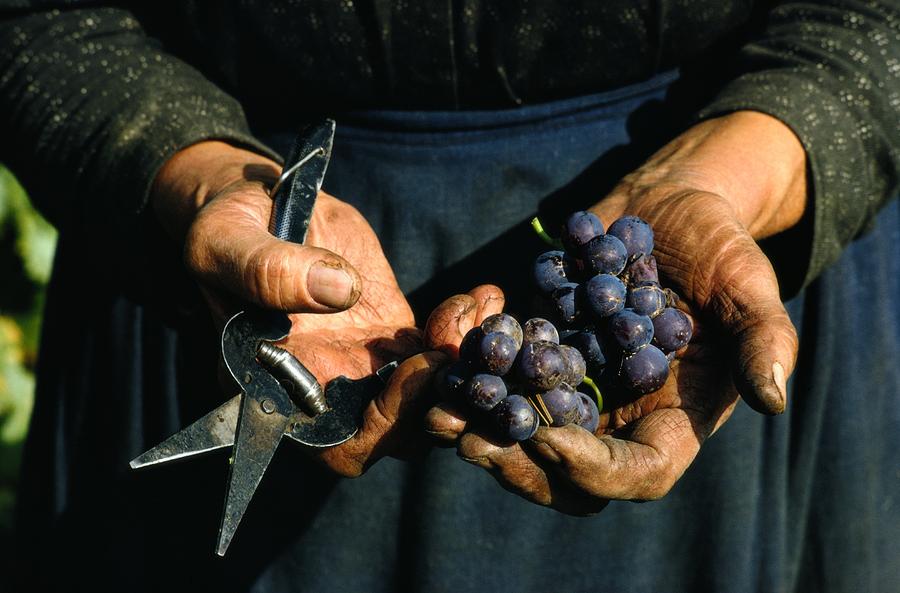
Gospel Reading: John 15:1-8 *The setting for this Sunday’s Gospel is just after the Last Supper discourse in the upper room (John 13:1—14:31). It is speculated that, after leaving the upper room, this part of Jesus’ discourse may have been delivered at the Temple gates (where there was an elaborate engraving of grapes and vines), or in the vineyard near the Kidron Valley, on the way to the Mount of Olives, where the Garden of Gethsemane was located. *In the Old Testament, the nation of Israel is often spoken of as a vine or a vineyard (Isaiah 5:1-7; Psalm 80:9-17; Jer 2:21, 5:10-11; Ez 15:2-8, 17:5-10; 19:10-14; Hosea 10:1, etc.), as did Jesus (Mt 21:33-46). *This Gospel reading, however, is much more personal than previous uses of this figure since Jesus speaks of himself as the vine and we, his members, as the branches. *St. Paul also uses a similar idea in his description of the true Israel as the body of Christ (Rom 12:4-5; 1 Cor 3:9, 12:12-26; Eph 4:15-16). Thus our spiritual survival is dependent upon our connection to him—and to one another. *Jesus is talking about two kinds of branches with a different kind of pruning for each. Those branches that are not bearing fruit are to be cut off all together, as they are useless and only serve to draw nourishment away from the fruitful branches. The fruitful branches are also pruned, but it is because they are already productive and pruning makes then even more so. BIBLE QUESTIONS: +If the fruitful vine branches were human lives, what kinds of things are being pruned away? What pain would be associated with pruning? What tools? What spiritual fruit? +Jesus repeats “remain in me”, “love” and “bear fruit”. How are these words related? What is the “fruit that will remain” (verse 16)? +How do verses 9 and 12 tie together? How is love the essential dynamic of the Christian life (1 Cor 13)? How does your relationship with Jesus change once you start practicing his example of love? +What is the link between obedience and prayer (verses 7 and 16. See also John 14:13-14)? +As a branch on Christ’s vine, how would you describe the fruit in your life: Grade A-1? Juicy? Green? Wormy? Rotten? or Dried Up? Why? +Specifically, how would you rate yourself on laying down your life for your friends (verse 13)? (courtesy of Sunday Scripture Study for Catholics) Bible Study--5th Sunday of Easter--Cycle B (courtesy of St. Charles Borromeo Parish, Picayune, MS, Faith Studies) Grapevines and Vineyards in the Bible 
“For Christ’s Word in the first place cleanses us from errors, by instructing us, secondly, it purifies our hearts of earthly affections, filling them with desire for heavenly things. and finally, his Word purifies us with the strength of faith, for “he cleansed their hearts by faith.” ~St. Thomas Aquinas |

|
There is a popular Italian saying... In Vino Veriatis. In wine there is truth. Every time I read our Lords analogies I am astounded at what he picks. Lambs. Wine grapes. Lamps and sheep are simple animals who have to be tended constantly. They are helpless and it takes round the clock care to protect and nurture them. Wine grapes are difficult to grow. They are delicate. The climate must be just right, humidity just right, soil just right. They vines have to continually be pruned and shapes. They are easily overrun by weeds. Too much rain and they get blight. Too little and the wither quickly. If a plant dies it can destroy the vineyard. Growing wine grapes is intuition, experience, constant tending. And if your read any of these forums.. isn't this the way of faith? It must be tended. But the roots of the plant are strong and hard to remove and like all vine plant these vines get entwines with others so you can't tell which branch belongs to which root. That entwine is crucial to supporting the delicate growth of the fruit! Its the combination of so many things to produce a good bundle. God is telling us we matter and He is our support. Someone once said: treat others as though they will make a difference... and they will. Dare to be Holy.  |
|
I thought this set of readings were also demonstrative of the necessity of 'works.' It is not simple faith alone. He remains in those who 'do' the will of God. He lists two things to 'do.' To have faith and to love on another. Sound like a Nike commercial. Just 'do' it. |