


Posted: 4/21/2010 7:15:17 PM EDT
April 25, 2010
 First Reading: Acts of the Apostles 13:14,43-52 14 Yet truly, they, traveling on from Perga, arrived at Antioch in Pisidia. And upon entering the synagogue on the Sabbath day, they sat down. 43 And when the synagogue had been dismissed, many among the Jews and the new worshipers were following Paul and Barnabas. And they, speaking to them, persuaded them to continue in the grace of God. 44 Yet truly, on the following Sabbath, nearly the entire city came together to hear the Word of God. 45 Then the Jews, seeing the crowds, were filled with envy, and they, blaspheming, contradicted the things that were being said by Paul. 46 Then Paul and Barnabas said firmly: “It was necessary to speak the Word of God first to you. But because you reject it, and so judge yourselves unworthy of eternal life, behold, we turn to the Gentiles. 47 For so has the Lord instructed us: ‘I have set you as a light to the Gentiles, so that you may bring salvation to the ends of the earth.’” 48 Then the Gentiles, upon hearing this, were gladdened, and they were glorifying the Word of the Lord. And as many as believed were preordained to eternal life. 49 Now the word of the Lord was disseminated throughout the entire region. 50 But the Jews incited some devout and honest women, and the leaders of the city. And they stirred up a persecution against Paul and Barnabas. And they drove them away from their parts. 51 But they, shaking the dust from their feet against them, went on to Iconium. 52 The disciples were likewise filled with gladness and with the Holy Spirit. Second Reading: Revelation 7:9,14b-17 9 After these things, I saw a great crowd, which no one could number, from all the nations and tribes and peoples and languages, standing before the throne and in sight of the Lamb, clothed in white robes, with palm branches in their hands. 14b “My lord, you know.” 15 Therefore, they are before the throne of God, and they serve him, day and night, in his temple. And the One who sits upon the throne shall dwell over them. 16 They shall not hunger, nor shall they thirst, anymore. Neither shall the sun beat down upon them, nor any heat. 17 For the Lamb, who is in the midst of the throne, will rule over them, and he will lead them to the fountains of the waters of life. And God will wipe away every tear from their eyes.” Gospel: John 10:27-30 27 My sheep hear my voice. And I know them, and they follow me. 28 And I give them eternal life, and they shall not perish, for eternity. And no one shall seize them from my hand. 29 What my Father gave to me is greater than all, and no one is able to seize from the hand of my Father. 30 I and the Father are one.” Study Resources and CCC References Overview of the Gospel: * The setting for this Sunday’s Gospel is the city of Jerusalem during the Jewish Feast of the dedication, also known as Hanukkah. This feast celebrated the deliverance of the Jews from the Greek tyrant, Antiochus IV Epiphanes, during the Maccabean Revolt (168—165 B.C. See 1 Maccabees 4:36-39). Antiochus had attempted the Hellenization (forced adoption of Greek culture) of Israel and had ordered the committing of sacrilege in the Jewish temple. * During this festival, there was sure to be strong nationalistic feelings against the Roman occupation of Israel, and a heightened longing for the coming of Messiah. * At this time Jesus is within the Temple precincts amidst the crowds. He is challenged to proclaim outright whether or not he is the promised Messiah. * Jesus tells them in effect that it is because of their refusal to believe, that they cannot recognize who he is (verses 25-26). He then goes on to make two other remarkable claims that scandalize and infuriate them. Questions: * In the First Reading we see how the preaching of the Apostles had both successes and resulted in persecution. How has your witness to Christ seen its share of both of these? How do the promises of the Second Reading encourage you in both the joys and sorrows of your Christian walk? * Given the social conditions at the time of this event (see above), what might be the real intent of the Pharisee’s questions in verse 24? * How do the Jewish leaders interpret Jesus’ claim to be one with God (verses 31-33)? What is their reaction? Do you think they are misinterpreting Jesus’ words? * What difference does it make that Jesus is God and not just a man? Would the promise of verse 28 mean much otherwise? * Do these verses imply “once saved, always saved? Why or why not (see Matthew 10:32-33; Colossians 1:22-23; Hebrews 12:14; John 15:2-6; CCC 161-162)? What, then do these verses imply? If no one can take Jesus’ sheep out of his hand, what power does the world or the devil have over you? How then can a sheep of his be lost? * What has convinced you that Jesus is the Messiah? What “old ways” of looking at Jesus must you overcome by faith? |
|
Given the social conditions at the time of this event (see above), what might be the real intent of the Pharisee’s questions in verse 24
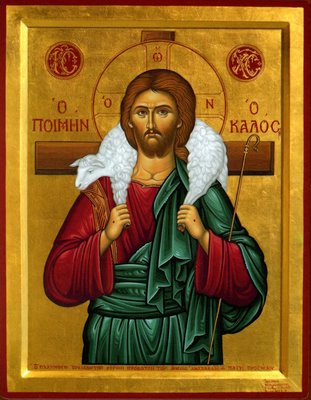
well––if we look at John 10:24, what does it show us? The Jews therefore came round about him, and said to him: How long dost thou hold our souls in suspense? If thou be the Christ, tell us plainly. The Jews literally surrounded Jesus, crowing around him; they finally asked his straight-out" "are you the Messiah?" Wow! Think about it. Here we have Jesus in their midst performing objective miracles; quoting scripture, fulfilling it, AND YET THEY DOUBT THEIR OWN EYES! There's an old saying which applies here: "Christ would have us to believe; we make ourselves doubt." They were, of course, looking to accuse him––the son of a carpenter––of blasphemy. But Jesus, speaking in parables, confuses them––gives them no ammunition to accuse him. The Jews find it hard to use Christ's words against him. (Memo: Don't try and trip God up; you'll always be a bit out-gunned!) The shepherd led his sheep but did not drive them, and a very intimate and loving relationship existed between the shepherd and the sheep, even extending to the shepherd's habit of giving each sheep a name and teaching them to respond to his voice and commands. At night, he usually led them into a safe enclosure, often lying across the entrance and thus forming literally the door. Flocks from several shepherds often occupied the same enclosure, the separation taking place next morning when each shepherd went his way, calling his sheep to follow, the sheep invariably following their true shepherd. Such shepherds were devoted to their sheep, risking or even giving their lives in defense of them against marauding beasts or thieves and robbers. 
Almighty God appears throughout the Old Testament as the true shepherd of Israel: The Lord is my shepherd (Psalms 23:1). We are thy people and the sheep of thy pasture (Psalms 79:13). Give ear, O Shepherd of Israel, thou that leadest Joseph like a flock (Psalms 80:1). For He is our God, and we are the people of his pasture, and the sheep of his hand (Psalms 95:7). Moreover, the whole 34th chapter of Ezekiel is given over to this metaphor of God as the good shepherd and the false leaders as the evil shepherds. This great Old Testament chapter is the key to all that is spoken here. Jesus is the fullfillment of the Scriptures. P.S. Notice how Jesus uses the images of sheep and shepherd. Anyone who has been around sheep knows a thing or two about them: they ain't too smart (often getting themselves in a lot of trouble) and they smell real bad! Jesus makes it clear to us: He's not the "High Priest" of old––privileged, clean, immaculate, status conscious. Jesus is "down-and-dirty" with his real flock: not afraid to meet and speak to the filthiest of creatures. Protecting them, feeding them, healing them, forgiving them, and ultimately saving them from "slaughter" and death. |