


Posted: 3/5/2012 8:12:20 PM EDT
|
As part of my whole "layoff re-education" phase here, while I am already going to school part time (for a compsci degree), I thought I could take some continuing education classes to prep up for some certs.
They have the usual CompTia stuff and some other ones so before I get in to deep, I thought I would ask the hive mind here. What certs would you work on so by the time you graduate with a bs:compsci you would also have some industry certs to go along with it? I was thinking networking and security but what do you folks think? |
|
CompTIA is mostly useless unless you're looking for an entry-level job, e.g. PC technician. For networking, the CCNA is an easy and well-respected entry-level networking certification. If you're looking to break into application development (since you're a CompSci major), you might want to choose a cert that meshes with your development language(s) of choice. If you're using a .NET language, Microsoft has a number of certifications that will provide credentials for those languages. Since you're just getting started in IT, I'd recommend choosing a certification that closely parallels your primary talents. You can expand into other fields down the road once you've got a job. |
|
Thank you for the suggestions.
One thing though is I've already been in IT for 15+ years but just got laid off in January. I have experience, but I need the degree/certs to get past the HR screeners. I'm not going to graduate for a few more years so I wanted to get something to help. Yes the CompTIA stuff is a bit of a entry level (plus it now has to be renewed) but if I keep getting certs while going to school, it may lessen the "out of the workforce" gap on my resume by staying current. I have done a ton of programming in an obscure language, so I'm now learning python & then java. I have done HD/desktop/server support. I have done image and configuration management for multiple OS and automation platform provisioning. I have managed a mobile sales force hardware/software platform for 5K+ reps. I've worked enough with databases to realize that I don't want to be a DBA. 
i've done tons of research and testing of equipment and software plus built a tons of QA/Validation tools. Where, I thought I, shined well was creating solutions to new and ongoing problems, taking what was there and figuring out a new way to do "whatever"that needed to be done by adding glue code from one app to another, writing apps to automate processes, or coming up with new methods to remove process pain points (different servers, different software, etc). Sorry for the rant, but things are grim out there. orrrrrrrr maybe I should just go learn to weld. |
|
Quoted:
CompTIA is mostly useless unless you're looking for an entry-level job, e.g. PC technician. For networking, the CCNA is an easy and well-respected entry-level networking certification. If you're looking to break into application development (since you're a CompSci major), you might want to choose a cert that meshes with your development language(s) of choice. If you're using a .NET language, Microsoft has a number of certifications that will provide credentials for those languages. Since you're just getting started in IT, I'd recommend choosing a certification that closely parallels your primary talents. You can expand into other fields down the road once you've got a job. It may be baseline level, but it sure isn't easy. The fun thing is the CCNP (Routing and switching) stuff isn't too far past CCNA level stuff except you're just going a bit more in depth into the protocols and such. |
|
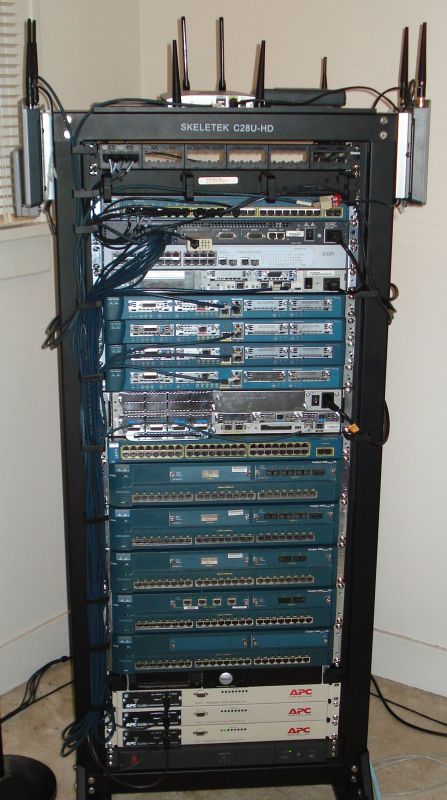
Quoted: It may be baseline level, but it sure isn't easy. The fun thing is the CCNP (Routing and switching) stuff isn't too far past CCNA level stuff except you're just going a bit more in depth into the protocols and such. I wouldn't say the CCNA is particularly difficult. It's time consuming, but there are a ridiculous number of resources out there to help with certification. If you're interested in pursuing the CCNA, I'd be happy to provide you with access to my home lab. Just shoot me an IM. |
|
Quoted: Sooooo I should go more into networking? I know that some businesses operate more remotely once the network is setup and established then handoff support duties to India. If I were to go into that, what would be a career path? I wouldn't recommend networking to anyone that isn't passionate about networking. I live and breathe networking, but I couldn't imagine doing it if I didn't love it. It can be an incredibly arcane science at times. Networking is a huge field with a lot of specializations, so you've got choices if you decide to focus on networking. A solid understanding of routing and switching is a must, but once you have that down the sky is the limit. Storage networking, network security, network design, wireless deployment, and telecommunications (voice/video) are all popular sub-fields. It sounds like you've spent a great deal of time in the field. If you can tailor your resumé to the jobs you're looking for, you shouldn't have too much trouble landing interviews. Most IT managers I work with would much rather interview someone with 15 years of experience as opposed to a guy fresh out of college. You mentioned you are fluent in an obscure programming language. May I ask which language? If you have any geographical mobility, that may be key to landing a fantastic job with very little competition. My employer heavily utilizes MUMPS, a pre-C language that is virtually unheard of in the private sector. People with MUMPS experience can practically write their own ticket. |
|
Quoted:
Quoted:
It may be baseline level, but it sure isn't easy. The fun thing is the CCNP (Routing and switching) stuff isn't too far past CCNA level stuff except you're just going a bit more in depth into the protocols and such. I wouldn't say the CCNA is particularly difficult. It's time consuming, but there are a ridiculous number of resources out there to help with certification. If you're interested in pursuing the CCNA, I'd be happy to provide you with access to my home lab. Just shoot me an IM. what equipment do you have in your home lab? I am currently working towards my CCNA |
|
Quoted:
Quoted:
what equipment do you have in your home lab? I am currently working towards my CCNA This is my lab rack: http://www.TWNCommunications.Net/Other/RackLab4.jpg nice |
|
Having been in IT for a long while, I'd second the suggestion of CCNA, and if you like it, go forward from there. Another thing to look at are the certs from the SANS Institute or a CISSP. Also, take some time to learn a UNIX variant at least at the end-user level. Some stuff is just so much easier in a UNIX shell than in a GUI, like sifting through logs and what not. You'll probably figure this out as you work on learning python.
The best paying fields in IT are Information Security, DBA (specifically Oracle), and highly experienced network engineers (e.g. CCIE). As a UNIX system admin, transitioning to InfoSec without an InfoSec cert has been impossible even though I've managed multiple PCI-DSS environments (including developing the blueprint for the latest one), responded to security incidents and written risk acceptance docs for a gov't agency. I think it would have happened already if I'd been in networking, even without an InfoSec cert. My $.02. =V= |
| The CISSP has been good to me. The Microsoft certs don't hold much weight these days except to get your resume past HR. Forget about the money for a second. IT can suck sometimes. People are nasty and the hours are rough because you have to implement and fix during off hours. Then you have to be back in the office to fix any issues that crop up as a result of your changes. In some positions you are the company's bitch 24x7x365. Lots of people washed out after the Y2K boom. My point is pick a specialty that you love at least a little bit.. If you enjoy what you are doing it will help you get though the rough patches. My background is in server infrastructure, networking and info security. |
|
If you're looking at networking, Cisco certs are the way to go. Unless you've been doing real networking with routers and switches, I wouldn't say the CCNA is easy in any way. Starting from scratch, it is pretty difficult if you don't know the basic OSI model. Then from there you could go to an NP to IE, or specialize in another category like wireless or VoIP. I'd strongly recommend VoIP as I see more and more companies wanting VoIP people as they are either migrating from traditional PBXs or are planning to. While the Cisco exams are vendor specific, they also give you the fundamentals which you can apply to any vendor of networking equipment. |