


[ARCHIVED THREAD] - MODS PLEASE LOCK (Page 1 of 16)
Posted: 10/17/2016 9:17:50 AM EDT
Publshed on Scribd.

*this is not a BOB thread* Let's start by making the clear differentiation between a 'GTFO BAG' and 'get home bag'. I work 60 miles from home. It's a 1.25 hour commute one way. Should there be a major event, such as weather, rapid breakdown in law in order, or anything that might clog up the primary ways of travel - I want to be able to head home on foot. Getting home is different from getting away from home. This thread is about getting home. Here is another great thread on the subject: _RAGNAR_'s GHB thread At a decent walking pace, it would take me two days to walk home, assuming no major interruptions, injuries or setbacks. Because I expect that I will probably have all of those, I'm figuring 5 days - worst case. Now, I have many close buddies that live at various points on the way home, and I fully expect those to be stops, if not longer term hold-overs. With all of that said - there are a few great resources I've referenced over the years. A few, as points of discussion are: http://www.artofmanliness.com/2015/01/21/how-to-travel-around-the-world-with-just-a-20lb-backpack/ http://www.itstactical.com/ etc, etc. At this point, though, I feel pretty strongly that (with a few minor exceptions) I have finally dialed this in. I've been camping, hiking, and otherwise "using" this setup for about 10 years now. It's obviously gone through many iterations, and still gets tweaked here and there. The first thing you need to is establish goals for you kit. The mission drives the gear, right? Are you walking 10 miles or 150? Do you travel via airplane? Have to cross rivers? Think about the biggest obstacles, things like ghettos or bad neighborhoods, mountains, etc. I would like to point out that having the most expensive gear in the world doesn't mean dick if your shoes are trash, you can't read a map, and you are in poor shape or poor health. I realize that some of this can't be helped. That is not the subject of this thread. There are some things that do need to be quality, though. Let’s talk about those first. Feet and Shoes I would argue that this is probably the single most important thing for you to spend money on. For around $100-200, you can get some seriously high quality hoof cover. I prefer Salomon GTX series shoes because I have shitty ankles. Actually, I have shitty feet all together. I’ve broken nearly every bone in my feet (some of them more than once) over my lifetime. https://www.amazon.com/Salomon-Quest-4D-Asphalt-Titanium/dp/B00KWK2KMY I don’t care what brand you end up with, but I would highly suggest you spend time hiking and running and testing them out. I’ve been hiking, camping, working patrol, etc in Salomons for about 5 years. Give some thought to gortex too. It’s a pro and a con. It can make your feet sweat and it will also retain moisture if you get water over the top of your boots. It also keeps your feet dry in shallow water and especially in grass that is wet with dew or rain. I prefer gortex because of rain and dew-soaked grass. It’s not for everyone though. Socks are huge, too. Get some merino wool or synthetic socks. Get several pairs. Carry several pairs. They should be calf-high socks. It is imperative that your feet stay dry. https://www.amazon.com/Kirkland-Signature-Outdoor-Merino-Assorted/dp/B00KRH8B70 There are a million options, this is one example. Footcare is not limited to shoes and socks. You need to be prepared for blisters or worse. I carry an advanced footcare module from rescue essentials along with extra moleskin. (you can get moleskin anywhere that sells medical stuff) http://www.rescue-essentials.com/advanced-foot-care-module/ Consider things like baby powder too. Thanks to joker117 for posting up this link to a great thread on the subject. link Bag selection Let’s go ahead and knock out bag selection. This has been a struggle for me since forever. Probably because I have more packs than my wife has coach purses. A metric fuck-ton. I'm a pack whore. Part of pack selection will obviously involve how long you expect to be on foot. A simple day pack will be fine if you are only traveling a few miles. Any expectation of overnight stay should push you into the 30-50 Liter range. These are commonly referred to as 3 day packs. I’m also a huge proponent of getting the smallest pack possible, because your tendency will be to fill it up with shit. A three-day pack should weigh, fully loaded (excluding water, guns and ammo) 25-35 lbs. Mine is 26 lbs. There are things that I will say are mandatory for you pack. 1.A frame. Without a frame, of some kind, you will hate life. I’ve hiked dozens of miles at a time on some crazy terrain without a framed pack and it sucks. It sucks balls. Get a frame. 2.Waist belt. If you don’t have a waist belt, your shoulders will carry the weight and they will fatigue fast. If you can, get a padded waist belt. I’m not one to care if it looks tactical or not. There are a million people in the US who have .mil surplus shit and wear it all the time. If you are walking, others probably are too, and I’ll wager many of them will be wearing alice packs and other tactical shit, although I understand why some might make the argument. Now that I’ve said a frame is mandatory, here is my no-frame GHB. Lol (I’m going to switch it back out soon) 
It’s a simple LBT 3-day bag with a HPG chest bag attached. I’ve also used the 5.11 covrt bag, and I like it. This is what I normally use. https://www.amazon.com/Osprey-Packs-Kestrel-Backpack-Medium/dp/B014EC0EJ6 I don’t really care all that much about a water bladder, but I can see the use. I prefer Nalgene bottles and collapsible water bottles. Make sure you get a water cover for your pack. I’m using this one right now, but it shreds easily in the southern brush. https://www.amazon.com/Pockettrip-Waterproof-Rainproof-Traveling-Camouflage/dp/B00QS8SY9W I’m a big believer in a three-tiered system (kind of like your three tier gun kit). Tier 1 is my HPG bag. It is with me always.(when getting home, not literally always) It has important shit, like fire, comms, knife, etc. Things I can’t live without. You could use a packable pocket backpack or something if you wanted. Tier 2 is my main pack. Tier 3 is a duffel bag of shit that I might need, but could leave behind. Finally, I’ll add. Spend some time wearing your pack. There are adjustments for a reason. =) |
|
First aid
First aid is simple, so I’ll make this short. There are two broad categories that medical equipment falls into, for me. Life or Death – you will die. Booboos – this sucks a little. For the first category - A 6” Israeli bandage and a CAT. If you aren’t familiar with these things, I suggest you get familiar with them. I would even advise most dudes carry two TQs. I love my SOFTTWs too. In a nutshell, these are the things I care about: 1.Exsanguinating Hemorrhage 2.Airway obstruction 3.Tension Pneumothorax 4.Shock I also have airways and chest seals I’m picking up from a friend, they’ll be in there as well. In a nutshell, I’m prepared to treat all of these in some (albeit limited) capacity, despite the fact that in a GHB type situation, advanced medical care (required for all of these, even when treated) will likely be unavailable. https://www.amazon.com/Berman-Oral-airway-sizes-poly/dp/B0015E2FDK https://www.amazon.com/North-American-Rescue-Hyfin-Chest/dp/B003VSQDQS For the second category, I run rescue essentials packs, with little stuff like bandaids and such thrown in. (all of these are on their webiste - http://www.rescue-essentials.com/) Advanced Foot Care Module Blister Kit Medications Unit Dose Pack Topical Treatments Not pictured is a SAM SPLINT. For the love of god, get some medical training. Even if it's just a simple thing put on locally. My wife and kids are all CPR certified, and have taken combat medicine courses. At the very least, understand how to use your kit effectively, especially when it comes to self-aid. Shelter I’m a hammock dude. Pretty have been since camping hammocks became a thing. They’re light, they’re comfy, and they’re cool in the summertime. They are also good for the shitty terrain here in the southeast where it’s impossible to find a flat spot for a tent. Shelters, though, are a seasonal thing. Here, a hammock can be a three season gig, and it is for me. In the spring and fall I use a jungle bag, and in the winter, I use a three-layer military bag and just sleep on the ground. Jungle bag I don’t really get to riled up on the quality of a hammock, so long as it holds your body weight and has a built in mosquito net. They are a consumable, and should be used until they wear out, and then tossed. I’ve bought some big $$ hammocks, and the ROI just isn’t there. They still wear out, and while they might last twice as long as a cheap hammock, they cost 3-4 times as much. It’s just not worth it. Tarps are a must, obviously. Any shelter/hammock tarp needs to be at least 6’x8’. I also buy cheap tarps for the same reason – consumable. I think the tarp and hammock here cost me a total of maybe $40 on WOOT. Notice the extra Para cord. Obviously, the stuff is useful for a ton of things, but I keep with the shelter in case I need to tie down a tarp grommet or add length to the hammock straps. Speaking of straps, I suggest you get some nice straps. It makes life so much better. You can see this setup is basically two carabiners with some pre-looped straps. Stick your shelter gear into a dry bag. Nothing worse than getting out of wet clothes and into a wet bed. If you want to go with a tent, there are lots of good options, but they are generally heavy, bulky, expensive and just too much trouble. Worst case, if you can’t do the hammock, get a nice all-weather sleeping bag, mat and tarp. A few pics of shelter setups over the years: 


Fire Fire is mission critical for a BOB, camping trip, or other “survival” type activities. I will argue here that it’s much less important for a GHB, but it is still important. Fortunately, fire making equipment is small and lightweight, so there is no excuse for excluding from your kit. My fire kit is simple. I have an altoids tin with a candle, BIC lighter, char cloth and a small Ferro Rod and striker. I also strap a Fresnel Lens on the outside and store it in a cotton bag (make more char cloth). I also keep two extra BIC lighters in a separate bag. That’s it folks. Simple. I will say this. If you’ve never actually made a fire, especially in adverse (rain, wind) conditions, you better practice. I have no plans of making huge fires. I will make one in my wood stove to heat food or water, or boil water if my other filtering options fail. That’s about all. Knives I think this warrants its own discussion. I’ve purchased and used everything from huge knives to pocket knives and several hundred dollars to less than ten dollars. I’ve used every design, and I’ve tested just about everything you can imagine. The first thing to clear up is what you plan to use your knife for. I hear you all screaming “batonning!” and “chopping” and “combat!”. Stop. Knives are for cutting. At least in this context. You aren’t going to be felling an oak with your Mora, nor should you be. If you plan to process wood for fire, you need a saw or an axe. Alright, mission drives the gear, right? We need a sturdy, lightweight knife that will cut stuff. Well, when you break it down like that, it’s pretty simple. I only have three rules about your knife. Fixed blade No serrations 4-6” blade Serrations are a bitch to sharpen, and you want to be able to maintain your blade easily in the field. They also make things like cleaning animals and fish, and making smooth cuts more difficult. You don’t need a huge knife. The larger the knife, the more difficult it becomes to do small, technical tasks. Get a quality sheath. Preferably kydex, and be able to carry it on your belt. The honest to god best knife for a GHB is a stainless mora. https://www.amazon.com/Morakniv-Companion-Outdoor-Stainless-4-1-Inch/dp/B00BTJKB00 $12 is hard to beat. Buy three of them because ‘Murica. You also need to sharpen your knife. https://www.amazon.com/Lansky-LCD02-The-Tactical/dp/B0055DL5NI $12 is hard to beat and this will do everything you’ll need to do. I don’t care if you buy the same model, but get something small, light, and easy to use. Then practice with it. Sharpening a knife is a skill honed (see what I did there?) with experience. That’s pretty much it. What I’m carrying now is a custom, by Tucker Knives - an arfcommer. It's riding in custom leather from Eagle Leatherworks out of ATL. Yes I have a custom knife fetish. Leave me alone. I like this knife because it’s extremely useful for intricate tasks, and it fits my hand perfectly. It also has a notch that serves as the handhold on a bow drill. |
|
Water
I’m lucky. In the SE US there is water everywhere. You can’t throw a rock without hitting a pond, lake, stream or river down here. Because of this, my setup is very simple and includes primary and backup of the two key water components: Purification Storage Filtering or purifying water is pretty straight forward, and while purification hasn’t changed much, filtering has evolved quite a bit. I prefer Sawyer minis for my filter because they are super light, very small, easy to field clean, and can be deployed using a gravity feed so you don’t have to stand over them the whole time. Additionally, the bags they use to feed the filter can double as water storage. Also, $18 for 100k gallons that weighs 2oz is pretty hard to argue with. I carry three sawyer bags, three 1 liter collapsible bags, and a 32 oz nalgene bottle. All in all, I can store up to 5 liters of water. Excessive? Probably, but I really like water. I also carry powdered gatorade in a plastic container. They make pouches now. For purification I obviously have the ability to boil water, and I have these coleman Tetraglycine tablets as a final alternative. (not pictured) https://www.amazon.com/Coleman-Potable-Chemical-Treatment-Treats/dp/B007QHDNCW Someone did mention that filters can freeze. While that is a concern, it doesn't generally get that cold in the SE US. Even if it does, these filters are small enough to keep close to your body to prevent freezing. Also, I don't like the pump kits because they become difficult to pump when the filters get clogged, they are a pain to backflush and the O-rings go out on them constantly. They're also 5x the price and weight 4x as much as a sawyer mini. That’s it! |
|
Communications
Clearly, communications are HUGE. If you can’t talk to people, life in an emergency context becomes pretty challenging. Obviously, we all have loved ones that we care about, and even if you don’t - having a connection to the local or regional world is crucial from an intelligence perspective. Of course, you already have comms, right? You’ve got a cell phone. How can we be more sure that our cell phone will serve us better if there is an emergency? Battery banks, car chargers, solar chargers, etc. If your car breaks down in a remote area and your phone dies or you have no service, what’s your backup plan? There are plenty of situations where 911 is busy or unreachable, or maybe first responders have a 12 hour lead due to other emergencies (think Katrina, earthquake, etc). You’re on your own, or maybe you don’t have to be. Amateur radio is a great alternative for most people, and it’s relatively cheap and easy to get into. If that isn’t your cup of tea, you can actually buy a sattelite phone with limited service for a reasonable amount of money. The trick is, there better be someone to call. That’s why comms go hand in hand with land nav and more importantly, having a plan that involves a support network. Step by Step backup comms plan 1-Get your HAM radio license. 2-Get a HT. 3-Get your buddies to get theirs. 4-Learn how to work your gear. 5-Find your local repeaters (mainly for monitoring). 6-Set a comms plan. 7-??? 8-Profit. Start here if you know nothing about HAM or Amature Radio. http://www.ar15.com/forums/t_10_22/604477_Ham_Radio_101.html If you’re on a budget, get a UV-5R or some variant. If you don’t know what that is, check this out. https://thesurvivalpodcast.com/forum/index.php?topic=49095.30 The Baofeng is the walmart version of a HT, so you get what you pay for. They work pretty well, though. Wouxun makes an HT that doubles as a repeater, and it’s pretty sturdy. I’ve been happy with mine. https://www.amazon.com/Wouxun-KG-UV8D-Dual-Band-134-174-400-480/dp/B00KFVWX0E 
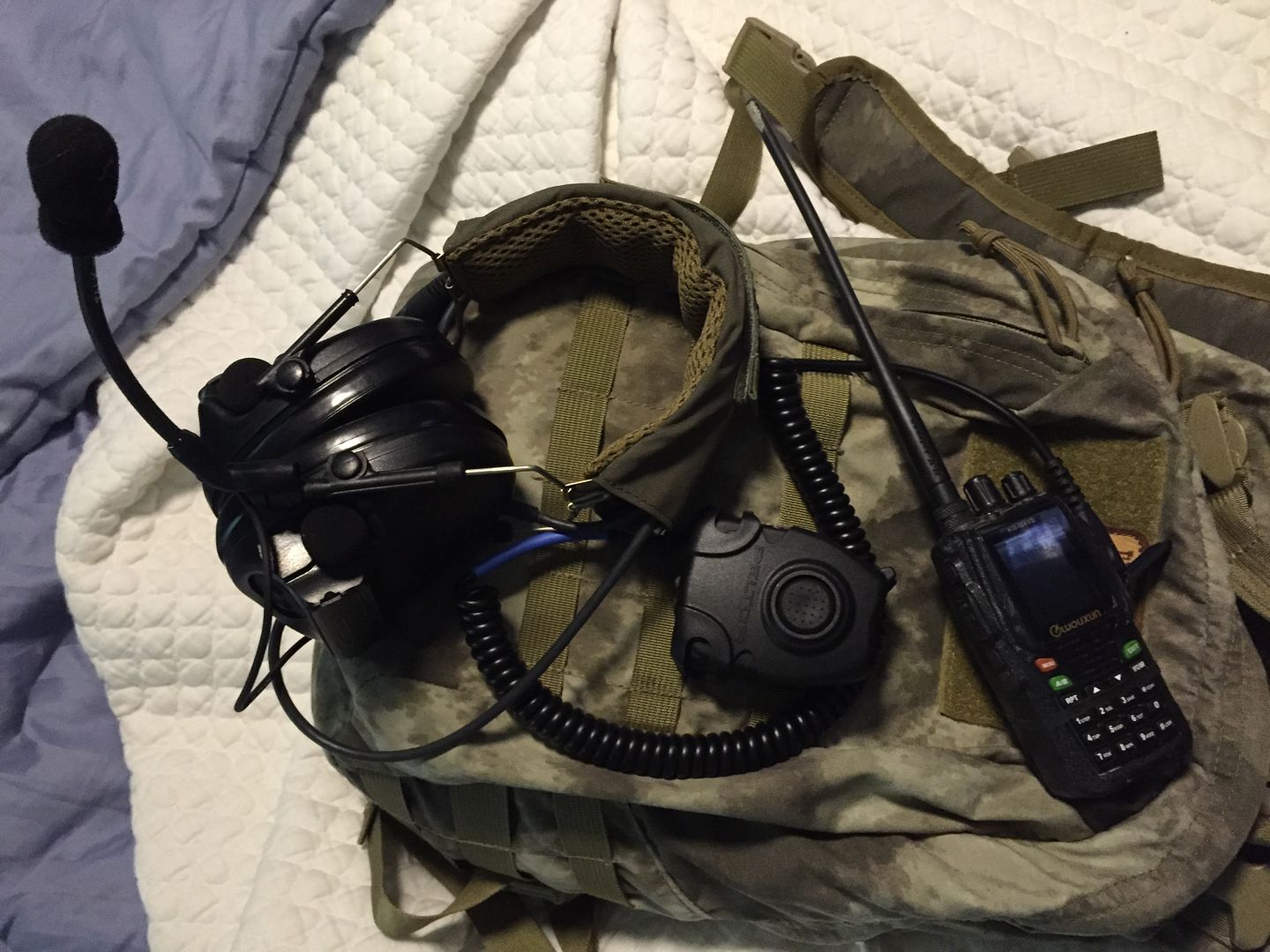
Make sure you carry an extra battery or a AA pack to fit your HT. You should establish a Simplex freq for you and your buddies, then have a few backups. Also, come up with a comms schedule. For example. Freq 1234 -> 11.45AM-12PM Freq 1235 -> 12AM-12.30AM This way, your buddies will be listening for you during those times, instead of monitoring the radio 24x7, burning batteries and getting fatigued. Finally, have a plan to meet somewhere if no comms are functional. Will you hunker in place for a day first, trying comms? Or will you step off to a pre-planned location and wait there for a day? Whatever it is, agree on it and document it on a card or something non-digital and store in your pack. Land Nav Land Navigation is pretty simple, with very little tools required. However, the skill ceiling is pretty high, and requires actual experience. I’m not talking about your clipper compass hooked onto your watchband. I’m talking about precise, deliberate movement across longer distances on foot or even mounted. There are two general types of directional devices. Gross and Precise. Gross devices are every compass that isn’t designed for use with a map. Gross can also be the sun, stars or other environmentally based directional methods. Precise directional devices include GPS devices and orienteering compasses. I love a GPS, and encourage you to use one as your primary method of navigation. There are a boatload of different, really well made GPS devices, but I prefer light and simple. I don’t need to have PacMan and a color display that will eat up precious battery life. I prefer a wrist wearable unit like the foretrex401 or such. It also sips battery juice, which is nice. 
A few things on your TODO list for your GPS. -Mark important waypoints (home, work, friends, etc) -Learn how to use your device. Most are not intuitive if you aren’t familiar with handheld GPS devices. A little story for you. Some time ago, I was doing an exercise with a small group. All of our navigation was based on pace count/azimuth. Our radio guy was supposed to be marking waypoints while we were out and about. At some point, base radioed and was concerned we were off the pre-planned route. The radio guy gave base the coordinates and they gave us a new azimuth. Immediately, I’m like ‘WTFO’, that’s the wrong way. Turns out, our radio dude wasn’t familiar with the interface of the GPS, and he had basically used the first waypoint (like 5 hours worth of walking ago) to overwrite every other waypoint. So basically we gave base the coordinates of our first waypoint of the day, many many miles away and the whole wrong direction of travel from where we needed to go. A GPS can be a crutch or even a hindrance, which is why I suggest you use one, but verify everything with a compass/map. Compass selection is HUGE. My compass requirements are as follows: -Clear base -Adjustable declination -Hinged & Mirrored lid 
I don’t care if your compass is metric or US or whatever. It doesn’t matter if it’s “global” or NH or what-the-fuck ever. Just get one with those three listed above. Maps are a little more complicated. Mainly because of scale issues. I prefer using maps with NAD27 (North American Datum of 1927) on a 1:24000 scale. Most north american maps intended for use with a compass for orienteering will be set up this way. (of course, talking civ, so don’t start with your .mil shit). Additionally, be sure to get maps with 1k UTM overlays. If you choose to use something else, like MGRS, just make sure you’re consistent across your maps, and be sure anyone you’re talking to is also using the same grid system. There are several sources for maps that are free, including the following: https://caltopo.com http://www.natgeomaps.com/trail-maps/pdf-quads You can also buy road maps, and I encourage you to do that, at the local gas station. Get your maps, look them over, and pick a few routes home. (R1, R2) Highlight them based on preference, and mark intersecting cross over paths. (I1, I2) For example: 
Drive your routes, identify issues, choke points, etc. Also keep an eye out for resources like rivers, creeks or places to hide and hunker down. Finally, communicate your plan to your loved ones and friends. Give them copies if necessary. You want them to know the planned route in case you blow your deadline, and they have to come find you. Last two items -Get some pace beads and learn how to use them. -Get a protractor and learn how to use it. Easting before northing. Food I prefer freeze dried food for a few reasons: They are lightweight. Water is heavy, and having food full of it might be a waste of ounces and pounds you don’t need. They store longer. Your bag is going to get hot and cold sitting in your car. Food that contains water will expand and contract, and even increase its expiration due to temperature fluctuations. While freeze dried foods do also lose some shelf life, it’s not as dramatic as other foods. Taste/Nutrition. Freeze dried foods do not lose nutrition or taste at the rate that other storage methods do. That being said, there are some cons. The most obvious is that they need to be heated and require water to re-hydrate. You could argue that they could be eaten cold, but it’s not a good idea to eat them without plenty of water. Mountain house is the obvious choice, but I find that they contain excess air, and may need to be repackaged to save space. Dense emergency food bars. These are hard to beat for caloric to weight ratios, and they are generally compact. I don’t like the taste, and they seem to make me thirsty. They will certainly work, no doubt. They also withstand hot/cold storage well. MREs are probably my least favorite for GHBs. They don’t store well, long term, in the heat. They’re bulky, heavy, expensive and don’t taste very good. I have a good friend that freeze dries real food for me, and I use that in the place of the more expensive commercial options. Freeze driers are currently around $4000, so the investment might not be worth it for you. Also, I really enjoy the lipton noodle packets, and they are great at flavoring other things as well. Ramen is another good choice(albeit poor in nutrition), but it takes a lot of room. 
I carry one spork, and one metal food container to cook in. (nested with my nalgene bottle) That is the steel version, but I would suggest you get the titanium one with the lid. Not only is it lighter, but titanium is a much more efficient material for heat transfer. https://www.amazon.com/gp/product/B009B98FGW https://www.amazon.com/TOAKS-Titanium-Ultralight-Spork/dp/B00GLD3Q7O You might also consider getting a single container for cooking/water by nixing the cup and nalgene for an all metal thermos type of water carrier. Something like this might work well. https://www.amazon.com/dp/B0093IS19C To heat my food, I prefer the bushbox wood stove. (they do make a titanium on of these as well) https://www.amazon.com/Bushcraft-Essentials-Bushbox-Outdoor-Pocket/dp/B00CMQJW0E I do not like stoves that require me to carry fuel. While they work great, I'm packing extra weight, and the fuel never lasts long enough. Also, once the fuel runs out, you’ve got a nice paper weight. With the bushbox, I can use wood, alcohol, gel cans, Trangia burners along with Esbit and hexamine tablets. Here in my environment, twigs and sticks are plentiful. I do not condone making a big fire unless it is required to keep warm. Fires draw attention. It may be necessary to procure food on the way home. If so, these speed-hooks are light and do not take up room. They also work for you while you do other things like sleep or set up camp for the night. I have used these a good bit on longer hiking and camping trips, and they work great. https://www.amazon.com/Fishing-Hook-Speedhook-Survival-Trapping/dp/B00AQPJ1P4 There are other ways to accomplish this, including snares, deadfall traps, etc. I generally reserve these techniques for places I intend to stay at for a few days, so they aren't applicable to our GHB scenario. Finally, know what local native plants and animals are active or in season in your area. For example, Kudzu is rampant in the south. The leaves can be used like spinach and eaten raw, chopped up and baked in quiches, cooked like collards, or deep fried. Young kudzu shoots are tender and taste similar to snow peas. This makes a great snack, and it is frequently seen growing along roads and paths. That's it on food! Weapons This is going to be an obvious point of contention. You will have schools of thought who imagine a Vietnam style face painted moving through the underbrush with a 20” A2. You will probably have guys who think, on the other hand, that a .22 single shot survival rifle is all you need, or that sneaky stealthy movement will get you home. I consider myself a hybrid or “middle of the road” thinker on the subject. It is possible that you will face some sort of resistance if things are so bad that you are walking home. That means that first responders are not timely, phone service isn’t working reliably and the roads are toast. Criminals, by their nature, are opportunists, and will see fit to exploit these conditions. A functional pistol of self defense caliber with a few extra magazines of ammunition will probably be sufficient. I’m defining a self defence caliber as 9mm, .40 or .45 caliber and a functional pistol as a compact or full size weapon of reliable manufacture. (Glock, Beretta, Smith and Wesson, etc) Carry your pistol in a concealed but accessible location with thought given to your pack. Worst case, if you carry on a daily basis using something unorthodox (I carry AIWB, which fits the term) then have a real OWB belt holster in your pack so you can transition when you set off. Leave the leather stuff at home. Kydex or nylon is where it’s at for this type of work. Rifles are a point of contention because they’re so large, and are relatively heavy. Once you get a rifle loadout, with ammunition and kit, you’ve bolted on a significant amount of weight. You’ve also reduced any chance of blending in as a regular refugee or pedestrian. In some cases, SBRs or AR Pistols can be broken down and stowed away, and that’s okay, but I would argue that a broken down rifle doesn’t get you anything but extra weight. There are packs which have dedicated pouches/slots for rifles so you can carry and access them, but it will still be obvious that you’re rocking a long gun. Further, you’ll be leaving a rifle in your car with the possibility of being stolen. That said, if you must carry a rifle, do your best to conceal it while it is stowed and when you’re moving with it. Misc. A few extra points I wanted to cover. Get a synthetic boonie hat. They weigh nothing, fold up tiny and give your face and neck excellent coverage in rain and shine. Also, they dry out fast and wick away sweat. 
https://www.amazon.com/Columbia-Mens-Bora-Booney-Grill/dp/B008FIFFY0 Dopp kit There is an excellent article on building a lightweight dopp kit over at ITS Tactical. http://www.itstactical.com/gearcom/load-bearing/how-to-build-a-lightweight-backpacking-dopp-kit/ Mine is pretty simple, and I could cut more weight if I wanted. 
I especially want to emphasize the moist towelette thingys. They aren’t just for your asshole. They’re also invaluable for a cloth bath. For me, in the humid SEUS, my underarms and crotch will start to chafe after about the third day of not showering. A quick wipe down with these clothes and re-application of deodorant, and I’m good for another few days. Bring lots of bug spray, preferably 90-99% DEET. You need it in the CONUS pretty much anywhere. Wrap some duct tape around an expired credit card or spent gift card. You can get a few yards of it, and it’s obviously super useful. I’ve actually repaired a pack strap in the field with it before. 
The two extra Tan 1” straps in this picture are there if I have to strap on my sleeping bag. If you run a modular system like I do, make sure to account for how you plan to carry additional gear. 1” webbing and buckles are cheap and light if you want to throw a couple in your trunk.
Clothing is another miscellaneous topic that is easily overlooked. The easiest way to summarize this is to say synthetic and layers. That is, avoid cotton and other animal or plant materials, and move toward things like polyester. The obvious exception is wool. Wool rocks in all seasons. Trekking poles are also something to consider. They’re excellent, especially in questionable terrain and are a possibility just for walking support and to reduce the likelihood of injury. Hydrate, Hydrate, Hydrate. You should be pissing clear and you should be pissing often. If you aren’t, then you’re doing it wrong. |
|
Quoted:
I have a phone charger in my truck. If I can't solve a problem with my phone and CCW, there won't be a home to go to. I actually use my kit for lots of stuff. Unexpected business layovers, booboos, etc. It's a comfort thing for me, knowing I've got enough shit to get through just about anything with me at all times. |

|
Quoted:
Get a bicycle... 10mph There are even fold up options you can store in your car trunk. https://www.amazon.com/Stowabike-Folding-Suspension-Speed-Mountain/dp/B0187AWNVI/ref=sr_1_5?ie=UTF8&qid=1470332697&sr=8-5&keywords=fold+up++bike |

|
Bcauz3y, I have been dealing with this issue for years. My current commute is 100 miles. I set up my bag to support me for 6 days or about 2 days longer than I think it would take me if i could just walk down the road. I plan to walk parallel to the railroad tracks that are adjacent to the highway.
Our weather ranges from 110-ish in the summer to 0-10 in the winter, so i had to figure out to handle that as well. I chose freeze dried Mountain House meals due to their light weight. I have a small stove etc. I throw up some pics. My boots are Keens. I have fucked up feet and ankles too and they are the only ones that work well. The bag I chose was one that I had. It's an old Blackwater gear bag that is discontinued. It is the color of everything here 9 months of the year. 
It has an internal Camelback pouch but i prefer external for ease of refilling without unpacking the bag to get to it. Meals 
3 way to make fire 
extra dry socks/briefs 
nesting cook stove with fuel 

My sleeping bag is an Elite Survival Systems Recon IV 
In the compression sack with G19 magazine for scale 
I combine the bag with a USGI Goretex bivy cover and a Thermarest Z-lite sleeping pad. Gerber saw and titanium spork 
Frogg Togg poncho 
Katadyn Pocket water filter and compass 
I must have the ability to write and open cans and bottles in case the trip goes longer than expected. 
Waterproof case for writing gear, filled with a paper towel to prevent rattling. 
There are a few extras not pictured such as a length of paracord etc. In winter I put heavier wool socks in the bag. It weighs 25 lbs dry. and yes i have an IFAK. it rides in my truck. It's molle so i can attach it to the pack if i need to. |
|
Thankfully i only work 8 miles from home and can drive 2 different ways to get there.
I keep a home made camo tarp and emergency blanket in my GHB, it's the only "shelter" that i have in it. Emergency Straw for water, but i have several water bottles in the car and in my office so i shouldn't need to use it. |
|
Quoted:
I have a phone charger in my truck. If I can't solve a problem with my phone and CCW, there won't be a home to go to. I walked home from the shop one night because of a blizzard making the roads impassible. 
Nine miles in a blizzard at night. It was great. 
Yes. I was prepared. I had a headlight and a snickers bar.  (and good boots/socks) (and good boots/socks)
Becauzy's feet, nav and fitness comments are spot on. If you don't take care of your dogs, you're toast. Looking forward to good discussion in this thread. 
|
|
Your point about footwear is right on the money.
When I was in my 20s I broke down on the side of the road driving home at dusk in early winter. I walked about 5 miles home. I was not prepared, and learned from that experience to keep a bag in the car that would let me get home in better shape next time. And footwear was one of the things on my list. As well as other winter gear, I'm in MN. I'll be interested to see what else is on your list, I wonder how closely it matches mine. |
|
Quoted:
Bcauz3y, I have been dealing with this issue for years. My current commute is 100 miles. I set up my bag to support me for 6 days or about 2 days longer than I think it would take me if i could just walk down the road. I plan to walk parallel to the railroad tracks that are adjacent to the highway. Our weather ranges from 110-ish in the summer to 0-10 in the winter, so i had to figure out to handle that as well. I chose freeze dried Mountain House meals due to their light weight. I have a small stove etc. I throw up some pics. My boots are Keens. I have fucked up feet and ankles too and they are the only ones that work well. The bag I chose was one that I had. It's an old Blackwater gear bag that is discontinued. It is the color of everything here 9 months of the year. http://i60.photobucket.com/albums/h12/jimanders1967/LoadOut/100_0882_zpscb6db6b6.jpg It has an internal Camelback pouch but i prefer external for ease of refilling without unpacking the bag to get to it. Meals http://i60.photobucket.com/albums/h12/jimanders1967/LoadOut/100_0881_zps0494b461.jpg 3 way to make fire http://i60.photobucket.com/albums/h12/jimanders1967/LoadOut/100_0881_zps0494b461.jpg extra dry socks http://i60.photobucket.com/albums/h12/jimanders1967/LoadOut/100_0881_zps0494b461.jpg nesting cook stove with fuel http://i60.photobucket.com/albums/h12/jimanders1967/LoadOut/100_0877_zps1a2dad78.jpg http://i60.photobucket.com/albums/h12/jimanders1967/LoadOut/100_0875_zps625532dd.jpg My sleeping bag is an Elite Survival Systems Recon IV http://i60.photobucket.com/albums/h12/jimanders1967/LoadOut/100_0874_zps4cb0d0e5.jpg In the compression sack with G19 magazine for scale http://i60.photobucket.com/albums/h12/jimanders1967/LoadOut/100_0873_zpsdd213407.jpg I combine the bag with a USGI Goretex bivy cover and a Thermarest Z-lite sleeping pad. Gerber saw and titanium spork http://i60.photobucket.com/albums/h12/jimanders1967/LoadOut/100_0873_zpsdd213407.jpg Frogg Togg poncho http://i60.photobucket.com/albums/h12/jimanders1967/LoadOut/100_0870_zps4aec8088.jpg Katadyn Pocket water filter and compass http://i60.photobucket.com/albums/h12/jimanders1967/LoadOut/100_0870_zps4aec8088.jpg I must have the ability to write and open cans and bottles in case the trip goes longer than expected. http://i60.photobucket.com/albums/h12/jimanders1967/LoadOut/100_0864_zpsae2a7daf.jpg Waterproof case for writing gear, filled with a paper towel to prevent rattling. http://i60.photobucket.com/albums/h12/jimanders1967/LoadOut/100_0865_zps1e7bc446.jpg There are a few extras not pictured such as a length of paracord etc. In winter I put heavier wool socks in the bag. It weighs 25 lbs dry. Nice socks
|
|
Quoted:
Nice socks Quoted:
Quoted:
Bcauz3y, I have been dealing with this issue for years. My current commute is 100 miles. I set up my bag to support me for 6 days or about 2 days longer than I think it would take me if i could just walk down the road. I plan to walk parallel to the railroad tracks that are adjacent to the highway. Our weather ranges from 110-ish in the summer to 0-10 in the winter, so i had to figure out to handle that as well. I chose freeze dried Mountain House meals due to their light weight. I have a small stove etc. I throw up some pics. My boots are Keens. I have fucked up feet and ankles too and they are the only ones that work well. The bag I chose was one that I had. It's an old Blackwater gear bag that is discontinued. It is the color of everything here 9 months of the year. http://i60.photobucket.com/albums/h12/jimanders1967/LoadOut/100_0882_zpscb6db6b6.jpg It has an internal Camelback pouch but i prefer external for ease of refilling without unpacking the bag to get to it. Meals http://i60.photobucket.com/albums/h12/jimanders1967/LoadOut/100_0881_zps0494b461.jpg 3 way to make fire http://i60.photobucket.com/albums/h12/jimanders1967/LoadOut/100_0881_zps0494b461.jpg extra dry socks http://i60.photobucket.com/albums/h12/jimanders1967/LoadOut/100_0881_zps0494b461.jpg nesting cook stove with fuel http://i60.photobucket.com/albums/h12/jimanders1967/LoadOut/100_0877_zps1a2dad78.jpg http://i60.photobucket.com/albums/h12/jimanders1967/LoadOut/100_0875_zps625532dd.jpg My sleeping bag is an Elite Survival Systems Recon IV http://i60.photobucket.com/albums/h12/jimanders1967/LoadOut/100_0874_zps4cb0d0e5.jpg In the compression sack with G19 magazine for scale http://i60.photobucket.com/albums/h12/jimanders1967/LoadOut/100_0873_zpsdd213407.jpg I combine the bag with a USGI Goretex bivy cover and a Thermarest Z-lite sleeping pad. Gerber saw and titanium spork http://i60.photobucket.com/albums/h12/jimanders1967/LoadOut/100_0873_zpsdd213407.jpg Frogg Togg poncho http://i60.photobucket.com/albums/h12/jimanders1967/LoadOut/100_0870_zps4aec8088.jpg Katadyn Pocket water filter and compass http://i60.photobucket.com/albums/h12/jimanders1967/LoadOut/100_0870_zps4aec8088.jpg I must have the ability to write and open cans and bottles in case the trip goes longer than expected. http://i60.photobucket.com/albums/h12/jimanders1967/LoadOut/100_0864_zpsae2a7daf.jpg Waterproof case for writing gear, filled with a paper towel to prevent rattling. http://i60.photobucket.com/albums/h12/jimanders1967/LoadOut/100_0865_zps1e7bc446.jpg There are a few extras not pictured such as a length of paracord etc. In winter I put heavier wool socks in the bag. It weighs 25 lbs dry. Nice socks Photobucket is the asshole of pic hosting sites |
|
I work in Seattle and live about 32 miles away. My concern is a major earthquake which could prohibit driving home. I know my office would be destroyed so more than likely I will have to hoof it home.
I have- Change of clothes (warm and cool temp) Gore Tex top and bottom Water MRE First Aid Fire Sleeping bag with Gore Tex Bivy Solomon GTX High Tops Phone back up battery Two handguns with multiple reloads per. I feel like I could make it home in a couple of days with some E&E, or at least make it to one of multiple safe spots on the way and rendezvous with HH6 if there is some kind of COMMS. We have a pretty good COM / bug out plan, so I think we could make contact without Cell in one area. I'm definitely going to look at one of those folding bikes. That's a great idea that never really occurred to me. |
|
Tag. I definitely have stuff to learn here.
ETA: I'm 13.5 miles from home, straight down the highway. I've been playing with the idea of walking home one Friday after work just for the hell of it, then going and picking up my vehicle that evening/the next morning. |
|
8 miles one way through the middle of town. wife and I work at the same location. Adult son and my mother work at about the 4 mile point on our travel route.
small bag in each truck with everything we need. change of clothes water 1st aid rope (you always need rope) pen and paper a little cash some other seasonal stuff |
|
When I lived up north, in the winter I always had the following gear on hand:
Insulated muck type boots. Bivvy (very small) https://www.amazon.com/gp/product/B000WXX0JS/ref=oh_aui_search_detailpage?ie=UTF8&psc=1 2x Sleeping bags, different ratings based on weather. Sleeping Pad (also very small) https://www.rei.com/product/850321/klymit-static-v-sleeping-pad Extra wool socks (https://darntough.com/) Ski Socks Backcountry ski boots / skis Climbing skins https://www.youtube.com/watch?v=cX5UWvZfihs Osprey backpack w/ hydration to fit everything |
|
I can be as much as 150 miles from home on certain days.
Not only do I have the gear to make it back. But I have multiple routes mapped out and preplanned in my bag. This includes, main and secondary roads, rural wooded routes, and several major rivers that can get me within 10 miles of my homestead. Maps, plans, and navigation will be one of the top items to have prepared beforehand and stored in your GHB. |
| One item you want to add is navigation. A compass and map(s) are indispensable to any plan involving movement. It is pretty easy to print and laminate a 4x6 map with primary and alternate routes, including nav points and visible landmarks that are durable and visible at night/dust/smoke. |
|
I got some Heelys in my GHB. Seriously though, good thread topic and excellant execution. If the S were to HTF while I was working, I think I'd be pretty alright. Especially if it were at such a magnitude that I didn't care about "borrowing" my work ride. It's packed with everything I need for a limited terror attack, 3 day backcountry search and rescue response, conduct initial attack on a small wildland fire and start triage on an overturned bus. The problem would come when I had to decide what to carry on my back. I have several packs in the trunk, up to 45 liters in size so I figured I'd just tailor what I needed to the particular environmental and threat condition. That's kind of how I roll at work. Something to think about if trunk space is not a huge factor is to fill a duffle bag with an empty pack and several prepacked "modules." For example, one stuff sack labeled "winter" might contain extra fire starting material and a better sleep system, one marked "civil unrest" or some shit might contain extra cash and bullits. One marked "summer" might contain a woobie, mosquito net/dope and electrolytes. The nice thing about this type of set up is that you only carry what you [anticipate you might] need. In the summer, around my area I'd be hard pressed to need anything more than a poncho liner for a forced overnight. Likewise, I probably ain't humping a basic load for a flood event that washes out all the roads. Ounces = pounds and pounds = pain. Anyways just my 2¢ |
|
A "no comm plan" is important. Actually, it is essential.
If phones are out, and multiple family members are away from home, you need to establish meeting points and wait times. This is true if you are all heading home, AND if you are all heading OUT. What about the kids in school? Is that where you head first? If so, bring something for them, too. |
| Thread is relevant to my interests as I work 40+ miles from home. I agree on the footwear part. I have such a fear of being stuck with poor shoes that I only ever wear shoes/boots I can walk for miles in. Even with office wear I wear boots of some kind. While cleaner than my hiking or yard work boots they are boots just the same and I wouldn't hesitate to walk for miles wearing them if need be. |
|
Quoted:
Bcauz3y, I have been dealing with this issue for years. My current commute is 100 miles. I set up my bag to support me for 6 days or about 2 days longer than I think it would take me if i could just walk down the road. I plan to walk parallel to the railroad tracks that are adjacent to the highway. Our weather ranges from 110-ish in the summer to 0-10 in the winter, so i had to figure out to handle that as well. I chose freeze dried Mountain House meals due to their light weight. I have a small stove etc. I throw up some pics. My boots are Keens. I have fucked up feet and ankles too and they are the only ones that work well. The bag I chose was one that I had. It's an old Blackwater gear bag that is discontinued. It is the color of everything here 9 months of the year. http://i60.photobucket.com/albums/h12/jimanders1967/LoadOut/100_0882_zpscb6db6b6.jpg It has an internal Camelback pouch but i prefer external for ease of refilling without unpacking the bag to get to it. Meals http://i60.photobucket.com/albums/h12/jimanders1967/LoadOut/100_0881_zps0494b461.jpg 3 way to make fire http://i60.photobucket.com/albums/h12/jimanders1967/LoadOut/100_0879_zps99281c59.jpg extra dry socks/briefs http://i60.photobucket.com/albums/h12/jimanders1967/LoadOut/100_0878_zpsed591136.jpg nesting cook stove with fuel http://i60.photobucket.com/albums/h12/jimanders1967/LoadOut/100_0876_zps28eb53fe.jpg http://i60.photobucket.com/albums/h12/jimanders1967/LoadOut/100_0875_zps625532dd.jpg My sleeping bag is an Elite Survival Systems Recon IV http://i60.photobucket.com/albums/h12/jimanders1967/LoadOut/100_0874_zps4cb0d0e5.jpg In the compression sack with G19 magazine for scale http://i60.photobucket.com/albums/h12/jimanders1967/LoadOut/100_0873_zpsdd213407.jpg I combine the bag with a USGI Goretex bivy cover and a Thermarest Z-lite sleeping pad. Gerber saw and titanium spork http://i60.photobucket.com/albums/h12/jimanders1967/LoadOut/100_0872_zps31848dc5.jpg Frogg Togg poncho http://i60.photobucket.com/albums/h12/jimanders1967/LoadOut/100_0870_zps4aec8088.jpg Katadyn Pocket water filter and compass http://i60.photobucket.com/albums/h12/jimanders1967/LoadOut/100_0869_zpsa850c5ba.jpg I must have the ability to write and open cans and bottles in case the trip goes longer than expected. http://i60.photobucket.com/albums/h12/jimanders1967/LoadOut/100_0864_zpsae2a7daf.jpg Waterproof case for writing gear, filled with a paper towel to prevent rattling. http://i60.photobucket.com/albums/h12/jimanders1967/LoadOut/100_0865_zps1e7bc446.jpg There are a few extras not pictured such as a length of paracord etc. In winter I put heavier wool socks in the bag. It weighs 25 lbs dry. and yes i have an IFAK. it rides in my truck. It's molle so i can attach it to the pack if i need to. So about $1k worth of stuff? LOL. ok... |
| What do you do with your truck/trunk gun if you decide you have to walk home? Sling up and bring it with you? Seems like that would draw a lot of attention that you might not want, given the scenario. Leave it in your vehicle? Might get looted in an extended SHTF event. Mine's in a discreet case, but it would be difficult and uncomfortable to bring it along packed in that (no provision for a shoulder strap, just handles). |
|
Quoted:
What do you do with your truck/trunk gun if you decide you have to walk home? Sling up and bring it with you? Seems like that would draw a lot of attention that you might not want, given the scenario. Leave it in your vehicle? Might get looted in an extended SHTF event. Mine's in a discreet case, but it would be difficult and uncomfortable to bring it along packed in that (no provision for a shoulder strap, just handles). Your "truck gun" should be considered your long walk gun, too. Adjust accordingly. |
|
Quoted:
What do you do with your truck/trunk gun if you decide you have to walk home? Sling up and bring it with you? Seems like that would draw a lot of attention that you might not want, given the scenario. Leave it in your vehicle? Might get looted in an extended SHTF event. Mine's in a discreet case, but it would be difficult and uncomfortable to bring it along packed in that (no provision for a shoulder strap, just handles). I only keep a pistol in the car, dont have to worry about a long gun. |
|
Quoted:
Your "truck gun" should be considered your long walk gun, too. Adjust accordingly. Quoted:
Quoted:
What do you do with your truck/trunk gun if you decide you have to walk home? Sling up and bring it with you? Seems like that would draw a lot of attention that you might not want, given the scenario. Leave it in your vehicle? Might get looted in an extended SHTF event. Mine's in a discreet case, but it would be difficult and uncomfortable to bring it along packed in that (no provision for a shoulder strap, just handles). Your "truck gun" should be considered your long walk gun, too. Adjust accordingly. A lot of people have ARs and such filling that role, I'm curious what (if any) the plan is for that. |
|
Quoted: Quoted: Get a bicycle... 10mph Keep this in the trunk. http://ep.yimg.com/ay/nycewheels/dahon-vitesse-i7-folding-bike-4.jpg ... I'd second this idea, that and a way to purify water |
|
Quoted:
A lot of people have ARs and such filling that role, I'm curious what (if any) the plan is for that. Quoted:
Quoted:
Quoted:
What do you do with your truck/trunk gun if you decide you have to walk home? Sling up and bring it with you? Seems like that would draw a lot of attention that you might not want, given the scenario. Leave it in your vehicle? Might get looted in an extended SHTF event. Mine's in a discreet case, but it would be difficult and uncomfortable to bring it along packed in that (no provision for a shoulder strap, just handles). Your "truck gun" should be considered your long walk gun, too. Adjust accordingly. A lot of people have ARs and such filling that role, I'm curious what (if any) the plan is for that. I unexpectedly cross too often into DC and Maryland during my day, so I can't carry. |
|
Quoted:
A lot of people have ARs and such filling that role, I'm curious what (if any) the plan is for that. Quoted:
Quoted:
Quoted:
What do you do with your truck/trunk gun if you decide you have to walk home? Sling up and bring it with you? Seems like that would draw a lot of attention that you might not want, given the scenario. Leave it in your vehicle? Might get looted in an extended SHTF event. Mine's in a discreet case, but it would be difficult and uncomfortable to bring it along packed in that (no provision for a shoulder strap, just handles). Your "truck gun" should be considered your long walk gun, too. Adjust accordingly. A lot of people have ARs and such filling that role, I'm curious what (if any) the plan is for that. An AR pistol might be your best bet then. You can always hope for rain and use a poncho. |
|
Weather is a very real thing. I've been stuck roughly 50 miles from home due to weather. I carry a bag in my trunk now that has a hammock and rainfly, underquilt or top quilt appropriate for season, a jetboil and some freeze dried food, batteries, light, lighter, simple first aid stuff, a packable rain jacket and extra clothes. In winter I have a little more stuff. Oh and a spare pistol mag. I always carry a pistol anyway.
I go backpack with the exact same gear sometimes so I know how to use it. I'm not gearing up for war, just trying to have stuff to help out in case I absolutely have nowhere else to sleep. |