


[ARCHIVED THREAD] - pool shock storage fail (Page 1 of 2)
Posted: 1/6/2015 5:18:07 PM EDT
the calcium hypochlorite pool shock was in the Mason jar for about 1 year...in its original vinyl packaging

|
|
Pool shock is cost effective, but may not be the best way to buy sodium hypochlorite. There are pre-packaged "tabs" type solids that can be mixed with water to make liquid bleach. Packaging might hold up better over the long run. Otherwise, I'd say, wrapped in plastic, in a plastic container, inside another plastic container which is vented, with nothing else in it. I assume the solid sodium hypochlorite is a water attractant so moisture is going to collect and make concentrated bleach when it does. (Just like salt does when left in the open.) I'd treat it like gasoline as far as "keep away from stuff" rules. |
|
I tried a few things and finally settled on the all-glass apothecary/chemical jars. They use a ground glass stopper and are available in larger sizes - I am at work so no pics but I will try to pull a couple out when I get home. I also seal the gap around the stopper with oil-based clay, it acts as an airtight seal, is non-corrosive, and keeps the stopper in place in the unlikely event one tips over.
Yes - they are glass, so I would not recommend them for the top shelf (especially in an earthquake-prone area), but if stored properly, they should be fine. Remember, if you can smell chlorine, chances are good that something metallic is rusting/oxidizing somewhere... ETA: Something like this: 
|
|
BioGuard Super Soluble
Instead of calcium hypochlorite use sodium dichloro-s-triazinetrione dihydrate. Much higher water solubility and much more stable to store. The linked product is 99% pure and would be excellent for water purification. |

|
I've seen that stuff before, but shied away because I couldn't find an ingredients list for it... didn't want to "purify" water with other gunk that might cause more trouble than the water cooties. 
Just found the MSDS data sheet for it, though, and it looks like it's GTG. Off to buy bleach tabs. 
|
|
Quoted:
I tried a few things and finally settled on the all-glass apothecary/chemical jars. They use a ground glass stopper and are available in larger sizes - I am at work so no pics but I will try to pull a couple out when I get home. I also seal the gap around the stopper with oil-based clay, it acts as an airtight seal, is non-corrosive, and keeps the stopper in place in the unlikely event one tips over. Yes - they are glass, so I would not recommend them for the top shelf (especially in an earthquake-prone area), but if stored properly, they should be fine. Remember, if you can smell chlorine, chances are good that something metallic is rusting/oxidizing somewhere... ETA: Something like this: http://i281.photobucket.com/albums/kk231/dogwizard/_57.jpg Do you have any recommendations on a source for those jars? I have some stored in the original packaging, some in mason jars with metal rings/lids, and some with plastic rings/lids. The metal lids are a little rusty as are some of the metal things around it, but it's nothing like the OP's. I've wanted to find a better way to store it but haven't done enough research. The glass jars you show looks like a good option. |
|
Interesting. |
|
Quoted:
Do you have any recommendations on a source for those jars? I have some stored in the original packaging, some in mason jars with metal rings/lids, and some with plastic rings/lids. The metal lids are a little rusty as are some of the metal things around it, but it's nothing like the OP's. I've wanted to find a better way to store it but haven't done enough research. The glass jars you show looks like a good option. Quoted:
Quoted:
I tried a few things and finally settled on the all-glass apothecary/chemical jars. They use a ground glass stopper and are available in larger sizes - I am at work so no pics but I will try to pull a couple out when I get home. I also seal the gap around the stopper with oil-based clay, it acts as an airtight seal, is non-corrosive, and keeps the stopper in place in the unlikely event one tips over. Yes - they are glass, so I would not recommend them for the top shelf (especially in an earthquake-prone area), but if stored properly, they should be fine. Remember, if you can smell chlorine, chances are good that something metallic is rusting/oxidizing somewhere... ETA: Something like this: http://i281.photobucket.com/albums/kk231/dogwizard/_57.jpg Do you have any recommendations on a source for those jars? I have some stored in the original packaging, some in mason jars with metal rings/lids, and some with plastic rings/lids. The metal lids are a little rusty as are some of the metal things around it, but it's nothing like the OP's. I've wanted to find a better way to store it but haven't done enough research. The glass jars you show looks like a good option. I've had the best luck trolling Ebay - just keep an eye out and you shouldn't have to pay much more than $10-$15 each for the larger bottles in good shape. Just make sure that the glass stopper is included and you should be OK. I tried a few different storage options after discovering some unexpected rust in the closet (nothing as bad as the OP's Mason jar) and these plus the clay seal have worked extremely well for me over the last couple years. The original, vintage bottles are usually extremely thick and well-made and I recommend avoiding the "decorative" modern versions. They tend to be much thinner/cheaper and usually use a plastic gasket to seal. This may be fine, but I prefer to have the old style - after all, they were originally used to hold chemicals so this is not a stretch. For some extra protection, you can always wrap them in some old towels and put them in a sealed 5 gallon bucket - nothing should escape and it provides a measure of impact protection. You can also hit the flea market or antique shops, but I've had better luck watching and waiting online. ETA: Here's a quick pic of a couple bottles: 
|
|
Quoted:
i bought a box of it 2 years ago.... left it sealed, and taped it up to keep moisture out. the box is a darker color now.... i might should cut it open and see what the insides look like.  If you do post up a few pics. I just decided to go with concentrated bleach tablets from Walmarts. Couple bucks per and each and makes a bunch of bleach when needed. There are no specific ratios to follow but from what I can guess (based on what I have read) one tab per gallon of bleach would be pretty close to putting a good table spoon or two of pure liquid bleach into said gallon of water. For me I prefer to boil my drinking water if it comes from unknown source. These bleach tabs extend the ability to get some good cleaning water and can purify in a pinch. |
|
I've had the best luck trolling Ebay - just keep an eye out and you shouldn't have to pay much more than $10-$15 each for the larger bottles in good shape. Just make sure that the glass stopper is included and you should be OK. I tried a few different storage options after discovering some unexpected rust in the closet (nothing as bad as the OP's Mason jar) and these plus the clay seal have worked extremely well for me over the last couple years. The original, vintage bottles are usually extremely thick and well-made and I recommend avoiding the "decorative" modern versions. They tend to be much thinner/cheaper and usually use a plastic gasket to seal. This may be fine, but I prefer to have the old style - after all, they were originally used to hold chemicals so this is not a stretch. For some extra protection, you can always wrap them in some old towels and put them in a sealed 5 gallon bucket - nothing should escape and it provides a measure of impact protection. You can also hit the flea market or antique shops, but I've had better luck watching and waiting online. ETA: Here's a quick pic of a couple bottles: http://i281.photobucket.com/albums/kk231/dogwizard/IMG_1307-1.jpg Awesome, thanks! I'll have to find some and rebottle my pool shock. |
|
This subject was brought up by Homeslice about a year or so ago.
The solution was the large plastic jars, with a plastic gasketed lid, held closed by a wire bail device... Sold by Walmart. It's what we use and works. The wire bail will allow pressure relief before the jar blows up. 
However, we have not noticed any corrosive gasses escaping in many years or use... Or any deterioration of the container. 
|

|
Quoted:
I used a mason jar and a plastic jar lid. Three'ish Four and a half years later it looks like the day I put it on the shelf in my garage. http://www.ar15.com/media/viewFile.html?i=72180 By substituting a plastic lid for steel, are you really preventing the chemical from decomposing and dissipating - or just masking the effects? How much weaker is your pool shock now than when you bought it? |
|
I had mine still in the bag I bought it in in my basement. ironically, just yesterday my wife moved it. The bag fell apart and the dry chlorine spilled all over the floor.
However, even if I buy a few bags annually, it's still much cheaper than bleach. bleach tabs look interesting also, but I would prefer a product that is approved for water purification. HTH shock n swim definitely is. |
|
Quoted:
I had mine still in the bag I bought it in in my basement. ironically, just yesterday my wife moved it. The bag fell apart and the dry chlorine spilled all over the floor. However, even if I buy a few bags annually, it's still much cheaper than bleach. bleach tabs look interesting also, but I would prefer a product that is approved for water purification. HTH shock n swim definitely is. Possibly a minor detail... Bleach, or calcium hypochlorite, or chlorine dioxide, etc, don't PURIFY water. If anything, they add additional [tolerable in some cases] impurities to it. Distillation [energy intensive due to the need for vapor phase conversion] and RO, are easy solutions to ---almost--- purification --that are easy to do, and provide water without stuff in it that, personally, stuff I'd prefer not to drink long term. Here's a link to RO 'processing'... RO |
|
Quoted:
By substituting a plastic lid for steel, are you really preventing the chemical from decomposing and dissipating - or just masking the effects? How much weaker is your pool shock now than when you bought it? Quoted:
Quoted:
I used a mason jar and a plastic jar lid. Three'ish Four and a half years later it looks like the day I put it on the shelf in my garage. http://www.ar15.com/media/viewFile.html?i=72180 By substituting a plastic lid for steel, are you really preventing the chemical from decomposing and dissipating - or just masking the effects? How much weaker is your pool shock now than when you bought it? The reason I use some plastic lids is to prevent possible leak-causing corrosion of a steel lid/ring. I don't know if it impacts decomposition or anything like that... |
|
Quoted:
The reason I use some plastic lids is to prevent possible leak-causing corrosion of a steel lid/ring. I don't know if it impacts decomposition or anything like that... Quoted:
Quoted:
Quoted:
I used a mason jar and a plastic jar lid. Three'ish Four and a half years later it looks like the day I put it on the shelf in my garage. http://www.ar15.com/media/viewFile.html?i=72180 By substituting a plastic lid for steel, are you really preventing the chemical from decomposing and dissipating - or just masking the effects? How much weaker is your pool shock now than when you bought it? The reason I use some plastic lids is to prevent possible leak-causing corrosion of a steel lid/ring. I don't know if it impacts decomposition or anything like that... As long as O2 and H2O is kept from the calcium hypochlorite, ---IIRC, there isn't any reaction that would cause it to 'deteriorate'. Liquid bleach, sodium hypochlorite, does spontaneously 'deteriorate', and turns to salt water after a year or so, depending on several things. Sounds similar to storing gasoline -doesn't it??? 
That said, I usually mix Stabil to extend the life of my bleach...
|
|
Quoted:
Benjamin-Linus... looks good ... did the lid come from a WallMart/Home Depot, or special order? I think I got the plastic lids from Walmart. They seem to be air tight. Inside the jar I have a shot glass with measuring lines on it that I also found at Walmart; helps me mix when the time comes. |
|
Quoted:
By substituting a plastic lid for steel, are you really preventing the chemical from decomposing and dissipating - or just masking the effects? How much weaker is your pool shock now than when you bought it? Quoted:
Quoted:
I used a mason jar and a plastic jar lid. Three'ish Four and a half years later it looks like the day I put it on the shelf in my garage. http://www.ar15.com/media/viewFile.html?i=72180 By substituting a plastic lid for steel, are you really preventing the chemical from decomposing and dissipating - or just masking the effects? How much weaker is your pool shock now than when you bought it? I just used the plastic lid to avoid the corrosion the OP posted about. I don't know the rate at which the pool shock decomposes and if having it sealed in the glass jar slows the decomposition. It seems to me like having it sealed up and out of sunlight would help, but I can't say for sure. If there is some cheap easy way to test it then let me know and I'll post the results. |
|
Quoted:
I just used the plastic lid to avoid the corrosion the OP posted about. I don't know the rate at which the pool shock decomposes and if having it sealed in the glass jar slows the decomposition. It seems to me like having it sealed up and out of sunlight would help, but I can't say for sure. If there is some cheap easy way to test it then let me know and I'll post the results. Quoted:
Quoted:
Quoted:
I used a mason jar and a plastic jar lid. Three'ish Four and a half years later it looks like the day I put it on the shelf in my garage. http://www.ar15.com/media/viewFile.html?i=72180 By substituting a plastic lid for steel, are you really preventing the chemical from decomposing and dissipating - or just masking the effects? How much weaker is your pool shock now than when you bought it? I just used the plastic lid to avoid the corrosion the OP posted about. I don't know the rate at which the pool shock decomposes and if having it sealed in the glass jar slows the decomposition. It seems to me like having it sealed up and out of sunlight would help, but I can't say for sure. If there is some cheap easy way to test it then let me know and I'll post the results. I think there are inexpensive pool chlorine test kits. They might be too sensitive and you would need to dilute your bleach mix tho. |

|
How would you go about using those for purification? I'm familiar with the procedures for liquid bleach, but not the tablets. What are the proper mixing ratios for the tablets? ETA: After having further researched Evolve tablets, it appears these are not suitable for water purification purposes. I guess Evolve can call this stuff "bleach" since it is an oxidizer, but it is chemically different from regular Clorox or pool shock. If you read the label on the bottle, it even says in tiny, albeit red print, that the product isn't intended for sanitation or disinfection. |
|
I use the old-school type glass jars that have a glass lid with a wire hinge and retainer, they were recommended for storage when I first began researching chlorine pool shock and storage. They were right, it works perfectly.
I have found a bunch of these types of jars in second-hand stores like Goodwill and Savers, dirt cheap too. 
|
|
It comes in 20 lb aka 2.5 gallon buckets...with air tight locking lids.......
Ain't had one rot....rust...etc......if anything ...find one...buy one and store the shock in that. Done deal...... I wonder his many bought those lil 1 lb bags cheaping out that have that shit rotting away metal or wood shelves and other shit in their garage or basement ...LOL Posted Via AR15.Com Mobile |
|
Quoted:
BioGuard Super Soluble Instead of calcium hypochlorite use sodium dichloro-s-triazinetrione dihydrate. Much higher water solubility and much more stable to store. The linked product is 99% pure and would be excellent for water purification. People are making this difficult when the solution is simple. Buy it, store and be done with it. 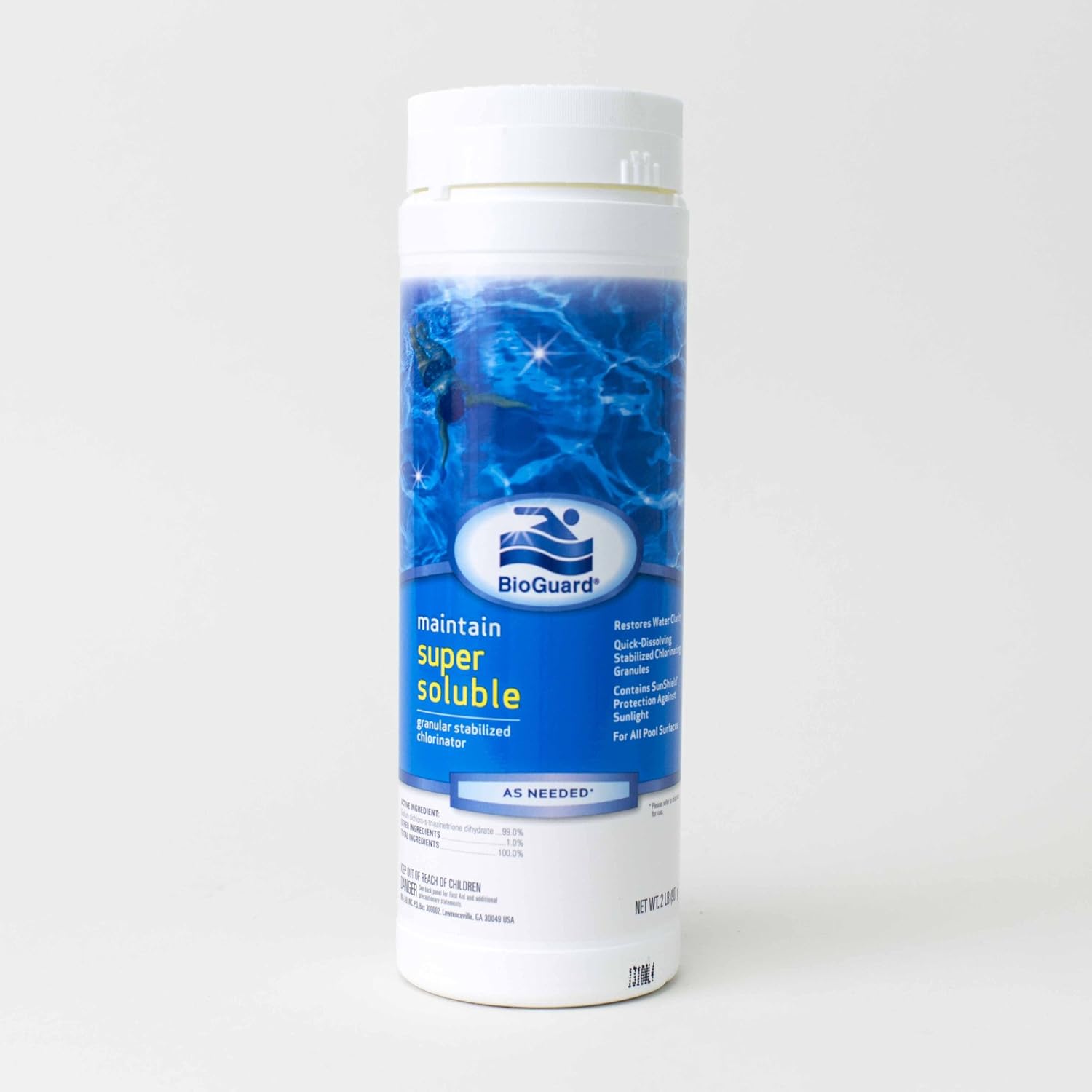
|
|
to hit on a comment made by EXPY37.. He is correct. If you are stocking chlorine based products with the hope that they will make drinking water safe you may be placing you and your family at huge risk. Here is why!!!
Yes Chlorine will kill Bacteria, some viruses,protozoa etc. Things like Giardia and Cholera. HOWEVER, Chlorine WILL NOT KILL Cryptosporidium. Crypto is a particularly nasty little critter common in water that has come in contact with human/animal waste. A huge issue after a event such as hurricanes or where standard utilities such as sewage and electrical have been compromised. You may be thinking, "ok im cool, I don't live in a city im gonna get my water from the river or pond" Do animals crap in it? CRYPTO..... Why doesn't chlorine work?? Cryptosporidium is a cyst with a hard outer casing or shell, this shell protects it from the chemical. The safest method is distillation closely followed by UV, boiling and then physical filtration using at least a .5 micron filter. CDC specs call for a 1 micron "absolute" filter where some manufacturers use a 1 micron "nominal' just go with a .5 micron or better. These days a .2 or .1 is the best coverage and will protect against virus infection also.. SO again Chlorine based chemicals with the exception of chlorine dioxide (not the pool chemical) WILL NOT kill Crypto though in a survival situation Crypto certainly can KIll YOU!!! |
|
Quoted:
That stuff is nasty. It will also corrode nails in your walls. I don't know if there is any good way to store it long term. An all glass jar with a glass stopper such as laboratory chemicals are stored in or an all plastic container. You can't use any metal in the container. I've kept the stuff in the original plastic buckets for over 15 years. I forgot that I had it after I got rid of my pool. |
|
Quoted: to hit on a comment made by EXPY37.. He is correct. If you are stocking chlorine based products with the hope that they will make drinking water safe you may be placing you and your family at huge risk. Here is why!!! Yes Chlorine will kill Bacteria, some viruses,protozoa etc. Things like Giardia and Cholera. HOWEVER, Chlorine WILL NOT KILL Cryptosporidium. Crypto is a particularly nasty little critter common in water that has come in contact with human/animal waste. A huge issue after a event such as hurricanes or where standard utilities such as sewage and electrical have been compromised. You may be thinking, "ok im cool, I don't live in a city im gonna get my water from the river or pond" Do animals crap in it? CRYPTO..... Why doesn't chlorine work?? Cryptosporidium is a cyst with a hard outer casing or shell, this shell protects it from the chemical. The safest method is distillation closely followed by UV, boiling and then physical filtration using at least a .5 micron filter. CDC specs call for a 1 micron "absolute" filter where some manufacturers use a 1 micron "nominal' just go with a .5 micron or better. These days a .2 or .1 is the best coverage and will protect against virus infection also.. SO again Chlorine based chemicals with the exception of chlorine dioxide (not the pool chemical) WILL NOT kill Crypto though in a survival situation Crypto certainly can KIll YOU!!! reason why i filter and treat..when backpacking. filter first..add hypo drops...if i really worried id boil or filter treat again. |
|
Quoted: People are making this difficult when the solution is simple. Buy it, store and be done with it. http://ecx.images-amazon.com/images/I/715UxnaRg-L._SL1500_.jpg Quoted: Quoted: BioGuard Super Soluble Instead of calcium hypochlorite use sodium dichloro-s-triazinetrione dihydrate. Much higher water solubility and much more stable to store. The linked product is 99% pure and would be excellent for water purification. People are making this difficult when the solution is simple. Buy it, store and be done with it. http://ecx.images-amazon.com/images/I/715UxnaRg-L._SL1500_.jpg high humidity can cause those plastic cans to sweat per say and leak once the foil/paper seal corrodes. the 2 gallon buckets with ratcheting lid are the best imho. |
|
Quoted:
high humidity can cause those plastic cans to sweat per say and leak once the foil/paper seal corrodes. the 2 gallon buckets with ratcheting lid are the best imho. Quoted:
Quoted:
Quoted:
BioGuard Super Soluble Instead of calcium hypochlorite use sodium dichloro-s-triazinetrione dihydrate. Much higher water solubility and much more stable to store. The linked product is 99% pure and would be excellent for water purification. People are making this difficult when the solution is simple. Buy it, store and be done with it. http://ecx.images-amazon.com/images/I/715UxnaRg-L._SL1500_.jpg high humidity can cause those plastic cans to sweat per say and leak once the foil/paper seal corrodes. the 2 gallon buckets with ratcheting lid are the best imho. My suggestion was to use the content of the package (sodium dichloro-s-triazinetrione dihydrate) and not specifically the package. I have the one shown and in my experience it is a decently sealed container. At any rate the sodium dichloro-s-triazinetrione dihydrate is a superior chlorinating agent. Better solubility and stability compared to calcium hypochlorite. |
|
Quoted:
My suggestion was to use the content of the package (sodium dichloro-s-triazinetrione dihydrate) and not specifically the package. I have the one shown and in my experience it is a decently sealed container. At any rate the sodium dichloro-s-triazinetrione dihydrate is a superior chlorinating agent. Better solubility and stability compared to calcium hypochlorite. Quoted:
Quoted:
Quoted:
Quoted:
BioGuard Super Soluble Instead of calcium hypochlorite use sodium dichloro-s-triazinetrione dihydrate. Much higher water solubility and much more stable to store. The linked product is 99% pure and would be excellent for water purification. People are making this difficult when the solution is simple. Buy it, store and be done with it. http://ecx.images-amazon.com/images/I/715UxnaRg-L._SL1500_.jpg high humidity can cause those plastic cans to sweat per say and leak once the foil/paper seal corrodes. the 2 gallon buckets with ratcheting lid are the best imho. My suggestion was to use the content of the package (sodium dichloro-s-triazinetrione dihydrate) and not specifically the package. I have the one shown and in my experience it is a decently sealed container. At any rate the sodium dichloro-s-triazinetrione dihydrate is a superior chlorinating agent. Better solubility and stability compared to calcium hypochlorite. Rich, I bought some when you first suggested it. It's sitting on the table next to me right now. Not sure why everyone else in this thread is still chasing a solution for an inferior product. I trust the chemist ... |
|
Quoted:
Rich, I bought some when you first suggested it. It's sitting on the table next to me right now. Not sure why everyone else in this thread is still chasing a solution for an inferior product. I trust the chemist ... Quoted:
Quoted:
Quoted:
Quoted:
Quoted:
BioGuard Super Soluble Instead of calcium hypochlorite use sodium dichloro-s-triazinetrione dihydrate. Much higher water solubility and much more stable to store. The linked product is 99% pure and would be excellent for water purification. People are making this difficult when the solution is simple. Buy it, store and be done with it. http://ecx.images-amazon.com/images/I/715UxnaRg-L._SL1500_.jpg high humidity can cause those plastic cans to sweat per say and leak once the foil/paper seal corrodes. the 2 gallon buckets with ratcheting lid are the best imho. My suggestion was to use the content of the package (sodium dichloro-s-triazinetrione dihydrate) and not specifically the package. I have the one shown and in my experience it is a decently sealed container. At any rate the sodium dichloro-s-triazinetrione dihydrate is a superior chlorinating agent. Better solubility and stability compared to calcium hypochlorite. Rich, I bought some when you first suggested it. It's sitting on the table next to me right now. Not sure why everyone else in this thread is still chasing a solution for an inferior product. I trust the chemist ... I thought a little background info on using sodium sodium dichloro-s-triazinetrione (NaDCC) would be helpful. A publication on its use in drinking water: Sodium dichloroisocyanurate (NaDCC) tablets as an alternative to sodium hypochlorite for the routine treatment of drinking water at the household level A commercial product using NaDCC to purify water: http://www.aquatabs.com/index.html NaDCC is very potent so a little goes a long way. Typically 3.5 and 7mg per liter of water is used. That 2 pound bottle will treat 125,000 - 250,000 liters of water. Since most people can't weigh out milligrams of powder I would recommend making a working solution of 1 gram/liter then measure out what you need from this solution of 1mg per milliliter. If you want something for a backpack then you are best to just buy the Aquatabs for convenient packaging. |
| Aqua tabs are in deed a great product. However no where on the company web site do they state that it will kill crypto. The UNICEF doc on it CLEARY states that crypto is highly resistant to chlorine based products page 4 right column. Boil. /. UV. /. Physical filtration |
|
Quoted:
I thought a little background info on using sodium sodium dichloro-s-triazinetrione (NaDCC) would be helpful. A publication on its use in drinking water: Sodium dichloroisocyanurate (NaDCC) tablets as an alternative to sodium hypochlorite for the routine treatment of drinking water at the household level A commercial product using NaDCC to purify water: http://www.aquatabs.com/index.html NaDCC is very potent so a little goes a long way. Typically 3.5 and 7mg per liter of water is used. That 2 pound bottle will treat 125,000 - 250,000 liters of water. Since most people can't weigh out milligrams of powder I would recommend making a working solution of 1 gram/liter then measure out what you need from this solution of 1mg per milliliter. If you want something for a backpack then you are best to just buy the Aquatabs for convenient packaging. Can a standard chlorine test kit be used with this for final, consumable solution. Is there a conversion from metric weight to English measure volumes. Any special precautions over Calcium Hypochlorite storage conditions,containers etc. Thanks for the heads up. |
|
NaDCC
if you have a reloading scale, the conversion is 1 grain = 65mg a convenient container is a 5 gal bucket... 5 gal = 18.9 liters for a 3.5mg per liter solution, 3.5 mg x 18.9 liters is 66.2 mg / 5 gal so one grain NaDCC per reasonably filled 5 gal of clear water is pretty darn close... let stand for 30 minutes... can someone get a volume measurement of 1 grain of NaDCC with a DIY measuring "spoon" edit... using a hole drilled in old cutting board, a strip cut from a soft drink can (heated to anneal), and a steel "BB"... formed then trimmed... using table salt for a test media gave a 1 grain reading... can someone with an open supply of NaDCC duplicate?.... thank you... looks like much better storage than calcium hypochlorite 
|
Aquatabs Water Purification Tablets
|