


Posted: 5/30/2012 4:16:49 AM EDT
|
Hi All,
I'm almost ready to start setting up my permanent diesel storage area. It will consist of several tanks unfortunately. I will have a 500g, and 2 or 3 275g tanks. What would be the best way to pipe them up? Just a parallel the outputs (with a ball valve at each exit), and come through a filter to the output? |
| There is no good reason to pipe them all together in my mind. I would rather they be separate in the unlikely event that one should spring a leak etc....If you had one large tank, that's one thing but you don't so I wouldn't trade the advantages of what you have for some imagined benefit gained in connecting them. |
|
Quoted:
There is no good reason to pipe them all together in my mind. I would rather they be separate in the unlikely event that one should spring a leak etc....If you had one large tank, that's one thing but you don't so I wouldn't trade the advantages of what you have for some imagined benefit gained in connecting them. Yes, what good would it serve to interconnect them? |
|
You could plumb all the outlets to a common delivery manifold with ball valves for each tank's outlet. That would give you one common outlet through which all fuel is delivered, yet you retain control over which tank is delivering and they can remain isolated from each other. Don't forget about proper outlet filtration and venting too. Maybe intake filtration as well, depending on your supply source. |
|
Quoted:
There is no good reason to pipe them all together in my mind. I would rather they be separate in the unlikely event that one should spring a leak etc....If you had one large tank, that's one thing but you don't so I wouldn't trade the advantages of what you have for some imagined benefit gained in connecting them. I guess the only advantage is that it would be plumbed directly to my generator. I'd have to make/break some sort of connection in order to change over tanks. I suppose I could just hook up the main tank, and manually pump the oil to the main tank if needed. |
|
Quoted:
Quoted:
There is no good reason to pipe them all together in my mind. I would rather they be separate in the unlikely event that one should spring a leak etc....If you had one large tank, that's one thing but you don't so I wouldn't trade the advantages of what you have for some imagined benefit gained in connecting them. I guess the only advantage is that it would be plumbed directly to my generator. I'd have to make/break some sort of connection in order to change over tanks. I suppose I could just hook up the main tank, and manually pump the oil to the main tank if needed. In that case I would plumb the largest one directly and use the others as "transfer" tanks. I thought maybe these were being used for vehicle storage etc...... |
|
Quoted: You could plumb all the outlets to a common delivery manifold with ball valves for each tank's outlet. That would give you one common outlet through which all fuel is delivered, yet you retain control over which tank is delivering and they can remain isolated from each other. Don't forget about proper outlet filtration and venting too. Maybe intake filtration as well, depending on your supply source. This is what I'd do. |
|
Quoted:
Is it all gravity feed/drain or do you have a pump? It would be gravity fed for the most part. The whole place is a hill, and the tanks would be at least 15' above the generator. I would have an outlet for vehicles also, and do have manual, and electric pumps. |
|
Bottom piped in series with your outlet if on top to the lower level via a pipe well. They'll act as one tank and gravity will keep the level equal in both tanks. If you are draining from the bottom, you won't need a pipe well.
Keep in mind, you may want a vent, simple outlet with a valve, to allow air in and avoid partial vacuums and pressures. Its done all the time. Tj |
|
Quoted:
Bottom piped in series with your outlet if on top to the lower level via a pipe well. They'll act as one tank and gravity will keep the level equal in both tanks. If you are draining from the bottom, you won't need a pipe well. Keep in mind, you may want a vent, simple outlet with a valve, to allow air in and avoid partial vacuums and pressures. Its done all the time. Tj Thanks TJ. I will bottom feed it. I assume there must be more than one outlet at the bottom on most tanks? |
|
Quoted:
Exactly how TJ described...use teflon tape/paste on all treaded joints. Teflon is not good around diesel, use Permatex #2 or Rectorseal. Diesel will eat up teflon. I'd pipe them all to a common tie point and install a filter with a valve on each tank. If you expect to be able to fill from a single point, you'll need 1-1/4" steel pipe vent line from each tank for a common vent. I've done #2 tanks before, it's not rocket science. Ops |
|
Quoted:
Quoted:
Exactly how TJ described...use teflon tape/paste on all treaded joints. Teflon is not good around diesel, use Permatex #2 or Rectorseal. Diesel will eat up teflon. I'd pipe them all to a common tie point and install a filter with a valve on each tank. If you expect to be able to fill from a single point, you'll need 1-1/4" steel pipe vent line from each tank for a common vent. I've done #2 tanks before, it's not rocket science. Ops Teflon TAPE is inert vs diesel and most everything else. I use it for diesel and jet fuel GENERALLY with success. A lot has to do with how it is installed/wrapped, sometimes it has to be redone. Diesel likes to seep. The issue that concerns many is tape pieces contaminating the fuel. It's all about the installation. A lot of aircraft hoses have a teflon liner. Teflon is one of the most inert materials you can commonly find. If you are going to use teflon, skip the paste and use the tape. I like the pink and yellow tape vs the thin white tape. |
|
Im in the petro business and we use http://www.jomarvalve.com/products/pdf/byCategory/SEALANT.pdf |
|
Quoted:
Each tank will have its own filter? If you series them, a leak in one will drain all if the valves are all open. If they wind up in series, it would just be one filter at the end of the line, unless there is a good reason to do it another way. As for the leak, I'm unsure how to avoid the potential for a problem. I suppose the problem would still be there if they were in parallel also. The only way I can see the problem disappearing, is if they were all independent. Quoted:
Do you have ability to read levels in the tanks? I should. Two of the tanks have it already, and it will be easy to add it to the last one. |
|
Quoted:
Im in the petro business and we use http://www.jomarvalve.com/products/pdf/byCategory/SEALANT.pdf Thanks Hawk. Which one do you use? |
|
Quoted:
Im in the petro business and we use http://www.jomarvalve.com/products/pdf/byCategory/SEALANT.pdf Thanks, Hawk. I'll have to find a distributor. Ops |
|
Oh sorry we use the White . Alot of gas dispensing parts such as nozzles ,breakaways and the such will crack or not tighten all the way with Teflon tape . Most commercial tanks are connected via the top with a siphon bar , that way if a line develops a leak you will not loose fuel . Most small pumps do not have a vacuum port to activate the siphon bar but there are several work arounds . |
|
I wouldn't gravity feed a backup generator- Stored diesel often develops a water bottom, which is going to get drained first. If you use the tanks weekly, no big deal, but if it's going to sit for a while, maybe not. Maybe less of an issue in your climate
I would pump into a day tank and feed the day tank into the generator via gravity. This also reduces the magnitude of a leak. You can drain the daytank before startign the generator or if it's auto start, let the scheduled runs do it. |
|
Quoted:
I wouldn't gravity feed a backup generator- Stored diesel often develops a water bottom, which is going to get drained first. If you use the tanks weekly, no big deal, but if it's going to sit for a while, maybe not. Maybe less of an issue in your climate I would pump into a day tank and feed the day tank into the generator via gravity. This also reduces the magnitude of a leak. You can drain the daytank before startign the generator or if it's auto start, let the scheduled runs do it. Thanks. For something this simple, there are allot of decisions to be made. This wouldn't get a heck of allot of use, just filling the tractor about 5 gallons a week for the most part, and a generator run when the power is out (haven't had a long outage in a while, but had close to 4 weeks a few years back). |
|
Quoted:
Quoted:
Bottom piped in series with your outlet if on top to the lower level via a pipe well. They'll act as one tank and gravity will keep the level equal in both tanks. If you are draining from the bottom, you won't need a pipe well. Keep in mind, you may want a vent, simple outlet with a valve, to allow air in and avoid partial vacuums and pressures. Its done all the time. Tj Thanks TJ. I will bottom feed it. I assume there must be more than one outlet at the bottom on most tanks? Maybe, maybe not. You may have to tap your tanks. Its really not that hard because you don't need a really big pipe from your secondary tank. Most of the load will come from the first tank and the second will have enough time to slowly balance out in the first. Your drain line and fill lines are the ones you want a size to match your flow rates. How to tap, depends on the tank type. Steel, its as easy as drill the right size hole and simply tap it. Just keep in mind, smaller the balance line, the better the idea to have two tank fill holes, one in each tank, so you can fill more quickly. Polymer, you'll have to just see what's the best adhesive, like these guys are suggesting. If the metal is too thin to tap, then you use a flange and either weld or braze. Typical would be two fill holes on top, probably the way the thank comes. Then do two small taps, pipe out of each to a "T" straight across, then your outlet from the "T". Straight across simply means 3 taps, and two straights. Simply match your pipe to your drain hose diameter. Your flow rate will be limited by the narrowest section, which is usually your nozzle. Tank level is as simple as a drop stick. Use to live in a trailer that was the only way I could keep track of my fuel oil and the way all filling stations use to be. You simply stick a stick in, pull it out, and like a dipstick on a car oil see where its wet. Once you learn, its not that hard to tap tanks, you may want to add a sight gauge. A sight gauge, you only need one because the tanks will balance. Its nothing more than a protected glass tube tappped high and low which allows the fuel in and will show constant level. You can pick these up used at industrial junk yards or someplace like Grainer for $100. Just keep in mind, it doesn't have to be the entire length of the tank. It just needs to be starting from above the level you need to start ordering your new fuel fill. Me, I'd gravity feed the thing, hose big enough to handle my load on whatever I'm using the fuel for, with a simply ball valve on the outlet. My two large taps up high for filling if possible. I like the sight gauge better than a dip stick. Fun project really. Tj BTW, Wanted to touch on brazing which I think is about the most misunderstood metal joining method. Its actually pretty darn simple and you can buy a beginer kit for $60 at Lowes or Home Depot. Making sure your tank is clean and won't blow up (same thing you would have to do to weld), you simply flux, apply the braze material, then heat the flange till the braze material melts. It will get red hot. If there's voids keep the heat on it and use a wire brush to add more flux to make it flow. Keep your joint to no more than 0.002" gap or it won't flow. Braze washers are better than trying to use a rod. A washer is nothing more than braze rod, turned into a circle, then smash it flat. Unlike a weld, you blow it, you simply add the heat again, take the flange off, wire brush the surfaces, and try again. Just keep in mind, a propane torch is not a braze torch. It doesn't get near as hot. A braze torch will have an oxygen tank and you'll use twice as much oxygen as fuel. I keep a kit around my house all the time for joining metal projects. Some things are damn hard to weld. |
|
Quoted:
I wouldn't gravity feed a backup generator- Stored diesel often develops a water bottom, which is going to get drained first. If you use the tanks weekly, no big deal, but if it's going to sit for a while, maybe not. Maybe less of an issue in your climate I would pump into a day tank and feed the day tank into the generator via gravity. This also reduces the magnitude of a leak. You can drain the daytank before startign the generator or if it's auto start, let the scheduled runs do it. Good thought on the day tank with a filter before and after. |
|
Quoted:
I wouldn't gravity feed a backup generator- Stored diesel often develops a water bottom, which is going to get drained first. If you use the tanks weekly, no big deal, but if it's going to sit for a while, maybe not. Maybe less of an issue in your climate I would pump into a day tank and feed the day tank into the generator via gravity. This also reduces the magnitude of a leak. You can drain the daytank before startign the generator or if it's auto start, let the scheduled runs do it. Good thought on the day tank with a filter before and after. |
|
The last house I lived in back in Connecticut had two heating oil tanks in series. One cold day, the boiler went out due to fuel starvation even though it had not been long since we were topped off and the gauge read nearly full. The 1/2" ID pipe connecting the two tanks was completely clogged. The tanks were not very old –– not sure exactly, but just a few years. I would not put stationary tanks in series. If I had no choice, it would be with much larger pipe. It also seems to me that when connecting tanks in parallel, the leak risk is additive, but in series, it's multiplicative. |
|
How are you going to thread/tap a tank of 14 gauge sheet steel????
Normally there are weldment bushings/bungs like these: http://www.mcmaster.com/#weld-on-tank-fittings/=hrzqgv ...that are required to make a safe and effective connection to piping. We have some to weld [or braze, easier] to old hot water tanks for more versatile storage. Any plumbing supplier should stock. Also, there are MANY reasons NOT to connect the tanks together at the lower points. For less than specialized applications, this can be a bad idea. Instead, why connect them at all for 'home' use, just siphon or pump contents as needed. It is a good idea to have a -capped- drain petcock at the tank's lowest point to drain accumulated water. |
|
Quoted:
Thanks TJ. Allot to digest. How thick is a tank generally? A home heating oil tank for instance? Anyone know? Tanks come in all kinds of thicknesses. I had heating oil tank once that was nothing but a 55 gallon drum. Industrial tanks can be very thick. 300 gallons is going to be a good size tank with a heck of a lot of weight when filled, over a ton. That's why I did the write up on brazing. That's easier to learn and do than welding. Welding is faster, but it takes a longer learning curve and more initial capital cost (buy a welder). |
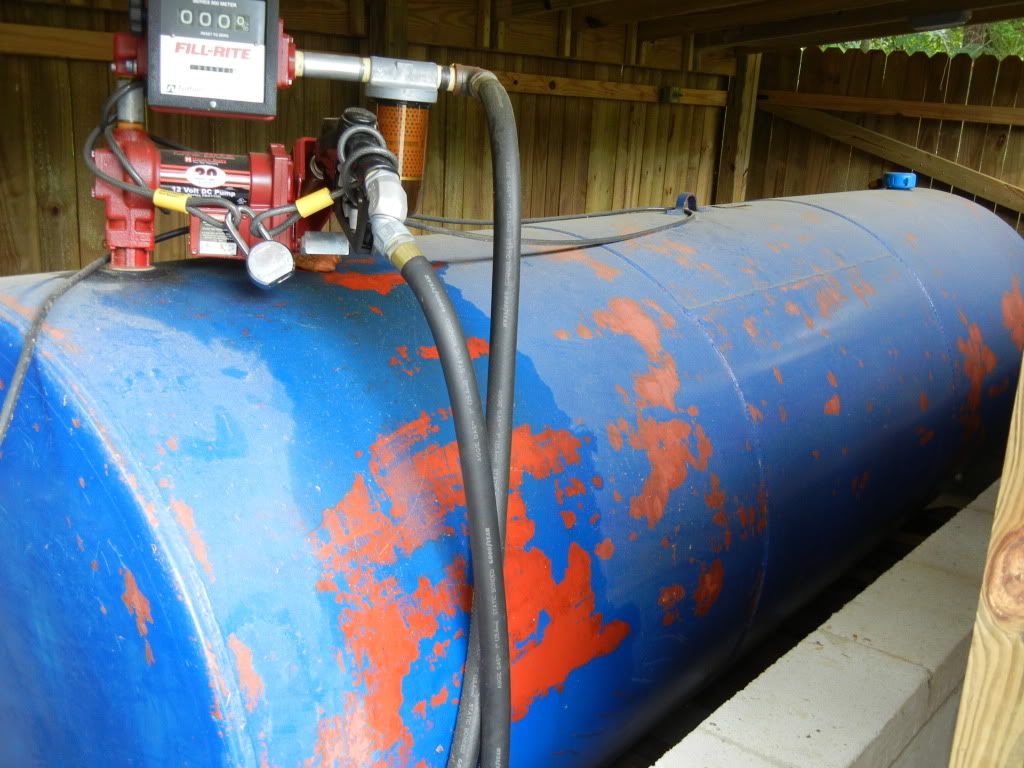
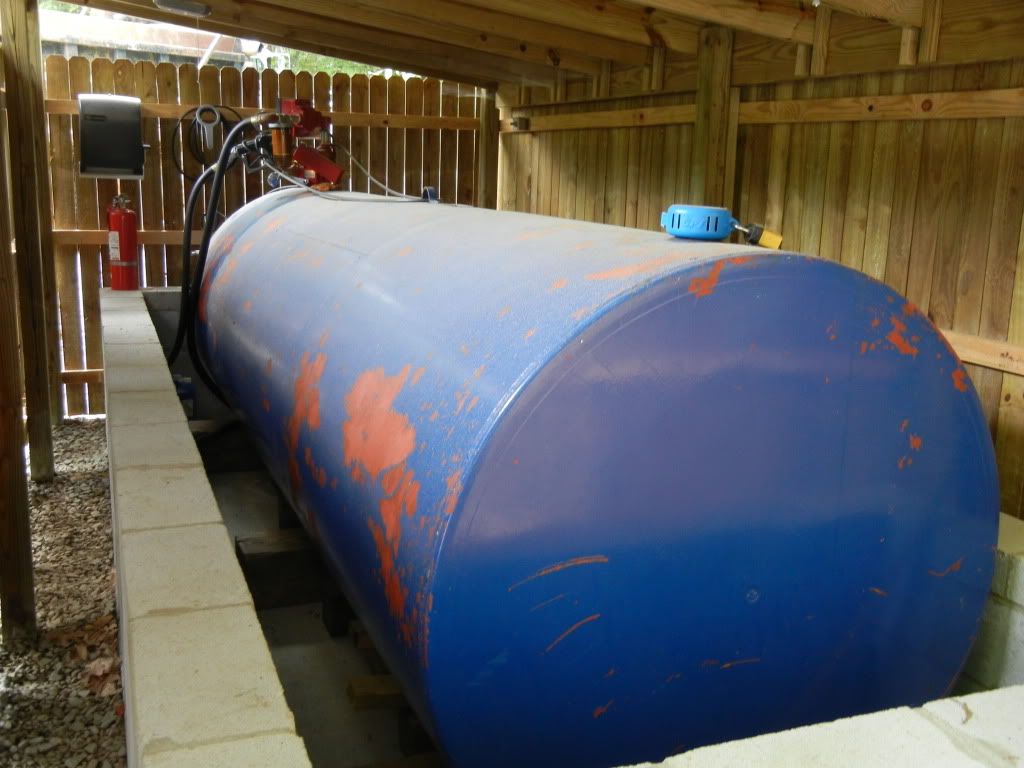

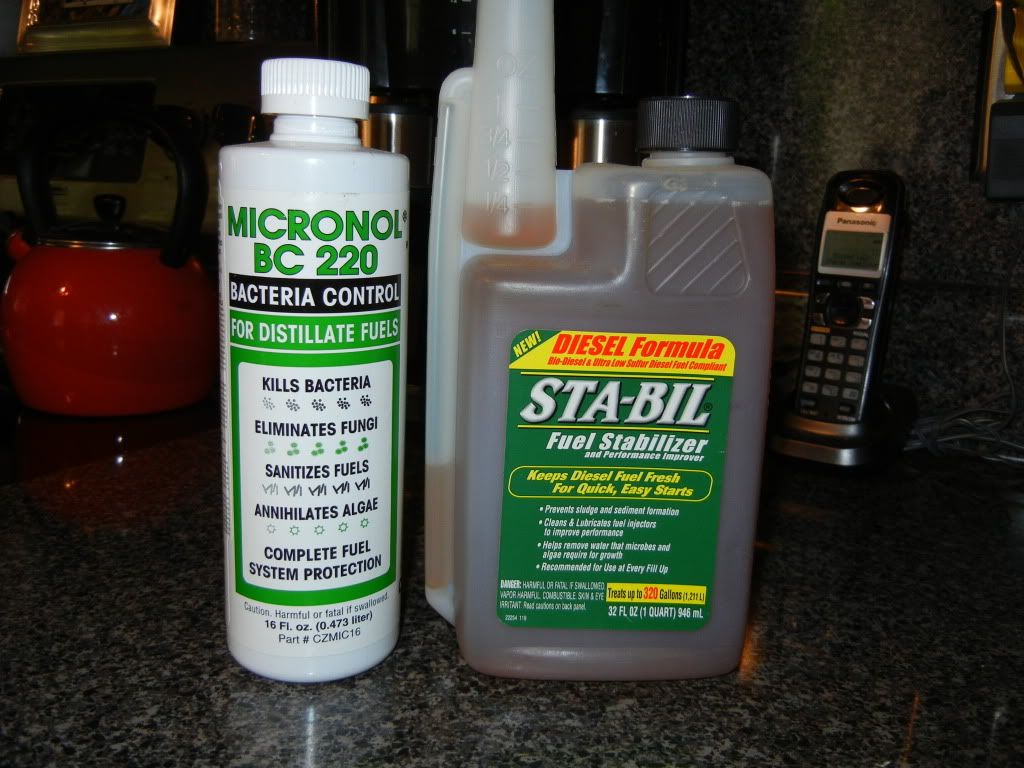
|
Quoted:
I don't know if you've seen my setup or not, but here it is. Its a 1000 gal tank, in its own building to keep it hidden better from view, and it keeps the heat off the tank to help with sweating. http://i901.photobucket.com/albums/ac216/Rockyriver1234/AR15%20Stuff/DSCN1431-1.jpg http://i901.photobucket.com/albums/ac216/Rockyriver1234/AR15%20Stuff/DSCN1432.jpg http://i901.photobucket.com/albums/ac216/Rockyriver1234/AR15%20Stuff/DSCN1437.jpg http://i901.photobucket.com/albums/ac216/Rockyriver1234/AR15%20Stuff/DSCN1443.jpg That's awesome. Is the concrete sealed in some way, in case there is a spill? |
|
Quoted: Quoted: I don't know if you've seen my setup or not, but here it is. Its a 1000 gal tank, in its own building to keep it hidden better from view, and it keeps the heat off the tank to help with sweating. http://i901.photobucket.com/albums/ac216/Rockyriver1234/AR15%20Stuff/DSCN1431-1.jpg http://i901.photobucket.com/albums/ac216/Rockyriver1234/AR15%20Stuff/DSCN1432.jpg http://i901.photobucket.com/albums/ac216/Rockyriver1234/AR15%20Stuff/DSCN1437.jpg http://i901.photobucket.com/albums/ac216/Rockyriver1234/AR15%20Stuff/DSCN1443.jpg That's awesome. Is the concrete sealed in some way, in case there is a spill? It should be , some localities require a sealed tank field that will contain a spill the size of the tank for tanks over a certain size . |
|
I have not sealed the blocks or concrete, however the concrete is High tensile and fiberglass reinforced.
It will hold a spill long enough for me to pump it out if need be. I would imagine the block would be damp with fuel, however they would dry out in a few weeks in the summer heat. My concrern is not to contaminate the ground, should there be a spill. |
|
Quoted:
I don't know if you've seen my setup or not, but here it is. Its a 1000 gal tank, in its own building to keep it hidden better from view, and it keeps the heat off the tank to help with sweating. http://i901.photobucket.com/albums/ac216/Rockyriver1234/AR15%20Stuff/DSCN1431-1.jpg http://i901.photobucket.com/albums/ac216/Rockyriver1234/AR15%20Stuff/DSCN1432.jpg http://i901.photobucket.com/albums/ac216/Rockyriver1234/AR15%20Stuff/DSCN1437.jpg http://i901.photobucket.com/albums/ac216/Rockyriver1234/AR15%20Stuff/DSCN1443.jpg Nice setup! |