


Posted: 12/22/2009 3:48:48 AM EDT
|
I'm thinking it's on our 10-year plan to invest in an outdoor furnace/boiler. The free-standing wood burners are nice but, AFAIK, they're limited to burning wood. I've been looking at this biomass furnace as an alternative. The wide variety of possible fuels seems like it would be a real plus:
• Adjustable BTU output: 70,000 to 400,000. • Manufactured as right-hand or left-hand hopper feed, determined by where the unit will be located. • Multi-fuel use. Burns corn, pellets, pea coal, log wood, waste wood, wood chips, cherry pits and other herbaceous materials. Adjustable fuel feed rates. Air-injected fuel feed. • Hopper capacity: 7 bushels. Anybody have experience with this type of heater? The cost is substantial (hence it's on the 10-year plan) but the flexibility of being able to burn just about anything is really attractive. Thoughts? 
|
|
Do you have a good supply of those items or the ability to get them local?
I know someone who has one just for the ability to burn nearly anything, problem is there is nothing around locally to support it, he has to stock wood. He originally had a supply from a wood shop but another company began buying the scraps/dust for recycling. I would see if you have the ability to feed it, most everything now a days is used or recycled but if you have a supply then it might work out. You also need to look at the BTUs produced of some of the products. Some of them use a lot of material with moderate btu production. A great idea to be sure but you need to look at supporting the system for long term |
|
I don't know about that one but I hav thought of building a pallet stove,a big outdoor russian fireplace kinda thing
fire it once a day then aftr it is out load it with wet pallets and the latent heat will dry them by the time it will be fired again. It would make wood cutting easier since you can cut it 4' long. |
|
Sorry Feral, I cannot claim any experience with biomass furnaces...
Our local cooperative extension has sort of taken the opposite route. Instead of developing a furnace that burns anything, they are taking biomass and turning it into pellets (for consumption in regular pellet stoves). At the moment they are harvesting switchgrass, feeding it into a pelletizer, and forming pellets. I don't have any firsthand experience with this process. I do like one aspect of this: One can produce his own fuel (but it does require some liquid fuels for the tractor as well as some arable land. I do wonder about a gasifier on a tractor. The biomass switchgrass pellets are supposedly producing 16 units of useable energy for each unit of energy spent on production). One question: That furnace is $15,000 plus installation and incidentals. That is a LOT of money, and after installation you still need to source a fuel (in whatever form that comes). Might it make more economic sense to use a regular stove/furnace and then stockpile a very substantial amount of fuel? Around here decent split hardwood runs $50.00 a cord, delivered. You can buy hardwood in log lengths at $300 per 10 cord load if you want teo cut/split yourself. The $15,000.00 biomass furnace cost equates to 300 cords of firewood if bought already cut and split. I suspect that is a 20 to 30 year supply of stove wood. It could be purchased in smaller lots as cash allows, and if memory serves correctly I think you have substantial storage capabilities with a barn on site. Storing 300 cords is admittedly extreme. However, one could construct a simple pole-barn structure for several thousand dollars, and a 24x40 foot building could house 100 cords of stove wood. In my area at least such a pole barn building and the 100 cords inside it could be done for under the cost of the biomass furnace. Another 40,50, 100 cords might fit in any excess space in your existing buildings. I guess I'm not quite seeing the attraction of the biomass stove. The economics do not appear to be working. After $15K you now own a stove, yet still need to purchase/grow/scrounge or otherwise obtain, process and store some form of fuel. You have great flexibility BUT you are still dependent upon some form of supply chain (however primitive it may be) unless you also stockpile biomass for the new furnace. Which takes you full circle back to stockpiling fuel.... I've been looking for heating independence as well. In my case I've looked at available options and concluded the best bet for me is a local wood lot. |
|
Quoted:
One question: That furnace is $15,000 plus installation and incidentals. That is a LOT of money, and after installation you still need to source a fuel (in whatever form that comes). Might it make more economic sense to use a regular stove/furnace and then stockpile a very substantial amount of fuel? Around here decent split hardwood runs $50.00 a cord, delivered. You can buy hardwood in log lengths at $300 per 10 cord load if you want teo cut/split yourself. The $15,000.00 biomass furnace cost equates to 300 cords of firewood if bought already cut and split. I suspect that is a 20 to 30 year supply of stove wood. It could be purchased in smaller lots as cash allows, and if memory serves correctly I think you have substantial storage capabilities with a barn on site. Storing 300 cords is admittedly extreme. However, one could construct a simple pole-barn structure for several thousand dollars, and a 24x40 foot building could house 100 cords of stove wood. In my area at least such a pole barn building and the 100 cords inside it could be done for under the cost of the biomass furnace. Another 40,50, 100 cords might fit in any excess space in your existing buildings. I guess I'm not quite seeing the attraction of the biomass stove. The economics do not appear to be working. After $15K you now own a stove, yet still need to purchase/grow/scrounge or otherwise obtain, process and store some form of fuel. You have great flexibility BUT you are still dependent upon some form of supply chain (however primitive it may be) unless you also stockpile biomass for the new furnace. Which takes you full circle back to stockpiling fuel.... I've been looking for heating independence as well. In my case I've looked at available options and concluded the best bet for me is a local wood lot. Very good points. I can't touch wood for that price here though: a tri-axle load of hardwood logs runs ~$700. Even so, you're right about the initial cost of that furnace. Unfortunately, a standard outdoor woodburner isn't hugely less expensive as you know. Last I checked, cut and split cords were running ~$175. Even so, it's a huge savings over burning oil. Maybe the thing to do is just invest a portion of what I'm saving burning wood every year and then just use the proceeds in my waning years to heat with a conventional fuel. |
|
Feral,
If you are near Pottsville, Pa, you should consider anthracite coal. A high quality, locally mined, cheap fuel, that stores well. There are people buying trailer loads of coal for future use. If you have the truck, you can even purchase directly from the mine/breaker and save the delivery charge. 22 ton delivered If you have the space, find some Jersey Barriers, and make a coal bin. Fill it and have fuel for years. coal bins Coal has a high btu rating. Is a rock and stores well. Has a long self life. Feeds with farm grain augers and flows out of gravity bins. Burns with no smoke. No creosote. There's a long list of advantages. Spend some time at the coal forum. They're good people. Coal forum john |
|
Quoted:
Feral, If you are near Pottsville, Pa, you should consider anthracite coal. A high quality, locally mined, cheap fuel, that stores well. There are people buying trailer loads of coal for future use. If you have the truck, you can even purchase directly from the mine/breaker and save the delivery charge. 22 ton delivered If you have the space, find some Jersey Barriers, and make a coal bin. Fill it and have fuel for years. coal bins Coal has a high btu rating. Is a rock and stores well. Has a long self life. Feeds with farm grain augers and flows out of gravity bins. Burns with no smoke. No creosote. There's a long list of advantages. Spend some time at the coal forum. They're good people. Coal forum john Nice links––thank you. 
We don't live far from coal country so it's a viable option. I know a few folks who heat with coal, but I don't know as much about it as I should. I'll check things out. |
|
Quoted:
. Has a long self life. john How long is it, when do I need to rotate, how do I know if it goes bad? J/K 
I thought its funny people get bent out over shape over storage items, that are millions of years old, i.e.water. and your comment caught my attention |
|
I grew up in PA and went to a one room schoolhouse for 1st thru 3rd grades and then moved to a beautiful modern school. The contrast was amazing to me and I was in awe of the stage and technical features like the sound system, automatic clocks, heavy beautiful doors, etc.
We had a coal stove in the one room school that did a fine job of heating it and a couple of us were responsible to keep it fired, take out ashes, etc. It was a good source of heat, IIRC we just dumped the clinkers out behind the play yard and the outdoor toilets. When I was maybe 8 my Mother had to have an operation IIRC and I was sent to live with my aunt near Pittsburg. They had bought a farm sized property and my uncle was a stone mason and he was building a nice house. For a few years they lived in their garage and my aunt had a coal stove in the kitchen and I remember it didn't have much odor and kept the place fairly warm. They actually had coal in the ground in their back yard. More recently, I bought, for not much, my SO 40 acres out west that had 3 coal mines on it but the state closed them long ago after stupid people kept getting killed in some others nearby. We visit the property once in a while and have considered digging out an adit but it's too dangerous and too much work. The place is fairly well hidden and I don't think anyone would notice. IMO, coal is a great heat source and after this thread, maybe it would be a good idea to have a few tons dumped up in the mtns. Burning coal can be smelled a long ways and would be hard to do discreetly. |
|
first off its my first post, Hello all.
My buddy has a bio mass gasification furnace and it is great. I am going to try and get one for our home down the road. We got a new Lopi stove last month that has a gasification process to it and its unreal how much heat it puts out on a much smaller amount of wood than our old big box iron stove did. The outdoor gasification biomas furnaces do heat and hot water on very little wood from what I have seen. |
|
Quoted:
first off its my first post, Hello all. My buddy has a bio mass gasification furnace and it is great. I am going to try and get one for our home down the road. We got a new Lopi stove last month that has a gasification process to it and its unreal how much heat it puts out on a much smaller amount of wood than our old big box iron stove did. The outdoor gasification biomas furnaces do heat and hot water on very little wood from what I have seen. Welcome aboard! 
What's your buddy run in that furnace? Also, got a link to that Lopi stove? I'd to check it out. Reduced wood consumption is a good thing.
|
|
A biomass furnace makes a lot of sense if you have a reliable and ready source of biomass (other than firewood). In my case I have an endless supply of sawdust from my mill and I've been seriously looking at investing in a pellet maker (about $2-3k for a small one). But if you have to go out and gather and process your biomass then it's a losing game since firewood is one of the most concentrated sources of fuel energy that is easily gathered and processed. Obviously a furnace that burns any biomass is useful if it is cost effective. The furnace I want is one that burns wood, oil, and propane. It uses the oil or propane to start the wood, and automatically switches.<ETA: It also can run on just oil or propane/NG> I don't have a link, but it too was pricey.
While I'm living in a fairly energy efficient cabin that I built after my fire, burning only a little more than a cord (true cord, 4x4x8) per year, the new house I am building is going to have a lot of passive solar and thermal mass as I too am concerned about how I will heat when I am too old to easily gather wood or other biomass. |
|
Quoted:
While I'm living in a fairly energy efficient cabin that I built after my fire, burning only a little more than a cord (true cord, 4x4x8) per year, the new house I am building is going to have a lot of passive solar and thermal mass as I too am concerned about how I will heat when I am too old to easily gather wood or other biomass. That's it in a nutshell. 
We do fine right now just burning wood. There are sacrifices to be made there, to be sure. It's time consuming and requires a certain degree of.....vigor. I'm looking for options for when I can't do the work that wood heat entails. We live in a drafty old farmhouse......that's part of the problem, to be sure. I'm envious of your "one cord per year" but the fault is purely mine. |
|
Tag to learn more.
I currently rent so no wood stove here. Just using propane right now in the new place but the kerosene tower heaters are around for backup as well. I don't know what local coal costs but I know east tn has some and I have always wondered about it for later in life. I always think of wood stoves just because I can own the fuel source, but I agree it is a lot of work. |
|
Quoted:
Quoted:
While I'm living in a fairly energy efficient cabin that I built after my fire, burning only a little more than a cord (true cord, 4x4x8) per year, the new house I am building is going to have a lot of passive solar and thermal mass as I too am concerned about how I will heat when I am too old to easily gather wood or other biomass. That's it in a nutshell.
We do fine right now just burning wood. There are sacrifices to be made there, to be sure. It's time consuming and requires a certain degree of.....vigor. I'm looking for options for when I can't do the work that wood heat entails. We live in a drafty old farmhouse......that's part of the problem, to be sure. I'm envious of your "one cord per year" but the fault is purely mine. What is the expected life of this stove. I don't know your age, but is it possible that you may need to replace the stove before your "vigor" is worn out? Another thing to consider if there is a very long life to the stove, or if the fire brick inside can be replaced to extend the life for many additional years, certain states have looked at banning the installation of new stoves which can not meet certain levels of efficiency. In layman's terms, this means you can see smoke (hereafter called emissions, and therefore subject to state regulation) from the chimney. PA has not passed any such law, but there has been talk in PA about a state that has (I think it was Massachusetts). Once emissions standards have been set, older sources of pollution (emissions) (as the PA Department of Environmental Protection (DEP) calls them) traditionally have been grandfathered in. The DEP in my experience is not a friendly agency to work with. My experience was on the industrial side, but after working with the DEP, and their non English speaking (French as a primary language in my case) employees, I would have been glad to assist them in inspecting the inside of the furnace while it was working. The third thing, the stove that you are looking at may be larger than what you need to heat your residence. An oversize stoves will not be as efficient for btu's burnt as a properly sized one. For what it is worth, the facility I was working has a furnace that when installed in the 1970's was limited to a 20% opacity emissions standard. the means if there was a light behind the furnace stack, 80% of the light must be able to shine through the stack emissions. We were limited to 3 minutes of emissions per hour of operation at 20% or less emissions. The newer furnaces, installed in the 1980's and 90's, had a 10% opacity limit with the same time limitations. Over the years, the wording of the permits changed. The original machine, was grandfathered in as a fully usable machine when the opacity standard was changed, as it could not guarantee to meet the new standard. As of now (several permits later), the old machine can only be used as a backup to the other machines. The grandfathered status changed with the wording of the new permits. In time I expect it to be denied operation entirely, even though in the last 40 years, it has never operated outside it's operating parameters, and is operating within the increased opacity limits. Just a thought for outdoor stoves. One never knows what will become more regulated in the future. I would also add, that if you think US government inspectors are bad, French raised US government inspectors are worse. They may for instance, insist that "there eyes are certified to within 1% of visible emissions detection, yet, they do not know what heat refraction waves are, Because, in her words, If I can see anything (including heat waves) you are operating outside of your standards, and that is a $10,000.00 fine". It is probably not worth going into the argument she had with the chief engineer of the manufacturing company about certifying and testing thermocouples instead of the meters for the thermocouples, but suffice it to say that she lost - as she should have, since she was completely wrong. I am not trying to take this off topic, just to give you an idea of possible situations that future regulation may place you in. For what it is worth, I am also planning on installing an outdoor wood stove, in 2010 (to qualify for the $1500 tax credit) so any future regulations are not my biggest concern. I plan to get around the future "vigor" problems by having more children to cut firewood and take care of the stove. 
|
|
Quoted:
I am not trying to take this off topic, just to give you an idea of possible situations that future regulation may place you in. For what it is worth, I am also planning on installing an outdoor wood stove, in 2010 (to qualify for the $1500 tax credit) so any future regulations are not my biggest concern. I plan to get around the future "vigor" problems by having more children to cut firewood and take care of the stove. Feel free to wander away from the content in the OP––a good general discussion on issues of heating is always welcome.
I hear you on the issues of government inspection. The other day someone was telling me that the Cap & Trade bill has provisions in it that will require all houses that are sold to be inspected and certified as meeting certain energy efficiency standards. That's secondhand info, but I wouldn't be surprised if it's true. If it is true, I doubt we'll ever be able to bring the house we live in now up to that standard. More kids sounds like a good plan––it's good to have a fleet of wood-toters and stove-tenders. 
|

|
Quoted:
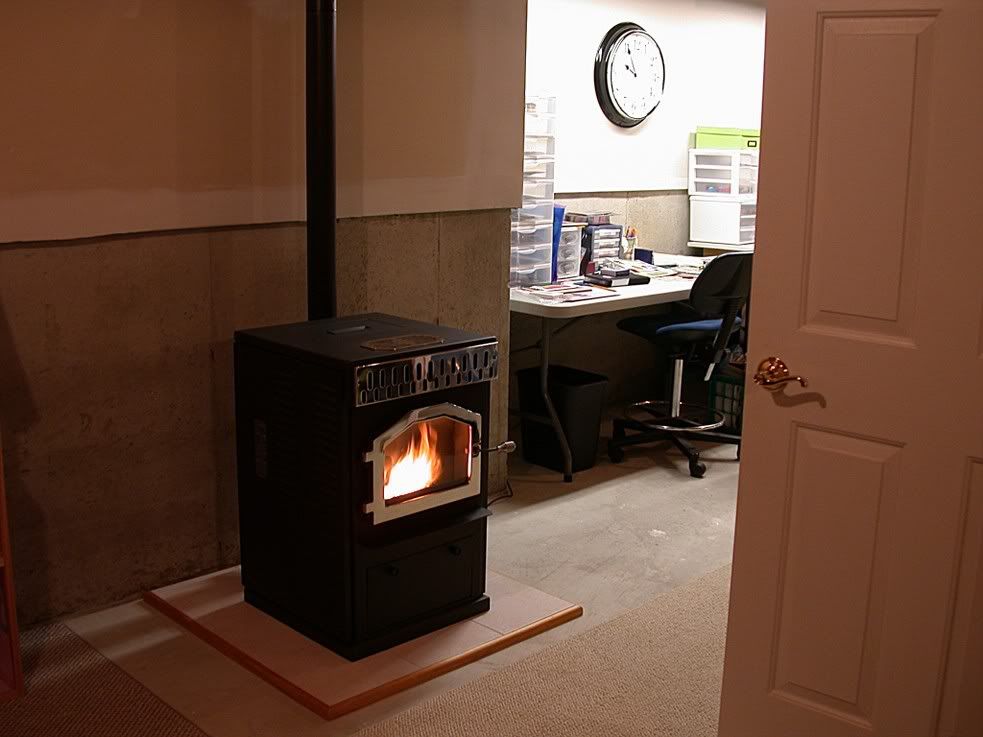
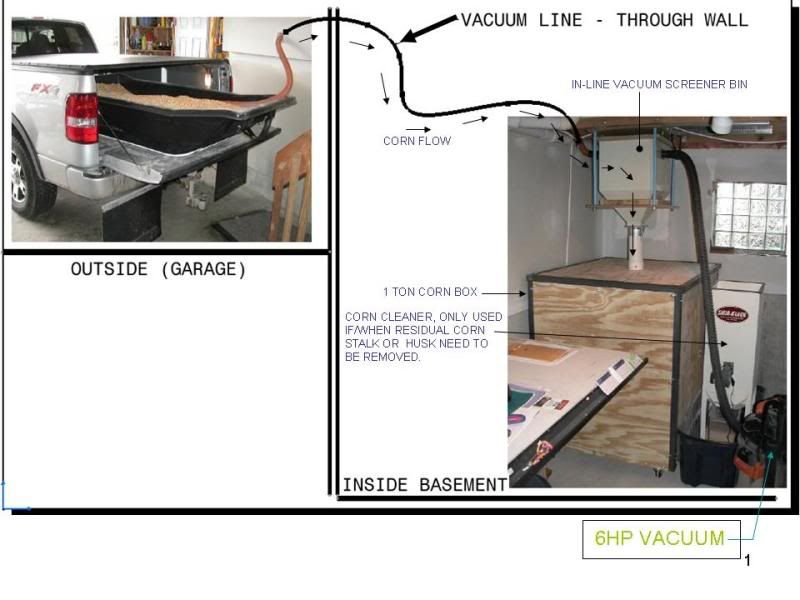
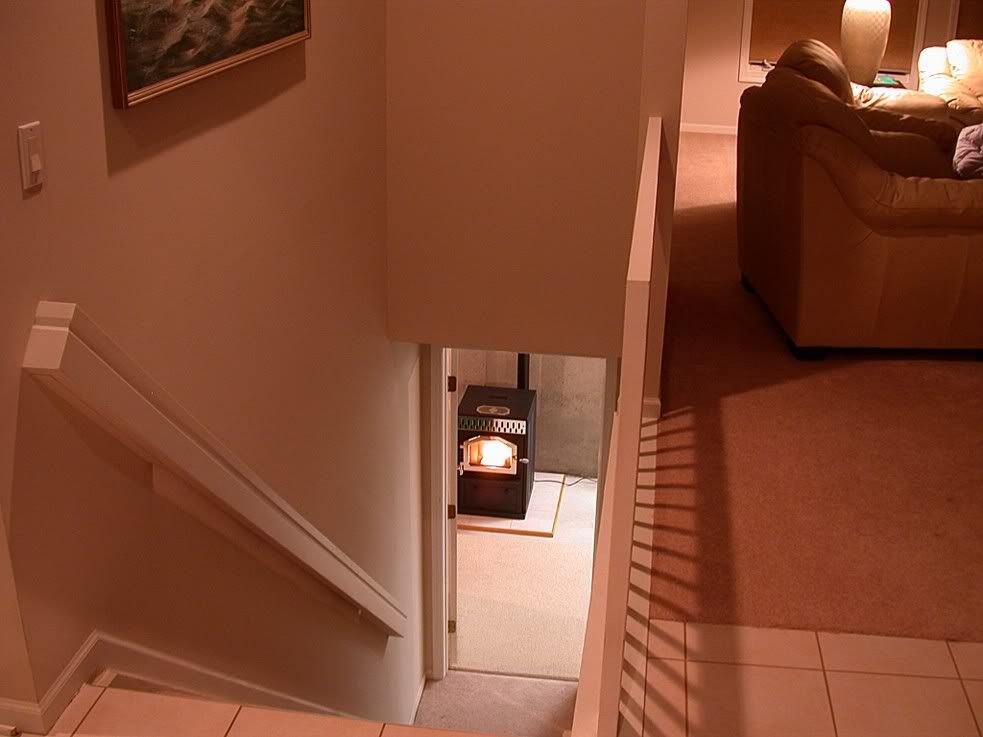
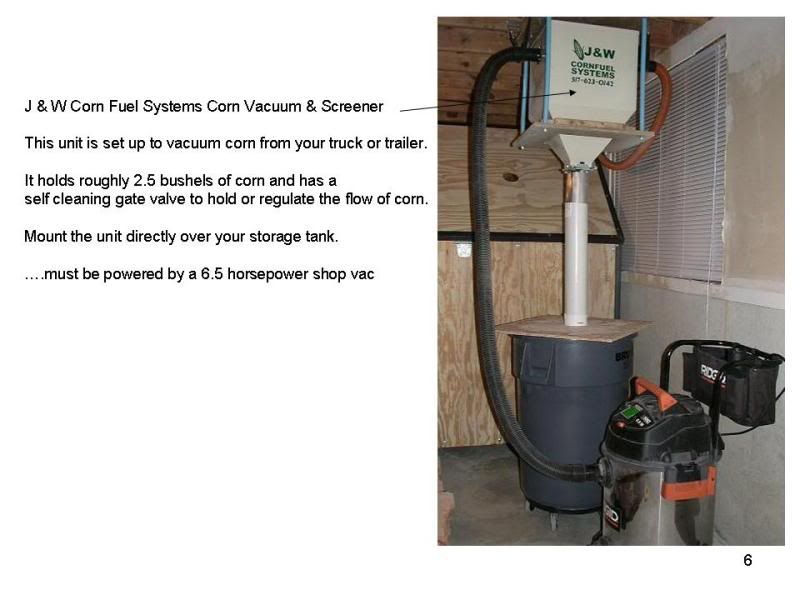
I burn corn and cherry pits, very happy with this stove....... http://img.photobucket.com/albums/v488/mr_joshua/DSCN5766.jpg http://img.photobucket.com/albums/v488/mr_joshua/DSCN5989.jpg I presume the second pic shows some sort of fuel hopper? Details, please? |
|
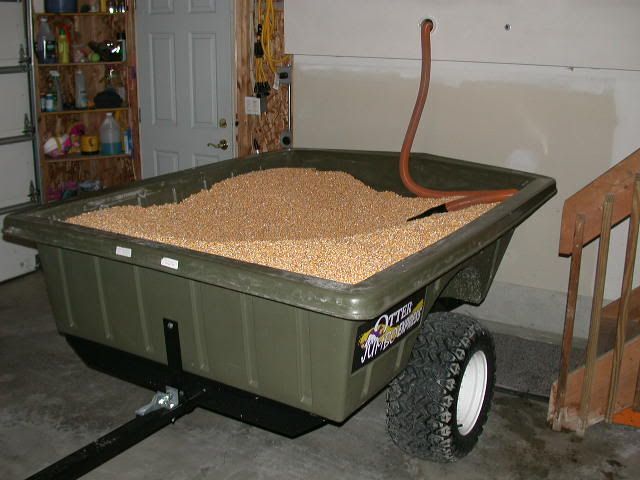
Corn transportation, transfer & storage are the biggest obstacles (unless you are very close to the source). I suppose this is the same for wood.
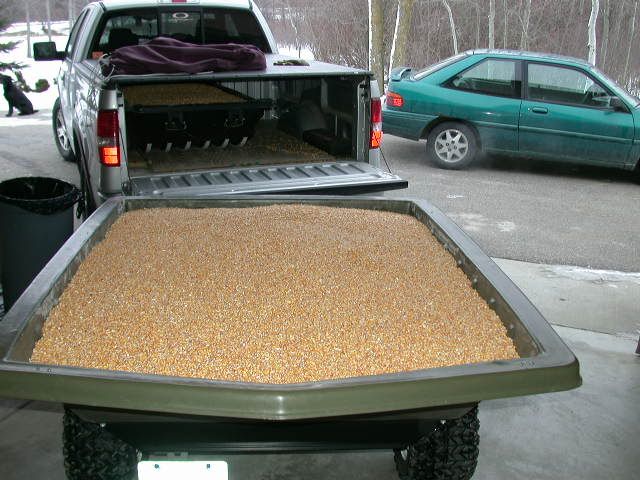
Anyway, when I first started burning corn, I found a local farmer who was willing to sell it bagged (I had to help). What a PITA this was (both at the site and dealing with it at home). On a positive note, I was able to bring home alot more this way (approx 3400lbs as shown in first pic). Once I realized bagging was not for me, I needed to find a way to purchase bulk “loose” straight from the gravity wagon. I'm currently using a large Otter Sled in my truck along with an Otter trailer. Once filled, I have just over 1 ton (600lbs/sled,1450lbs/trailer). Problem is, the trailer comes without suspension (axle bolted to frame, unacceptable). I added “slip” style leaf springs, little bit of other fabrication – good to go. I burn approx 1ton/month. 2500 sqft ranch. When it comes time to “re-load” corn, I would say (in total) loaded and unloaded - 2 hrs. 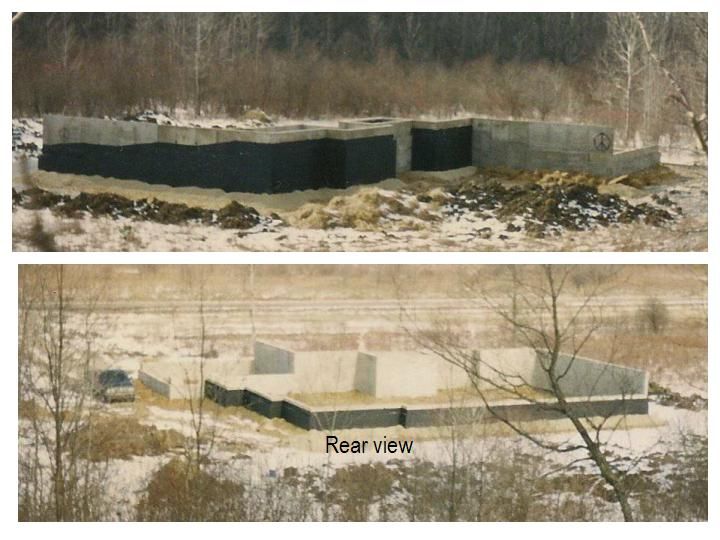




|
|
Quoted:
Quoted:
While I'm living in a fairly energy efficient cabin that I built after my fire, burning only a little more than a cord (true cord, 4x4x8) per year, the new house I am building is going to have a lot of passive solar and thermal mass as I too am concerned about how I will heat when I am too old to easily gather wood or other biomass. That's it in a nutshell.
We do fine right now just burning wood. There are sacrifices to be made there, to be sure. It's time consuming and requires a certain degree of.....vigor. I'm looking for options for when I can't do the work that wood heat entails. We live in a drafty old farmhouse......that's part of the problem, to be sure. I'm envious of your "one cord per year" but the fault is purely mine. For $5k or so you could very well, button up your current home and save alot of money and man power down the road. You'll get more ROI for sealing and insulating than you will with the new furnace/stove. Doing that now and saving some cash will allow you to install a smaller more efficient heating system down the road. Also, there may be incentives for doing such such as deductions or credits. |