


[ARCHIVED THREAD] - SHTF Vehicle. (Page 1 of 3)
Posted: 8/14/2009 7:30:19 PM EDT
| Do any of you guys have a SHTF vehicle? Seeing that all new vehicles have computers and fuel injectors, they will be pretty useless in the long run. What do you think is a good one to have? I found a 76 fj 40 landcruiser recently, and bought it mostly for this reason. What do you think? I would add a pic if I coulld figure it out. |
|
I would say a good portion either have a dedicated BOV or post SHTF vehicle, or at least have a DD/Family vehicle that's had ssome things done to help its durability.
I don't think the fuel injection would be much of a problem. Depends on the level of SHTF. If we just slide into a very deep depression or nation wide poverty and civil unrest, I trust the reliability of all my EFI vehicles. Most fuel injected vehicles I've had traveled well over 100K miles with normal services items such as belt, hoses, filters and possibly and fuel pump. The last had 220K with original engine, tranny and rear. The biggest thing ever replaced on the truck was a 30$ coil pack. Each has their advantage and I don't see anything wrong with your choice. Mine is a newer Exp with some durability mods. I don't see me driving much if any in the event of TEOTWAWKI |
|
Quoted:
what do you mean by useless? i think studies have shown that most emp's wouldnt effect cars computers in a catostrophic way. this. don't believe the interwebs hype. at most, as long as your not in the blast zone, your modern car will stall, just turn it off then start again. you may lose your CD player and your GPS though. |
|
.
Welcome to the forum. We call them Bug Out Vehicles or BOVs for short. There are many topics in this forum about BOVs. Here is a nice one to start with: http://www.ar15.com/forums/topic.html?b=10&f=18&t=605778 Here's one from Zombie Central (which is less than half useful): http://www.ar15.com/forums/topic.html?b=1&f=158&t=821243 I'm not sure how the search function works for free members, but if you look through the first 2 or 3 pages of this forum's index you should find several informative topics on BOVs. I'd also recommend that you read through the first few pages of topics here and in the Essential Survival Guides & Fiction, Survival Gear, and the Zombie CentralForum (under the main General tab). Admittedly, Zombie Central can be a bit out there, but it is basically extreme SHTF/TEOTWAWKI oriented. Don't even think about telling some of us who post there regularly that there are no such things as zombies. We've seen Obama suppporters. 
If you have additional questions/insight after reviewing the above material be sure to post. |
|
Quoted:
what do you mean by useless? i think studies have shown that most emp's wouldnt effect cars computers in a catostrophic way. Im talking about when SHTF, and lets just say its for some very long time. Do you have the equipment to deal with a break down. I dont, and i dont know anybody who does, but i have the knowledge,tooling(wrenchs, screwdrivers ect.) to work on a carburated engine, and the parts to keep it running. Do you have a computer that will tell you problem codes, and all the sensors to fix all those codes? Do you have spare injectors? What about coil packs???? I for one am not going to depend on what some study said. I will go with my gut felling, and common knowledge. Thats what I mean by USELESS. |
|
Quoted:
Do any of you guys have a SHTF vehicle? Seeing that all new vehicles have computers and fuel injectors, they will be pretty useless in the long run. What do you think is a good one to have? I found a 76 fj 40 landcruiser recently, and bought it mostly for this reason. What do you think? I would add a pic if I coulld figure it out. 
|
|
Quoted:
Quoted:
what do you mean by useless? i think studies have shown that most emp's wouldnt effect cars computers in a catostrophic way. Im talking about when SHTF, and lets just say its for some very long time. Do you have the equipment to deal with a break down. I dont, and i dont know anybody who does, but i have the knowledge,tooling(wrenchs, screwdrivers ect.) to work on a carburated engine, and the parts to keep it running. Do you have a computer that will tell you problem codes, and all the sensors to fix all those codes? Do you have spare injectors? What about coil packs???? I for one am not going to depend on what some study said. I will go with my gut felling, and common knowledge. Thats what I mean by USELESS. Oh Hi Elvis(the carb) left the building 22 years ago. In other words GM stopped selling carbs on pickups in 1986. Fuel injection is even the go to fuel system fro the hard core off road sports trucks(the rock climbers with mors suspension flex than I am tall). No BOV is perfect but the computers are not the end of the world. My dead BOV Myother BOV health and fitness BOVs Fun BOVs thanks to MS paint Welcome to the SF 
|

|
Quoted:
Quoted:
what do you mean by useless? i think studies have shown that most emp's wouldnt effect cars computers in a catostrophic way. Im talking about when SHTF, and lets just say its for some very long time. Do you have the equipment to deal with a break down. I dont, and i dont know anybody who does, but i have the knowledge,tooling(wrenchs, screwdrivers ect.) to work on a carburated engine, and the parts to keep it running. Do you have a computer that will tell you problem codes, and all the sensors to fix all those codes? Do you have spare injectors? What about coil packs???? I for one am not going to depend on what some study said. I will go with my gut felling, and common knowledge. Thats what I mean by USELESS. No question that carbureted engines are easier than electronically controlled engines to keep operating using field expedient maintenance and repairs. Whether or not any conceivably realistic SHTF incident would last long enough for that to make a difference may be another story. That being said, after some very long time of SHTF, exactly what are you going to burn in your carbureted engine? Refined gasoline only lasts so long. And I think it is safe to assume that if things are so bad that we can't parts for our newer cars and trucks, the refineries are going to be shut down as well. Sourcing the various lubricants that vehicles require may eventually pose a problem as well. And how about if the ignition or charging systems fail? Which brings us to my favorite SHTF fuel: Diesel. It stores far better and longer than gasoline. Recent SHTF incidents have shown that diesel fuel remains available for purchase far longer than does gasoline. It is less volatile and therefore safer to store and handle than gasoline. There are older mechanically injected diesel engines that require no electricity whatsoever to operate. And there are more alternative fuels available for diesel engines than there are for gasoline engines. Not to mention that diesel engines typically deliver considerably better fuel economy than comparable gasoline engines. Diesel fuel is basically a win-win-win-win-win for a BOV/SHTFV. The only drawback I can think of is if you are bugging out in Antartica where the extreme cold would affect the diesel engine's ease of starting. |
|
Boy it sure is nice to see someone civilly suggest some reading and welcome someone. I guess I'm used to other portions of the site where he may have been met with "hey dumbass read some next time before asking us anything, we are better than you because you are new here!" Thanks kar98k!
Quoted:
Welcome to the forum. We call them Bug Out Vehicles or BOVs for short. There are many topics in this forum about BOVs. Here is a nice one to start with: http://www.ar15.com/forums/topic.html?b=10&f=18&t=605778 Here's one from Zombie Central (which is less than half useful): http://www.ar15.com/forums/topic.html?b=1&f=158&t=821243 I'm not sure how the search function works for free members, but if you look through the first 2 or 3 pages of this forum's index you should find several informative topics on BOVs. I'd also recommend that you read through the first few pages of topics here and in the Essential Survival Guides & Fiction, Survival Gear, and the Zombie CentralForum (under the main General tab). Admittedly, Zombie Central can be a bit out there, but it is basically extreme SHTF/TEOTWAWKI oriented. Don't even think about telling some of us who post there regularly that there are no such things as zombies. We've seen Obama suppporters.
If you have additional questions/insight after reviewing the above material be sure to post. |

|
Quoted: The one on the right is my primary SHTF and daily driver - the tonka toy in the back ground is my reserve or TEOTWAWKI truck http://i261.photobucket.com/albums/ii65/TexomaTrash/M-816%20Wrecker/Photo_020709_002.jpg Hub, them's some rusty storage tanks you got there. Nice ladder though !!  5sub |
| I have plenty of options for BOV. My daily drivers a late model suburban and my wifes saturn.... my 4x4's a 1973 Scout II and a 1977 Jeep CJ7. I also have different kind of motorcycles...from stupid fast to full on dirt and stuff in between. Besides all that...I have 2 feet if gas became difficult to find. |
|
Quoted:
Quoted:
The one on the right is my primary SHTF and daily driver - the tonka toy in the back ground is my reserve or TEOTWAWKI truck http://i261.photobucket.com/albums/ii65/TexomaTrash/M-816%20Wrecker/Photo_020709_002.jpg Hub, them's some rusty storage tanks you got there. Nice ladder though !!
5sub Yep - if there is one thing I got plenty of it is old rusty junk... I've inherited 3 generations worth of rusty junk |
|
Quoted:
Quoted:
Quoted:
The one on the right is my primary SHTF and daily driver - the tonka toy in the back ground is my reserve or TEOTWAWKI truck http://i261.photobucket.com/albums/ii65/TexomaTrash/M-816%20Wrecker/Photo_020709_002.jpg Hub, them's some rusty storage tanks you got there. Nice ladder though !!
5sub Yep - if there is one thing I got plenty of it is old rusty junk... I've inherited 3 generations worth of rusty junk I'm jealous. I love junk as long as it's good junk. I see people all over the place with junk everywhere, but they have collected all the wrong junk. |
|
The only wrong answer for a BOV is it doesn't get the job done YOU particularly need done.
I totally agree there is way too much hype on EMP. Modern vehicles are designed to take 100 v/m of RFI. At that level bouncing off stuff in the vehicle, it actually starts acting like a microwave cooking things and any pulse that will permanently disable a modern car will probably fry a lot of stuff on older vehicles too. No matter how you shake the wide area EMP blast, if we see that event we'll have our hands full with a lot of issues other than will our vehicle start. I wouldn't even give it a planning thought. That being said, there is something to say about a non-computer system if one is not accustomed to working on and repairing a computer system. They lean them self far easier to the shade tree work off the top of his head type mechanic, where those of us that work on computerized vehicles have to have repair manuals and code readers and such. That being said, my oldest vehicle is 21 years old, is fuel injected, and seen the inside of a garage twice both times transmission which is something I have elected not to work on due to the weight hassle. Though there is something to be said for newer is more reliable, there's nothing wrong with a older dedicated BOV. A BOV only really has to work once which is get you to your BOL. Though I like Landcruisers, in general, I wouldn't own any vehicle made in the mid-70s even for pleasure let alone a BOV unless every strip and part of the strap on mandated EPA crap was removed. That stuff from 75 to 80 was a nightmare especially the carboraters. Also any vehicle that old will most certainly even if low miles need new ball joints and front end rebuild which is a PITA especially if the parts are hard to find. Most of the heads from those days were designed for leaded gas and they just through in stainless valves which will eat themselves right up into those heads over time. Now the 76 Land Cruiser had a hell of an engine block and frame, almost a damn tank. I will advise you though the Japanese will last forever thing is a myth and they most certainly do not have magic rubber which won't deteriorate over time. As someone who has spent much of his life restoring old cars, anything that old you better go into it eyes open and ready to work on it a lot. I don't care who made it. Tj |
|
Quoted:
A BOV only really has to work once which is get you to your BOL. This is why I believe that the "BOV" term is a misnomer for myself and I assume at least some others. While some vehicles obviously offer higher capabilities than others, virtually any vehicle can be kept prepared for that single bug out. Whether it's a Geo Metro, an old pickup, that blingin' new Hummer, or a AM General M35. Which is where the "SHTFV", or shit-hits-the-fan-vehicle comes in. In my mind, this is a vehicle that can be depended on to either get you out of Dodge or offer you continued mobility should you decide to hunker down in place. When I think back on it, this is also a likely cause of disagreement in past threads. To me, the SHTFV should
That substantially narrows down my own list of suitable candidates. Maybe this is worthy of thread all it's own... |
Good choice on the old FJ. I have had CJs and one 78 FJ. The FJ was one tuff SOB. I liked that old truck, would go everywhere. I called it the mountain goat. I sold my 78 CJ5, got the 78 FJ, and said F Jeep. Parts are easy to get, and the Toyota engine just keeps right on running. Parts are easy to get, and the Toyota engine just keeps right on running.
I now have a 97 Dodge 2500 with a modified Cummins. It has been upgraded to be reliable with tranny mods and other small changes. I will hold on to it for its versatility and because it is just like new. I only have 100K on it now. I also have two Toyota 4 Runners that are very dependable. I think the EFI units are more inherently less trouble if you understand them. Now, with that said, it depends on the manufacturer. I understand GM, Ford, Dodge, and Toyota electronic systems. I refuse to own anything but Toyota. I am sure Honda would be right up there too, but have never owned one and do not have the knowlege on their systems I do on the others. I know some will take that as a hurt feeling thing, but it is based on 25 years of tinkering and fixing other peoples junk, many times when the local shops had already gone through the parts swapping. I think any inherently good design will last you when SHTF, just be careful of having something too big. I have found out that different SHTF situations demand totally different vehicles. Example, 94 we had a flood that washed out every road into and out of the county and cut off the city I lived in for 3 days. No water, very little power. 16 people dead in the county from driving into flooded roadways and being washed into the rivers. A big 4x4 diesel was priceless in that situation. Along with a good boat. I had my 78 CJ and a 16 foot bass boat. I was fortunate to be able to save a couple people, unfortunately I could not save one mans wife and child. We found them 3 days later down stream. Anyway, 2007, city gets hit by a F3-F4 Tornado that WIPES OUT the major 3 county hospital. Trees down everywhere, lines and poles down everywhere else. My choice was a Toyota Tacoma and it worked great. I could get into the small areas around the trees and alley ways that I would not have been able to in my big 2500 to direct the ambulances on evacuation of the hospital. There is no one vehicle for everything, only versatility. |
|
Quoted:
Nobody knows this 100% for sure . Better safe than sorry .
Quoted:
what do you mean by useless? i think studies have shown that most emp's wouldnt effect cars computers in a catostrophic way. this. don't believe the interwebs hype. at most, as long as your not in the blast zone, your modern car will stall, just turn it off then start again. you may lose your CD player and your GPS though. |

|
Quoted:
Which brings us to my favorite SHTF fuel: Diesel. It stores far better and longer than gasoline. Recent SHTF incidents have shown that diesel fuel remains available for purchase far longer than does gasoline. It is less volatile and therefore safer to store and handle than gasoline. There are older mechanically injected diesel engines that require no electricity whatsoever to operate. And there are more alternative fuels available for diesel engines than there are for gasoline engines. Not to mention that diesel engines typically deliver considerably better fuel economy than comparable gasoline engines. Diesel fuel is basically a win-win-win-win-win for a BOV/SHTFV. The only drawback I can think of is if you are bugging out in Antartica where the extreme cold would affect the diesel engine's ease of starting. While not fancy, these lovable lugs will take a lickin' and keep on tickin'. Because of tightening emmisions, today's diesels are becoming a nightmare of complications compared to the old diesels. Whereas, the big thing used to be the injector pump rebuild, now you have ECMs, expensive fuel injectors (to the tune of approx $2300 for 8 / 6.0L powerstroke - which according to some should be considered for replacement after 100,000 miles), fuel pumps, etc. These new diesels are really powerful, but sometimes I miss my '93 Ford F350 4x4 with the non-turbo, 7.3 Navistar. |
|
Quoted:
To me, the SHTFV should
That substantially narrows down my own list of suitable candidates. Maybe this is worthy of thread all it's own... This is why we love our CUCV's. The 1009 is also DH's daily driver. Cheap, reliable, basic transportation, and components are still in production and available at the local auto parts store. 1008 on a hunting trip (it now sports true HMMV bias-ply tires): 
1009 in our driveway, w/ trailer, with HMMV tires: 
And the real workhorse, though you can't just run down to NAPA for the parts like with the other two... 
|
|
Quoted:
And the real workhorse, though you can't just run down to NAPA for the parts like with the other two... http://i477.photobucket.com/albums/rr136/efillc/M35spring.jpg actually i've found the majority of parts for my M35a2 at NAPA... what cant you find? tubes are available at most ag places.. if you're talking major engine parts... buy a parts truck that runs... they're around a grand 
|
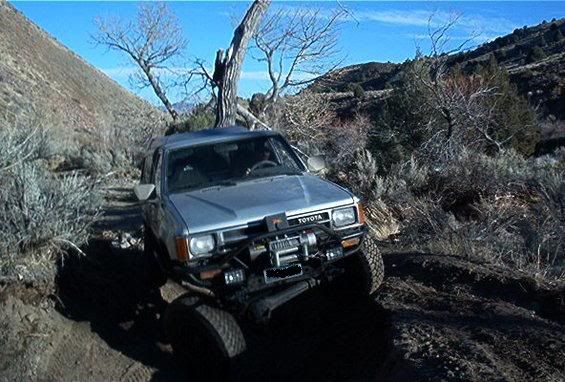
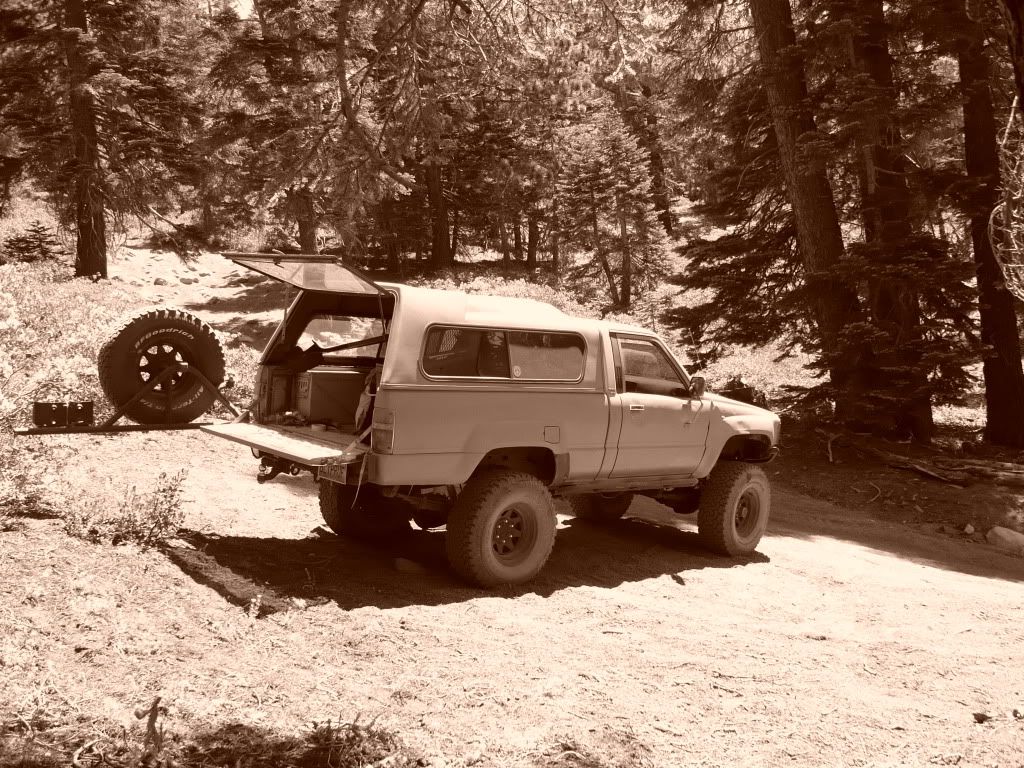


|
Quoted:
Well if nothing else, at least you'll look sharp and probably get plenty of second looks in either of those rigs if the SHTF. Now whether or not that is a good thing... Possibly, but based off of the pics I've seen here and the area of georgia I live in, it will more than likely fit right in...lol. It will be the convoy that will stick out...lol |
|
Quoted:
Quoted:
Quoted:
what do you mean by useless? i think studies have shown that most emp's wouldnt effect cars computers in a catostrophic way. Im talking about when SHTF, and lets just say its for some very long time. Do you have the equipment to deal with a break down. I dont, and i dont know anybody who does, but i have the knowledge,tooling(wrenchs, screwdrivers ect.) to work on a carburated engine, and the parts to keep it running. Do you have a computer that will tell you problem codes, and all the sensors to fix all those codes? Do you have spare injectors? What about coil packs???? I for one am not going to depend on what some study said. I will go with my gut felling, and common knowledge. Thats what I mean by USELESS. No question that carbureted engines are easier than electronically controlled engines to keep operating using field expedient maintenance and repairs. Whether or not any conceivably realistic SHTF incident would last long enough for that to make a difference may be another story. That being said, after some very long time of SHTF, exactly what are you going to burn in your carbureted engine? Refined gasoline only lasts so long. And I think it is safe to assume that if things are so bad that we can't parts for our newer cars and trucks, the refineries are going to be shut down as well. Sourcing the various lubricants that vehicles require may eventually pose a problem as well. And how about if the ignition or charging systems fail? Which brings us to my favorite SHTF fuel: Diesel. It stores far better and longer than gasoline. Recent SHTF incidents have shown that diesel fuel remains available for purchase far longer than does gasoline. It is less volatile and therefore safer to store and handle than gasoline. There are older mechanically injected diesel engines that require no electricity whatsoever to operate. And there are more alternative fuels available for diesel engines than there are for gasoline engines. Not to mention that diesel engines typically deliver considerably better fuel economy than comparable gasoline engines. Diesel fuel is basically a win-win-win-win-win for a BOV/SHTFV. The only drawback I can think of is if you are bugging out in Antartica where the extreme cold would affect the diesel engine's ease of starting. QFT (since you are new, quoted for truth) Diesel is much more versitile for BOV/SHTFV. At the extreme end of the spectrum, a duece and a half will burn just about any oil based liquid as fuel. Even the other end of the spectrum, as mentioned already in the thread, the 6.0L ford powerstroke (which is what I run in my SHTFV, a 2004 Ford Excursion) can be made to be very versitile for fuel. Check out dino fuel alternatives Thier Veggie oil systems are pretty awesome. A complete second fuel system that only requires diesel on start up and shut down, the rest of the time you run veggie oil. Used, new, spoiled, doesn't matter, just filter it and run it. Might be nice if SHTF. Hell, just having the second tank and fuel pump might be nice if SHTF. When the funds present themselves, this is something I am looking into for my Ex. Veggiestroke It's pricy, but being able to run waste veggie oil, motor oil, kerosene, ect. is priceless to me. |
|
Quoted:
Quoted:
Quoted:
Quoted:
what do you mean by useless? i think studies have shown that most emp's wouldnt effect cars computers in a catostrophic way. Im talking about when SHTF, and lets just say its for some very long time. Do you have the equipment to deal with a break down. I dont, and i dont know anybody who does, but i have the knowledge,tooling(wrenchs, screwdrivers ect.) to work on a carburated engine, and the parts to keep it running. Do you have a computer that will tell you problem codes, and all the sensors to fix all those codes? Do you have spare injectors? What about coil packs???? I for one am not going to depend on what some study said. I will go with my gut felling, and common knowledge. Thats what I mean by USELESS. No question that carbureted engines are easier than electronically controlled engines to keep operating using field expedient maintenance and repairs. Whether or not any conceivably realistic SHTF incident would last long enough for that to make a difference may be another story. That being said, after some very long time of SHTF, exactly what are you going to burn in your carbureted engine? Refined gasoline only lasts so long. And I think it is safe to assume that if things are so bad that we can't parts for our newer cars and trucks, the refineries are going to be shut down as well. Sourcing the various lubricants that vehicles require may eventually pose a problem as well. And how about if the ignition or charging systems fail? Which brings us to my favorite SHTF fuel: Diesel. It stores far better and longer than gasoline. Recent SHTF incidents have shown that diesel fuel remains available for purchase far longer than does gasoline. It is less volatile and therefore safer to store and handle than gasoline. There are older mechanically injected diesel engines that require no electricity whatsoever to operate. And there are more alternative fuels available for diesel engines than there are for gasoline engines. Not to mention that diesel engines typically deliver considerably better fuel economy than comparable gasoline engines. Diesel fuel is basically a win-win-win-win-win for a BOV/SHTFV. The only drawback I can think of is if you are bugging out in Antartica where the extreme cold would affect the diesel engine's ease of starting. QFT (since you are new, quoted for truth) Diesel is much more versitile for BOV/SHTFV. At the extreme end of the spectrum, a duece and a half will burn just about any oil based liquid as fuel. Even the other end of the spectrum, as mentioned already in the thread, the 6.0L ford powerstroke (which is what I run in my SHTFV, a 2004 Ford Excursion) can be made to be very versitile for fuel. Check out dino fuel alternatives Thier Veggie oil systems are pretty awesome. A complete second fuel system that only requires diesel on start up and shut down, the rest of the time you run veggie oil. Used, new, spoiled, doesn't matter, just filter it and run it. Might be nice if SHTF. Hell, just having the second tank and fuel pump might be nice if SHTF. When the funds present themselves, this is something I am looking into for my Ex. Veggiestroke It's pricy, but being able to run waste veggie oil, motor oil, kerosene, ect. is priceless to me. You know if SHTF, it's not like you're going to be able to run around to the local chinese resteraunt and collect up used frying oil to filter and burn in your rig either. This is time consuming, and if times are that bad you will not find any fuel. Previous scenarios such as katrina are the exception, not the rule. stopping to look for such fuel is a tactical blunder in my opinion. Have enough fuel to get you to your BOL. From there if you can get more through barter or trade or making your own, then awesome. The fuel requirements for any rig - gas, diesel, bio-diesel or straight filtered veggie oil will still be extreme if you're talking a long trip. If you're talking say 150 miles by shortest route during normal times, you can triple the consumption rate during SHTF times. Some of us are looking at 700+ miles in bugouts if necessary. Better have 3x the fuel needed normally to get there regardless of type of fuel. Pumps now days are computer/power run. You ain't stopping and getting fuel out of them unless you access the underground tank with a 12volt pump set up. The owners or occupants if still there may have something to say about that. If they are'nt there then someone may become desparate enough to take your pump for fuel...... |
|
Quoted:
Quoted:
Quoted:
Quoted:
Quoted:
what do you mean by useless? i think studies have shown that most emp's wouldnt effect cars computers in a catostrophic way. Im talking about when SHTF, and lets just say its for some very long time. Do you have the equipment to deal with a break down. I dont, and i dont know anybody who does, but i have the knowledge,tooling(wrenchs, screwdrivers ect.) to work on a carburated engine, and the parts to keep it running. Do you have a computer that will tell you problem codes, and all the sensors to fix all those codes? Do you have spare injectors? What about coil packs???? I for one am not going to depend on what some study said. I will go with my gut felling, and common knowledge. Thats what I mean by USELESS. No question that carbureted engines are easier than electronically controlled engines to keep operating using field expedient maintenance and repairs. Whether or not any conceivably realistic SHTF incident would last long enough for that to make a difference may be another story. That being said, after some very long time of SHTF, exactly what are you going to burn in your carbureted engine? Refined gasoline only lasts so long. And I think it is safe to assume that if things are so bad that we can't parts for our newer cars and trucks, the refineries are going to be shut down as well. Sourcing the various lubricants that vehicles require may eventually pose a problem as well. And how about if the ignition or charging systems fail? Which brings us to my favorite SHTF fuel: Diesel. It stores far better and longer than gasoline. Recent SHTF incidents have shown that diesel fuel remains available for purchase far longer than does gasoline. It is less volatile and therefore safer to store and handle than gasoline. There are older mechanically injected diesel engines that require no electricity whatsoever to operate. And there are more alternative fuels available for diesel engines than there are for gasoline engines. Not to mention that diesel engines typically deliver considerably better fuel economy than comparable gasoline engines. Diesel fuel is basically a win-win-win-win-win for a BOV/SHTFV. The only drawback I can think of is if you are bugging out in Antartica where the extreme cold would affect the diesel engine's ease of starting. QFT (since you are new, quoted for truth) Diesel is much more versitile for BOV/SHTFV. At the extreme end of the spectrum, a duece and a half will burn just about any oil based liquid as fuel. Even the other end of the spectrum, as mentioned already in the thread, the 6.0L ford powerstroke (which is what I run in my SHTFV, a 2004 Ford Excursion) can be made to be very versitile for fuel. Check out dino fuel alternatives Thier Veggie oil systems are pretty awesome. A complete second fuel system that only requires diesel on start up and shut down, the rest of the time you run veggie oil. Used, new, spoiled, doesn't matter, just filter it and run it. Might be nice if SHTF. Hell, just having the second tank and fuel pump might be nice if SHTF. When the funds present themselves, this is something I am looking into for my Ex. Veggiestroke It's pricy, but being able to run waste veggie oil, motor oil, kerosene, ect. is priceless to me. You know if SHTF, it's not like you're going to be able to run around to the local chinese resteraunt and collect up used frying oil to filter and burn in your rig either. This is time consuming, and if times are that bad you will not find any fuel. Previous scenarios such as katrina are the exception, not the rule. stopping to look for such fuel is a tactical blunder in my opinion. Have enough fuel to get you to your BOL. From there if you can get more through barter or trade or making your own, then awesome. The fuel requirements for any rig - gas, diesel, bio-diesel or straight filtered veggie oil will still be extreme if you're talking a long trip. If you're talking say 150 miles by shortest route during normal times, you can triple the consumption rate during SHTF times. Some of us are looking at 700+ miles in bugouts if necessary. Better have 3x the fuel needed normally to get there regardless of type of fuel. Pumps now days are computer/power run. You ain't stopping and getting fuel out of them unless you access the underground tank with a 12volt pump set up. The owners or occupants if still there may have something to say about that. If they are'nt there then someone may become desparate enough to take your pump for fuel...... We're getting back into the differences between the BOV vs the SHTFV. The SHTFV is something that has the best odds of being able to sustain continued operation amid a crisis situation, not simply flee from one. With a diesel not only is fuel from a retailer more likely to be available, but it can be sourced from construction equipment, OTR and delivery trucks, railroads, maritime facilities, heating fuel, farmer Joe, etc. Cash talks. And if all of that fails, I can turn to alternative fuels. You simply do not have options like that available with a gasoline engine. Also, if you are looking at a 700+ mile bug out and need to plan on having enough fuel to go 3x that far, how are you planning on handling 125 gallons of gas with an H3? Seriously, that is a lot of gas. I don't see how you could do it without a trailer. Again, a diesel powered pickup would really shine here as it could easilly be fitted with auxilliary fuel tanks that could handle even more than that much fuel and still have tons of room left for cargo. As I said, just about anything can be made to work for that one time evacuation. But for a vehicle with a higher emphasis on suitability as a SHTFV, diesel power is just win-win-win-win-win. |

|
Quoted:
These new diesels are really powerful, but sometimes I miss my '93 Ford F350 4x4 with the non-turbo, 7.3 Navistar. BEST truck I ever had was a '93, F350, 4X4, crew cab, 7.3, normally aspirated. It was a PIG to get rolling, but once I got her up on plane, it was
I pulled 7,000+ most everyday, it never missed beat. One of my brothers is a diesel mechanic by trade, has '99 7.3 and a '97 Cummins. And a PILE of old normally aspirated 7.3s : picked them up for almost nothing. Some school systems require their buses be retired after so many tears, despite the mileage, and he gets them for a song.
|
|
Quoted:
Quoted:
Quoted:
Quoted:
Quoted:
Quoted:
what do you mean by useless? i think studies have shown that most emp's wouldnt effect cars computers in a catostrophic way. Im talking about when SHTF, and lets just say its for some very long time. Do you have the equipment to deal with a break down. I dont, and i dont know anybody who does, but i have the knowledge,tooling(wrenchs, screwdrivers ect.) to work on a carburated engine, and the parts to keep it running. Do you have a computer that will tell you problem codes, and all the sensors to fix all those codes? Do you have spare injectors? What about coil packs???? I for one am not going to depend on what some study said. I will go with my gut felling, and common knowledge. Thats what I mean by USELESS. No question that carbureted engines are easier than electronically controlled engines to keep operating using field expedient maintenance and repairs. Whether or not any conceivably realistic SHTF incident would last long enough for that to make a difference may be another story. That being said, after some very long time of SHTF, exactly what are you going to burn in your carbureted engine? Refined gasoline only lasts so long. And I think it is safe to assume that if things are so bad that we can't parts for our newer cars and trucks, the refineries are going to be shut down as well. Sourcing the various lubricants that vehicles require may eventually pose a problem as well. And how about if the ignition or charging systems fail? Which brings us to my favorite SHTF fuel: Diesel. It stores far better and longer than gasoline. Recent SHTF incidents have shown that diesel fuel remains available for purchase far longer than does gasoline. It is less volatile and therefore safer to store and handle than gasoline. There are older mechanically injected diesel engines that require no electricity whatsoever to operate. And there are more alternative fuels available for diesel engines than there are for gasoline engines. Not to mention that diesel engines typically deliver considerably better fuel economy than comparable gasoline engines. Diesel fuel is basically a win-win-win-win-win for a BOV/SHTFV. The only drawback I can think of is if you are bugging out in Antartica where the extreme cold would affect the diesel engine's ease of starting. QFT (since you are new, quoted for truth) Diesel is much more versitile for BOV/SHTFV. At the extreme end of the spectrum, a duece and a half will burn just about any oil based liquid as fuel. Even the other end of the spectrum, as mentioned already in the thread, the 6.0L ford powerstroke (which is what I run in my SHTFV, a 2004 Ford Excursion) can be made to be very versitile for fuel. Check out dino fuel alternatives Thier Veggie oil systems are pretty awesome. A complete second fuel system that only requires diesel on start up and shut down, the rest of the time you run veggie oil. Used, new, spoiled, doesn't matter, just filter it and run it. Might be nice if SHTF. Hell, just having the second tank and fuel pump might be nice if SHTF. When the funds present themselves, this is something I am looking into for my Ex. Veggiestroke It's pricy, but being able to run waste veggie oil, motor oil, kerosene, ect. is priceless to me. You know if SHTF, it's not like you're going to be able to run around to the local chinese resteraunt and collect up used frying oil to filter and burn in your rig either. This is time consuming, and if times are that bad you will not find any fuel. Previous scenarios such as katrina are the exception, not the rule. stopping to look for such fuel is a tactical blunder in my opinion. Have enough fuel to get you to your BOL. From there if you can get more through barter or trade or making your own, then awesome. The fuel requirements for any rig - gas, diesel, bio-diesel or straight filtered veggie oil will still be extreme if you're talking a long trip. If you're talking say 150 miles by shortest route during normal times, you can triple the consumption rate during SHTF times. Some of us are looking at 700+ miles in bugouts if necessary. Better have 3x the fuel needed normally to get there regardless of type of fuel. Pumps now days are computer/power run. You ain't stopping and getting fuel out of them unless you access the underground tank with a 12volt pump set up. The owners or occupants if still there may have something to say about that. If they are'nt there then someone may become desparate enough to take your pump for fuel...... We're getting back into the differences between the BOV vs the SHTFV. The SHTFV is something that has the best odds of being able to sustain continued operation amid a crisis situation, not simply flee from one. With a diesel not only is fuel from a retailer more likely to be available, but it can be sourced from construction equipment, OTR and delivery trucks, railroads, maritime facilities, heating fuel, farmer Joe, etc. Cash talks. And if all of that fails, I can turn to alternative fuels. You simply do not have options like that available with a gasoline engine. Also, if you are looking at a 700+ mile bug out and need to plan on having enough fuel to go 3x that far, how are you planning on handling 125 gallons of gas with an H3? Seriously, that is a lot of gas. I don't see how you could do it without a trailer. Again, a diesel powered pickup would really shine here as it could easilly be fitted with auxilliary fuel tanks that could handle even more than that much fuel and still have tons of room left for cargo. As I said, just about anything can be made to work for that one time evacuation. But for a vehicle with a higher emphasis on suitability as a SHTFV, diesel power is just win-win-win-win-win. 700 mile range for me is 2.2 tanks of gas or about 40 gallons, so 120 gallons would give me 3x the fuel. I have a trailer and rack and can easily haul that much gas with the H3. Gear and other supplies are prepositioned. Tank holds 19 gallons; 6 MFCs hold 30 more. 24 more in 4 6gallon PFCs, Transport tank in trailer holds an additional 60 gallons. 114 gallons + 19 in truck = 133 gallons. Gasoline weighs 6.2lbs per gallon. Hummer H3 has a 4500lb towing capacity. I'm only adding around 700lbs of fuel. You seriously don't understand the vehicles capabilities. Yes your diesel truck may haul more, but my vehicle is suffcient for what I need. The fact that the rest of the crew has them as well or Jeeps and trailers just adds to our flexibility. MOF - none of us have a pickup truck, all have SUVs. If the Power is out, which everyone knows happens usually first in a SHTF situation, you willl not be able to get fuel from any stations. Do you really have time to scavenge for fuel? I don't. There is no differance between a BOV and "SHTFV". they are one in the same. |
|
2006 HUMMER H3 - REVIEW
By Lori Wildrick Hummer, known for its big, brawny good looks unveils a new look for this summer: Lean and mean. Not truly downsized, the new H3 is an exceptional mid-size SUV, with impressive gas mileage and city-friendly lines that still maintain the aggressive, rugged styling that the Hummer made famous. The H3 maintains all of the signature elements that you would expect from a Hummer, including the seven-slot louvered grille and rounded headlamps. There are also the large tires and those rectangular windows. Remember, small or not, this is a Hummer through and through. Think of it this way: The H3 is really big—on a small scale. It is powered by a Vortec 3.5-liter inline five-cylinder engine that puts out a dependable 220 horsepower at 5600 rpm and 225 lb.-ft. of torque at 2800 rpm. The engine itself, crafted for the light truck segment, fits well here. Efficient and light weight, when combined with the H3’s full-time 4WD powertrain, it helps enable the H3 to keep fuel consumption at a respectable 20 miles per gallon (estimated highway mpg). For the first time ever for the Hummer, the H3 is available with either the standard 5-speed manual or an optional 4-speed automatic transmission. The manual is a great pick for off-roaders, providing the gear ratios that are essential for climbing and smooth shifting for excellent on- and off-road feel. The four-speed is a Hydra-matic 4L60-E includes GM’s StabiliTrak® Stability Enhancement System that assists and helps correct oversteering or understeering. Built upon a three-piece boxed ladder-style frame, the H3 is equipped with independent torsion bar suspension up front and independent suspension in the rear. It also has impressive underbody protection that runs the length of the vehicle. There’s a solid aluminum front skidplate that protects the frame and front suspension; rocker panel protection; and three standard skid plates to protect the oil pan, fuel tank and transfer case. An optional underbody protection package with two additional skid plates is available for the hard-core off-roader. The electronically controlled full-time 4WD powertrain features both high and low range for precise throttle control and horsepower at slower speeds, which means you can pretty much go anywhere you want to. The nimble, 37-ft. turning circle will get you out of any situation, and the 8.5-inch ground clearance means that little and not-so-little road obstacles suddenly aren’t. A four-channel anti-lock braking system with dynamic rear proportioning helps the H3 control braking and prevent rear lock up. The H3’s ABS can even detect a change in road surface and adjust the braking accordingly. Dynamic Rear Braking Proportioning ensures that braking is balanced between both front and rear brakes. But don’t let the "smaller SUV" title give you the impression that the H3 is a lightweight or a ghost of its former self. To the contrary, this Hummer was built for off-roading and it has capabilities that will have any serious dirt-lover smiling big. Whether plowing through water (stats have it that the Hummer can ford 16 inches of water at 20 mph or 24-inch streams at 5 mph) or climbing hills, the H3 still a strong contender, even with its leaner size. The H3 is part ox and part mountain goat. The ox can trailer 3,00 pounds (with the manual transmission) and 4,500 pounds (with the automatic). Its mountain goat features can get you just about anywhere you want to go, in comfort. For example, the H3 can scale a 60% slope or climb a 16-inch vertical wall. And its exceptional approach and departure and angles (37.5 degrees and 35.5 degrees, respectively) mean that there are not to many places that this H3 can’t go. And with the gas mileage, there’s no reason why you shouldn’t. Breakover angle is an impressive 23.5 inches when equipped with the standard Goodyear 32-inch all-terrain tires. On the optional Bridgestone 33-inchers, the breakover angle is upped to 25 degrees. On the other hand, don’t get the impression that the H3 is only for off-roading weekend excursions. It’s not. In fact, it is quite civilized and well-adapted for city life, as you soon discover when you climb inside. Behind the wheel, the H3 is very similar to the H1. Its clean, easy-to-read controls are very much like what you find in the H1. Everything is laid out just like the Hummer itself: Clean and logical. You can add a leather-stitched steering wheel and chrome door handles if you want a little more luxury. The H3 seats five comfortably, and I do mean comfortably. When a 6’2" guy can push the seat back all the way and have plenty of leg room, and leave decent leg room for the passengers in the second row, well, you’re talking plenty spacious. Standard appointments include plush cloth, although leather (and heated seats) are an option. Front seats are buckets. The 60/40 split rear bench seats feature dual-density foam and soft bolsters for added comfort. Putting the rear seats down is a snap. Lift the bench, slide it slightly forward and then fold the seats. It’s that easy. They don’t fold completely flat, but they fold flat enough. Cargo space is exceptional in the H3. With the spare moved to a gate-mount on the outside, the H3 offers up a handy 55.7 cubic feet of cargo space with the rear seats folded down. The gas-shock-assisted gate mount is, by the way, another first-in-class for the H3. Nicer yet, that gas-shock-assist helps push the door open and hold it there. No struggling to keep the door in place while you load or unload. The H3 has an outstanding, large electric sunroof (36.1 X 24.6 inches) which enhances headroom and also lets the great outdoors in. At a touch of a button, you can go from fully opened to fully closed to vent. A built-in safety protection feature ensures that fingers don’t get pinched when the sunroof is closing. There’s also an electric rear window defogger; outside power-adjustable manually folding rearview mirrors and a self-dimming rearview mirror with compass and outside temperature indicator. Other bells and whistles include a DVD-based navigation radio and a choice of three audio systems, all of which work with GM’s OnStar system and are compatible with the optional XM Satellite Radio. The audio systems range from a single-disc CD player to an in-dash six-disc CD player to a single disc with MP3 disc playing capabilities. As much as the H3 was built for off-roading, it has the safety features to match. All H3s come standard with dual front airbags. The handy Passenger Sensing System is able to determine whether or not to enable the right front passenger air bag based on seated weight. What this means is that if you need that extra seat for a child under 12, you don’t have to mess with disabling the front passenger airbag; the system does it automatically for you. The H3 also features the LATCH system for anchoring child safety seats in the rear, a lockout protection feature on the power window and door locks, and optional head curtain side air bags that provide added head protection for front and rear passengers seated next to the doors. And GM’s On-Star comes standard with a one-year safe and sound service plan. And, if you can’t stand the thought of leaving your H3 in the driveway while you vacation, Avis has added the H3 to its car rental fleet, just in time for the busy summer season. Ask for it at select Avis airport locations (currently reported as Dallas, Denver, Phoenix, Portland, Salt Lake City and Seattle). So what’s big about this smaller Hummer? Off-road utility. Substantial look and feel. Civilized city driving. Roomy and accommodating, you just might want to consider having a his and hers in your driveway. And why not? This H3 packs a versatility one-two punch. |
|
Quoted:
700 mile range for me is 2.2 tanks of gas or about 40 gallons, so 120 gallons would give me 3x the fuel. I have a trailer and rack and can easily haul that much gas with the H3. Gear and other supplies are prepositioned. Tank holds 19 gallons; 6 MFCs hold 30 more. 24 more in 4 6gallon PFCs, Transport tank in trailer holds an additional 60 gallons. 114 gallons + 19 in truck = 133 gallons. So my estimate of requiring 125 gallons was pretty close. It's kind of hard to tell, but that trailer you posted a pic of earlier and claimed would be used in the event of an evacuation looks like it would pretty much be at capacity with all of those fuel containers and fuel. Not too mention that it doesn't look set up for an immediate BO. Do you have gear prepositioned on multiple evacuation routes, or have you limited yourself to one route/direction? Gasoline weighs 6.2lbs per gallon. Hummer H3 has a 4500lb towing capacity. I'm only adding around 700lbs of fuel. You seriously don't understand the vehicles capabilities. Yes your diesel truck may haul more, but my vehicle is sufficient for what I need. The fact that the rest of the crew has them as well or Jeeps and trailers just adds to our flexibility. MOF - none of us have a pickup truck, all have SUVs. LOL, yeah, I just don't understand the limitations of the small interior of a mid-size SUV with a 4500lb towing capacity. Okay. Out of curiosity, what flexibility is added by having a fleet consisting solely of mid-size SUVs and Jeep and trailers? I could see the benefits of standardization if everyone had identical vehicles, but not increased flexibility. So chances are that you really have neither. If the Power is out, which everyone knows happens usually first in a SHTF situation, you will not be able to get fuel from any stations. Do you really have time to scavenge for fuel? I don't. There is no difference between a BOV and "SHTFV". they are one in the same. My plan is not to run out first thing and scavenge for fuel. But perhaps I'll be hunkering down in place to ride out whatever event is befalling us. Perhaps the event is not one that necessitates an evacuation, such as a weather related one like a snowstorm, ice storm, flooding, or wind storm that causes significant power outages. Maybe an earthquake. For those of us in PNW it could be a volcanic eruption that disrupts the transportation of everyday necessities. You might say that Katrina was an exception, an anomaly, a fluke. I'll say that I have seen local gas stations run out of gasoline as a result of more typical severe storms disrupting the transportation of fuel and other goods while diesel was still available and able to be pumped and purchased. So yes, under those type of scenarios, I will have the desire and time to source or "scavenge" fuel. And I will have options that the owners of gasoline powered vehicles will not. This is where the purposes of a BOV and a SHTFV diverge. And yes, there is a difference. |
|
Quoted:
Isuzu is coming out with the same engine as the base H3 (inline 5) in diesel next year. I plan on getting one eventually to retrofit my H3 to diesel down the road. Lol. You do realize that you just vindicated my own opinions about the most suitable fuel for a BOV/SHTFV, don't you?
Seriously, though, good luck with that. That's going to be a complex, expensive project. And it may not be legal or pass emission control inspections if you are subject to them. If the engine is going to be offered in newer H3s you may be better off just buying one of those. It will be nice to enjoy the benefits of diesel, however. 
|
| I'm another one with an H3 for my BOV/Daily Driver. Mine has the Adventure Off-Road package which includes the extra skid plates, a little beefier suspension, electronic lockers, and larger tires. I can't say enough good stuff about this vehicle. Comfortable to drive, plenty of cargo and passenger space, decent mileage, and an absolute beast off-road. The maneuverability is incredible too. At full wheel lock, it will damn near rotate on the inside rear tire. I can do a U-turn on a standard residential street with room to spare. If you really plan to take your vehicle across rough terrain, this agility is VERY important! I have owned a litany of 4x4s, including FJ40s, FJ60s, CJ5s, CJ7s, CJ8, K5 Blazers, Ramchargers, Chevy Z71s, 3/4 ton 4x4 P/Us from Dodge, Ford and Chevy and 4x4 Suburbans. The H3 is the most capable off-road of all of them in stock form in my experence, and gets the best mileage too. Others will carry or tow more, and the Suburban is more comfortable, but the H3 is the most impressive all-around package I have found to date. The only improvement I would like to see is a diesel option, then it would be perfect. |
|
A. How many people who use their vehicles off highway on a regular basis leave them in stock form? To say what is best in stock form is at best disingenuous. A SWB Jeep with 35s and lockers, while not being as well rounded a vehicle in other aspects, will absolutely shame a H3 or any other Hummer offroad.
B That being said, romantic STHF notions aside, how much extreme offroading are any of us really planning on doing during an actual, realistic evacuation? Yes, I will gladly ackowledge that there are vehicles available with far greater offroad prowess, but even my extended cab long bed pickup on 35s should be able to handle any reasonably expected terrain or obstacles. |
|
Quoted:
Quoted:
Quoted:
Quoted:
Quoted:
what do you mean by useless? i think studies have shown that most emp's wouldnt effect cars computers in a catostrophic way. Im talking about when SHTF, and lets just say its for some very long time. Do you have the equipment to deal with a break down. I dont, and i dont know anybody who does, but i have the knowledge,tooling(wrenchs, screwdrivers ect.) to work on a carburated engine, and the parts to keep it running. Do you have a computer that will tell you problem codes, and all the sensors to fix all those codes? Do you have spare injectors? What about coil packs???? I for one am not going to depend on what some study said. I will go with my gut felling, and common knowledge. Thats what I mean by USELESS. No question that carbureted engines are easier than electronically controlled engines to keep operating using field expedient maintenance and repairs. Whether or not any conceivably realistic SHTF incident would last long enough for that to make a difference may be another story. That being said, after some very long time of SHTF, exactly what are you going to burn in your carbureted engine? Refined gasoline only lasts so long. And I think it is safe to assume that if things are so bad that we can't parts for our newer cars and trucks, the refineries are going to be shut down as well. Sourcing the various lubricants that vehicles require may eventually pose a problem as well. And how about if the ignition or charging systems fail? Which brings us to my favorite SHTF fuel: Diesel. It stores far better and longer than gasoline. Recent SHTF incidents have shown that diesel fuel remains available for purchase far longer than does gasoline. It is less volatile and therefore safer to store and handle than gasoline. There are older mechanically injected diesel engines that require no electricity whatsoever to operate. And there are more alternative fuels available for diesel engines than there are for gasoline engines. Not to mention that diesel engines typically deliver considerably better fuel economy than comparable gasoline engines. Diesel fuel is basically a win-win-win-win-win for a BOV/SHTFV. The only drawback I can think of is if you are bugging out in Antartica where the extreme cold would affect the diesel engine's ease of starting. QFT (since you are new, quoted for truth) Diesel is much more versitile for BOV/SHTFV. At the extreme end of the spectrum, a duece and a half will burn just about any oil based liquid as fuel. Even the other end of the spectrum, as mentioned already in the thread, the 6.0L ford powerstroke (which is what I run in my SHTFV, a 2004 Ford Excursion) can be made to be very versitile for fuel. Check out dino fuel alternatives Thier Veggie oil systems are pretty awesome. A complete second fuel system that only requires diesel on start up and shut down, the rest of the time you run veggie oil. Used, new, spoiled, doesn't matter, just filter it and run it. Might be nice if SHTF. Hell, just having the second tank and fuel pump might be nice if SHTF. When the funds present themselves, this is something I am looking into for my Ex. Veggiestroke It's pricy, but being able to run waste veggie oil, motor oil, kerosene, ect. is priceless to me. You know if SHTF, it's not like you're going to be able to run around to the local chinese resteraunt and collect up used frying oil to filter and burn in your rig either. This is time consuming, and if times are that bad you will not find any fuel. Previous scenarios such as katrina are the exception, not the rule. stopping to look for such fuel is a tactical blunder in my opinion. Have enough fuel to get you to your BOL. From there if you can get more through barter or trade or making your own, then awesome. The fuel requirements for any rig - gas, diesel, bio-diesel or straight filtered veggie oil will still be extreme if you're talking a long trip. If you're talking say 150 miles by shortest route during normal times, you can triple the consumption rate during SHTF times. Some of us are looking at 700+ miles in bugouts if necessary. Better have 3x the fuel needed normally to get there regardless of type of fuel. Pumps now days are computer/power run. You ain't stopping and getting fuel out of them unless you access the underground tank with a 12volt pump set up. The owners or occupants if still there may have something to say about that. If they are'nt there then someone may become desparate enough to take your pump for fuel...... Ok, so you make it to your BOL, then what? Wouldn't it be nice to have a vehicle that can run on non traditional fuels? How much would it be worth to have a vehicle that can run when the gas is gone? Bugging out is not the end of my plans. After all, what if SHTF turns into TEOTWAWKI? Olive oil is produced here locally, as is corn oil, both of which could be used in with a wvo kit. You also talk about having fuel capacity, well, my main tank is 48 gallons, which gives me a range of just about 800 miles in normal driving. If I get the veggiestroke kit, that adds a second 40 gallon tank which whould ad another 700 or so miles. Even at 3X fuel consumption, that would give you an effective range of 500 miles, and you still have the flexability of being able to run multiple fuels. |
|
Quoted:
Quoted:
Quoted:
Quoted:
Quoted:
Quoted:
Quoted:
what do you mean by useless? i think studies have shown that most emp's wouldnt effect cars computers in a catostrophic way. Im talking about when SHTF, and lets just say its for some very long time. Do you have the equipment to deal with a break down. I dont, and i dont know anybody who does, but i have the knowledge,tooling(wrenchs, screwdrivers ect.) to work on a carburated engine, and the parts to keep it running. Do you have a computer that will tell you problem codes, and all the sensors to fix all those codes? Do you have spare injectors? What about coil packs???? I for one am not going to depend on what some study said. I will go with my gut felling, and common knowledge. Thats what I mean by USELESS. No question that carbureted engines are easier than electronically controlled engines to keep operating using field expedient maintenance and repairs. Whether or not any conceivably realistic SHTF incident would last long enough for that to make a difference may be another story. That being said, after some very long time of SHTF, exactly what are you going to burn in your carbureted engine? Refined gasoline only lasts so long. And I think it is safe to assume that if things are so bad that we can't parts for our newer cars and trucks, the refineries are going to be shut down as well. Sourcing the various lubricants that vehicles require may eventually pose a problem as well. And how about if the ignition or charging systems fail? Which brings us to my favorite SHTF fuel: Diesel. It stores far better and longer than gasoline. Recent SHTF incidents have shown that diesel fuel remains available for purchase far longer than does gasoline. It is less volatile and therefore safer to store and handle than gasoline. There are older mechanically injected diesel engines that require no electricity whatsoever to operate. And there are more alternative fuels available for diesel engines than there are for gasoline engines. Not to mention that diesel engines typically deliver considerably better fuel economy than comparable gasoline engines. Diesel fuel is basically a win-win-win-win-win for a BOV/SHTFV. The only drawback I can think of is if you are bugging out in Antartica where the extreme cold would affect the diesel engine's ease of starting. QFT (since you are new, quoted for truth) Diesel is much more versitile for BOV/SHTFV. At the extreme end of the spectrum, a duece and a half will burn just about any oil based liquid as fuel. Even the other end of the spectrum, as mentioned already in the thread, the 6.0L ford powerstroke (which is what I run in my SHTFV, a 2004 Ford Excursion) can be made to be very versitile for fuel. Check out dino fuel alternatives Thier Veggie oil systems are pretty awesome. A complete second fuel system that only requires diesel on start up and shut down, the rest of the time you run veggie oil. Used, new, spoiled, doesn't matter, just filter it and run it. Might be nice if SHTF. Hell, just having the second tank and fuel pump might be nice if SHTF. When the funds present themselves, this is something I am looking into for my Ex. Veggiestroke It's pricy, but being able to run waste veggie oil, motor oil, kerosene, ect. is priceless to me. You know if SHTF, it's not like you're going to be able to run around to the local chinese resteraunt and collect up used frying oil to filter and burn in your rig either. This is time consuming, and if times are that bad you will not find any fuel. Previous scenarios such as katrina are the exception, not the rule. stopping to look for such fuel is a tactical blunder in my opinion. Have enough fuel to get you to your BOL. From there if you can get more through barter or trade or making your own, then awesome. The fuel requirements for any rig - gas, diesel, bio-diesel or straight filtered veggie oil will still be extreme if you're talking a long trip. If you're talking say 150 miles by shortest route during normal times, you can triple the consumption rate during SHTF times. Some of us are looking at 700+ miles in bugouts if necessary. Better have 3x the fuel needed normally to get there regardless of type of fuel. Pumps now days are computer/power run. You ain't stopping and getting fuel out of them unless you access the underground tank with a 12volt pump set up. The owners or occupants if still there may have something to say about that. If they are'nt there then someone may become desparate enough to take your pump for fuel...... We're getting back into the differences between the BOV vs the SHTFV. The SHTFV is something that has the best odds of being able to sustain continued operation amid a crisis situation, not simply flee from one. With a diesel not only is fuel from a retailer more likely to be available, but it can be sourced from construction equipment, OTR and delivery trucks, railroads, maritime facilities, heating fuel, farmer Joe, etc. Cash talks. And if all of that fails, I can turn to alternative fuels. You simply do not have options like that available with a gasoline engine. Also, if you are looking at a 700+ mile bug out and need to plan on having enough fuel to go 3x that far, how are you planning on handling 125 gallons of gas with an H3? Seriously, that is a lot of gas. I don't see how you could do it without a trailer. Again, a diesel powered pickup would really shine here as it could easilly be fitted with auxilliary fuel tanks that could handle even more than that much fuel and still have tons of room left for cargo. As I said, just about anything can be made to work for that one time evacuation. But for a vehicle with a higher emphasis on suitability as a SHTFV, diesel power is just win-win-win-win-win. 700 mile range for me is 2.2 tanks of gas or about 40 gallons, so 120 gallons would give me 3x the fuel. I have a trailer and rack and can easily haul that much gas with the H3. Gear and other supplies are prepositioned. Tank holds 19 gallons; 6 MFCs hold 30 more. 24 more in 4 6gallon PFCs, Transport tank in trailer holds an additional 60 gallons. 114 gallons + 19 in truck = 133 gallons. Gasoline weighs 6.2lbs per gallon. Hummer H3 has a 4500lb towing capacity. I'm only adding around 700lbs of fuel. You seriously don't understand the vehicles capabilities. Yes your diesel truck may haul more, but my vehicle is suffcient for what I need. The fact that the rest of the crew has them as well or Jeeps and trailers just adds to our flexibility. MOF - none of us have a pickup truck, all have SUVs. If the Power is out, which everyone knows happens usually first in a SHTF situation, you willl not be able to get fuel from any stations. Do you really have time to scavenge for fuel? I don't. There is no differance between a BOV and "SHTFV". they are one in the same. So what then are your plans for sustainability? Or do you not plan to ever leave your BOL? Options, its all about options. Oh yeah, if an H3 was available in diesel, I might very well own one. I've got nothing against them, certainly an improvment over the H2 parked next to me in the parking lot right now. Can your H3 go places my Ex can't? Sure, my Ex weighs nearly twice as much. It sucks in the sand and the mud, but I've never been stuck with it. It can handle any terrain I want to drive on locally. Compared to an H3, I can tow almost three times as much, get comparable if not better fuel economy, I can seat 2 more people (three if I switch to a middle bench), and my cargo area in the back is signficiantly larger than yours. I can stick a ton more shit in my rig. So, are you sure your SUV is better than my SUV? Or are they just different? I'll tell you one thing though, I dont stand a snowballs chance in hell of making a u-turn on a residential street. Every vehicle has strengths and weaknesses. Mine is a heavy beast. Yours is a little tiny thing, but it is still bigger than an old Jeep. |
|
Quoted:
Quoted:
Quoted:
what do you mean by useless? i think studies have shown that most emp's wouldnt effect cars computers in a catostrophic way. Im talking about when SHTF, and lets just say its for some very long time. Do you have the equipment to deal with a break down. I dont, and i dont know anybody who does, but i have the knowledge,tooling(wrenchs, screwdrivers ect.) to work on a carburated engine, and the parts to keep it running. Do you have a computer that will tell you problem codes, and all the sensors to fix all those codes? Do you have spare injectors? What about coil packs???? I for one am not going to depend on what some study said. I will go with my gut felling, and common knowledge. Thats what I mean by USELESS. No question that carbureted engines are easier than electronically controlled engines to keep operating using field expedient maintenance and repairs. Whether or not any conceivably realistic SHTF incident would last long enough for that to make a difference may be another story. That being said, after some very long time of SHTF, exactly what are you going to burn in your carbureted engine? Refined gasoline only lasts so long. And I think it is safe to assume that if things are so bad that we can't parts for our newer cars and trucks, the refineries are going to be shut down as well. Sourcing the various lubricants that vehicles require may eventually pose a problem as well. And how about if the ignition or charging systems fail? Which brings us to my favorite SHTF fuel: Diesel. It stores far better and longer than gasoline. Recent SHTF incidents have shown that diesel fuel remains available for purchase far longer than does gasoline. It is less volatile and therefore safer to store and handle than gasoline. There are older mechanically injected diesel engines that require no electricity whatsoever to operate. And there are more alternative fuels available for diesel engines than there are for gasoline engines. Not to mention that diesel engines typically deliver considerably better fuel economy than comparable gasoline engines. Diesel fuel is basically a win-win-win-win-win for a BOV/SHTFV. The only drawback I can think of is if you are bugging out in Antartica where the extreme cold would affect the diesel engine's ease of starting. Great points, diesel fuel lasts longer than gas and diesels are easier to maintain. My BOV is a John Deere diesel tractor with a wagon & plow, just like those Euro farmer refugees. |