


[ARCHIVED THREAD] - Building the Castle (Page 1 of 2)
Posted: 2/14/2009 9:00:29 PM EDT
|
Neat post I saved from another forum, originally written by "Geezer"
–––––––––––––––––––––––– First I have to pull a little rank. I’ve been in the Construction Industry for over 50 years. I am a licensed Civil Engineer, a certified Plan Examiner and Building Inspector, a Certified Professional Estimator. I taught construction courses at UCLA Engineering Extension for seven years. I am going to make a bunch of flat statements in the following paper. I will not debate any of my points unless the debater can match my background and qualifications. I will cheerfully answer questions, as long as they are not just poorly masked invitations to debate any of the points. The fort starts with the ground it sits on. Most ground is not suitable. No clay, no loose sand, no fill. Yes, there are ways to build on them, but to build a fort on those soils would cost more than the fort itself. If that’s what you own, sell it and buy something suitable. County soil maps are unreliable. In many rural and not so rural areas, the maps were prepared as drive-by maps. Literally, the college soil engineer or geologist drove by, observed what was growing and guessed at the soil based on what he could see out of the Dodge Power wagon window at 45 mph. Before you think about a fort, have the soil tested. To build a typical three bedroom 2 ½ bath fort we use what are called the 1000-year techniques, that is, building techniques that will produce a structure that will still be around and viable 1000 years from now. Building codes are minimum standards. They are not adequate for our purposes. Thus our footings have to be increased by 50% in width and thickness, and the steel increased by two sizes and doubled. The steel must be laid on 3” dobies, or hung with at least 3” clearance between steel and dirt. Same is true of S.O.G. construction. The basic structure is concrete. I prefer CMU construction because it can be done by one man working alone, and it is much less expensive than cast-in-place. 8” CMU is adequate, 10” is better, and 12” is wonderful. Use two horizontal courses of #5 bar in the 12”, one course in the 8” and 10” at 16” O.C. At the corners, add extra vertical bars, and use #6 or #7, one or two on each side of the corner. All the other verticals are #5 at 16” O.C. Use epoxy coated rebar. Buy only as much as you are going to use up within a week or two. Order all the bends pre-bent. The epoxy coating gets scratched, the epoxy comes off, and it will rust inside the concrete core filling. When you fill your cores, fill every 3-4 feet of wall height. Use a 6 sack mixture, that is six sacks of Portland cement to each cubic yard of concrete. Be sure you use a piece of rebar or a stick to tamp the concrete down (Gently, gently.) in each core hole. Reentrant corners require a couple of rebar pieces set more or less at a 45 degree angle over the corners. These are hard to set in CMU construction, take the time and effort to make sure they are in, they are very important in preventing failure at these corners. (Lesson from Northridge, ’94) To get a nice effect, and reduce vulnerability and maintenance, I lay my CMUs dry, no mortar, and then fill the cores. The core concrete holds everything together, and I don’t have to deal with periodic tuck pointing or attempted entry by chiseling out the mortar. Split face CMUs will give the appearance of stone. Do not use the Styrofoam blocks. The Styrofoam will give off noxious gases when it burns, which will happen a number of times over the 1000 year life of the fort. The basic shape of the fort is a rectangle, or a rectangle attached to a rectangle. You can use an indent for the front door and the back door. If there are firing slots, that makes the doors essentially impregnable, assuming that the indent porch is not wide enough to ram a vehicle into the front door. If you build the first floor as a slab-on-grade, make it a structural slab, that is, use rebar reinforcement and tie it back into the surrounding walls. Since you cannot predict the climate over the next 1000 years, I prefer a raised floor. A good way to do this is to use wider CMU to start, and then go down one size at the floor; this provides a 2” ledge for the floor to sit on. Don’t forget there has to be metal between the floor joists and the CMU. Heavy gauge aluminum will still be there 1000 years from now. The higher the floor, the greater underfloor storage area, and the harder it is for someone to reach the first floor windows. Calc out, or have someone calc out the floor joists using 4”x material, or at least 3”x. The thicker they are, the slower to burn. Don’t use steel; it collapses at temperatures that only char the thick wood beams. Use 1 1/8” plywood flooring, and cover it with 2” lightweight concrete. Be sure whoever calcs out the floor overbuilds it, you want minimum 100# per square foot total LL & DL. You have no idea what is going to be on that floor over the next 1000 years. If you want a second floor, don’t step back the CMU, use a 4”x ledger that is epoxied into the CMU wall. Joists and flooring are identical to the first floor. You can build this 5 stories high like that in almost any jurisdiction that will allow that height. Make all interior doors at least 3’0” doors. Over the next 1000 years, more than one person is going to be in a wheel chair or be carried on a stretcher. First floor windows need to be narrow, and set flush on the inside, so that one has to reach into the CMU wall to access them. Doors need to be 2” thick steel shells with insulated cores. Rifle bullets will go through them, so they need to be situated so that there is a CMU wall a few feet behind them. These interior walls can be 6” CMU. No overhang on the roof, except at the front and back door indent. Make the roof at least 8:12 pitch. Almost no one can stand unassisted on a roof that steep. Frame it out of the thickest members that you can get calced out, and cover it with metal roofing, the thickest available where you are. The rafter framing should be doubled over the calced values, and should include extra bracing. This is where you are vulnerable to something like an RPG and you want a roof that can withstand damage without collapsing. Use cut-to-fit CMUs for bird blocks, and epoxy the connectors to the rafters to create the diaphragm. Second floor windows should be wide enough to be used as escape windows. You can store those escape flex ladders right below them, so all anyone has to do is open the window and flip the ladder over the side. Regarding windows, windows draw fire. Firing holes on the upper floors might be a better idea. The small part of the hole goes on the outside, and then it opens in a cone shape to the inside, giving you room to maneuver the weapon. I haven’t figured out a simple closure for them, custom made hard rubber plugs might be best. In all cases, remember rifle bullets go through windows, even Lexan, (I shot up some with a .308 Galil.) and you need to lay out the windows and interior walls accordingly. A tear gas canister will not go through Lexan. The entry points for utilities are an area of vulnerability. Use gray water systems and Incinerlit toilets. These may not be code in your area. Hmmm. You can bury the French wells for the greywater system and then cover it, so no one would know how to find them, especially not while you are shooting at them. The electrical, gas and water should enter through lines under the footing, and up through the floor. Provide an airtight shaft with venting through the roof and an explosion-proof fan system, that way you cannot be gassed through the ventilation systems. The access for the utility lines to the rest of the fort is through explosion-proof gaskets. There it is. A home that is really a castle. Glossary: CMU––concrete block S.O.G.––Slab on grade, concrete poured on the ground. Bird blocks––The material betweren ragfters where they meet the wall. Reentrant corner––Any corner, such as the corner of a door hole. Used to reference vertically and horizontally. Lexan––Bulletproof "glass" Epoxied––refers to setting bolts, etc., into the CMU by drilling a hole and then setting with an epoxy adhesive. Tedious and expensive, but necessary. Epoxy coated rebar––As an alternate, investigate satainless steel rebar, check against local results, as soil/air corrosive chemicals vary from place to place. God bless and y’all be mindful out there. |
|
Agree, 100%, except for this:
No overhang on the roof, except at the front and back door indent. Make the roof at least 8:12 pitch. Almost no one can stand unassisted on a roof that steep. Frame it out of the thickest members that you can get calced out, and cover it with metal roofing, the thickest available where you are. The rafter framing should be doubled over the calced values, and should include extra bracing. This is where you are vulnerable to something like an RPG and you want a roof that can withstand damage without collapsing. Use cut-to-fit CMUs for bird blocks, and epoxy the connectors to the rafters to create the diaphragm.
In 20 years framing, I put up maybe two roofs less than 8/12, not counting bay windows and little sheds over bumpouts, the rest were all between 8/12 and 12/12, with a few up to 18/12. I've spent all day for days on end, on plywood, on OSB, on ice, on snow, on hot shingles, on roofs up to 10/12. I forced my guys to use toe boards on 12/12s, use them or leave my jobsite, but I can usually stay on a 12/12 too, it's just too dangerous to assume you can ALWAYS stay on a 12/12. We never used metal roofing, we always used shingles or shakes, but I'd still opt for at least a 10/12 roof, better yet, a 12/12. An attacker might be able to stay on a 12/12 but he will not fight effectively on one without a safety rope or toe boards. Otherwise, this article is spot on with pretty much everything I know about construction, including the mass/financial efficiency/stopping power/long term durability of core filled block construction plus liberal use of rebar. Nice find. |
|
)Interesting.
I've done very little block work. Just bocked up my garage doors, as we've NEVER had a vehicle in there, and I was looking for a more secure area! Went pretty good.(My Dad did masonary work in the 40s and 50s, then farmed it out for later jobs, he advised me. I was thinking of building another 30X40 shop, and was considering block.He told me to go on and do it: said by the time I got from the footer to above grade, I'd be decent! 
I've been fooling with the idea of the dry lay method mentioned in the article. Saw sacrete, on their website even has plans for a garage made that way. Just came into a bunch of 8" block, so looking for small project. |
|
Quoted:
Neat post I saved from another forum, originally written by "Geezer" –––––––––––––––––––––––– ...... Do not use the Styrofoam blocks. The Styrofoam will give off noxious gases when it burns, which will happen a number of times over the 1000 year life of the fort. ...... God bless and y’all be mindful out there. Great post. Having just had a cabin built, the little details that I wanted got me some weird looks a few times. You can only build a castle if you are building a castle. (Unless of course you got slaves.) On a serious note: Besides the burning point, how do you feel about Insulated Concrete Form construction? For a single story 28' by 48' garage with ICF foundation and walls (including interior) and steel or wood (recommendation?) trusses? I have a drawing, but not on the computer. On a funny note: Listen, lad. I built this kingdom up from nothing. When I started here, all there was was swamp. Other kings said I was daft to build a castle on a swamp, but I built it all the same, just to show 'em. It sank into the swamp. So, I built a second one. That sank into the swamp. So, I built a third one. That burned down, fell over, then sank into the swamp, but the fourth one... stayed up! And that's what you're gonna get, lad: the strongest castle in these islands. |
|
Overall good ideas. I have concrete floors and roof, and of course, walls.
The oversize doors is a very good point. I'd differ on the ICF's, having studied all of these when I built my house. If you are worrying about the styrofoam giving off gases, you'd better not put any carpet, furniture, plastic buckets or anything else, as they burn much more readily than the treated ICF's. Besides, the styrofoam will only give off the fumes the first time it burns.  The styrofoams in most ICF's now won't burn unless kept in continuous contact with a source of ignition (i.e. blowtorch). I had to remove a large amount of foam for some slab tie in's and burning it out didn't work, I had to chip it out with a claw hammer. The styrofoams in most ICF's now won't burn unless kept in continuous contact with a source of ignition (i.e. blowtorch). I had to remove a large amount of foam for some slab tie in's and burning it out didn't work, I had to chip it out with a claw hammer.
ICF is a great way to work alone, I built my house with myself and another guy doing the ICF's, but working solo would just take a little longer, as we pretty much worked independently. (One at day, one at night) Without decent insulation, CMU's make for a very cold house/fort/castle. We have #5 vertically on 12" spacing, #5 horizontally at 16" spacing. I'll take an ICF house, in a region where I can live/work, afford to heat/cool it, and still offer great protection. Much easier to get the wimmenz to live in than most other bunkers. ;) |
|
Quoted:
So for a typical 2000-2500 sq ft structure, what kind of cost per sq ft are we in the ballpark of....? I suspect most of us arent lottery winnners. Here was his response to a similar question –––– Geezer, Interesting and thought provoking post. So, what would be the cost of doing a "1000 year castle" in this manner? I know, I know, costs are going to vary according to the area, local material costs, ease of access to site, type of build out, customization of the interior, and other variables I'm sure I've overlooked. So, for sake of argument, compare your local cost of typical constructon against this heavily fortified construction. Assumptions: 1) Similar floor plans and square footage 2) Site easily accessed 3) Interior build out similar and comfortable. Not spartan, not plush 4) Other non security portions of building roughly equal. So what are we talking about. 2x standard building costs? 4x, .... 10x. Not looking for precision, just a SWAG. Thanks, Coop ––––––––––––––––––––––––––––––––––––––––––––––––––––––––––- Geezer Coop posted: "So, what would be the cost of doing a "1000 year castle" in this manner?" Off the top of my head, I expect about 1.25 or 1.3 percent maximum. The two problems involved are finding a local architect to draw it up, and finding a local contractor who is willing to do something different than he did yesterday. To solve the first, hiring a H.S. or Junior College drafting student is simplest and of course, cheapest. FWIW, that is who is actually doing the drawings in many architectural firms anyway! For the latter, heck, build the structural part yourself, then anybody can finish it off. I will, however, sometime over the next few weeks, do a detailed estimate on this. I have the drawings for my house since I did some of the engineering, so I can get fairly precise. I can actually cost that for any town in England, or Bulgaria, or South Africa,. as well as any place in the U.S. I'll post the estimate and some pictures of our place. God bless and y'all be mindful out there. |
|
Quoted:
I'm serious with the question. How do you defeat fire?(or at the least attempt to slow it down) Do you have a system designed to intall sprinklers, vents, anything, or is that something you would have to add to your design plans altogether? Are you asking me? If so you are out of luck  I have my fair share of construction experience but it is mostly limited to roofing, siding, framing, finish and cabinet work. I have my fair share of construction experience but it is mostly limited to roofing, siding, framing, finish and cabinet work.
|
I actually dream about what I will put in mine once I build it (mil have to retire first)
I agree with the ICF comment, the foam now used will not burn unless it in constant contact with flame For my castle it would be similar with the following/additions: I would use 8" ICF vs the block,It would be cheaper and stronger. Hardwood floors vs carpet. I like it better and its harder to get to burn (at least to start to burn). marble or the like on any of the concrete floors-carpet sucks. Also will use blinds vs carpet, everything else will get "flame-tard" For the joist I would use engineered wood with a char coating or metal vs beams. Roof, steeper is usually better but with bottle caps on a pair of old shoes I can stand on nearly any roof, even when wet. (I use to shingle a lot) I plan to either use concrete shingles or actual solid concrete with a rubber membrane. The attic would have the spray on foam for insulation if I go that route. Residential sprinklers installed, in the house and possibly on the roof-depending on material used. Exterior foam will be covered in either concrete hari-board siding or a epoxy "stucco". The epoxy/cement stucco will probably be cheaper Windows will be thin but I will have shutters, regular storm shutters on the "3rd floor", with the attachments for steel shutters-contingency. Bottom floor will all be underground, with the "1st floor" at ground level. half of the basement floor will be a vault with vault door. And a ton of other stuff. The cost when contracted would be astronomical, but if you do most of it yourself (lots of work) you can save a ton because the base material can be had for cheap. Its not that hard but it takes a good bit of planning/.engineering. Basic shapes, simple (over) engineering goes a long way. The shape and waste of space/energy in modern houses is disgusting. |
|
Quoted:
How do you defeat fire? concrete/slate/metal shingles, concrete siding, and a sprinkler. exterior fire is not that hard to stop, usually a grass/brush fire next to a house wont do much unless the overhanges catch a lot of heat and start to burn. Internal, flame tard on furniture/drapes. no carpet wood or better yet stone floors. |
|
As a firefighter, I'll add my two cents about fire resistance of structures.
Don't use trusses or engineered beams, such as Silent Floor systems. While they will hold an extraordinary amount of weight, and can be engineered to span distances that most dimensional lumber would never reach, they do not hold up to fire at all. The combination of the load and heat weakens the beams before they've ever even had direct flame impingement. Once they start burning, they fail. Mass equals fire resistance when it comes to wood, and engineered beams and trusses have very little mass. They're held together by either gusset plates or glue, maybe a combination of both. Both fasteners fail under heat. Gusset plates expand and fall out. Glue just melts. Some new trusses are made with wood and steel. They might be even more dangerous, because they're still only glued together, but steel expands greatly at 1000 degrees, and will cause catastrophic failure of the structural components. Roofs and floors should be made of the largest dimensional lumber you can find, or heavy timber if cost does not block this option. You may be able to marry two boards of dimensional lumber to support more weight, but that's up to an engineer to figure that one out. By dimensional lumber, I mean cut boards with measured dimensions, such as 2x10, 2x12, etc. The more mass, the greater the fire resistance. Think about times that you've tried to get a large log to start burning in a fireplace, and how much easier smaller logs started burning and kept burning. Trusses kill and injure firefighters. They cause buildings to collapse that would otherwise have stood longer under the same conditions. They rely on cheap, weak components that, together, make a strong one. Without fire, they hold up great under weight. They use joist hangers that are also flimsy and subject to failure under fire. |
|
One thing to keep in mind with the metal roof and the mentioned lack of roof overhangs is that most forms of fire are going to run back down the roof and hit the ground.
I hate cleaning gutters so I wind up being a fan of large gravel along the drip edges of a roof, but that always had a lot of overhang. The thick block walls can generally handle a lot of heat before it gets to the inside and causes issues. Now a fire inside is where I think the sprinklers might come into play. These days I just don't have a whole lot of stuff that would burn if there was a fire in a place I built my way. Lose the carpet and keep drapes and what not to whatever you need for blackout conditions. But since I don't have lots of windows all over the place it is not like there are that many. I have my issues with blinds but I like shutters. My first project once I get some property is going to be a block shed for storing some stuff. I plan to just do it myself and complain a lot but this thread has given me some things to aim for while doing it. One thing I always considered was later being able to tie it into a another building and slowly wind up with a decent sized home and what not. I have to say the mortarless building method is something I never considered but I love the idea and am off to do some reading on it. |

|
Definitely sprinkler the inside of the structure, as well as the attic and crawl/storage spaces. Even without carpet, you have plenty in your home to burn. Furniture, anything made of plastic/rubber, paper/cardboard, wood (floors or structural components), food preps (because they might be dry goods stored in plastic containers), chemicals, any natural gas lines, clothing/bedding, etc.
Don't make it impossible to fight a fire inside the house, either for you or actual firefighters. Don't make it so hard to get in that you cannot get out. You want your building to be flexible, in that when you WANT it hard, it's hard, but there are options for being softer in lower-risk times. I think this thread is about making a structure that will stand forever, even if the contents are gutted repeatedly. If YOU are included in the contents that are gutted, you won't care one bit about the structure. I would also debate the shape of the structure. I don't know anything about structural engineering and what shapes are the strongest. I do know that a rectangular box is hard to defend. Your visibility as threats get closer becomes nil. Your ability to address threats against the walls of the structure is about zero if it's just a box. Think about actual castles, and how they were really designed. REAL castles were not comfortable, lavish retreats for kings. The first and true castles were forts, strongholds, and buildings meant to defend small numbers against many. As threats changed and lessened over the years, royalty began actually living in the castles, and living LARGE. The designs became more attractive and comfortable and less defensible. But anyways...try bumping out some walls. On each corner, bump a wall out a foot or more so that you can make "arrow loops" or firing slits that face each other, but more importantly, look down the length of the walls between the opposing loops. They also look down the length of the length of the wall that was bumped out. If you do this on all four corners, you can cover every single exterior wall. If this would really make a house unattractive, or interfere with something you've got going, try doing some bay windows. They are large, soft points for the house, but they provide the same cover with a lower profile. They look less castle-like. Myself, I would put an octagon on each corner, and just go ahead and make the castle thing all-out. You could put an octagon on each of two diagonally-opposed corners of the house, creating a Victorian look, if you did the roof properly. The steeply pitched roof described in the first post would also fit with this without looking odd. Firing slits or just narrow windows wouldn't look out of place here, and two octagons could cover the whole exterior of the home, assuming you could see out of every side of each octagon. If not, the octagons would not be able to cover themselves. For interior design, present doors that oppose each other, making it easier to cover one door from the other side of a hall, and making it harder to systematically clear the home by attackers. If you have to worry about the door across the hall while you clear one room, you need more men for the same task. Having doors on the sides of hallways makes it hard to get a running start to force the door if the attacker has no tools. With tools, it won't matter. In a real castle, hallways would be narrow to create easily defended funnels. In your home, you'll want to actually be able to live your life. As mentioned, you never know when you might be in a wheelchair or a stretcher. Such an event is WAAAAY more likely than your home being stormed by intruders. As such, make all your living spaces on the lower floor accessible by wheelchair. Have at least one bedroom on the ground floor, or a space that could be used as such. Garage doors are terribly soft barriers to entry. If you're making a castle, don't bother with an attached garage. Don't even have an attached carport. You don't want something like a carbecue impinging directly upon any component of your home. Vehicle fires are very hot, and can definitely lead to bad house fires, even if the vehicle is parked in a driveway in front of a home (not under anything). While it makes vehicular escape harder, move your vehicle parking area away from the house. If you're being attacked by fire-throwing zombies, you won't want to be in a soft, flammable object like a car anyways. If you drive a tank, maybe you can work something out. Chimneys. If you have a chimney, it is a weak point. Unless made entirely of masonry, it's a weak point. Even then, if you're not able to cover it with defensive fire, it might be possible for someone to ladder the top of it and drop things down it. I'm not familiar with different chimney toppers, but you'll want to look into ways to fortify that. You still want to be able to clean the chimney, though. EDIT: To continue my point about covering long exterior walls- you could also probably easily create machicolations with the type of construction we've been discussing here. Machicolations are basically a projection of an upper part of a wall out over the lower part (kind of like cantilevering the upper floor out over the outside of the home), so that you could put slits in the upper floor through which objects could be dropped, fired, etc. In early castle days, this could've just been rocks, but also included boiling tar or water, as well as arrows. If you slope the lower walls smoothly out at the bottom, whatever you dropped through these machicolations would bounce off the lower wall and project outward at attackers who were not right under the machicolations. This would also be a great way to not have to use strange octagons or wall shapes on an otherwise rectangular home in order to cover all your walls. I also like the idea of sunken in entrances with narrow windows that look at each other across the door. I got this from a Jeff Cooper book, and I like what he said about it. It makes someone feel like they have to walk "into" your home before they even get to the front door. It also means you don't have to go TO the front door to see who's at the door. If you have one of these windows on each side, it would be difficult to predict from which side you might look at the door, too. |
|
Quoted:
I have to say the mortarless building method is something I never considered but I love the idea and am off to do some reading on it. The only downside I can think of offhand is that suddenly a perfectly level footing moves from important to absolutely critical. |
|
For windows:
I was working for ADT many years ago in Houston. Bank of America built a cash counting/storage facility and we put in the alarms. They had no windows, but they had these clear/plastic looking blocks that let in light. No view, they were opaque, but they claimed they were bulletproof, or resistant at any rate. I don't know if they were lexan or what material these were made of. Combination of these on the ground floor and gun ports on the upper floors sounds like a plan, if they were in fact bullet resistant. Patrick |
|
I would not argue with much of what you posted.
I would question the cost side of things. Some time ago i looked at having a house built with concrete walls in lieu of 2X construction. The cost was insane. Concrete is not a real good insulator either. The contractor i talked with suggested building 2X4 stud walls inside the concrete walls just to put in insulation, and services. I suppose one could do it one's self as you seem to have suggested, but building anything of substantial size one bag of concrete at a time is an enormous amount of work, and the skills involved are not trivial. i like the steel roof idea, as well as a steeper than normal pitch. it not only keeps invaders off your roof, but the snow will slide off easier. |
|
Something else I just thought of- communications. With a "castle" like this, if you ever have to defend it, you may face the ultimate weakness of all fortifications- siege.
Even with large stockpiles of food and water, and good hygiene capabilities, ultimately, you WILL run out without a means to resupply. You'll run out of ammo, you'll run out of food, you'll run out of soap and toilet paper, you'll run out of everything. When under siege, you either have to break the siege and get out for resupply, or have someone else come in from outside. Getting out is much harder than another force with the element of surprise getting in with resupply, or just to aid in your defense. But you'll need a way to call the cavalry. Your hard lines will likely be cut. If you try to use a cell phone in a fully concrete-built home, you will encounter more than just a small problem. Day to day usage of cell phone will be difficult, too. I have an alarm system on my home that uses cellular towers as its primary contact with the monitoring company. If my home were made of concrete, that just plain would not work. I have cable as my backup, but in the event of an emergency, all means of hard line communication might be down. Keep that in mind here. Have another way to signal, or have really good preplanned communications. Have secret escape routes out of your castle so that it doesn't become a prison instead. These secret routes could be resupply routes as well. I'm not sure if having a wood-frame roof would be fine for cellular reception, or if there would still be too much concrete around you, particularly if you poured concrete floors. |
|
Quoted:
steel vs wood beams in a fire... http://rustylopez.typepad.com/photos/uncategorized/2007/03/30/g3a.jpg are you telling me wood lasts longer? how bout with a char coat? |
|
I got all fired up about this recently and picked up what's supposed to be the Castle Bible from an historical point at least.
Just looking through the drawings gives some good basic ideas, and you can see the change in building ideas over time. Key thing back then, and addressing some of the points above, was circles of defense. The fortified house would have some sort of perimeter fencing. Sally Ports were used so that there wasn't just one entry/exit to the fortified keep. And the thickness of the walls was just crazy. Not all of us will win the lottery, but these guys say they can build as olden times, estimated cost is $325/sqft+. This guy built a castle in WV using blocks. I think it was more for the looks, I don't think it would be necessarily more defensible. He does note a calculation of the weight of deep snow on the flat roof though that seems pretty impressive, to me at least. Lastly, this home plan looks friggin sweet (to me). one weak point, the kitchen side. But in my daily commute lottery dreaming, I figure you just reverse it so all first floor windows face the interior courtyard. Survivalblog had some entries recently on this, and it was noted that "hacienda" type home plans with inner courtyards are a big plus, as the above plan. I can't find the Cooper book(s), anyone have a good source for them? |
|
Quoted:
Quoted:
steel vs wood beams in a fire... http://rustylopez.typepad.com/photos/uncategorized/2007/03/30/g3a.jpg are you telling me wood lasts longer? how bout with a char coat? Absolutely. It isn't that steel burns away, but that it loses it's rigidity under prolonged heat. The heat at which steel becomes maleable is fairly low... 800F or so. That is not a high temp for a residential fire. considering that the steel used in a building is seldom there as decoration, but as support or reinforcement, the hotter it gets, the more unstable the building becomes. Also, steel elongates more than it expands. In the case of steel beams, they can elongate enough to push over the block walls on which they rest. Lightweight steel trusses are incredibly strong, but unless 'protected' behave poorly in nominal fire conditions, and compare miserably with wooden trusses (not a big fan of those, either, mind you). Stick built homes are incredibly over built. A house can have a hole burned through the floor to the roof and still be relatively safe. Each joist is not interdependent on the one next to it for it's strength. Trusses are. |
Polysteel Litedeck seems like a good way to avoid wood or steel floor joist.

|
| 100%. This is how collapses happen, and what typically kills firefighters. The steel trusses or just beams expand by a foot or more, pushing brick or block walls outward. Even if the steel structure is not supported by these walls, the walls could still collapse, now that they're leaning outward. Once the steel is cooled, it returns to its normal length, but it may be more brittle, and those walls that it pushed out probably won't pull back in. If the walls do support the steel, then this is prime time for failure. The beams or trusses would be too short to span the space, and would fall. |
|
This is very interesting!
I have a BS in Civil Engineering, and am a prior USMC infantryman and Embassy Guard. Some of the newer Embassies can be defended by only a few people (for a short amount of time). The older Embassies have to make due with what they have. Around here, the biggest stuctural failures are related to subgrade problems. We've used Tensar BX 6200 in conjunction with compacted aggregate (crushed quarry rock, not river rock) for problematic soils. We have highly expansive soils though... Drainage is extremely important, and often overlooked by the layperson. You can't overdo it with drainage away from your structure. |
|
Quoted:
Quoted:
I have to say the mortarless building method is something I never considered but I love the idea and am off to do some reading on it. The only downside I can think of offhand is that suddenly a perfectly level footing moves from important to absolutely critical. To some extent I figure a bit of mortar might be needed now and then to help level things out, I kind of doubt concrete blocks are going to be super duper perfect themselves. But skipping the big lines of mortar does really interest me because it seems like one of the more annoying parts of making a wall let alone a building. But that is also why building an outbuilding first would be the start. I currently live in an old brick building and while it is old and the metal steps on each side of the building are getting to where they are needing some repairs the bricks just keep on going for the most part. |
|
Quoted:
Something else I just thought of- communications. With a "castle" like this, if you ever have to defend it, you may face the ultimate weakness of all fortifications- siege. Even with large stockpiles of food and water, and good hygiene capabilities, ultimately, you WILL run out without a means to resupply. You'll run out of ammo, you'll run out of food, you'll run out of soap and toilet paper, you'll run out of everything. When under siege, you either have to break the siege and get out for resupply, or have someone else come in from outside. Getting out is much harder than another force with the element of surprise getting in with resupply, or just to aid in your defense. But you'll need a way to call the cavalry. Your hard lines will likely be cut. If you try to use a cell phone in a fully concrete-built home, you will encounter more than just a small problem. Day to day usage of cell phone will be difficult, too. I have an alarm system on my home that uses cellular towers as its primary contact with the monitoring company. If my home were made of concrete, that just plain would not work. I have cable as my backup, but in the event of an emergency, all means of hard line communication might be down. Keep that in mind here. Have another way to signal, or have really good preplanned communications. Have secret escape routes out of your castle so that it doesn't become a prison instead. These secret routes could be resupply routes as well. I'm not sure if having a wood-frame roof would be fine for cellular reception, or if there would still be too much concrete around you, particularly if you poured concrete floors. This is an awesome thread. The only way it could be cooler is if the castle included an underground bunker
In fact, that would be the way to go. A tunnel in the basement, with steel blast doors of course, leading to the supplied bunker. And another tunnel giving safe egress to some hidden area. |
|
I would love to build a house with these ideas. A real fortress of a home. I'd make it a large rectangular home surrounding an internal open courtyard. That way the outside walls could have small windows but the inside walls could be all glass to let light in. Have a garage with doors on both sides for truck access into the courtyard.
|
 Awesome shootemup! I've been to that castle!!! It's the only 8 sided castle in the world, built by the Knights Templar. We drove to that castle when we were driving back to Brindisi from Napoli. |
|
Quoted: http://i205.photobucket.com/albums/bb107/motoracer51/CIMG2475.jpg Awesome shootemup! I've been to that castle!!! It's the only 8 sided castle in the world, built by the Knights Templar. We drove to that castle when we were driving back to Brindisi from Napoli. Hey, thanks. I didn't think there would be any other people knowledgeable about it as it really isn't a prime tourist destination compared to the rest of Italy. I have a house, and about 15 acres of olive/grapes/figs about 15 minutes from there. I love it there.  |
|
Found link in SurvivalBlog with pix such as this of Afghan Compunds which house one or more families.
http://www.michaelyon-online.com/compounds.htm 
|
|
Another sorta compound, a Roman Villa
http://en.wikipedia.org/wiki/Roman_villa 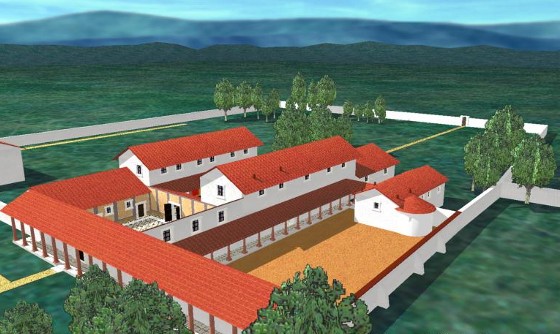
|
|
For more info on dry stacking masonry, check out this site:
Dry Stacked Masonry One possible solution for insulating masonry/concrete structures is using EFIS as an exterior insulation (See also Dryvit) while retaining the thermal mass of the concrete for interior comfort. Hope someone finds this useful. |
|
Quoted:
http://i205.photobucket.com/albums/bb107/motoracer51/CIMG2475.jpg Awesome shootemup! I've been to that castle!!! It's the only 8 sided castle in the world, built by the Knights Templar. We drove to that castle when we were driving back to Brindisi from Napoli. That is actually a hunting lodge, rather than a castle. It was built by HRE Fredrich II (1220-1250), and not by the knights Templer. |
|
Quoted:
pardon my ignorance, but what is a grey water system and how does it work? Grey water is waste water from everything *but* your toilet - it's the water from your sink, your washing machine, your shower, etc. - that water is then used to flush the toilet and for irrigation. Typical grey water systems run the drain lines to a separate cistern where it is stored for later re-use. |
| As far as the visibility problem associated with rectangles, I have a bay window on the second floor of my house and it serves pretty well as a hoarding/machicolation. Mine is in the middle of the rear wall, but if you had a couple of those on opposite corners the of the structure the whole building would be visible. |
|
This is really interesting, as next May I'll have my BS in Civil and Environmental Engineering.
If I were doing it for defensive purposes, a triangular or star layout would be a great way, though hard to build. Realistically, I think doing the rectangle with corner protrusions to monitor the walls would be great. I'd definitely have a grey water system in place. If you could find a way to have a hand pump well either in the structure or in an enclosed structure with secure passage from the main building, you'd be able to keep from having your well messed with or contaminated, hopefully. Drainage would be a very important key, I'd have liberal implementation of french drains. All rain water would run to rain barrels, maybe in the building with the well, or another secure location. Why not put a roof hatch in? It would make use of phones/radios easier, and one could put rain barrels on the roof. Hell, if you wanted, you could make a shooting tower at the center of the building if you so desired. The main drawback to something like that is it becomes somewhat of a weakpoint in keeping the structure secure, though I don't think its any worse than a door. I doubt I'd be using any steel, timber beams would be the cat's ass if you could find them or swing the cost for the roof and what not. Since we're building a castle, you may as well make an escape tunnel that is tall enough and wide enough to walk comfortably down. Use the same concrete block method as the main structure. Have it exit to a hatch somewhere in a stand of trees or the woods. Plant jagger/briar bushes or some other brushy plant to keep it hidden. One could also cover with a light layer of dirt or leaves to keep it hidden. Can't imagine thorns being much of your worries, if it's to the point you have to use an escape tunnel. Cool thread, thanks for sharing. |
|
castles are cool, but they stand out way too much, I'd prefer to build a "normal" looking house with all hardening camouflaged or otherwise hidden in the design.
After all, the best defense is to avoid drawing attention alltogether. If you draw enough attention with the castle look, you will eventually lose regardless of how fancy the defenses are. The castle look is just a huge neon sign screaming "lots o nice stuff worth defending is inside". |
| That's why building a Victorian-style home with block-wall construction and covering it with Hardi-plank siding would solve the high/low profile issues. It would not outwardly look like a castle, but could be constructed and defended more like one without being conspicuous. |
|
With just a quick search, here's a home plan I found that is almost what I'm talking about.
http://www.homeplans.com/exec/action/plans/browsemode/details/filter/HStyleID.27%3bSQFTMax.3500%3bSQFTMin.2500/hspos/HSNET/page/31/planid/10263/planname/HDS99323/section/homeplans?pvs=tot.eNqzsAAAAKoAcQ%3d%3d |
|
Quoted:
With just a quick search, here's a home plan I found that is almost what I'm talking about. http://www.homeplans.com/exec/action/plans/browsemode/details/filter/HStyleID.27%3bSQFTMax.3500%3bSQFTMin.2500/hspos/HSNET/page/31/planid/10263/planname/HDS99323/section/homeplans?pvs=tot.eNqzsAAAAKoAcQ%3d%3d I like it. |