


Posted: 4/22/2010 11:06:24 PM EDT
|
Who else thinks it's going to be a weird ass year for weather?
Just saw the thread about snow in Arizona earlier. Here in tornado alley, I can only think of one storm that produced any cells so far this year in my area. We've had more snow/ice here this winter than I can remember. Personally, I want to hear what other weird weather patterns are going on around the country. Screw the global warming/no global warming b.s. One weird year doesn't indicate anything. 
|
http://en.wikipedia.org/wiki/Year_Without_a_Summer
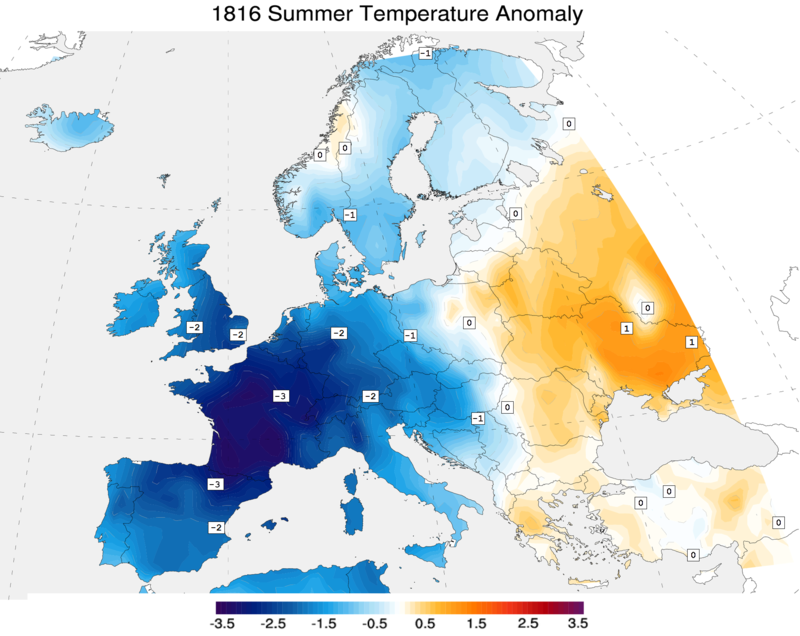
The Year Without a Summer (also known as the Poverty Year, Year There Was No Summer and Eighteen Hundred and Froze to Death[1]) was 1816, in which severe summer climate abnormalities destroyed crops in Northern Europe, the Northeastern United States and eastern Canada.[2][3] Average global temperatures decreased about 0.4–0.7 °C (0.7–1.3 °F),[4] enough to cause significant agricultural problems around the globe.
Historian John D. Post has called this "the last great subsistence crisis in the Western world".[5] Most consider the climate anomaly to have been caused by a combination of an historic low in solar activity with a volcanic winter event; the latter caused by a succession of major volcanic eruptions capped off by the Mount Tambora eruption of 1815, the largest known eruption in over 1,600 years. Description The unusual climatic aberrations of 1816 had the greatest effect on the Northeastern United States, the Canadian Maritimes, Newfoundland, and Northern Europe. Typically, the late spring and summer of the northeastern U.S. and southeastern Canada are relatively stable: temperatures (average of both day and night) average about 20–25 °C (68–77 °F), and rarely fall below 5 °C (41 °F). Summer snow is an extreme rarity, though May flurries sometimes occur. In the spring and summer of 1816, a persistent dry fog was observed in the northeastern United States. The fog reddened and dimmed the sunlight, such that sunspots were visible to the naked eye. Neither wind nor rainfall dispersed the "fog". It has been characterized as a stratospheric sulfate aerosol veil.[6] In May 1816,[7] however, frost killed off most of the crops that had been planted, and on 4 June 1816, frosts were reported in Connecticut, and by the following day, most of New England was gripped by the cold front. On 6 June 1816, snow fell in Albany, New York, and Dennysville, Maine.  Nearly a foot (30 cm) of snow was observed in Quebec City in early June, with consequent additional loss of crops—most summer-growing plants have cell walls which rupture even in a mild frost. The result was regional malnutrition, starvation, epidemic, and increased mortality—in short, famine. Nearly a foot (30 cm) of snow was observed in Quebec City in early June, with consequent additional loss of crops—most summer-growing plants have cell walls which rupture even in a mild frost. The result was regional malnutrition, starvation, epidemic, and increased mortality—in short, famine.
In July and August, lake and river ice were observed as far south as Pennsylvania. Rapid, dramatic temperature swings were common, with temperatures sometimes reverting from normal or above-normal summer temperatures as high as 35 °C (95 °F) to near-freezing within hours. Even though farmers south of New England did succeed in bringing some crops to maturity, maize and other grain prices rose dramatically. Oats, for example, rose from 12¢ a bushel ($3.40/m³) the previous year to 92¢ a bushel ($26/m³)—nearly eight times as much—and oats are a necessary staple for an economy dependent upon horses for primary transportation. Those areas suffering local crop failures then had to deal with the lack of roads in the early 19th century, preventing any easy importation of bulky food stuffs. Cool temperatures and heavy rains resulted in failed harvests in the United Kingdom of Great Britain and Ireland as well. Families in Wales traveled long distances as refugees, begging for food. Famine was prevalent in north and southwest Ireland, following the failure of wheat, oat and potato harvests. The crisis was severe in Germany, where food prices rose sharply. Due to the unknown cause of the problems, demonstrations in front of grain markets and bakeries, followed by riots, arson and looting, took place in many European cities. It was the worst famine of the 19th century.[9] In China, the cold weather killed trees, rice crops and even water buffalo, especially in northern China. Floods destroyed many remaining crops. Mount Tambora’s eruption disrupted China’s monsoon season, resulting in overwhelming floods in the Yangtze Valley in 1816. In India the delayed summer monsoon caused late torrential rains that aggravated the spread of cholera from a region near the River Ganges in Bengal to as far as Moscow.[10] In the ensuing bitter winter of 1817, when the thermometer dropped to -32 °C (-26°F), the waters of New York's Upper Bay froze deeply enough for horse-drawn sleighs to be driven across Buttermilk Channel from Brooklyn to Governors Island.[11] The effects were widespread and lasted beyond the winter. In eastern Switzerland, the summers of 1816 and 1817 were so cool that an ice dam formed below a tongue of the Giétro Glacier high in the Val de Bagnes; in spite of the efforts of the engineer Ignaz Venetz to drain the growing lake, the ice dam collapsed catastrophically in June 1818.[12] |
|
Causes
It is now generally thought that the aberrations occurred because of the 1815 (April 5–15) volcanic Mount Tambora eruption[13][14] on the island of Sumbawa, Indonesia (then part of the Dutch East Indies). The eruption had a Volcanic Explosivity Index ranking of 7, a super-colossal event that ejected immense amounts of volcanic dust into the upper atmosphere. It was the world's largest eruption since the Hatepe eruption over 1,630 years earlier in AD 180. The fact that the 1815 eruption occurred during the middle of the Dalton Minimum (a period of unusually low solar activity) is also significant. Other large volcanic eruptions (with VEI at least 4) during the same time frame are: 1812, La Soufrière on Saint Vincent in the Caribbean 1812, Awu on Sangihe Islands, Indonesia 1813, Suwanosejima on Ryukyu Islands, Japan 1814, Mayon in the Philippines These other eruptions had already built up a substantial amount of atmospheric dust. As is common following a massive volcanic eruption, temperatures fell worldwide because less sunlight passed through the atmosphere. [edit] Effects As a result of the series of volcanic eruptions, crops in the above cited areas had been poor for several years; the final blow came in 1815 with the eruption of Tambora. In the United States, many historians cite the "Year Without a Summer" as a primary motivation for the western movement and rapid settlement of what is now western and central New York and the American Midwest. Many New Englanders were wiped out by the year, and tens of thousands struck out for the richer soil and better growing conditions of the Upper Midwest (then the Northwest Territory). Europe, still recuperating from the Napoleonic Wars, suffered from food shortages. Food riots broke out in the United Kingdom and France and grain warehouses were looted. The violence was worst in landlocked Switzerland, where famine caused the government to declare a national emergency. Huge storms, abnormal rainfall with floodings of the major rivers of Europe (including the Rhine) are attributed to the event, as was the frost setting in during August 1816. A major typhus epidemic occurred in Ireland between 1816-19, precipitated by the famine caused by "The Year Without a Summer". It is estimated that 100,000 Irish perished during this period. A BBC documentary using figures compiled in Switzerland estimated that fatality rates in 1816 were twice that of average years, giving an approximate European fatality total of 200,000 deaths. The eruption of Tambora also caused Hungary to experience brown snow. Italy experienced something similar, with red snow falling throughout the year. The cause of this is believed to have been volcanic ash in the atmosphere. In China, unusually low temperatures in summer and fall devastated rice production in Yunnan province in the southwest, resulting in widespread famine. Fort Shuangcheng, now in Heilongjiang province, reported fields disrupted by frost and conscripts deserting as a result. Summer snowfall was reported in various locations in Jiangxi and Anhui provinces, both in the south of the country. In Taiwan, which has a tropical climate, snow was reported in Hsinchu and Miaoli, while frost was reported in Changhua.[15] High levels of ash in the atmosphere led to unusually spectacular sunsets during this period, a feature celebrated in the paintings of J. M. W. Turner. It has been theorised that it was this that gave rise to the yellow tinge that is predominant in his paintings such as Chichester Canal circa 1828. A similar phenomenon was observed after the 1883 Krakatoa eruption, and on the West Coast of the United States following the 1991 eruption of Mount Pinatubo in the Philippines. The lack of oats to feed horses may have inspired the German inventor Karl Drais to research new ways of horseless transportation, which led to the invention of the Draisine or velocipede. This was the ancestor of the modern bicycle and a step towards mechanized personal transport.[16] The crop failures of the “Year without Summer” forced the family of Joseph Smith to move from Sharon, Vermont to Palmyra, New York [17], precipitating a series of events culminating in the publication of the Book of Mormon and the founding of the Church of Jesus Christ of Latter-day Saints.[18] In July 1816 "incessant rainfall" during that "wet, ungenial summer" forced Mary Shelley, John William Polidori and their friends to stay indoors for much of their Swiss holiday. They decided to have a contest, seeing who could write the scariest story, leading Shelley to write Frankenstein, or The Modern Prometheus and Polidori to write The Vampyre.[19] The Year without a Summer also inspired Lord Byron to write his 1816 poem Darkness. The chemist Justus von Liebig, who had experienced the famine as a child in Darmstadt, later studied the nutrition of plants and introduced mineral fertilizers. [edit] Comparable events Toba catastrophe 70,000 to 75,000 years ago. The Hekla 3 eruption of about 1200 BC, contemporary with the historical bronze age collapse. The 1628–26 BC climate disturbances, usually attributed to the Minoan eruption of Santorini. Climate changes of 535–536 have been linked to the effects of a volcanic eruption, possibly at Krakatoa. An eruption of Kuwae, a Pacific volcano, has been implicated in events surrounding the Fall of Constantinople in 1453. An eruption of Huaynaputina, in Peru, caused 1601 to be the coldest year in the Northern Hemisphere for six centuries (see Russian famine of 1601–1603). An eruption of Laki, in Iceland, caused major fatalities in Europe, 1783–84. The eruption of Mount Pinatubo in 1991 led to odd weather patterns in the United States, particularly in the Midwest and parts of the Northeast. An unusually warm spring was followed by an unusually cool and mild summer in 1992. The current eruptions are a high 4 http://en.wikipedia.org/wiki/Volcanic_Explosivity_Index I think we all know what this means... 
|
|
and if Hekla goes...
http://en.wikipedia.org/wiki/Hekla_3_eruption
|

Yesterday's tiny proto-sunspot dissolved before it could be numbered by NOAA. Officially, the sun remains blank for the 8th day in a row. Credit: SOHO/MDI
Sunspot number: 0 What is the sunspot number? Updated 22 Apr 2010 Spotless Days Current Stretch: 8 days 2010 total: 15 days (13%) 2009 total: 260 days (71%) Since 2004: 785 days Typical Solar Min: 485 days explanation | more info Updated 21 Apr 2010 The Radio Sun 10.7 cm flux: 76 sfu explanation | more data Updated 22 Apr 2010 This could be worse than the Dalton Minimum.
|
http://spaceweather.com/glossary/spotlessdays.htm
Spotless Days
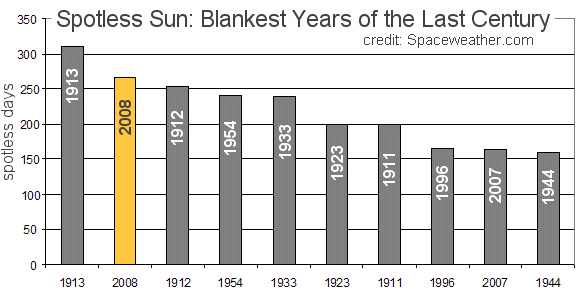
A spotless day is a day without sunspots, a day when the face of the sun is utterly blank. Spotless days never occur during Solar Max when the sun is active, but they are common during solar minimum, the opposite phase of the 11-year sunspot cycle when the sun is very quiet. By counting spotless days, we can keep track of the depth and longevity of a solar minimum. By the standard of spotless days, the ongoing solar minimum is the deepest in a century: NASA report. In 2008, no sunspots were observed on 266 of the year's 366 days (73%). To find a year with more blank suns, you have to go all the way back to 1913, which had 311 spotless days (85%): The lack of sunspots in 2008, made it a century-level year in terms of solar quiet. Remarkably, sunspot counts for 2009 have dropped even lower. As of March 31st, there were no sunspots on 78 of the year's 90 days to date (87%). On the front page of spaceweather.com, you can monitor the increasing number of spotless days. Look beneath the Daily Sun image for these key indicators (updated daily): Current stretch: 9 days Updated April 4, 2009 "Current Stretch" is the number of consecutive days the sun has been blank. The 100-year record is 92 consecutive spotless days in April, May and June of 1913. 2009 Total: 81 days (87%) Updated April 4, 2009 "2009 Total" is the total number of days and the percentage of days in 2009 that the sun has been blank. The 100-year record for a full year is 311 spotless days (85%) in 1913. Since 2004: 592 days Updated April 4, 2009 The first blank sun of the ongoing solar minimum appeared in 2004. "Since 2004" tells us the total number of spotless days since that time. The 100-year record for total spotless days in an entire multi-year minimum is 1019 spotless days in the years around 1913. Typical Solar Min: 485 days Looking back at the last ten solar minima (not including the ongoing minimum), we can count the total number of spotless days in each and calculate an average: 485 spotless days. The average exceeds the number of days in a year because solar minima last much longer than one year. The fact that the ongoing solar minimum has already racked up 590+ spotless days with no end in sight tells us that it is much deeper and longer than average. This page will be updated with more information and data in the days ahead 
Oh for the good old days...
|
|
And something even more ominous may be lurking on the horizon...
Deadly airborne fungus in Oregon set to spread 
The new, rare strain has killed 1 in 4 infected, researchers say By Charles Q. Choi
updated 6:12 p.m. ET, Thurs., April 22, 2010 A deadly, airborne new strain of fungus has emerged in Oregon. It has killed nearly one out of four known affected people so far and might also attack animals ranging from dogs to dolphins. And it is likely to spread, researchers now warn. The new strain known as VGIIc of the fungus Cryptococcus gattii not only targets humans but has also proven capable of infecting dogs, cats, alpacas, sheep and elk. Other strains have even infected porpoises. Although it can spread to mammals, it does not jump from animal to animal. Instead, people and other animals get it from inhaling spores released by samples of the fungus that infect trees. "It's in the environment, and we're exposed to the environment," researcher Edmond Byrnes III of Duke University Medical Center told LiveScience. "And the environmental range of this has been expanding." Potential to spread While scientists aren't sure how the highly infectious or virulent fungus emerged in Oregon, they caution the new strain now looks set to expand to California and other neighboring areas. "This novel fungus is worrisome because it appears to be a threat to otherwise healthy people," Byrnes said. "Typically, we more often see this fungal disease associated with transplant recipients and HIV-infected patients, but that is not what we are seeing yet." Symptoms can appear two or more months after exposure. Most people never develop symptoms, but those infected may have a cough lasting weeks, sharp chest pain, shortness of breath, headache related to meningitis, fever, nighttime sweats and weight loss. In animals the symptoms are a runny nose, breathing problems, nervous system problems and raised bumps under the skin. Treatment requires months to years of antifungal medications, and even surgery to remove the large masses of the fungus known as cryptococcomas that can develop in the body. So far it cannot be prevented, as there is no vaccine. Origin unknown The fungus C. gattii was originally linked with eucalyptus trees in tropical and subtropical climates. It first caused an outbreak in temperate climes on Vancouver Island in 1999 that has now spread into Washington and Oregon, where it infects local trees. This earlier strain, VGIIa/major, has killed nearly 9 percent of 218 patients. After comparing the genes of the new VGIIc strain from Oregon with others, researchers suggest the new strain most likely arose recently, parallel to the outbreak that began on Vancouver Island. So far it has killed five out of 21 patients analyzed in the United States, a nearly 25 percent mortality rate. Lab studies with immune cells and with live mice revealed it is extremely virulent — that is, it can cause severe disease. Determining the exact origin of the VGIIc strain has proven difficult. Investigations so far have failed to find it in Oregon soil, water or trees. It may have arrived from abroad or originated locally, researchers said. Because this fungus had been confined to the tropics until now, researcher Wenjun Li at Duke University speculated that environmental changes might be responsible for the evolution and emergence of these new strains. "We are trying to put together the evolutionary story of where these types come from by closely studying the genetics of all samples possible," explained researcher Yonathan Lewit at Duke University Medical Center. It remains uncertain why VGIIc and VGIIa/major are more virulent than other strains. One possibility, given how this fungus can reproduce sexually, new hypervirulent combinations of genes emerged due to sex. The researchers also noted that cell components known as mitochondria in these strains could adopt a distinctive tube shape. Since mitochondria help generate energy in cells, it is possible these strains are more energetic, "but that's just speculation right now," Byrnes said. When it comes to a public response to outbreaks of these strains, "public health officials in that area have formed a working group with state epidemiologists from all those states in the Pacific Northwest," Byrnes noted. "It's important that public awareness expand on this." The scientists detailed their findings online April 22 in the journal PLoS Pathogens.
|
|
Now ABC's version:
Fatal Fungus Cryptococcus Gattii Sparks Fear Deadly Airborne Fungi Poses Rare Threat By COURTNEY HUTCHISON Apr. 23, 2010— It sounds like a plot straight out of a science fiction movie: A new strain of a deadly airborne fungus in Oregon is set to spread to California. But there's no need to sound the alarm, doctors say. The new strain of the well-known Cryptococcus gattii fungus is "worrisome" because it appears to be a threat to otherwise healthy people, according to a report released today by Duke University Medical Center. The fungus had previously affected only people with weakened immune systems. It is absorbed through the lungs and the symptoms of infection, which can appear two to several months after exposure, can include chest pain, shortness of breath, headache, fever and a cough lasting weeks, according to researchers. Scientists at Duke have called for awareness and vigilance regarding the potentially harmful fungus, but doctors caution that while increased research may be wise, the new strain should not be of concern to the public. To make a big deal out of this would be "a great example of the manufacturing of risk," said Philip Alcabes, a professor of urban public health at Hunter College School of Health Sciences in New York City. One would be as likely to be hit by lightning as to be afflicted by this strain, said Dr. William Schaffner, chair of preventive medicine at Vanderbilt University in Nashville, Tenn. He says the new development is "more of a curiosity" than a threat, one that should only provoke interest in microbiologists and infectious disease specialists. Despite the caveats, the report, which documents the spread of the deadlier strain and calls for increased vigilance, is poised to trigger public concern. As with past rare scares, doctors say, the novel and unpredictable nature of the threats can prove difficult to ignore. Fearing What's Farfetched, Forgetting What's Familiar Periodically, a virus, or a fungus or a bacterium "will cause a lot of fuss and receive a lot of attention –– unnecessarily," Schaffner said, and then it will disappear from the public eye. For example, a few years back a rare infectious fungus that you can get from pricking your finger on a rose thorn got some attention. "It's usually not deadly... but it's hard to diagnose without a specialist so it can go untreated," he said, and then become painful and troublesome. It can be alarming, he said, "because who hasn't pricked their finger on a rose thorn?" But that is also the point of his story: Almost everybody has been pricked in their life and almost no one gets the infection, but it's scary to think that something so seemingly harmless –– and random –– could ever wreak havoc in the body. "It has everything to do with how you perceive the risk," he said. Other microscopic threats have created buzz in the past, especially after one kind of fungus in a pile of mulch led to the death of a British gardener in 2008. Another scare occurred in 2002 when one boy died and another was hospitalized after contracting a rare brain infection from an amoeba while swimming in a Florida lake. The strange and seemingly random hazards are those that are most likely to cause public panic, Schaffner said, even though they also are the least likely to actually afflict anyone. When the rare threats "take shape in the news, a viewer may perceive a lack of control ...and may thus develop a sense of heightened anxiety or vigilance [about it]," said Kim Liebowitz, director of cardiac behavioral medicine at Bluhm Cardiovascular Institute of Northwestern Memorial Hospital in Chicago. Vanderbilt's Schaffner said, "If something new pops ups –– if it's novel, mysterious, and if it can strike seemingly anyone, anytime, you suddenly feel like you have no control over the situation. If the threat is disfiguring or life-threatening, if there's no preventative measures you can take against it, these elements invoke fear." This reaction is known as behavioral conditioning, Liebowitz said, and it means that one can develop strong negative reactions to a threat just by hearing about victims and identifying with them;- no personal experience with the risk required. Retrain Your Response At the end of the day, the actual threat the bizarre afflictions pose for any individual is quite small, so it's better to nip needless anxiety in the bud, doctors say. One way is to see this threat in perspective, said Dr. Robert Betts, infectious disease expert at the University of Rochester in New York. While 21 cases of C. gattii infection have been documented to date, "hundreds or even thousands have been infected with this fungi, but only a few become ill," he said. In other words, it's not as though anyone who walks past this spore is doomed to infection. Also, looking at these rare risks in comparison to the none-too-rare risks we face every day can help highlight one's tendency to be overly anxious about such things, Lebowitz said. The common fear of flying is a good example of how we misjudge danger. "So many individuals have a fear of flying despite very safe aviation records," but these same individuals do not fear driving, "which is more dangerous," she said. It's not the safety records or level of risk people pay attention to, she added, it's the "emotionally laden content" of the stories told about victims of the rare dangers. As far as the fear of fatal fungi, Alcabes of Hunter College pointed out that the strain is likely to fade out soon. "In most cases, when new strains arise, they are transient," he says. Certainly, he said, "it's worth asking, 'Is there some new risk here?'" But in this particular case, he said, "I see no new threat at all, just a slightly different name for an existing, and rather rare, danger." http://abcnews.go.com/Health/Wellness/fatal-fungus-sparks-fear-worry/story?id=10438475 |
|
Quoted:
Now ABC's version: Fatal Fungus Cryptococcus Gattii Sparks Fear Deadly Airborne Fungi Poses Rare Threat By COURTNEY HUTCHISON Apr. 23, 2010— It sounds like a plot straight out of a science fiction movie: A new strain of a deadly airborne fungus in Oregon is set to spread to California. But there's no need to sound the alarm, doctors say. The new strain of the well-known Cryptococcus gattii fungus is "worrisome" because it appears to be a threat to otherwise healthy people, according to a report released today by Duke University Medical Center. The fungus had previously affected only people with weakened immune systems. It is absorbed through the lungs and the symptoms of infection, which can appear two to several months after exposure, can include chest pain, shortness of breath, headache, fever and a cough lasting weeks, according to researchers. Scientists at Duke have called for awareness and vigilance regarding the potentially harmful fungus, but doctors caution that while increased research may be wise, the new strain should not be of concern to the public. To make a big deal out of this would be "a great example of the manufacturing of risk," said Philip Alcabes, a professor of urban public health at Hunter College School of Health Sciences in New York City. One would be as likely to be hit by lightning as to be afflicted by this strain, said Dr. William Schaffner, chair of preventive medicine at Vanderbilt University in Nashville, Tenn. He says the new development is "more of a curiosity" than a threat, one that should only provoke interest in microbiologists and infectious disease specialists. Despite the caveats, the report, which documents the spread of the deadlier strain and calls for increased vigilance, is poised to trigger public concern. As with past rare scares, doctors say, the novel and unpredictable nature of the threats can prove difficult to ignore. Fearing What's Farfetched, Forgetting What's Familiar Periodically, a virus, or a fungus or a bacterium "will cause a lot of fuss and receive a lot of attention –– unnecessarily," Schaffner said, and then it will disappear from the public eye. For example, a few years back a rare infectious fungus that you can get from pricking your finger on a rose thorn got some attention. "It's usually not deadly... but it's hard to diagnose without a specialist so it can go untreated," he said, and then become painful and troublesome. It can be alarming, he said, "because who hasn't pricked their finger on a rose thorn?" But that is also the point of his story: Almost everybody has been pricked in their life and almost no one gets the infection, but it's scary to think that something so seemingly harmless –– and random –– could ever wreak havoc in the body. "It has everything to do with how you perceive the risk," he said. Other microscopic threats have created buzz in the past, especially after one kind of fungus in a pile of mulch led to the death of a British gardener in 2008. Another scare occurred in 2002 when one boy died and another was hospitalized after contracting a rare brain infection from an amoeba while swimming in a Florida lake. The strange and seemingly random hazards are those that are most likely to cause public panic, Schaffner said, even though they also are the least likely to actually afflict anyone. When the rare threats "take shape in the news, a viewer may perceive a lack of control ...and may thus develop a sense of heightened anxiety or vigilance [about it]," said Kim Liebowitz, director of cardiac behavioral medicine at Bluhm Cardiovascular Institute of Northwestern Memorial Hospital in Chicago. Vanderbilt's Schaffner said, "If something new pops ups –– if it's novel, mysterious, and if it can strike seemingly anyone, anytime, you suddenly feel like you have no control over the situation. If the threat is disfiguring or life-threatening, if there's no preventative measures you can take against it, these elements invoke fear." This reaction is known as behavioral conditioning, Liebowitz said, and it means that one can develop strong negative reactions to a threat just by hearing about victims and identifying with them;- no personal experience with the risk required. Retrain Your Response At the end of the day, the actual threat the bizarre afflictions pose for any individual is quite small, so it's better to nip needless anxiety in the bud, doctors say. One way is to see this threat in perspective, said Dr. Robert Betts, infectious disease expert at the University of Rochester in New York. While 21 cases of C. gattii infection have been documented to date, "hundreds or even thousands have been infected with this fungi, but only a few become ill," he said. In other words, it's not as though anyone who walks past this spore is doomed to infection. Also, looking at these rare risks in comparison to the none-too-rare risks we face every day can help highlight one's tendency to be overly anxious about such things, Lebowitz said. The common fear of flying is a good example of how we misjudge danger. "So many individuals have a fear of flying despite very safe aviation records," but these same individuals do not fear driving, "which is more dangerous," she said. It's not the safety records or level of risk people pay attention to, she added, it's the "emotionally laden content" of the stories told about victims of the rare dangers. As far as the fear of fatal fungi, Alcabes of Hunter College pointed out that the strain is likely to fade out soon. "In most cases, when new strains arise, they are transient," he says. Certainly, he said, "it's worth asking, 'Is there some new risk here?'" But in this particular case, he said, "I see no new threat at all, just a slightly different name for an existing, and rather rare, danger." http://abcnews.go.com/Health/Wellness/fatal-fungus-sparks-fear-worry/story?id=10438475 Folks, fighting this fatal fungus feels futile.
|
|
Quoted: Quoted: Now ABC's version: Fatal Fungus Cryptococcus Gattii Sparks Fear Deadly Airborne Fungi Poses Rare Threat By COURTNEY HUTCHISON Apr. 23, 2010— It sounds like a plot straight out of a science fiction movie: A new strain of a deadly airborne fungus in Oregon is set to spread to California. But there's no need to sound the alarm, doctors say. The new strain of the well-known Cryptococcus gattii fungus is "worrisome" because it appears to be a threat to otherwise healthy people, according to a report released today by Duke University Medical Center. The fungus had previously affected only people with weakened immune systems. It is absorbed through the lungs and the symptoms of infection, which can appear two to several months after exposure, can include chest pain, shortness of breath, headache, fever and a cough lasting weeks, according to researchers. Scientists at Duke have called for awareness and vigilance regarding the potentially harmful fungus, but doctors caution that while increased research may be wise, the new strain should not be of concern to the public. To make a big deal out of this would be "a great example of the manufacturing of risk," said Philip Alcabes, a professor of urban public health at Hunter College School of Health Sciences in New York City. One would be as likely to be hit by lightning as to be afflicted by this strain, said Dr. William Schaffner, chair of preventive medicine at Vanderbilt University in Nashville, Tenn. He says the new development is "more of a curiosity" than a threat, one that should only provoke interest in microbiologists and infectious disease specialists. Despite the caveats, the report, which documents the spread of the deadlier strain and calls for increased vigilance, is poised to trigger public concern. As with past rare scares, doctors say, the novel and unpredictable nature of the threats can prove difficult to ignore. Fearing What's Farfetched, Forgetting What's Familiar Periodically, a virus, or a fungus or a bacterium "will cause a lot of fuss and receive a lot of attention –– unnecessarily," Schaffner said, and then it will disappear from the public eye. For example, a few years back a rare infectious fungus that you can get from pricking your finger on a rose thorn got some attention. "It's usually not deadly... but it's hard to diagnose without a specialist so it can go untreated," he said, and then become painful and troublesome. It can be alarming, he said, "because who hasn't pricked their finger on a rose thorn?" But that is also the point of his story: Almost everybody has been pricked in their life and almost no one gets the infection, but it's scary to think that something so seemingly harmless –– and random –– could ever wreak havoc in the body. "It has everything to do with how you perceive the risk," he said. Other microscopic threats have created buzz in the past, especially after one kind of fungus in a pile of mulch led to the death of a British gardener in 2008. Another scare occurred in 2002 when one boy died and another was hospitalized after contracting a rare brain infection from an amoeba while swimming in a Florida lake. The strange and seemingly random hazards are those that are most likely to cause public panic, Schaffner said, even though they also are the least likely to actually afflict anyone. When the rare threats "take shape in the news, a viewer may perceive a lack of control ...and may thus develop a sense of heightened anxiety or vigilance [about it]," said Kim Liebowitz, director of cardiac behavioral medicine at Bluhm Cardiovascular Institute of Northwestern Memorial Hospital in Chicago. Vanderbilt's Schaffner said, "If something new pops ups –– if it's novel, mysterious, and if it can strike seemingly anyone, anytime, you suddenly feel like you have no control over the situation. If the threat is disfiguring or life-threatening, if there's no preventative measures you can take against it, these elements invoke fear." This reaction is known as behavioral conditioning, Liebowitz said, and it means that one can develop strong negative reactions to a threat just by hearing about victims and identifying with them;- no personal experience with the risk required. Retrain Your Response At the end of the day, the actual threat the bizarre afflictions pose for any individual is quite small, so it's better to nip needless anxiety in the bud, doctors say. One way is to see this threat in perspective, said Dr. Robert Betts, infectious disease expert at the University of Rochester in New York. While 21 cases of C. gattii infection have been documented to date, "hundreds or even thousands have been infected with this fungi, but only a few become ill," he said. In other words, it's not as though anyone who walks past this spore is doomed to infection. Also, looking at these rare risks in comparison to the none-too-rare risks we face every day can help highlight one's tendency to be overly anxious about such things, Lebowitz said. The common fear of flying is a good example of how we misjudge danger. "So many individuals have a fear of flying despite very safe aviation records," but these same individuals do not fear driving, "which is more dangerous," she said. It's not the safety records or level of risk people pay attention to, she added, it's the "emotionally laden content" of the stories told about victims of the rare dangers. As far as the fear of fatal fungi, Alcabes of Hunter College pointed out that the strain is likely to fade out soon. "In most cases, when new strains arise, they are transient," he says. Certainly, he said, "it's worth asking, 'Is there some new risk here?'" But in this particular case, he said, "I see no new threat at all, just a slightly different name for an existing, and rather rare, danger." http://abcnews.go.com/Health/Wellness/fatal-fungus-sparks-fear-worry/story?id=10438475 Folks, fighting this fatal fungus feels futile. Good times ahead folks. If you aren't dead. ETA: It's nice to see your avatar back. |