


Posted: 3/28/2010 5:49:58 PM EDT
|
I've been reading a bit today on the history of grenades, mostly during ww1 and ww2 , and comparisons of Alied grenades , vs Axis grenades. The thing I'm curious most about is why stick grenades aren't used anymore for the most part? From all the data I've read over, it seems that the stick style grenades have significantly longer range compared to what is now standard. I do understand the primary german 'potato masher' grenades killed mostly by blast rather than fragmentation , but was improved upon during the end of the war. Just a curious question I haven't found the answer to yet , any help/insight would be helpful. Edit : I know technically glocks have handles on them , making them grenades with handles , but I'm talking more along the lines of potato mashers/RGD33 |
|
Quoted:
I've been reading a bit today on the history of grenades, mostly during ww1 and ww2 , and comparisons of Alied grenades , vs Axis grenades. The thing I'm curious most about is why stick grenades aren't used anymore for the most part? From all the data I've read over, it seems that the stick style grenades have significantly longer range compared to what is now standard. I do understand the primary german 'potato masher' grenades killed mostly by blast rather than fragmentation , but was improved upon during the end of the war. Just a curious question I haven't found the answer to yet , any help/insight would be helpful. Due to the polymer frame, attaching a stick to the traditional GlockNade can be problematic. |
|
Quoted: Quoted: I've been reading a bit today on the history of grenades, mostly during ww1 and ww2 , and comparisons of Alied grenades , vs Axis grenades. The thing I'm curious most about is why stick grenades aren't used anymore for the most part? From all the data I've read over, it seems that the stick style grenades have significantly longer range compared to what is now standard. I do understand the primary german 'potato masher' grenades killed mostly by blast rather than fragmentation , but was improved upon during the end of the war. Just a curious question I haven't found the answer to yet , any help/insight would be helpful. Due to the polymer frame, attaching a stick to the traditional GlockNade can be problematic.  they already make these:  |
|
Quoted:
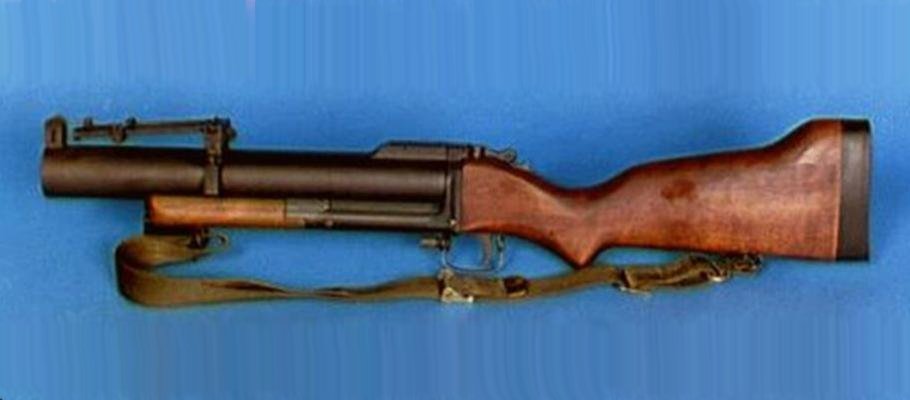
I've been reading a bit today on the history of grenades, mostly during ww1 and ww2 , and comparisons of Alied grenades , vs Axis grenades. The thing I'm curious most about is why stick grenades aren't used anymore for the most part? From all the data I've read over, it seems that the stick style grenades have significantly longer range compared to what is now standard. I do understand the primary german 'potato masher' grenades killed mostly by blast rather than fragmentation , but was improved upon during the end of the war. Just a curious question I haven't found the answer to yet , any help/insight would be helpful. The 40mm grenade projectile, and the RPG. |
|
Bulky and size were probably the main reasons stick grenades aren't used anymore. Whereas the stick allowed the potato masher to be thrown a little further, the allies developed adapters to allow grenades to be launched via rifle if extra range was needed.
Also, the #36 mills bomb and the american "pineapple" had the advantage that you could pull the pin, and the delay didn't activate until the handle was released. The potato masher used a friction wire that activated the timer immediately and was also less reliable. |
|
Quoted: The wooden handles on the German potato mashers were very nasty when they shattered in the blast and sent splinters tearing into soft flesh. That makes sense , however I'd imagine the blast radius on a US grenade/mills bomb would be much more significant. Also , the one interesting thing I noted with the potato masher was how simple the design was , seems like any 3rd world toilet could crank them out by the truck load. |
| IIRC, at the time American youth played an outside game called baseball and did this physical exercise known as throwing a ball all summer long vs. the European youth playing soccer or rugby which did not have a ball throwing component to them. The addition of a handle made it easier to throw a grenade more accurately for Europeans vs. this was an ingrained skill for the 1930's American youth. |
|
Quoted:
I'm guessing the trade off in range is made up for the compact size, mobility and weight? This. Your typical German soldier carried a maximum of about 3 potato mashers, typically just held in place by their uniform belts (as seen in numerous photographs). I don't know if the Germans had any purpose-made pouches for stick grenades. On the other hand, your typical American soldier could carry 4-8 MKII grenades, and I'm pretty sure we did have purpose-made pouches for them (though it seems clipping the spoons to web gear was a popular practice). I'd imagine the same applies to the Brits with the No. 36 Mills Bomb. |
|
Quoted:
Quoted:
Quoted:
I've been reading a bit today on the history of grenades, mostly during ww1 and ww2 , and comparisons of Alied grenades , vs Axis grenades. The thing I'm curious most about is why stick grenades aren't used anymore for the most part? From all the data I've read over, it seems that the stick style grenades have significantly longer range compared to what is now standard. I do understand the primary german 'potato masher' grenades killed mostly by blast rather than fragmentation , but was improved upon during the end of the war. Just a curious question I haven't found the answer to yet , any help/insight would be helpful. Due to the polymer frame, attaching a stick to the traditional GlockNade can be problematic.
they already make these: http://www.radioactive-software.com/images/Guns/11.jpg Haha.. I lost it when I saw this. |
|
Quoted: That's a long stick! Well, from a practical standpoint of the soldier I could imagine: Not only do you have to carry around several 1 pound grenades, now they each have a 12' stick to get in the way, jab you in uncomfortable places and get caught on things. Just a thought.  |
I think as the modern warfare front has changed from the "front lines" being a literal line in the sand to a predominately urban environment, the necessity for a grenade to be thrown any distance has diminished. Not only do we have better weapons for that now, but mostly let's just kick in the door and toss one in 
|
|
Jesus I expect more from Arfcom––-not much but a little more.
The stick grenade is still in use in some Eastern block countries former Yugoslavian republics. The stick grenades are meant as offensive similiar to flashbangs very little shrapnel is generated mostly blast. The reason for the stick were traditional games in germany one of the most popular was throwing a stick into a ring. The baseball grenade was an American design and used a baseball shape and size. Most American grenades were defensive grenades with thick shells that create a lot of shrapnel. There are advantages to both designs the stick grenades can be thrown farther while ball grenades are smaller and easier to carry. Both grenades can be cooked off to short fuse for bunker work or prevent throw back interestingly WW2 german grenades had longer time fuzes 6 or 7 seconds compared to American 5 second fuse. |
|
Quoted: I've been reading a bit today on the history of grenades, mostly during ww1 and ww2 , and comparisons of Alied grenades , vs Axis grenades. The thing I'm curious most about is why stick grenades aren't used anymore for the most part? From all the data I've read over, it seems that the stick style grenades have significantly longer range compared to what is now standard. I do understand the primary german 'potato masher' grenades killed mostly by blast rather than fragmentation , but was improved upon during the end of the war. Just a curious question I haven't found the answer to yet , any help/insight would be helpful. Edit : I know technically glocks have handles on them , making them grenades with handles , but I'm talking more along the lines of potato mashers/RGD33 The idea has merit. But go modular. Modify existing 'nade shells with threaded receptacles on the bottom and two or three sticks could be carry on the user to be used as mission dictates. - my $.02 |
|
Quoted:
Quoted:
I've been reading a bit today on the history of grenades, mostly during ww1 and ww2 , and comparisons of Alied grenades , vs Axis grenades. The thing I'm curious most about is why stick grenades aren't used anymore for the most part? From all the data I've read over, it seems that the stick style grenades have significantly longer range compared to what is now standard. I do understand the primary german 'potato masher' grenades killed mostly by blast rather than fragmentation , but was improved upon during the end of the war. Just a curious question I haven't found the answer to yet , any help/insight would be helpful. Edit : I know technically glocks have handles on them , making them grenades with handles , but I'm talking more along the lines of potato mashers/RGD33 The idea has merit. But go modular. Modify existing 'nade shells with threaded receptacles on the bottom and two or three sticks could be carry on the user to be used as mission dictates. - my $.02 

|

|
Quoted: Quoted: That's a long stick! Well, from a practical standpoint of the soldier I could imagine: Not only do you have to carry around several 1 pound grenades, now they each have a 12' stick to get in the way, jab you in uncomfortable places and get caught on things. Just a thought. Damn shift key is broken.  |
|
Quoted: Quoted: Quoted: I've been reading a bit today on the history of grenades, mostly during ww1 and ww2 , and comparisons of Alied grenades , vs Axis grenades. The thing I'm curious most about is why stick grenades aren't used anymore for the most part? From all the data I've read over, it seems that the stick style grenades have significantly longer range compared to what is now standard. I do understand the primary german 'potato masher' grenades killed mostly by blast rather than fragmentation , but was improved upon during the end of the war. Just a curious question I haven't found the answer to yet , any help/insight would be helpful. Due to the polymer frame, attaching a stick to the traditional GlockNade can be problematic. they already make these: http://www.radioactive-software.com/images/Guns/11.jpg  |