


Armory Sponsor


Posted: 2/6/2011 11:38:07 AM EDT
|
I picked up a good deal on a complete loading outfit from an older gentleman on a local classified rag based around a RCBS Rock Chucker single stage press. It came with dies for .38/.357, .222 Rem, .22-250, .308 WIN, .243 WIN, and a few others I don't remember. Also, Lyman and Spear manuals with all of his notes and loads going back a long time. I saw a kit at MidwayUSA to convert the single stage to a turret press. Is this worth looking in to? My wife and I have 0 reloading experience. We will start reloading with .44 rem mag, as that is what she shoots the most. |
|
If you have zero experience, use the press as is for a while. Does the conversion you saw convert it to a turret or a progressive? If it is the RCBS piggyback unit, I have heard that it doesn't work well.
eta: Using his notes might help, but using his loads is bad juju....work the loads up on your own. |
Start with the Rockchucker as is. Learn the reloading process. It's one of the best single stage presses out there. You will never out grow it. Just starting out, you will keep finding tools you will want to add to your setup as you go. Keep things simple to start. 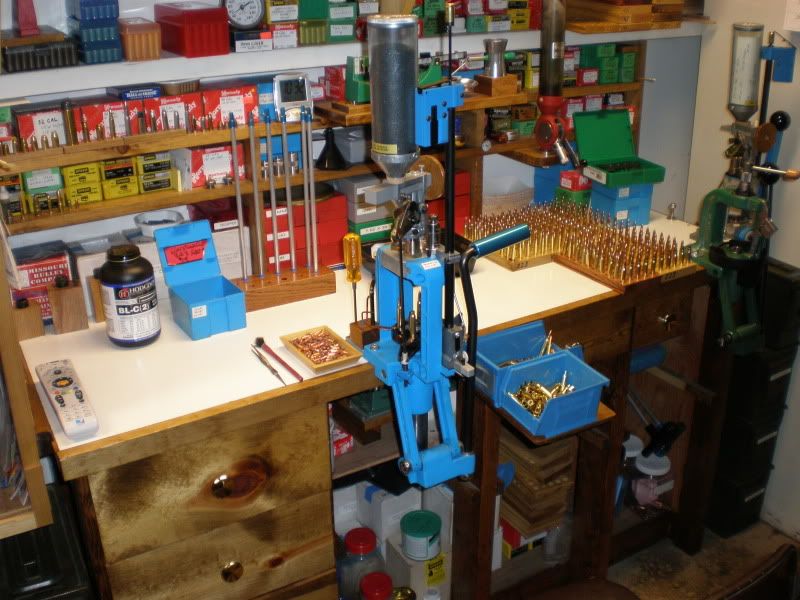
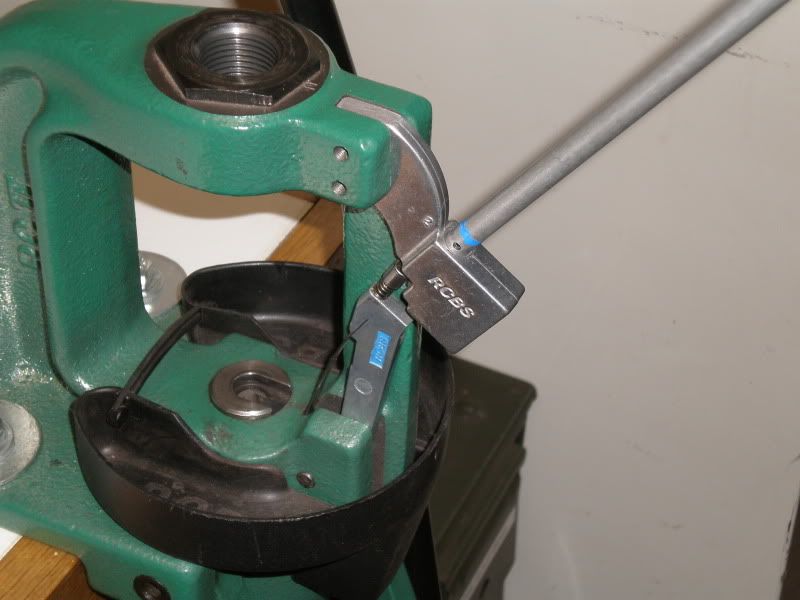
Once you are experienced, then go with a press that will load faster. A Dillon 550 is a good progressive. See the Rockchucker over on the right side of my bench? Still use it all the time. In this pic it has a bullet puller installed, in case I need it. |
| just for the record, i load 44 mag with a lee pro 1000. it is a progressive machine and it works perfectly and spits ammo out very consistently. they are cheap too about 140.00 for a complete set up. very easy to learn to use. i purchased another machine just for 45 acp. i plan on buying more machines for other calibers instead of changing the dies and settings. i figure at 140.00 i can always sell them for $100.00 each someday. the blue presses are not bad, i have one of those too. |
|
Quoted:
just for the record, i load 44 mag with a lee pro 1000. it is a progressive machine and it works perfectly and spits ammo out very consistently. they are cheap too about 140.00 for a complete set up. very easy to learn to use. i purchased another machine just for 45 acp. i plan on buying more machines for other calibers instead of changing the dies and settings. i figure at 140.00 i can always sell them for $100.00 each someday. the blue presses are not bad, i have one of those too. Understatement of the year 
|
|
Ok so blue brainwashing asside....
The RCBS You got is a great press. The fact that you and your wife are both interested in reloading is also good. I reload with my GF and now the problem is that she doesn't let me do much, except run the progressive. It still scares her, but not for much longer I fear. Add a progressive when you are better and more experienced then you have a press for both of you to use. Once you get the hang of what you are doing find the presses, tools and upgrades that are best for you and for your wife. Brainwashing asside Dillon makes good equipent but it is not for everyone. I personally only have one piece of blue equipment on my bench, a super swager. So, Learn on the RCBS and hang on to it. You will discover a hundred uses for a singel stage even when running multiple progressive presses. |
|
Thanks for all of the advice. I have discovered two trains of thought on starting to reload - start with a single stage or a turret (not progressive) so that you learn the process well, then make the progressive leap OR jump right in to progressive because you might as well learn on what will get the most use (or something to that effect). I thought that starting with the single stage made more sense so I will concentrate more on learning what happens to the developing cartridge vice figuring out the timing on a progressive where I would have no idea what is actually going on. The guy we bought the unit from agrees that this is the way to start. He said he was selling because he believes he has more ammo at home than he can possibly shoot before he dies (67 y.o.) and he doesn't shoot as much anymore anyway. |
|
Welcome to reloading.
IMHO............the RCBS Rockchucker is a good press. Congratulations. If you haven't already done so...........please READ UP about your new hobby. Reading and following directions is paramount to SAFETY. Along that line............ Most will say to get a copy of "The ABC of RELOADING." For ME..............my first reading began with the SPEER RELOADING MANUAL #10 (it's been updated many times). I chose it because, that particular manual had detailed instructions for a beginner wanting to start re-loading. I read it from cover to cover (OK.......I did skip over the load data for the cartridges that I didn't own). There are many other good books and reloading manuals to choose from. I only mention these for a "start." Follow the recomendations and data found in your reloading manual. Experimentation can come later. Then...........know that different reloading manuals can/will vary some with their data. That DOES NOT ALWAYS mean that something is WRONG with one book or the other. The book publishers and writers just have a "different experience/opinion" with their particular combinations of test components. But.........MISTAKES can/could happen. So, some folks like to check with multiple data sources. 
Last advice.............. GENERAL RULES
Only reload ammunition when you can give your full and undivided attention. Allow plenty of time so you do not rush. Avoid distractions such as television, visitors, or any other factor that negatively affects your concentration. NEVER attempt to to reload while under the influence of alcohol or medications that affect concentration or judgment. Thoroughly read and understand all reloading equipment instructions before using that equipment. All manufacturers offer technical support. If you do not understand the written instructions, contact the manufacture for clarification before proceeding. Wear approved safety glasses during all reloading operations, and while shooting. Make safety glasses available to any approved visitors to your loading area. Make certain that all equipment is firmly anchored to the work surface during use. A heavy loading press falling on your foot can cause serious injury. Avoid using clamps to attach heavy tools to the bench. Follow the tool's manufacturer's instructions for safely mounting the tool. Observe "good housekeeping" in the reloading area. See that all components and equipment has a designated place. Clean up spills promptly. Limit components on the bench to only those required for the immediate project. Keep accurate and legible records. Label everything so there is no confusion regarding the ammo or components. A log book is a great way to insure that you always know the load information for each cartridge. Store and keep powder and primers away from sources of heat, open flame, and electricity, and out of the reach of children. This also means NO SMOKING in the loading area. Keep powder and primers in their original, factory-marked containers. Scrap any components that lose their identification information. If you must remove any components from their factory containers during loading, return them to their proper containers as soon as the loading sessions ends. Place a "sticky-note" on the powder measure that identifies the propellant being used. Remove the note promptly when the propellant is returned to its original factory container. Keep no more than one container of propellant on the bench at one time. Store powder away from the bench to avoid mistakes or mixing. Carefully read and follow published reloading data. Verify that your loading manual is open to the proper page for the cartridge you are loading. Don't play "inventor." Never attempt to reload without immediate access to a reliable reloading scale. Scales built for other purposes, such as cooking or postage, are unacceptable. Check the "zero" of the scale before each powder weighing session. Once a month, remove dust from the scale and calibrate. Calibration weight sets are available from RCBS and other manufacturers. Check both zero and calibration if the scale is jarred or moved from its normal location. Avoid locating mechanical scale within three (3) feet (one meter) of fluorescent lights. The electromagnetic fields generated by such lights can cause weighing errors. Use extra care with primer tubes. Handle loaded tubes with care; a dropped tube can explode. Do not store primers in primer tubes between sessions. Check monthly for build-up of residue inside the tubes and, if detected, clean the tube under water with a narrow bottle brush if needed. Dry washed tubes thoroughly before returning them to service. Never apply oil to any primer tube; this will accelerate build-up of residue. Never attempt to use a damaged primer tube, or one that is not intended for your make and model of reloading press/priming apparatus. Tube fit in the tool is important to safe loading; make certain you have the right tube matched with the right tool. When filling tubes, never use excessive pressure. If unusual force is detected, cease loading immediately and correct the problem before proceeding. _____________________________________________________________________ Note your reloading rules.......... LOAD DATA IMPORTANT NOTE: Reloading data published by SPEER are for SPEER bullets. Many of our bullets are of unique construction; there is no such thing as "generic loading data" any more. Other bullet makes may produce significantly different pressures and velocities. We make no warranty that our published loads are safe with another make of bullet. You, the reloader, bear the ultimate responsibility for knowing your firearm, loading equipment, and techniques. 1. Always use loading data published by a reputable component manufacturer. Your brother-in-law is a nice guy but, statistically, he's not likely to be a professional ballistician. 2. Never start with a maximum load. Always begin with the starting load and work toward the maximum in increments, testing at each step. This provides you with a safety margin in case of some undiscovered change in the components. Component manufacturers strive to maintain lot-to-lot uniformity, but some variance may occur over time. 3. Always use the latest data for your cartridge. Over long periods of time. components may change. Using the latest recommendation insures that your loads reflect current technology and standards. 4. If new to the art and practice of reloading, use only moderate loads until you gain experience with the cartridge, your firearm, and your loading equipment. 5. Leave experimentation to the professionals. Published data is FACT. It is not a "jumping-off point" for wild experimentation. 6. Never mix propellants. Blending propellants is extremely dangerous and should never be done. 7. Always reduce loads when changing components. Sometimes, you cannot match the exact combination of components that the component company used when developing the load. Drop back to the starting load to build a safe margin for any changes. Taken from Speer’s web site. ________________________________________________________________ LEAD EXPOSURE The metallic element lead can, at high exposure levels, result in birth defects, reproductive harm, or other serious medical problems. Lead is present in primers and most bullets, and the reloader may be exposed to lead when handling reloading components (including fired cases), shooting, or cleaning firearms or reloading equipment. Simple guidelines will limit your exposure and result in your hobby remaining a safe one. Observe good personal hygiene. Wash hands thoroughly with soap as soon as you finish handling ammunition, shooting, or cleaning firearms. Simple hand washing is the best step to minimize lead exposure. Never eat or drink while reloading. Failing to follow this simple rule means that lead residue on your hands goes directly into your body. Keep your hands away from your nose and mouth while loading. If you smoke, wash up thoroughly before taking a smoke break, and take that break well away from powders and primers. Avoid breathing dust in the loading area. Have your loading room properly ventilated. If you use dry case-cleaning media, wear a dust mask when charging and emptying your case cleaner. The media can become charged with lead from fired cases. Clean the reloading area regularly. This prevents the buildup of dust that may contain lead. Wipe horizontal surfaces with a damp cloth. Damp mop hard-surface floors often. Avoid using carpeting in areas identified as loading areas. In addition to holding residue, carpet can induce static electricity problems that constitute a hazard when handling primers. Aloha, Mark PS............sorry, I got sidetracked. As for the add on to the RCBS. IMHO..........learn to use what you got FIRST. |
Armory Sponsor