


Armory Sponsor

Close Inspection of Coopers Scout Rifle Definition (Page 1 of 2)
Posted: 4/21/2011 12:10:48 AM EDT
[Last Edit: Enforcer][Edited]
Posted this on scoutrifle.org thought I might post here for you guys consideration.

The dogma and misinterpretation surrounding the definition of the Scout rifle has bothered me for quite some time. So, I felt I needed to give my thoughts and observations regarding the scout concept and how I interpret Coopers beloved rifle. But first, let me toss a few comments out on the "guru" himself. Jeff Cooper spent his life developing shooters into marksmen. Whether it was a pistol or rifle, Mr. Cooper was dedicated to improving the craft and those who practice it. The "general purpose" or "practical rifle" was but one aspect and he defined it as this: "A general purpose rifle is a conveniently portable, individually operated firearm, capable of striking a single decisive blow, on a live target of up to 200 kilos in weight, at any distance at which the operator can shoot with the precision necessary to place a shot in a vital area of the target." Col. Jeff Cooper " To Ride, Shoot Straight, and Speak the Truth" Mr. Cooper was not interested in developing your skills for any narrow purpose such as long range, target, tactical, varmint, etc. His efforts were concentrated on developing shooters who could cleanly handle themselves in "all" situations. This definition was the start of a quest to develop the ultimate practical rifle, and the "scout rifle" was in his mind and others, the perfection of the concept. I never knew or met Mr. Cooper, so I can only summize his intentions when it appeared his dogma regarding the "scout definition" would violate the principle(s) of his "general purpose rifle" concept. I believe the key lies with Coopers very definition of the scout rifle. Cooper, as we all know was a wordsmith of which few were equal; his definition contains both broad and specifics, which would allow the originator to narrowly define and the practitioner to build a rifle suitable for his/her needs. He was brilliant. In practice, he was generally forgiving and gave legitimacy to various forms of the scout rifle. In word, he kept to his dogma, I suppose out of fear the concept would loose relevance; or out of a need to keep the concept as pure as possible. Either way, it has allowed the scout concept to be discovered and applied by future generations of "riflemen". Again, not sure, and just an observation on my part. Now, lets move on to the "Scout Rifle" definition and my observations. Weight-sighted and slung: 3 kilograms (6.6 lb). This has been set as the ideal weight but the maximum has been stated as being 3.5 kilograms (7.7 lb). Surprisingly there is considerable wiggle room in the weight of the rifle. Here the words "set" "ideal" and "stated" are used. The word "set" denotes finality and "ideal" relates to perfection or "to attain". It means the rifle "can" weigh less or it can weigh more. But, the "ideal weight" will always be 6.6 lb; it is set. In order to keep the weight from getting to far from the ideal he "states" a maximum weight of 7.7 lb. A statement has no finality. It is merely what a person "says". A statement can be changed for further clarification; and Cooper did just that concerning the Steyr Scout. Essentially we really do not have a maximum weight by Coopers own definition. I believe this was Coopers way of keeping some level of control so weight would not stray to far from "ideal". Brilliant. So, what we have is a "ideal weight range" of between 6.6 lb - 7.7 lb that allows the rifle to weigh a little more or less outside the "ideal range". Length: one meter (39 inches) This is the only specification of the Scout concept or definition that is set. Not much to discuss here. I find it odd that the length is the spec few give much regard to. Most agree it shouldn't be longer, but if it is a little shorter I see no purists shouting "it ain't a scout". I figure it's because it's harder to make "length" rhyme with "fate". Nominal barrel length: 0.48 meter (19 inches) Cooper uses "nominal" twice in his definition. Nominal is quite possibly the most ambiguous word in the english language. It can be minimal, small, figurative, less than, meaningless, inconsequential, etc. Examples in use would include "The club has a nominal fee for entry"; "The candidate for office is a nominal choice"; "The queen of England is the nominal head of state". You notice Cooper did not use the word "ideal" here. That is because barrel length actually effects performance. I am sure barrel length was a hotly debated topic and I assume that most in the conference followed the 1980's conventional wisdom that barrels should be no less than 20" in length. Cooper was less dogmatic about barrel length; but was more concerned with practical results. I personally believe 19" was a compromise and his choice of "nominal" allows the barrel to be a little shorter or longer than 19" and most cases to err towards longer. Currently we know that shorter barrels do not effect practical results in a defensive rifle. So Cooper was yet brilliant again. 19" is "nominal" Sighting system: Typically a forward and low mounted (ahead of the action opening) long eye relief telescope of between 2x and 3x. Reserve iron sights desirable but not necessary. Iron sights of the ghost ring type, without a scope also qualify, as does a low powered conventional position scope. I am going suggest you read the above carefully. There are a lot of options here. As I understand it, the rifle can have a forward or conventionally mounted scope with or without iron sights. If you choose to have reserve iron sights there is no specification as to what type; you choose. If you do not want a scope on your scout it will qualify for a scout if it uses ghost ring aperture sights. If you use a telescope it should be of low power. Forward mounted scopes typically being 2x to 3x(fixed assumed); traditional mounted scopes of low power(low power is generally considered 1x to 4x fixed) Notice there is no mention of variable in the definition. In the 1980's low powered variables were few and far between and Cooper considered a variable scope, because of it's high end magnification, a liability for dangerous game and self defense. But things have changed. Low powered variables are pouring into the market as well as red dot, illuminated reticle and holographic sights. By Coopers open ended definition and his use of the word "typically" any of these sight options and in various combinations would qualify on a scout as long as the magnification does not exceed the accepted low range of 1x-4x(this is assumed). Cooper again was brilliant in his choice of words because he knew technology would change and was seeing it evolve shortly before his death. Action: Magazine fed bolt action. Detachable box magazine and or stripper clip charging is desirable but not necessary Notice, short or long action is not specified; we assume it should be a short action because Cooper preferred them and it was easier to make ideal weight. Detachable box mag's and striper clips are not required, nor is a magazine cut off. We make too many assumptions regarding action. The only requirement is that it be a magazine fed bolt action. Sling: Fast loop-up type, ie Ching or CW style. Many assumptions made here. Just because Cooper gave 2 examples does not mean these are the only choices for a quick loop up style sling. It also doesn't mean a scout rifle has to have 3 sling swivels. A Ching requires 3 but a CW uses 2; one at the forend and one just in front of the magazine well. I personally can think of at least 5 to 6 more "quick loop" style slings that I like much better than the the Ching or CW; and they only require 2 sling mounts. My personal favorites are the Allen slide loop nylon sling and the Hunt sling made of leather. In my opinion they are faster; easily adjustable and won't hang up on brush when carrying the rifle off the shoulder. These two slings were not available when Cooper put the conference together; he just preferred the Ching and CW. Only requirement here is a fast loop style sling and enough sling swivels to make it work. Caliber: Nominally .308 Winchester(7.62x51). Calibers such as 7mm-08 Remington(7x51mm) or .243 Winchester(6x51mm) being considered for frail individuals or where "military" calibers are proscribed There's that word "nominally" again. Cooper preached the .308 and short action because he felt it was the best overall combination to achieve scout rifle specs and effectiveness. But the definition does not require it. I believe in this case Cooper wanted the smallest most effective family of medium range cartridges available. Nominally here refers to the .308 family. You ask how can you say that? because just after".308 Winchester" he gives two examples in the cartridge family that express "range". He also uses the phrase "such as" which is the equivalent to "for example". This leaves the cartridges below .243x51 out and those cartridges above it as viable alternatives for the scout rifle. This would include long action medium range cartridges as well. Cooper knew the .308; although widely distributed thru out the world is not available every where. Cooper couldn't tell a Swedish or Norwegian citizen that they really can't have a scout rifle because the most plentiful ammo available is either 6.5x55 or 7.62x54. I don't believe we have that right either. So, from Coopers designed choice of ambiguous language, cartridges greater than .243 Win and up are good to go. Even Cooper's own rhetoric did not completely limit the scout to only three cartridges; he preached it in order to keep the purity of the concept; but practically, he changed it when it suited him. I think "Lion Scout" comes to mind. Built in bipod: desirable but not mandatory Enough said, I'll move on. Accuracy: should be capable of shooting into 2 minutes of angle or less(4") at 200 yards/meters (3 shot groups) Accuracy for the scout is a practical issue and does not require sub moa. Although, most of us desire a rifle more capable of 2 moa just for bragging rights alone. I just want to remind everyone that tack driving is not required of a scout rifle. Couple of other features or lack of them that are not required of a scout rifle. 1. Synthetic stock; you mean it's not in there! yup. Cooper preferred them but it's not required. 2. Threaded barrel and flashhider; yes Virginia, there is a santa clause; and there will be a sound suppressor under the tree for your GSR. Cooper had no use for any of them; but by definition they can be included. 3. Magazine cut-off; nope still not there. 4. The list could get long so I'll stop. I hope you guys see my point. We tend to be far more dogmatic than we should regarding what does or does not make a scout rifle. I find it interesting that Cooper preached a narrow scout definition while alive; but chose to leave the characteristics of the scout as a concept. I say again, the man was brilliant. |

|
Excellent write up! Thanks for taking the time to put that together.
Since the Ruger GSR has come out, I have seen many people trying to learn about the scout rifle (including myself). This post covers the topic very well. On the various forums, I have seem a lot of "if it doesn't meet requirement X, it is not a scout. Peroid. End of story." Hopefully, this will show that there is some flexibility in the scout rifle concept. I give this post 5 thumbs up (or thumbs down if you're a Roman citizen) |
"Hell must be like... reminiscing about the good old days when we wished we were dead."
|
Enforcer, you need to go back and edit your weights in the paragraph (lbs for kgs).
Here's a 1891 Mosin Nagant produced by Tula built in 1904 that was modified into a scout rifle back in the early 90s. Barrel cut to 18.5" and ported, orginally had a Bushnell 3x Phantom scope on it but it didn't hold up one afternoon when we had 1000 rds to get rid of. So now it has a cheap NCStar red/green dot til I find something else. Stock is still wood and chambered for the 7.62x54R, still takes stripper clips. 
CD ETA: got this rifle cheap. With the Bushnell scope for $40, another $40 for the NCStar for a total of around $80ish. |
De Oppresso Liber
Iraq: 91,03,04,05,06,08,09'
Afganistan: 09,10,11'
Iraq: 91,03,04,05,06,08,09'
Afganistan: 09,10,11'
|
Originally Posted By Combat_Diver:
Enforcer, you need to go back and edit your weights in the paragraph (lbs for kgs). Here's a 1891 Mosin Nagant produced by Tula built in 1904 that was modified into a scout rifle back in the early 90s. Barrel cut to 18.5" and ported, orginally had a Bushnell 3x Phantom scope on it but it didn't hold up one afternoon when we had 1000 rds to get rid of. So now it has a cheap NCStar red/green dot til I find something else. Stock is still wood and chambered for the 7.62x54R, still takes stripper clips. http://www.hunt101.com/data/500/medium/1904_NM_full_view.jpg CD fixed and thank you, I bet I read that several dozen times and never caught the typo. Thanks for posting the pic; it's a perfect example of what the spirit of the scout concept is all about. |

|
Interesting...I don't get bent out of shape or bothered by people's opinions of guns or brands for that matter. There's a lot of blind/unfounded loyalty out there. That said the scout rifle concept IMHO would probably shine out east here for a hunting rifle where the distances you take shots at in the woods are less than 100M (usually 10-50M at most unless you're shooting across a field).
|
|
Thought this might be a good read. It's the current May issue cover story on the Ruger GSR. Very well done. Falls in line with my first post.
American Rifleman |

|
Originally Posted By DeMarcus:
Excellent write up! Thanks for taking the time to put that together. Since the Ruger GSR has come out, I have seen many people trying to learn about the scout rifle (including myself). This post covers the topic very well. On the various forums, I have seem a lot of "if it doesn't meet requirement X, it is not a scout. Peroid. End of story." Hopefully, this will show that there is some flexibility in the scout rifle concept. I give this post 5 thumbs up (or down thumbs down if you're a Roman citizen) Whenever I see that attitude I always wonder if the worshippers of the dead prophet realize that the German Wehrmacht issued over 100,000 'Scout' type rifles with forward mounted long eyerelief 1.5x scopes starting in 1939. They saw heavy combat throughout the war. So the concept long predates the prophet......... |
What would Boxer do?
A dead whale or a stove boat.
A dead whale or a stove boat.

|
I read the article in the latest "American Rifleman" on the "new" Ruger Scout rifle.
It dawned on me that I already have a "Scout Rifle". It's called an Enfield No.5 "Jungle Carbine", re- manufactured by Gibbs Rifle Co. It cost me about $250. Not $995 like the Ruger. "The rifle to own if you can only own ONE rifle".........................................NOT!!!!!! IMO, it's an obsolete concept and I mean no disrespect to "The Colonel". 
It may be a handy option if you don't have anything else, but I'll just stick with my light barreled 20" AR15, thank you very much. You see, if you can only own one rifle, then IMO, it needs to be a rifle that's enjoyable to shoot so you will actually practice with it (AND enjoy practicing with it) and it needs to be easy on the budget so you can afford to shoot it. With the cost of 30 cal factory ammo and even 30 cal reloading components stretching towards the moon these days, that pretty much rules out that whole class of firearms. But from where I stand, the past ten years (and more) has been characterized by firearms manufacturers reinventing the wheel, over and over and over. And so far, they seem to be getting away with it because gun owners are so dumb they'll just keep on buying anything they're told they "have" to have. 
|
|
Originally Posted By Coolio:
IMO, it's an obsolete concept and I mean no disrespect to "The Colonel".
<SNIP> But from where I stand, the past ten years (and more) has been characterized by firearms manufacturers reinventing the wheel, over and over and over. And so far, they seem to be getting away with it because gun owners are so dumb they'll just keep on buying anything they're told they "have" to have.
While you meant no disrepect Cooper, where you trying to disrespect those of us who like and/or own the GSR? |
|
Originally Posted By Dissident:
Originally Posted By Coolio:
IMO, it's an obsolete concept and I mean no disrespect to "The Colonel".
<SNIP> But from where I stand, the past ten years (and more) has been characterized by firearms manufacturers reinventing the wheel, over and over and over. And so far, they seem to be getting away with it because gun owners are so dumb they'll just keep on buying anything they're told they "have" to have.
While you meant no disrepect Cooper, where you trying to disrespect those of us who like and/or own the GSR? I too see no point in the GSR. I can see the merit of Cooper's idea but Ruger failed to execute properly. None of us one just one gun and if we ever needed just one gun, a bolt action .30cal would rarely fit the bill. Ruger should have used a fiberglass stock, full length picatinny rail over the receiver as well as up front for multiple mounting options, readily available mags, three swivel studs so you can use the proper sling, ghost ring night sights, and a not so gay flash hider. Then they could justify the 1k price tag. |
|
OP, I enjoyed your post, you put some time and effort into it.
For myself I never bought into Cooper or any of the other gun writers. I have a brain and can form my on thoughts as to what works for me and what doesnt. (no offense meant) I also realize terms like"scout" "tactical" "varmint" etc., are designed to sell more guns. I have a few "scout" rifles I guess, you know, short, lite weight, easy to use. One is an old Rossi Puma SRC in 357 mag. With that 16 inch barrel on a lever action, it is one short, handy gun. My other one is an old Glenfield 30-30 that belonged to my uncle. Again, it is short, lite weight and easy to use. I think my Oly Ar with 16 inch barrel and 4-position stock is short, easy to use. The weight of a rifle never bothered me. I am a decent size guy I guess, 6-2 an 260. I spent a week carrying my Eddystone model 1917 all over Colorado on an Elk hunt. My dad and brother thought I was nuts, they said the gun was way too heavy. I never noticed, thats what a sling is made for. That Ruger is a good looking rifle but costs way too much. |
|
Originally Posted By USCG_CPO:
OP, I enjoyed your post, you put some time and effort into it. For myself I never bought into Cooper or any of the other gun writers. I have a brain and can form my on thoughts as to what works for me and what doesnt. (no offense meant) I also realize terms like"scout" "tactical" "varmint" etc., are designed to sell more guns. I have a few "scout" rifles I guess, you know, short, lite weight, easy to use. One is an old Rossi Puma SRC in 357 mag. With that 16 inch barrel on a lever action, it is one short, handy gun. My other one is an old Glenfield 30-30 that belonged to my uncle. Again, it is short, lite weight and easy to use. I think my Oly Ar with 16 inch barrel and 4-position stock is short, easy to use. The weight of a rifle never bothered me. I am a decent size guy I guess, 6-2 an 260. I spent a week carrying my Eddystone model 1917 all over Colorado on an Elk hunt. My dad and brother thought I was nuts, they said the gun was way too heavy. I never noticed, thats what a sling is made for. That Ruger is a good looking rifle but costs way too much. Thank you for the kindly response; The scout concept utilizing the forward optic is not for everyone; however, the concept is one that will will work for most if they are open to it. The scout is merely a "general purpose rifle" that has been refined. I believe I have laid out that potentially, it can be modified to suit most any rifleman if they care to explore it. |
|
Ya know, I look at this GSR and I cannot help but want one. For a while I couldn't figure out why. I have over 30 rifles and the idea that I actually "need" another one just isn't true. I am only vaguely familiar with Jeff Cooper and I have learned a lot more about his "scout" concept since this rifle was released than I ever knew before that time, so I can't say that has anything to do with it - although I certainly found what you wrote here to be very interesting.
For me, I guess what it comes down to is that it looks like it would just be a blast to shoot and own. A (relatively) short barrel, bolt-action .308 set up for a long eye-relief scope with a threaded barrel? I just like the idea regardless of whether it meets one guy's definition of a certain type of rifle or not. |
Nothing to see here.. move along..
|
Originally Posted By bradpierson26:
Originally Posted By Dissident:
Originally Posted By Coolio:
IMO, it's an obsolete concept and I mean no disrespect to "The Colonel".
<SNIP> But from where I stand, the past ten years (and more) has been characterized by firearms manufacturers reinventing the wheel, over and over and over. And so far, they seem to be getting away with it because gun owners are so dumb they'll just keep on buying anything they're told they "have" to have.
While you meant no disrepect Cooper, where you trying to disrespect those of us who like and/or own the GSR? I too see no point in the GSR. I can see the merit of Cooper's idea but Ruger failed to execute properly. None of us one just one gun and if we ever needed just one gun, a bolt action .30cal would rarely fit the bill. Ruger should have used a fiberglass stock, full length picatinny rail over the receiver as well as up front for multiple mounting options, readily available mags, three swivel studs so you can use the proper sling, ghost ring night sights, and a not so gay flash hider. Then they could justify the 1k price tag. To begin, I should state that I don't own a Ruger Gunsite Scout Rifle, nor do I ever plan on owning one. For a "one-gun" purpose there's always going to be a lot of debate, but I think it would be hard to objectively view a light, short, handy .30 cal bolt action as being a strong contender for almost any need. Hunting, home defence, plinking, etc...it can be used effectively in most any circumstance. Other choices will always be better for a given role, but as a jack of all trades it remains quite respectable. As far as Ruger's offering goes, I'd agree that a synthetic stock makes more sense. A full-length picatinny rail might be useful for some, but the rifle does come with scope mounting points on the receiver, and a set of rings. There's really nothing gained by a longer rail, other than additional cost and weight. The magazines are the single most commonly-available bolt action magazine type available; everyone who complains that they want SR25 or M1A mags really have no idea what they're talking about (hint: receiver compatability, magazine size, hunting capacity issues, loaded rifle weight, and aftermarket magazine feeding reliability issues). A third swivel stud would be nice, but can be installed at home for about $10 and ten minutes of time with a drill. While it would be great to include night sights, realistically that would add a solid $75-125 onto the rifle's price (that people are already complaining about). And the flash hider can be removed in two minutes if you don't like it. All in all, Ruger's put together a damn good package, especially since your estimated $1000 price tag is off by about 25%. There are plenty of examples on Gunbroker right now listed at $750, and it's not unreasonable to expect that even better deals are possible if you find one used, or know of a good dealer. In the final estimation, I'd still prefer to have a Steyr Scout any day of the week...but given the fact that they run over twice that of the Ruger, it's good to see another option out there on the market. |
|
Originally Posted By Enforcer: Posted this on scoutrifle.org thought I might post here for you guys consideration. –– snip –– Sighting system: Typically a forward and low mounted (ahead of the action opening) long eye relief telescope of between 2x and 3x. Reserve iron sights desirable but not necessary. Iron sights of the ghost ring type, without a scope also qualify, as does a low powered conventional position scope. I am going suggest you read the above carefully. There are a lot of options here. As I understand it, the rifle can have a forward or conventionally mounted scope with or without iron sights. If you choose to have reserve iron sights there is no specification as to what type; you choose. If you do not want a scope on your scout it will qualify for a scout if it uses ghost ring aperture sights. If you use a telescope it should be of low power. Forward mounted scopes typically being 2x to 3x(fixed assumed); traditional mounted scopes of low power(low power is generally considered 1x to 4x fixed). –– snip –– I hope you guys see my point. We tend to be far more dogmatic than we should regarding what does or does not make a scout rifle. I find it interesting that Cooper preached a narrow scout definition while alive; but chose to leave the characteristics of the scout as a concept. I say again, the man was brilliant. I strongly agree that the Scout Rifle committee (chairman, Colonel Cooper) never mandated a forward mounted scope. Early in the analysis, it was concluded that a detachable box magazine would always make the action to heavy. To be able to recharge the magazine with the weapon at the ready, it was thought that the forward mounted scope would be required (the stripper clip). Making allowance for this operation would add to the benefit of keeping both eyes open and down range on the target. Indulge me for a moment if we roll back to a time before Coopers Scout rifle concept was codified. Seldom mentioned is that when Col. Cooper formed the Southwest Pistol League, it was primarily as a research opportunity to identify what works with the fighting pistol. Equipment, technique, and expectations were all scrutinized. Years later, Col. Cooper and associates would be conducting training for all willing participants at Gunsite. Col. Cooper became weary of the trends in rifle craft in the 70's and 80's. Specifically, persons were arriving with heavy-barreled, magnum chambered rifles topped off with "moon scopes". This trend would be weighed against the classic Col. Cooper consideration: "What is it for?" ...(in reference to any object)... To wit, Colonel Cooper knew that he had to define the type of rifle which would be suitable for his course of instruction and appropriate for a man going to field. This was weighed against the trend of persons arriving for his courses with magnum, bench rest type rifles. Further, what training offered would equip the individual rifleman? If one is not training a rifle squad, what would one man afield with a rifle be doing? The answer to these questions pointed to the scout, and the role of the scout in times of war is also emulated in Col Coopers writing. Lastly, the scout in peace time is typified by the man patrolling lands or hunting. So, in addition to the conventionally mounted scope, the detachable box magazine is not dis-allowed, either. There is a member in the AR Variants forum who re-profiled the barrel on his AR-10 carbine and his rifle weighs 7.8 pounds without the optic. His optic is in a Larue mount with the return to zero feature. In this case, I think his weapon makes weight and feature the ability to mount the optic when observing targets from cover. Where it deviates from the scout expectations, it offers a broader field of options that those offered by the "budget scouts". I did get to meet Col. Cooper on two occasions. At the time, I was a mere high school student and I did not rate the courtesy or interest which he paid to me. He was a resolute man, but he was not dogmatic. If someone could offer an informed argument to the topic at hand, he would most often consider even an opposing view. Well appointed, purpose built rifles need not be "scouts" to be noteworthy. |



|
Originally Posted By ISUSteve:
Why a bolt? At the very least, a lever action. In fact, a lot of lever actions are close to fitting the major part of requirements. My guess is to keep it simple by having less moving parts that can go wrong, or because a lever action lacks the ability to "force feed" a slightly oversized case into the chamber. I base my case feeding argument on the basis that it is recommended that reloaded rounds for a lever action or semi-auto be full length resized rather than only neck resized. |

I still don't get the concept. A low capacity, slow firing rifle with a LER scope seems  ; If the whole point of the scope being mounted forward of the action was to make it faster to reload (from the top), then why not just use detachable mags and a normal eye relief scope? ; If the whole point of the scope being mounted forward of the action was to make it faster to reload (from the top), then why not just use detachable mags and a normal eye relief scope?
I read the article in American Riflemen, and it seems like Col. Cooper's frustration at "his" concept not catching on is understandable. Did he never consider the AR15 or AR10? The AR series is lightweight, fast to reload, can take game or put down human threats, and take any optic you desire. It seems like an AR in a larger than 5.56 caliber would be the one rifle for everything (hunting and self defense). Of course a bolt action of limited capacity is legal in more places, but if we're talking about when SHTF, an AR is superior to just about any rifle, IMO. I'll take an M4 clone with a red dot for my "scout rifle", but to each their own. |
"I was also drunk, crazy and heavily armed at all times.
People trembled and cursed when I came into a public room and started screaming in German."
People trembled and cursed when I came into a public room and started screaming in German."
|
Originally Posted By Heartbreaker1373:
I still don't get the concept. A low capacity, slow firing rifle with a LER scope seems ; If the whole point of the scope being mounted forward of the action was to make it faster to reload (from the top), then why not just use detachable mags and a normal eye relief scope?
I read the article in American Riflemen, and it seems like Col. Cooper's frustration at "his" concept not catching on is understandable. Did he never consider the AR15 or AR10? The AR series is lightweight, fast to reload, can take game or put down human threats, and take any optic you desire. It seems like an AR in a larger than 5.56 caliber would be the one rifle for everything (hunting and self defense). Of course a bolt action of limited capacity is legal in more places, but if we're talking about when SHTF, an AR is superior to just about any rifle, IMO. I'll take an M4 clone with a red dot for my "scout rifle", but to each their own. The 5.56 AR was extant, but rather uncommon in civilian hands during most of the Scout Rifle's developmental phase, which spanned decades, and which incorporated a number of varying prototypes. Some of these preliminary models did better than others as a General Purpose rifle. 7.62 NATO ARs were extremely uncommon, to say the least. Recall also that the flat-top AR is relatively new, the carry-handle version being what Cooper had to work with for much of the time. The original version, with the then-common 4X scope mounted was far different sighting and using than the modern versions, with no/low mag red-dots and holo devices mounted on a flat rail with BUIS. All this being the case, and with the 5.56 round being entirely unsuitable for hunting dangerous game in the 200KG category at any but the shortest of ranges, the existing models of the AR were not given much consideration. If a 7.62 NATO flat-top AR had been available, particularly with the complimentary modern sighting options now available, it is possible he might have done some developmental work with it. What you are missing concerning the Scout Rifle concept is the vastly increased situational awareness, and speed of handling/use that a forward-mounted, Low/No power optic gives to the user. Our troops in the field have rediscovered this principle, so Cooper's theories in this regard can be said to have been vindicated. |
"The M1 Rifle is the greatest battle implement ever devised." General George S. Patton Jr.,US Army
|
Originally Posted By Heartbreaker1373:
I still don't get the concept. A low capacity, slow firing rifle with a LER scope seems ; If the whole point of the scope being mounted forward of the action was to make it faster to reload (from the top), then why not just use detachable mags and a normal eye relief scope?
I read the article in American Riflemen, and it seems like Col. Cooper's frustration at "his" concept not catching on is understandable. Did he never consider the AR15 or AR10? The AR series is lightweight, fast to reload, can take game or put down human threats, and take any optic you desire. It seems like an AR in a larger than 5.56 caliber would be the one rifle for everything (hunting and self defense). Of course a bolt action of limited capacity is legal in more places, but if we're talking about when SHTF, an AR is superior to just about any rifle, IMO. I'll take an M4 clone with a red dot for my "scout rifle", but to each their own. you are looking at this in the context of today rather than decades ago when it was developed. There were no 'flattops' and the AR-10 was an actual selective-fire military rifle rather than the later commercial design from a rebranded Eagle Arms. In the dark days when optics were only seen on target, hunting and sniper rifles.... |
What would Boxer do?
A dead whale or a stove boat.
A dead whale or a stove boat.
|
raf
very astute observations; You nailed the forward mounted optic. thankyou. Heartbreaker1373 Thank you for your post; all are welcome. The bantering and exchange of opinion are what this is all about. Several points of additional information and clarification Col Cooper died in 2006 and he maintained the scout concept to be the best alternative for the properly trained rifleman. His interest was not to "strap on and meet the beast" in a SHTF scenario. But more directed to avoid trouble and "hit and run" at distances generally out of reach from the average neo-fascist. The scout, in his opinion, was the best weapon for all round in the field, survival and occasional conflict if it need be. Col. Cooper's doctrine emphasized the rifleman be neither seen or heard and a marksman first and foremost. You should also be reminded that Col Cooper and his Gunsite Academy have fathered so many of the pistol and rifle tactics used today. Cooper was encouraging the use of the 1911 and felt it was still the benchmark defensive pistol when most others were calling it "outdated" and dead. So much for that. His primary concerns with actions were reliability and weight. The bolt action will be more reliable in all environments and less prone to failure. This is particularly important if you are on your own with family or in small squads of resistances with little or no opportunity for support or resupply. Bolt actions are lighter, use far less moving parts and can utilize higher power cartridges for their size than their auto loading counter parts. This makes for a handier rifle that will send more efficient and deadly shots down range. Col Cooper has also been on record that he would not be opposed to to a autoloader, if it could meet his reliability and weight requirement. Currently, some might be coming close, but no such a animal exists. I am going to gently encourage you to read my post again. You'll find no where is it required that the scout has to use a forward mounted optic. A low powered conventional scope is acceptable as well as many other sighting options; the package in total is what makes the scout a more refined general purpose rifle. My intent is not to convince you or anyone else that the Scout rifle is the only option; just for many of us it is the best alternative. |
|
Originally Posted By Enforcer:
raf very astute observations; You nailed the forward mounted optic. thankyou. You're welcome. The difference in situational awareness provided by a no/low power forward-mounted optic compared to a conventional scope of, say, 4X or more, has to be experienced first-hand to be fully understood. NO comparison between the two, and our troops with Aimpoints and EoTechs have confirmed Cooper's early work. It is true that the Scout may sport a conventionally-mounted scope assuming the rifle is equipped with a detachable magazine, but in order for the situational awareness of the user to be at its' greatest, the conventionally mounted scope (or other optic) should be of low/no magnification, at least for close ranges. We now have the option, unknown to the Colonel, of extended eye relief, variable power optics with reticular hold-over hash marks. These scopes, usually selected Burris pistol scopes, can be dialed-down in magnification for close-in use, dialed-up to midrange in magnification for up to 500 meter use (with reticular hold-overs performing as such for intermediary ranges), and dialed-up to 12X for very long range shots or recon purposes. A poster above mentioned the WW II German Mauser with forward mounted optic. At first glance, this seems to anticipate cooper, but the WWII optic was a magnified scope, as opposed to a no/low mag true Scout scope. As such, it was intended primarily for use at extended ranges, and thus was a dedicated snoper rifle, as opposed to the general-purpose Scout rifle. The two concepts are obviously quite different. It should be pointed out that early prototypes of the scout rifle were military and customized civilian actions which did not accept detachable mags.. The mil rifles already had cut-outs for then-common milsurp 5-rd stripper clips, and the civvy rifles were modified to accept such clips. This was the initial impetus for the forward-mounted scope, but when the even greater advantages of forward-mounting of scope, became apparent, this arrangement became the very much preferred configuration. Nowadays, with the cost-cutting move of not milling receivers to accept stripper clips (perhaps because clips are now made of unobtanium), the modern default is a mag-fed rifle. It should be pointed out that if the mag extends much below the trigger guard, use of the highly desirable 3-point sling is problematic. Moreover, it is far less bulky and less weighty to store and carry 5-rd stripper clips of ammo Vs. 5-rd magazines. Oddly enough, bolt-action rifles, as currently manufactured, have regressed in that the are seldom made to accept stripper clips. No problem for the hunter, but for other purposes this is a real devolution. Heartbreaker1373 Thank you for your post; all are welcome. The bantering and exchange of opinion are what this is all about. Several points of additional information and clarification Col Cooper died in 2006 and he maintained the scout concept to be the best alternative for the properly trained rifleman. His interest was not to "strap on and meet the beast" in a SHTF scenario. But more directed to avoid trouble and "hit and run" at distances generally out of reach from the average neo-fascist. The scout, in his opinion, was the best weapon for all round in the field, survival and occasional conflict if it need be. Col. Cooper's doctrine emphasized the rifleman be neither seen or heard and a marksman first and foremost. You should also be reminded that Col Cooper and his Gunsite Academy have fathered so many of the pistol and rifle tactics used today. Cooper was encouraging the use of the 1911 and felt it was still the benchmark defensive pistol when most others were calling it "outdated" and dead. So much for that. It should be noted that Col. Cooper actively hunted dangerous game world-wide while trying out the various iterations of the Scout rifle. The configuration of the Scout rifle was of no small importance to the Col., as his life was possibly on the line. His preference for the more reliable bolt-action and the reasonably powerful 7.62 NATO ctg become more understandable when viewed in this light. His primary concerns with actions were reliability and weight. The bolt action will be more reliable in all environments and less prone to failure. This is particularly important if you are on your own with family or in small squads of resistances with little or no opportunity for support or resupply. Bolt actions are lighter, use far less moving parts and can utilize higher power cartridges for their size than their auto loading counter parts. This makes for a handier rifle that will send more efficient and deadly shots down range. Col Cooper has also been on record that he would not be opposed to to a autoloader, if it could meet his reliability and weight requirement. Currently, some might be coming close, but no such a animal exists. I am going to gently encourage you to read my post again. You'll find no where is it required that the scout has to use a forward mounted optic. A low powered conventional scope is acceptable as well as many other sighting options; the package in total is what makes the scout a more refined general purpose rifle. My intent is not to convince you or anyone else that the Scout rifle is the only option; just for many of us it is the best alternative. It is true that the Colonel left a certain amount of lattitude in some respects of the Scout rifle, while trying hard to control the weight. It is equally valid to say that some configurations were more successful than others. While personally a big fan of the forward-mounted optics, I acknowledge that other configurations are of value as well. When the 7.62 barrel is shortened much below 19', a flash-suppressor becomes mandatory for serious social encounters. Owners of shorty, flat-topped ARs with Aimpoints or EoTechs are already shooting what the Colonel would term pseudo Scouts; no insult there, as the Colonel owned and shot pseudo Scout rifles himself. The final thought I would like to leave here is that it is of the UTMOST importance to mount the optic as LOW as possible. I have seen so-called Scout mounts that raise the scope to chin-weld levels. This sort of mount destroys all the advantages of a properly set-up Scout rifle. If you see any scope-equipped Scout rifle, and the lowest part of the scope is more than 1/8" away from the rifle itself, you're looking at a BAD example of a Scout rifle. Don't judge the Scout rifle concept by such bad examples, OK? |
"The M1 Rifle is the greatest battle implement ever devised." General George S. Patton Jr.,US Army
|
Originally Posted By raf:
A poster above mentioned the WW II German Mauser with forward mounted optic. At first glance, this seems to anticipate cooper, but the WWII optic was a magnified scope, as opposed to a no/low mag true Scout scope. As such, it was intended primarily for use at extended ranges, and thus was a dedicated sniper rifle, as opposed to the general-purpose Scout rifle. The two concepts are obviously quite different. Some poorly researched works and US Mil Intelligence from the period might lead you to believe this, but its simply untrue. German works on the other hand are very clear as to what role it was intended to fill, it was not created as a sniper rifle. The Germans had acquired substantial experience during the Great War on how to build a proper sniper rifle. Designated Karabiner 98k mit Zielfernrohr 41 (Carbine 98 short with telescopic sight 41), it was a Mauser short rifle equipped with a ZF41 1.5x long eye-relief scope. The result was a fairly short and handy optically sighted bolt-action rifle which could be rapidly reloaded using stripper clips. The optical sight was specifically intended to increase the hit probability of the average infantryman in field conditions. While it WAS pushed into sniper use, this was not by design but simply due to a lack of proper sniper equipment. It was originally designed to increase the hit probability of the 'average infantryman' and not as a sniper rifle. Note that it only had 1.5x magnification and the scope was mounted forward specifically to allow rapid reloading with stripper clips........plus the scope was mounted to still allow use of the standard iron sights. Where it differs from the Scout concept is in length/weight but the concept is similar. |
What would Boxer do?
A dead whale or a stove boat.
A dead whale or a stove boat.
|
Originally Posted By Enforcer:
His primary concerns with actions were reliability and weight. The bolt action will be more reliable in all environments and less prone to failure. This is particularly important if you are on your own with family or in small squads of resistances with little or no opportunity for support or resupply. Is this really a fair statement in this context? Sure, bolt-actions are going to be mechanically simpler and likely (almost certainly) have an edge in reliability, but is it enough to notice in a real-world environment? Case in point, look at all the FAL's, G3's, MP-44's, AK's, M1's, et al that have been in constant use since the 40's/50's/60's around the world, especially in third world hell holes receiving little to no maintenance. Is the weight penalty really a detriment when the rifle has double or more the capacity of a bolt action, plus the ability to fire and reload more rapidly? I realize the scout rifle concept was conceived in a different time, but present-day considerations must be taken into account unless we are to say the concept was once relevant, but is heretofore dated and obsolescent. What is it going to be? For the record, I really have no beef against the concept. More guns for more people is always good. I just think this is much ado about nothing. |
|
Although bolt guns are without doubt very reliable.......
I often wonder how many have read about the problems experienced in the mud and trenches of WWI? One drawback to designs with front locking lugs was that every time you thumbed a stripper in you also tended to shove mud into the action. Mud would be pushed forward by the bolt and accumulate in the locking lug recesses. Lee's design proved more reliable in such conditions according to reports from the field. How would a Kar 98k compare in reliability to an AK or FAL? Kinda a moot point don't you think....... |
What would Boxer do?
A dead whale or a stove boat.
A dead whale or a stove boat.
|
Originally Posted By raf:
Oddly enough, bolt-action rifles, as currently manufactured, have regressed in that the are seldom made to accept stripper clips. No problem for the hunter, but for other purposes this is a real devolution. I agree, my dad and I hunt deer together. I use a scoped 700 he has an M1903A3. I wish I could load from strippers. I swiped one of his to put my loose rounds in when we have unload. And the mag cut-off is nice when you can have a loaded mag, but don't want one in the chamber. |

|
I took a week long Rifle class at Gunsite in 1981 and most of the class, including me, had Scout clones. One day I asked LTC Cooper what rifle he would choose if going to war today. He said (as close as I can remember the exact wording), "A BM59 for me and HK91's for the troops." In other words, .308 "Battlerifles." He explained he preferred the superior sights and trigger of the Garand and the shorter barrel of the BM59/62 which made it handier. The 20 round magazine could come in handy too. He also found that HK91's worked better for people with little training. He never said anything about the Scout Rifle replacing the Battlerifle for war. He also said his Scout Rifle was the first thing he would grab if there was trouble and he going to investigate. In other words, it was his "Ranch rifle." In class the Scout Rifles did better than the lone Garand and M1A1. I think the lack of optics kept them from being as fast as needed on the close targets and as precise as needed on the far ones. I remember the Garand shooter saying, "My front sight is bigger than the target," when we were shooting at 500 yards. The class revolved around quick engagements, not target rich battlefields, so large capacity magazines were no advantage. Hitting the target first mattered most and that often meant getting into a steady position and using the sling to get that first round hit quickly. The Scouts excelled at that. |
|
Originally Posted By Gunwritr:
Originally Posted By raf:
A poster above mentioned the WW II German Mauser with forward mounted optic. At first glance, this seems to anticipate cooper, but the WWII optic was a magnified scope, as opposed to a no/low mag true Scout scope. As such, it was intended primarily for use at extended ranges, and thus was a dedicated sniper rifle, as opposed to the general-purpose Scout rifle. The two concepts are obviously quite different. Some poorly researched works and US Mil Intelligence from the period might lead you to believe this, but its simply untrue. German works on the other hand are very clear as to what role it was intended to fill, it was not created as a sniper rifle. The Germans had acquired substantial experience during the Great War on how to build a proper sniper rifle. Designated Karabiner 98k mit Zielfernrohr 41 (Carbine 98 short with telescopic sight 41), it was a Mauser short rifle equipped with a ZF41 1.5x long eye-relief scope. The result was a fairly short and handy optically sighted bolt-action rifle which could be rapidly reloaded using stripper clips. The optical sight was specifically intended to increase the hit probability of the average infantryman in field conditions. While it WAS pushed into sniper use, this was not by design but simply due to a lack of proper sniper equipment. It was originally designed to increase the hit probability of the 'average infantryman' and not as a sniper rifle. Note that it only had 1.5x magnification and the scope was mounted forward specifically to allow rapid reloading with stripper clips........plus the scope was mounted to still allow use of the standard iron sights. Where it differs from the Scout concept is in length/weight but the concept is similar. I stand corrected, thank you. You mention that the scope was mounted so as to allow use of the iron sights. Were the iron sights visible under the scope, or did the scope have to be dismounted in order to use the iron sights? |
"The M1 Rifle is the greatest battle implement ever devised." General George S. Patton Jr.,US Army
|
Originally Posted By TangoFoxtrot:
I took a week long Rifle class at Gunsite in 1981 and most of the class, including me, had Scout clones. One day I asked LTC Cooper what rifle he would choose if going to war today. He said (as close as I can remember the exact wording), "A BM59 for me and HK91's for the troops." In other words, .308 "Battlerifles." He explained he preferred the superior sights and trigger of the Garand and the shorter barrel of the BM59/62 which made it handier. The 20 round magazine could come in handy too. He also found that HK91's worked better for people with little training. He never said anything about the Scout Rifle replacing the Battlerifle for war. He also said his Scout Rifle was the first thing he would grab if there was trouble and he going to investigate. In other words, it was his "Ranch rifle." In class the Scout Rifles did better than the lone Garand and M1A1. I think the lack of optics kept them from being as fast as needed on the close targets and as precise as needed on the far ones. I remember the Garand shooter saying, "My front sight is bigger than the target," when we were shooting at 500 yards. The class revolved around quick engagements, not target rich battlefields, so large capacity magazines were no advantage. Hitting the target first mattered most and that often meant getting into a steady position and using the sling to get that first round hit quickly. The Scouts excelled at that. very wel put. I agree. As I have said many times before, if you are going to "strap it on with 150 rds of ammo and take it to the Beast", the scout is not for you. I believe a more traditional battle rifle is the ticket. The scout rifle is a general purpose rifle that will do many things well, and save your bacon if need be. I thank everyone who is contributing regarding the german forward mounted optics; it is useful and very informative. thanks again |
|
Originally Posted By raf:
Originally Posted By Gunwritr:
Originally Posted By raf:
A poster above mentioned the WW II German Mauser with forward mounted optic. At first glance, this seems to anticipate cooper, but the WWII optic was a magnified scope, as opposed to a no/low mag true Scout scope. As such, it was intended primarily for use at extended ranges, and thus was a dedicated sniper rifle, as opposed to the general-purpose Scout rifle. The two concepts are obviously quite different. Some poorly researched works and US Mil Intelligence from the period might lead you to believe this, but its simply untrue. German works on the other hand are very clear as to what role it was intended to fill, it was not created as a sniper rifle. The Germans had acquired substantial experience during the Great War on how to build a proper sniper rifle. Designated Karabiner 98k mit Zielfernrohr 41 (Carbine 98 short with telescopic sight 41), it was a Mauser short rifle equipped with a ZF41 1.5x long eye-relief scope. The result was a fairly short and handy optically sighted bolt-action rifle which could be rapidly reloaded using stripper clips. The optical sight was specifically intended to increase the hit probability of the average infantryman in field conditions. While it WAS pushed into sniper use, this was not by design but simply due to a lack of proper sniper equipment. It was originally designed to increase the hit probability of the 'average infantryman' and not as a sniper rifle. Note that it only had 1.5x magnification and the scope was mounted forward specifically to allow rapid reloading with stripper clips........plus the scope was mounted to still allow use of the standard iron sights. Where it differs from the Scout concept is in length/weight but the concept is similar. I stand corrected, thank you. You mention that the scope was mounted so as to allow use of the iron sights. Were the iron sights visible under the scope, or did the scope have to be dismounted in order to use the iron sights? There was a dovetail for the optic on the rear sight base. The 1.5x long eye relief scope was fitted to a QD mount which slide onto the dovetail and locked into place. The standard irons were visible directly beneath the scope. This allowed the use of either irons or optic as required by the situation. If needed the optic could be immediately removed. Typical German engineering. these are NOT my pics, they are from http://www.milsurps.com/content.php?r=236-1942-Code-AR-K98k-ZF41-%28Karabiner-98%29-Rifle-%28Mfg-by-Mauser-Werke-AG-Borsigwalde%29 but were the easiest to post 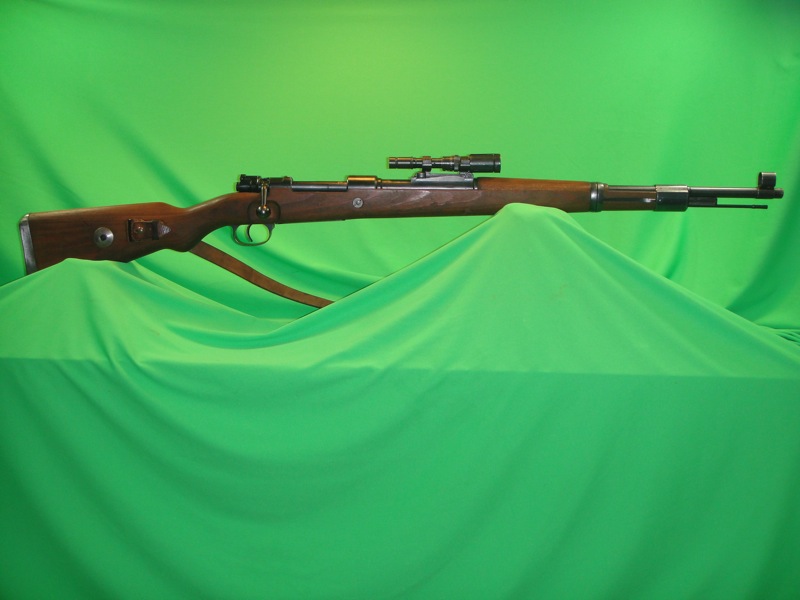
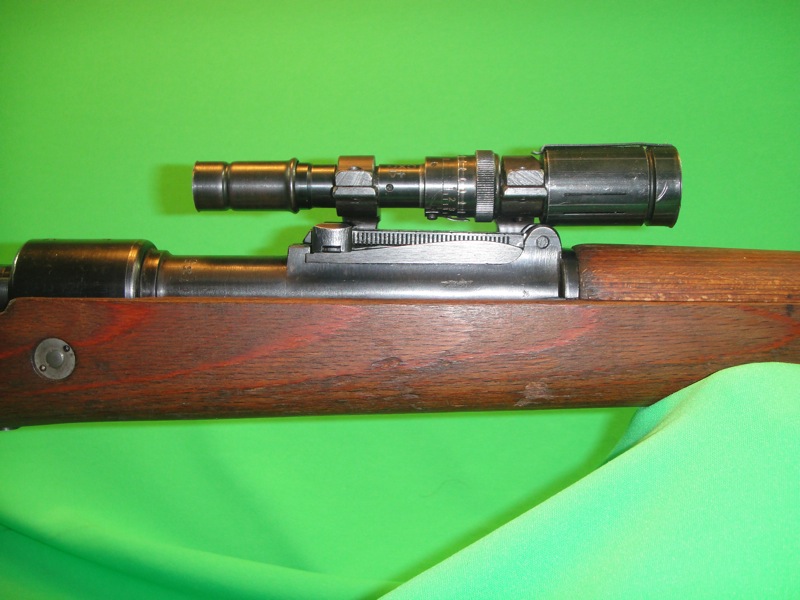
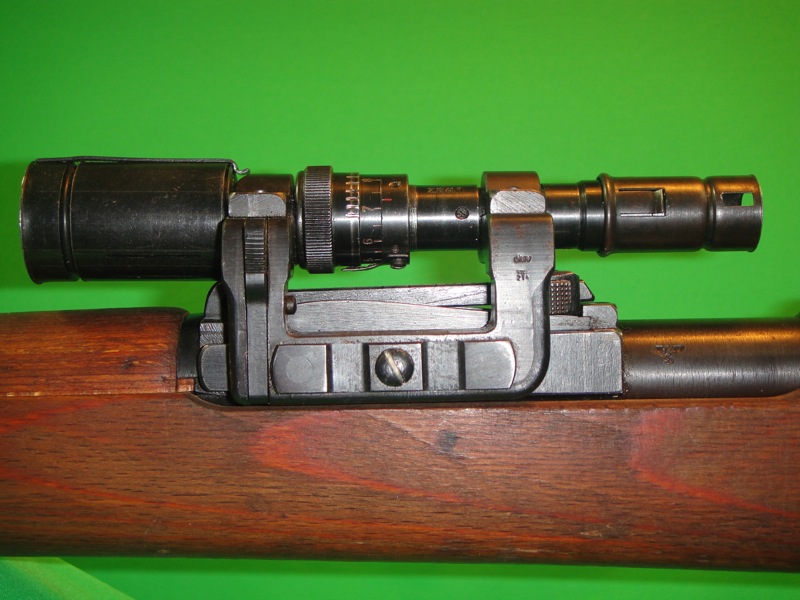
Although the above Kar 98k is a bit long and heavy to be considered a 'true' Scout, how about this World War II issue German G33/40 Mountain Carbine (for Mountain Troops) fitted with an issue ZF41? 

and yes this is a factory as issued gun 

at 7.4 pounds and just over 39 inches long it would be hard to argue that this World War II issue German 7.92x57mm carbine would not make a true 'Scout'..... |
What would Boxer do?
A dead whale or a stove boat.
A dead whale or a stove boat.
|
Originally Posted By Gunwritr:
Originally Posted By raf:
Originally Posted By Gunwritr:
Originally Posted By raf:
A poster above mentioned the WW II German Mauser with forward mounted optic. At first glance, this seems to anticipate cooper, but the WWII optic was a magnified scope, as opposed to a no/low mag true Scout scope. As such, it was intended primarily for use at extended ranges, and thus was a dedicated sniper rifle, as opposed to the general-purpose Scout rifle. The two concepts are obviously quite different. Some poorly researched works and US Mil Intelligence from the period might lead you to believe this, but its simply untrue. German works on the other hand are very clear as to what role it was intended to fill, it was not created as a sniper rifle. The Germans had acquired substantial experience during the Great War on how to build a proper sniper rifle. Designated Karabiner 98k mit Zielfernrohr 41 (Carbine 98 short with telescopic sight 41), it was a Mauser short rifle equipped with a ZF41 1.5x long eye-relief scope. The result was a fairly short and handy optically sighted bolt-action rifle which could be rapidly reloaded using stripper clips. The optical sight was specifically intended to increase the hit probability of the average infantryman in field conditions. While it WAS pushed into sniper use, this was not by design but simply due to a lack of proper sniper equipment. It was originally designed to increase the hit probability of the 'average infantryman' and not as a sniper rifle. Note that it only had 1.5x magnification and the scope was mounted forward specifically to allow rapid reloading with stripper clips........plus the scope was mounted to still allow use of the standard iron sights. Where it differs from the Scout concept is in length/weight but the concept is similar. I stand corrected, thank you. You mention that the scope was mounted so as to allow use of the iron sights. Were the iron sights visible under the scope, or did the scope have to be dismounted in order to use the iron sights? There was a dovetail for the optic on the rear sight base. The 1.5x long eye relief scope was fitted to a QD mount which slide onto the dovetail and locked into place. The standard irons were visible directly beneath the scope. This allowed the use of either irons or optic as required by the situation. If needed the optic could be immediately removed. Typical German engineering. these are NOT my pics, they are from http://www.milsurps.com/content.php?r=236-1942-Code-AR-K98k-ZF41-%28Karabiner-98%29-Rifle-%28Mfg-by-Mauser-Werke-AG-Borsigwalde%29 but were the easiest to post http://photos.imageevent.com/badgerdog/germanservicerifles/1942codearzf411636k/DSC00585.JPG http://photos.imageevent.com/badgerdog/germanservicerifles/1942codearzf411636k/DSC00591.JPG http://photos.imageevent.com/badgerdog/germanservicerifles/1942codearzf411636k/DSC00551.JPG very, very nice. thank you |
|
Originally Posted By Gunwritr:
Originally Posted By raf:
Originally Posted By Gunwritr:
Originally Posted By raf:
A poster above mentioned the WW II German Mauser with forward mounted optic. At first glance, this seems to anticipate cooper, but the WWII optic was a magnified scope, as opposed to a no/low mag true Scout scope. As such, it was intended primarily for use at extended ranges, and thus was a dedicated sniper rifle, as opposed to the general-purpose Scout rifle. The two concepts are obviously quite different. Some poorly researched works and US Mil Intelligence from the period might lead you to believe this, but its simply untrue. German works on the other hand are very clear as to what role it was intended to fill, it was not created as a sniper rifle. The Germans had acquired substantial experience during the Great War on how to build a proper sniper rifle. Designated Karabiner 98k mit Zielfernrohr 41 (Carbine 98 short with telescopic sight 41), it was a Mauser short rifle equipped with a ZF41 1.5x long eye-relief scope. The result was a fairly short and handy optically sighted bolt-action rifle which could be rapidly reloaded using stripper clips. The optical sight was specifically intended to increase the hit probability of the average infantryman in field conditions. While it WAS pushed into sniper use, this was not by design but simply due to a lack of proper sniper equipment. It was originally designed to increase the hit probability of the 'average infantryman' and not as a sniper rifle. Note that it only had 1.5x magnification and the scope was mounted forward specifically to allow rapid reloading with stripper clips........plus the scope was mounted to still allow use of the standard iron sights. Where it differs from the Scout concept is in length/weight but the concept is similar. I stand corrected, thank you. You mention that the scope was mounted so as to allow use of the iron sights. Were the iron sights visible under the scope, or did the scope have to be dismounted in order to use the iron sights? There was a dovetail for the optic on the rear sight base. The 1.5x long eye relief scope was fitted to a QD mount which slide onto the dovetail and locked into place. The standard irons were visible directly beneath the scope. This allowed the use of either irons or optic as required by the situation. If needed the optic could be immediately removed. Typical German engineering. these are NOT my pics, they are from http://www.milsurps.com/content.php?r=236-1942-Code-AR-K98k-ZF41-%28Karabiner-98%29-Rifle-%28Mfg-by-Mauser-Werke-AG-Borsigwalde%29 but were the easiest to post http://photos.imageevent.com/badgerdog/germanservicerifles/1942codearzf411636k/DSC00585.JPG http://photos.imageevent.com/badgerdog/germanservicerifles/1942codearzf411636k/DSC00591.JPG http://photos.imageevent.com/badgerdog/germanservicerifles/1942codearzf411636k/DSC00551.JPG OK, thanks. This is more-or-less an illustration of a too-high scope mounting situation. This configuration requires the shooter to climb up on the standard stock, or use a (detachable) cheek-riser since the bore of the scope is considerably higher than the line-of-sight through the standard iron sights, and for which the comb of the stock was originally designed. If the scope had been mounted further to the rear, it might have been possible to lower it quite a bit, thus making it much more user-friendly. That makes a WORLD of difference. |
"The M1 Rifle is the greatest battle implement ever devised." General George S. Patton Jr.,US Army
|
Originally Posted By raf:
Originally Posted By Gunwritr:
Originally Posted By raf:
Originally Posted By Gunwritr:
Originally Posted By raf:
A poster above mentioned the WW II German Mauser with forward mounted optic. At first glance, this seems to anticipate cooper, but the WWII optic was a magnified scope, as opposed to a no/low mag true Scout scope. As such, it was intended primarily for use at extended ranges, and thus was a dedicated sniper rifle, as opposed to the general-purpose Scout rifle. The two concepts are obviously quite different. Some poorly researched works and US Mil Intelligence from the period might lead you to believe this, but its simply untrue. German works on the other hand are very clear as to what role it was intended to fill, it was not created as a sniper rifle. The Germans had acquired substantial experience during the Great War on how to build a proper sniper rifle. Designated Karabiner 98k mit Zielfernrohr 41 (Carbine 98 short with telescopic sight 41), it was a Mauser short rifle equipped with a ZF41 1.5x long eye-relief scope. The result was a fairly short and handy optically sighted bolt-action rifle which could be rapidly reloaded using stripper clips. The optical sight was specifically intended to increase the hit probability of the average infantryman in field conditions. While it WAS pushed into sniper use, this was not by design but simply due to a lack of proper sniper equipment. It was originally designed to increase the hit probability of the 'average infantryman' and not as a sniper rifle. Note that it only had 1.5x magnification and the scope was mounted forward specifically to allow rapid reloading with stripper clips........plus the scope was mounted to still allow use of the standard iron sights. Where it differs from the Scout concept is in length/weight but the concept is similar. I stand corrected, thank you. You mention that the scope was mounted so as to allow use of the iron sights. Were the iron sights visible under the scope, or did the scope have to be dismounted in order to use the iron sights? There was a dovetail for the optic on the rear sight base. The 1.5x long eye relief scope was fitted to a QD mount which slide onto the dovetail and locked into place. The standard irons were visible directly beneath the scope. This allowed the use of either irons or optic as required by the situation. If needed the optic could be immediately removed. Typical German engineering. these are NOT my pics, they are from http://www.milsurps.com/content.php?r=236-1942-Code-AR-K98k-ZF41-%28Karabiner-98%29-Rifle-%28Mfg-by-Mauser-Werke-AG-Borsigwalde%29 but were the easiest to post http://photos.imageevent.com/badgerdog/germanservicerifles/1942codearzf411636k/DSC00585.JPG http://photos.imageevent.com/badgerdog/germanservicerifles/1942codearzf411636k/DSC00591.JPG http://photos.imageevent.com/badgerdog/germanservicerifles/1942codearzf411636k/DSC00551.JPG OK, thanks. This is more-or-less an illustration of a too-high scope mounting situation. This configuration requires the shooter to climb up on the standard stock, or use a (detachable) cheek-riser since the bore of the scope is considerably higher than the line-of-sight through the standard iron sights, and for which the comb of the stock was originally designed. If the scope had been mounted further to the rear, it might have been possible to lower it quite a bit, thus making it much more user-friendly. That makes a WORLD of difference. The centerline of that scope is noticeably lower than on any sniper rifle of the time period. Perfect, no, but quite usable and not nearly as high as you make out. As an example compare it to this German heavy barrel sniper rifle prototype with a commonly used military mount.........note the difference? 
Yes, they could have made it lower but the military requirement called for use of the iron sights and a quick detach mount....compare it to where the scope is on a M1C/D "Sniper" rifle... 
|
What would Boxer do?
A dead whale or a stove boat.
A dead whale or a stove boat.

|
A source? As in where to buy one?
As it was only issued to Mountain Troops they are not very common. Your best bet would be to keep your eyes open on gunbroker and the like. A nice one just sold on gunbroker for around $905. http://www.gunbroker.com/Auction/ViewItem.aspx?Item=219137464 |
What would Boxer do?
A dead whale or a stove boat.
A dead whale or a stove boat.
|
Originally Posted By Gunwritr:
A source? As in where to buy one? As it was only issued to Mountain Troops they are not very common. Your best bet would be to keep your eyes open on gunbroker and the like. A nice one just sold on gunbroker for around $905. http://www.gunbroker.com/Auction/ViewItem.aspx?Item=219137464 not to buy; but the source for the pics and information. I find this very interesting and would like to add it to my online list of references. |
|
Originally Posted By raf:
The final thought I would like to leave here is that it is of the UTMOST importance to mount the optic as LOW as possible. I have seen so-called Scout mounts that raise the scope to chin-weld levels. This sort of mount destroys all the advantages of a properly set-up Scout rifle. If you see any scope-equipped Scout rifle, and the lowest part of the scope is more than 1/8" away from the rifle itself, you're looking at a BAD example of a Scout rifle. Don't judge the Scout rifle concept by such bad examples, OK? I don't think the issue really is the height of the optic as to the poor design of the stocks being commonly utilized. To retain that sleek sporter 'look' far too many insist on retaining a stock designed solely for iron sights. Even the M40/A1 has this issue. A properly designed stock would help a great deal. Currently the area where the Scout concept is far behind the curve is in the optic itself. As the concept never took off no one currently makes a Scout type scope which wouldn't be at home in the 1980s. Modern technology has not been applied to this type of optic. Such as reticle design or daylight illumination. A variable power 1.5-6x scope with a simple BDC reticle with daylight illumination would be a huge step forward. As it is, I have to say that I don't see anything a conventional Scout rifle can do that a lightweight AR with a modern optic in 6.5mm Grendel or 6.8 SPC II can't do better. Times change, technology moves on.... |
What would Boxer do?
A dead whale or a stove boat.
A dead whale or a stove boat.
|
Originally Posted By Enforcer:
His primary concerns with actions were reliability and weight. The bolt action will be more reliable in all environments and less prone to failure. This is particularly important if you are on your own with family or in small squads of resistances with little or no opportunity for support or resupply. Bolt actions are lighter, use far less moving parts and can utilize higher power cartridges for their size than their auto loading counter parts. This makes for a handier rifle that will send more efficient and deadly shots down range. Col Cooper has also been on record that he would not be opposed to to a autoloader, if it could meet his reliability and weight requirement. Currently, some might be coming close, but no such a animal exists. I am going to gently encourage you to read my post again. You'll find no where is it required that the scout has to use a forward mounted optic. A low powered conventional scope is acceptable as well as many other sighting options; the package in total is what makes the scout a more refined general purpose rifle. My intent is not to convince you or anyone else that the Scout rifle is the only option; just for many of us it is the best alternative. In this thread http://www.ar15.com/forums/topic.html?b=3&f=118&t=535047 there was a discussion about an AR version of the scout. The discussion basically became, is the scout function or aesthetics? Some people seem to (incorrectly, as you pointed out) believe that all a scout is a forward mounted optic. When considering caliber, weight, length and sighting systems as being the prerequisites .308 ARs can come close to those requirements, but are usually about a lb too heavy and a couple inches too long. However, examining coopers requirements, the SCAR-17 is the modern .308 Semi-Auto that fits within not only caliber and sighting requirements, but also within weight and length requirements. Using a RDS or a a 1-4x or one of the 1.1-8x scopes, the speed of target acquisition and situational awareness is still there along with the ability to reach out. The only real requirements that it doesn't fit is that it's not a bolt action with the ability to take stripper clips. However, being the reason for bolt action being specified has already been touched on, and I think that when considering a "modern" scout rifle, magazine fed semi-auto is a non-issue. |
Please, call me Joe
There is definitely something perverse about two men who carry guns 24/7 being so happy that others are giving theirs up. -happycynic
There is definitely something perverse about two men who carry guns 24/7 being so happy that others are giving theirs up. -happycynic
|
Originally Posted By raf:
It should be pointed out that early prototypes of the scout rifle were military and customized civilian actions which did not accept detachable mags.. The mil rifles already had cut-outs for then-common milsurp 5-rd stripper clips, and the civvy rifles were modified to accept such clips. This was the initial impetus for the forward-mounted scope, but when the even greater advantages of forward-mounting of scope, became apparent, this arrangement became the very much preferred configuration. Nowadays, with the cost-cutting move of not milling receivers to accept stripper clips (perhaps because clips are now made of unobtanium), the modern default is a mag-fed rifle. It should be pointed out that if the mag extends much below the trigger guard, use of the highly desirable 3-point sling is problematic. Moreover, it is far less bulky and less weighty to store and carry 5-rd stripper clips of ammo Vs. 5-rd magazines. Oddly enough, bolt-action rifles, as currently manufactured, have regressed in that the are seldom made to accept stripper clips. No problem for the hunter, but for other purposes this is a real devolution. A couple points on this..... If you want a stripper clip guide milled into your receiver, all you have to do is look around for a bolt on guide or someone who will cut your receiver. M70s and M700s are still run Across the Course in High Power with strippers. All you have to do is look. While I may be a heretic if given the choice I would take Mannlicher's clip system over Mauser's any day. Much easier to load without a fumble and far better retains the rounds during hard use. Sure....people will moan that you 'can't quickly top up the mag with single rounds'.......who cares. It is a different system. With the Berthier modification you simply shoved a fresh clip in if you wanted to top off and retain the partially expended clip for later use. If you only want 5 rounds, the clip system will work but the advantages of higher capacity were proven time and time again in both WWI and WWII by British troops armed with Lee Enfields. Why the Germans introduced a 20 round box magazine. A 15 round box magazine would likely be the best compromise. German Gew 98 with 20 round Trench mag and note the dust cover to keep mud out of the action, a real problem during WWI 


I think if people actually wanted to get serious about a bolt action Scout rifle they should ditch the prehistoric actions they are building them on. 90 degree bolt rotations and 5-6 inch bolt throws are just plain silly. If you are going to run a bolt gun, run a fast one. Skip the front locking lugs specifically to shorten the bolt and bolt throw. Next change it from a 90 degree throw to 60 degrees or less. Make it so the bolt only has to move as far as necessary. |
What would Boxer do?
A dead whale or a stove boat.
A dead whale or a stove boat.
|
Originally Posted By Enforcer:
Originally Posted By Gunwritr:
A source? As in where to buy one? As it was only issued to Mountain Troops they are not very common. Your best bet would be to keep your eyes open on gunbroker and the like. A nice one just sold on gunbroker for around $905. http://www.gunbroker.com/Auction/ViewItem.aspx?Item=219137464 not to buy; but the source for the pics and information. I find this very interesting and would like to add it to my online list of references. Here you go! This is where those pics are from: http://rockislandauction.com/viewitem/aid/50/lid/3235 |
What would Boxer do?
A dead whale or a stove boat.
A dead whale or a stove boat.
|
Originally Posted By TCBA_Joe:
Originally Posted By Enforcer:
His primary concerns with actions were reliability and weight. The bolt action will be more reliable in all environments and less prone to failure. This is particularly important if you are on your own with family or in small squads of resistances with little or no opportunity for support or resupply. Bolt actions are lighter, use far less moving parts and can utilize higher power cartridges for their size than their auto loading counter parts. This makes for a handier rifle that will send more efficient and deadly shots down range. Col Cooper has also been on record that he would not be opposed to to a autoloader, if it could meet his reliability and weight requirement. Currently, some might be coming close, but no such a animal exists. I am going to gently encourage you to read my post again. You'll find no where is it required that the scout has to use a forward mounted optic. A low powered conventional scope is acceptable as well as many other sighting options; the package in total is what makes the scout a more refined general purpose rifle. My intent is not to convince you or anyone else that the Scout rifle is the only option; just for many of us it is the best alternative. In this thread http://www.ar15.com/forums/topic.html?b=3&f=118&t=535047 there was a discussion about an AR version of the scout. The discussion basically became, is the scout function or aesthetics? Some people seem to (incorrectly, as you pointed out) believe that all a scout is a forward mounted optic. When considering caliber, weight, length and sighting systems as being the prerequisites .308 ARs can come close to those requirements, but are usually about a lb too heavy and a couple inches too long. However, examining coopers requirements, the SCAR-17 is the modern .308 Semi-Auto that fits within not only caliber and sighting requirements, but also within weight and length requirements. Using a RDS or a a 1-4x or one of the 1.1-8x scopes, the speed of target acquisition and situational awareness is still there along with the ability to reach out. The only real requirements that it doesn't fit is that it's not a bolt action with the ability to take stripper clips. However, being the reason for bolt action being specified has already been touched on, and I think that when considering a "modern" scout rifle, magazine fed semi-auto is a non-issue. I could not agree with you more. The bolt action requirement were for weight and reliability issues. Weight was the single biggest reason for Coopers rejection of the autoloader. Most, once sighted and slung, will top at close to 9 lbs or greater. As technology continues to improve reliability of autoloaders should become less of an issue. The SCAR17 certainly has potential; for those that care here is a pic with specs. Carbine 
- Caliber: 308 Winchester/7.62x51mm NATO - Barrel Length: 13" (CQC) - Overall Length: 25” to 35” (CQC) - Weight: 7.69 lbs. empty (CQC) - Ammunition Capacity: 20-round detachable box magazine Standard rifle 
- Caliber: 308 Winchester/7.62x51mm NATO - Barrel Length: 16" (STD) - Overall Length: 28” to 38” (STD) - Weight: 7.91 lbs. empty (STD) - Ammunition Capacity: 20-round detachable box magazine BTW Gunwritr; thanks for the pics and source of the German Mtn Rifle! |
 j/k
j/k
|
Originally Posted By Gunwritr:
Originally Posted By raf:
The final thought I would like to leave here is that it is of the UTMOST importance to mount the optic as LOW as possible. I have seen so-called Scout mounts that raise the scope to chin-weld levels. This sort of mount destroys all the advantages of a properly set-up Scout rifle. If you see any scope-equipped Scout rifle, and the lowest part of the scope is more than 1/8" away from the rifle itself, you're looking at a BAD example of a Scout rifle. Don't judge the Scout rifle concept by such bad examples, OK? I don't think the issue really is the height of the optic as to the poor design of the stocks being commonly utilized. To retain that sleek sporter 'look' far too many insist on retaining a stock designed solely for iron sights. Even the M40/A1 has this issue. A properly designed stock would help a great deal. Currently the area where the Scout concept is far behind the curve is in the optic itself. As the concept never took off no one currently makes a Scout type scope which wouldn't be at home in the 1980s. Modern technology has not been applied to this type of optic. Such as reticle design or daylight illumination. A variable power 1.5-6x scope with a simple BDC reticle with daylight illumination would be a huge step forward. As it is, I have to say that I don't see anything a conventional Scout rifle can do that a lightweight AR with a modern optic in 6.5mm Grendel or 6.8 SPC II can't do better. Times change, technology moves on.... The key feature of the scout that causes it to be so quick to use is that the scope is mounted very low. This means, in practice, that the same stock/comb configuration can be used for both iron sights and the scope, with no neck-craning and/or fiddlin' around on the stock prior to shooting. The shooter should be able to grab the rifle blindfolded, assume a normal, comfortable shooting grip/position, and once removing the blindfold, be dead-on with either iron sights or scope. In practice, this generally entails the use of QD scope mounts in order to use the iron sights. I agree mostly with your comments on the lack of modern Scout type scopes, although a few are beginning to appear. Some Burris variable power pistol scopes are very versatile, and some models have illumination, IIRC. Personally, while some other ctgs might effectively duplicate the 7.62 NATO, their being uncommon would give me pause when considering their use in a true long-term SHTF scenario. I certainly would look askance at a very short-barreled rifle, as I think there is a point where the loss of energy imparted to the projectile becomes a problem not to mention flash/blast suppression. While the hunter tries to get close as possible to the game, very often distance is the soldier's friend, since the "game" can shoot back. Presumably, a well-trained Rifleman using a good 7.62 NATO Scout rifle would have a considerably greater effective range against the average two-legged varmint/conscript soldier using a 5.56 carbine. |
"The M1 Rifle is the greatest battle implement ever devised." General George S. Patton Jr.,US Army
Close Inspection of Coopers Scout Rifle Definition (Page 1 of 2)
Armory Sponsor