Posted: 4/20/2026 1:51:24 AM EDT
[Last Edit: BigJimFish][Edited]
 Remington 5R in a Grayboe Core stock on a Field Optics Research Pro39TC#-MIL tripod  Les (Jim) Fischer BigJimFish Written: April 20, 2026 Table of Contents: 1) Introduction 2) New “Forged” Stock Composition 3) Universal Mini Chassis Concept 4) Observations On and Experience With the Mini Chassis 5) Core Stock 6) Summary and Conclusion  A look at the Grayboe Universal Mini-Chassis system concept & review of the Core forged carbon stock Less complete YouTube version for the illiterate. Introduction It’s been a couple of years since I last reviewed a Grayboe stock. I first took a look at the now discontinued Ridgeback in 2018 and then the ultralight Phoenix in 2021. These have both continued to be excellent stocks for me and I particularly adore the Phoenix for its excellent feature set, its rigidity despite its remarkably light weight, and its cost-effectiveness. I have probably recommended it more than any other stock or chassis. Both of these stocks featured Grayboe’s non-directional molded composite technology with molded-in-place aluminum pillars. These stocks were usable either as a drop-in stock or you could pretty easily Dremel out a little paint and material around the pillars to traditionally bed them. They offer most of the features and advantages of traditional hand lay up composite stocks, as well as a few more features, such as generous M-Loc attachment points for a significantly lower cost than a hand lay up composite stock. 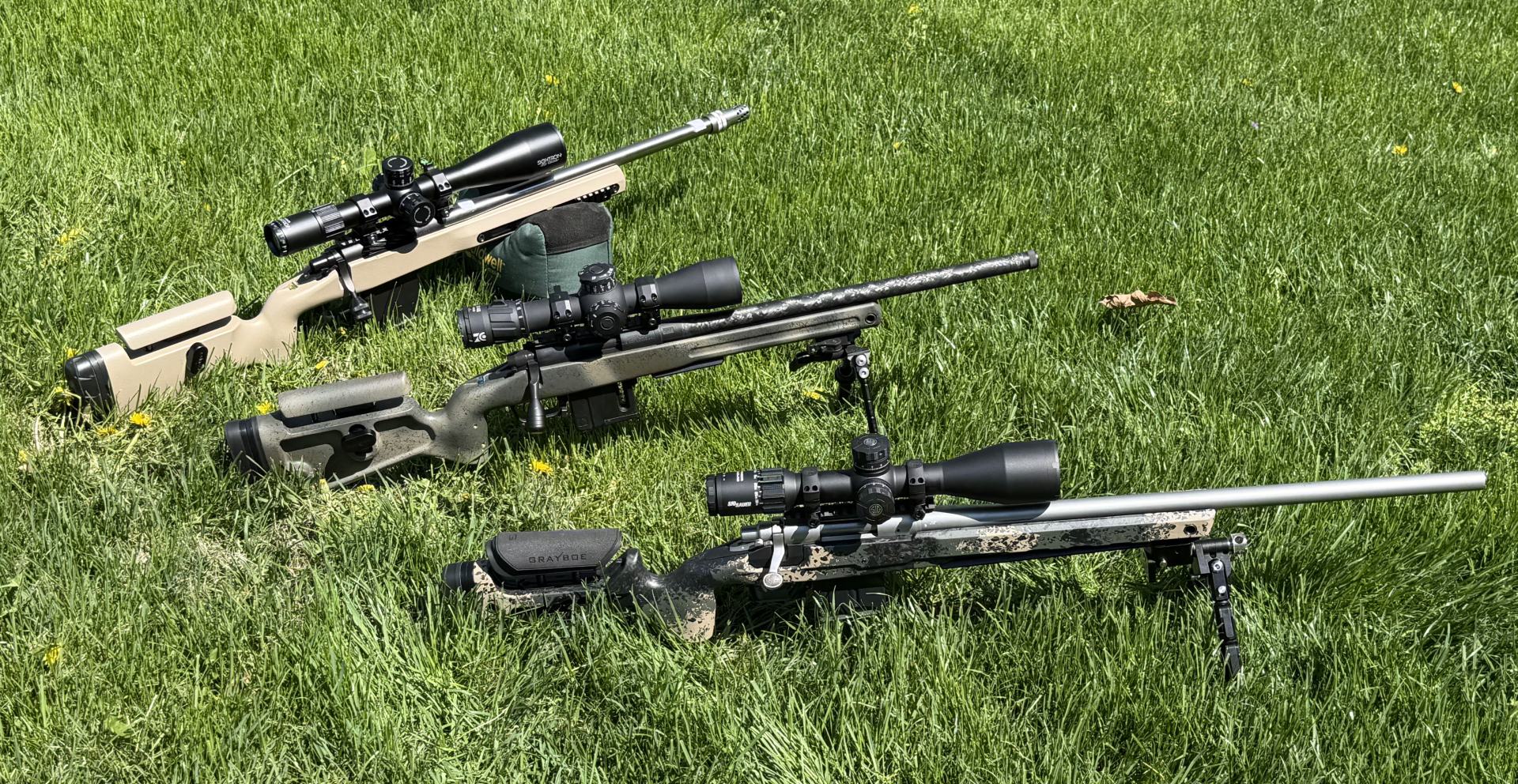 Kelbly’s Atlas in a Grayboe Ridgeback, Vudoo V-22 in a Phoenix, and Remington 5R in a Core The core is a significantly different product as it uses a forged carbon construction and ditches the M5 type bottom metal for a universal mini chassis system (UMC). A UMC costs about the same as a bottom metal but contains the functions of both bottom metal and a bedding block. The UMC can also be detached and swapped from stock to stock without changing zero so you can share a few different model stocks between a number of rifles. These rifles could even include those of different action pattern such as Savage vs. Remington. Both the Core stock and UMC system looked pretty interesting to me as each employs a design or technology new to rifle stocks so I thought I would take a look.  Grayboe Core stock and Universal Mini-Chassis (UMC) Unboxing New “Forged” Stock Composition The first Grayboe models were molded of an epoxy resin, lightening agents, and fiberglass, using a proprietary method to create a non-directional uniform material similar in chemical composition to traditional hand lay up composite stocks, but for a lower cost due to the tremendously lower man hour requirements of manufacturing them. These stocks were, and are, similar in performance in most ways to traditionally constructed composite stocks - and are even superior in few ways, too. Check out my previous reviews linked above for more details on that. Most of Grayboe’s models have used this construction, but since that time they have also added polymer stocks as well as the forged carbon Core model we will be examining today. Forged carbon/fiberglass technology is similar to their other composite stocks in that it is an epoxy resin filled with chopped up fiberglass or carbon fibers. The carbon forged stocks do not contain any lightening agents though, and they are cured under high temperature and pressure. The fiberglass-forged version contains a lightener like the original Grayboe technology, but it is still substantially denser and heavier than that technology. Forged carbon is a technology often used in the automotive and aerospace industries to create strong, light components of complex shape and non-directional strength and rigidity. The strength and rigidity of forged carbon is far beyond other technologies used to make composite rifle stocks. As thick as the carbon is in the Core stock, it is also quite a bit stiffer than most (if not all) aluminum chassis I have encountered. The material also appears to be able to handle pretty fine molding detail, as you can see from the below image of the molded-in embossed Grayboe logo. This is very thin and detailed text, and the mold captured most of it with high definition and all of it with some definition. I do not see any evidence of any voids with this material either and it comes out of the mold with a pretty attractive surface finish and visible carbon pattern. It’s a little surprising I haven’t seen forged carbon utilized in rifle stock making before, as it clearly has some desirable characteristics for the purpose. I suspect it would be pretty easy and stable to machine as well, should the end user want to epoxy in other custom attachment points. This has been an aspect of Grayboe’s unique technology I have enjoyed on past stocks. 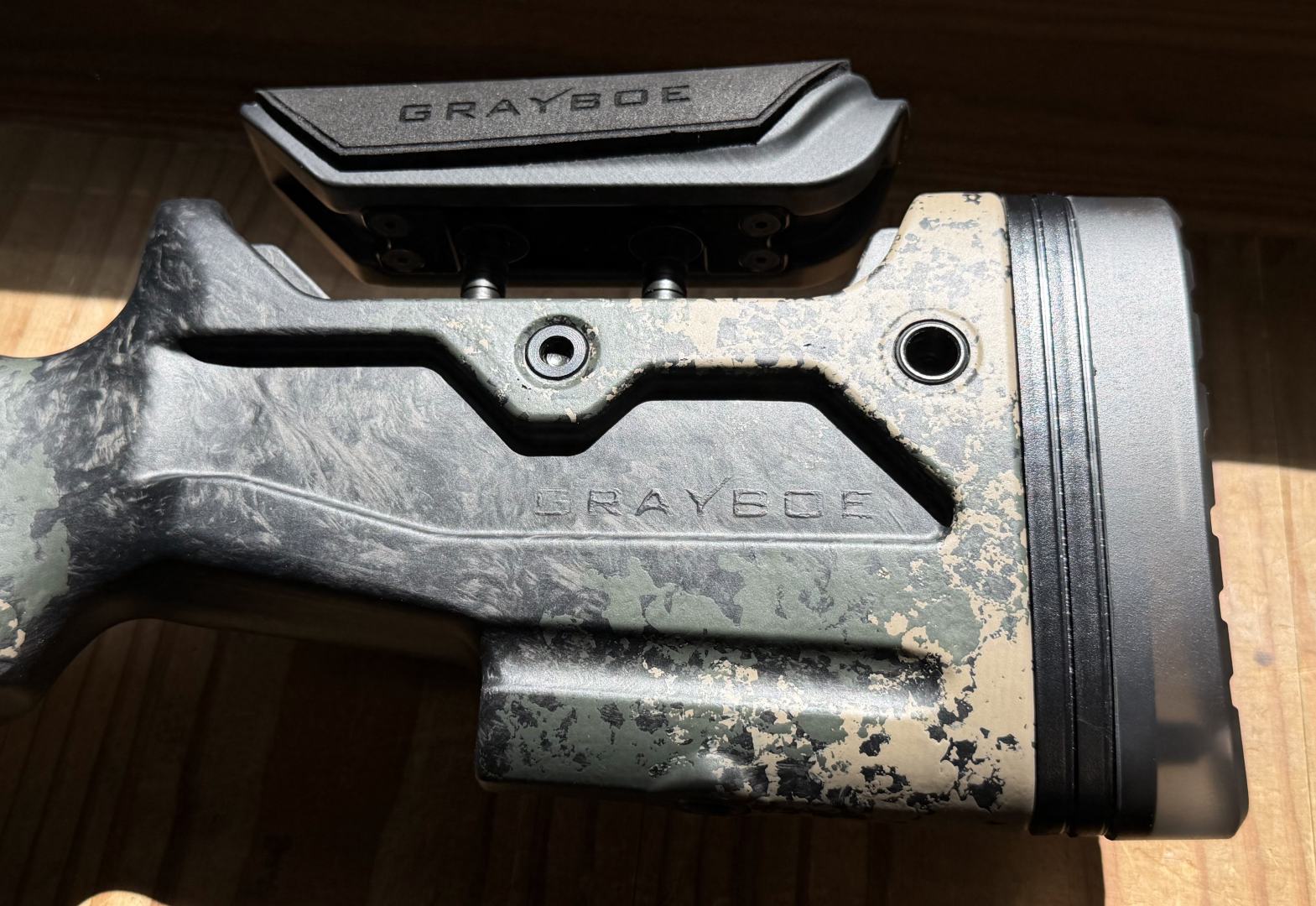 Closeup of the fine lettering on the molded Grayboe logo Universal Mini Chassis Concept Over the last ten years or so, the traditionally bedded rifle stock has been largely replaced by chassis or stocks with a bedding block. I have mixed feelings about this, but skipping the time consuming and somewhat risky bedding process, having a much higher resale value if you decide to move on from a stock, and having the ability to switch barreled actions from stock to stock are all wins. Being able to move rifles from stock to stock is not typically a wholly unallayed joy, though, as you can only do this with rifles of the same action type and the zero sometimes shifts slightly during this process. Grayboe’s UMC is a system designed to solve both of these problems. It does this by marrying the action to the UMC instead of the stock. This allows for different UMCs to be used on different rifles but all to fit in the same stocks. For instance, a Savage long action can now share a stock with a Remington short, each using their own UMC. The UMC also allows you to move the UMC/action/barrel combo from rifle to rifle without un-torquing the high torque action’s screws and removing the action from the big aluminum UMC. Instead, you remove the lower tension screws between the UMC and the stock for the move and thereby don’t introduce the possibility of a noticeable zero shift. This is a really unique concept, as you can easily have different stocks for different applications shared by a variety of rifles chambered in different calibers. For instance, your .22lr can be put in a match stock for a competition or a lightweight stock for squirrel hunting. Likewise for your 6.5CM - though I would suggest that perhaps larger game would be more appropriate for that cartridge. Since the UMC functions as both bedding block and bottom metal and costs the same as a typical bottom metal, it does not introduce additional cost into the equation. If anything, it will decrease the overall cost vs. a stock with a bedding block, as you now have one machined piece of metal whereas previously you had two. 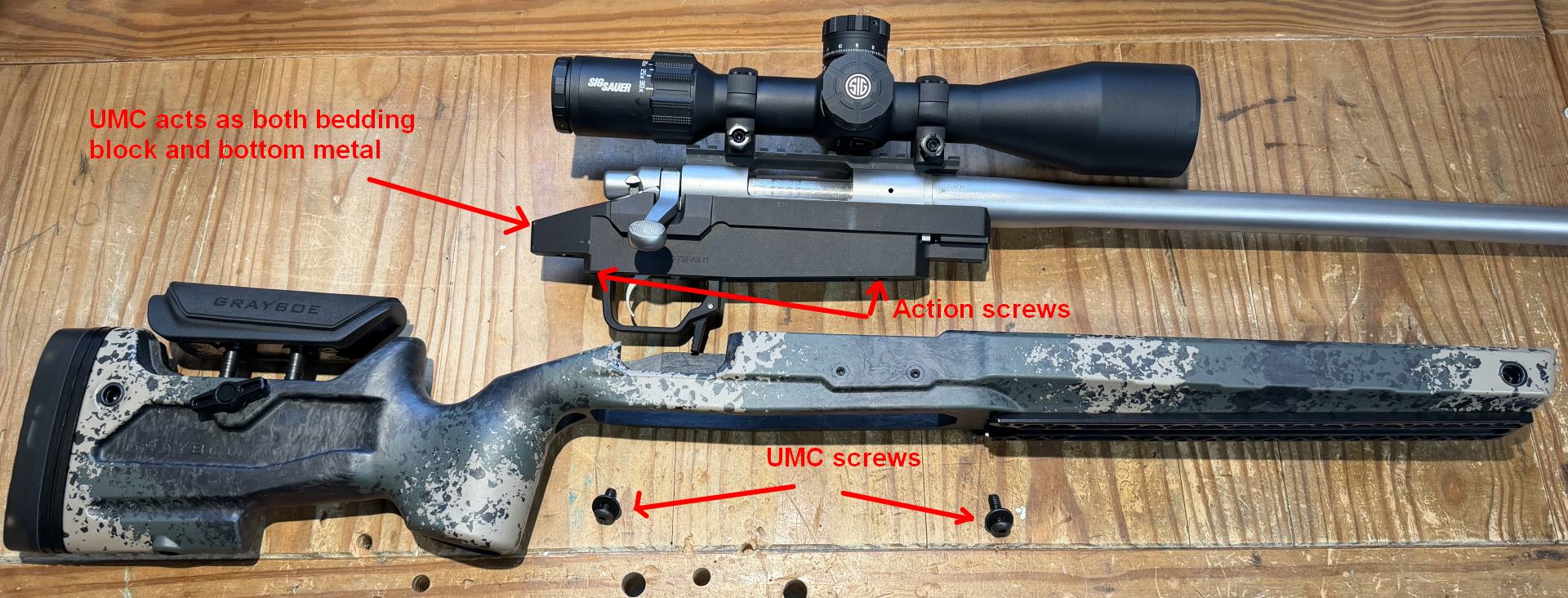 Remington 700 UMC on a 5R Remington 700 action Observations On and Experience With the Mini Chassis The first thing I noticed on the UMC is that it is a big chunk of metal and is thereby heavy. This will not matter at all if you’re putting it in a heavy competition stock like the Core. It is also pretty unavoidable with a polymer stock like the Halo or Flagstaff models, as polymer is soft and bendy and would need a substantial aluminum bedding block to create a solid interface for the action even if you weren’t using a UMC. However, if you are adding it to the lightweight Phoenix II UMC version, you will come in at 13oz heavier than the Phoenix II Remington short action non-UMC version with a bottom metal. That is not insignificant, as it takes a 39oz stock solution up to 52oz. There might not be a price difference, but there is still a cost for having an easy switch rifle system in a lightweight hunting stock - and that cost is weight. The next thing I noticed about the UMC system is that it is very precisely machined for fit, both to the action and the Core stock. It slides into the stock with no play at all. Similarly, when I tested the fitment to the action using transfer paper clamped between the two, I found very even contact. The magazine is likewise a very good fit in the mag well. It is far less loose than in most bottom metals, but none of my mags had issues fitting, unlike on some other chassis I have encountered. The UMC can also be had with or without an adjustable magazine catch. I opted for ‘with’ as my experience is you just sometimes need one. Not all magazines and chassis work together. There is just too much variance in what different manufactures consider the correct dimensions to be.  Using transfer paper to note the even contact between the Remington 700 action and the Grayboe UMC Speaking of manufacturer specifications on which liberty is often taken: Recoil lug depth, shape, and size varies greatly from one custom action maker to another. The maximum recoil lug depth (top to bottom, not front to back) on the Remington 700 short action UMC is .385”. This is not a whole lot greater than a factory 700 recoil lug depth of .367” and is not as deep as some custom actions. My Kelbly Atlas bottoms out, leaving the front of the action not in contact with the UMC around the front action screw, for instance. I expect there will be a number of actions with recoil lugs too deep to fit as having a lug larger than the factory Remington is a common, if baffling, practice. The trigger pocket is another area where actions differ a great deal from maker to maker. Grayboe has given you a good deal of room here and I don’t think the fatter TriggerTechs or common trigger hangers will have a problem, for instance. I had to add just a little inletting for the factory 700 bolt release lever, but the UMC has since been updated so new ones will not require that. So, as is pretty much always the case, there is some possibility of needing to inlet for something in the trigger area, but I don’t think many will need to as they have left a lot of clearance for different sizes and shapes of trigger / hanger. These are always things to keep in mind, at least with the 700 footprint UMC as there is no universal standard that all clone 700 actions and triggers comply with. 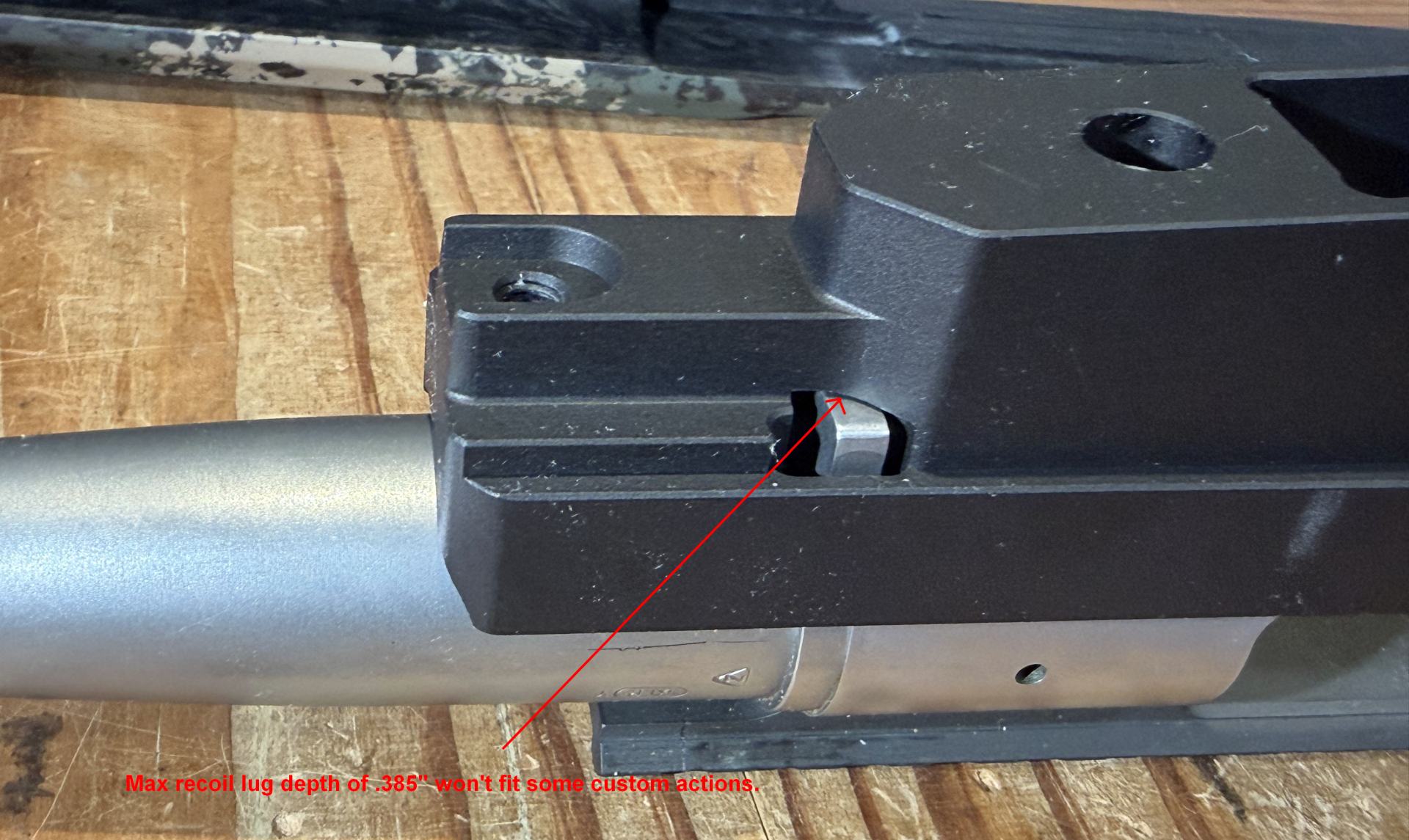 There is not much leeway in the 700 footprint UMC to accommodate recoil lugs deeper than those of the factory 700 actions. The pocket for the recoil lug measures .385” in depth. In using the UMC, I did not find the zero to move with detachment and reattachment to the stock. I had only one stock to test it with, but I don’t anticipate any issues with noticeable zero shift moving from stock to stock as your moving the critical and high tension dimensions with the UMC. The two 45in/lbs screws you attach the UMC to the stock with are just not going to flex anything enough to cause an issue. Core Stock At 6lbs (96oz) with UMC for the carbon version and 4.5lbs (72oz) for the fiberglass, the Core is positioned as Grayboe’s most competition focused stock. This is solidly heavyweight range and is around the heft of a lot of Foundation models, not far from the JAE or Matrix chassis. The forged material is remarkably dense and stiff, yielding a stock with essentially no flex. It does not feel stiff or vibrate like a metal chassis when fired, however. When you combine the weight, composite material, substantial recoil pad, and foam cheek piece, you get a very solid dead feeling stock. My uncompensated 5R .308 felt closer to a .223 than itself and moved very little during recoil. This makes the stock very comfortable to shoot and fast on follow-up shots: it was a pleasure to shoot! In addition to the weight and stiffness, the Core has a number of other features designed for competition use. Its LOP is adjustable with spacers and can be made very short with a minimum LOP of 12.75”. It also features a clamping style adjustable cheek piece for height and cast. This has a particularly nice metal wing nut style locking knob. The forearm of the stock has a built in aluminum M-Lok attachment rail and it is flat from the mag well to the end of the forearm for attaching a full length ARCA if desired. The side of the stock also features studs for a 2-round quiver and there are 7 QD sling attachment points. Unsurprisingly, the Core accommodates massive 1.25” straight barrel contours and the diameter at the front of the barrel channel is 1.330”. Despite the number of competition features the Core has, it is noticeably lacking a few that have become common on competition stocks. I’ll start off with an ARCA rail. The core comes with an M-Lok forearm that can accept an ARCA rail, but it does not come with one. The distance between the front of the mag well and the closest place on the M-Lok rail that you can attach a fastener is ~4.75”. In my experience, even using a rail with extension, getting you closer to the mag well really doesn’t help. The unsupported rail area has too much flex to be worth clamping to, so you really can’t get any closer than about 5” with your hard tripod clamp. Grayboe has a dedicated full length ARCA rail being designed that will bolt into the stock instead of the M-Lok attachment rails. This should be a substantial improvement in rail stiffness and distance between the fasteners that secure the rail and the end of said rail. I look forward to trying that out, as the current ARCA solution is just not as good of a rail solution as I think a competition stock should have, which is more infuriating given how stiff the forearm on the Core is. It should be able to get very low flex in its tripod attachment and I hope it will with the upcoming dedicated full length ARCA rail - and that it will also get the rail much closer to the balance point near the mag well. Speaking of balance points, another common competition feature not included is a weight system. There are no M-Lok rails on the side of the forearms for standard aftermarket weights (or wings) and no places in the butt or forearm for proprietary weights. Though the cheek adjustment is excellent, the spacer based butt stock system is the basic stackable spacer type that you must completely remove the recoil pad to utilize. This is certainly too clumsy and time consuming for adjustment in the field in anticipation of the optimum arrangement for a particular stage. The Core also does not have a swappable grip system, leaving those with smaller hands the familiar reach problem A5-shaped stocks like the Core are known for. Finally, it’s not my bag at all, but I recognize there are a significant number of shooters doing this ultra low chin weld thing that requires the ability to set the cheek piece very low for. This one does not go as low as I have observed those using that technique prefer. 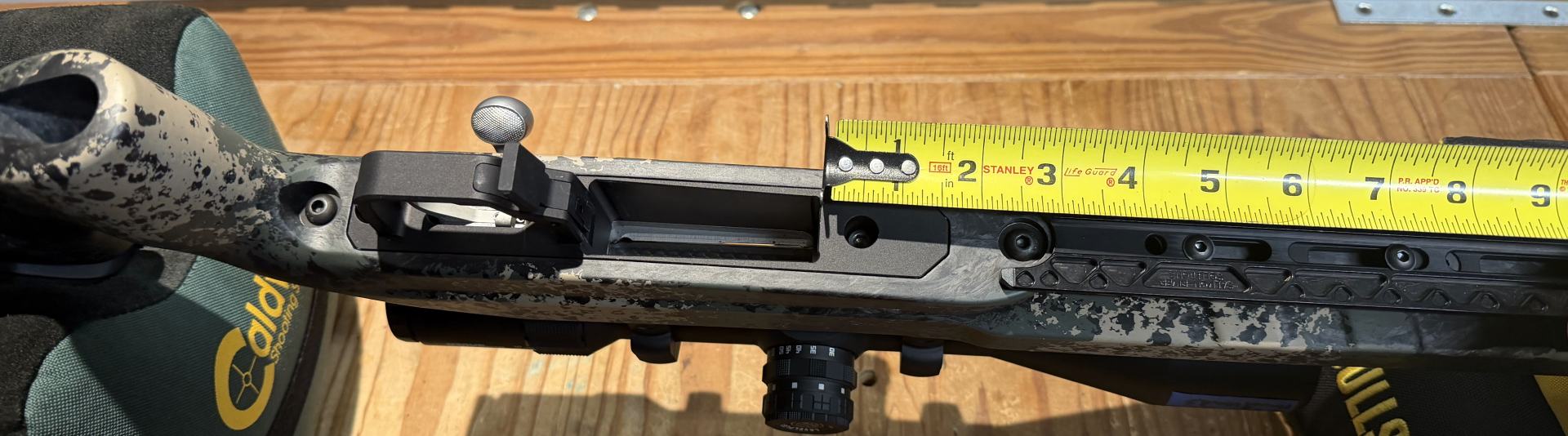 Grayboe Core with Salmon river M-Lok full length ARCA rail. The closest fastener point for the M-Lok is ~4.75” from the front of the mag well Summary and Conclusion The Grayboe universal mini chassis is one of the most exciting concepts I have seen in rifle stocks in some time. The idea of being able to share different purpose-built stocks between a number of rifles that don’t even share the same action type is pretty appealing - and being able to do it without zero movement even better. Dropping a lightweight hunting rifle into a comp stock to shoot a match is easy with this system, as is shaving a little weight when you go blow up some groundhogs with your comp 6mm. The only real downside is that you can’t go as low in weight with some stock/rifle combinations with the UMC as you can without. In terms of financial cost, there really isn’t one for adopting this system even if you never use the interchangeability. The UMC costs basically the same as bottom metal so, if anything, you might actually end up ahead as it serves as both the bottom metal and bedding block. In terms of quality and fitment, I found Grayboe’s UMC to be excellent though there may be some actions with a bit too deep a recoil lug to fit so you may want to measure yours. As is always the case, there may be a little hand fitting for your particular trigger, although I think it’s unlikely given how generous the inletting is. The UMC is a very appealing system and it will be interesting to watch as Grayboe designs more purpose-built stocks around it. 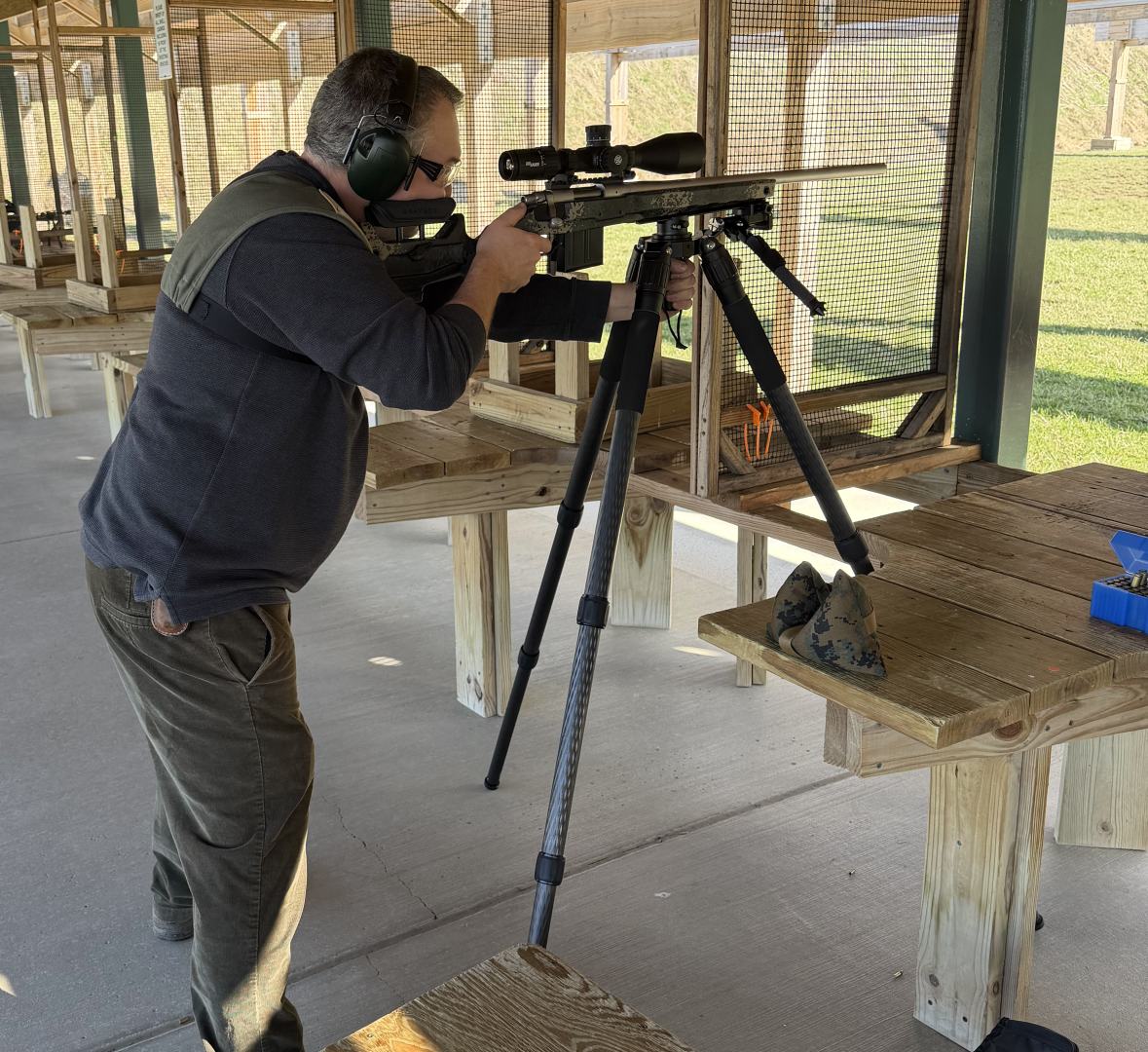 Shooting a Remington 5r in the Grayboe Core stock off of a Field Optics Research Pro39TC#-MIL tripod The Core stock likewise represents something new in rifle stocks. It utilizes the high pressure / temperature forged carbon technology common in high-end automotive manufacture and aerospace. This produces a remarkably strong and ridgid stock with a very solid dead feel. It was a pleasure to shoot. The Core stock utilizes a geometry very similar to the well-loved A5 shape and a weight, 4.5lb (fiberglass) or 6lb (carbon), that puts it solidly in the competition stocks category. The A5 geometry has been updated with a number of popular competition features for this role, such as a short minimum LoP, available adjustable mag catch, three-way cheek piece, and M-Lok forearm. I felt it also left a lot on the table, though, with no side M-Loks, integrated ARCA, changeable grips, or weight system, as well as having a rudimentary LoP spacer system. It’s not an inexpensive stock and I would have liked to see some more features to go with the excellent feel. |