


HF emcom / SOTA / choose my first HF (Page 1 of 2)

Posted: 6/1/2026 11:06:39 PM EDT
[Last Edit: Greenspan][Edited]
|
I'm looking for my first HF radio. I have a theory I want challenged and some advice. 1. What are some very weather proof good HF rigs? 2. For emcom what makes more sense a separate HF or a do all man pack? The HF only I know can get much smaller and that appeals to me. 3. I am a minimalist and don't want 10 HF radios. I just want one, can I get a good POTA style and hook up an amp to it to use home base style or is that stupid? 4. Gear recommendations welcome, poke holes in my idea. 5. Complicating matters, I like DMR (not Internet stuff) which means any all in one rig is either China comms or I don't get DMR 6. I mostly want to do js8, but want the ability to do voice. Thanks |

|
Originally Posted By Greenspan: I'm looking for my first HF radio. I have a theory I want challenged and some advice. 1. What are some very weather proof good HF rigs? Doesn't really exist at this point. The long out of production Icom 7200 was the only real one that's been on the market. Buy a radio and put it in a pelican case. Unless like many newbies you're falling for the siren song of tacticool QRP HF radios. Then you have the Lab599 TX-500. I don't recommend QRP HF until you know what you are doing. 2. For emcom what makes more sense a separate HF or a do all man pack? The HF only I know can get much smaller and that appeals to me. Define "emcom". The user cycle of HF and VHF/UHF are significantly different and lends itself to separate radios in almost all cases. The "manpack" comment makes me think you are envisioning hiking around talking to people. This doesn't work very well in practice. 3. I am a minimalist and don't want 10 HF radios. I just want one, can I get a good POTA style and hook up an amp to it to use home base style or is that stupid? It's probably stupid if you're envisioning a backpack-borne HF station. If "POTA" means pull up in your SUV, unload a couple equipment cases, set up your antenna and station and sit in a pavilion and make contacts, then there are a wider range of options. 4. Gear recommendations welcome, poke holes in my idea. 5. Complicating matters, I like DMR (not Internet stuff) which means any all in one rig is either China comms or I don't get DMR Yeah you're not doing DMR along with HF. Icom and Yaesu have competing digital formats with QRP setups, but again, that's QRP. I do know that it really sucks to put in a lot of work to go out portable and then not be able to talk to people. 6. I mostly want to do js8, but want the ability to do voice. Thanks You say "manpack" yet you're wanting to mostly do a computer-controlled data mode. Maybe the digital mode makes QRP more functional, I don't have field experience with the modern HF digital modes. We have several relatively experienced POTA folks here, I've done a little bit of other kinds of portable operation. I don't think there is a perfect radio for what you describe. To my view it depends on exactly how you're planning to do things and what the real requirements are for power and size. A standard 100 watt radio is going to be a much more effective and satisfying experience if you have the ability to power it. If you're not going for minimal size, a standard size radio makes for an easier time in voice operation mostly. Lots of POTA folks like the Yaesu FT891, it's small and works well, but like most tiny/mobile HF radios the user interface can be difficult. It lacks a built-in data modem so you'd need to set up a data interface for your JS8 or whatever data mode. If you're driving to a park and unloading your gear a normal desktop size radio like an IC-7300 or Yaesu 710 or Kenwood TS590 isn't all that big but still makes for a little easier user interface experience. Sitting at a park pavilion and sitting at a desk at home isn't all that different as far as what kind of radio you like. Maybe find a club somewhere with a good Field Day setup later this month, see if you can get some hands-on experience, that might be helpful. |
This is...a clue - Pat_Rogers
I'm not adequately aluminumized for this thread. - gonzo_beyondo
CO, MI, OR - Please lobby your legislators to end discrimination against non-resident CCW permit holders
I'm not adequately aluminumized for this thread. - gonzo_beyondo
CO, MI, OR - Please lobby your legislators to end discrimination against non-resident CCW permit holders

|
Originally Posted By Greenspan: I'm looking for my first HF radio. I have a theory I want challenged and some advice. 1. What are some very weather proof good HF rigs? 2. For emcom what makes more sense a separate HF or a do all man pack? The HF only I know can get much smaller and that appeals to me. Nevertheless, there's nothing wrong with radio LARPing, or POTA, or SOTA, or whatever. It's all part of having fun with the hobby!  That said, two separate radios, one for HF and one for VHF, is definitely the way to go. The very minor additional size and weight is more than made up for by the better performance and features available in the available dedicated radio designs. 3. I am a minimalist and don't want 10 HF radios. I just want one, can I get a good POTA style and hook up an amp to it to use home base style or is that stupid? However, to Gamma's point, low power (QRP) operations substantially increase the difficulty of making contacts, especially for newbies. It can make it hard for newbies to build their skills and experience. It's generally recommended to learn about HF comm's in a more comfortable and less challenging environment, such as your home and using 100W and bigger antennas, before attempting POTA, SOTA, etc. 5. Complicating matters, I like DMR (not Internet stuff) which means any all in one rig is either China comms or I don't get DMR 6. I mostly want to do js8, but want the ability to do voice. |
"Cogito, ergo armatum sum."

|
The first thing you need to do is define the problem. What are you trying to do? Emcomms for local, regional or something else? For VHF/UHF, a handheld may work with a stubby antenna, or it may not. For HF, a Shark Stick bolted to the man pack may work fine. But, it's not going to get very far. There are plenty of folks who fit everything into a five gallon bucket to reach halfway around the world. That may be overkill for you, may not. |
|
Originally Posted By Gamma762: Doesn't really exist at this point. The long out of production Icom 7200 was the only real one that's been on the market. Buy a radio and put it in a pelican case. Unless like many newbies you're falling for the siren song of tacticool QRP HF radios. Then you have the Lab599 TX-500. I don't recommend QRP HF until you know what you are doing. Define "emcom". The user cycle of HF and VHF/UHF are significantly different and lends itself to separate radios in almost all cases. The "manpack" comment makes me think you are envisioning hiking around talking to people. This doesn't work very well in practice. It's probably stupid if you're envisioning a backpack-borne HF station. If "POTA" means pull up in your SUV, unload a couple equipment cases, set up your antenna and station and sit in a pavilion and make contacts, then there are a wider range of options. Yeah you're not doing DMR along with HF. Icom and Yaesu have competing digital formats with QRP setups, but again, that's QRP. I do know that it really sucks to put in a lot of work to go out portable and then not be able to talk to people. You say "manpack" yet you're wanting to mostly do a computer-controlled data mode. Maybe the digital mode makes QRP more functional, I don't have field experience with the modern HF digital modes. We have several relatively experienced POTA folks here, I've done a little bit of other kinds of portable operation. I don't think there is a perfect radio for what you describe. To my view it depends on exactly how you're planning to do things and what the real requirements are for power and size. A standard 100 watt radio is going to be a much more effective and satisfying experience if you have the ability to power it. If you're not going for minimal size, a standard size radio makes for an easier time in voice operation mostly. Lots of POTA folks like the Yaesu FT891, it's small and works well, but like most tiny/mobile HF radios the user interface can be difficult. It lacks a built-in data modem so you'd need to set up a data interface for your JS8 or whatever data mode. If you're driving to a park and unloading your gear a normal desktop size radio like an IC-7300 or Yaesu 710 or Kenwood TS590 isn't all that big but still makes for a little easier user interface experience. Sitting at a park pavilion and sitting at a desk at home isn't all that different as far as what kind of radio you like. Maybe find a club somewhere with a good Field Day setup later this month, see if you can get some hands-on experience, that might be helpful. Originally Posted By Gamma762: Originally Posted By Greenspan: I'm looking for my first HF radio. I have a theory I want challenged and some advice. 1. What are some very weather proof good HF rigs? Doesn't really exist at this point. The long out of production Icom 7200 was the only real one that's been on the market. Buy a radio and put it in a pelican case. Unless like many newbies you're falling for the siren song of tacticool QRP HF radios. Then you have the Lab599 TX-500. I don't recommend QRP HF until you know what you are doing. 2. For emcom what makes more sense a separate HF or a do all man pack? The HF only I know can get much smaller and that appeals to me. Define "emcom". The user cycle of HF and VHF/UHF are significantly different and lends itself to separate radios in almost all cases. The "manpack" comment makes me think you are envisioning hiking around talking to people. This doesn't work very well in practice. 3. I am a minimalist and don't want 10 HF radios. I just want one, can I get a good POTA style and hook up an amp to it to use home base style or is that stupid? It's probably stupid if you're envisioning a backpack-borne HF station. If "POTA" means pull up in your SUV, unload a couple equipment cases, set up your antenna and station and sit in a pavilion and make contacts, then there are a wider range of options. 4. Gear recommendations welcome, poke holes in my idea. 5. Complicating matters, I like DMR (not Internet stuff) which means any all in one rig is either China comms or I don't get DMR Yeah you're not doing DMR along with HF. Icom and Yaesu have competing digital formats with QRP setups, but again, that's QRP. I do know that it really sucks to put in a lot of work to go out portable and then not be able to talk to people. 6. I mostly want to do js8, but want the ability to do voice. Thanks You say "manpack" yet you're wanting to mostly do a computer-controlled data mode. Maybe the digital mode makes QRP more functional, I don't have field experience with the modern HF digital modes. We have several relatively experienced POTA folks here, I've done a little bit of other kinds of portable operation. I don't think there is a perfect radio for what you describe. To my view it depends on exactly how you're planning to do things and what the real requirements are for power and size. A standard 100 watt radio is going to be a much more effective and satisfying experience if you have the ability to power it. If you're not going for minimal size, a standard size radio makes for an easier time in voice operation mostly. Lots of POTA folks like the Yaesu FT891, it's small and works well, but like most tiny/mobile HF radios the user interface can be difficult. It lacks a built-in data modem so you'd need to set up a data interface for your JS8 or whatever data mode. If you're driving to a park and unloading your gear a normal desktop size radio like an IC-7300 or Yaesu 710 or Kenwood TS590 isn't all that big but still makes for a little easier user interface experience. Sitting at a park pavilion and sitting at a desk at home isn't all that different as far as what kind of radio you like. Maybe find a club somewhere with a good Field Day setup later this month, see if you can get some hands-on experience, that might be helpful. @Gamma762 I really appreciate your comments and as stated I wanted harsh feedback and suggestions! 1. Sad, I wish the good ham radio producers would make some more commercial grade but ham featured radios. What is falling for the siren of QRP, and why should I stay out of QRP until I have more experience? My end goal is primarily JS8 Call on HF, maybe some Winlink or Vara. 2. Thanks, I was leaning separate radios but notice some people really like the all in one. I was not seeing a huge benefit in having UHF or VHF in the larger form factor for the added power in most cases. Define EMCOM: I have UHF DMR for the main family radio if you will. I can hit from the base to most of the places our family goes and repeaters (not internet, direct) to everywhere else. The why is any unexpected loss of communication where communicating could help. Sudden storm where maybe I could come help the wife if she is stuck somewhere things like that, cell phones are down but wife has a flat tire at the grocery store 5 miles away. Anything from mundane with no cell phone to whatever wild imagination you might have. The HF side of it I want for things like a Helene where there could be a couple days or weeks of no cell phone and assume the repeater could have been out or not reachable in my area and I want to contact someone outside the zone to say "hey my neighbor needs their heart meds in 4 days or they are dead and we can't get out, I need delivery to this location or an evac for them". Also willing to consider zombies, aliens, and radio is fun but I like to have a practical side even if it is a low probability fantasy. Will also bring the radio on some remote trips I do knowing it is not the primary method of contacting for rescue (that is sat). It can help with things though like one time I used a repeater far off on UHF to determine I was safe from a fire that broke out while I was camping but was getting ash from it. I am not envisioning hiking around talking to people, that is what I have my HT for. I am picturing being able to carry the gear short or further than I would want to hand carry the gear, set up and operate for a while. 3. I was picturing an HF that lived in a pack but then connected to my home antennas or my out and about antennas as needed so mobile base or base, then having amplifier for the home base to up the power as needed. I suppose if the amp was portable also that could be cool but not the primary idea. Or maybe I should just go high power radio to begin with knowing that will tend larger. I do want to be able to hike places and setup. I was hoping to have HF that could scale from a decent hike to sitting on my ass at home, I don't have a bugging out with just my radio and a knife in the woods fantasy, but taking the radio on a hike and setting up would be fun so I'd like to be able but primarily want a radio that works and keeps working. 5. I know I can't do DMR on HF, that was only a complication if I wanted to all in one the radios, you have said don't, and I was leaning don't all in one... so this problem is resolved. thanks for all the feedback, and I hope more people chime in to tear my ideas apart. |
|
Originally Posted By aa777888-2: What Gamma said. You could go down the surplus military man-pack route, but there are a lot of downsides to doing that. Size, weight and power consumption will all be much worse than a consumer, amateur HF radio. Cost, maintainability and support will also be worse. And it's hard to beat the convenience of a modern radio with a USB interface for data modes like the JS8 you are interested in. You do understand that "emcom" is the ham radio equivalent of LARP? Unless you have a very active, local community of like-minded ham-LARPers, in an a real emergency you won't find amateur radio to be terribly useful. At the end of the day the best equipment and skills don't mean very much if there's nobody valuable to communicate with. Nevertheless, there's nothing wrong with radio LARPing, or POTA, or SOTA, or whatever. It's all part of having fun with the hobby! That said, two separate radios, one for HF and one for VHF, is definitely the way to go. The very minor additional size and weight is more than made up for by the better performance and features available in the available dedicated radio designs. Not at all! There are quite a few excellent QRP (less than 10 Watts) radios that have matching 50 or 100W amp's available to add-on. It's a very popular approach. However, to Gamma's point, low power (QRP) operations substantially increase the difficulty of making contacts, especially for newbies. It can make it hard for newbies to build their skills and experience. It's generally recommended to learn about HF comm's in a more comfortable and less challenging environment, such as your home and using 100W and bigger antennas, before attempting POTA, SOTA, etc. Again, separate radios is the way to go. Not to worry. Any radio you buy is going to be a "voice" (aka "phone") radio first and a data radio second. thank you for your feedback and confirming to keep the radios separate. I do realize emcom can be a LARP, my area has active emcom focused repeater network and I am picturing Helene style use for HF and my UHF and VHF is 90% to talk to my friends and family that I have been testing regularly with, so we already have that local area network established but not perfect.... and like you said even if it is just a LARP, well moon bouncing is no more valid than pointless LARP in my mind. However, with that said I am not trying to go for a tacticool look or anything. I just want shit that works and is robust so I don't break it and works so if I am not making contact I know it is me being retarded and not because my gear was all manufactured in China. |
|
Originally Posted By TVille: The first thing you need to do is define the problem. What are you trying to do? Emcomms for local, regional or something else? For VHF/UHF, a handheld may work with a stubby antenna, or it may not. For HF, a Shark Stick bolted to the man pack may work fine. But, it's not going to get very far. There are plenty of folks who fit everything into a five gallon bucket to reach halfway around the world. That may be overkill for you, may not. I have my local worked out with commercial DMR for my family and friends. I have regional on the repeaters (assuming they work). I want HF for regional non repeater comms and to reach further if needed for things like Helene type event where outside assistance was needed, even if not for me maybe for an elderly neighbor that needs a specific med in 3 days or will die. That sort of thing, and just fun, but fun with a purpose. |

|
I am in a similar spot. Js8, portable emcomm, etc. Honestly, i think I'm going to start with a (tr)usdx and or a qmx plus. They are qrp radios, but they are inexpensive, and seem like they will do what I want to get my feet wet. I'm not looking to blow gun money on radios. Everybody wants to push you away from qrp, but even the used radios aren't cheap. The qrp radios will be finicky, but again, just getting started. And everyone will tell you how much more important antennas are than the radio. Hams around here seem to have it out for mentioning manpacks for some reason. But, it sounds like you've been watching tech prepper, and I like his theories, and the manpack idea of having one radio to plug into different antennas between home, car, and maybe some hiking. Yeasu 891 might be the ultimate, but I'm not spending $700 on one right now. But, if you can swing the budget, i think the 891 fits the bill best. Everyone will say get a 7300 for home, and an 891 for the car, and a 705 for hiking. But thats over $3k just in radios. |
|
Originally Posted By Greenspan: thank you for your feedback and confirming to keep the radios separate. I do realize emcom can be a LARP, my area has active emcom focused repeater network and I am picturing Helene style use for HF and my UHF and VHF is 90% to talk to my friends and family that I have been testing regularly with, so we already have that local area network established but not perfect.... I have my local worked out with commercial DMR for my family and friends. I have regional on the repeaters (assuming they work). I want HF for regional non repeater comms and to reach further if needed for things like Helene type event where outside assistance was needed, even if not for me maybe for an elderly neighbor that needs a specific med in 3 days or will die. That sort of thing, and just fun, but fun with a purpose. Starlink requires no training, no special skills, no licensing, and very little support infrastructure. Pretty much any low-spec solar/battery unit will run it forever. There are no antennas to sort out. No mic's, speakers, headphones, antenna tuners, antenna analyzers, blah, blah, blah. It is easily back-packable, requires no more power than the average QRP portable HF radio and, again, no need to throw wires, antennas, cables and accessories in that same backpack. If you want on-the-move service, the Roam plan allows use up to 100 MPH. And no need to shell out for an HF antenna on your vehlicle(s), so even more money and time saved there. By the time you add up the cost of all the stuff you will invest in to achieve HF "emcomm", you can pay for the Starlink Mini and probably a year or two of service. And that isn't accounting for the value of your time. If reliable, robust, safety-of-life comm's are the goal, if you are serious about back-up comm's in the event of a serious situation, the right answer is Starlink. We are well into the 21st Century. Ham radio is a hobby, not a solution. Yes, I do own a Mini, it's sitting in a closet waiting for a disaster, although sometimes I take it on the road because I'm going somewhere with no cell service. |
"Cogito, ergo armatum sum."

|
In regards to emcomm: PACE plan. Dont count on Starlink (Iran was able to block out, Ive had areas in Colorado (2.5 hours) and Wyoming(4.5 hours) Starlink would not work) Dont count on Mesh/Tastic/Core Reticlum. Dont count on radio Ham GMRS whatever. There is no one stop solution. Im in total agreement with whats been stated above but I dont look at emcomm as one solution, and there seems to be instances in the past to prove this. P - Primary: Your preferred, everyday method. It is the fastest and most efficient, but often lacks redundancy. A - Alternate: A common, reliable backup method. It might be less optimal or slower, but it accomplishes the same task. C - Contingency: An entirely different method or system. It is usually slower or more expensive, but capable of functioning when primary and alternate methods are down. E - Emergency: Your method of last resort. It has significant delays or impacts, but keeps you operational until conditions improve Hope this gives you some direction on this. Im sure someone will get their panties in a bunch over this but Im only trying to help. As for the radio aspect of things: I use two radios mainly for POTA an Icom 706mk2g and a Yaesu 710. My SOTA setup is either a Xiegu x6100 or a Zbitx. |
THIS IS THE WAY
|
Originally Posted By SteveJobs: I am in a similar spot. Js8, portable emcomm, etc. Honestly, i think I'm going to start with a (tr)usdx and or a qmx plus. They are qrp radios, but they are inexpensive, and seem like they will do what I want to get my feet wet. I'm not looking to blow gun money on radios. Everybody wants to push you away from qrp, but even the used radios aren't cheap. The qrp radios will be finicky, but again, just getting started. And everyone will tell you how much more important antennas are than the radio. Hams around here seem to have it out for mentioning manpacks for some reason. But, it sounds like you've been watching tech prepper, and I like his theories, and the manpack idea of having one radio to plug into different antennas between home, car, and maybe some hiking. Yeasu 891 might be the ultimate, but I'm not spending $700 on one right now. But, if you can swing the budget, i think the 891 fits the bill best. Everyone will say get a 7300 for home, and an 891 for the car, and a 705 for hiking. But thats over $3k just in radios. I have looked at the trusdx. I might eventually get one to try out, and maybe I can get friends into that price point. I don't mind spending gun money on radios but I don't want to proliferate operating systems, it just gets too complicated to have your shit updated and useful when you have 4 different HF radios that all need different programming / operation / connectors etc. I ended up going with Motorola for my HTs and Mobiles so.... $$. I have found radio sensitivity is worth paying for as is robustness of design. I have looked at the Yeasu 891, and I don't mind spending that money, as long as it made sense as the one radio for me. I have also looked at the lab599 tx500 which for some uses would need to be paired with a amplifier to make it a true base station radio, but it seems like it would be easier for hiking with and maybe it would hold up better in dusty or wet weather. Whatever I go with I want it to be my one and done HF radio. I might eventually at most end up with 2 of them, but I would want the same radio. I think the manpack thing gets a bad rep as a pure LARP that isn't useful, I just mean I want my gear to be more portable than a truck full of 80lb pelican cases. I know I will need to setup / deploy the HF gear. I don't think manpack has enough value over an HT in UHV / VHF to validate it's use, unless you are also setting up a station but oh well. Running through the jungle nam style, not so much what I intended but maybe that is the rub. I do want it to be able to be used in a pack so that set up is basically take it off, send your antenna up and get to work, then grab and go Logistics is huge for me, I am not really into playing with radios if you will. I want to communicate on them and make a simple user experience for me and others that are hams but not really super deep in the tinkering part of the hobby. Yes I do follow Tech Prepper, though I don't always agree with him, I do like his "no random contacts" concept. Given that my goal is not really to talk to someone in a country I have never been to as much as it is for specific NVIS dome of comms, some specific reach outs to out of area contacts, and the maybe there is an event talk to anyone just outside of the event area. |
|
Originally Posted By aa777888-2: Your friends and family are all hams, then? Can you make comm's with them using simplex, or is a repeater necessary? If a repeater is necessary, how robust is the repeater? Would it survive a Helene-style event? How many days will the backup power last on the repeater(s) you rely on? Leaving aside TEOTWAWKI scenarios where there is no terrestrial or space-based infrastructure anymore, for more normal, SHTF, Helene-style emergencies, Starlink is the Tier 1 solution by a very, v e r y w i d e margin. A Starlink Mini can be had for under $300 including registration fees and the first month of service. Order the least expensive "Roam" service and put it in standby mode for $10/mo. Even in standby mode, with its 500 Kbps limit, you can easily send and receive emails, text messages, and make WiFi calls with your normal phone or PC. Light web browsing is possible as well. And, if it's going to be a lengthy emergency, you can activate full speed mode via the Starlink itself. Starlink requires no training, no special skills, no licensing, and very little support infrastructure. Pretty much any low-spec solar/battery unit will run it forever. There are no antennas to sort out. No mic's, speakers, headphones, antenna tuners, antenna analyzers, blah, blah, blah. It is easily back-packable, requires no more power than the average QRP portable HF radio and, again, no need to throw wires, antennas, cables and accessories in that same backpack. If you want on-the-move service, the Roam plan allows use up to 100 MPH. And no need to shell out for an HF antenna on your vehlicle(s), so even more money and time saved there. By the time you add up the cost of all the stuff you will invest in to achieve HF "emcomm", you can pay for the Starlink Mini and probably a year or two of service. And that isn't accounting for the value of your time. If reliable, robust, safety-of-life comm's are the goal, if you are serious about back-up comm's in the event of a serious situation, the right answer is Starlink. We are well into the 21st Century. Ham radio is a hobby, not a solution. Yes, I do own a Mini, it's sitting in a closet waiting for a disaster, although sometimes I take it on the road because I'm going somewhere with no cell service. Originally Posted By aa777888-2: Originally Posted By Greenspan: thank you for your feedback and confirming to keep the radios separate. I do realize emcom can be a LARP, my area has active emcom focused repeater network and I am picturing Helene style use for HF and my UHF and VHF is 90% to talk to my friends and family that I have been testing regularly with, so we already have that local area network established but not perfect.... I have my local worked out with commercial DMR for my family and friends. I have regional on the repeaters (assuming they work). I want HF for regional non repeater comms and to reach further if needed for things like Helene type event where outside assistance was needed, even if not for me maybe for an elderly neighbor that needs a specific med in 3 days or will die. That sort of thing, and just fun, but fun with a purpose. Starlink requires no training, no special skills, no licensing, and very little support infrastructure. Pretty much any low-spec solar/battery unit will run it forever. There are no antennas to sort out. No mic's, speakers, headphones, antenna tuners, antenna analyzers, blah, blah, blah. It is easily back-packable, requires no more power than the average QRP portable HF radio and, again, no need to throw wires, antennas, cables and accessories in that same backpack. If you want on-the-move service, the Roam plan allows use up to 100 MPH. And no need to shell out for an HF antenna on your vehlicle(s), so even more money and time saved there. By the time you add up the cost of all the stuff you will invest in to achieve HF "emcomm", you can pay for the Starlink Mini and probably a year or two of service. And that isn't accounting for the value of your time. If reliable, robust, safety-of-life comm's are the goal, if you are serious about back-up comm's in the event of a serious situation, the right answer is Starlink. We are well into the 21st Century. Ham radio is a hobby, not a solution. Yes, I do own a Mini, it's sitting in a closet waiting for a disaster, although sometimes I take it on the road because I'm going somewhere with no cell service. 1. Enough of my friends and family are hams yes, of course not all of them, others have GMRS which is good enough for how close they tend to be. Some friends I would need the repeater to be working or HF or Sat to your next point. The main repeaters I rely on are good for 48 hours of moderate use based on what I know with no power. 2. I am aware of the Starlink option as well as the even smaller Garmin In Reach options. The reason I am not posting about these is because as you say essentially, it's so easy to use I won't have any questions to ask. Yes they are the 90% solution in all ways. While we can calculate the expense and payback period of the ever changing subscription prices and probably come out ahead, that just isn't my question though I think you do answer the question, "I want the best solution for long distance emergency comms", that is just not my question at this time, and despite how reliable sat is.... well maybe.... let me have my LARP damnit! |

Attached File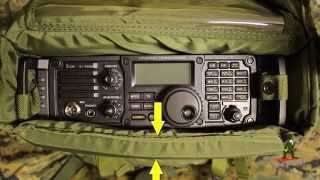 Packing the Icom IC-7200 HF Radio in Surplus Harris Falcon II Radio Pack The IC-7200 can be found for about $500.00, but it weighs 12.1 pounds, so it would be a bit heavy to lug around. The Tech Prepper "No Random Contacts" seem a bit foolish to me, but then again to each his own. |
“Every man has two deaths, when he is buried in the ground and the last time someone says his name. In some ways, men can be immortal. “ - Ernest Hemingway
|
Originally Posted By firemed13: In regards to emcomm: PACE plan. Dont count on Starlink (Iran was able to block out, Ive had areas in Colorado (2.5 hours) and Wyoming(4.5 hours) Starlink would not work) Dont count on Mesh/Tastic/Core Reticlum. Dont count on radio Ham GMRS whatever. There is no one stop solution. Im in total agreement with whats been stated above but I dont look at emcomm as one solution, and there seems to be instances in the past to prove this. P - Primary: Your preferred, everyday method. It is the fastest and most efficient, but often lacks redundancy. A - Alternate: A common, reliable backup method. It might be less optimal or slower, but it accomplishes the same task. C - Contingency: An entirely different method or system. It is usually slower or more expensive, but capable of functioning when primary and alternate methods are down. E - Emergency: Your method of last resort. It has significant delays or impacts, but keeps you operational until conditions improve Hope this gives you some direction on this. Im sure someone will get their panties in a bunch over this but Im only trying to help. As for the radio aspect of things: I use two radios mainly for POTA an Icom 706mk2g and a Yaesu 710. My SOTA setup is either a Xiegu x6100 or a Zbitx. I agree with all your points and sometimes you cannot be the one guy that has the whole Ideal PACE. The Primary is easy but as you go down that PACE plan road the bills keep adding up. I have an interest in radio, so even though a starlink might do more for me in more scenarios, my neighborhood is littered with starlinks and I would like to fill that HF gap. Also some of my friends have a starlink, I wanted an in reach, but they really upped their monthly price and I am not out remotely much anymore, might still get two of those. Optimal Pace is probably: P - Cell phone A - Garmin in reach if remote, Starlink mini if home C - UHF and VHF HT / Base / Mobile E - HF That's a lot of stuff and money for anyone not in the instagram prepper reels. |
|
Originally Posted By K9-Bob: https://www.ar15.com/media/mediaFiles/54857/IC-7200_jpg-3772284.JPG  https://www.youtube.com/watch?v=ffjq3BJXd94 https://www.youtube.com/watch?v=ffjq3BJXd94The IC-7200 can be found for about $500.00, but it weighs 12.1 pounds, so it would be a bit heavy to lug around. The Tech Prepper "No Random Contacts" seem a bit foolish to me, but then again to each his own. thanks for providing a good example and some advice. Can you explain why you think the no random contacts is foolish? |
|
Take a peek at this archive thread and understand the concept discussed to get a handle on the challenges of a QRP (~5 watt) radio versus a 100 watt. https://www.ar15.com/forums/Outdoors/-ARCHIVED-THREAD-Watts-versus-whats-/22-706744/?page=1 Originally Posted By Greenspan: Can you explain why you think the no random contacts is foolish? How are you going to develop skills and experience? HF is not plug and play. What are you going to do during an emergency if the particular person you expect to talk to isn't there or can't be reached due to propagation or other issues? Helene was mentioned already in the thread. If you had listened to the on-air traffic in the aftermath of Helene you'd probably have a very different approach to this exercise of radio for emergency/disaster communications. |
This is...a clue - Pat_Rogers
I'm not adequately aluminumized for this thread. - gonzo_beyondo
CO, MI, OR - Please lobby your legislators to end discrimination against non-resident CCW permit holders
I'm not adequately aluminumized for this thread. - gonzo_beyondo
CO, MI, OR - Please lobby your legislators to end discrimination against non-resident CCW permit holders
|
Originally Posted By Gamma762: Take a peek at this archive thread and understand the concept discussed to get a handle on the challenges of a QRP (~5 watt) radio versus a 100 watt. https://www.ar15.com/forums/Outdoors/-ARCHIVED-THREAD-Watts-versus-whats-/22-706744/?page=1 How are you going to develop skills and experience? HF is not plug and play. What are you going to do during an emergency if the particular person you expect to talk to isn't there or can't be reached due to propagation or other issues? Helene was mentioned already in the thread. If you had listened to the on-air traffic in the aftermath of Helene you'd probably have a very different approach to this exercise of radio for emergency/disaster communications. Originally Posted By Gamma762: Take a peek at this archive thread and understand the concept discussed to get a handle on the challenges of a QRP (~5 watt) radio versus a 100 watt. https://www.ar15.com/forums/Outdoors/-ARCHIVED-THREAD-Watts-versus-whats-/22-706744/?page=1 Originally Posted By Greenspan: Can you explain why you think the no random contacts is foolish? How are you going to develop skills and experience? HF is not plug and play. What are you going to do during an emergency if the particular person you expect to talk to isn't there or can't be reached due to propagation or other issues? Helene was mentioned already in the thread. If you had listened to the on-air traffic in the aftermath of Helene you'd probably have a very different approach to this exercise of radio for emergency/disaster communications. Oh, I totally agree with you on the practice, you have to make contacts where and when you can, but if all you have is random people to talk to then you also don't have anyone to talk to. Sure in an emergency, any helpful person will do. I think the point of the no random contacts is that communication prepper questions usually are "I want to talk to this person over here, how do I do that" vs "I want to shoot signal anywhere and hope someone responds". The truth is both could be valid, but people usually ask the 1st question but hams usually do the 2nd question. What would I know that I am ignorant of had I listened to the Helene traffic? It's not really fair to just say, "oh you are ignorant because you lack this experience" and not follow-up with the lesson. I assure you, I am open minded to the lesson. |
|
Originally Posted By Greenspan: I agree with all your points and sometimes you cannot be the one guy that has the whole Ideal PACE. The Primary is easy but as you go down that PACE plan road the bills keep adding up. I have an interest in radio, so even though a starlink might do more for me in more scenarios, my neighborhood is littered with starlinks and I would like to fill that HF gap. Also some of my friends have a starlink, I wanted an in reach, but they really upped their monthly price and I am not out remotely much anymore, might still get two of those. Optimal Pace is probably: P - Cell phone A - Garmin in reach if remote, Starlink mini if home C - UHF and VHF HT / Base / Mobile E - HF That's a lot of stuff and money for anyone not in the instagram prepper reels.   This is probably the sanest and most realistic "PACE" plan ever posted on an amateur radio group. Well done! "Speed costs money, how fast do you want to go?" It's nice to have all the options at your fingertips but few have the time, energy and resources. In this day and age, amateur radio is a hobby first and a resource a very distant second. That in no way diminishes the joy folks get from "playing radio", whether that be EMCOMM LARPing or making meteor scatter contacts. If things ever get so bad that HF is the only option that works, then that's very bad indeed There might not be a lot of folks left to talk to by any means, and even fewer that can take the time out from pure survival activities to get an HF station on the air. As for Starlink not being reliable, unless service is intentionally denied, something that generally happens only in war zones, it's still many times more reliable than HF. Of course, in a perfect PACE plan you'd have equipment to communicate on multiple satellite constellations: Starlink, Iridium (e.g. inReach), INMARSAT, and a variety of VSAT services  💰💰💰 💰💰💰 |
"Cogito, ergo armatum sum."

|
Originally Posted By aa777888-2: Your friends and family are all hams, then? Can you make comm's with them using simplex, or is a repeater necessary? If a repeater is necessary, how robust is the repeater? Would it survive a Helene-style event? How many days will the backup power last on the repeater(s) you rely on? Leaving aside TEOTWAWKI scenarios where there is no terrestrial or space-based infrastructure anymore, for more normal, SHTF, Helene-style emergencies, Starlink is the Tier 1 solution by a very, v e r y w i d e margin. A Starlink Mini can be had for under $300 including registration fees and the first month of service. Order the least expensive "Roam" service and put it in standby mode for $10/mo. Even in standby mode, with its 500 Kbps limit, you can easily send and receive emails, text messages, and make WiFi calls with your normal phone or PC. Light web browsing is possible as well. And, if it's going to be a lengthy emergency, you can activate full speed mode via the Starlink itself. Starlink requires no training, no special skills, no licensing, and very little support infrastructure. Pretty much any low-spec solar/battery unit will run it forever. There are no antennas to sort out. No mic's, speakers, headphones, antenna tuners, antenna analyzers, blah, blah, blah. It is easily back-packable, requires no more power than the average QRP portable HF radio and, again, no need to throw wires, antennas, cables and accessories in that same backpack. If you want on-the-move service, the Roam plan allows use up to 100 MPH. And no need to shell out for an HF antenna on your vehlicle(s), so even more money and time saved there. By the time you add up the cost of all the stuff you will invest in to achieve HF "emcomm", you can pay for the Starlink Mini and probably a year or two of service. And that isn't accounting for the value of your time. If reliable, robust, safety-of-life comm's are the goal, if you are serious about back-up comm's in the event of a serious situation, the right answer is Starlink. We are well into the 21st Century. Ham radio is a hobby, not a solution. Yes, I do own a Mini, it's sitting in a closet waiting for a disaster, although sometimes I take it on the road because I'm going somewhere with no cell service. Originally Posted By aa777888-2: Originally Posted By Greenspan: thank you for your feedback and confirming to keep the radios separate. I do realize emcom can be a LARP, my area has active emcom focused repeater network and I am picturing Helene style use for HF and my UHF and VHF is 90% to talk to my friends and family that I have been testing regularly with, so we already have that local area network established but not perfect.... I have my local worked out with commercial DMR for my family and friends. I have regional on the repeaters (assuming they work). I want HF for regional non repeater comms and to reach further if needed for things like Helene type event where outside assistance was needed, even if not for me maybe for an elderly neighbor that needs a specific med in 3 days or will die. That sort of thing, and just fun, but fun with a purpose. Starlink requires no training, no special skills, no licensing, and very little support infrastructure. Pretty much any low-spec solar/battery unit will run it forever. There are no antennas to sort out. No mic's, speakers, headphones, antenna tuners, antenna analyzers, blah, blah, blah. It is easily back-packable, requires no more power than the average QRP portable HF radio and, again, no need to throw wires, antennas, cables and accessories in that same backpack. If you want on-the-move service, the Roam plan allows use up to 100 MPH. And no need to shell out for an HF antenna on your vehlicle(s), so even more money and time saved there. By the time you add up the cost of all the stuff you will invest in to achieve HF "emcomm", you can pay for the Starlink Mini and probably a year or two of service. And that isn't accounting for the value of your time. If reliable, robust, safety-of-life comm's are the goal, if you are serious about back-up comm's in the event of a serious situation, the right answer is Starlink. We are well into the 21st Century. Ham radio is a hobby, not a solution. Yes, I do own a Mini, it's sitting in a closet waiting for a disaster, although sometimes I take it on the road because I'm going somewhere with no cell service. I will add that locally if cell, landline and internet is all down due to a disaster, ham VHF / UHF might get you in contact with other people that also have no other comm if the local repeater antennas are still up, have battery backup charged with solar and an off chance you can contact someone with starlink. If you need medical help so will a big chunk of your town. HF could be useful in contacting someone outside the disaster area that still has normal comm and they could call a family member outside the disaster area and let them know you are ok. This was actually done for weeks from Puerto Rico when the hurricane took out the grid and all comm from the island except for 3 ham operators. And then 50 hams from the US voluntarily deployed there to help with radio comm. We have a member that did that on his own dime with his own equipment. Other than that, ham radio is a hobby for the most part. I don't have starlink on standby, but I do have InReach that I use in remote camping areas and also keep for emergency comm. Just like security should be in layers, 2 is 1 and 1 is none, comm should also be in layers. |
Mach
Nobody is coming to save us.
.
Nobody is coming to save us.
.
|
I was in East TN, probably 60 miles from NC when Helene rolled through. I was not involved with the recovery, but did listen to a lot of VHF repeater traffic from the Mount Mitchell, NC, repeater. In the days and months afterwards, they used this repeater as a coordination base for volunteers, identifying supplies they needed and did *not* need. The held nets several times a day listing locations for help, what was available, what was needed, what was available but needed someone to go pick it up and move it. The amount of supplies they had and volunteers was very impressive. And, I'm sure there was a ton of behind the scenes work going on as well. But, it was a high power, wide ranging (110 mile radius) repeater that allowed this to work. A repeater that either stayed up or was back up shortly after the event passed. A very unusual repeater in terms of coverage and reliability, not impacted by the event. Cell phones were down for a very long time, weeks, or longer in some areas. This really creates challenges for folks that use cell or internet based radios, like a lot of first responders now. In this case, anyone with a Baofeng could find help or assistance. Contrary to the naysayers, I never heard anyone apparently misusing a china radio mucking up the repeater, and this is an open repeater, no tone. There could have been DMR or HF sources on the air waves that I was not aware of. This repeater just happens to reach my QTH, some 80 miles away, so I heard the traffic, and it went of for a couple of months. They were telling you where to get food, water, generators, gasoline, heck, even chainsaws. The equipment was free to borrow, yes, even chainsaws.  While a Starlink system would provide information, and get you a phone, for the first week or three, there was literally no one local to call. 911 was nonexistent. I still think the Starlink is a fantastic part of a PACE plan and is instrumental in the recovery phase, as it allows you to get back towards normal once the immediate threats are addressed. |
|
Forget "weatherproof" Forget "man pack" Nobody is going to hear you walking around with a small HF compromise backpack antenna. Every time I hear "manpack" I imagine nerdy airsoft kids playing in the back yard. 100 watt HF rigs need to breathe if you seal them up to be waterproof, or pack them tight in a ruck they are going to overheat. [Clint Smith voice] The PRC-77 was only 2 watts VHF, and this ain't Vietnam. Get a small 100watt HF rig, a BIOENNO battery, and a good antenna. SSB voice is probably the best mode for emergencies. I do POTA with FT891 BIOENNO in an amazon plastic ammo can Wolf River Coil or 20/40 dipole. It's FUN calling "CQ parks on the air" and getting a pile-up of hams calling you. You will learn how the different bands propagate, and how that changes from day to night. It's more about knowledge and experience than gear.    slingshot that dipole up between two trees    . . . . . https://associatedradio.com/nitem.php?cat_id=39&item_id=1632 https://portablezero.com/yaesu857D.html https://qrpkits.com/dualbanddipole.html https://www.wolfrivercoils.com/TIA.html |

|
The most modern that I can think of that can be somewhat reasonably attained is the CODAN 2110 series. They are out of production and no longer supported but can be found on line at times for a couple grand or so. I have one. It has a built in tuner, is 25 watts, and has a phenomenal DSP for audio shaping. I can reliably make contacts using it sitting on the ground with the 9 foot whip antenna and a counterpoise but it's no guarantee. Outside of that there really isn't much out there. If I were to put together a system from scratch I would probably go with a G90 and shove it in a waterproof box with a DB9 serial cable exiting it so that the remote mount control head could be used more easily and somewhat shielded from the elements. |
"My battery is low and it's getting dark."
|
Originally Posted By mancow:..... If I were to put together a system from scratch I would probably go with a G90 and shove it in a waterproof box with a DB9 serial cable exiting it so that the remote mount control head could be used more easily and somewhat shielded from the elements. Even the little G90 will overheat if you "shove it in a waterproof box " |
|
Originally Posted By Colt653: Even the little G90 will overheat if you "shove it in a waterproof box " I think most guys can understand how to open the box, and get airflow through the radio. Built in antenna tuner is fairly interesting on the G90. I just looked at the amazon reviews, and theres a bunch of pictures of guys building them into ammo cans. Neat idea. |
|
Here's someone who found out that talking to other people can be a benefit: https://www.ar15.com/forums/outdoors/-/22-690203/ |
This is...a clue - Pat_Rogers
I'm not adequately aluminumized for this thread. - gonzo_beyondo
CO, MI, OR - Please lobby your legislators to end discrimination against non-resident CCW permit holders
I'm not adequately aluminumized for this thread. - gonzo_beyondo
CO, MI, OR - Please lobby your legislators to end discrimination against non-resident CCW permit holders
|
Starlink mini is my primary internet source. 100gb/mo for 55 bucks. That is enough for me. I have the stuff to take it on the road and power it by battery/solar indefinitely. All my HF radios right now are Xiegu. I learned with a 20 watt G90 with an EFHW, and got 70 countries with 20w and that wire SSB. Bought an amp and got 100 countries with the same antenna and 100w. I routinely check into the qrp net on Sunday evenings, and have no issues most weeks checking in with 10w and dropping down from there. It's 50/50 on weather or not I can make it with 1/2w. I check into the weekly net with a Xiegu X6100 connected to a micro PA100 amp that can do a little over 100w, but I normally don't drive it harder than 75. I hear most everyone, I stream the radio directly into my hearing aids, very handy. I have a 50w amp that will work with any of the 3 radios, and is very compact. The X6100 will do ft8 on the radio, and save the contacts to a micro sd card. The guy that wrote that is working on js8 so the X6100 would just need a folding bluetooth keyboard and an antenna. People hate on them, but they are decent radios, and all but the G106 and G1M have killer tuners. They have an amplifier with a great tuner. They are certainly not contest rigs, but they offer a decent radio with good features that won't break the bank. |
|
Originally Posted By Colt653: Even the little G90 will overheat if you "shove it in a waterproof box " Originally Posted By Colt653: Originally Posted By mancow:..... If I were to put together a system from scratch I would probably go with a G90 and shove it in a waterproof box with a DB9 serial cable exiting it so that the remote mount control head could be used more easily and somewhat shielded from the elements. Even the little G90 will overheat if you "shove it in a waterproof box " I haven't tried with mine but was assuming that some relatively light duty SSB traffic might not be too overwhelming for it. I sure wouldn't do digital. |
"My battery is low and it's getting dark."
|
Originally Posted By Colt653: Forget "weatherproof" Forget "man pack" Nobody is going to hear you walking around with a small HF compromise backpack antenna. Every time I hear "manpack" I imagine nerdy airsoft kids playing in the back yard. 100 watt HF rigs need to breathe if you seal them up to be waterproof, or pack them tight in a ruck they are going to overheat. [Clint Smith voice] The PRC-77 was only 2 watts VHF, and this ain't Vietnam. Get a small 100watt HF rig, a BIOENNO battery, and a good antenna. SSB voice is probably the best mode for emergencies. I do POTA with FT891 BIOENNO in an amazon plastic ammo can Wolf River Coil or 20/40 dipole. It's FUN calling "CQ parks on the air" and getting a pile-up of hams calling you. You will learn how the different bands propagate, and how that changes from day to night. It's more about knowledge and experience than gear. https://i.imgur.com/dpKYL5l.jpg https://i.imgur.com/VgRzNSt.jpg https://i.imgur.com/2yTVmpQ.jpg slingshot that dipole up between two trees https://i.imgur.com/l7iobwt.jpg https://i.imgur.com/oyDbZw5.jpg https://i.imgur.com/Qfh3yOJ.jpg . . . . . https://associatedradio.com/nitem.php?cat_id=39&item_id=1632 https://portablezero.com/yaesu857D.html https://qrpkits.com/dualbanddipole.html https://www.wolfrivercoils.com/TIA.html Thank you for your comments and I appreciate your information. I take it your map shown is on more than one day or is that all a single day? Based on your extensive experience how would that map change if you had 5W, 10W, 50W? I have been considering the 100W FT891 though it looks like the radio its self is not that bad in heft that is quite the chonk of a battery. While I am looking at POTA style ops I don't want to rule out SOTA, and to my question of your contact map, I don't really need to make it to Europe ever. If I got half the US pretty consistently voice, and almost always JS8 I would be totally pleased. How far off base am I here? |
|
Mine are more go bags than manpacks. I have a bag for each that includes power and a length of coax. A couple of them have antennas as well. I can put up a vertical or an efhw with what is in the G90 bag. Same with the X6100. It will fit in one of the "tactical" water bottle holders that can be put on a belt or a pack. |
|
Originally Posted By Greenspan: While I am looking at POTA style ops I don't want to rule out SOTA, and to my question of your contact map, I don't really need to make it to Europe ever. If I got half the US pretty consistently voice, and almost always JS8 I would be totally pleased. How far off base am I here? This is where the knowledge and experience comes in to play, because HF propagation doesn't work the way you probably think it does. It's not a matter of "I need x miles of range", because longer distances are sometimes happening when shorter are not. All of which varies with band/frequency, time of day, ionospheric conditions (space weather), season, and "season" of the 11 year sunspot cycle. Part of the fun of amateur radio, for the folks who like fun, is where the roll of a dice of all the variables lands you. The same thing is a headache for the folks looking for reliable and predictable. The knowledge and experience part lets you pick the variables (the ones under your control anyway) to give you the best chance at what you're looking for at the time. |
This is...a clue - Pat_Rogers
I'm not adequately aluminumized for this thread. - gonzo_beyondo
CO, MI, OR - Please lobby your legislators to end discrimination against non-resident CCW permit holders
I'm not adequately aluminumized for this thread. - gonzo_beyondo
CO, MI, OR - Please lobby your legislators to end discrimination against non-resident CCW permit holders
|
Originally Posted By Greenspan:... I don't really need to make it to Europe ever.... Honestly, it sounds like ham radio is not what you're looking for. Newer cellphones can make contact thru satillite, something like that might be better in an emergency. https://support.apple.com/en-us/105097 |
|
Originally Posted By Gamma762: This is where the knowledge and experience comes in to play, because HF propagation doesn't work the way you probably think it does. It's not a matter of "I need x miles of range", because longer distances are sometimes happening when shorter are not. All of which varies with band/frequency, time of day, ionospheric conditions (space weather), season, and "season" of the 11 year sunspot cycle. Part of the fun of amateur radio, for the folks who like fun, is where the roll of a dice of all the variables lands you. The same thing is a headache for the folks looking for reliable and predictable. The knowledge and experience part lets you pick the variables (the ones under your control anyway) to give you the best chance at what you're looking for at the time. Originally Posted By Gamma762: Originally Posted By Greenspan: While I am looking at POTA style ops I don't want to rule out SOTA, and to my question of your contact map, I don't really need to make it to Europe ever. If I got half the US pretty consistently voice, and almost always JS8 I would be totally pleased. How far off base am I here? This is where the knowledge and experience comes in to play, because HF propagation doesn't work the way you probably think it does. It's not a matter of "I need x miles of range", because longer distances are sometimes happening when shorter are not. All of which varies with band/frequency, time of day, ionospheric conditions (space weather), season, and "season" of the 11 year sunspot cycle. Part of the fun of amateur radio, for the folks who like fun, is where the roll of a dice of all the variables lands you. The same thing is a headache for the folks looking for reliable and predictable. The knowledge and experience part lets you pick the variables (the ones under your control anyway) to give you the best chance at what you're looking for at the time. If I had that experience I would not be asking the question. I do understand the propagation theory and cycle and a low point is coming soon, I don't understand the experience side which is OK considering the solar cycle long term and all that shit you can do nothing about, what do I need to approach pretty reliable for what I want to do which is the NVIS locally / countywide and about half the country JS8? I am trying to balance saving my back, space, and battery needs with actually making contacts primarily on js8. I am looking for people to share experience based on that I want it to be in that 85% of the time sort of success rate based on what I have discussed. |
|
Originally Posted By Colt653: Honestly, it sounds like ham radio is not what you're looking for. Newer cellphones can make contact thru satillite, something like that might be better in an emergency. https://support.apple.com/en-us/105097 have sat already thanks, don't want more. |
Member
Joined:
Jan 2022
Posts:
2947
EE: 0% (0)
 MO, USA
|
Originally Posted By Colt653: Forget "weatherproof" Forget "man pack" Nobody is going to hear you walking around with a small HF compromise backpack antenna. Every time I hear "manpack" I imagine nerdy airsoft kids playing in the back yard. 100 watt HF rigs need to breathe if you seal them up to be waterproof, or pack them tight in a ruck they are going to overheat. [Clint Smith voice] The PRC-77 was only 2 watts VHF, and this ain't Vietnam. Get a small 100watt HF rig, a BIOENNO battery, and a good antenna. SSB voice is probably the best mode for emergencies. I do POTA with FT891 BIOENNO in an amazon plastic ammo can Wolf River Coil or 20/40 dipole. It's FUN calling "CQ parks on the air" and getting a pile-up of hams calling you. You will learn how the different bands propagate, and how that changes from day to night. It's more about knowledge and experience than gear. https://i.imgur.com/dpKYL5l.jpg https://i.imgur.com/VgRzNSt.jpg https://i.imgur.com/2yTVmpQ.jpg slingshot that dipole up between two trees https://i.imgur.com/l7iobwt.jpg https://i.imgur.com/oyDbZw5.jpg https://i.imgur.com/Qfh3yOJ.jpg . . . . . https://associatedradio.com/nitem.php?cat_id=39&item_id=1632 https://portablezero.com/yaesu857D.html https://qrpkits.com/dualbanddipole.html https://www.wolfrivercoils.com/TIA.html I could NOT have said it all any better. I have an 891 for my mobile and a couple of Icom 7300's for the house The 891 is a good solid mobile radio (it is small but still runs a full 100 watts) But the 7300 is a much easier to operate radio, and has a good waterfall display with a touch screen and is a better receiver. But it is all a matter of preference. But I agree wholeheartedly with the above posters approach to amateur radio HF communications. Forget waterproof, and forget manpack is the best advice you have received. |
|
Originally Posted By K0UA: I could NOT have said it all any better. I have an 891 for my mobile and a couple of Icom 7300's for the house The 891 is a good solid mobile radio (it is small but still runs a full 100 watts) But the 7300 is a much easier to operate radio, and has a good waterfall display with a touch screen and is a better receiver. But it is all a matter of preference. But I agree wholeheartedly with the above posters approach to amateur radio HF communications. Forget waterproof, and forget manpack is the best advice you have received. Originally Posted By K0UA: Originally Posted By Colt653: Forget "weatherproof" Forget "man pack" Nobody is going to hear you walking around with a small HF compromise backpack antenna. Every time I hear "manpack" I imagine nerdy airsoft kids playing in the back yard. 100 watt HF rigs need to breathe if you seal them up to be waterproof, or pack them tight in a ruck they are going to overheat. [Clint Smith voice] The PRC-77 was only 2 watts VHF, and this ain't Vietnam. Get a small 100watt HF rig, a BIOENNO battery, and a good antenna. SSB voice is probably the best mode for emergencies. I do POTA with FT891 BIOENNO in an amazon plastic ammo can Wolf River Coil or 20/40 dipole. It's FUN calling "CQ parks on the air" and getting a pile-up of hams calling you. You will learn how the different bands propagate, and how that changes from day to night. It's more about knowledge and experience than gear. https://i.imgur.com/dpKYL5l.jpg https://i.imgur.com/VgRzNSt.jpg https://i.imgur.com/2yTVmpQ.jpg slingshot that dipole up between two trees https://i.imgur.com/l7iobwt.jpg https://i.imgur.com/oyDbZw5.jpg https://i.imgur.com/Qfh3yOJ.jpg . . . . . https://associatedradio.com/nitem.php?cat_id=39&item_id=1632 https://portablezero.com/yaesu857D.html https://qrpkits.com/dualbanddipole.html https://www.wolfrivercoils.com/TIA.html I could NOT have said it all any better. I have an 891 for my mobile and a couple of Icom 7300's for the house The 891 is a good solid mobile radio (it is small but still runs a full 100 watts) But the 7300 is a much easier to operate radio, and has a good waterfall display with a touch screen and is a better receiver. But it is all a matter of preference. But I agree wholeheartedly with the above posters approach to amateur radio HF communications. Forget waterproof, and forget manpack is the best advice you have received. thank you for your input, I think I should have said radio deployment bag and no man pack. I have since clarified I mean fast setup I can carry over distances beyond truck to park bench. Is the "forget waterproof" comment because there just are not any good radios that have weather proofing? Do you pack up your 891 if it starts raining or just keep going and it has not been an issue? How about if the dust gets a swirling? |
|
Originally Posted By Greenspan: Is the "forget waterproof" comment because there just are not any good radios that have weather proofing? Do you pack up your 891 if it starts raining or just keep going and it has not been an issue? How about if the dust gets a swirling? turn on the windshield wipers and keep going   
|
|
Originally Posted By Colt653: turn on the windshield wipers and keep going https://i.imgur.com/yIRAoZ9.png https://i.imgur.com/VJMMHSI.jpg Funny, but not really what I had in mind on a camping trip. |
Member
Joined:
Jan 2022
Posts:
2948
EE: 0% (0)
MO, USA
|
Originally Posted By Colt653: turn on the windshield wipers and keep going https://i.imgur.com/yIRAoZ9.png https://i.imgur.com/VJMMHSI.jpg Originally Posted By Colt653: Originally Posted By Greenspan: Is the "forget waterproof" comment because there just are not any good radios that have weather proofing? Do you pack up your 891 if it starts raining or just keep going and it has not been an issue? How about if the dust gets a swirling? turn on the windshield wipers and keep going https://i.imgur.com/yIRAoZ9.png https://i.imgur.com/VJMMHSI.jpg Same mode of operation for my 891 here. Except the vehicle is a 2010 Silverado. And yes it is "rainproof". Setup is a breeze. AND good seating is automatically provided.
|
Member
Joined:
Jan 2022
Posts:
2949
EE: 0% (0)
MO, USA
 " />
" /> " />
" />
|
Attached File The NANUK 910 Hard Case fits the Yaesu FT-891 perfectly and makes it about as waterproof as you can get.  You can slip the hard case in a backpack and you are good to go. You can slip the hard case in a backpack and you are good to go. |
“Every man has two deaths, when he is buried in the ground and the last time someone says his name. In some ways, men can be immortal. “ - Ernest Hemingway
|
Originally Posted By Greenspan: thank you for your input, I think I should have said radio deployment bag and no man pack. I have since clarified I mean fast setup I can carry over distances beyond truck to park bench. Is the "forget waterproof" comment because there just are not any good radios that have weather proofing? Do you pack up your 891 if it starts raining or just keep going and it has not been an issue? How about if the dust gets a swirling? Originally Posted By Greenspan: Originally Posted By K0UA: Originally Posted By Colt653: Forget "weatherproof" Forget "man pack" Nobody is going to hear you walking around with a small HF compromise backpack antenna. Every time I hear "manpack" I imagine nerdy airsoft kids playing in the back yard. 100 watt HF rigs need to breathe if you seal them up to be waterproof, or pack them tight in a ruck they are going to overheat. [Clint Smith voice] The PRC-77 was only 2 watts VHF, and this ain't Vietnam. Get a small 100watt HF rig, a BIOENNO battery, and a good antenna. SSB voice is probably the best mode for emergencies. I do POTA with FT891 BIOENNO in an amazon plastic ammo can Wolf River Coil or 20/40 dipole. It's FUN calling "CQ parks on the air" and getting a pile-up of hams calling you. You will learn how the different bands propagate, and how that changes from day to night. It's more about knowledge and experience than gear. https://i.imgur.com/dpKYL5l.jpg https://i.imgur.com/VgRzNSt.jpg https://i.imgur.com/2yTVmpQ.jpg slingshot that dipole up between two trees https://i.imgur.com/l7iobwt.jpg https://i.imgur.com/oyDbZw5.jpg https://i.imgur.com/Qfh3yOJ.jpg . . . . . https://associatedradio.com/nitem.php?cat_id=39&item_id=1632 https://portablezero.com/yaesu857D.html https://qrpkits.com/dualbanddipole.html https://www.wolfrivercoils.com/TIA.html I could NOT have said it all any better. I have an 891 for my mobile and a couple of Icom 7300's for the house The 891 is a good solid mobile radio (it is small but still runs a full 100 watts) But the 7300 is a much easier to operate radio, and has a good waterfall display with a touch screen and is a better receiver. But it is all a matter of preference. But I agree wholeheartedly with the above posters approach to amateur radio HF communications. Forget waterproof, and forget manpack is the best advice you have received. thank you for your input, I think I should have said radio deployment bag and no man pack. I have since clarified I mean fast setup I can carry over distances beyond truck to park bench. Is the "forget waterproof" comment because there just are not any good radios that have weather proofing? Do you pack up your 891 if it starts raining or just keep going and it has not been an issue? How about if the dust gets a swirling? water proof while operating is not impossible but because you need constant airflow to dissipate the heat the components generate it will have to be a home brew solution. It just isn't off the shelf. You might be able to make a box with downward facing air intake and exhaust and airflow with push / pull fans, but you aren't going to able to change the freq and controls unless you have it coupled to a cell phone or something, ( some of that does exist ) even then the microphone needs air contact so that will not be water proof unless you can use the cell phone microphone or a blue tooth mic and speaker and some of that does exist to some extent, it just isn't common. Even that would not be rain proof, just rain resistant. When it is raining, I go into a tent or I close the water proof box and stop operating. NVIS generally requires a lot of power because the higher the angle off the ionisphere the higher the attenuation of the signal back to the dirt. It is possible at 10 or 20 watts, but not reliable. 100 watts will make it work on 60 meters most evenings at the right time window and maybe 80 meters with more power most nights and 40 meters once in a while with more than 100 watts. There are exceptions of course. Easy to deploy ( meaning low height horizontal ) portable NVIS antennas are very inefficient which makes power more important. The best NVIS antenna is going to be a 1/2 wavelength horizontal wire between 1/4 to 1/3 wavelength off the ground. So take the best ham band for NVIS, 60 meters. the best antenna will be a horizontal wire of 30 meters long and 15 to 20 meters high. Not something you can do in a minute or 2. Of course it can be 10 feet or 5 feet off the ground, but then the majority of the power will be in ground losses and not radiated. |
Mach
Nobody is coming to save us.
.
Nobody is coming to save us.
.
|
Originally Posted By Mach: Water proof transport box, sure that is easy. I do that kayaking with an IC-705 water proof box that i open and get good airflow with. water proof while operating is not impossible but because you need constant airflow to dissipate the heat the components generate it will have to be a home brew solution. It just isn't off the shelf. You might be able to make a box with downward facing air intake and exhaust and airflow with push / pull fans, but you aren't going to able to change the freq and controls unless you have it coupled to a cell phone or something, ( some of that does exist ) even then the microphone needs air contact so that will not be water proof unless you can use the cell phone microphone or a blue tooth mic and speaker and some of that does exist to some extent, it just isn't common. Even that would not be rain proof, just rain resistant. When it is raining, I go into a tent or I close the water proof box and stop operating. NVIS generally requires a lot of power because the higher the angle off the ionisphere the higher the attenuation of the signal back to the dirt. It is possible at 10 or 20 watts, but not reliable. 100 watts will make it work on 60 meters most evenings at the right time window and maybe 80 meters with more power most nights and 40 meters once in a while with more than 100 watts. There are exceptions of course. Easy to deploy ( meaning low height horizontal ) portable NVIS antennas are very inefficient which makes power more important. The best NVIS antenna is going to be a 1/2 wavelength horizontal wire between 1/4 to 1/3 wavelength off the ground. So take the best ham band for NVIS, 60 meters. the best antenna will be a horizontal wire of 30 meters long and 15 to 20 meters high. Not something you can do in a minute or 2. Of course it can be 10 feet or 5 feet off the ground, but then the majority of the power will be in ground losses and not radiated. Originally Posted By Mach: Originally Posted By Greenspan: Originally Posted By K0UA: Originally Posted By Colt653: Forget "weatherproof" Forget "man pack" Nobody is going to hear you walking around with a small HF compromise backpack antenna. Every time I hear "manpack" I imagine nerdy airsoft kids playing in the back yard. 100 watt HF rigs need to breathe if you seal them up to be waterproof, or pack them tight in a ruck they are going to overheat. [Clint Smith voice] The PRC-77 was only 2 watts VHF, and this ain't Vietnam. Get a small 100watt HF rig, a BIOENNO battery, and a good antenna. SSB voice is probably the best mode for emergencies. I do POTA with FT891 BIOENNO in an amazon plastic ammo can Wolf River Coil or 20/40 dipole. It's FUN calling "CQ parks on the air" and getting a pile-up of hams calling you. You will learn how the different bands propagate, and how that changes from day to night. It's more about knowledge and experience than gear. https://i.imgur.com/dpKYL5l.jpg https://i.imgur.com/VgRzNSt.jpg https://i.imgur.com/2yTVmpQ.jpg slingshot that dipole up between two trees https://i.imgur.com/l7iobwt.jpg https://i.imgur.com/oyDbZw5.jpg https://i.imgur.com/Qfh3yOJ.jpg . . . . . https://associatedradio.com/nitem.php?cat_id=39&item_id=1632 https://portablezero.com/yaesu857D.html https://qrpkits.com/dualbanddipole.html https://www.wolfrivercoils.com/TIA.html I could NOT have said it all any better. I have an 891 for my mobile and a couple of Icom 7300's for the house The 891 is a good solid mobile radio (it is small but still runs a full 100 watts) But the 7300 is a much easier to operate radio, and has a good waterfall display with a touch screen and is a better receiver. But it is all a matter of preference. But I agree wholeheartedly with the above posters approach to amateur radio HF communications. Forget waterproof, and forget manpack is the best advice you have received. thank you for your input, I think I should have said radio deployment bag and no man pack. I have since clarified I mean fast setup I can carry over distances beyond truck to park bench. Is the "forget waterproof" comment because there just are not any good radios that have weather proofing? Do you pack up your 891 if it starts raining or just keep going and it has not been an issue? How about if the dust gets a swirling? water proof while operating is not impossible but because you need constant airflow to dissipate the heat the components generate it will have to be a home brew solution. It just isn't off the shelf. You might be able to make a box with downward facing air intake and exhaust and airflow with push / pull fans, but you aren't going to able to change the freq and controls unless you have it coupled to a cell phone or something, ( some of that does exist ) even then the microphone needs air contact so that will not be water proof unless you can use the cell phone microphone or a blue tooth mic and speaker and some of that does exist to some extent, it just isn't common. Even that would not be rain proof, just rain resistant. When it is raining, I go into a tent or I close the water proof box and stop operating. NVIS generally requires a lot of power because the higher the angle off the ionisphere the higher the attenuation of the signal back to the dirt. It is possible at 10 or 20 watts, but not reliable. 100 watts will make it work on 60 meters most evenings at the right time window and maybe 80 meters with more power most nights and 40 meters once in a while with more than 100 watts. There are exceptions of course. Easy to deploy ( meaning low height horizontal ) portable NVIS antennas are very inefficient which makes power more important. The best NVIS antenna is going to be a 1/2 wavelength horizontal wire between 1/4 to 1/3 wavelength off the ground. So take the best ham band for NVIS, 60 meters. the best antenna will be a horizontal wire of 30 meters long and 15 to 20 meters high. Not something you can do in a minute or 2. Of course it can be 10 feet or 5 feet off the ground, but then the majority of the power will be in ground losses and not radiated. A reasonable center support mast of 15 to 20 feet for a dipole will generally work fine on 80-60-40 for short range signals. No, it's not as good as a quarter wavelength up, but it will work. |
This is...a clue - Pat_Rogers
I'm not adequately aluminumized for this thread. - gonzo_beyondo
CO, MI, OR - Please lobby your legislators to end discrimination against non-resident CCW permit holders
I'm not adequately aluminumized for this thread. - gonzo_beyondo
CO, MI, OR - Please lobby your legislators to end discrimination against non-resident CCW permit holders
|
Originally Posted By Mach: Water proof transport box, sure that is easy. I do that kayaking with an IC-705 water proof box that i open and get good airflow with. water proof while operating is not impossible but because you need constant airflow to dissipate the heat the components generate it will have to be a home brew solution. It just isn't off the shelf. You might be able to make a box with downward facing air intake and exhaust and airflow with push / pull fans, but you aren't going to able to change the freq and controls unless you have it coupled to a cell phone or something, ( some of that does exist ) even then the microphone needs air contact so that will not be water proof unless you can use the cell phone microphone or a blue tooth mic and speaker and some of that does exist to some extent, it just isn't common. Even that would not be rain proof, just rain resistant. When it is raining, I go into a tent or I close the water proof box and stop operating. NVIS generally requires a lot of power because the higher the angle off the ionisphere the higher the attenuation of the signal back to the dirt. It is possible at 10 or 20 watts, but not reliable. 100 watts will make it work on 60 meters most evenings at the right time window and maybe 80 meters with more power most nights and 40 meters once in a while with more than 100 watts. There are exceptions of course. Easy to deploy ( meaning low height horizontal ) portable NVIS antennas are very inefficient which makes power more important. The best NVIS antenna is going to be a 1/2 wavelength horizontal wire between 1/4 to 1/3 wavelength off the ground. So take the best ham band for NVIS, 60 meters. the best antenna will be a horizontal wire of 30 meters long and 15 to 20 meters high. Not something you can do in a minute or 2. Of course it can be 10 feet or 5 feet off the ground, but then the majority of the power will be in ground losses and not radiated. Originally Posted By Mach: Originally Posted By Greenspan: Originally Posted By K0UA: Originally Posted By Colt653: Forget "weatherproof" Forget "man pack" Nobody is going to hear you walking around with a small HF compromise backpack antenna. Every time I hear "manpack" I imagine nerdy airsoft kids playing in the back yard. 100 watt HF rigs need to breathe if you seal them up to be waterproof, or pack them tight in a ruck they are going to overheat. [Clint Smith voice] The PRC-77 was only 2 watts VHF, and this ain't Vietnam. Get a small 100watt HF rig, a BIOENNO battery, and a good antenna. SSB voice is probably the best mode for emergencies. I do POTA with FT891 BIOENNO in an amazon plastic ammo can Wolf River Coil or 20/40 dipole. It's FUN calling "CQ parks on the air" and getting a pile-up of hams calling you. You will learn how the different bands propagate, and how that changes from day to night. It's more about knowledge and experience than gear. https://i.imgur.com/dpKYL5l.jpg https://i.imgur.com/VgRzNSt.jpg https://i.imgur.com/2yTVmpQ.jpg slingshot that dipole up between two trees https://i.imgur.com/l7iobwt.jpg https://i.imgur.com/oyDbZw5.jpg https://i.imgur.com/Qfh3yOJ.jpg . . . . . https://associatedradio.com/nitem.php?cat_id=39&item_id=1632 https://portablezero.com/yaesu857D.html https://qrpkits.com/dualbanddipole.html https://www.wolfrivercoils.com/TIA.html I could NOT have said it all any better. I have an 891 for my mobile and a couple of Icom 7300's for the house The 891 is a good solid mobile radio (it is small but still runs a full 100 watts) But the 7300 is a much easier to operate radio, and has a good waterfall display with a touch screen and is a better receiver. But it is all a matter of preference. But I agree wholeheartedly with the above posters approach to amateur radio HF communications. Forget waterproof, and forget manpack is the best advice you have received. thank you for your input, I think I should have said radio deployment bag and no man pack. I have since clarified I mean fast setup I can carry over distances beyond truck to park bench. Is the "forget waterproof" comment because there just are not any good radios that have weather proofing? Do you pack up your 891 if it starts raining or just keep going and it has not been an issue? How about if the dust gets a swirling? water proof while operating is not impossible but because you need constant airflow to dissipate the heat the components generate it will have to be a home brew solution. It just isn't off the shelf. You might be able to make a box with downward facing air intake and exhaust and airflow with push / pull fans, but you aren't going to able to change the freq and controls unless you have it coupled to a cell phone or something, ( some of that does exist ) even then the microphone needs air contact so that will not be water proof unless you can use the cell phone microphone or a blue tooth mic and speaker and some of that does exist to some extent, it just isn't common. Even that would not be rain proof, just rain resistant. When it is raining, I go into a tent or I close the water proof box and stop operating. NVIS generally requires a lot of power because the higher the angle off the ionisphere the higher the attenuation of the signal back to the dirt. It is possible at 10 or 20 watts, but not reliable. 100 watts will make it work on 60 meters most evenings at the right time window and maybe 80 meters with more power most nights and 40 meters once in a while with more than 100 watts. There are exceptions of course. Easy to deploy ( meaning low height horizontal ) portable NVIS antennas are very inefficient which makes power more important. The best NVIS antenna is going to be a 1/2 wavelength horizontal wire between 1/4 to 1/3 wavelength off the ground. So take the best ham band for NVIS, 60 meters. the best antenna will be a horizontal wire of 30 meters long and 15 to 20 meters high. Not something you can do in a minute or 2. Of course it can be 10 feet or 5 feet off the ground, but then the majority of the power will be in ground losses and not radiated. In your NVIS example are we talking voice or digital modes? Based on what I have seen (not hands on experience) the digital modes NVIS do pretty well on low power, but the voice has some issues where the RF patterns are interfering with each other, I forget what that is called.... |
|
Originally Posted By Greenspan: In your NVIS example are we talking voice or digital modes? Based on what I have seen (not hands on experience) the digital modes NVIS do pretty well on low power, but the voice has some issues where the RF patterns are interfering with each other, I forget what that is called.... Nothing to do with "NVIS", just that most of the digital modes can work at poorer signal to noise ratios than is comfortable for SSB voice. SSB voice is generally unsquelched and if you're running higher receive gain to try to dig out a weak signal it's very fatiguing to listen to that much noise. Part of HF propagation is that the lower frequencies you need for NVIS get attenuated by the D layer of the ionosphere during the daytime so a little extra umph helps. You can always turn the power down on a 100 watt radio, you can't turn the power up on a 5~10 watt radio. |
This is...a clue - Pat_Rogers
I'm not adequately aluminumized for this thread. - gonzo_beyondo
CO, MI, OR - Please lobby your legislators to end discrimination against non-resident CCW permit holders
I'm not adequately aluminumized for this thread. - gonzo_beyondo
CO, MI, OR - Please lobby your legislators to end discrimination against non-resident CCW permit holders
|
Originally Posted By Greenspan: In your NVIS example are we talking voice or digital modes? Based on what I have seen (not hands on experience) the digital modes NVIS do pretty well on low power, but the voice has some issues where the RF patterns are interfering with each other, I forget what that is called.... Originally Posted By Greenspan: Originally Posted By Mach: Originally Posted By Greenspan: Originally Posted By K0UA: Originally Posted By Colt653: Forget "weatherproof" Forget "man pack" Nobody is going to hear you walking around with a small HF compromise backpack antenna. Every time I hear "manpack" I imagine nerdy airsoft kids playing in the back yard. 100 watt HF rigs need to breathe if you seal them up to be waterproof, or pack them tight in a ruck they are going to overheat. [Clint Smith voice] The PRC-77 was only 2 watts VHF, and this ain't Vietnam. Get a small 100watt HF rig, a BIOENNO battery, and a good antenna. SSB voice is probably the best mode for emergencies. I do POTA with FT891 BIOENNO in an amazon plastic ammo can Wolf River Coil or 20/40 dipole. It's FUN calling "CQ parks on the air" and getting a pile-up of hams calling you. You will learn how the different bands propagate, and how that changes from day to night. It's more about knowledge and experience than gear. https://i.imgur.com/dpKYL5l.jpg https://i.imgur.com/VgRzNSt.jpg https://i.imgur.com/2yTVmpQ.jpg slingshot that dipole up between two trees https://i.imgur.com/l7iobwt.jpg https://i.imgur.com/oyDbZw5.jpg https://i.imgur.com/Qfh3yOJ.jpg . . . . . https://associatedradio.com/nitem.php?cat_id=39&item_id=1632 https://portablezero.com/yaesu857D.html https://qrpkits.com/dualbanddipole.html https://www.wolfrivercoils.com/TIA.html I could NOT have said it all any better. I have an 891 for my mobile and a couple of Icom 7300's for the house The 891 is a good solid mobile radio (it is small but still runs a full 100 watts) But the 7300 is a much easier to operate radio, and has a good waterfall display with a touch screen and is a better receiver. But it is all a matter of preference. But I agree wholeheartedly with the above posters approach to amateur radio HF communications. Forget waterproof, and forget manpack is the best advice you have received. thank you for your input, I think I should have said radio deployment bag and no man pack. I have since clarified I mean fast setup I can carry over distances beyond truck to park bench. Is the "forget waterproof" comment because there just are not any good radios that have weather proofing? Do you pack up your 891 if it starts raining or just keep going and it has not been an issue? How about if the dust gets a swirling? water proof while operating is not impossible but because you need constant airflow to dissipate the heat the components generate it will have to be a home brew solution. It just isn't off the shelf. You might be able to make a box with downward facing air intake and exhaust and airflow with push / pull fans, but you aren't going to able to change the freq and controls unless you have it coupled to a cell phone or something, ( some of that does exist ) even then the microphone needs air contact so that will not be water proof unless you can use the cell phone microphone or a blue tooth mic and speaker and some of that does exist to some extent, it just isn't common. Even that would not be rain proof, just rain resistant. When it is raining, I go into a tent or I close the water proof box and stop operating. NVIS generally requires a lot of power because the higher the angle off the ionisphere the higher the attenuation of the signal back to the dirt. It is possible at 10 or 20 watts, but not reliable. 100 watts will make it work on 60 meters most evenings at the right time window and maybe 80 meters with more power most nights and 40 meters once in a while with more than 100 watts. There are exceptions of course. Easy to deploy ( meaning low height horizontal ) portable NVIS antennas are very inefficient which makes power more important. The best NVIS antenna is going to be a 1/2 wavelength horizontal wire between 1/4 to 1/3 wavelength off the ground. So take the best ham band for NVIS, 60 meters. the best antenna will be a horizontal wire of 30 meters long and 15 to 20 meters high. Not something you can do in a minute or 2. Of course it can be 10 feet or 5 feet off the ground, but then the majority of the power will be in ground losses and not radiated. In your NVIS example are we talking voice or digital modes? Based on what I have seen (not hands on experience) the digital modes NVIS do pretty well on low power, but the voice has some issues where the RF patterns are interfering with each other, I forget what that is called.... The Ionisphere doesn't care whether the signal is phone or digital mode, the high angle of incidence incurs a higher attenuation for the same conditions compared to a lower angle and it also has to go through the D layer twice, once on the way up, bounce off the F layer and back down through the D layer. each time it goes through the D layer ( daylight ) there is attenuation and the higher the angle of incidence the higher the attenuation. For the same radiated power ( not power from the radio ) but power off the antenna in the direction needed, near vertical, the power is attenuated the same and as said above you need a signal about 3 -6 db above the noise level for phone to be intelligible, for digital it can decode much closer to the noise level. Also with phone, say SSB and 100 watts you are putting that 100 watts into a 3000 hz bandwith which spreads out the power density of the signal over that 3000 hz. For FT8 or JS8Call you are putting that 100 watts into a 50 hz bandwith, so the power density is much higher. Those 2 features make decoding the digital signal much easier for a particular path. You can look at it as 100 watts FT8 / JS8 is equivalent to 6000 watts SSB over 3000 hz or another way to say it is you need 6000 watts to get 100 watts per 50 hz ( like FT8 / JS8 is ) with SSB with 3000 hz bandwidth. that is why those 2 digital modes work so well, it has to do with power density of the signal. So even though the attenuation is much higher for NVIS ( when conditions allow NVIS and they often do not on ham bands, The NVIS freq needs to be below the Critical freq and that changes ) , it depends on the power density of the signal is and digital modes power density is much higher to start with, when using digital modes. But when NVIS conditions are good, you don't need a lot of power, the power comes into play when NVIS conditions are not good and many times it is not. |
Mach
Nobody is coming to save us.
.
Nobody is coming to save us.
.
|
NVIS FAQ link https://www.ar15.com/forums/Outdoors/Near-Vertical-Incidence-Skywave-NVIS-Frequently-Asked-Questions-FAQ-/22-706748/ |
"Cogito, ergo armatum sum."
|
Originally Posted By aa777888-2: NVIS FAQ link https://www.ar15.com/forums/Outdoors/Near-Vertical-Incidence-Skywave-NVIS-Frequently-Asked-Questions-FAQ-/22-706748/ |
Mach
Nobody is coming to save us.
.
Nobody is coming to save us.
.
|
Originally Posted By Gamma762: Nothing to do with "NVIS", just that most of the digital modes can work at poorer signal to noise ratios than is comfortable for SSB voice. SSB voice is generally unsquelched and if you're running higher receive gain to try to dig out a weak signal it's very fatiguing to listen to that much noise. Part of HF propagation is that the lower frequencies you need for NVIS get attenuated by the D layer of the ionosphere during the daytime so a little extra umph helps. You can always turn the power down on a 100 watt radio, you can't turn the power up on a 5~10 watt radio. Originally Posted By Gamma762: Originally Posted By Greenspan: In your NVIS example are we talking voice or digital modes? Based on what I have seen (not hands on experience) the digital modes NVIS do pretty well on low power, but the voice has some issues where the RF patterns are interfering with each other, I forget what that is called.... Nothing to do with "NVIS", just that most of the digital modes can work at poorer signal to noise ratios than is comfortable for SSB voice. SSB voice is generally unsquelched and if you're running higher receive gain to try to dig out a weak signal it's very fatiguing to listen to that much noise. Part of HF propagation is that the lower frequencies you need for NVIS get attenuated by the D layer of the ionosphere during the daytime so a little extra umph helps. You can always turn the power down on a 100 watt radio, you can't turn the power up on a 5~10 watt radio. thank you for your helpful comment, and this is what has me looking seriously at the 891.... I can always turn it down, but you can't turn a 5W up (aside from the amplifier option). I do worry a little bit about the equipment getting wrecked out here with the dust flow we get. Sometimes I am dumping out my pockets of dust after a hike out. That is what has me looking at the lab 599 stuff. |
|
Originally Posted By aa777888-2: NVIS FAQ link https://www.ar15.com/forums/Outdoors/Near-Vertical-Incidence-Skywave-NVIS-Frequently-Asked-Questions-FAQ-/22-706748/ thanks, very informative. |
 Lab599 Discovery TX-500 Ham Radio Go Kit I am not sure the juice is worth the squeeze with the Lab599, but I think if you bought one the PA500 amp would be a must have. Attached File This is a hot mess of wires, but man the $3600 price tag is just too much. https://theqrpstore.com/stations/ |
“Every man has two deaths, when he is buried in the ground and the last time someone says his name. In some ways, men can be immortal. “ - Ernest Hemingway
|
Originally Posted By K9-Bob: https://www.youtube.com/watch?v=dv3Tt-AUZCYI am not sure the juice is worth the squeeze with the Lab599, but I think if you bought one the PA500 amp would be a must have. https://www.ar15.com/media/mediaFiles/54857/DJI_0129-2-scaled_webp-3773838.JPG This is a hot mess of wires, but man the $3600 price tag is just too much. https://theqrpstore.com/stations/ sigh, you are not wrong! I think the 891 is really where it's at. |