


Posted: 1/25/2021 11:37:23 PM EDT
|
Come along with me as I learn how to apply my Volunteer Examiner credentials to license more folks into the world of amateur radio. Let's get APC more comms capabilities. https://www.ar15.com/forums/outdoors/GLAARG-VEC/22-699276/ @TNC @Redbirdxx @Extrabonez @SnowMule Tag other APC members if I have forgot their screen names as appropriate. |
|
Quoted: Come along with me as I learn how to apply my Volunteer Examiner credentials to license more folks into the world of amateur radio. Let's get APC more comms capabilities. https://www.ar15.com/forums/outdoors/GLAARG-VEC/22-699276/ @TNC @Redbirdxx @Extrabonez @SnowMule Tag other APC members if I have forgot their screen names as appropriate. @patchouli it's time to up your game. @sharkman6 it's time to start your game |
|
Im a noob but trying to learn. I went hiking with Mauser556 last weekend and he might be able to help me get up to speed on things when time allows. The Problem i have had to date is that i like to understand what I'm doing and everywhere I dip my toes feels like the deep end. Also, for VHF/UHF there are not many repeaters to listen to/program, and when scanning i haven't found much more than some channels doing CW so i dont know what else to do but have comms when out hiking. And I need to take the technician test too. As HF, I just got my yeasu 891 but haven't read through the manual and know next to nothing about setting up an antenna. I need a good overview lecture on getting started with HF. |
|
Quoted: I just figured out how to get NOAA on my baofeng. Would like to be more useful. Anybody new to radio should start by getting familiar with the US radio spectrum. It helps a lot of have a scanner to learn exactly what is where. https://www.ntia.doc.gov/files/ntia/publications/january_2016_spectrum_wall_chart.pdf Most of these bands can be divided further. Land mobile, fixed and mobile are really broad and vague. These can be business, public safety, railroad, government or whatever else. But there are specific ranges that are generally going to have a specific users like 406-420MHz is the federal government's UHF band. 163-174 is their VHF band. The military uses 380-400MHz FM for a lot of their trunked systems. While 225-380 AM primarily (still some stuff 380-400) is the UHF aircraft band for the military. |
|
Well, I just put an ARRL VEC application in the mail. Who knows, maybe we can get enough VEs and get an APC test set up at some event in the future. Quoted: I just figured out how to get NOAA on my baofeng. Would like to be more useful. I would start by downloading Chirp and programming local repeaters, and 2m/70cm national simplex frequencies. If you don't have a license you can either adjust settings in chirp that will prevent transmission, or just don't push the button. But having local frequencies, you can also look for local clubs that might have nets going and see how contacts are made, and what courtesies/procedures they have. See what areas you might have problems with receiving and then once you have your license if you don't already, you can try to transmit and see what works and what doesn't. While radio is about communication, it is also about experimentation to see what works and what doesn't and what can you do to make transmissions more reliable to get where they need to be. Chirp really is as simple as naming a channel, input the frequency listed, add a tone as needed and verify the offset is correct. After that it's just go out and try repeaters when you can, which can be simple as throwing out a callsign, and asking for a signal report. There is a good chance some ham is sitting near a radio and monitoring local repeaters, and can give you a report and a chat about equipment being used. ARRL band plans, and state specific band plans are good to look for too. |
|
Quoted: Well, I just put an ARRL VEC application in the mail. Who knows, maybe we can get enough VEs and get an APC test set up at some event in the future. That's my goal. A lot of the testing is being done via HamStudy.org, so I have a pending VE account application in process there. |
|
Quoted: I was studying the general stuff but had to stop . Just had a final interview for a job in another state. Will have to be there in 2 weeks if I get it. Kinda stressed right now.  Quoted: Quoted: @patchouli it's time to up your game. @sharkman6 it's time to start your game I was studying the general stuff but had to stop . Just had a final interview for a job in another state. Will have to be there in 2 weeks if I get it. Kinda stressed right now. Studying transmission line theory and propagation is very relaxing |
|
This is relevant to my interests. Im trying to learn ham right now. Im definitely not the smartest person, but also not the dumbest, im just having problems getting ham radio (and more importantly all the shitty 'memorize test questions and answers that dont actually teach you shit' ways of studying) to click for me. I just checked out a ham radio for dummies book from the library. Im only a bit of the way in so far, so we'll see if the name is correct. It seems like so many places (im looking at you, youtube) always assume you have some knowledge, so they rattle off all the khz and mhz numbers like i know what it means and they start using jargon that makes no sense to me. With all of this nonsense, it DOES make me feel like the dumbest person, cause after numerous videos, reading articles and making my way through 'practice tests' like a drunken toddler in a dark room, im really no closer to understanding ham radio, let alone being ready for anything resembling a test. Sorry for ranting, its just frustrating that it feels like im trying everything and have nothing to show for it. |
|
Quoted: That's my goal. A lot of the testing is being done via HamStudy.org, so I have a pending VE account application in process there. Quoted: Quoted: Well, I just put an ARRL VEC application in the mail. Who knows, maybe we can get enough VEs and get an APC test set up at some event in the future. That's my goal. A lot of the testing is being done via HamStudy.org, so I have a pending VE account application in process there. Cool, I like where this is headed. I'll look into putting in an application today. BTW, I didn't get notification of the mention. I think I read somewhere the limit is 3 mentions per post or they don't work. @GreenDragon @TheRadBaron |
|
Quoted: Cool, I like where this is headed. I'll look into putting in an application today. BTW, I didn't get notification of the mention. I think I read somewhere the limit is 3 mentions per post or they don't work. @GreenDragon @TheRadBaron Once you get certified as a VE, most other VEC's will honor, and issue reciprocal VE credentials. I'd recommend ARRL, GLAARG, W5YI & Laurel based on what we've seen here from posters, and I'm also in the process of finding out what it takes to be a "Team Lead" for scheduling and conducting exam sessions with GLAARG. |


|
Application sent. edit- for anyone who hasn't looked into this, it's a fairly straightforward/simple process. It's just an application form and a 40 question open book test you can do at your leisure. You don't have to be a amateur radio expert to do this, as I just proved. |
https://hamtactical.com/blogs/news/what-its-like-taking-an-online-ham-radio-exam ExamTools Tier 2 BETA - How to be a VE for a Fully-Remote Exam! Thanks to @N6ATF , I took part in being a remote session VE for a license testing session this afternoon for GLAARG VEC. In spite of the short notice, I was able to get everything up and running for my first remote session and everything went quite well, other than the examinee had some serious bandwidth issues. Like dial-up quality. Good news, is he passed tech & General. |
|
Quoted: I think I'm about ready to test, consistently 80% or better for Tech, a little less for Gen. Time to setup a PO box. Before you test, remember to get an FCC FRN number. 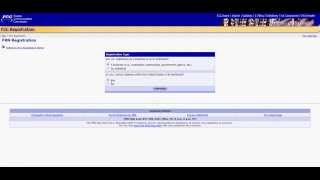 How to acquire an FRN number from the FCC I've got one guy on my Mobilization with me here who's about ready to test, and another just starting his practice tests. |