


[ARCHIVED THREAD] - "Two Homes Just Exploded—The Hidden Danger in Battery Storage" StacheD Training (Page 1 of 2)
Posted: 3/3/2025 7:44:27 PM EDT
 Two Homes Just Exploded—The Hidden Danger in Battery Storage! Two homes just exploded—both linked to home battery storage systems. One in Germany, one in Austria, and the cause? Battery failures leading to massive gas explosions. 7.5 min vid.In this video, we break down what went wrong, including a DIY energy storage setup gone horribly wrong and a commercial battery system failure that destroyed an entire house. Are home battery systems safe? Should they even be allowed in basements and garages? Well worth considering for anyone that wants to get a sizeable battery system for their house. I don't kow why anyone would think it was ever safe to keep *any* battery of these sorts of capacities inside their houses, regardless the chemstry of the battery. build an outhouse of fire brick with venting and blowout panels already ... |
|
Quoted: Part of my job is installing backup battery systems. They typically don’t self destruct. However when they do. It can be pretty fucken biblical. I would never have one in a house. Maybe in an outbuilding. The key is proper maintenance and checkups. 
|
|
Quoted: Of a well designed system. Quoted: Quoted: Part of my job is installing backup battery systems. They typically don’t self destruct. However when they do. It can be pretty fucken biblical. I would never have one in a house. Maybe in an outbuilding. The key is proper maintenance and checkups. Exactly. Ours are strictly 132VDC. So no conversion back to AC. That simplifies things a bit. |
|
NMC chemistry in that video. LifePo4 doesn’t have the same thermal runaway risks. A properly installed system will have a BMS with temp sensors and overcharge protection. It communicates directly with the inverter. No more dangerous than any combustible fuel appliance in your home. Pics of my latest battery shipment. Attached File |
These Fortress eflex batteries aren’t capable of a runaway.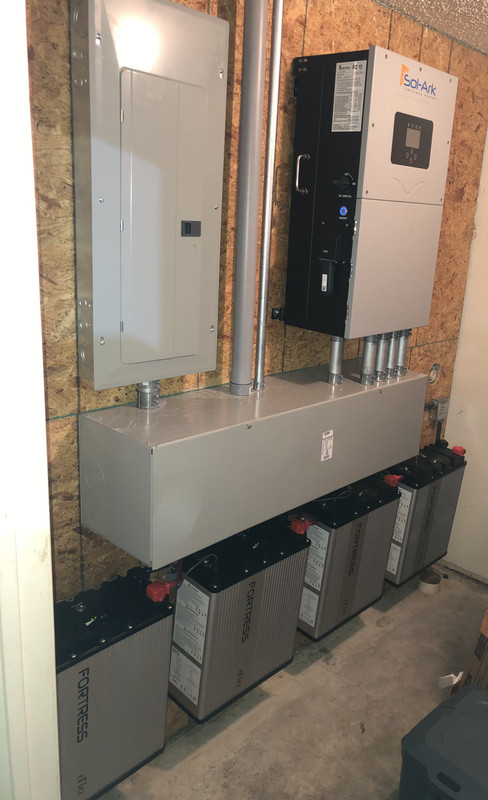 The Fortress Power eFlex is a 5.4 kWh scalable energy storage solution based on safe and energy dense prismatic Lithium Iron Phosphate cells. The digital processor Battery Management System (BMS) includes high amperage contactor disconnects and advanced Closed-Loop inverter communication, as well as individual cell voltage monitoring, temperature monitoring, and cell balancing to maximize reliability and longevity. |
|
Quoted: These Fortress eflex batteries aren’t capable of a runaway. https://i.postimg.cc/c4h0m7xM/IMG-4682.jpg The Fortress Power eFlex is a 5.4 kWh scalable energy storage solution based on safe and energy dense prismatic Lithium Iron Phosphate cells. The digital processor Battery Management System (BMS) includes high amperage contactor disconnects and advanced Closed-Loop inverter communication, as well as individual cell voltage monitoring, temperature monitoring, and cell balancing to maximize reliability and longevity. What can something like that power and for how long? |
|
Quoted: IDK about their systems but ... Putting *any* large battery bank inside of a house just seems like you're really asking for it. You might as well put your LP tank inside your house. Quoted: Quoted: So better wait on getting an ecoflow? IDK about their systems but ... Putting *any* large battery bank inside of a house just seems like you're really asking for it. You might as well put your LP tank inside your house. Laughs in TLX-39B |
|
Quoted: Overcharging is a bitch. Hydrogen and CO go BOOM when it gets to 4% in air. It has a far wider range between LEL and UEL ignition ranges [4%-75%] then natural gas which is actually pretty narrow. [5%-17%] We always used 4% to 15% at work FWIW. Are you still running Lead Acetate batteries? I'm not aware of any LiFEPO4 batteries that release either Hydrogen or CO. And per code, you are required to have a pretty impressive venation system (more air exchanges than a kitchen hood) This sounds like the installation was screwed up, not a failure in tech. Otherwise, I would also call into question is this another marketing campaign by the power companies to discredit solar/battery systems? |
|
apparently some of you didn't watch the video. since OP can't be bothered, i'll summarize: some of the examples in the video are lifepo4. He makes the point that 3rd party BMS give users a false sense of security but they need to be made specifically for the battery system in use. He also says there is a lower chance of failure with lifepo4 chemistry, but when they do off-gas, there's a higher percent of hydrogen, which makes bigger kabooms. personally, my 69kwh lifepo4 system is installed in a concrete box outside to prevent fires, etc from blowing up my cabin. it is not sealed, but very well vented. ultimately, there's a lot of energy in there and if you don't respect it, you may regret it that said, i do not support his call for gov intervention to prevent people from having indoor batteries. it's not like houses don't burn down from gas leaks or wood stoves, etc. |
|
Quoted: IDK about their systems but ... Putting *any* large battery bank inside of a house just seems like you're really asking for it. You might as well put your LP tank inside your house. When I was a kid a home in my neighborhood exploded, they did hot air balloons and stored their tanks in the basement. A leak a pilot light, kaboooley. Picked the whole house up off the foundation moved it over a couple of feet and set it back down. |
|
Quoted: apparently some of you didn't watch the video. since OP can't be bothered, i'll summarize: some of the examples in the video are lifepo4. He makes the point that 3rd party BMS give users a false sense of security but they need to be made specifically for the battery system in use. He also says there is a lower chance of failure with lifepo4 chemistry, but when they do off-gas, there's a higher percent of hydrogen, which makes bigger kabooms. personally, my 69kwh lifepo4 system is installed in a concrete box outside to prevent fires, etc from blowing up my cabin. it is not sealed, but very well vented. ultimately, there's a lot of energy in there and if you don't respect it, you may regret it that said, i do not support his call for gov intervention to prevent people from having indoor batteries. it's not like houses don't burn down from gas leaks or wood stoves, etc. LiFePO4 is generally very safe chemistry, but at 69KWh, I don't care what batteries they are. They're going outside! 
|
|
Quoted: apparently some of you didn't watch the video. since OP can't be bothered, i'll summarize: some of the examples in the video are lifepo4. He makes the point that 3rd party BMS give users a false sense of security but they need to be made specifically for the battery system in use. He also says there is a lower chance of failure with lifepo4 chemistry, but when they do off-gas, there's a higher percent of hydrogen, which makes bigger kabooms. personally, my 69kwh lifepo4 system is installed in a concrete box outside to prevent fires, etc from blowing up my cabin. it is not sealed, but very well vented. ultimately, there's a lot of energy in there and if you don't respect it, you may regret it that said, i do not support his call for gov intervention to prevent people from having indoor batteries. it's not like houses don't burn down from gas leaks or wood stoves, etc. I didn't summarize it because to do so leaves out important things regarding safety. Some things shouldn't be summarized. People will either watch or they wont. |
|
Quoted: LiFePO4 is generally very safe chemistry, but at 69KWh, I don't care what batteries they are. They're going outside! Quoted: Quoted: apparently some of you didn't watch the video. since OP can't be bothered, i'll summarize: some of the examples in the video are lifepo4. He makes the point that 3rd party BMS give users a false sense of security but they need to be made specifically for the battery system in use. He also says there is a lower chance of failure with lifepo4 chemistry, but when they do off-gas, there's a higher percent of hydrogen, which makes bigger kabooms. personally, my 69kwh lifepo4 system is installed in a concrete box outside to prevent fires, etc from blowing up my cabin. it is not sealed, but very well vented. ultimately, there's a lot of energy in there and if you don't respect it, you may regret it that said, i do not support his call for gov intervention to prevent people from having indoor batteries. it's not like houses don't burn down from gas leaks or wood stoves, etc. LiFePO4 is generally very safe chemistry, but at 69KWh, I don't care what batteries they are. They're going outside! Winner winner, chicken dinner. Even if the chemistry is incredibly safe, that level of stored power will have meaningful consquences if a short develops. |
|
Quoted: apparently some of you didn't watch the video. since OP can't be bothered, i'll summarize: some of the examples in the video are lifepo4. He makes the point that 3rd party BMS give users a false sense of security but they need to be made specifically for the battery system in use. He also says there is a lower chance of failure with lifepo4 chemistry, but when they do off-gas, there's a higher percent of hydrogen, which makes bigger kabooms. personally, my 69kwh lifepo4 system is installed in a concrete box outside to prevent fires, etc from blowing up my cabin. it is not sealed, but very well vented. ultimately, there's a lot of energy in there and if you don't respect it, you may regret it that said, i do not support his call for gov intervention to prevent people from having indoor batteries. it's not like houses don't burn down from gas leaks or wood stoves, etc. Well said. |
|
Quoted: IDK about their systems but ... Putting *any* large battery bank inside of a house just seems like you're really asking for it. You might as well put your LP tank inside your house. Quoted: Quoted: So better wait on getting an ecoflow? IDK about their systems but ... Putting *any* large battery bank inside of a house just seems like you're really asking for it. You might as well put your LP tank inside your house. I always figure that if I was to get a home battery backup, the proper place to install it would be the shed. If I can afford a backup battery, I can afford some long wires to go with it. And if my lawn mower burns up, oh well i hate mowing the grass anyways. |
|
Quoted:  https://www.youtube.com/watch?v=dFhSI0IcVtA https://www.youtube.com/watch?v=dFhSI0IcVtATwo homes just exploded—both linked to home battery storage systems. One in Germany, one in Austria, and the cause? Battery failures leading to massive gas explosions. 7.5 min vid.In this video, we break down what went wrong, including a DIY energy storage setup gone horribly wrong and a commercial battery system failure that destroyed an entire house. Are home battery systems safe? Should they even be allowed in basements and garages? Well worth considering for anyone that wants to get a sizeable battery system for their house. I don't kow why anyone would think it was ever safe to keep *any* battery of these sorts of capacities inside their houses, regardless the chemstry of the battery. build an outhouse of fire brick with venting and blowout panels already ... I've just recently taken an interest in solar after seeing the prices on equipment drop over the last year. My first project is an out building I've built specifically as a solar gen/storage shack. Roof is made of panels and the equipment will be housed inside of it. If it burns or explodes, it won't take out my house or barn. The folks in a solar forum I joined are all mostly OK with battery storage inside the home. They say the LiFePo4's are perfectly safe. From my research, 99% of this stuff is made on China. History has shown China is asshoe. My battery storage will be tin lined, we'll vented and the back panel designed to blow outside or in a cinder block grave in the ground. That being on the exterior wall with a water shedding tin cover. |
|
Quoted: NMC chemistry in that video. LifePo4 doesn’t have the same thermal runaway risks. A properly installed system will have a BMS with temp sensors and overcharge protection. It communicates directly with the inverter. No more dangerous than any combustible fuel appliance in your home. Pics of my latest battery shipment. https://www.ar15.com/media/mediaFiles/336742/IMG_3989_jpeg-3480685.JPG Is that a load of 48v? I could run my house and a few neighbors on that.  |
|
Quoted: These Fortress eflex batteries aren’t capable of a runaway. https://i.postimg.cc/c4h0m7xM/IMG-4682.jpg The Fortress Power eFlex is a 5.4 kWh scalable energy storage solution based on safe and energy dense prismatic Lithium Iron Phosphate cells. The digital processor Battery Management System (BMS) includes high amperage contactor disconnects and advanced Closed-Loop inverter communication, as well as individual cell voltage monitoring, temperature monitoring, and cell balancing to maximize reliability and longevity. You dropped a dime or three for that rig. $$$olark, I'm jelly.  |
|
If I ever build a home, i want a battery bank, I'm putting it in a separate building. I'm not electrician, but I want the meter away from the home too if possible, I have heard of those going up, and I know of one case where it happened to a friend. Meter was damaged during a hurricane, when they restored power it caught fire, burned her house down. Dumb fucking boyfriend of her's took the batteries out of the smoke detectors because they were chirping, dog woke her up, opens the bedroom door and the house is on fire. Crazy shit. my 69kwh lifepo4 system I'm impressed! |
|
Quoted: I always figure that if I was to get a home battery backup, the proper place to install it would be the shed. If I can afford a backup battery, I can afford some long wires to go with it. And if my lawn mower burns up, oh well i hate mowing the grass anyways. I can’t speak to all installations, but if you are running inverters, there are requirements to have fairly short cables from the batteries-that can limit how far away from the house the batteries can be, especially in a low power system because of line loss. My 2kw inverter has a 3” max cable length to be under warranty, and the length of runs for my 110vac causes the amps to go way up for the longer runs like my well pump. That one is 1/2hp(375 watts), but it’s 1650watts by the time it gets 43 feet to the well head, 160 feet down, and back…. |
|
Dollars-to-donuts, MOST of the “battery exploded!!!” stories we hear about are cheap ass Chinese made crap devices (scooters, bikes, etc) charged using cheap shitty chargers. Good quality devices with well made batteries and battery systems charged with good chargers should be very very low risk. |
|
Quoted: Dollars-to-donuts, MOST of the “battery exploded!!!” stories we hear about are cheap ass Chinese made crap devices (scooters, bikes, etc) charged using cheap shitty chargers. Good quality devices with well made batteries and battery systems charged with good chargers should be very very low risk. The prob is all lifepo4 batteries are made in China so distinguishing between crap and !crap is difficult. At least one of the explosions in the unsummarized OP was someone reusing a Tesla battery which isn’t a great idea but is quite popular especially since there’s no good way to recycle them |
|
Quoted: What can something like that power and for how long? Quoted: Quoted: These Fortress eflex batteries aren’t capable of a runaway. https://i.postimg.cc/c4h0m7xM/IMG-4682.jpg The Fortress Power eFlex is a 5.4 kWh scalable energy storage solution based on safe and energy dense prismatic Lithium Iron Phosphate cells. The digital processor Battery Management System (BMS) includes high amperage contactor disconnects and advanced Closed-Loop inverter communication, as well as individual cell voltage monitoring, temperature monitoring, and cell balancing to maximize reliability and longevity. What can something like that power and for how long? Just so happens, that a windstorm came through early yesterday morning and grid power is still out. No problem running the house yesterday. Two fridge/freezers, lights, well pump, water heater, etc. The sun was shining most of the day and by noon, the batteries were back to 99-100% charged and stayed that way until almost sunset. This morning, they were still at 71%. These batteries, unlike my previous lead filled, can be taken way down (<10% versus 50%) than the lead. Between the four, there’s 21,600 watts available. @sanman28 |
|
Quoted: I always figure that if I was to get a home battery backup, the proper place to install it would be the shed. If I can afford a backup battery, I can afford some long wires to go with it. And if my lawn mower burns up, oh well i hate mowing the grass anyways. I wonder what 100s of feet of 2/0 welding cable would cost with copper prices up? 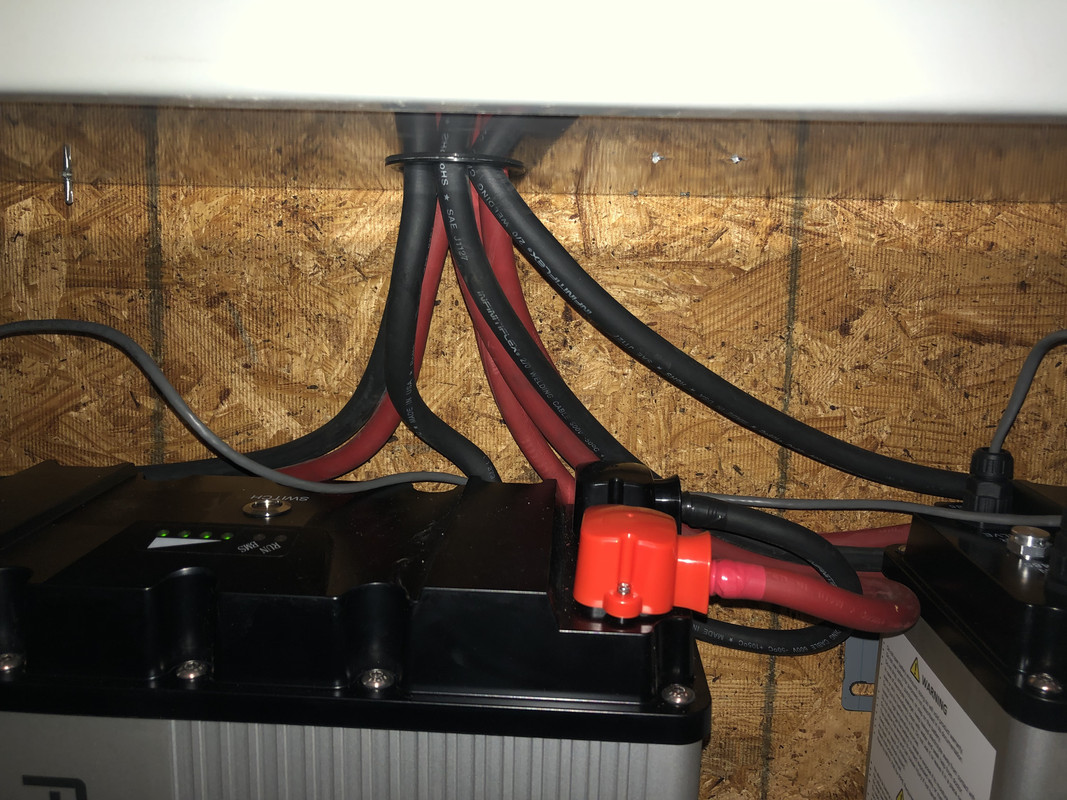 " /> " />
|
|
Quoted: Just so happens, that a windstorm came through early yesterday morning and grid power is still out. No problem running the house yesterday. Two fridge/freezers, lights, well pump, water heater, etc. The sun was shining most of the day and by noon, the batteries were back to 99-100% charged and stayed that way until almost sunset. This morning, they were still at 71%. These batteries, unlike my previous lead filled, can be taken way down (<10% versus 50%) than the lead. Between the four, there’s 21,600 watts available. @sanman28 AC in the summer? |
|
Quoted: apparently some of you didn't watch the video. since OP can't be bothered, i'll summarize: some of the examples in the video are lifepo4. He makes the point that 3rd party BMS give users a false sense of security but they need to be made specifically for the battery system in use. He also says there is a lower chance of failure with lifepo4 chemistry, but when they do off-gas, there's a higher percent of hydrogen, which makes bigger kabooms. personally, my 69kwh lifepo4 system is installed in a concrete box outside to prevent fires, etc from blowing up my cabin. it is not sealed, but very well vented. ultimately, there's a lot of energy in there and if you don't respect it, you may regret it that said, i do not support his call for gov intervention to prevent people from having indoor batteries. it's not like houses don't burn down from gas leaks or wood stoves, etc. Insurance companies end up dictating policy to law makers. |
|
Quoted: Part of my job is installing backup battery systems. They typically don’t self destruct. However when they do. It can be pretty fucken biblical. I would never have one in a house. Maybe in an outbuilding. The key is proper maintenance and checkups. One consideration is that charging them at 32f or below, has a very high chance of CAUSING the shorts that result in fires and explosions (eg. A non-climate controlled outbuilding), and they’re also sensitive to being subjected to high temps in the Summer |
|
Worked in IT in downtown STL at ATT One before they sold it and.moved everything back to the old SWB building next door. They kept the other build by the tower with the server farm. It has an absolutely huge battery room with all kinds of alarms and remote monitoring. They don't depend on remote sensors alone. The have cameras to view on site stuff to see if it agrees. I guess it's from experience. There remote buildings that run Telcom equipment around downtown. They have call center, repair, truck depot ect. Almost half is battery banks. It has a ton of sensors all through the building. Smoking will get you escorted out and.fired I heard. |
|
Home made, diy charging system = a recipe for death. Lead Acid? That would take A SHIT TON of H2S (hydrogen sulfide) and zero ventilation- but it's doable. Especially if its in an airtight container. Didnt watch, but im assuming this was a Li cell system? YOU CANNOT USE A LEAD-ACID CHARGER ON LITHIUM CELLS. The stories I could tell... This was caused by a bms software error that allowed a 0.5A overcharge to occur on a system. This little overcharge took around 4 days before the thermal reaction. Cooked the inside of that room pretty good.   Guys, if you are charging litium cells in your house in a diy system - first, use a blocking diode on your dc supply. Second, charge them in one of those flammable storage containers. All the smoke will most likely kill you, but the chances that your house will burn down are reduced. 
|
Interesting thread. I bought a Bluetti AC200Max along with an extra LifePo4 battery a couple years ago after my youngest girl went into DKA and now has to live life as a Type 1 diabetic  . We have a ton of extra insulin in both pens and vials to keep her alive for at least 2-3 years if something were to happen and the solar generator still worked to run a fridge to keep it cool. I’ve only run the system and batteries through complete cycles a few times to make sure they work and to estimate how long they’ll last powering various devices before needing to be recharged via solar and have kept them stored in a closet at the recommended battery level. Will storing them where they could be exposed to high summer temps or cold winter temps away from the interior of my house affect or damage those batteries? Something to consider. . We have a ton of extra insulin in both pens and vials to keep her alive for at least 2-3 years if something were to happen and the solar generator still worked to run a fridge to keep it cool. I’ve only run the system and batteries through complete cycles a few times to make sure they work and to estimate how long they’ll last powering various devices before needing to be recharged via solar and have kept them stored in a closet at the recommended battery level. Will storing them where they could be exposed to high summer temps or cold winter temps away from the interior of my house affect or damage those batteries? Something to consider.
|
|
Quoted: One consideration is that charging them at 32f or below, has a very high chance of CAUSING the shorts that result in fires and explosions (eg. A non-climate controlled outbuilding), and they’re also sensitive to being subjected to high temps in the Summer Most of the Lifepo4 batteries I've seen teardown-test videos on have battery management that kicks off charging if the cells get too cold. Some even have internal heating that also kicks in at low temp. |
|
Quoted: The panels run the Central ac/heat during the day. On a summer night, with the thermostat on 75 and ceiling fan on, the batteries will run the ac. If I turned the thermostat down to 70-72, probably not. Quoted: Quoted: AC in the summer? The panels run the Central ac/heat during the day. On a summer night, with the thermostat on 75 and ceiling fan on, the batteries will run the ac. If I turned the thermostat down to 70-72, probably not. A company called EG4 makes a couple really neat "solar assist" heat pump mini splits. One is a one ton, one is a two ton. The one ton can run totally on the sun power of four 400w panels. If sun is not available, it draws grid power. The best thing is no battery storage is needed at all. I will be installing one of the smaller units, hopefully later in the year. A large portion of my electric bill is from keeping my home cool during Alabama summers. Here is an install video on these:  Solar Air Conditioner Full Installation & Review! True DIY From EG4! |
|
Quoted: Interesting thread. I bought a Bluetti AC200Max along with an extra LifePo4 battery a couple years ago after my youngest girl went into DKA and now has to live life as a Type 1 diabetic . We have a ton of extra insulin in both pens and vials to keep her alive for at least 2-3 years if something were to happen and the solar generator still worked to run a fridge to keep it cool. I’ve only run the system and batteries through complete cycles a few times to make sure they work and to estimate how long they’ll last powering various devices before needing to be recharged via solar and have kept them stored in a closet at the recommended battery level. Will storing them where they could be exposed to high summer temps or cold winter temps away from the interior of my house affect or damage those batteries? Something to consider.Exactly one my justifications for adding a solar option at my place. I'm not diabetic, but two in my circle are insulin dependent. It will be nice to have refrigeration storage that is not grid dependent. It could give them more time if things slide backwards. |
|
Quoted: Exactly one my justifications for adding a solar option at my place. I'm not diabetic, but two in my circle are insulin dependent. It will be nice to have refrigeration storage that is not grid dependent. It could give them more time if things slide backwards. Quoted: Quoted: Interesting thread. I bought a Bluetti AC200Max along with an extra LifePo4 battery a couple years ago after my youngest girl went into DKA and now has to live life as a Type 1 diabetic . We have a ton of extra insulin in both pens and vials to keep her alive for at least 2-3 years if something were to happen and the solar generator still worked to run a fridge to keep it cool. I’ve only run the system and batteries through complete cycles a few times to make sure they work and to estimate how long they’ll last powering various devices before needing to be recharged via solar and have kept them stored in a closet at the recommended battery level. Will storing them where they could be exposed to high summer temps or cold winter temps away from the interior of my house affect or damage those batteries? Something to consider.Exactly one my justifications for adding a solar option at my place. I'm not diabetic, but two in my circle are insulin dependent. It will be nice to have refrigeration storage that is not grid dependent. It could give them more time if things slide backwards. One Second After is a sobering read for anyone with insulin dependent family members. |
|
Quoted: A company called EG4 makes a couple really neat "solar assist" heat pump mini splits. One is a one ton, one is a two ton. The one ton can run totally on the sun power of four 400w panels. If sun is not available, it draws grid power. The best thing is no battery storage is needed at all. I will be installing one of the smaller units, hopefully later in the year. A large portion of my electric bill is from keeping my home cool during Alabama summers. Here is an install video on these: https://www.youtube.com/watch?v=Nsi_B07C_yEQuoted: Quoted: Quoted: AC in the summer? The panels run the Central ac/heat during the day. On a summer night, with the thermostat on 75 and ceiling fan on, the batteries will run the ac. If I turned the thermostat down to 70-72, probably not. A company called EG4 makes a couple really neat "solar assist" heat pump mini splits. One is a one ton, one is a two ton. The one ton can run totally on the sun power of four 400w panels. If sun is not available, it draws grid power. The best thing is no battery storage is needed at all. I will be installing one of the smaller units, hopefully later in the year. A large portion of my electric bill is from keeping my home cool during Alabama summers. Here is an install video on these: https://www.youtube.com/watch?v=Nsi_B07C_yEMakes more sense to me, to use the solar panels to charge a battery bank to power a high SEER unit. Depending on the battery bank and panels, it could run the system completely non grid tied. |
|
Quoted: One consideration is that charging them at 32f or below, has a very high chance of CAUSING the shorts that result in fires and explosions (eg. A non-climate controlled outbuilding), and they're also sensitive to being subjected to high temps in the Summer I have the room cooled with a mini split all summer. I have plenty of excess sun all summer. |
|
Quoted: ARF.com fears solar and battery power like children afraid of the dark. If you watched the video and you came up with that, I don't know what to tell you, because it's clear and not fearmongering. You also make rediculously shure your gun is empty before cleaning. Some also might say it's friggin paranoid to drop the mag out, cycle the weapon, catch the round, cycle it a few more times, look in the chamber, and then stick your finger in to check. It's not, though, because when you do that cleaning a few thousand times all that is to backstop you for that one time. |
|
Quoted: The panels run the Central ac/heat during the day. On a summer night, with the thermostat on 75 and ceiling fan on, the batteries will run the ac. If I turned the thermostat down to 70-72, probably not. |
|
Quoted: Exactly one my justifications for adding a solar option at my place. I'm not diabetic, but two in my circle are insulin dependent. It will be nice to have refrigeration storage that is not grid dependent. It could give them more time if things slide backwards. I've got about two years of insulin, but if it ever gets hot or frozen it's done. |