


DGRVP- F-111 in Vietnam | COMBAT LANCER (Page 14 of 60)

Interesting presentation from Google Deepmind CEO. Accelerating Scientific Discovery with AI - lecture by Sir Demis Hassabis |
|
Originally Posted By Former11BRAVO: Grinding grains came later - along with it, dental deterioration/decay. Originally Posted By Former11BRAVO: Originally Posted By DaGoose: If I remember correctly from a paper I read, a lot of the issues with eating grains back then was the method of grinding it with stone tools which introduced a lot of stone dust/specks which wore down the teeth much faster and led to a lot of health issues due to cavities and infections. Grinding grains came later - along with it, dental deterioration/decay. Depends on what timeframe we are talking about. The paper if I remember correctly was during the time frame of the first European farmers, so around 7-8K BC when they moved in from the Anatolian region. |
Presentation around human origins. Human Origins by Adam Rutherford |
Presentation on mathematical modeling Not real in-depth. Using Maths to Decode the Universe - Dr Tom Crawford |
Presentation on Epigenetics.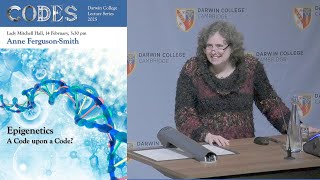 Epigenetics: A Code upon a Code? - Professor Anne Ferguson-Smith |
Presentation on neutron stars Anna Watts - Neutron Stars: The Supranuclear Density Zombies of the Cosmos (March 26, 2025) |
Podcast (audio only, video is random stuff) on a bunch of items around technological civilizations. Was There a Technological Civilization Before Us? With Daniel Mills 00:05:03 – The role of oxygen in enabling technological civilizations 00:10:46 – Could Earth have produced an earlier technological civilization? 00:15:21 – Discussion on the Rare Earth Hypothesis 00:21:17 – Are habitable planets common, or is Earth unique? 00:26:04 – Why oxygen is crucial for life and technology 00:31:01 – Could high oxygen levels prevent civilization from developing? 00:36:27 – Evolutionary advantages of photosynthesis in intelligence 00:41:03 – Why oxygen and water might make Earth-like life common 00:46:14 – How evolution shaped Earth's habitability 00:51:07 – What an atmospheric gas profile could reveal about alien civilizations |
Good, but short video. What really happened in a MEDIEVAL INN? |
Interesting short video on LLMs. Channel has a few other videos on neural nets and other things related to AI. THIS is why large language models can understand the world |
Interesting presentation on Human culture/psychology over time. Evolutionary Psychology & Human Culture – Professor Bill von Hippel |
Some interesting ideas. Will Humanity Pass “The Great Filter”? | Robin Hanson Timestamps: 00:00 - Introduction 01:36 - The Great Filter 05:38 - Where Are The Aliens? 09:13 - UFOs 16:50 - Panspermia 23:05 - Alien Hierarchies 27:30 - Alien Culture & Motivations 33:18 - Probability of Aliens 39:18 - Truth 49:41 - Fall of Academia 01:11:27 - Peer Review 01:20:22 - Ranking Ideas 01:23:09 - The System is “Broken” |
Question/Answer session with David Kipping The great quest for extraterrestrial life | @CoolWorldsLab Full Interview 00:00:00 The search for habitable worlds, and extraterrestrial life 00:00:17 Are there different types of astronomers? 00:01:29 What is an exoplanet? 00:02:56 Were there previous claims of exoplanets? 00:04:29 Theoretically, how many exoplanets could exist? 00:05:43 How do we search for exoplanets? 00:09:06 What are blueshift and redshift? 00:10:10 Why are you interested in exomoons? 00:14:48 What are the challenges to finding exomoons? 00:16:24 Is there evidence of exomoons? 00:19:08 Could exomoons be inhabited? 00:21:10 How could new telescopes affect our search for exoplanets? 00:23:39 Why do human beings want to colonize other planets? 00:25:43 What are some ways we could inhabit an exoplanet? 00:30:33 What are some cultural ramifications of expanding civilization? 00:31:49 Do you believe humans will actually inhabit another planet? 00:32:44 What is the Rare Earth Hypothesis? 00:33:40 What do we call exoplanets that resemble Earth? 00:35:08 What are the most common types of exoplanets? 00:37:10 Have we found any Earth-like exoplanets? 00:39:29 How common could Earth-like planets be? 00:43:31 What makes a planet habitable? 00:45:25 How do asteroids play into the Rare Earth Hypothesis? 00:48:37 What is your anti-Rare Earth argument? 00:50:24 Why is the search for alien life so popular? 00:51:45 What is life? 00:53:05 What are the requirements for life? 00:54:59 What is the Copernican principle? 00:58:08 What is the Kardashev scale? 01:00:15 What is Hart's Fact A? 01:02:47 Are there any recent developments in the search for life? 01:05:20 How long might it take for intelligent life to develop? 01:07:23 How do we look for life on other planets? 01:10:46 Why should we be cautious in our search for life? 01:12:49 Will we ever answer the question of whether we are alone? 01:14:44 How does our experience on Earth inform our concept of life? 01:16:41 What is the SETI Paradox? 01:17:43 Why are we reluctant to send messages out into space? 01:23:21 What is the three-body problem? 01:24:44 What are the challenges to sending messages across such large distances? 01:26:32 What are the linguistic challenges to communication? 01:29:37 What's the most likely way we could communicate with life in the future? |
Pretty good presentation on the rise of humans. Sheridan College Thickman Faculty Lecture Series: From Many Came Few – Humanity’s Rise |
Interesting short video The Forbidden Knowledge of Washers And a meme! Attached File |
Don't think too hard on it   The Most Controversial Idea In Math 0:00 What comes after one? 2:42 Some infinities are bigger than others 6:17 The Well Ordering Principle 10:32 Zermelo And The Axiom Of Choice 17:22 Why is the axiom of choice controversial? 23:16 The Banach–Tarski Paradox 27:53 Obviously True, Obviously False 29:58 Your Proof Your Choice |
Good overview of mathematics in 50 minutes. Math Seminar | 50 Centuries in 50 Minutes: A Brief History of Mathematics |
Interesting discussion around European cultures through early history 077 - Uncovering European Origins | Yamnaya, Celts, Vikings w/ Survive the Jive 00:00 Intro 00:48 Survive the Jive 01:30 Early Youtube 04:09 History of European Peoples 16:47 Horse Domestication Changing Culture 21:28 Bride Stealing 24:19 Value in Different Cultures 33:26 Technological Advancements and Cultural Shifts 37:19 Feuding Cultures and Honor Societies 39:48 Anatolian Farmers in Europe 40:53 Scandinavian Hunter-Gatherers 43:14 Hunter-Gatherers Meeting Farmers 47:34 Norman Influence & the Commons 49:41 Irish, British, Ancestry 56:15 Scots-Irish in America 58:26 Ulster Scots vs Scots-Irish 01:03:00 Home Counties to Devon 01:06:14 Cornish and Devonian Traditions 01:20:49 Bronze Age Trade 01:25:40 Philosophy and Paganism |
|
Thought you might enjoy this - terrible AI animation aside. The Man Who Almost Broke Math (And Himself...): The Most Controversial Idea In Math |
Presentation on Neanderthals and Denisovans in Central Asia Living on the Edge? – Neanderthals and Denisovans in Central Asia |
|
Originally Posted By anothermisanthrope: Thought you might enjoy this - terrible AI animation aside. The Man Who Almost Broke Math (And Himself...):  https://www.youtube.com/watch?v=_cr46G2K5Fo https://www.youtube.com/watch?v=_cr46G2K5FoSee 3 above
|
Posting this as he finally got around to updating the podcast with video . Be prepared though, it's a long one. 19. The Mongols - Terror of the Steppe 00:00 Introduction 09:31 The Steppe 50:51 Temujin 01:53:51 Chinggis Khan 02:18:28 China 03:02:42 Persia 03:33:27 Succession 04:02:20 Ogedei 04:19:41 Europe 05:01:23 Assassins 05:19:11 Kublai 06:03:20 The Fall 06:34:21 Ghosts of the Steppe |
|
Originally Posted By DaGoose: See 3 above Originally Posted By DaGoose: Originally Posted By anothermisanthrope: Thought you might enjoy this - terrible AI animation aside. The Man Who Almost Broke Math (And Himself...): https://www.youtube.com/watch?v=_cr46G2K5FoSee 3 above Doh - didn't catch up on thread before I posted this morning 
|
Interesting presentation on the Amorites. Winter Archaeology Lecture 2025 - 1 of 2 - Amorites: Their Origins and Their Legacy 00:00:00 - Announcements 00:00:18 - Welcome 00:01:33 - Speaker Introduction 00:05:15 - Prelude and Outline by Aaron Burke 00:10:17 - Amorite Identity 00:18:48 - Archaeology of the Amorites 00:27:48 - Conflict Crisis 00:33:35 - Environmental Crisis and Migration 00:40:31 - Political Integration 00:49:44 - So-called Warrior Burials 00:54:40 - Fortifications 00:56:27 - Political Legitimization 01:01:16 - Amorite Identity Revisited 01:03:12 - Amorites in the Bible 01:06:13 - Q&A 01:17:01 - Closing remarks |
Part 2 of the Amorite Presentation Winter Archaeology Lecture 2025 - 2 of 2 - King Sihon: Biblical Memory & the Amorite Conquest 00:00:00 - Announcements 00:00:18 - Welcome 00:01:27 - Speaker Introduction 00:05:48 - Prelude and Outline 00:09:23 - The Amorites’ Legacy 00:12:20 - Why King Sihon Matters 00:16:29 - The Heshbon Expedition 00:24:14 - The Enduring Legacy of Sihon 00:34:39 - Community Archaeology 00:39:52 - Aggrandizement of Sihon 00:44:41 - Conclusions 00:46:06 - Response by Larry Geraty 00:48:19 - Response by Aaron Burke 00:55:28 - Q&A |
Interesting talk about life and how to define it. LIVESTREAM | Sara Imari Walker | An Informational Theory of Life |
Documentary on some British archaeological sites. Bizarre Burials, Ancient Rituals, And More Of Britain's Archaeological Mysteries |
Couple of presentations by Bettany Hughes. Bettany Hughes | Digging Up History: What the Treasures of the Past Can Teach Us Today  HistFest: Seven Wonders by Bettany Hughes |
Interesting presentation on the Maya Collapse. The Classic Maya Collapse: New Evidence on a Great Mystery |
Good discussion around Exomoons and detecting them. Alien Civilizations, Exomoons, and Cool, Habitable Worlds | David Kipping [Ep. 474] 00:00 Intro 01:42 David Kipping's background and motivation 04:53 The role of moons in the origin of life 10:43 Bayesian frameworks and panspermia 19:14 Exomoon detection and research strategy 32:26 JWST observations and data analysis 41:00 Balancing scientific communication and public engagement 50:32 Future missions and their impact on exomoon research 54:33 Advice for young scientists and final thoughts 57:14 Outro |
Interview with Adam Frank on Extraterrestrial life. Also, a breakdown and analysis by Brian Keating. Adam Frank: Alien Civilizations and the Search for Extraterrestrial Life | Lex Fridman Podcast #455 OUTLINE: 0:00 - Introduction 1:58 - Planet formation 7:08 - Plate tectonics 14:30 - Extinction events 18:41 - Biosphere 21:39 - Technosphere 25:53 - Emergence of intelligence 32:06 - Drake equation 36:20 - Exoplanets 39:04 - Habitable zones 42:06 - Fermi Paradox 51:04 - Alien civilizations 1:00:32 - Colonizing Mars 1:12:48 - Search for aliens 1:29:13 - Alien megastructures 1:35:19 - Kardashev scale 1:40:32 - Detecting aliens 1:47:14 - Warp drives 1:53:21 - Cryogenics 1:56:39 - What aliens look like 2:05:24 - Alien contact 2:16:29 - UFO sightings 2:28:14 - Physics of life 2:54:05 - Nature of time 3:10:29 - Cognition 3:14:53 - Mortality  What Makes Earth So SPECIAL For Life To Thrive? 0:00 Introduction 3:45 Binary Planet Analysis 8:12 Earth First Calculation 14:35 Panspermia Math 19:20 Implications 23:50 Conclusions |

|
Originally Posted By DaGoose: Posting this as he finally got around to updating the podcast with video . Be prepared though, it's a long one. https://www.youtube.com/watch?v=PdFwMDuAnS400:00 Introduction 09:31 The Steppe 50:51 Temujin 01:53:51 Chinggis Khan 02:18:28 China 03:02:42 Persia 03:33:27 Succession 04:02:20 Ogedei 04:19:41 Europe 05:01:23 Assassins 05:19:11 Kublai 06:03:20 The Fall 06:34:21 Ghosts of the Steppe I was enthralled by this and watched every second! |
"A fear of weapons is a sign of retarded sexual and emotional maturity" --- Sigmond Freud, General Introduction to Psychoanalysis
Good presentation on Toba eruption and the aftermath with the human population. Volcanic Winter, Population Bottlenecks, and Human Evolution |
Interesting presentation on stone tools used by early hominids  Exploring Humanity’s Technological Origins |
History of pottery and it's spread. The World's First Pottery is Older Than You Think 00:00 World’s Oldest Pottery 01:27 Sponsorship 02:52 The Oldest Ceramics 11:37 Why Invent Pottery? 22:10 Pottery Spreads to Europe |
Good presentation around UAPs and the study team from NASA. PSW 2513 Unidentified Anomalous Phenomena | Joshua Semeter Unidentified Anomalous Phenomena-From Sensationalism to Science The NASA Panel's Investigations and Report Joshua Semeter Professor, Electrical and Computer Engineering Boston University In 2017, the New York Times published a report featuring video footage captured by Navy aviators depicting airborne objects surrounded by a glowing aura that appeared to exhibit extraordinary flight characteristics, despite lacking any visible means of propulsion. The videos and pilot testimonies initiated a new wave of public and scientific interest in Unidentified Anomalous Phenomena (UAP). In 2022, NASA commissioned a team of 15 experts to bring transparency and scientific rigor to UAP investigations. A critical finding in their report was the inadequacy of existing data, which has allowed sensationalized narratives to flourish in popular media. This lecture will review the activities and outcomes of the NASA UAP study team before moving beyond their findings to offer a technical analysis of several notable UAP cases. Two key factors must be addressed before drawing conclusions from observational evidence. First the role of the sensor in shaping an object’s appearance must be fully characterized; that is, formally, the sensor’s “instrument function” has to be understood. Second, geometric effects that can distort perceptions of motion and distance have to be accounted for. Of particular significance is the parallax effect, where movement of the observing platform can create the illusion of rapid, or even unphysical, motion. The lecture will conclude with some reflections on the scientific method, advocating for a disciplined, data-driven approach when confronted with the unknown. Beyond the equations and analysis lies the essence of true discovery – where skepticism sharpens our questions, and wonder keeps us searching for answers. Josh Semeter is a Professor of Electrical and Computer Engineering, and Director of the Boston University Center for Space Physics (CSP). He was a member of the NASA UAP Independent Study Team: a group of 15 experts from diverse backgrounds and institutions, charged with bringing transparency and scientific rigor to UAP investigations (the subject of this lecture). And he recently served on the National Academy of Sciences steering committee that led the development of the 2024-2033 Decadal Survey for Solar and Space Physics. Before joining the faculty at BU he was a Senior Research Engineer at SRI International, and he worked as a research scientist at the Max Planck Institute for Extraterrestrial Physics. Josh’s research has focused on exotic plasma phenomena in the near-space environment driven by interactions between the solar wind, the magnetosphere, and the ionosphere. His approach has been to synthesize measurements captured by ground-based and space-based instrument networks, which are connected using physics-based and data-driven modeling. A particular interest has been micro-scale plasma processes that require inferential techniques to study. He enjoys cultivating natural synergies among astronomers, astrophysicists, and engineers to better understand the origin and fate of our stellar-planetary system. Josh is the author of over 100 technical papers and has given numerous invited talks and seminars on his work. He earned a BS degree in Electrical Engineering at the University of Massachusetts at Amherst, and an MS and PhD degree at Boston University. |
Interesting presentation on milk and it's spread throughout the world with an emphasis on Mongolia. Making Milk: Mongolia’s Unique Role in Dairy’s History Lecture by Christina Warinner, Professor of Anthropology and Human Evolutionary Biology, Harvard University Milk is both ancient and enigmatic. First transformed into dairy products over 9,000 years ago in the Near East, its production required the domestication of not only animals, but also microorganisms. Dairy technologies spread across Europe, Africa, and Asia, reaching as far as Mongolia 5,000 years ago. Today, dairy products are produced and consumed worldwide; annual global milk and dairy production exceeds 900 million tons. And yet, the majority of the world’s population is estimated to be lactose intolerant. How did such an unlikely and often indigestible food become a staple of global cuisines? Christina Warinner examines the long and often surprising history of milk in Mongolia, where more than ninety percent of the population should be lactose intolerant—but is not. This talk takes a fresh look at the history of milk in Asia and its unexpected ethnographic and archaeological paradoxes. Far from familiar, milk is an ancient food with a modern scientific mystery at its heart. Christina Warinner is Professor of Anthropology and Human Evolutionary Biology at Harvard University, and she leads international research groups at the Max Planck Institute for Evolutionary Anthropology in Leipzig, Germany and the Leibniz Institute for Natural Products Research and Infection Biology in Jena, Germany. Warinner specializes in the analysis of ancient DNA and proteins, and her research focuses on the study of ancient biomolecules to better understand past human diet, health, and the evolution of the human microbiome. She has conducted groundbreaking studies on the evolution and changing ecology of the human oral microbiome, including reconstructing the oldest microbiome to date from a 100,000-year-old Neanderthal, and she has published extensively on prehistoric migrations, the origins and spread of dairy pastoralism, and the biodiversity of the human gut microbiome. She has published two books and more than 70 peer-reviewed articles in journals such as Nature, Science, Cell, and PNAS (Proceedings of the National Academy of Sciences). Warinner is the recipient of the American Anthropological Association’s Exemplary Cross-Fields Award, the Federation of European Microbiological Societies Article Award, and the Shanghai Archaeological Forum Research Award. Her ancient microbiome findings were named among the top 100 scientific discoveries of 2014 by Discover Magazine, and her research on medieval women artists was named one of the top 10 archaeological discoveries of 2019 by Archaeology Magazine. She was named one of the Top 10 Scientists Ready to Transform Their Field in 2017 by Science News, and her research has been featured in more than a hundred news articles and programs. Warinner is passionate about public education and outreach, and she designed the Dairy Cultures exhibit at the Natural History Museum of Mongolia, and she has been featured in documentaries produced by PBS NOVA, Netflix, and the genome sequencing company Illumina. She created the Adventures in Archaeological Science coloring book, now available in more than sixty languages, including many Indigenous and underrepresented languages. She is engaged in the open science movement, and her research group has been actively involved in improving scholarly communication, data sharing, and research transparency. |
Short video on the first humans (hominids) in Europe. First Humans into Europe |
Nice video on 3 possible population bottlenecks for humans in the last 80K years. Major Population Bottlenecks in Human Prehistory 0:00 - Introduction 1:55 - Toba Super-eruption (~74,000 years ago) 35:46 - Campanian Ignimbrite Eruption (~40,000 years ago) 1:00:41 - Younger Dryas Cooling Event (~12,900–11,700 years ago) Separate video on Campanian Ignimbrite Eruption from same channel  Did Neanderthals Witness the Campanian Ignimbrite Eruption? |
Documentary on 536 AD.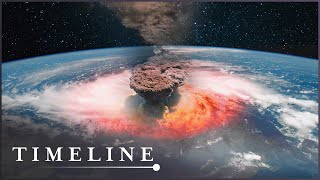 The Year The Sun Turned Black: The Volcanic Winter Of 536 AD | Catastrophe | Timeline |
|
Interesting video on Lyme disease. The piece about Indians avoiding certain valleys due to a disease may put a kibosh on the lab created theory on Lyme disease. Lyme Disease: The Hidden Epidemic | SLICE SCIENCE | FULL DOC 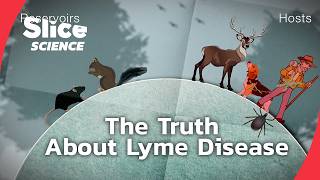 Lyme Disease: The Hidden Epidemic | SLICE SCIENCE | FULL DOC |

|
Fauci and company are working on the mRNA vaccine First create the panic Then sell them the jab |
For since the creation of the world God’s invisible qualities, His eternal power and divine nature, have been clearly seen, being understood from His workmanship, so that men are without excuse.
|
Originally Posted By DaGoose: Interesting video on Lyme disease. The piece about Indians avoiding certain valleys due to a disease may put a kibosh on the lab created theory on Lyme disease. Lyme Disease: The Hidden Epidemic | SLICE SCIENCE | FULL DOC https://www.youtube.com/watch?v=dVRfotio4YMLyme disease has always been around, but it's worse today because it was manipulated to be a bioweapon. Hell, they told us that at NBC school in the 80s. |
"A fear of weapons is a sign of retarded sexual and emotional maturity" --- Sigmond Freud, General Introduction to Psychoanalysis
Discussion around the Peking man and it's disappearance. What Really Happened to PEKING MAN? ~ with CHRISTOPHER BAE 0:00 START 00:54 Reactions to Homo juluensis 05:24 Peking Man - overview 10:41 Dragon bones 15:38 The main figures 20:26 The Peking Man site 40:37 Homo erectus 46:36 Mysterious disappearance 57:09 Peking Man research today 1:01:01 Future projects 1:03:08 Our artists |
Short discussion around Cro-Magnons. CRO-MAGNONS - The Last Ice Age People of Europe ~ with TRENTON HOLLIDAY 00:00 START 01:59 Trent's background 05:37 Overview of the Cro-Magnons 15:43 Cro-Magnon culture 28:16 Cro-Magnon creativity 33:19 Interactions with Neandertals 52:44 Trent's Cro-Magnon book 55:25 Future projects 57:37 Our paleo-artists |
|
Interesting short video on hominid's brains. Why We Got Smart - The Story of the Hominid Brain ~ with ZACHARY COFRAN  Why We Got Smart - The Story of the Hominid Brain ~ with ZACHARY COFRAN 00:00 START 02:10 Zach's research 06:55 The story of the hominid brain 16:08 Why did the hominid brain grow? 22:42 Why did humans get so smart? 31:31 The Homo naledi quandry 38:37 Upcoming projects |
|
Short video on the genus homo. The Human Ape ~ Origins of the Genus Homo - with TRENTON HOLLIDAY  The Human Ape ~ Origins of the Genus Homo - with TRENTON HOLLIDAY 0:00 START 02:02 The Genus Homo 03:55 Australopithecus vs Homo 11:17 Genus Homo - Old Ideas vs New 35:50 The Tangled Web 41:56 Future Projects |
|
Interesting short discussion around hunting and the need for fats by early hominids. How Hunting Changed Everything ~ MIKI BEN-DOR  How Hunting Changed Everything ~ MIKI BEN-DOR 0:00 START 02:07 Miki's background 04:07 The energy constraint 15:24 Extinction of the megafauna 22:37 Why our brains grew 28:54 Reaction of the scientific community 35:47 Upcoming projects 37:27 Paleo artists Paper Links Man the Fat Hunter: The Demise of Homo erectus and the Emergence of a New Hominin Lineage in the Middle Pleistocene (ca. 400 kyr) Levant The evolution of the human trophic level during the Pleistocene |
|
Couple of interesting videos on the last universal common ancestor. CHASING LUCA - Origins of the Genetic Code ~ with PROFESSOR JOANNA MASEL  CHASING LUCA - Origins of the Genetic Code ~ with PROFESSOR JOANNA MASEL 0:00 START 02:30 Joanna's background 06:33 What is the Genetic Code? 08:08 The team's procedure 12:06 The Miller-Urey Experiment 16:34 The importance of LUCA 20:03 Ongoing work DECODING LUCA - Secrets of the Genetic Code ~ with SAWSAN WEHBI  DECODING LUCA - Secrets of the Genetic Code ~ with SAWSAN WEHBI 0:00 START 02:52 Sawsan's background 05:23 Astrobiology 08:17 Research overview 12:25 Question: How could LUCA have ancestors? 16:03 Question: How can ancient amino acid frequencies be identified? 23:04 Question: Are the origin of life and the origin of the genetic code different things? 26:34 Question: Is the genetic code still evolving? 27:41 Future projects |
|
Short interesting video on the Out of Africa theory. Does Neanderthal DNA put a ceiling on Out of Africa?  Does Neanderthal DNA put a ceiling on Out of Africa? Intro 0:00 What is out of Africa? 2:43 Neanderthal love when? 8:09 Pig 17:09 What does this all mean? 20:25 |
|
This channel has a lot of math related items that may be of interest. Ancient trick to calculate ANY square root  How To Calculate Any Square Root. An Ancient Method That Powers Modern Computers 0:00 history 2:32 calculations 7:22 sqrt 2 10:19 intuition |