


DGRVP- F-111 in Vietnam | COMBAT LANCER (Page 13 of 60)

Good discussion with Susskind. Leonard Susskind: String Theory and the Black Hole War OUTLINE 00:00 Introduction 05:21 Black Holes and the War Between Relativity and Quantum Mechanics 11:18 Is The Singularity at the Heart of a Black Hole Real? 21:51 Demystifying the Puzzle of Quantum Information 28:27 What Does The Famous Phrase “It From Bit” Mean? 30:59 Can We Measure the Chaos of a Black Hole? 38:47 Can Information Be Stored on the Surface of a Black Hole? 47:11 Was Stephen Hawking a Good Physicist? 48:13 Who Were the Best Physicists of All Time? 53:23 What Is Hawking Radiation? 56:21 How Will The Universe End? 1:00:49 What Is the Black Hole Information Paradox? 1:02:31 On Gerard ’t Hooft 1:10:47 What Is the Holographic Principle? 1:20:01 How Leonard Susskind Won the Black Hole War Against Stephen Hawking 1:25:09 What Is the Infamous AdS/CFT Correspondence? 1:32:29 Is Physics in a Deep Crisis? 1:39:29 Are String and M-Theory Totally Wrong? 1:43:05 Is String Theory the Theory of Everything? 1:47:43 Is String Theory a Failure? 1:50:15 Does Our World Have Extra Dimensions? 1:53:34 Could Our World Be a Hologram? |
Discussion with Irving Finkel around a variety of topics. The most important ancient artefacts in the world and what they tell us - Irving Finkel Returns TIMESTAMP 00:00 Irving Finkel 01:45 What are the most important artefacts in the British Museum? 01:58 The Lewis Chess Pieces 03:58 The Rosetta Stone 06:05 The Portland Vase 07:00 The Royal Game of Ur 17:56 How accurate is the Bible? 22:00 The Flood of the Bible and the Flood of Mesopotamia 30:10 Have you ever played Santa Claus? 32:10 What the very oldest inscription says 42:07 Is writing in China or India older than Cuneiform? 44:10 Are Egyptian Hieroglyphics older? 48:00 Sumerian number systems 52:10 The labyrinth motive 56:55 The meaning of burial objects 01:02:02 The waiting room for souls in the nether-world 01:05:20 Should the British Museum return the Elgin Marbles? 01:07:29 How would you start learning Cuneiform? 01:13:14 Has AI been used to help translate Cuneiform? 01:19:52 What wisdom have you personally learned from the Babylonians? 01:22:00 The diary project |
Interesting new theory on Bormann. Martin Bormann Escape - A New Theory Longer video on Bormann  The Hunt for Martin Bormann - The Complete Series |
|
Originally Posted By DaGoose: Interesting new theory on Bormann.  https://www.youtube.com/watch?v=6wkan7rNjg8 https://www.youtube.com/watch?v=6wkan7rNjg8Longer video on Bormann https://www.youtube.com/watch?v=rjUtrTAtPFgI thought they dug up Bormann in a parking lot being excavated not far from the ruins of the Reichstag back in the early 70s? I thought the group he left the bunker with all of them were eventually found dead near a tunnel they were trying to get to? |
|
Originally Posted By Grug: I thought they dug up Bormann in a parking lot being excavated not far from the ruins of the Reichstag back in the early 70s? I thought the group he left the bunker with all of them were eventually found dead near a tunnel they were trying to get to? Originally Posted By Grug: Originally Posted By DaGoose: Interesting new theory on Bormann. https://www.youtube.com/watch?v=6wkan7rNjg8Longer video on Bormann https://www.youtube.com/watch?v=rjUtrTAtPFgI thought they dug up Bormann in a parking lot being excavated not far from the ruins of the Reichstag back in the early 70s? I thought the group he left the bunker with all of them were eventually found dead near a tunnel they were trying to get to? The theory was more around evidence that he was setting a plan up to escape and maybe take others. He didn't make it 
|
Good discussion with Melanie Philips about the Progressive Left. The short clip below is worth watching if you don't want to do the full interview. Fighting Anti-Semitism and Cultural Decay | Melanie Phillips 00:00 Introducing Melanie Philips 01:45 Melanie Phillips: The West’s Fall and Middle East Mess 12:00 Trump’s Gaza Dream vs. Hostage Nightmare 19:25 Genocide Twisted: Israel’s Truth Under Fire 29:45 Liberal Denial Meets Islamist Lies 39:01 The West’s Truth Collapse: A Totalitarian Turn 54:00 Religion’s Loss: A Meaningless West 1:00:05 Judeo-Christian Roots of Freedom 1:12:07 Anti-Semitism vs. Islamophobia: A False Equivalence 1:24:25 The Builder Stone: A Judeo-Christian Lifeline The Disturbing Logic Of The Left | Melanie Phillips  The Disturbing Logic Of The Left | Melanie Phillips |
|
Interesting, but dense discussion around AI and what it might entail. Paper is linked below. Paper: https://www.forethought.org/research/preparing-for-the-intelligence-explosion  Why the 'intelligence explosion' might be too fast to handle | Will MacAskill Chapters: • Cold open (00:00:00) • Who’s Will MacAskill? (00:00:43) • Why Will now just works on AGI (00:01:03) • Will was wrong(ish) on AI timelines and hinge of history (00:04:21) • A century of history crammed into a decade (00:09:19) • Science goes super fast; our institutions don't keep up (00:16:15) • Is it good or bad for intellectual progress to 10x? (00:21:44) • An intelligence explosion is not just plausible but likely (00:23:41) • Intellectual advances outside technology are similarly important (00:30:04) • Counterarguments to intelligence explosion (00:32:42) • The three types of intelligence explosion (software, technological, industrial) (00:39:00) • The industrial intelligence explosion is the most certain and enduring (00:42:01) • Is a 100x or 1,000x speedup more likely than 10x? (00:53:44) • The grand superintelligence challenges (00:57:39) • Grand challenge #1: Many new destructive technologies (01:01:29) • Grand challenge #2: Seizure of power by a small group (01:09:10) • Is global lock-in really plausible? (01:11:06) • Grand challenge #3: Space governance (01:21:50) • Is space truly defence-dominant? (01:32:19) • Grand challenge #4: Morally integrating with digital beings (01:36:04) • Will we ever know if digital minds are happy? (01:45:01) • “My worry isn't that we won't know; it's that we won't care” (01:50:39) • Can we get AGI to solve all these issues as early as possible? (01:54:05) • Politicians have to learn to use AI advisors (02:07:05) • Ensuring AI makes us smarter decision-makers (02:11:25) • How listeners can speed up AI epistemic tools (02:15:11) • AI could become great at forecasting (02:18:54) • How not to lock in a bad future (02:20:26) • AI takeover might happen anyway — should we rush to load in our values? (02:32:14) • ML researchers are feverishly working to destroy their own power (02:41:57) • We should aim for more than mere survival (02:45:23) • By default the future is rubbish (02:57:03) • No easy utopia (03:05:21) • What levers matter most to utopia (03:15:19) • Bottom lines from the modelling (03:29:32) • People distrust utopianism; should they distrust this? (03:33:34) • What conditions make eventual eutopia likely? (03:38:26) • The new Forethought Centre for AI Strategy (03:47:15) • How does Will resist hopelessness? (04:00:42) |

|
Originally Posted By DaGoose: Good discussion with Melanie Philips about the Progressive Left. The short clip below is worth watching if you don't want to do the full interview. https://www.youtube.com/watch?v=_UpkltCphnY00:00 Introducing Melanie Philips 01:45 Melanie Phillips: The West’s Fall and Middle East Mess 12:00 Trump’s Gaza Dream vs. Hostage Nightmare 19:25 Genocide Twisted: Israel’s Truth Under Fire 29:45 Liberal Denial Meets Islamist Lies 39:01 The West’s Truth Collapse: A Totalitarian Turn 54:00 Religion’s Loss: A Meaningless West 1:00:05 Judeo-Christian Roots of Freedom 1:12:07 Anti-Semitism vs. Islamophobia: A False Equivalence 1:24:25 The Builder Stone: A Judeo-Christian Lifeline The Disturbing Logic Of The Left | Melanie Phillips https://www.youtube.com/watch?v=iDBlatl0C5YI've watched better than an hour of this video and all I can say is... PLEASE don't muddy up this excellent, highly informative thread with politics and propaganda. Thank you! |
"A fear of weapons is a sign of retarded sexual and emotional maturity" --- Sigmond Freud, General Introduction to Psychoanalysis
|
Originally Posted By Former11BRAVO: I've watched better than an hour of this video and all I can say is... PLEASE don't muddy up this excellent, highly informative thread with politics and propaganda. Thank you! Originally Posted By Former11BRAVO: Originally Posted By DaGoose: Good discussion with Melanie Philips about the Progressive Left. The short clip below is worth watching if you don't want to do the full interview. https://www.youtube.com/watch?v=_UpkltCphnY00:00 Introducing Melanie Philips 01:45 Melanie Phillips: The West’s Fall and Middle East Mess 12:00 Trump’s Gaza Dream vs. Hostage Nightmare 19:25 Genocide Twisted: Israel’s Truth Under Fire 29:45 Liberal Denial Meets Islamist Lies 39:01 The West’s Truth Collapse: A Totalitarian Turn 54:00 Religion’s Loss: A Meaningless West 1:00:05 Judeo-Christian Roots of Freedom 1:12:07 Anti-Semitism vs. Islamophobia: A False Equivalence 1:24:25 The Builder Stone: A Judeo-Christian Lifeline The Disturbing Logic Of The Left | Melanie Phillips https://www.youtube.com/watch?v=iDBlatl0C5YI've watched better than an hour of this video and all I can say is... PLEASE don't muddy up this excellent, highly informative thread with politics and propaganda. Thank you! One man’s propaganda is another man’s truth. I watch a lot of stuff from all sides, so can guarantee anything. |
Great video on different cave art in Europe (mostly). Lot of links to papers and books in the first comment. Cave Art is Cooler Than You Think |
Never heard of this. Operation Clockwork Orange - Secret Military Coup Against British Prime Minister |
Very long video on general relativity. Tim Maudlin: A Masterclass on General Relativity 00:00:00 Introduction 00:05:08 Naming Names 00:13:46 Einstein on General Relativity and Metric 00:27:21 More on Coordinates 00:40:26 A Novel Coordinate System and Special Relativity 00:50:30 The Conflict Between Quantum Theory and Relativity 01:02:00 Doing Physics with Geometry 01:12:38 Geometry and Special Relativity 01:30:20 More on Geometry and Relativity 01:36:19 Lorentz Frames 01:46:56 Simultaneity 02:02:03 John Bell and Special Relativity 02:11:00 Paradoxes of Distance 02:22:12 A Penrose Diagram 02:27:47 Introducing General Relativity 02:32:23 The Most Important Experiment About Gravity 02:45:52 Changing the Geometry of Spacetime 02:55:28 Curvature of Space 03:02:03 Be Careful with Diagrams in Science 03:10:23 The Equivalence Principle 03:19:40 Clocks and Gravity 03:28:09 Richard Feynman on General Relativity 03:37:00 The Cosmological Constant 03:41:56 What Are Black Holes? 03:50:45 What Steven Weinberg Got Wrong About General Relativity 04:01:01 Black Holes and the Centrifugal Force Paradox 04:06:32 Curved Black Holes and Gödel Spacetime 04:19:34 The John Bell Institute |
Discussion around fine tuning of the universe. Is There EVIDENCE for Intelligent Design? Luke Barnes and Jay Richards 00:00:00 Intro 00:01:34 Cosmic fine-tuning 00:11:58 The Privileged Planet 00:20:53 When did the fine-tuning take place? 00:27:05 The SETI project 00:30:02 The lack of life on Mars 00:38:43 Why we’re so fascinated by this question 00:56:32 Quantum mechanics and Einstein’s relativity 01:01:05 Human exceptionalism 01:07:50 Science and religion 01:12:01 Outro |
Pretty interesting discussion on some of the oldest religions and myths. The Oldest Religion in the World: The Origin of Belief 0:00 Introduction 3:58 Origins of the Abrahamic Religions 12:00 Origins of Religions from Mesopotamia and the Near East 20:23 Origins of Egyptian Religion 23:49 Origins of the Indo-European Religions 33:29 Origin of Buddhism 34:10 The Catalyst for Modern Religion 43:09 From Nomads to Settlers 52:20 Hunter-Gatherers 57:56 Animism and Shamanism 1:00:44 Pre-Historic Art 1:07:30 Burial Rituals 1:14:07 Other Archaeological Evidence 1:17:26 Evidence from Mythology 1:25:10 Our Earliest Beliefs 1:30:51 Reviewing the Evidence for the Earliest Beliefs 1:41:19 The Findings and Conclusion |
Older documentary on the dark ages in Europe and the Middle East. Were The 'Dark Ages' Really That Dark? |
Discussion around exoplanets. Is Earth Truly One of a Kind? Exploring Exoplanets with Josh Winn [Ep. 463] 00:00:00 Intro 00:00:19 Rare Earth Hypothesis 00:05:49 The role of stars in exoplanet habitability 00:13:08 Judging a book by its cover 00:16:35 Could aliens detect Tokyo? 00:19:27 The Habitable Worlds Observatory 00:21:51 Methods for detecting exoplanets 00:25:04 The lazy method 00:29:48 Avi Loeb and Oumuamua 00:35:53 The nuts and bolts of Josh's work 00:44:14 The role of technology in detecting exoplanets 00:52:33 Why should young people be interested in exoplanets? 00:57:07 Outro |
Discussion around Kepler mission and exoplanets. #20 Natalie Batalha - Kepler Mission, Exoplanets with JWST, Future Imagers |
Discussion around alien worlds and how to find aliens possibly. #6 Adam Frank - Technosignatures, Semantic Information, Galactic Colonization |

Interesting discussion around alien worlds and life. #12 Lisa Kaltenegger - Alien Earths, Astrobiology Controversies, Frequency of Life |
Interesting video around communicating with aliens and what medium may be the best. #18 Nick Searra - Alien Communication, Golden Record, Future Relics The nanofiche they talk about is interesting. https://www.archmission.org/technologies |
Discussion around Climate Science. #14 Gavin Schmidt - Climate Science, Projections, Measurements, Denialism |
Interesting presentation on complexity in the universe. 15th Annual Biard Lecture - Sean Carroll "Complexity in the Universe" Complexity in the Universe Sean Carroll (Johns Hopkins University and Santa Fe Institute) Wednesday, February 19, 2025 Held at the Mershon Auditorium, The Ohio State University A famous law of physics, the Second Law of Thermodynamics, states that the entropy of the universe increases over time. And entropy is supposed to be a measure of disorder or randomness. This raises an important question: how did we come to be? Biological organisms are exquisitely ordered and complex, not something we might expect to arise out of a universal tendency toward disorder. In this talk, I will show how simplicity/complexity is a distinct idea from order/disorder, and suggest how complexity can naturally develop between the Big Bang and today, before eventually fading away in the far future. Sean Carroll (https://www.preposterousuniverse.com/) is the Homewood Professor of Natural Philosophy at Johns Hopkins University and Fractal Faculty at the Santa Fe Institute. He received his Ph.D. in 1993 from Harvard University. His research focuses on the foundations of physics, including issues in quantum mechanics, spacetime, cosmology, and emergence. He is the author of several books, most recently The Biggest Ideas in the Universe, Vol. 2: Quanta and Fields. He has been awarded prizes and fellowships by the National Science Foundation, NASA, the Sloan Foundation, the Packard Foundation, the American Physical Society, the American Institute of Physics, the Royal Society of London, the Guggenheim Foundation, and the American Association for the Advancement of Science. He is the host of the weekly Mindscape podcast. |
Interesting presentation on the origins of different alphabets. PSW 2511 Alphabet Histories | Johanna Drucker Alphabet Histories: The Origins of Letters from Antiquity to the Present Johanna Drucker Distinguished Research Professor UCLA The history of alphabetic writing from its origin to its modification and spread is now more or less well-mapped. And though many common misunderstandings about the identity and diversity of alphabetic script remain, paleographers, epigraphers, and archaeologists have established a solid foundation for historical knowledge of when, where, and by whom the alphabet was invented. Occasionally new discoveries, such as the incised clay objects recently unearthed in Syria, or the Wadi el-Hol inscriptions discovered in the 1990s, challenge older narratives. But though the development of the alphabet is sufficiently established, a systematic account of the historiography through which we came to know that history was not mapped comprehensively until the research on which this talk is based. First briefly sketching the origin of the alphabet, this talk traces various intellectual lineages from antiquity to the present, some now set aside, others still continuing, with an emphasis on technologies of knowledge production over several millennia. Attention to the materiality of information sources is an integral part of history of science and technology studies, but it has been less fully attended to in scholarship in the humanities. Using a constructivist approach to knowledge (based on the principle that what we know is a product of how we can know), this talk examines the material properties of textual, biblical, graphical, tabular, artefactual, archaeological, epigraphical and digital/forensic approaches to the evidence on which alphabet history is produced. The talk suggests that each phase of alphabet historiography be examined for its validity on its own terms, as a full explanation of the origins and development of script, even as the understanding of time scales and cultural processes of knowledge transmission have been through multiple paradigm shifts. Reflections on how the alphabet is conceived and understood have included mystical, magical, linguistic, pragmatic, and semiotic dimensions all of which continue to have some advocates into the present. The potency of letters is one of the touchstones of human history, not only in the empirical frame of an established record, but in the cultural imaginary where it is sustained. Long traditions fuel these beliefs and attention to their tenets provides an insight into the way knowledge attains legitimacy and asserts authority through various critical perspectives using different sources and types of evidence. The global hegemony of the alphabet is apparent in its use in the internationally networked communication systems. All alphabets in use today—Roman, Hebrew, Arabic, Cyrillic, those in the Indian sub-continent—derive from a single source, the proto-Canaanite script developed in the Ancient Near East in the 2nd millennium BCE by Semitic speakers. Their accomplishment was not the invention of writing—that already existed in cuneiform and hieroglyphic systems throughout the region—but the analysis of spoken language into significant sounds that could be represented by a limited set of signs. Astonishingly, those signs, adopted for a multitude of languages, graphically modified, are what undergird our contemporary global communications and information transmission. The implications of alphabetic hegemony are linked to the history of its origin and development, and the larger issues in characterization of the Semitic roots and territories are evident in current regional and global politics. Johanna Drucker is Distinguished Professor and Breslauer Professor Emerita, Department of Information Studies, UCLA. Drucker is internationally known for her work in the history of graphic design, typography, experimental poetry, fine art, and digital humanities. Recent work includes Visualization and Interpretation (MIT Press, 2020), and Iliazd: Meta-Biography of a Modernist (Johns Hopkins University Press 2020), Digital Humanities 101: An introduction to Digital Methods (Routledge, 2021). Her most recent publication, Inventing the Alphabet (University of Chicago Press, 2022), documents the intellectual history of knowledge about the invention and spread of the alphabet. Her work has been translated into Korean, Catalan, Chinese, Spanish, French, Hungarian, Danish and Portuguese. She received her BFA from California College of Arts and Crafts in 1973; MA in Visual Studies from University of California, Berkeley, in 1982, and her PhD from UC Berkeley in 1986. |
Short documentary on Stone Age/Bronze Age. Covers a few things, but not expansive. What Was Life Actually Like For People In The Stone Age? |
History channel show on it that is actually pretty good (like the old days). How Prehistoric Men Survived | Full Special | History |
Discussion on the evolution of humans. How Humans Became Humans: The Evolution of You and Me |
Interesting video and article on OSL dating and it's uses. Optically Stimulated Luminescence (OSL) dating: What is it and how is it applied to geomorphology? https://geosciences.artsandsciences.baylor.edu/about-us/facilities/geoluminescence-dating-research-lab/what-osl-dating |
Presentation around James Webb Telescope. PSW 2510 The James Webb Space Telescope | Robert Smith The James Webb Space Telescope: Key Moments in Its History From "Napkin" to Lagrange Point Robert W. Smith University of Alberta The James Webb Space Telescope (JWST) – a joint enterprise of NASA, the European Space Agency, and the Canadian Space Agency – is the most complex and in some ways the most powerful telescope ever built. And since its launch in 2021, JWST has produced a string of spectacular scientific results. JWST’s history, which includes a near-death experience at the hands of a U.S. congressional committee in 2011 when there was an effort to kill the project, raises a range of critical policy issues. This lecture will discuss several key moments in JWST’s history, and what these have to say not just about JWST and the future of space astronomy, but also about very large-scale scientific enterprises more broadly, projects of such a scale that we can reasonably refer to them as “megascience.” The lecture will discuss similarities and differences in the policy contexts for JWST, the Hubble Space Telescope, and the ill-fated Superconducting Supercollider which was cancelled just before serious planning got under way for JWST. Hubble, for example, exemplified (after serious initial problems) the successful management of increasing scale, which was central to the broader success of large-scale science in the twentieth century. Hubble demonstrated the ability of “science managers” and astronomers to operate successfully in – and to shape – the prevailing “political economy” of science. The lecture will consider how JWST may be seen in this regard, and some of the lessons its history may have for future large scale science missions. Robert W. Smith is a Professor of History at the University of Alberta. For many years before that he was a staff member of the US National Air and Space Museum. In addition, he has served as an advisor to the Organization of Economic Cooperation and Development, NASA, and the National Academy of Sciences, among others. Robert is an author of over 50 research papers, most of them as sole author; author or coauthor of five books; and co-editor of three volumes. Publications of his have been translated into French, Spanish, Italian and Chinese. Robert’s first book was The Expanding Universe: Astronomy’s ‘Great Debate’, 1900–1931, and he has continued to publish on early twentieth century astronomy and cosmology throughout his career. While he has also written extensively on nineteenth century astronomy, his chief research area is the history of space astronomy, and he has a particular interest in the emergence of space astronomy as “megascience.” His research on the prelaunch history of the Hubble Space Telescope is summarized in his book, The Space Telescope: A Study of NASA, Science, Technology and Politics, which also includes contributions by Paul Hanle, Robert Kargon, and Joseph N. Tatarewicz. For more than two decades he has been following the progress of the James Webb Space Telescope project, and he is working on a history of the telescope. Among other honors and awards, Robert was a Fellow at the National Humanities Center in the United States, held the Lindbergh Chair of Aerospace History at the Smithsonian Institution, and was the Sarton Lecturer for the History of Science Society at the American Association for the Advancement of Science. He has been awarded the American Astronomical Society’s Doggett Prize for Historical Astronomy, the History of Science Society’s Watson Davis Prize for The Space Telescope, and the Bunge Prize of the Gesellschaft Deutscher Chemiker and the Deutsche Bunsen-Gesellschaft für Physiklische Chemie for seminal contributions to the study of the history of scientific instruments. Robert earned a BSc at Queen Mary College, University of London, Part III of the Mathematics Tripos at the University of Cambridge, and a PhD in the History and Philosophy of Science, at Cambridge University. |
NSFW due to language.  Where do swear words come from? |
Short documentary on the Egtved girl. The Egtved Girl: A Fascinating Glimpse Into the Bronze Age I SLICE HISTORY | FULL DOCUMENTARY |
Interesting video on the rise of the Zapotecs in Central America. Monte Albán and the rise of the Zapotecs Introduction: 0:00 Early Zapotecs: 3:47 San José Mogote: 8:37 Monte Albán's Foundation: 15:07 Tour of Monte Albán: 18:03 Preclassic Monte Albán: 26:15 Classic Monte Albán: 35:20 Decline and Conclusion: 50:07 |
Interesting studies on the Milankovitch cycles. Study Uncovers How Milankovitch Cycles Work Predicting Next Ice Age 0:00 Milankovitch cycles and how ice ages started 2:05 Milankovitch cycles explained 3:30 What starts the ice formation and how do ice sheets form? 4:40 How does this connect to Milankovitch cycles? 5:30 Issues with cycle calculations 6:20 Study discovers new patterns and how cycles affect the glaciation 8:10 Next ice age will begin in... 9:10 Why does this happen? 10:30 Small issues in the study 11:35 Conclusions Studies: The importance of Canadian Arctic Archipelago gateways for glacial expansion in Scandinavia Older article, but may be the same as the newer released one Late Pleistocene 100-kyr glacial cycles paced by precession forcing of summer insolation |
Interesting talk by Yann LeCun from Meta. Yann LeCun "Mathematical Obstacles on the Way to Human-Level AI" The Joint Mathematics Meetings channel has a lot of high level mathematical presentations. |
Simple explanation around telescope resolution. His channel has a lot of optics related videos that are more advanced.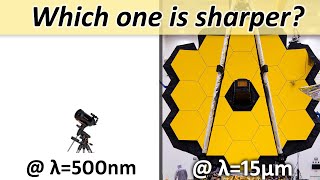 Telescope Resolution vs. Aperture and Wavelength 0:00 Intro 2:43 Short experiment with aperture 4:47 About angular resolution 7:44 Resolution comparison of 3 different telescopes 10:13 Diffraction phenomena explained using energy as a basis 14:08 Experiment showing edge diffraction in real aperture 17:14 The James Web resolution explained using aperture and wavelength |
Short documentary on Neolithic change from hunter-gatherers to farming. Failed To Load Title |
|
Originally Posted By DaGoose: Short documentary on Neolithic change from hunter-gatherers to farming. https://www.youtube.com/watch?v=Myb1Wg-7N0sExamination of the bones seems to prove to me a PALEO, hunter-gatherer, lifestyle was much healthier. All the more reason to try our best to simulate that (best we can) today. A diet high in fat and protein and little to no grains is best for overall health. ETA: combined with strenuous exercise, of course. |
"A fear of weapons is a sign of retarded sexual and emotional maturity" --- Sigmond Freud, General Introduction to Psychoanalysis
Short documentary on the megafauna extinction. The Last Giants: Tracking the Ice Age Extinction | Full Documentary |
|
Originally Posted By Former11BRAVO: Examination of the bones seems to prove to me a PALEO, hunter-gatherer, lifestyle was much healthier. All the more reason to try our best to simulate that (best we can) today. A diet high in fat and protein and little to no grains is best for overall health. ETA: combined with strenuous exercise, of course. Originally Posted By Former11BRAVO: Originally Posted By DaGoose: Short documentary on Neolithic change from hunter-gatherers to farming. https://www.youtube.com/watch?v=Myb1Wg-7N0sExamination of the bones seems to prove to me a PALEO, hunter-gatherer, lifestyle was much healthier. All the more reason to try our best to simulate that (best we can) today. A diet high in fat and protein and little to no grains is best for overall health. ETA: combined with strenuous exercise, of course. If I remember correctly from a paper I read, a lot of the issues with eating grains back then was the method of grinding it with stone tools which introduced a lot of stone dust/specks which wore down the teeth much faster and led to a lot of health issues due to cavities and infections. |
Interesting theory. Joseph Henrich — Humans defeated smarter species with cultural evolution Timestamps: (0:00:00) - Humans didn’t succeed because of raw IQ (0:10:13) - How cultural evolution works (0:21:34) - Why is brain size declining? (0:32:46) - Will AGI have superhuman cultural learning? (0:43:20) - Why Industrial Revolution happened in Europe (0:56:16) - Why China, Rome, India got left behind (1:21:55) - Loss of cultural variance in modern world (1:32:06) - Is individual genius real? (01:44:35) - IQ and collective brains |
|
Originally Posted By DaGoose: Interesting theory. https://www.youtube.com/watch?v=TcfhrThp1OUTimestamps: (0:00:00) - Humans didn't succeed because of raw IQ (0:10:13) - How cultural evolution works (0:21:34) - Why is brain size declining? (0:32:46) - Will AGI have superhuman cultural learning? (0:43:20) - Why Industrial Revolution happened in Europe (0:56:16) - Why China, Rome, India got left behind (1:21:55) - Loss of cultural variance in modern world (1:32:06) - Is individual genius real? (01:44:35) - IQ and collective brains |
Documentary on animals tamed by humans. Failed To Load Title |
|
Originally Posted By feudist: Ever read the sci-fi novel Blindsight by Peter Watts? He postulates a hominid variant that evolved as an apex predator on Homo Sapiens. Their primary advantage was an astronomically higher(and different) IQ...like the difference between us and chimps. Their weakness was the inability to cooperate(or tolerate each other's existence) beyond infrequent mating. Originally Posted By feudist: Originally Posted By DaGoose: Interesting theory. https://www.youtube.com/watch?v=TcfhrThp1OUTimestamps: (0:00:00) - Humans didn't succeed because of raw IQ (0:10:13) - How cultural evolution works (0:21:34) - Why is brain size declining? (0:32:46) - Will AGI have superhuman cultural learning? (0:43:20) - Why Industrial Revolution happened in Europe (0:56:16) - Why China, Rome, India got left behind (1:21:55) - Loss of cultural variance in modern world (1:32:06) - Is individual genius real? (01:44:35) - IQ and collective brains I have it, but haven't read it yet. Kind of sounds like the Nethandertal predator hypothesis too. |
Good discussion around the Egyptian Pyramids. The Evolution of the Pyramids. From Hierakonpolis to Giza with Dr Beth Hart Chapters 0:00 Introduction. The context that led to the pyramids at Giza 0:03:20 Categories of Evidence 0:08:02 Hierankopolis. The first royal cemetery in Egypt? 0:24:40 Abydos Umm el Qa-ab. The cemetery of the first kings of Egypt 0:50:34 The first pyramids at Saqqara 1:08:27 Pyramid Innovations under Pharaoh Sneferu 1:23:20 The pyramids of Khufu and Khafre at Giza |
Presentation from Joseph Henrich that is better than the previous video above from him.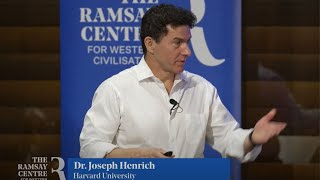 Dr Joseph Henrich | WEIRD Minds-Why the West is psychologically peculiar and particularly prosperous |
|
Originally Posted By DaGoose: I have it, but haven't read it yet. Kind of sounds like the Nethandertal predator hypothesis too. Originally Posted By DaGoose: Originally Posted By feudist: Originally Posted By DaGoose: Interesting theory. https://www.youtube.com/watch?v=TcfhrThp1OUTimestamps: (0:00:00) - Humans didn't succeed because of raw IQ (0:10:13) - How cultural evolution works (0:21:34) - Why is brain size declining? (0:32:46) - Will AGI have superhuman cultural learning? (0:43:20) - Why Industrial Revolution happened in Europe (0:56:16) - Why China, Rome, India got left behind (1:21:55) - Loss of cultural variance in modern world (1:32:06) - Is individual genius real? (01:44:35) - IQ and collective brains I have it, but haven't read it yet. Kind of sounds like the Nethandertal predator hypothesis too. They're the origin of vampire mythology. Here the author gives a fictional presentation describing how a Pharma treatment for autism resulted in the discovery of dormant vampire genes, and the program to explore their capabilities. He describes their biology and evolutionary origins in the guise of an investment sales pitch for resurrecting the species to take advantage of their mental talents. This serves as a general background for the setting of the book which is a First Contact novel set in the near future. The author is a PH.D. in Zoology and worked as a marine biologist, so he infuses a lot of hard science into his books. https://www.rifters.com/blindsight/vampires.htm |
Interesting presentation on detecting exoplanets via microlensing. PSW 2512 Detecting Exoplanets by Gravitational Microlensing | David Bennett Detecting Exoplanets by Gravitational Microlensing Survey Gaps & Rogues David Bennett Senior Research Scientist NASA Goddard Space Flight Center Our current knowledge of exoplanets is dominated by planets that are very different from those in our own Solar System, primarily because the most prolific exoplanet detection methods are most sensitive to planets with short orbital periods or large masses. The gravitational microlensing method will fill this gap with sensitivity down to Mars-mass planets, with maximum sensitivity just beyond the snow line, where planet formation is thought to be most efficient. For this reason, NASA has selected an exoplanet microlensing survey as a core survey for the Nancy Grace Roman Space Telescope. The Roman Telescope will complete the statistical census of exoplanets started with the Kepler mission’s Galactic Bulge Time Domain Survey, which will be able to detect planets like those in our own Solar System (except Mercury). The Roman Telescope’s sensitivity will extend far beyond the orbital separation of the planets in our own Solar System’s and will be able to detect unbound (“rogue”) planets as well as orbitally bound ones. Ground-based microlensing surveys have already provided hints of what the Roman Telescope may find. The microlensing data thus far seems to contradict predictions of a sub-Saturn mass desert in the wide orbit exoplanet distribution. Even more surprising than this result is the recent discovery by the MOA microlensing survey that low-mass “rogue” planets appear to be more common than all known types of bound planets, although some of these “rogue” planets could be in very wide orbits around stars. This is a somewhat unexpected clue to aspects of the planet formation process as it is currently understood. This lecture will review the exoplanet microlensing discoveries to date, and explore how the Nancy Grace Roman Telescope’s exoplanet microlensing survey will add to the statistical census of exoplanets data on wide orbit and rogue planets that is needed to develop our understanding of planet formation. David Bennett is Senior Research Scientist at the NASA Goddard Space Flight Center and at the University of Maryland. He currently serves as the Science Principal Investigator (PI) for the Nancy Grace Roman Telescope Galactic Exoplanet Survey Project Infrastructure Team and as the US PI for the Microlensing Observations in Astrophysics (MOA) collaboration. Previously, David served as the PI for the Microlensing Planet Finder mission concept, which was combined with two similar mission concepts to create the Nancy Grace Roman Space Telescope (previouly called WFIRST). He served on the first NASA Exoplanet Analysis Group Executive Committee, and on every WFIRST and Roman Space Telescope science team since 2011. Before this work, David had postdoctoral positions in theoretical cosmology at Fermilab and at Princeton. David’s research has been primarily on microlensing and its use to study dark matter and, more recently, exoplanets. In graduate school he became intrigued by Bohdan Paczyński’s paper showing that a gravitational microlensing survey could confirm or deny the possibility that the Milky Way’s dark matter consists of objects ranging from planetary to stellar masses. He suggested this idea to Charles Alcock at Lawrence Livermore National Laboratory (LLNL) (in 1989!). The next year he joined Alcock to work on the first gravitational microlensing survey, which they called “MACHO” (for Massive Compact Halo Objects). MACHO proved to be quite successful: discovering the first microlensing event (in 1993!) Sun Hong Rhie in examining the result, had the remarkable insight that a short duration feature in the light curve of this event could be due to a planet. This led her to work out important aspects of gravitational microlensing theory, leading to a seminal 1996 paper (with David Bennett) showing that microlensing was sensitive to very low-mass planets. Rhie and Bennett realized that a space-based microlensing survey would be needed to realize the full potential of exoplanet microlensing, leading them to propose the Galactic Exoplanet Survey Telescope (GEST) to NASA in 2000, and to a revised proposal for GEST, including the cosmology programs that are now a major focus of the Nancy Grace Roman Space Telescope. Much of David’s subsequent research has focused on further development of the space-based exoplanet microlensing survey methods, with recent emphasis on methods to determine the masses and distances of exoplanetary microlensing systems. David is an author of more than 400 scientific publications. David earned a BS in Mathematics at Case Western Reserve University and a PhD in Physics at Stanford University. |
Short video on the function of sewing machines You (likely) don't understand how a sewing machine works |
|
Interesting presentation. The really interesting piece was around 56 minutes in and had to do why in some fires you saw houses/neighborhoods burn to the ground, but the trees around them weren't, like in the below picture. 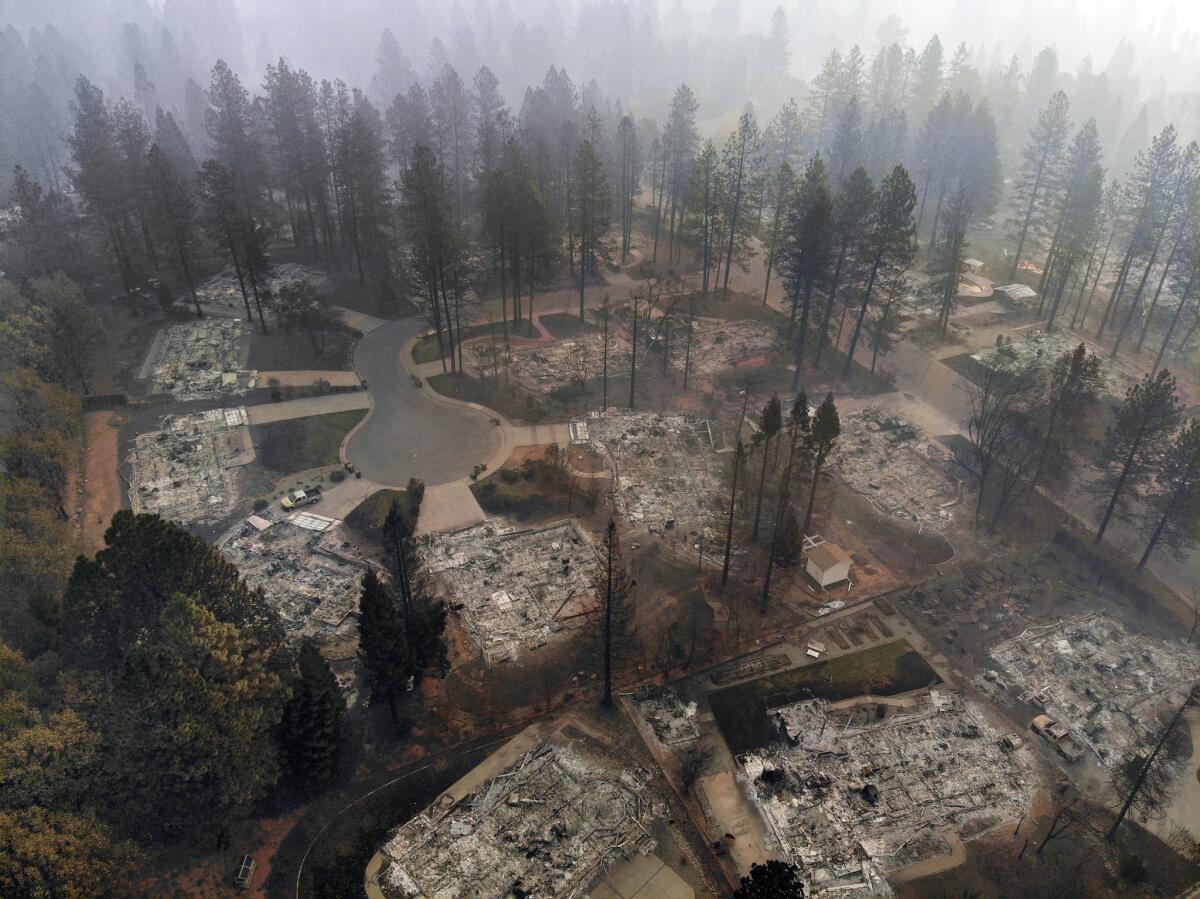  PSW 2509 Remote Sensing of Wildfires | Falkowski & Seablom Remote Sensing of Wildfires Michael Falkowski Program Manager NASA Wildland Fires Program Michael Seablom Associate Director for Technology, Earth Science Division NASA Science Mission Directorate Wildland fire is a natural disturbance and a fundamental process in many ecosystems. In many parts of the world, however, due to a combination of global change, increased fire season length, and an expanding wildland-urban interface, fires have become more frequent, larger, faster, and ultimately more dangerous to human communities. This talk will discuss how NASA is contributing to the development of technology to enhance Earth observation capabilities and their use by operational wildland fire management agencies. These new capabilities will provide improved data for understanding the changing fire dynamics and aid improving methods for fire mitigation, management, and recovery, and for helping to build communities that are more fire resilient. Michael J. Falkowski is the Program Manager of the NASA Wildland Fire program at NASA Headquarters in Washington, DC where he focuses on facilitating the development of wildland fire technology, research, and related applications. Before joining NASA Mike was Professor of Ecosystem Science and Sustainability at Colorado State University and conducted research on ecosystem science and management. Before that he held faculty positions at the University of Minnesota and Michigan Technological University and was also a Natural Sciences and Engineering Research Council of Canada Research Fellow with the Canadian Forest Service at the Pacific Forestry Centre in Victoria, British Columbia. Before he began his academic career, Mike served on wildfire and prescribed fire crews, gaining hands-on experience with managing fires and with the communities that work on the ground in fire management. Falkowski earned an MS and PhD in Forestry at the University of Idaho. Michael Seablom is the Associate Director for Technology in NASA’s Earth Science Division at NASA Headquarters. He manages a portfolio of programs that invest in the next generation of Earth Science missions. He previously served as Chief Technologist for the NASA’s Science Mission Directorate, responsible for surveying and assessing technology needs for the Heliophysics, Astrophysics, Earth Science, and Planetary Science Divisions, and for promoting crosscutting capabilities throughout the Agency. Mike is a meteorologist by training. He began his career applying estimation theory to data assimilation for numerical weather prediction and developed one of the first parallel implementations of this approach. Seablom earned a MS in Meteorology at Florida State University, an MS in Atmospheric Science at Purdue, and an MBA in Management of Technology at Georgia Tech. |
|
Originally Posted By DaGoose: If I remember correctly from a paper I read, a lot of the issues with eating grains back then was the method of grinding it with stone tools which introduced a lot of stone dust/specks which wore down the teeth much faster and led to a lot of health issues due to cavities and infections. Grinding grains came later - along with it, dental deterioration/decay. |
"A fear of weapons is a sign of retarded sexual and emotional maturity" --- Sigmond Freud, General Introduction to Psychoanalysis