


DGRVP-Q&A: Air campaign, hybrid warfare, nuclear weapons, lessons for modern warfare (Page 24 of 60)

|
Good documentary on sugar. The Worst Story in Food History: How Sugar Destroyed Everything  The Worst Story in Food History: How Sugar Destroyed Everything 0:00 - Introduction 1:00 - The Sweetest Thing 4:28 - Origins 6:22 - Khanda and Sharkara 8:22 - Jaggery 11:19 - A Mediocre Laxative 13:18 - The Sugar Masters 16:17 - Bakkwa 20:14 - The Zoroastrians 21:38 - Dessert 23:15 - Everything Goes Sideways 26:27 - A Nice Donut 27:38 - The Brutal Job 29:36 - Madeira 32:33 - The Worst Story in Food History 37:18 - Rum 39:50 - Pirates of the Caribbean 42:26 - Meanwhile, in Asia 45:17 - The Boycott 49:05 - Rum Again 51:43 - Beets and Big Sugar 55:30 - Seriously, Sugar is the Worst |
|
Interesting documentary on breakfasts. From Tea Spies to Pancake Wars: The Wild Stories of the Day’s First Meal  The Surprising Story of Why We Eat a Morning Meal 0:00 - Introduction 1:12 - The Most Important Meal 4:40 - Community 6:26 - The World's First Breakfast 8:15 - Ful, Falafel, and Bread 11:54 - Breakfast Foods Take Shape 14:35 - Eggs 17:14 - A Tamil Breakfast 21:41 - Greeks, Romans, and How We Get Our Words 26:52 - A Trip Around the Old World 29:06 - Coffee 30:08 - The Ethiopian Ceremony 33:56 - Cafes and Catholicism 35:55 - Morning in The Americas 39:58 - The Aztec Specialty 42:05 - 18th Century Breakfasts 43:48 - The Spy 46:19 - Colonies and the Industrial Revolution 50:08 - A Breakfast Crawl 52:26 - Madison Avenue Mornings 56:24 - Diner 1:00:00 - Credits and Post-Credits |
|
Victorian Linear Dividing engine. Always wondered how they made ruler/precision marks back in the olden days. The Most Interesting Tool You’ve (Probably) Never Heard Of?  The Most Interesting Tool You’ve (Probably) Never Heard Of? — And I’m Giving It Away 0:00 Intro 0:49 The Challenge 1:45 Discovery of the Machine 3:08 What is a Linear Dividing Engine? 4:22 Restoration Process 13:54 Testing the machine 16:30 Receiving a gift from Chronova Engineering |
|
More from Clickspring on the Antikythera Mechanism Lots of sources in the video descriptions. The Antikythera Mechanism Episode 12, Part 1 - Making The Lunar Phase Display Assembly  The Antikythera Mechanism Episode 12, Part 1 - Making The Lunar Phase Display Assembly The Antikythera Mechanism Episode 12, Part 2 - Making The Lunar Phase Display "Pipe" and "Cheeks"  The Antikythera Mechanism Episode 12, Part 2 - Making The Lunar Phase Display "Pipe" and "Cheeks" |

I'll add since birds are so awesome and this video shows why.. Bird Brain | Full Documentary | NOVA | PBS https://www.youtube.com/watch?v=2y1Lp5WXuxM |
The person who complains most, and is the most critical of others has the most to hide.
All truth passes through three stages. First, it is ridiculed. Second, it is violently opposed. Third, it is accepted as being self-evident.
All truth passes through three stages. First, it is ridiculed. Second, it is violently opposed. Third, it is accepted as being self-evident.
|
Making an adjustable Allen key. Inventing the Adjustable Allen Key | Toolroom Takeover 2025  Inventing the Adjustable Allen Key | Toolroom Takeover 2025 |
|
Originally Posted By brass: I'll add since birds are so awesome and this video shows why..  https://www.youtube.com/watch?v=2y1Lp5WXuxM https://www.youtube.com/watch?v=2y1Lp5WXuxMhttps://www.youtube.com/watch?v=2y1Lp5WXuxM Thanks! It was in my queue :) |
|
Good overview of the shipwrecks with links below. TOP 10 AMAZING SHIPWRECKS from Prehistory  TOP 10 AMAZING SHIPWRECKS from Prehistory 00:00 - Introduction & preamble 04:20 - Burgas (Black Sea) shipwreck 07:50 - Dokos shipwreck 11:49 - Kumluka shipwreck 14:47 - Geladonya shipwreck 20:07 - Bajo De Campana shipwreck 23:37 - Mazarrón shipwrecks 27:25 - Peristera shipwreck 32:26 - Kyrenia shipwreck 38:08 - The ‘MYSTERY’ shipwreck 45:27 - Uluburun shipwreck 50:45 - Outro Burgas (Black Sea) 2,400 BP Bulgaria Dokos shipwreck - 4,200 BP Greece Kumluca shipwreck - 3,600 BP Turkey Cape Gelidonya shipwreck - 3,200 BP Turkey Bajo de la Campana Phoenician shipwreck - 2,700 BP Spain Phoenician shipwrecks of Mazarrón 1&2 - 2,600 BP Spain Peristera shipwreck - 2,400 BP Greece Kyrenia shipwreck - 2,300 BP Turkey antikythera shipwreck - 2,070 BP Greece Uluburun shipwreck - 3,400 BP Turkey |
|
Good overview of the various faction in Europe after the fall of the Western Roman Empire. 476 AD - A Tour Of Post-Roman Europe  476 AD - A Tour Of Post-Roman Europe // European History Documentary 1 - The Fall Of Rome? 5:03 2 - Italy 8:46 3 - the Eastern Roman Empire 19:43 4 - The Gepids - 26:34 5 - Dalmatia 30:36 6 - The Ostrogoths - 35:00 7 - The Rugii - 40:08 8 - The Alemanii - 45:33 9 - Scandinavia - 50:31 10- The Franks - 57:51 11 - The Burgundians - 1:03:20 12 - Britannia - 1:07:30 13 - Roman Gaul - 1:12:49 14 - The Visigoths - 1:16:45 15 - The Suevi - 1:23:06 16 - The Vandals & The Alans - 1:26:38 |
|
Interesting discussion on History with Dominic Sandbrook The Best Conversation About History You’ve Ever Heard - Dominic Sandbrook  The Best Conversation About History You’ve Ever Heard - Dominic Sandbrook 00:00 Introduction 07:34 We Have Lost A Sense Of The Tragic 16:59 How People Talk About The British Empire 31:20 We All Have Different Views On History Changing Figures 39:48 Talking About People And Events In History As Being Evil 57:22 Hitler Being Seen As The Most Evil Person That Ever Lived 01:06:17 Does The State Of The Country Concern You? 01:12:40 Human Nature Is What It Is 01:19:44 What's The One Thing We're Not Talking About That We Really Should Be? |
|
Good discussion around the copper mining in the Great Lakes area. Lots of sources are in the video description. Ancient Copper Mining in the Great Lakes: Isle Royale & Keweenaw Explained with Ryan Peterson  Ancient Copper Mining in the Great Lakes: Isle Royale & Keweenaw Explained with Ryan Peterson 00:00 Introduction to Old Copper Culture Research 05:51 The Role of Isle Royale in Copper Mining 11:38 Understanding the Relic Shoreline 17:27 Evidence of Archaic Presence on Isle Royale 23:01 The Importance of Advisors in Academic Research 35:56 The Copper Industry: Historical Perspectives 41:56 Metallurgy: Understanding Copper Production 50:00 Fire and Copper Extraction: Theories and Evidence 01:08:21 Research Challenges: Insights and Future Directions 01:14:10 Experiencing Isle Royale: Fieldwork Challenges 01:21:06 The Science of Cold Hammering and Annealing 01:26:34 The Sensory Experience of Copper Working 01:31:49 Trade Routes and Portages in Copper Transportation 01:39:40 Excavation Insights and Artifact Discovery 01:44:42 Cultural Significance of Copper Mining 01:50:51 Malleability Hypothesis and Functional Efficiency 02:10:34 Decline of the Old Copper Complex 02:15:31 Evolution of Copper Use and Trade 02:20:02 Diminishing Returns in Resource Extraction 02:26:51 Indigenous Stories and Public Perception 02:47:41 Recent Research and Future Directions |
|
Overview of the Indus Valley civilization. Sources are in the video description. What Happened To The Indus Valley Civilization? (I Visited To Find Out)  What Happened To The Indus Valley Civilization? // Ancient History Archaeology Documentary |
|
Very interesting presentation on the Harappan civilization (Indus Valley). The sanitation/drainage pieces were very interesting as it was around 2500 BCE. Harappan Civilization | Michel Danino | India ki Khoj | 2019  Harappan Civilization | Michel Danino | India ki Khoj | 2019 |
Need to add this guy to your channel loadout. Extremely long but extremely rare and awesome, from DIY Home EDM, welding and a DIY scanning electron microscope in addition to higher res stuff from, form his chip (DSP silicon processor designs) job for 3D AFM and the like of things only 1 or 2 of even exist. He's ok for electronics in SHTF, he can rebuild MOSFETs for 5ramps, problem would be re-developing ultra high density physical and mechanical as well as all the code re- learned and back engineered.. Anyway.... I weighed an airplane... while it was flying! https://www.youtube.com/watch?v=hnvtstq3ztI |
The person who complains most, and is the most critical of others has the most to hide.
All truth passes through three stages. First, it is ridiculed. Second, it is violently opposed. Third, it is accepted as being self-evident.
All truth passes through three stages. First, it is ridiculed. Second, it is violently opposed. Third, it is accepted as being self-evident.
|
Presentation of the pre-Harappan to Harappan civilization. He is hard to understand in spots, so you might want to enable CC. Roots of the Harappan Civilization | Dr. RS Bisht | ASC IITGN  Roots of the Harappan Civilization | Dr. RS Bisht | ASC IITGN |
|
Originally Posted By brass: Need to add this guy to your channel loadout. Extremely long but extremely rare and awesome, from DIY Home EDM, welding and a DIY scanning electron microscope in addition to higher res stuff from, form his chip (DSP silicon processor designs) job for 3D AFM and the like of things only 1 or 2 of even exist. He's ok for electronics in SHTF, he can rebuild MOSFETs for 5ramps, problem would be re-developing ultra high density physical and mechanical as well as all the code re- learned and back engineered.. Anyway.... https://www.youtube.com/watch?v=hnvtstq3ztIhttps://www.youtube.com/watch?v=hnvtstq3ztI Interesting looking channel. I don't tend to have a channel list, I just start on some and then follow the algorithm, so it's random to me :) |
|
Couple of presentations on the Harappan civilization. Harappan Civilization A Century of Discovery | ASC  Harappan Civilization A Century of Discovery | ASC |
|
Pretty good presentation on underwater archaeology. Archaeology Underwater: How Submerged Landscapes are Changing the Future of Archaeology  Archaeology Underwater: How Submerged Landscapes are Changing the Future of Archaeology presented Dr. Ashley Lemke, Assistant Professor at the University of Texas in Arlington and Chair of the Advisory Council on Underwater Archaeology The phrase “underwater archaeology” conjures notions of shipwrecks, ships lost at sea, and the dramatic catastrophes that sank them; however, the discipline can also reveal details about ancient landscapes that contain the record of past human occupations. Many of these sites are on the earth’s continental shelves where vast stretches of shallow, coastal lands were exposed at the end of the last Ice Age. These once dry landscapes supported life for plants, animals, and humans for thousands of years. In this lecture, Dr. Lemke outlines how research on submerged landscapes is becoming an increasingly important part of archaeology, focusing on a specific study in the Great Lakes, where 100 feet of water has preserved a virtually intact 9,000-year-old landscape with rooted trees, peat bogs, hunting sites, and artifacts. About Dr. Lemke: Ashley Lemke is an Assistant Professor at the University of Texas in Arlington and Chair of the Advisory Council on Underwater Archaeology. She is a leading researcher on the archaeology of hunter-gatherers. She has worked extensively on both terrestrial and underwater archaeological projects from the Lower Paleolithic in Europe to 19th-century Nunamiut archaeological sites in the arctic. She is an expert on submerged ancient sites in the Americas and has researched such sites in the Gulf of Mexico, Great Lakes, and Atlantic Ocean. Dr. Lemke received her BA from the University of Texas in Anthropology and Classical Civilizations, and her MA and PhD in Anthropology for the University of Michigan. She is the editor of Foraging in the Past: Archaeological Studies of Hunter-Gatherer Diversity, coeditor of Caribou Hunting in the Upper Great Lakes: Archaeological, Ethnographic, and Paleoenvironmental Perspectives, and author of Introduction to Archaeology: A Workbook and The Architecture of Hunting: The Built Environment of Hunter-Gatherers and its Impact on Mobility, Property, Leadership, and Labor coming soon from Texas A&M University Press. |
|
Short video on rock art that may depict a battle in ancient times. Sources are in the video description. The Horrifying Archaeology Of The First Wars  The Horrifying Archaeology Of The First Wars |
Short video on curves and Parthenon being bent crooked to look straight. Why Some Things Just Look Beautiful https://www.youtube.com/watch?v=AofrZFwxt2Y |
The person who complains most, and is the most critical of others has the most to hide.
All truth passes through three stages. First, it is ridiculed. Second, it is violently opposed. Third, it is accepted as being self-evident.
All truth passes through three stages. First, it is ridiculed. Second, it is violently opposed. Third, it is accepted as being self-evident.
|
Another interesting presentation on some tech used by the various Indian civilizations. 14 | Prof. Michel Danino | Minor Technologies: Transport, Water-lifting, Cosmetics | 27 March 2019  14 | Prof. Michel Danino | Minor Technologies: Transport, Water-lifting, Cosmetics | 27 March 2019 Title of the talk - Minor Technologies: Transport, Water-lifting, Cosmetics, Writing, Paper, Ice-making.... While prominent traditional technologies such as metallurgy, agriculture, water management or textile, have attracted due attention, in the Indian context, “minor” technologies deserve notice, too, since their contribution was equally essential to the material growth of the civilization. This lecture briefly surveys the following technologies: sanitation (especially in the Harappan civilization); water-lifting mechanisms; transport and road networks; ship-making, sailing, and maritime trade; writing; cosmetics; earthquake-resistant construction. |
|
Originally Posted By brass: Short video on curves and Parthenon being bent crooked to look straight. https://www.youtube.com/watch?v=AofrZFwxt2Yhttps://www.youtube.com/watch?v=AofrZFwxt2Y I've seen the pillars being bigger in the middle, but didn't notice the rest on the Parthenon before. |
|
Follow up video on the vase scanning video I had a while back, but discussing it with David Miano. Debunked or Real? Precise Vases/Pyramids | Dr. David Miano & Adam Young – Ancient Technology Podcast  Debunked or Real? Precise Vases/Pyramids | Dr. David Miano & Adam Young – Ancient Technology Podcast 00:00:00 - Introduction 00:02:18 - David's perspective on the Vase Scan Project 00:05:09 - Adam's early evidence & research motivation 00:07:04 - Main hypothesis 00:15:03 - Traditional dating vs alternative views 00:22:13 - Scanning methodology 00:24:54 - Hand made or machine made 00:29:26 - Measuring precision: circularity 00:33:35 - What tools and culture made these 00:50:22 - Zahi Hawass and mainstream archaeology 00:55:26 - Dating of the Great Pyramid of Giza 01:05:28 - Khufu's cartouche 01:14:59 - Outro |
|
Short video on Monsanto and Glyphosate. Exposing the Monsanto Conspiracy  Why Farmers Can't Legally Replant Their Own Seeds 0:00 An Unusual Enemy 5:18 Monsanto’s Secret Poison Problem 11:17 Vietnam and Agent Orange 14:08 Roundup 19:31 How Monsanto controls seeds 26:06 The Crop Mafia 31:10 The Monsanto Papers 41:18 How dangerous is Roundup really? |
|
Interesting discussion around TARS and other things related to interstellar travel. Paper: Torqued Accelerator using Radiation from the Sun (TARS) for Interstellar Payloads How To Reach The Stars (and Shield Mars) with David Kipping  How To Reach The Stars (and Shield Mars) with David Kipping 00:00 Intro — welcome & setup 00:32 Kipping’s bio, Cool Worlds & research focus 02:03 T.A.R.S. — radiometer-inspired interstellar concept 04:11 Why classic solar sails stall with distance 06:02 Sub-Keplerian “quasite” orbits explained 07:04 Could T.A.R.S. shield Mars with a magnetic field? 10:46 Simplicity & cost: why swarms are attractive 16:46 Deployment, micro-thrusters, initial spin-up 17:21 Gyroscopic stability; dissipating energy via cyclotron radiation 18:27 Why the odd shape? Load paths & tapering 23:35 Near-term solar-system missions vs interstellar shots 24:18 Relay swarms for “live-feed” deep-space comms 29:00 Using T.A.R.S. probes to study the interstellar medium 34:08 Rubin (LSST), TESS shift-stacking & finding distant objects 40:55 Can T.A.R.S. be a telescope? (why not optical) 41:47 Massive swarms as gravitational-wave machines 44:52 Jupiter’s atmosphere as a lens; test with Juno 47:49 Gravitational waves & the Fermi paradox 52:01 Why radio still wins 56:14 Neutrinos, dark matter & detectability limits 01:01:05 Is Earth unusually interesting? Zoo vs rarity 01:06:05 “Alone in practice”: distance & timescales 01:07:12 Extragalactic SETI 01:11:05 Star-lifting as a technosignature 01:12:26 Anomaly hunting across galaxies 01:13:50 Interstellar’s influence & the audacity to try 01:17:22 Near-term life detection & abiogenesis focus 01:19:48 3I/ATLAS, UFOs & “are they here?” 01:23:30 Relics in the Solar System vs undetectable visitors 01:26:09 Outro & credits |
|
Interesting presentation on various Indian technologies from non-Indian sources. Prof. Michel Danino | Non-Indian sources on Indian technologies | 09 January 2019  01 | Prof. Michel Danino | Non-Indian sources on Indian technologies | 09 January 2019 |
|
Interesting presentation on the impact of climate change to the Indus civilizations. Climate, Environment and the Indus Civilization | Prof Cameron Petrie | ASC IITGN  Climate, Environment and the Indus Civilization | Prof Cameron Petrie | ASC IITGN The ancient Indus Civilisation developed in a region marked by a two rain systems that produced a variable climate pattern and diverse environmental conditions. This presentation will consider the nature of this climatic and environmental context, and consider the ways in which they impacted on the lifeways of Indus Civilisation populations. It will also consider the degree to which the Indus Civilisation was impacted by changing climatic conditions and the degree to which populations were adapted to their environment, and resilient and sustainable in the face of changes in water availability. Bio: Cameron Petrie is Reader in South Asian and Iranian Archaeology at the University of Cambridge, and conducts research on the archaeology of India, Pakistan and Iran. He joined the Department of Archaeology in Cambridge in 2005 as the Research Councils UK Fellow in South Asian and Iranian Archaeology, and was appointed as a lecturer in 2010, senior lecturer in 2014 and reader in 2016. Prior to coming to Cambridge he was the Katherine and Leonard Woolley Junior Research Fellow at Somerville College Oxford (2003-2006), and completed his PhD at the University of Sydney in 2002. |
|
Interesting presentation on ratios used in building in Harappan structures. Harappan Town Planning: Unravelling its use of ratios & linear measures | Michel Danino | ASC IITGN 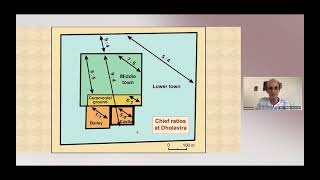 Harappan Town Planning: Unravelling its use of ratios & linear measures | Michel Danino | ASC IITGN Unexpectedly, almost every major Harappan structure — fortified enclosures, large buildings, reservoirs etc. — displays a simple ratio between length and breadth. This talk documents those ratios across several Harappan sites, especially Dholavira, and argues they are the result of a deliberate cultural choice — a choice that survived in later classical Indian architecture. Further, the linear units used to apply those ratios on the ground can be calculated through geometrical and statistical approaches, yielding a “master unit” of 1.9 m and a set of sub- units ending with a “Harappan angula” of 1.76 cm. This has important repercussions for the broader discipline of Indian metrology. About the Speaker: Michel Danino, Visiting Professor at IIT Gandhinagar, has authored books on Indian civilization, including The Lost River: On the Trail of the Sarasvati and Indian Culture and India’s Future, apart from many research papers on Harappan metrology and town- planning, the Sarasvati River, the Aryan debate, and cultural issues. He was a member of the Indian Council of Historical Research and is convener of a CBSE committee for the course “Knowledge Traditions and Practices of India” whose two-volume textbook he co-edited (with Prof. Kapil Kapoor). In 2017, the Government of India awarded him Padma Shri for his work on education and culture. |
|
Interesting overview of a Harappan city. Dholavira: A Harappan City  Dholavira: A Harappan City Dholavira in Gujarat has recently been added to UNESCO’s list of World Heritage Sites. This illustrated talk and conversation will highlight some of what makes Dholavira an outstanding example of a Harappan city. The 5,500-year-old settlement is famous for its town planning and its careful attention to water harvesting and storage, which made it possible for this bustling city to thrive for centuries in the arid environment of Kutch. To see its inhabitants through the rain-free months, the city was almost encircled with large reservoirs, which together could store several million litres of water. Unlike in many other places of historical interest, the ruins in Dholavira are not of grand palaces or large temples. Instead, we get an intimate glimpse into people’s everyday lives – the plinths of their houses are still visible, complete with courtyards, washrooms and drains. We will talk about what we know about how people in Dholavira lived and ate, who they traded with, and what they might have made, bought and sold. One of the fascinating things about the Harappan civilisation is its as-yet-undeciphered script. In Dholavira, archaeologists discovered a very intriguing and unique ‘signboard’: what might this have said? Sometime after 1800 BCE, Dholavira, and indeed, the whole Harappan Civilisation, began to fade away. Scholars believe this decline was brought about by climate change and attendant economic and social changes. |
|
Overview of the Punic wars by Eve MacDonald. Ancient Rome's Rival Carthage & The Punic Wars  Historian Explains The Punic Wars 0:00 - Carthage: Origins of a Superpower 16:01 - The First Punic War: Clash of Titans 29:57 - Hannibal in Spain: The Road to War 42:10 - Hannibal Crosses the Alps 53:12 - Rome's Greatest Defeat: The Battle of Cannae 1:03:04 - Scipio Africanus: Rome Strikes Back 1:11:31 - The Final War: The Destruction of Carthage |
|
Interesting presentation on the diet eaten by early humans in North America. New Insights into the Diet of America's First Peoples, Dr James Chatters  New Insights into the Diet of America's First Peoples, Dr James Chatters In recent decades archaeologists have actively, often acrimoniously debated the migration route and ecological adaptation of the earliest Americans. You have the Kelp Highway hypothesis, that argues for a maritime adaptation versus the inland migration hypothesis that envisions of terrestrial foragers. Then, for Clovis, the first and only continent-wide cultural pattern, we have those who see big-game focused adaptation versus backers of the “broad spectrum forager” hypothesis. Recent studies of two of the most ancient human skeletons, the Anzick boy and Naia of Hoyo Negro contribute actual, direct evidence to these debates (see maps below). Each allows us to approach the question from a different perspective. The Anzick boy’s bone proteins were well preserved, so it was possible to conduct a stable isotope analysis to the determine most likely diet of this nursing toddler’s mother. Naia’s bones lacked protein but were nearly complete, enabling an analysis of her growth patterns, supported by isotopes in her bone minerals. Both sets of results identify megafauna as central to the diet of these earliest Americans. They present these early immigrants to our hemisphere as highly sophisticated mobile who subsisted by following the most mobile, wide-ranging prey. That, in turn, light on Clovis culture could have spread so rapidly throughout North and South America and could have contributed to the extinction of native megafauna. |
|
Lot of interesting artifacts found in ice patches in Mount Edziza Provincial Park. The Edziza Ice Patch Work, Central B.C. Canada - Duncan McLaren  The Edziza Ice Patch Work, Central B.C. Canada - Duncan McLaren The thawing ice patches of Mount Edziza Provincial Park, B.C. Canada, have unveiled a cache of ancient artifacts dating back 7,000 years. |
|
Interesting discussion around SETI and Alien probes. Could Alien Probes Already Be Here? With John Gertz  Could Alien Probes Already Be Here? With John Gertz 00:00 Intro — John Michael Godier welcomes John Gertz 00:19 Gertz’s background and SETI involvement 02:05 Breakthrough Listen and SETI funding history 04:40 Why NASA should fund SETI 06:51 Microbes vs intelligent life 09:01 Flaws in the Fermi Paradox framing 11:02 Von Neumann probes and galactic law 13:50 Are probes already here in the Solar System? 17:05 The Great Silence and surveillance probes 20:19 Galactic internet, redundancy, and data storage 22:32 Reinventing SETI — Gertz’s new book 24:27 UFOs, UAPs, and evidence standards 27:02 Skepticism, the press, and missing radar data 31:58 Could probes operate in Earth’s atmosphere? 33:54 Why we lack dashcam UFOs vs meteor footage 35:20 The best time to search for technosignatures 36:01 Archival plate anomalies (Villarroel’s work) 38:22 Satellite anomalies and Trojan co-orbitals 40:11 Could asteroids hide alien probes? 42:10 Where to search for probes in the Solar System 44:58 Rogue planets and white dwarfs as SETI targets 46:59 Panspermia and intentional seeding of life 49:59 Abiogenesis experiments and early Earth life 50:53 Microbial life as ubiquitous, intelligence as rare 52:26 Dinosaurs, raccoons, and evolutionary contingencies 55:11 The next generation of SETI researchers 57:19 Will we crack abiogenesis within 20 years? 59:03 NASA budgets, telescopes, and future risks 60:11 Outro — thanks and closing remarks |
|
Continuation of the last discussion on METI and Dark Forest Hypothesis. What if Non-Human Intelligent Life is Not Friendly? Featuring John Gertz  What if Non-Human Intelligent Life is Not Friendly? Featuring John Gertz 0:00 Introduction: The Question of METI and Cosmic Risk 4:12 Why Messaging Extraterrestrial Intelligence Divides Scientists 9:05 Historical Attempts to Contact Alien Civilizations 13:48 What Would Happen If Another Civilization Found Us? 18:27 The “Dark Forest” Hypothesis Explained 23:02 How Do We Measure the Dangers of METI? 28:36 Why Staying Silent May Be Humanity’s Best Strategy 33:11 The Ethical Debate: Do We Have the Right to Represent Earth? 38:25 Lessons from Human History on First Contact 43:57 Could METI Trigger Hostile Action? 49:41 Alternatives to METI: Searching Without Shouting 55:03 What Governments Should Decide About Messaging the Cosmos 1:00:26 Looking Ahead: The Future of SETI and METI Policy |
|
Interesting news on possible planet around Alpha Centauri A. Papers: Worlds Next Door: A Candidate Giant Planet Imaged in the Habitable Zone of $α$ Cen A. I. Observations, Orbital and Physical Properties, and Exozodi Upper Limits Worlds Next Door: A Candidate Giant Planet Imaged in the Habitable Zone of $α$ Cen A. II. Binary Star Modeling, Planet and Exozodi Search, and Sensitivity Analysis A low-mass planet candidate orbiting Proxima Centauri at a distance of 1.5 AU Has JWST spotted a planet around our nearest Sun-like star?!  Has JWST spotted a planet around our nearest Sun-like star?! 00:00 - Introduction 04:03 - Why it’s so hard to find planets around our nearest stars 08:31 The discovery of this candidate planet around alpha Centauri A with JWST 10:33 Why it’s only a candidate exoplanet for now… 14:39 Bloopers |
|
Interesting paper on Exoplanet gaps. Paper: EXOPLANET EXPLORATION PROGRAM Science Gap List 2025 The things we DON'T KNOW about EXOPLANETS  The things we DON'T KNOW about EXOPLANETS 00:00 Introduction 01:30 Spectroscopic observations of the atmospheres of small exoplanets. 02:40 Modelling exoplanet atmospheres 03:20 Spectral signature retrieval 03:55 Planetary system architectures: occurrence rates for exoplanets of all sizes 04:40 Occurrence rates and uncertainties for temperate rocky planets 05:05 Yield estimation for exoplanet direct imaging missions 05:55 Intrinsic properties of known exoplanet host stars 06:30 Mitigating stellar jitter 06:55 Dynamical confirmation of exoplanet candidates 07:40 Observations and analyses of direct imaging targets 08:15 Understanding the abundance and distribution of exozodiacal dust 09:05 Measurements of accurate transiting planet radii 09:40 Properties of atoms, molecules and aerosols in exoplanet atmospheres 10:05 Exoplanet interior structure and material properties 10:30 Quantify and mitigate the impacts of stellar contamination 11:15 Complete the inventory of remotely observable exoplanet biosignatures 11:45 Understanding planet formation and disk properties 12:56 Bloopers |
|
Very nice video on showing how to make a mechanical calculator out of wood. Sources are in the video description. Book he kept referencing in the video. How I built a Mechanical Calculator  How I built a Mechanical Calculator 00:00 - Intro 00:34 - Materializing Numbers 08:23 - Constructing the Calculator 21:13 - Demonstrating Its Functions 30:07 - History and Conclusions |

|
Short video on the deconstruction of a liberty ship. Inside the Ship That Changed WWII | The Liberty Ship  How the Liberty Ship Actually Worked 00:00 - 00:54 Intro 00:54 - 02:26 History 02:26 - 04:10 Specifications & Capabilities 04:10 - 06:49 Exterior Tour 06:49 - 07:59 Weapons & Defenses 07:59 - 11:18 Bridge Deck & Boat Deck 11:18 - 11:58 Upper Deck 11:58 - 14:50 Second Deck & Steering Gear 14:50 - 15:50 Tank Top 15:50 - 17:51 Boilers 17:51 - 20:27 Engine 20:27 - 22:02 Legacy & Conclusion |
|
Presentation by Sarah Paine on UK and Germany during WW1 and WW2. How Hitler almost starved Britain – Sarah Paine  Sarah Paine – How Hitler almost starved Britain 00:00:00 – How WW1 shaped WW2 00:16:00 – Hitler and Churchill’s battle to command the Atlantic 00:31:00 – Peripheral theaters leading up to Normandy 00:38:03 – The Eastern front 00:48:53 – Russia’s & China’s geographic prisons 01:01:21 – Hitler’s blunders & America’s industrial might 01:15:53 – Bismarck’s limited wars vs Hitler’s total war |
|
Originally Posted By PeakMPD: Thanks for that link on the Liberty Ships. My grandfather served on one, and was badly burned on his legs. Ship caught fire after an attack, but fortunately didn't sink, or I'd not likely be posting this. No problem. Think I have some other videos in the thread that go over parts of it's use during WW2, but I couldn't point you to the right ones 
|
|
Interesting discussion around the origin of Flood myths in different cultures. Sources are in the video description. The Surprising Truth About Flood Myths Across Cultures  Flood Mythology Completely Rewritten by New Evidence 0:00 Introduction 3:08 Flood Theories 4:22 The Oldest “Written” Story 12:26 A Rising and Sinking Sea 17:33 A Slowly Changing Landscape 19:37 Australia: The Spencer Gulf 22:21 Stopping the Sea in the Neolithic 25:52 Gun-Yu: The Great Flood of China 27:12 Shuruppak: The antediluvian city 31:11 Flood Stories and Rituals of the Near East 31:45 Droughts 32:53 Australia: Tidilik 36:18 Mythological Research: Phylogenetics and Mythemes 40:00 Jean-Loïc Le Quellec and Julien d’Huy 41:32 Why Use Mythology? 44:35 The Cosmogonic Flood 52:28 Findings from the Studies 53:20 Is the Cosmogonic Flood the source of all Flood Myths? 55:27 The Dissemination of Myth: A Universal Model 1:01:55 Earth Divers and Emerging from the Underworld 1:03:14 Fire and Flood 1:03:48 Fruits fall from a Tree 1:04:25 A Wounded Creature 1:04:58 Bird Scout 1:05:47 Brother and Sister give Birth to People 1:06:26 Finding the Sun 1:07:35 The Origin of the Flood Myth 1:15:03 Out of Africa? 1:17:28 America? 1:18:19 Asia? 1:19:07 The Truth about the World’s Flood Stories |
|
Some interesting ideas, but not sure I agree with him on everything. China is killing the US on energy. Does that mean they’ll win AGI? — Casey Handmer  China is killing the US on energy. Does that mean they’ll win AGI? — Casey Handmer 00:00:00 – Why doesn’t China win by default? 00:08:28 – Why hyperscalers choose natural gas over solar 00:18:01 – Solar's astonishing learning rates 00:27:02 – How to build 50,000 acre solar-powered data centers 00:40:24 – Environmental regulations blocking clean energy 00:44:04 – Batteries replacing the grid 00:49:14 – GDP is broken, AGI's true value must be measured in total energy use 00:58:45 – Silicon wafers in space with one mind each |
|
Interesting short video on Sargon and the combat myth. Sources are in the video description. Sargon's Most Important Campaign 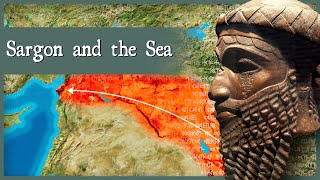 Sargon's Most Important Campaign 00:00 Sargon's Campaign to the Sea 00:51 The futility of any "most important" claim 02:07 Sargon's Life - Sources and History 07:10 Disclaimer and Our Sources 07:56 Sargon's Importance 11:05 Royal Ideology and the Combat Myth 13:27 Symbol Clustering and the Combat Myth 15:36 The Combat Myth and World History |
|
Short overview of the Cycladic Civilization in the Aegean Sea. Where Did European Civilization Begin?  Where Did European Civilization Begin? |
|
Interesting short video on Huaca Prieta. Site in Peru that may date back to 14.4K years ago. The Mystery of Huaca Prieta - Oldest Pyramid On Earth?  The Mystery of Huaca Prieta - Oldest Pyramid On Earth? Sources: https://www.elbrujo.pe/en/students/huacaprieta https://www.science.org/content/article/traces-some-south-america-s-earliest-people-found-under-ancient-dirt-pyramid https://antiquity.ac.uk/projgall/dillehay331 https://www.researchgate.net/publication/305654742_Chronology_mound-building_and_environment_at_Huaca_Prieta_coastal_Peru_from_13_700_to_4000_years_ago |

|
Interesting video on an old Grist mill in Indiana. Looks like they turned the area into a pioneer village. https://springmillstatepark.com/spring-mill-state-park-pioneer-village/ Inside the 1817 Spring Mill Grist Mill (and Why It Matters)  Inside the 1817 Spring Mill Grist Mill (and Why It Matters) |
|
Interesting film on the assembly line for Lincolns in 1928. Channel has a lot of videos on old cars (mostly Fords it appears). Original 1928 Film Shows Full Lincoln Assembly Line From Casting, Engine, Chassis, Paint Body & More  Original 1928 Film Shows Full Lincoln Assembly Line From Casting, Engine, Chassis, Paint Body & More |
|
Interesting documentary on the rise of the mini steel mills. Disrupting Big Steel: Conquest of the Minimills  Disrupting Big Steel: Conquest of the Minimills |