


Armory Sponsor

Posted: 4/2/2020 3:45:17 AM EDT
[Last Edit: TNVC_Augee][Edited]
|
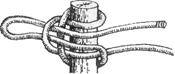
Given the frequency with which we field questions, here on the forum as well as via phone and e-mail, I thought it might be worth posting this simple illustration and explanation of binocular disparity/parallax, and how it relates to depth perception and NVGs. There’s a lot of variations on the question, but the crux of all of them pretty much end up being “why are Binocular Night Vision Goggles (BNVGs) better than/more expensive than other options?” Note: this is not meant to try to convince anyone that they need to buy BNVGs and that monoculars or bioculars will get you “killt in da streetz,” but rather an acknowledgement that both the difference in cost and the fact that so many professional end users and trainers use and advocate the use of BNVGs warrants at least some explanation of why they’re better. The common answer typically tends to be that BNVGs provide better depth perception, which then also translates to improved situational awareness, and allows end-users to move more quickly and more safely (important when operating vehicles and/or aircraft, as well as more “dynamic” dismounted activities). BNVGs also reduce user fatigue, allowing them to be worn longer, both in terms of overall duration, and the amount of time between when you need to give your eyes and a brain a “break.” Going into a little bit more detail, the primary mechanism by which BNVGs accomplish pretty much all of these is related to stereoscopic visual cues—our brains and bodies have evolved to use stereoscopic vision, common amongst active predators throughout nature. One of the main stereoscopic cues is binocular disparity, illustrated here in a very simplified form:  Simply put, your two eyes provide slightly different angles of objects that you observe in three-dimensional space. Based on the amount of disparity between the two angles on an object, your brain can then unconsciously judge the distance from you to a given object or obstacle with a fairly high degree of accuracy, especially if you are familiar with the object or type of object (e.g., a couch or a coffee table) and its nominal dimensions—or if there are other familiar objects around it (e.g., tree trunks). The greater the disparity, the closer the object/obstacle, allowing you to distinguish between a small object nearby, or a large object in the distance, as illustrated in the bottom half of the image. Moreover these cues are not dependent on objects/obstacles being in focus. Optical illusions like 3D images or stereograms (“Magic Eye”), and/or forced perspective scenes use binocular disparity to “trick” your eyes and brain into seeing (or in the case of some forced perspectives, not seeing) depth accurately—in fact, you can actually “see” stereograms through BNVGs, thanks to the proper translation of binocular disparity. Binocular disparity is one of the primary components of depth perception and stereoscopic vision, allowing you to proper gauge distance and relative size, making it extremely important while moving, especially at high speeds and over unfamiliar terrain/environments. With a monocular, depending on the amount of ambient light, you can get a degraded version of these stereoscopic cues using information from your unaided eye—when there is enough ambient light, your unaided eye can at least get some information about objects and obstacles, allowing you to have some sense of depth perception. This is why manual gain is considered so important in monocular night vision devices, while being less so in BNVGs—if the difference between your aided and unaided eye is too great, your brain can “turn off” your other eye, preventing you from “seeing” and processing supplementary information being provided by the unaided eye. Therefore the ability to dim the aided eye to better “equalize” the inputs from your two eyes can be extremely important. With a BNVG, since both aided eyes will have equal or close to equal inputs to provide stereoscopic visual cues, manual gain control tends to be considered less important with BNVGs. Moreover—this is why monocular night vision devices by far require the most training and practice to learn to use effectively, and why many novice users find biocular devices like the AN/PVS-7 family to initially be “more comfortable” and easier to use. On the other hand, biocular devices, as a function of their design and operation CANNOT provide binocular disparity, as a single image from a single image intensifier tube is being projected into both eyes. In doing so, biocular devices “trick” your brain into thinking you still have stereoscopic vision, making you “feel” more comfortable, simultaneously making you more confident, when you are in fact less able to accurately judge distances, making them a greater liability. The element of “comfort” provided by the biocular image has often times caused them to be “preferred” and recommended for vehicle drivers, however, IMHO, this is a mistake—as the “preference” of many novice night vision drivers for the AN/PVS-7D has everything to do with psychological factors, but actually provides poorer potential depth perception than the AN/PVS-14–shameless plug, but this was one of the main driving reasons behind the development of the TNV/PVS-14-PBM-A, to provide conventional military drivers without access to BNVGs with a binocular capability. Furthermore, stereoscopic visual cues also help to explain some of the importance behind proper collimation and interpupillary distance (IPD) adjustments: In terms of collimation—when photons enter the image intensifier tube, they do not necessarily travel in a straight line to the eye, the design of image intensifier tubes almost guarantees that there is a slight amount of shift in the image. Collimation involves ensuring that the image shift between eyes is within acceptable tolerances. This is also in part why boresighted and collimated devices like Clip-On Night Vision Devices (CNVDs) are so much more expensive and complex than normal NVGs (the catadioptric lens assembly is another big part—but that is a topic for another time). It’s worth noting that the acceptable image shift tolerance for an MX-11769 image intensifier is about three times that of an MX-10160 “aviation” style image intensifier, and hence why we prefer not to perform tube “conversions,” even with L3Harris image intensifiers with removable EGACs, they’re “out of spec” for most binocular devices, and much harder, if not impossible to collimate properly in a binocular system. Can you use an uncollimated or poorly collimated BNVG? Sure, and it’s better than a monocular or a biocular, however it’s still not ideal, and not the same as a properly collimated set of dedicated BNVGs. At the same time, for aviation applications, both the U.S. military and FAA require extremely strict inspection standards to ensure that BNVGs are within tolerances, as a minor misjudgment in an aircraft can have catastrophic results. This repeatable, consistent image shift is also why repeatable, consistent IPD can also be an important factor—your brain is used to a certain distance, i.e., a certain amount of shift between your left and right eyes, and will use that “known quantity” to judge the value of binocular disparity in judging depth and distance. When learning to use BNVGs, to a certain extent your brain has to “re-learn” the relationship between your left and right eye to give you the most accurate and reliable information, especially when combined with the image shift induced by the image intensifier tube, which is ultimately almost impossible to reduce to zero—hence why there is an acceptable and unacceptable tolerance. A non-repeatable, non-precise IPD can have an effect on binocular disparity, especially when coupled with image shift in the tube—the affect may be minor, but it’s there. Again, this is the reason that despite the increasing popularity of articulating goggles for ground applications, almost all aviation goggles utilize a fixed bridge system with precise and repeatable IPD adjustments—at very least with a fixed bridge, the image shift effects are limited to the horizontal plane, rather than an offset rotating axis relative to one another with an articulating goggle design. That being said, this is not meant to be interpreted that articulating goggle designs are terrible and you shouldn’t use them—there are some benefits to articulating goggle designs, otherwise they would not be so popular, however, in keeping with our mission of education and providing information to all potential end-users, it is worth discussing the potential pros and cons of certain configurations and design philosophies and understanding the benefits and limitations of each. The reality is that in many situations and to many end-users, the differences between these minor factors may not make any practical difference at all—and the vast number of goggles out there that have been built without proper collimation can certainly attest to that—however, this does not change the fact that there are right and wrong ways of doing things, and better and worse approaches, nor does it foreclose on the possibility of minor issues “stacking” to create a bigger problem. Finally—in terms of user fatigue, again, the basic concept is fairly simple: Your eyes and brain have evolved to operate a certain way—and while modern NVGs can’t exactly replicate our natural vision, properly built and configured BNVGs tend to get the closest, meaning that they are more “natural” to use, and therefore more comfortable to use for prolonged periods of time. The more deviations from “perfect,” the more your brain needs to work “overtime” to process the inputs and resolve them into useable information, which ultimately leads to user fatigue. With bridged monoculars or an uncollimated and/or improperly adjusted BNVG, your brain can resolve stereoscopic visual cues, but will have to work harder to do so, leading to accelerated fatigue compared to wearing dedicated BNVGs. With a single monocular, you can get a degraded version of the stereoscopic visual cues, but you will fatigue much more quickly as your brain strains to resolve the widely disparate information it’s receiving from your two eyes. With a biocular, you will probably experience less fatigue and be much more comfortable—arguably even more comfortable than with a BNVG, as you’re not experiencing the disparate shift from two different tubes, however you will not have any stereoscopic visual cues making you less capable of accurately judging distance and depth. TL;DR—Dedicated, collimated BNVG > bridged monoculars > single monocular > biocular. P.S. often people will recommend the purchase of a “low cost” PVS-7 as opposed to a PVS-14 as a way to “get in to” night vision. This is not bad advice, and I’ve given this advice to more than one person in the past, because having night vision is infinitely better than not having night vision. However, it’s worth noting that the only reason that PVS-7s are so “cheap,” is not because they’re inherently cheaper to produce—in fact they are much more complex and difficult to assemble than a simple monocular system, with prisms and 50% more optics (eyepiece assemblies) than a monocular—the image intensifier price is about the same, but simply put, because very few people want them. The “new” price of a biocular device to manufacture or assemble is actually higher than a monocular, they’re sold cheap because otherwise nobody would buy them. Okay, that’s what I’ve got for now.  ~Augee |
Director of Operations
Product Development/Marketing, Military/LE Sales, Training
Tactical Night Vision Corporation - TNVC, INC.
http://www.tnvc.com
[email protected]
(909) 796-7000 Ex. 201
Product Development/Marketing, Military/LE Sales, Training
Tactical Night Vision Corporation - TNVC, INC.
http://www.tnvc.com
[email protected]
(909) 796-7000 Ex. 201

|
Binocular NV is the way to go. Even the very best description cannot catch the amazing truth of the advantage that can the proven only when you have the binoculars on and have them adjusted just exactly right. There is a "sweet spot" in the adjustment that suddenly crystallizes in your vision -= and when you hit it you khow cool and effective binocular vision really is. If you can afford it....buy it now, while money retains its value, is my advice. Here is a poor man's way to cheat just a little depth perception out of your single tube set while you await delivery of the binocular set. It's an old article, and I don't know whether the pictures will still show up. If not, the word pictures will have to suffice. I used a red laser for the reason that it was cheap, and I could take pictures to post that showed the laser lines to make the point. https://www.ar15.com/forums/armory/Cheap_laser_line_generators_for_NV_depth_perception_and_hazard_detection/18-417389/? It is a cheat. Nowhere near as good as the real thing. If you fail to buy the real thing - a genuine dual tube binocular - while you still can cobble together the deal, don't come crying to me. |

|
Great post. This should help out a lot of folks. I don't know how close it is to being correct but this has worked for me for a quick and dirty DIY collimation. Obviously, it's ideal to have it done professionally. After dropping the tubes in with the eyepieces not fully tightened down, I put the bino on (powered on), and slowly rotate the eyepieces until I get the best image. I find a star works the best because if it's "off" I'll see double and when it's close to spot on I'll see just one star. I know I'm good when my eyes/brain go "ahhh, that's better". Then I tighten it up. |



|
Originally Posted By 2JokersWild: Oh damn, I didnt realize the differences between built to spec BNVGs and dual monoculars! Could someone have 2 monoculars collimated to have them synced up? Absolutely, but the effectiveness would depend on the security of the bridge mount system and whether they would always lock up together in the same place. Similar issue with flippy goggles like DTNVGs - can collimate then for one IP setting (width) but as soon as your eyes don’t match that same measurement they’ll be a bit off. Not sure how most guys set their collimation for those type of units when they go out the door, but I imagine there’s a set average width they stick to that most end users are near. A fixed bridge like an RNVG let’s you keep a given collimation for any width as long as the pods ride fairly rigidly and parallel-ley along the bridge track. |
|
Originally Posted By 2JokersWild: Oh damn, I didnt realize the differences between built to spec BNVGs and dual monoculars! Could someone have 2 monoculars collimated to have them synced up? @2JokersWild From my experience it's no big deal whatsoever. I suppose if you had a -14 that was seriously off it could be a problem but I've ran about 8 different PVS-14's as duals on a "fixed" bridge (NVD S-mount), D-14, and NPBM and never had any issues. Is there a difference, yes, but IMHO it's not an OMG difference. Same goes for articulating goggles versus fixed. I know people have had their monoculars collimated as duals but I don't think I've ever heard from someone if it made any difference. Maybe someone will chime in who's done it. ETA: I've done it and it can make a huge difference! |
|
Originally Posted By jwramp: Absolutely, but the effectiveness would depend on the security of the bridge mount system and whether they would always lock up together in the same place. Similar issue with flippy goggles like DTNVGs - can collimate then for one IP setting (width) but as soon as your eyes don’t match that same measurement they’ll be a bit off. Not sure how most guys set their collimation for those type of units when they go out the door, but I imagine there’s a set average width they stick to that most end users are near. A fixed bridge like an RNVG let’s you keep a given collimation for any width as long as the pods ride fairly rigidly and parallel-ley along the bridge track. I guess articulating goggles with IPD stops would help in that regard. |
|
Originally Posted By -HOOT-: I guess articulating goggles with IPD stops would help in that regard. For consistency sake and if they were collimated at the IPD stop setting that you’re using, probably. I think it’s tough to say how “big of a deal” any of that is though. You have guys that collimate by hand, some that don’t at all, and others that say the difference in image shift tolerance between the tubes with pigtails and the ones without is enough to make collimation near impossible. I imagine there was testing done on the .mil side to come up with the specific requirements for collimation and how close you need to get, but we’ll likely not get to see that. Having looked through the test set while my binos were getting collimated because I was curious, it’s a very simple process and it does indeed make for a more natural and less eye/brain-straining experience when it’s done right. I have no clue whether the variation in angle from switching flippy-goggles between different users is enough to put them “out of spec”, just something I thought might be worth bringing up if we’re gonna poke around in the weeds. Hopefully a non-issue for most. I don’t want dealers to have to make guys send in their IPD when they order goggles
|
|
I'll clarify that I was mainly referring to new PVS-14s on a bridge versus a collimated bino. The ones I used were all bought new so the eyepieces were set correctly and they worked very good together without being collimated like a bino. If the eyepieces are off from each other (such as a DIY) then you can have some major issues with it being unusable. Same for a non-collimated bino. You can't change the position of the image tube inside the housing, so you're really not collimating the tube, you're adjusting the eyepieces. I do mine by hand because I've switched tubes around and still do so it doesn't make sense to send them in each time. If I wasn't, I'd send them in to be done properly. From recollection, the goggles look about the same before I swapped them, although I do think the GP tubes that originally came in the Anvis-9 looked the best when I first got it and they were still collimated before I swapped them out. The BNVD-SG I had I bought new and I never messed with it. It was always a great image. IMO the articulation by itself doesn't make a noticeable difference in changing collimation. If it did, you'd be seeing outlines around things or double. You'd definitely know. We've all had (bino owners) one eyepiece that was slightly off (ETA: as in not focused right) and you know right away. |
|
So, the point is not necessarily that any one of these things is necessarily a "deal breaker," as I noted, I'm not trying to convince anyone to buy any particular product, and I made sure not to mention specific products aside from generic designations like AN/PVS-7 and AN/PVS-14 that are available from a variety of sources, or that they've made the wrong decision if they bought something besides dedicated BNVGs, a lot of priorities, not all related to this one small aspect of NVDs, play into decision making. Most famously, the Army decided after fielding the AN/PVS-5 that infantrymen didn't really "need" two tubes, and that a single tube, biocular design was "good enough," giving birth to the AN/PVS-7. No one at the time was suggesting that a single tube was better than dual tubes, but the cost of high performance (for the time) image intensifiers on the cusp of Gen. 2 and Gen. 3 was a very big factor at the time as well--equipping more infantrymen with single tubes was a much better option than equipping a much smaller number with dual tubes. And those decisions are getting made even today with all types of procurements. As far as collimating bridged PVS-14s... eh, you can kinda sorta do it, but as noted, you'd have to crack them open, making them "impossible" to collimate if you're not planning on opening them up and losing their purge, e.g., like the intended market for the PBM-A and NPBM-D, issued, fleeted PVS-14s used by military and law enforcement, in which case they tend to frown on doing that outside of an approved maintenance shop, which, especially for law enforcement, often ends up meaning sending them back to us. If you're building and purging at home and/or are fine with the canned-air thing, I suppose you could give it a try, I live on a South Carolina marsh so I'm not cracking shit open without the ability to properly re-purge it with the correct apparatus, but I don't do that kind of work on goggles at home, hahaha. The best that "most users" are going to be able to do with bridged '14s is as good mechanical alignment of the devices as possible, and depending on the bridge mount... some are better at it than others. Beyond that, in terms of whether or not you will "notice" uncollimated tubes, or how much articulation might affect collimation, or mismatched tubes (its own subject), part of the point here in discussing stereoscopic cues and how they work vis-a-vis binocular night vision goggles is to highlight just how much work your brain is doing unconsciously. Your brain is actually remarkably flexible and adaptable and it can adjust to a wide range of varied inputs and resolve it into something useful for you, and there are a bunch of different exercises and "optical illusions" you can use to get a sense of how much "work" your brain is really doing without you having any idea that it's doing it. Again, if you look at the illustration above--the point is that your brain "merges" the two disparate images into a single image that makes sense. Your brain does a lot of filling in information, automatically adjusting for differences, etc., traditional animation depends on the brain's ability to "fill in" certain gaps. With uncollimated monoculars or binocular goggles, a similar thing will happen most of the time, your brain will "fix" most problems for you, your brain will "make it work," and you may not even notice that something's off. However, over time as your brain continues working overtime to process information, you will start to experience increased fatigue, and for some people in some cases, even tension headaches. This may not be something that you notice much or that affects you too much over the course of wearing goggles for an hour or two here and there, but it's still something that happens--whether you realize it or not, running NVGs, any NVGs, is actually fairly exhausting, and more exhausting the less experience you have with them, because again, your brain is working overtime to process the information. A lot of times in CQB classes and other training classes "processor speed" will get discussed, and the importance of training unconscious competence, building neural pathways, and repetitions until you can't fail. The same applies to using night vision, and if your brain is using extra processing bandwidth to resolve a "bad" image, then a) you're going to get tired faster and b) you're taking up bandwidth that could be being committed elsewhere. Again, this is why the standards for aviation systems are so high, so strict, and so stringent--one could argue that even while driving most ground vehicles, much less being dismounted, the margin of error is much much higher than when zipping around nap-of-the-Earth in a helicopter or cruising at 500 mph in formation in a fixed wing aircraft. Usually when dismounted, you can also simply flip the goggles up and give your eyes a rest for a second periodically without risking a fatal mistake. Us "lowly" ground users benefit from a lot of research and development and testing that has really been done to protect pilots and expensive aircraft, not ground guys rolling around in Toyota pickups--remember, aviators got PNVGs before the Cool Actions Guys did, and they might never have got them if they weren't developed for that application first. Same with HUDs, fused sensors, and a lot of other cool toys that we now enjoy for ground use. Point is, this thread is not about saying this thing sucks or that thing sucks, it's about explaining some of the basic concepts behind why certain things are the way they are, and this thread is really only about discussing one factor that goes into night vision goggles, there are tons of other factors, from price to weight to other features, and we could probably have an equally long discussion about each if you wanted to explore all the branches and minutiae. I'm certainly not trying to say that articulating goggles suck--I have a set of AN/PVS-31A BNVDs and TNV/DTNVGs sitting on a table right next me, alongside the TNVC Artemis V1 prototype and PBM-A from our Instagram Live last night, and I've used them all extensively. The fact of the matter is that suitably within tolerance for collimation, and within the arc of the rotation within the mean range of IPD adjustments, you probably would never notice, and it probably won't make a huge practical difference in use, even in terms of cumulative fatigue, maybe you'd fatigue a few minutes sooner over the course of eight hours? I haven't done those scientific tests, so I couldn't say for certain what the exact difference is, but again, I've spent lots of time under all of them, including the Artemis recently (#quarantinegoals), including long-duration observation (we've been having stray dog issues lately, it's a whole... thing. Off topic. ). However, that doesn't change the fact that the difference does exist--it's up to you as an individual, or your organization if you're choosing something to standardize on, to decide how much that difference matters. It could be a lot, it could be some, it could be none at all. ~Augee |
Director of Operations
Product Development/Marketing, Military/LE Sales, Training
Tactical Night Vision Corporation - TNVC, INC.
http://www.tnvc.com
[email protected]
(909) 796-7000 Ex. 201
Product Development/Marketing, Military/LE Sales, Training
Tactical Night Vision Corporation - TNVC, INC.
http://www.tnvc.com
[email protected]
(909) 796-7000 Ex. 201

|
So, what if you don't have binocular vision? My vision is so bad in one eye, I really only use the other. No depth perception. It's my world, I've lived in it for a long time, and I'm not bumping into things or unable to catch baseballs. My brain just figured it out the best it could, I guess. I've been looking at some NV. If I were to get a PVS-7, and only used one eye through it, would the prisms and other mechanisms screw up the image? Would I be bumping into things or would it be just like the world I see with my one good eye? I think with PVS14's monoculars it would be easy, I just put it in front of my good eye. The whole world will just be green as my dominant eye would be the only one 'viewing' anything. |
|
Binocular disparity is but one aspect of the broader concept we know as “depth perception.” A big one and very important one, but obviously for some people it works better than others, and some people just don’t have it for a variety of reasons. The brain is remarkably adaptable, so if you’ve lost (or never had) sight in one eye, your brain can adapt to it, the bigger “issue” is if it “randomly” changes from what your brain is normally used to. One of the reasons you need to train more with a monocular is because it’s exactly that—training your brain to be comfortable with the input. I’m not an optometrist or ophthalmologist, but I don’t see why a PVS-7 wouldn’t work for you, but it would be even more pointless than normal if your brain doesn’t even “care” about your other eye. Most guys that I’ve known or known of have simply used a monocular and been perfectly good with it. ~Augee |
Director of Operations
Product Development/Marketing, Military/LE Sales, Training
Tactical Night Vision Corporation - TNVC, INC.
http://www.tnvc.com
[email protected]
(909) 796-7000 Ex. 201
Product Development/Marketing, Military/LE Sales, Training
Tactical Night Vision Corporation - TNVC, INC.
http://www.tnvc.com
[email protected]
(909) 796-7000 Ex. 201
|
Outstanding, TVNC once again being a fantastic contributor and resource for the community. Can we do a little bit of related "question time"? 1) I understand the basic gist of collimation, but how is it actually accomplished on a binocular device? What is physically adjusted to "line up" the image? Is that something that can be done somewhat safely by a non-expert end user? 1a) The last couple times I wore my binos, something felt slightly 'off', got that ever so slightly disjointed, dizzy feeling. Like cold medicine side effects. I haven't fully explored why that might be, but is it possible the collimation got messed up? 2) Is there a good 'procedure' for setting IPD, or do you really just have to feel it out? I tried using calipers to set the centerline of the tubes to my IPD as measured by the optometrist (and more or less confirmed by calipers and a mirror) but that didn't seem to work super well. From there I just kept adjusting until it seemed like the image was as perfectly round as I could get it (not being cut off by the edge of the lense meaning I'm looking through straight), but I wonder if there's a methodical way to get there that you folks with experience know that I haven't figured out yet. Apologies if these are already answered in the second wall of text, my monkey brain hasn't finished that one ye... SQUIRREL! |
|
@Klaustrophobia Below in red. 1) I understand the basic gist of collimation, but how is it actually accomplished on a binocular device? What is physically adjusted to "line up" the image? Is that something that can be done somewhat safely by a non-expert end user? Short, simplified version, it involves cracking open the seal and rotating the eyepiece lens and checking image alignment using a test set. You basically plug the BNVG into the test set that has essentially a series of night vision "eye charts," and there is a collimation "bridge" that goes over it which is basically a reverse-PVS-7 in and that it takes the two images and merges them into one, and there is a tolerance chart for what you should see to be within or outside of proper collimation. If you can't get it within tolerance within IIRC 1/2 turn of each eyepiece assembly, you've got bigger problems, and you basically just need to use different tubes or eyepieces or not use those tubes together. This procedure is done at a direct support maintenance level in aviation units, and one could argue that those guys are not necessarily experts--but you need the test set and tools to do it right. cj7hawk posted a DIY thread last year about a somewhat ad hoc way to do it, but I haven't ever tried this method, so I can't vouch for its effectiveness or recommend it as a method, but it might be something to look at: https://www.ar15.com/forums/Armory/Boresighting-and-Collimation-of-NVDs-and-clip-on-s-at-home-with-stuff-you-d-find-in-the-kitchen-/18-496234/ 1a) The last couple times I wore my binos, something felt slightly 'off', got that ever so slightly disjointed, dizzy feeling. Like cold medicine side effects. I haven't fully explored why that might be, but is it possible the collimation got messed up? It's certainly possible. Again, IIRC, aviation units are supposed to be re-checked for collimation (among other things) every six months or so to remain flight certified. During normal use a ground goggle "shouldn't" necessarily fall out of collimation regularly, but it's not impossible and it could be worthwhile to get them re-checked and if necessary adjusted. 2) Is there a good 'procedure' for setting IPD, or do you really just have to feel it out? I tried using calipers to set the centerline of the tubes to my IPD as measured by the optometrist (and more or less confirmed by calipers and a mirror) but that didn't seem to work super well. From there I just kept adjusting until it seemed like the image was as perfectly round as I could get it (not being cut off by the edge of the lense meaning I'm looking through straight), but I wonder if there's a methodical way to get there that you folks with experience know that I haven't figured out yet. I don't know of a specific "method" to arrive at the perfect IPD--the first time with a set of binos, I usually dial them as close together as possible (I guess I've got close set eyes ) and then start dialing them out (or pulling them out on an articulating goggle) until I get the best possible image--I usually overshoot, then dial back in, same way you do when focusing lenses. In a broader sense, I'll usually try to adjust everything else, including focus, elevation, tilt, eye relief, etc., first, then dial in the IPD, then re-check all those things, which may or may not lead to more tweaking of IPD and back and forth and back and forth. I might be a little picayune about it, but again, this is part of why I have a slight preference for fixed bridges and ANVIS mounts--articulating bridges can subtly change the elevation adjustment of the optical centerline, and I like my goggles to be where I like them the moment I flip them down--ANVIS mounts keep the goggles perfectly set, just flip up or flip down. I can work with an imperfect FOV, but if I can have it as close to perfect as possible, why not? But again, this is a matter of personal preferences and priorities. I also wear coke bottle glasses, so parallax through my eyeglass lenses can actually be a real thing, but I'm NOT saying one is objectively better than the other. ~Augee |
Director of Operations
Product Development/Marketing, Military/LE Sales, Training
Tactical Night Vision Corporation - TNVC, INC.
http://www.tnvc.com
[email protected]
(909) 796-7000 Ex. 201
Product Development/Marketing, Military/LE Sales, Training
Tactical Night Vision Corporation - TNVC, INC.
http://www.tnvc.com
[email protected]
(909) 796-7000 Ex. 201
|
Originally Posted By jwramp: Absolutely, but the effectiveness would depend on the security of the bridge mount system and whether they would always lock up together in the same place. Similar issue with flippy goggles like DTNVGs - can collimate then for one IP setting (width) but as soon as your eyes don’t match that same measurement they’ll be a bit off. Not sure how most guys set their collimation for those type of units when they go out the door, but I imagine there’s a set average width they stick to that most end users are near. A fixed bridge like an RNVG let’s you keep a given collimation for any width as long as the pods ride fairly rigidly and parallel-ley along the bridge track. If using a TS-3895 or a NV-2500, the IP distance is fixed, so you actually can't collimate it at a user's IP distance. I'm not sure about the ANV-126. If you're using tubes that were designed to be used in a Bino, and you have matching glass (same Part#, same MFR), in most cases you'll actually be close to collimated with only minor adjustments needed. Most fixed bridge systems with correctly matched tubes will usually pass a collimation field test on the first go. The issue with bridged PVS-14s is the amount of play and flexion that the bridge allows, since a half degree will throw collimation off by a significant margin. |
"Hokey religions and ancient weapons are no match for a good blaster at your side, kid."
-Han Solo
-Han Solo
|
Originally Posted By Stinkfoot09: Would a bnvd ul with 11769's be considered a bridged monocular or a collimated bnvg? (Tubes with very similar specs) How can one test their nvg's for proper collimation? I am unsure whether or not the Night Vision Devices BNVDs are collimated or not, but they are a dedicated BNVG. As I understand the manual does come with a disclaimer that the device may produce headaches, and 11769s (especially the ITT/Harris/Elbit) tend to have greater tolerances for image shift than 10160 "aviation" tubes since they are manufactured with the intent of being used in monocular systems. The "proper" way to test for collimation is to use an NVG test set, however there are some "at home" DIY methods that people have tried/come up with that are have been posted. ~Augee |
Director of Operations
Product Development/Marketing, Military/LE Sales, Training & Education
Tactical Night Vision Corporation - TNVC, INC.
http://www.tnvc.com
[email protected]
(909) 796-7000 Ex. 201
Product Development/Marketing, Military/LE Sales, Training & Education
Tactical Night Vision Corporation - TNVC, INC.
http://www.tnvc.com
[email protected]
(909) 796-7000 Ex. 201
|
I went with a PVS-7. My old eyes are getting to the point where I need the input from both eyes. I've also failed every depth perception test I've ever done. I'm used to using other clues to determine distance so I probably wouldn't get much benefit from binoculars. |

|
This topic can be highly specific to the end-user. Everything Augee says could be a factor for you, or not. It seems there is a very wide variation in the population; some guys can tolerate a lot of "slop", some guys can't. I would say we all strive for as close to perfection as we can get. But it can be difficult to determine what exactly you need, without extensive testing. With that being said, I think we're getting to really good perspectives here; Augee as to the theory behind the designs and how that effects you (even though he has much practical experience as well), and Will who gives us the "common man" approach, and the results of practical application. My own take-away has been that using a single -14 for many years has taught my eyes and brain to leverage the I2 to the max. It may even help that I have one extremely dominant eye and putting the tube on the weaker one actually makes me "see" with both. Could not possibly explain why that is, it just happens. I also spent many years walking through the woods at night aka patrolling. So perhaps my natural night vision is more finely tuned for this sort of thing and works more readily with I2. Beats me. But you also have to fine tune the gain for this to happen. Manual gain is critical in this set up. And I should add, this is a set up optimized for slow, stealthy movement through the woods. That may or may not apply to you. So I'm not sure what sort of adaptation went on here, or what I naturally brought to the table, with genetics, and possibly training. Just one data point. Then I switched to binos. Which was a bit underwhelming at first, because I think I had adapted so well to -14's, but slowly I began to perceive the differences. The depth perception is better. And the image seems "brighter" for lack of batter term. More vivid and detailed. I can see why they would be better for more dynamic movement, where info could be processed faster, without as much "study" of the image. I could maybe equal them if I took a security halt with a -14 and carefully studied the terrain, but binos gives a more rapid "info dump" as it were. As far as collimation and IPD, really haven't had them long enough to say for sure, but I have had no problems so far, with NVD "BNVD SG UL". Elbit tubes I believe. And articulation. So maybe I'm lucky in that regard. But again, data point of one. |
Armory Sponsor