Warning


Close
Confirm Action

Are you sure you wish to do this?

Cancel Confirm
AR15.COM
AR Sponsor
7/10/2026 6:34:36 PM EDT

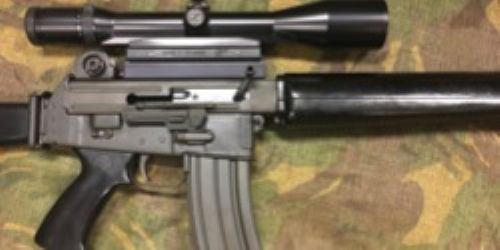
Howdy!  I haven't written anything in a while due to moving from commie marlandistan to a Free America so I'm going to be a little rusty.  But, that's OK, I'll muddle through. A very dear friand of mine recently found this preban Colt in a little shop in a tiny town and thought I should know about it.  So, I took a look.  What I found was that it had been totally unscrewed with and was very clean.  It has been shot but clearly not much.  But the thing that sold me on it was the old Colt scope mounted with original covers in almost new condition.  The covers these old Colt scopes came with were about as durable as paper (they are literally partially made of paper) and to find a set in the condition these were in tells me this old rifle spent almost all of its life sitting in storage.  Were it not for the missing box and manual, I'd call it a time capsule.  So, while the rifle itself is nothing particularly special (us old men remember seeing these new on the shelf), you don't run into these old 1980's Colts very often anymore so I thought I'd share it with the younger readers.  And while I'm at it, I figured I might as well compere the scope on it to the new Colt "retro" scope offered by Brownell's.  So.....here we go.


First up are left and right side views of the rifle and scope:

?


What we're looking at is A Colt Model R6401, sold as the "AR-15 A2 Sporter II":


Without getting into eye glazing details, I'll just keep it simple and say that this rifle was introduced by Colt in 1985 to replace the earlier SP1 (Sporter 1) which had been in production in one form or another since January of 1964.  Shown For comparison to the subject of this article, here's SP1 serial number 710 made in January or February of 1964:


Getting back to the Sporter II, Colt marketed this as a big change to their lineup because the Department od Defense had recently adopted the A2 and now you could own your very own!  But.....not really.  While this new Sporter II did have a number of A2 parts on it, it also had a bunch of A1 parts and an ancient design slab side lower receiver. In reality, Colt was essentially using up left over old style parts combined with new style parts and selling a "hybrid" rifle if you're kind or a "bastardized" rifle if you are not so kind.  At the time and for many years after, a lot of people considered the poor Sporter II as neither fish nor fowl and you could buy these rifles cheap, especially when other companies started sprouting up and selling a rifle that, cosmetically, looked much more like one that was issued to US troops.  But, eventually, these old Colts came to be seen in a different light and they are now considered to be some of the best Quality rifles they ever made.


Over time, as earlier pattern parts were exhausted, newer pattern parts were installed and Colt changed the model number of the rifle several times during its production run which ended with the 1994 Clinton ban.  In that time, the various small changes were numerous, so numerous that I'm not going to get into all that; I'll let you do your own research because it's good for you.  When you teach yourself, it sticks more!


So, as I said, the Sporter II was initially sold in 1985 with a serial number range starting at/around 300,000. The first ones had no forward assist because they were using up leftover SP1 upper receivers.  They were known the Model R6400 but very few of them were made before switching to an upper with a forward assist, the R6401 that I have:


This is what's known as the "tear drop" forward assist and it's what was used on the M16A1.  Actual A2 rifles would have had a push button and the Sporter II would too (in two different sizes as time went on) once the tear drop pattern parts ran out.  


Based on my research, the serial number on mine places its production as prior to August of 1985 and, like all Colts of this era, are marked as manufactured by "COLT'S FIREARMS DIVISION":


?And I know it has its original magazine because it's marked the same way on the baseplate:


?Evidence of just how little the rifle was used is shown by the minimal insertion marks on the magazine body:


Also notice in the picture above, there is what's known as a peel washer behind the A2 flash hider.  This is essentially an aluminum timing shim that was made in different thicknesses to time the closed bottom flash hider on the muzzle.


The top of the charging handle also shows minimal wear, indicating minimal use:


The barrel is an A2 barrel, also commonly called the "government profile" barrel:


The A2 barrel differs from the A1 in that it is much thicker from just behind the front sight extending all the way to the muzzle.  In the later years of production, A1's were chrome lined their entire length and the same is true of the A2.  Here are the marking on top of the barrel forward the front sight:


The "C" indicates chrome lining and the "MP" means that it was Magnetic Particle tested, a method using a magnetic fields and iron oxide particles to look for defects.  Do a little research on that, it's pretty neat!


That's it for this post.  We'll pick up and continue in the next.  I'm having fun....I hope you are too!

7/10/2026 7:06:55 PM EDT
[#1]
Beautiful weapon.  Brings back memories of the number of these I have owned over time.
7/10/2026 8:01:05 PM EDT
[#2]
Very nice OP.
"An age of glory passed like a lightning flash. The mandate of heaven passed from you but you didn't see. Times change and power passes. It is the pity of the world."

Song dynasty poet
7/10/2026 9:24:09 PM EDT
[Last Edit: akethan][Edited] [#3]
I had a converted MG SP2

"I miss the days of being able to shoot all commies" G.B.
7/10/2026 9:30:07 PM EDT
[#4]
Nice rifle OP. I really like the old slab side Colts. Still some of the best ARs ever made.

An armed society is a polite society.
7/10/2026 10:58:21 PM EDT
[#5]
Thank you guys!  Nice rifles!!


If the rifle were in true A2 configuration, we'd have a rear sight that was adjustable for both windage and elevation.  What you actually got was an A1 that was only adjustable for windage:


Although the A2 sight is better in every way, I've always liked the older sights because it's what I remember when I was a kid and it always reminded me of a telephone dial.  The "C" is for Colt, who did the final machine work to the upper and the "H" is for Anchor Harvey, the company that provided the rough forging.  


Also present on the front right side are Colt inspection stamps:


Very small, sometimes they are readily visible, but sometimes they are barely visible.  Whatever the case, they should always be there.  If you don't have pretty good vision, you might need a magnifying glass to see them.


Here we see the front right side of the upper and lower receivers:


The lower is what collectors call the "flat sided" or "slab sided" receiver because there is no "fence" around the magazine release button to keep it from being inadvertently pressed.  This goes back to the very earliest rifles.  Notice that there is a screw head where the front push pin would be on a military rifle.  This was a modification done by Colt to prevent you from swapping out full auto upper and lower receivers.  Not only is there no provision to hold a push pin in place, but the hole is a different size than you would find on a military rifle.  I forget if it's larger or smaller, but you have a 50% chance if you guess!

The ejection port cover has the earlier, small pad.  On later Sporter II's, the proper A2 larger version would replace it.  You can see a bit of wear on the lower receiver where it comes into contact when the port cover swings open.


All of the furniture on the Sporter II was A2 from beginning to end.  Some of the improvements in the A2 handguards were better purchase on the rifle, a much more durable plastic, and interchangeable halves (the top one was identical to the bottom one instead of the A1's left and right halves).  Inside were more effective heat shields too:


On these early rifles, every one I've seen is just snapped into place and you can remove them from the plastic by squeezing them but you run the risk of deforming them as they are thin aluminum.  They were never intended to be removed and they eventually started gluing them in place.  I've also seen later ones that have "DO NOT REMOVE" impressed into them.  But, to my knowledge, all early handguards (civilian ones at least) should have no glue or markings on the heat shields.  The only markings I can find anywhere on the entire handguards are what I presume to be mold cavity marks:


A2 pistol grip:


This one is exceptionally clean; another indicator that this rifle was barely used.


The buttstock is an A2 part as well, as evidenced by the full checkering on both the plastic butt plate and alloy trapdoor:


I didn't take any detail pictures of the sling.  It's just a standard nylon sling from the time as used by Colt.  I can't remember but I think one was included with each rifle.  There's really no way that I am aware of to identify it as original or added later.


That's it for tonight.  In the next post, I'll show you what typical 1980's internals looked like and then we'll finish up by looking at the scope compared to the one sold today.  I'll see you when I look at you.
7/10/2026 11:28:11 PM EDT
[Last Edit: tiger222][Edited] [#6]
Nice pick up OP, that rifle looks exactly like my 1st AR15 I bought in Califonia back in 1985.
They were on sale at a LGS in the San Fernando Valley. $499.95. Picked it up and then went to a surplus store
and bought some 30 round USGI mags, back when all of this was possible in the former golden state.

I really wanted a SP1, but they had just stopped making them, or so the LGS said and this was there.
They put an ad in the local Recycler magazine iirc. They had full A2's but this ticked the box for me.


Brings back good memories!!
"It just gets that much more exciting when it has a carry handle on it. Or tiger stripes. If you have both, then you have the John Wayne in the Green Berets size of a big win."
7/11/2026 10:38:37 PM EDT
[#7]
Okiedokie, as stated in the last post, we'll take a look at typical Colt internals in 1985.  At the rear of the lower receiver, it was hollowed out all the way back to the buffer tube but the opening wasn't as wide as a full auto receiver so the parts won't fit:


Additionally, the bottom rear of the upper receiver isn't machined out for the auto sear to clear:


​The bolt is, well, an AR bolt:


Stamped with a "C" on the left side so that you know it's an original Colt part:


Colt has always done a nice job staking their gas keys but it's been different ways over the years.  This is what it was looking like in 1985:


The bottom rear of the bolt carrier has most of it cut away so that it won't trip an auto sear even if you had one installed:

Military configuration bolts are easy to come by today but things were very different back then and this was much more of an impediment to someone looking to be naughty than it would be today.


"MPC" Magnetic Particle testing mark on the bolt:


And the bottom of the extractor showing the little blue rubber insert:

It's normal for a Colt commercial extractor of this era to not be marked with a "C".  Some were and some weren't.


And that's pretty much it for the internals.  It's all pretty standard stuff but it's nice to see what things looked like at this point in time so that you have some idea what to look for when you run across one so that you know you are getting what you are told you are getting.


In the next post, we begin looking at the scope.
7/11/2026 11:51:18 PM EDT
[Last Edit: ProbableColtAddict][Edited] [#8]
Alrighty, now we are going to look at the scope that came on this rifle and compare it to the new scope being offered by Brownell's.  Just a wee bit of History first to put things in context.  

To my knowledge, Colt only ever used two companies to make the classic short carry handle scope we all know and love, Realist and Hakko.  There was another one made by a Dutch company, Delft but that was in the 50's before the rifle was marketed to the commercial market so we're ignoring them here.  So, for our purposes, Realist 3 X 20 scopes were the first.  They were US made and first sold in the mid 1960's.  Here are a few pictures of one:

Front:


Rear:


Top:

I could go on but you get the point.  It looks like the scope we are all used to seeing when we think of a vintage AR15.  There are minor variations over the course of production but they  were only minor marking differences.  They only offered these for a few years before switching production to Hakko in Japan.  When?  Nobody knows for certain but it was probably in the late 1960's to very early 1970's.  Why?  I'm certain that I don't know but my guess is production cost.

The Hakko scopes were also 3 X 20 through around 1984.  Also available starting in the early 1980's and also made by Hakko was a 4 X 20 model.  And, by 1985, only the 4 X 20 was still available.  That's what's on this rifle.  

Now, just like the 3 X 20 scope, there were variations in the 4 X 20 over time but they've never been fully documented as far as I know.  I don't think anyone knows for sure when they quit selling them either.  Hecks, I don't know if we'll ever know these things, but one thing I do know is that I can show you this one that came with this rifle.  Judging by everything else on the rifle, I think it reasonable to assume that it was bought when the rifle was new and I offer it as a snap shot of what I believe was being sold in 1985.  

Also, while we're at it, we might as well look at the Colt scope Brownell's is currently selling.  It's also made by Hakko and some people are saying that it's a reproduction.  It is most certainly not.  Actually, it's simply Hakko's the latest version of the scope made decades after the last one they made for Colt but employing 21st century techniques and materials.  I mean, it's not a Zeiss but I'm certain it's at least as well made as the old 4 X 20.  So, before we get rolling, remember, it is "Retro" in the sense that it looks very much like the old jobber, but it was never intended to be a "reproduction" of one.  Got it?  I hope so.  Enough talk.  Let's get to some pictures.

In all pictures to follow, unless I tell you differently, the new scope or component(s) is on the left and the 1985 scope or component(s) is on the right.  We'll finish this post with a few general pictures and start to get into more detail in the next one.  

Left side:

Right out of the gate, we can see numerous differences.  The paint on the new one is more matte than on the old, which actually has just a bit more shine in person than is being picked up by the camera.  The mount, which also serves as a tunnel allowing you to use the rifle sights, is a hair taller on the new model, making the scope sit just millimeters higher above the handle than the old on.  The retaining screw that holds the mounting bolt in the mount is a phillips head on the new and slotted on the old.  There is a big slotted screw in the old scope that is not present on the new one.  You can't see it but there is also one on the bottom of the old scope.  This is how the internal elevation and windage mechanisms were installed back then but that's not necessary today.  This is a good thing as it eliminates that many more possibilities for seal failure.  The distances between the elevation markings are different between the two.  My guess is that the old one was calibrated for a 55 grain bullet and the new one is for a 62 grain. As we go along, you're going to see MANY more differences between the two.  I'll bring your attention to some of them but I'm not going to point them all out or I'd never finish writing this.  I'll just let the pictures speak for themselves and I invite you to study them carefully.


Right side:


Rear:

Note the slightly taller sight tunnel on the left, the new scope.  This will matter later when we look at lens covers.


Front:


Top:

Both of these have the ocular lens adjusted to my vision without glasses on.  


Bottom:

I can find no evidence of the yellow inspection sticker having been removed on the old scope. I do know that sometimes one was not applied.  "JAPAN-AO" in on the old scope too but it's in black paint where the new one is in white.


We'll call that good for tonight.  We'll start looking at some details in the next one.
7/12/2026 1:14:35 PM EDT
[#9]
Nice write up.

i have collected a bunch of info on Sporter iis, but unfortunately the thread got archived and I can no longer update it.

Still the best source of info out there on Sporter iis.

https://www.ar15.com/forums/AR-15/Colt-Sporter-II-Changes-Over-Their-Serial-Number-Range/127-784728/

The Serial numbers seemed to have started at 301,000 in 1984 and were pretty much done by 1987, except for a few stragglers.

I find these guns fascinating because they straddle the transitional period between A1s and A2s.

Colt considered anything with a 1/7 twist barrel an A2, while most folks picture what the US Military type classified as an A2.
7/16/2026 12:38:53 AM EDT
[Last Edit: ProbableColtAddict][Edited] [#10]
Quote History
Originally Posted By CapnMike:
Nice write up.

i have collected a bunch of info on Sporter iis, but unfortunately the thread got archived and I can no longer update it.

Still the best source of info out there on Sporter iis.

https://www.ar15.com/forums/AR-15/Colt-Sporter-II-Changes-Over-Their-Serial-Number-Range/127-784728/

The Serial numbers seemed to have started at 301,000 in 1984 and were pretty much done by 1987, except for a few stragglers.

I find these guns fascinating because they straddle the transitional period between A1s and A2s.

Colt considered anything with a 1/7 twist barrel an A2, while most folks picture what the US Military type classified as an A2.
View Quote


Thank you sir.  The thread you've referenced is a WONDERFUL thread that I have poured over many times.
7/16/2026 12:40:06 AM EDT
[#11]
Sorry, been busy the last few days.  Tonight, we're picking up where we left off with the scope.

We start with the locking lever that holds the scope to the carry handle..  Again, the new one is on the left.
Bottom view:

They are extremely similar with the new one being entirely painted in black and the old one being blued or some other treatment to darken the parts.

Top view:

You can see that the swinging lever is shaped slightly different between the two and the new one hac a much larger E-Clip holding the assembly together.  These assemblies WILL NOT interchange between the two scopes.  That's because the old scope affixing screw has a much courser thread than the new one.  The fine thread on the new one allows the scope to get a much more secure grip on the handle.  


Rear view showing the elevation setting dot on the top of the scope body:

The newer one on the left has a smaller dot and the font on the elevation knob is different between the two.


While both turrets are marked  "RANGE YARD x 100", this is readable on the right side with the knob set to "1 TO 2":


And at the front of the turret on the old one when set to "1 TO 2":


New elevation and windage adjustment covers on the left:

While the elevation adjustment covers are not absolutely identical, they will interchange between the scopes.  As for the windage adjustment covers, they will NOT interchange and also notice that the new one is taller.


While the markings on the windage adjustments look very similar, they are considerably larger on the new one and the adjustment knob itself is larger; so much so that the old cover won't even slip over the new knob:


New one with fewer adjustment hash marks:


Old one with many more adjustment hash marks:

These marks are deceiving though as there are no clicks.  The poor little knob just turns round and round with only friction to hold it in place.  You can just keep turning it until it comes to a stop or breaks...I don't know which because I'm not willing to experiment with it!  
According to the instructions that came with the new one, one mark equals 1" at 100 yards for both elevation and windage.  As the old one I have didn't come with an instruction sheet, I cannot say with certainty whet one mark equals on that one.  And, as stated earlier, there was variation over the years, so I won't guess.  Also, "L" moves the shot Left.

In this shot, you can see how much farther the new windage adjustment knob sticks out the side of the scope body than the old one:

Also, as an aside, notice that the old one has an "(R)' following the "Colt" logo.  Most of it is cut off, but the new one is marked "TM".  If you look at the general top view of both scopes farther up-thread, you can see bot marks in their entirety.


Closeup of new elevation adjustment:

30 hash marks if I'm counting right.  "UP" moves the shot up.

Closeup of old elevation adjustment:

I think I count 31 hash marks on this one.


The last pictures of the reticles.  Now, although they look slightly different due to my limited photography skills, the actual reticle appears to be identical to me.  Also, the clarity looks the same to me.  The only difference I see is that the old one has a slight yellow hue to the image.  You can see it in my pictures but it's just a hair more evident to the naked eye.  Whether that yellow hue is due to age, I cannot say.  I can only report what I see.
So, new reticle:


And old reticle:

I'd also like to point out that the eye relief one these is so short that your eyelashes are almost touching the glass.  I mean, you really have to squeeze up in there to get a full and proper picture.  that doesn't bother me but I figured I should point it out because I'm sure some of you are wondering.  It's pretty much like the ELCAN 145 on my M249 in that respect.  I don't have an ACOG, but I've read that they are super tight too.  No biggie...just adapt man!

In the last post, we'll look at the lens covers.  That'll be either incredibly boring or incredibly interesting depending on whether or not you are as strange as i am!

7/17/2026 12:20:56 PM EDT
[#12]
Great thread! Congrats on a beautiful new to you Colt and an even bigger congratulations on moving to a free state.
7/18/2026 11:33:51 PM EDT
[Last Edit: ProbableColtAddict][Edited] [#13]
Okiedokie.  It's time to wrap this one up with a look at the lens covers that came with the Hakko scopes.  As I said back at the beginning of this mess, you don't very often find them with the scopes anymore because they were very cheaply constructed.  We'll start with a picture of the cover removed from the optic:

Just looking at this picture, you can see how lightly built it is.  Stretching between the two covers are two elastic bands and they don't hold up too well as they tend to stretch out over time with even normal usage.  Because these clearly sat for all these years, they still retain their elasticity.  

The body of each cover is either paper thin leather or, more likely, leatherette that has been shaped into a cylinder with a black leatherette covered cardboard disk glued on the end.  Whatever it is, it's glued and stitched together and it'll easily crush in your hand.  You have to be careful sliding it over the end of the scope because it'll delaminate from the red cloth liner very easily.  You can see the beginning of that here:


A few detail shots:

Notice that the leatherette is starting to delaminate a little bit from the black cardboard cap.  Also, no stitching is evident running along the seam where the ends of the leatherette/leather meet so I'm assuming this is glued too.  There is some stitching at the rear of the cover but, as you can see, it's a pretty fine thread.


Here's a picture of the inside of the caps showing the red cloth liners:

Now, these caps are still in just about pristine condition and show almost no signs of use.  If that's true, that means that they looked this cheap even back in 1985 when they were new.  They're perfectly useable at the moment but the above pictures should make it abundantly clear that they wouldn't hold up if you did.  In other words, these are relegated to artifact status at this point.  


Unfortunately, Hakko didn't supply the new scopes with lens covers so it's up to you to supply your own.  Fortunately, a guy by the name of Ken Huddle down in Louisville, Kentucky hand crafts new covers that look very similar to the originals but they are heavy duty leather and extremely well made.  He sells them under the name "Mr-Raygun" on Gunbroker and Ebay.  He makes reproduction scope covers for wartime German ZF4 scopes too and just about any scope on the market.  There is absolutely nothing cheaply made on these covers and I've bought them for a number of old scopes I own.  Here are a couple pictures showing the impressive Quality:


Mr Huddle's covers on the left compared to the original on the right:

Notice how much thicker his are.

Vintage Hakko at the top with period covers and the new made Hakko with Ken's covers at the bottom:

As of this writing, Mr Huddle sells these for $55 a set.  

However, there is a slight problem; at least in my experience.  Remember in an earlier post, when I pointed out that the tunnel on the mount that allows you to use the rifle's sights is taller on the new Hakko scope?  Well, that slightly higher tunnel means that the new Hakko scope sits just a little higher above the carry handle.  This means that there is that much more clearance between the scope body and the handle.  So, I have found that, while it's a slightly tight fit, the thicker leather caps by Ken WILL seat on the new scope when it's mounted on the rifle.  However, because the old Hakko sits lower, Ken's caps won't fit when it's mounted to a rifle because there isn't enough clearance between the scope body and the carry handle.  So, if you have an older Hakko scope, you might find that Ken's covers won't work with your scope mounted to the rifle.  

As an aside, Ken's covers will also fit the Realist scopes made for both Colt and the Armalite Ar-180.  There is also just enough clearance between that rifle's rear sight and the scope body that the covers will fit when the scope is mounted to the rifle.  
Here are Ken's covers on both an old AR-180 scope and Hakko's new Colt scope:


He also made a set for my old Weaver K-4 that's mounted on my Steyr Mannlicher rifle and he even notched the front cover to clear the rifle's rear sight:


And lastly, here is the setup he made for my semi auto MP44.  They're extremely close to the real deal:


Please don't think I'm advertising for Ken.  He doesn't even know I'm writing this and I haven't bought from him for several years now.  But I believe that Quality American work is Quality American work and the guy deserves a mention.  So, if you need a beautifully made leather covers, look him up.  I think his work is absolutely outstanding.


And that concludes this look at my newest old Colt and it's neato 1980's Hakko scope.  I hope you found it fun to read and I hope you learned something too.  Thank you for your time and, if you're so blessed that you  still have your Mother in your Life, give her a big hug; she won't be around forever.  I'll see my Mom again but it won't be until I am free of this mortal body.  I love you Mom and I try to honor the time you put into raising me.  I'll see you soon!

Sign up to continue the discussion

Create a free account to share your thoughts, follow topics, and connect with the AR15.COM community.

Already a member? Sign In

AR Sponsor