


Most discussions about overpenetration in self-defense focus on ammunition. How far will a particular defensive load penetrate? Will a hollow point expand? Can a handgun round pass through drywall? Is one caliber safer than another inside a home?
Those are worthwhile questions, but there is another side of overpenetration that gun owners may not think about until after a defensive shooting: What happens legally when a bullet fired at a legitimate threat hits someone else?
Imagine an armed intruder enters your home. You reasonably believe you or your family are in immediate danger of being killed or seriously injured, so you fire and strike the attacker. The threat ends, but then you discover that one of your rounds passed through the attacker, traveled through a wall, and struck a neighbor.
Your decision to shoot the attacker may have been legally justified, but that does not necessarily end the legal analysis. Investigators may now have another question to answer: What responsibility do you have for the innocent person who was hit?
Overpenetration Is More Than a Ballistics Problem
Shooters spend a tremendous amount of time comparing defensive ammunition based on expansion, penetration depth, muzzle velocity, bullet weight, barrier performance, and terminal effectiveness. Those factors matter, but after a defensive shooting, investigators may be interested in something considerably less technical: Where did every round go?
Every bullet continues traveling until something stops it. Sometimes that is the intended target. Sometimes it is a wall, furniture, a vehicle, a neighboring apartment, or another person.

That reality creates an important distinction in defensive shootings. You may have been legally justified in firing at the person threatening you, but the innocent person standing behind that attacker was not threatening you. If your bullet strikes both people, the legal system may have to evaluate those injuries separately.
Can You Be Charged If a Bystander Is Hit During Self-Defense?
Possibly. There is no single nationwide rule governing every situation in which an innocent third party is injured during an otherwise justified act of self-defense.
Self-defense law is largely determined at the state level, and statutes, jury instructions, appellate decisions, criminal negligence standards, civil immunity laws, and other rules can vary considerably between jurisdictions.
Some states recognize versions of what is sometimes called transferred self-defense. Under that general concept, if a person lawfully uses force against an attacker and unintentionally harms a bystander, the justification associated with the original defensive act may affect criminal liability for the unintended injury.

California courts, for example, have recognized self-defense as potentially protecting someone from criminal responsibility when a justified defensive act inadvertently injures an innocent bystander. Other states have developed their own approaches to the issue. But that protection is not necessarily unlimited, and the manner in which the defender fired may still matter.
Recklessness Can Change the Legal Analysis
The fact that someone is threatening your life does not necessarily give you unlimited legal protection for every round fired in response.
Consider two very different situations. In the first, an attacker suddenly opens fire inside a restaurant. You have only seconds to respond, you fire at the attacker, and one round unintentionally strikes another person.
Now change the circumstances. The attacker is standing across a packed room with numerous people directly behind him, and you fire repeatedly through the crowd without regard for where missed rounds are likely to travel.
The existence of a legitimate threat remains extremely important, but investigators may also consider whether your actions created an unreasonable or legally unacceptable danger to everyone else.
Texas provides an unusually clear statutory example. Its Penal Code states that even when the use of force or deadly force against another person is justified, that justification is unavailable in a prosecution involving the reckless injury or killing of an innocent third person. Other jurisdictions address the same basic problem through case law or their own standards for negligence, recklessness, manslaughter, or other offenses.
That makes one of the oldest firearm safety rules suddenly very relevant to self-defense law.
Know Your Target and What Is Beyond It
Anyone who has spent time around firearms has probably heard the fundamental safety rule: Be sure of your target and what is beyond it.
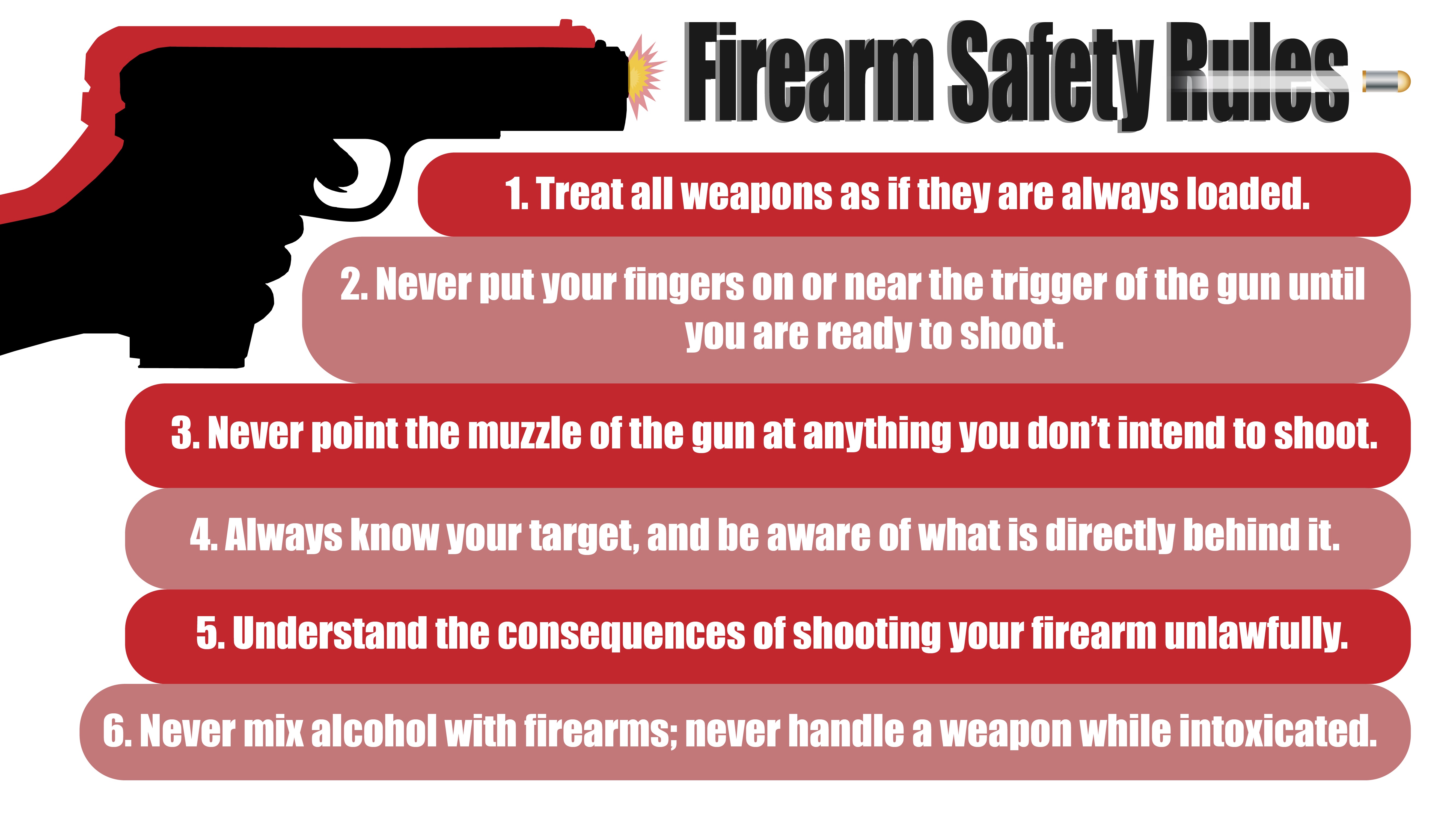
At a shooting range, satisfying that rule is relatively straightforward. You normally have a designated firing direction and a purpose-built backstop intended to safely contain projectiles.
Your home does not have that luxury. Your potential backstop might be drywall, a bedroom, an exterior wall, a window, a neighboring home, an apartment hallway, a parked vehicle, a sidewalk, or another person.
That means knowing what lies beyond a potential threat should be part of a serious home-defense plan. You cannot predict exactly where a violent confrontation might occur, but you can understand the environment in which you might have to defend yourself.
Evaluate Your Home Before You Ever Need to Fire
A homeowner who keeps a firearm for defensive purposes should be familiar with more than the location of the firearm. Look around your house and consider potential shooting directions.
Where do your children sleep? Where does your spouse sleep? Which walls face neighboring houses? Are there apartments directly beside or behind you? What is on the opposite side of your bedroom wall? Where are your largest windows? Which directions lead toward the street? Are there common areas where family members are likely to be during the night?
It is also worth thinking about whether there are locations where firing toward an attacker could place other people directly behind him.
You may not have the opportunity to choose a perfect position during a home invasion. An attacker controls much of what happens. You could wake up in darkness, be injured, find yourself trapped in a hallway or doorway, or have family members moving through the house at the same time.
Thinking about these problems beforehand does not eliminate them. It simply means you will not be considering them for the first time while someone is trying to kill you.
Missing the Attacker May Be an Even Bigger Problem
The term "overpenetration" usually makes people imagine a bullet striking an attacker, passing completely through his body, and continuing downrange. That certainly can happen, but there is another possibility that deserves at least as much attention: You miss.
A bullet that passes through a person may lose velocity and energy during that process. A missed shot encounters no such obstacle. Depending on the firearm, ammunition, angle, and surrounding materials, that projectile may continue through interior walls, doors, windows, furniture, or other parts of the structure before finally stopping.
That makes accuracy during a defensive shooting more than simply a question of stopping the attacker. Every missed round creates another unknown: where will it stop?
Investigators Will Reconstruct What Happened
One of the biggest differences between experiencing a shooting and investigating one is time.
The person defending himself may make several critical decisions within seconds. He may have to recognize the threat, determine whether deadly force is necessary, draw the firearm, move, aim, fire, decide whether the threat continues, and stop firing when it does not.
Investigators have considerably more time. They may photograph impact marks, recover projectiles, examine walls, document wound paths, review surveillance footage, interview witnesses, measure shooting angles, analyze firearms and ammunition, and reconstruct the sequence of shots.

A prosecutor or attorney might spend months examining decisions the defender made almost instantly. That does not mean those split-second decisions will automatically be viewed as unreasonable. Context matters enormously in self-defense cases.
But it does mean seemingly minor details can become important afterward. Investigators may want to know how many rounds were fired, which rounds struck the attacker, whether there were misses, where those misses landed, whether the defender could see people behind the attacker, whether either person was moving, how far apart they were, whether the threat continued throughout the entire string of fire, and where each bullet ultimately stopped.
The Threat Matters From the First Shot to the Last
Another important consideration is that legal justification is tied to the existence of a threat.
A defensive shooting may involve multiple shots, but those shots do not necessarily exist as one indivisible legal event. Circumstances can change rapidly, and an attacker who presents an imminent lethal threat at the beginning of an encounter might no longer present that same threat moments later.
That makes fire discipline important both tactically and legally. Defensive shooting is not simply about being capable of firing quickly. It also requires recognizing when shooting is necessary and when it is no longer necessary.
If investigators are reconstructing an incident involving an injured bystander, the timing of every shot could become especially significant.
Could You Still Face a Civil Lawsuit?
Potentially. Criminal liability and civil liability are separate legal questions.
A prosecutor declining charges, a grand jury refusing to indict, or a court finding a use of force justified does not necessarily resolve every possible civil claim arising from the shooting.
States vary considerably in the civil protections they provide to people who lawfully use force in self-defense. Some provide substantial immunity under certain circumstances, while others provide narrower protections.
The facts surrounding the injury can also matter. That means a justified defensive shooting involving an innocent third party could potentially create multiple legal proceedings involving different standards and different questions.
The violent encounter itself might be over in seconds. Its consequences may last considerably longer.
Ammunition Selection Still Matters
None of this means ammunition performance is irrelevant.

Understanding the characteristics of your defensive ammunition is part of responsible firearm ownership. Different projectiles behave differently after striking barriers or soft tissue, and walls and other building materials can affect bullets in ways that are difficult to predict.
But ammunition selection cannot completely eliminate the risks associated with firing a gun inside an occupied environment. There is no defensive cartridge capable of knowing which wall contains a family member and which wall is empty.
The most sophisticated projectile still obeys physics after it leaves the muzzle. That is why ammunition selection should be considered alongside firearm proficiency, target identification, awareness of your surroundings, knowledge of your home's layout, understanding potential backstops, knowing when deadly force is legally justified, and recognizing when the threat has ended.
Overpenetration and Self-Defense Are Ultimately About Accountability
Imagine returning to the original home-defense scenario. An attacker forced you to defend yourself. You survived, your family survived, and the attacker is no longer a threat.
From a defensive standpoint, that might sound like a successful outcome. Then you learn that one of your bullets continued into the home next door.
Suddenly the shooting is no longer only about whether you were justified in firing at the attacker. Investigators may also have to determine whether your actions toward everyone else in the area were legally reasonable under the circumstances.
That is why overpenetration in a self-defense shooting cannot be reduced to an argument about hollow points, calibers, or penetration tests. It is about understanding that every projectile has consequences until it finally stops.
Gun owners train to identify threats, draw efficiently, and place accurate rounds on target. We spend countless hours debating handguns, rifles, optics, ammunition, and defensive setups. Yet one of the most important lessons is also one of the first: Know your target and what is beyond it.
Know where your family sleeps. Know what is behind the walls of your home. Know which directions lead toward your neighbors. Understand what your defensive ammunition is capable of doing. And whenever circumstances actually allow you a choice, know your backstop.
Because after a defensive shooting, investigators are unlikely to ask only why you pulled the trigger. They may also ask where every bullet went. This article provides general educational information and is not legal advice. Self-defense laws, police procedures, and rules governing statements vary by jurisdiction and circumstance. Consult a qualified attorney regarding your specific situation.
Thanks to Attorneys On Retainer for collaborating with us on this article. https://attorneysonretainer.us/


