


Armory Sponsor

Posted: 12/11/2013 11:53:51 AM EDT
|
I'm working on my first batch of .223 reloads.
I'd like to get to working up precision loads for my 18" AR, but I want my first batch to be plinking ammo. That way, if I screw up (as I have already), I only ruin cheap components. I have a Wilson case length guage. My question is: should I try to tailor my first batch of loads to the chamber, or just size my loads according to the min/max specs from the chamber guage? How much effect will that have on accuracy? ETA: for this blasting ammo, I'd like to be able to shoot it in any of my ARs. I'd really like for all my ammo to be interchangeable between the guns. |
|
Quoted:
Adjust your sizing die to full length size per the manufacturer, probably turn it down to contact the shellholder. Most likely it'll work in everything, should be within the specs of your gauge, and if you develop the loads be quite accurate. This. If you are making plinking ammo to fit all your rifles then don't worry about loading to a chamber. Just FL resize and go. |
|
Quoted: I'm working on my first batch of .223 reloads. I'd like to get to working up precision loads for my 18" AR, but I want my first batch to be plinking ammo. That way, if I screw up (as I have already), I only ruin cheap components. I have a Wilson case length guage. My question is: should I try to tailor my first batch of loads to the chamber, or just size my loads according to the min/max specs from the chamber guage? How much effect will that have on accuracy? ETA: for this blasting ammo, I'd like to be able to shoot it in any of my ARs. I'd really like for all my ammo to be interchangeable between the guns. If you mean Wilson case gauge, use the gauge to set your sizing die. Adjust die so that the end of the sized of case is below end of gauge, but above the cut. The cut is .002 deep, so it may take some trial and error. After sizeing 2 cases that "gauge" per above, wipe off lube and chamber in your AR. If they fully chamber, (sized case, no powder, primer, bullet) you will be able to hear a click when you pull the trigger, then see if they extract easily. If they do, your sizing die is set correctly. While in this forum, click on the "My Topics" button. You will find your old thread where I went into detail and posted a pic of what you want to see with your case gauge. If not, report back. Good luck. |
|
Quoted:
If you mean Wilson case gauge, use the gauge to set your sizing die. Adjust die so that the end of the sized of case is below end of gauge, but above the cut. The cut is .002 deep, so it may take some trial and error. After sizeing 2 cases that "gauge" per above, wipe off lube and chamber in your AR. If they fully chamber, (sized case, no powder, primer, bullet) you will be able to hear a click when you pull the trigger, then see if they extract easily. If they do, your sizing die is set correctly. While in this forum, click on the "My Topics" button. You will find your old thread where I went into detail and posted a pic of what you want to see with your case gauge. If not, report back. Good luck. Quoted:
Quoted:
I'm working on my first batch of .223 reloads. I'd like to get to working up precision loads for my 18" AR, but I want my first batch to be plinking ammo. That way, if I screw up (as I have already), I only ruin cheap components. I have a Wilson case length guage. My question is: should I try to tailor my first batch of loads to the chamber, or just size my loads according to the min/max specs from the chamber guage? How much effect will that have on accuracy? ETA: for this blasting ammo, I'd like to be able to shoot it in any of my ARs. I'd really like for all my ammo to be interchangeable between the guns. If you mean Wilson case gauge, use the gauge to set your sizing die. Adjust die so that the end of the sized of case is below end of gauge, but above the cut. The cut is .002 deep, so it may take some trial and error. After sizeing 2 cases that "gauge" per above, wipe off lube and chamber in your AR. If they fully chamber, (sized case, no powder, primer, bullet) you will be able to hear a click when you pull the trigger, then see if they extract easily. If they do, your sizing die is set correctly. While in this forum, click on the "My Topics" button. You will find your old thread where I went into detail and posted a pic of what you want to see with your case gauge. If not, report back. Good luck. I think it's been archived, but I can still find it with a google search. I meant for this topic to be a little different. Mainly asking if that is still the correct procedure when creating general plinking loads for multiple guns. All my recent searches and the video from the manufacturer have shown people using this gauge to dial in for a specific barrel using spent brass from that barrel. Sometimes this leads to vary from the cuts on the gauge, if I'm understanding them correctly. As always, thanks for the help everyone! |
|
I load on a single stage RCBS press(RockChucker II) I set my Lee FL size die to cam over. Sized this way my ammo fits all of my AR's. I also size my most accurate loads this way (5/8" groups). With accuracy like this I see no need to potentially reduce reliability by backing off my size die.
Unless you have a rifle with a very tight chamber a FL die set to full length size should get you where you want to be. |
|
I use a hornady headspace gauge and bump the shoulder back .003 from the fired case shoulder dimension. This allows function but minimizes headspace and excessive brass forming during both the firing and resizing process. This will allow for longer brass life.
You need the hornady headspace gauge or a rcbs case micrometer to measure this. |
|
My personal precision load doesn't change the body of the resizing or crimping die and for the cost difference TO ME making anything but quality ammo is just shooting pennies down range. With that said I use the same rounds for both guns so I can have a better idea what each gun likes. I follow this
http://optimalchargeweight.embarqspace.com/ocw-instructions/4529817134 |
|
Quoted:
I use a hornady headspace gauge and bump the shoulder back .003 from the fired case shoulder dimension. This allows function but minimizes headspace and excessive brass forming during both the firing and resizing process. This will allow for longer brass life. You need the hornady headspace gauge or a rcbs case micrometer to measure this. Instead of this I setup my dies how the manufacturer says to. RCBS says to back the die body off a little. I set the die up like its a carbide pistol die. |
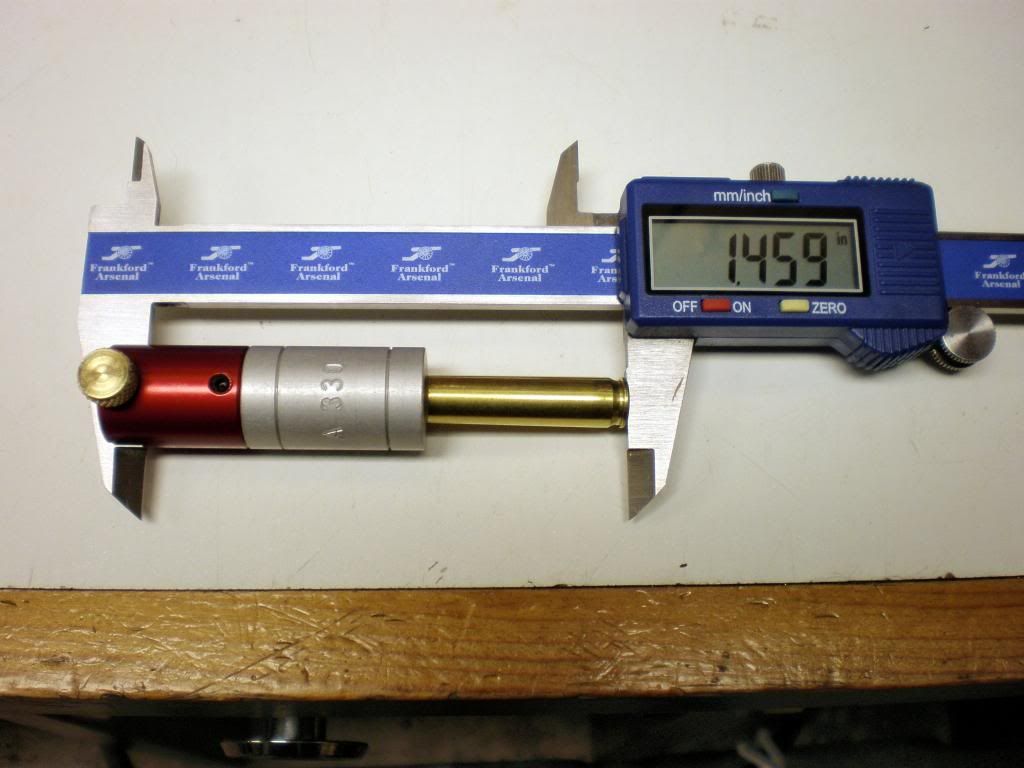
|
Quoted:
... 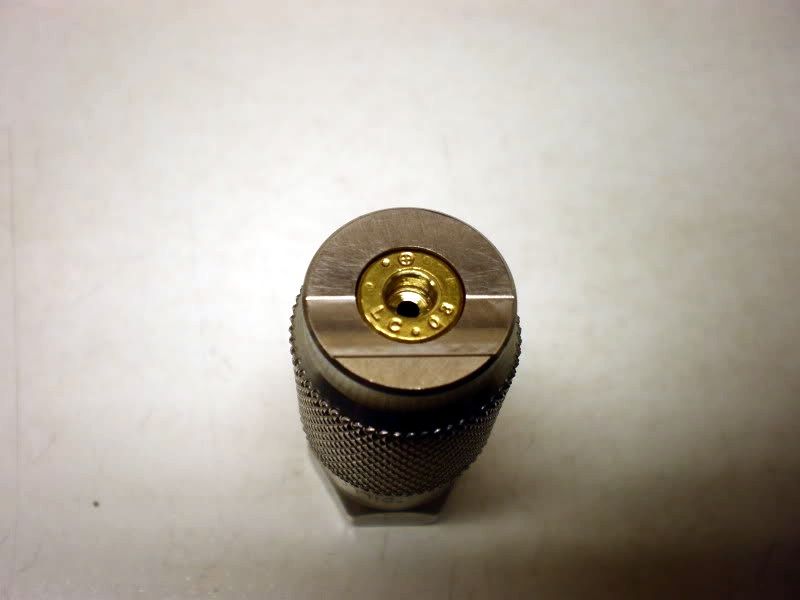
For multiple guns the case gauge will get you to standard dimensions. Alright, got my dies setup to look like this. I'm using the edge of a caliper as a straight edge to check the height. The base is between the max and min height with AE and Lake City. Note that the die is no longer touching the shell holder. There is a hairline gap between the two. I'm assuming that is ok? New question: the brass is under-spec for the mouth end. Its just a few thousandths short of the min slot. Is this typical for once fired AE 223 and LC? I thought it would need to be trimmed after the first firing. Is this brass good to go without trimming or anything? |
|
Quoted: Alright, got my dies setup to look like this. I'm using the edge of a caliper as a straight edge to check the height. The base is between the max and min height with AE and Lake City. Note that the die is no longer touching the shell holder. There is a hairline gap between the two. I'm assuming that is ok? That's how my dies/Rockchucker are. With some dies the shellholder will press hard against the bottom of the die, and sometimes not. Just tolerances at work. New question: the brass is under-spec for the mouth end. Its just a few thousandths short of the min slot. Is this typical for once fired AE 223 and LC? I thought it would need to be trimmed after the first firing. Is this brass good to go without trimming or anything? FC brass is always short, normally LC is over 1.760. But this can vary. Why you measure to know if cases need trimming. Quoted: Quoted: ... http://i250.photobucket.com/albums/gg272/dryflash3/Case%20Gauge/PB290317.jpg For multiple guns the case gauge will get you to standard dimensions. Alright, got my dies setup to look like this. I'm using the edge of a caliper as a straight edge to check the height. The base is between the max and min height with AE and Lake City. Note that the die is no longer touching the shell holder. There is a hairline gap between the two. I'm assuming that is ok? That's how my dies/Rockchucker are. With some dies the shellholder will press hard against the bottom of the die, and sometimes not. Just tolerances at work. New question: the brass is under-spec for the mouth end. Its just a few thousandths short of the min slot. Is this typical for once fired AE 223 and LC? I thought it would need to be trimmed after the first firing. Is this brass good to go without trimming or anything? FC brass is always short, normally LC is over 1.760. But this can vary. Why you measure to know if cases need trimming.  |
Armory Sponsor