


Armory Sponsor

Posted: 5/19/2012 4:35:42 PM EDT
|
Who's using what?
I am looking at investing in the Pat Marlin's checkmaker http://patmarlins.com/ Anyone use it? It the bees knees on the CB website. Any others out there that are easy to use and don't break the bank? |
|
PatMrlins stuff is top notch but do plan on waiting a while on them. He's a one man show and doesn't keep stock of items for sale.
He recently announced that he'd be moving so wait times might be even longer than the usual couple months. If you don't mind waiting you won't be disappointed. |
I'd highly recommend the FreeChex III. It's a one step operation where Pat Marlins is a two ih I understand correctly. Or if you're so inclined, do as I did and make your own:
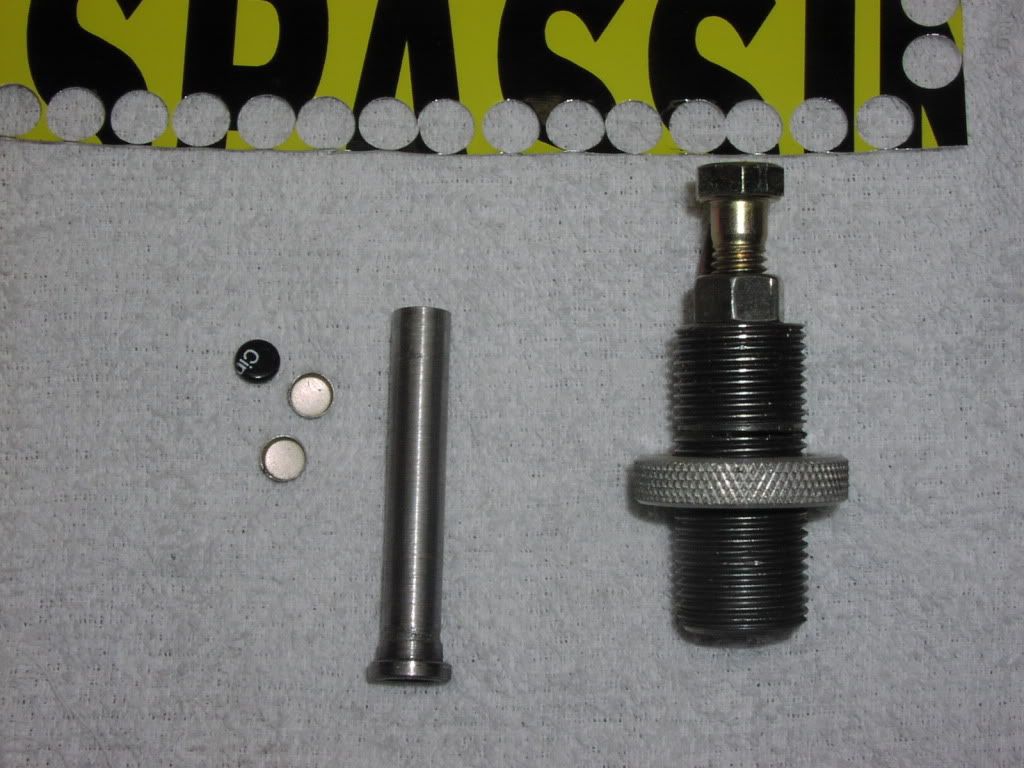
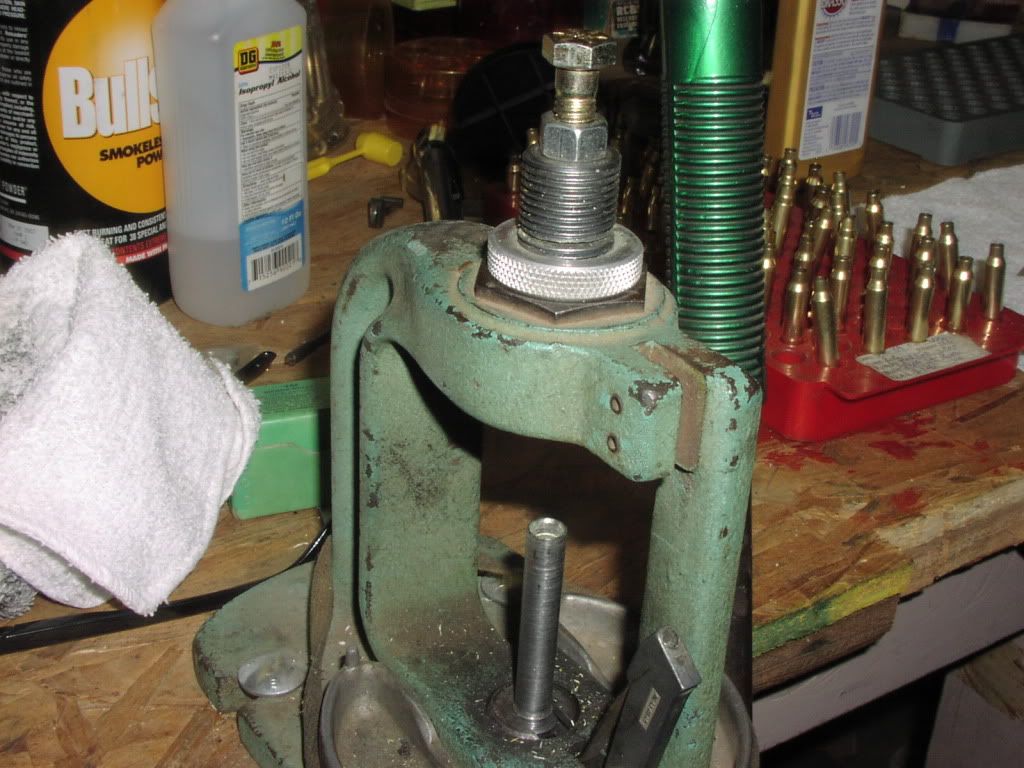
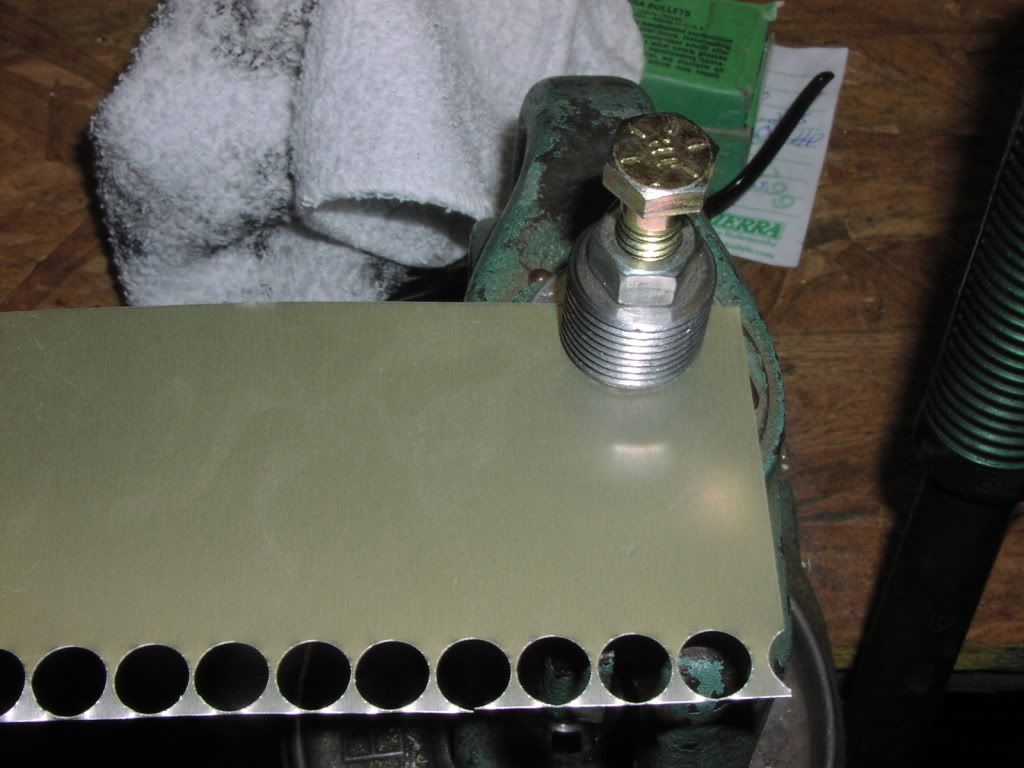
I use tons of .30 caliber checks. They're $25 or so per 1000, where the aluminum signs I use for material are about $2 each and two of them will net about 1100 checks. But the really nice thing is I can get the material at almost any local hardware or home improvement store. GG |
|
Quoted:
More info needed on the die you modified and cut, and what you made the punch from. Does aluminum work well for the gas check? I thought people were using pop cans for the aluminum. Interesting. The die body is made from a 7/8-14 bolt and the punch/bottom ram/cup forming stem was made from a bolt as well....I forget what size. I made the whole thing from scratch. Although I own a lathe, I''m not a machinist so there was lots of trial and error. Aluminum works so well for me, that I see no reason for me to ever buy copper checks again. Although I don't have any scientific data and didn't carry out any formal tests, I think my bullets with aluminum checks are slightly more accurate than those with copper, definitely at LEAST as accurate as my bullets with copper checks. I shoot a local reduced course High Power match once a month and use cast bullets so had there been a negative change in accuracy when I switched to aluminum, it would've shown up in my scores, but it didn't. I know a lot of people use aluminum cans as check material, but I found it too thin. When I bought a FreeChex I a few years ago, the guy sent a small sample of aluminum sheet that was about the thickness of aluminum cans or .008" +/-. The checks wouldn't stay on my bullets, so I looked around and found the aluminum "No Trespassing" type signs at around .013" were perfect and inexpensive. So when I built by own check maker, I designed it around this material. BTW aluminum guttering also works pretty good though at...going from memory....016" it's almost too thick. GG |
 I shoot cheaper, therefore I shoot more.....LOTS more!
|
Same here. I'd love to see what that looks like.
Also, how do you eject the formed check? The freechex 3 is a good idea but requires an arbor press. I like your design much better. Simple and effective and can be used with a normal reloading press that every average joe reloader has. |
|
Quoted:
Thanks for the info. Would sure like to see the end of the bolt you modified. And what die did you use? Meaning caliber of die. Sounds like aluminum checks work well. By bolt I'm guessing you mean the bolt screwed into the top of the die body. The end of it looks like the inside of the cup of a gas check. I just turned the tip of the bolt in the lathe to the size I wanted. So the last 1/4" or so of the tip of the bolt is a smooth step. A little trial and error there because I found that the tip of the bolt being a diameter of X inches doesn't necessarily mean the I.D. of the check cup will be the same diameter. So, the tube that's in the ram cuts a disc of aluminum. Then as the ram is raised further the disc hits the bottom of the top-most bolt. This bolt pushes the disc down into the tube which forms the check. The outside diameter of the check is determined by by the inside diameter of the tube that fit in the ram. The inside diameter of the check cup is determined my the outside diameter of the bolt. I'm not sure what you mean when you ask what caliber die I used. If you're asking about the body of the check maker, it's just a 7/8-14 bolt I got from a local place that sells bolts, it's not a reloading die. Also, how do you eject the formed check?
After punching about 15 checks I slip the tube out of the ram and all but the last made check fall out. I guy sent me a drawing of an adapter for the ram that would allow the checks to fall out, but like I said, I'm not a machinist and by the time I'd gotten to that point, I'd had enough of standing over a lathe. GG |
|
Quoted: Quoted: Thanks for the info. Would sure like to see the end of the bolt you modified. And what die did you use? Meaning caliber of die. Sounds like aluminum checks work well. By bolt I'm guessing you mean the bolt screwed into the top of the die body. The end of it looks like the inside of the cup of a gas check. I just turned the tip of the bolt in the lathe to the size I wanted. So the last 1/4" or so of the tip of the bolt is a smooth step. A little trial and error there because I found that the tip of the bolt being a diameter of X inches doesn't necessarily mean the I.D. of the check cup will be the same diameter. So, the tube that's in the ram cuts a disc of aluminum. Then as the ram is raised further the disc hits the bottom of the top-most bolt. This bolt pushes the disc down into the tube which forms the check. The outside diameter of the check is determined by by the inside diameter of the tube that fit in the ram. The inside diameter of the check cup is determined my the outside diameter of the bolt. I'm not sure what you mean when you ask what caliber die I used. If you're asking about the body of the check maker, it's just a 7/8-14 bolt I got from a local place that sells bolts, it's not a reloading die. Also, how do you eject the formed check? After punching about 15 checks I slip the tube out of the ram and all but the last made check fall out. I guy sent me a drawing of an adapter for the ram that would allow the checks to fall out, but like I said, I'm not a machinist and by the time I'd gotten to that point, I'd had enough of standing over a lathe. GG Ok, it's becoming clearer. The thing screwed into the press (die) that was cut to let the sheet of aluminum go into, what kind, caliber of die?
|
|
Quoted:
Quoted:
Quoted:
Thanks for the info. Would sure like to see the end of the bolt you modified. And what die did you use? Meaning caliber of die. Sounds like aluminum checks work well. By bolt I'm guessing you mean the bolt screwed into the top of the die body. The end of it looks like the inside of the cup of a gas check. I just turned the tip of the bolt in the lathe to the size I wanted. So the last 1/4" or so of the tip of the bolt is a smooth step. A little trial and error there because I found that the tip of the bolt being a diameter of X inches doesn't necessarily mean the I.D. of the check cup will be the same diameter. So, the tube that's in the ram cuts a disc of aluminum. Then as the ram is raised further the disc hits the bottom of the top-most bolt. This bolt pushes the disc down into the tube which forms the check. The outside diameter of the check is determined by by the inside diameter of the tube that fit in the ram. The inside diameter of the check cup is determined my the outside diameter of the bolt. I'm not sure what you mean when you ask what caliber die I used. If you're asking about the body of the check maker, it's just a 7/8-14 bolt I got from a local place that sells bolts, it's not a reloading die. Also, how do you eject the formed check?
After punching about 15 checks I slip the tube out of the ram and all but the last made check fall out. I guy sent me a drawing of an adapter for the ram that would allow the checks to fall out, but like I said, I'm not a machinist and by the time I'd gotten to that point, I'd had enough of standing over a lathe. GG Ok, it's becoming clearer. The thing screwed into the press (die) that was cut to let the sheet of aluminum go into, what kind, caliber of die? Sorry I'm not being more clear. When I say "die" I mean the body of the check maker, NOT a reloading die. The body of the check maker, the piece screwed into the press, is made from a 7/8-14 bolt, same thread dimensions as a reloading die. I cut the head off of the 7/8 bolt, then chucked in into the lather and drilled it out longitudinally to the sizes I needed. Is that more clear? GG |
|
Quoted:
Sorry I'm not being more clear. When I say "die" I mean the body of the check maker, NOT a reloading die. The body of the check maker, the piece screwed into the press, is made from a 7/8-14 bolt, same thread dimensions as a reloading die. I cut the head off of the 7/8 bolt, then chucked in into the lather and drilled it out longitudinally to the sizes I needed. Is that more clear? GG I got you there, I was just wondering how you got the checks to come out. Have you had any trouble with them sticking in the die? Quoted:
After punching about 15 checks I slip the tube out of the ram and all but the last made check fall out. This is the part I don't follow. How are you forming more than one check without removing the previous checks made and deforming them when making successive checks? |
|
Quoted:
Quoted:
Sorry I'm not being more clear. When I say "die" I mean the body of the check maker, NOT a reloading die. The body of the check maker, the piece screwed into the press, is made from a 7/8-14 bolt, same thread dimensions as a reloading die. I cut the head off of the 7/8 bolt, then chucked in into the lather and drilled it out longitudinally to the sizes I needed. Is that more clear? GG I got you there, I was just wondering how you got the checks to come out. Have you had any trouble with them sticking in the die? Quoted:
After punching about 15 checks I slip the tube out of the ram and all but the last made check fall out. This is the part I don't follow. How are you forming more than one check without removing the previous checks made and deforming them when making successive checks? The tube that goes into the ram on the reloading press is hollow all the way though. The I.D. of the tube is slightly smaller at the top where the check is actually formed than the remainder of the tube, (the lower portion). So when a check is made, it sits in the top of the tube waiting for the next check to be made. When the next check is formed, the check being formed pushes the previous check down the tube. Then when each sucessful check is formed, it pushed the previous check down the tube. The tube will hold 15 or so checks before it needs to be slid out of the slot in the reloading press ram and being emptied. GG |
|
Quoted:
The part that screws into the press and has a locknut attached to it is a bolt, not a die, I get it. What size hole was drilled in it? I honestly don't remember. The top was drilled and tapped for the 3/8" bolt and the bottom drilled to accept thwe tube. I need to take detailed measurments of the entire set up as I have a machinist buddy wh has access to a CNC machine. With drawings and measurements, theses things could be produced relatively easily. GG |
|
Quoted: Quoted: The part that screws into the press and has a locknut attached to it is a bolt, not a die, I get it. What size hole was drilled in it? I honestly don't remember. The top was drilled and tapped for the 3/8" bolt and the bottom drilled to accept thwe tube. I need to take detailed measurments of the entire set up as I have a machinist buddy wh has access to a CNC machine. With drawings and measurements, theses things could be produced relatively easily. GG Thanks for the info. |
Armory Sponsor