


Armory Sponsor

Posted: 11/25/2015 5:12:21 PM EDT
| Are there any ballistic helmet out there, possibly in foreign countries, rated to Level III protection against rifle rounds? |
|
Here is an old thread:
http://www.ar15.com/forums/t_1_5/1665550_Rifle_rated_ballistic_helmets.html you are most likely looking for the "ECH" |
|
3M/Ceradyne manufacture the Enhanced Combat Helmet which has apparently been issued to a few Marines.
Last year's SHOT Show they showed off various new helmets, including the Extreme Ballistic Helmet that was rated to stop rifle rounds as well, and has a higher cut for headsets. http://soldiersystems.net/2014/01/15/shot-show-3m-ceradyne/ 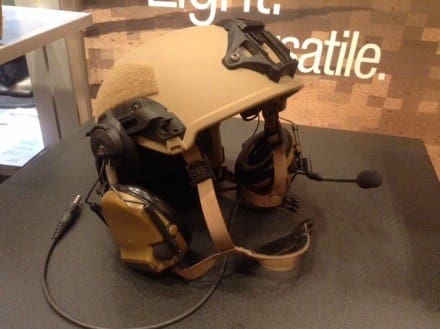
Still, I don't believe you can actually buy an ECH, and I haven't been able to find any more info about the Extreme Ballistic Helmet aside from that post. |
|
Quoted:
If you get hit in the head with a rifle round with a rifle rated helmet, you may live, but you will still take a beating to your brain/neck. You may wind up with brain damage, a concussion, or still die. Just something to consider. Yea but, there's a 100% chance your going to die if this is your head. 
|
|
Quoted:
If you get hit in the head with a rifle round with a rifle rated helmet, you may live, but you will still take a beating to your brain/neck. You may wind up with brain damage, a concussion, or still die. Just something to consider. So don't wear any protection at all because you may sustain secondary injuries. Got it. 
|
|
I'll try and address the effects of getting hit in a rifle-rated helmet. Disclaimer, I'm not a physicist and generally pretty bad at calculus, and I don't do anything sciency for a living. Everything that follows may be super-duper wrong, but I'm doing my best. Also, the "?"s in the units below are supposed to be the delta symbol, apparently the forum doesn't support displaying that character in posts.
According to a number of medical sources, the average adult cadaver's head removed at the C3 vertebra and without hair weighs about 12lbs. Add an average of 2lbs for the helmet, and you've got a 14-pound object sitting on a flexible-but-resistant mount (the neck). The neck will also be unusually tense considering anybody wearing a ballistic helmet and getting shot at is not going to be completely chill about it, but even discounting that we can just look at the effects of a projectile impacting a 14lb dead weight. If we assume the projectile is fully stopped and all its energy is dumped into the object (the helmeted head), and taking a respectable and common round that can be reliably stopped by level III armor: As per TM 43-0001-27 "Small Caliber Ammunition", of which I have a copy in front of me: Cartridge, 7.62mm, Bal., M80 Projectile weight: 146 grains Velocity: 2750fps @ 78ft. from muzzle 146 grains = 9.460641 grams 2,750 feet = 838.2 meters With these numbers we can calculate the number we actually want, the MOMENTUM of the bullet and thus the overall momentum of our hypothetical test system (yay, conservation law!). Using this handy calculator: Mass = .00946 kg ?v = 838.2 m/s ?M = 7.93 kg·m/s Now, since this is a closed system and momentum is conserved, we can flip the numbers around and calculate the change in velocity of our helmeted, severed head (converting the units, it weighs 6.35 kg): ?M = M·?v ?v = ?M/M ?M = 7.93 kg·m/s Mass = 6.35 kg ?v = 1.25 m/s That's not a lot. This means, in the absence of friction or any other external forces (all of which would work in favor of the bullet's recipient, making this a very conservative estimate), the severead head would be momentarily accelerated to 1.25 meters per second. If the helmet stops the projectile within NIJ spec for level III (per the specification found here), that means the projectile travels no more than 44mm before coming to a complete rest. This means that all of the energy is imparted over a distance of 44 mm, so at a velocity of 838.2 meters per second, that means it takes 0.00005 seconds to happen. I'm being lazy here, it's not actually linear but this makes the numbers a little more conservative in favor of the bullet anyway, so fuck it. So this means that within the span of .05 milliseconds, the head is accelerated to velocity of 1.25 m/s. These numbers should be sufficient to compare to records of traumatic injuries to the head from things like car crashes and such. For example, we can check the "Wayne State Tolerance Curve" here, which seems to indicate that despite the high acceleration involved, because it's so transient (.05 ms), it is low-risk. Also, there's this PDF that similarly shows it to be very low-risk for injury. It is also worth noting that the injuries resulting from bullets hitting a vest are the result of the 44mm backface signature being flush with your chest when it happens. All of that deformation is happening directly to your tissue, so naturally bad things can happen if, say, a rib or your liver is in the way. With helmets, that deformation happens in an air gap and is held at a standoff from your skull by the helmet suspension/liner. These vary wildly in form and quality, but the general gist is the the backface signature has much less, if any, contact with your body. So the only appreciable risks in a helmet-shot are the bullet penetrating (ur fukd) or the force to the head, which we just figured out above is not a big risk. It is still possible for the shot to cause the helmet to strike your skull with significant force, but that would require an ideal perpendicular strike, where you don't have any pads underneath that area, and it would have to cause near-maximum BFS. And in that particular situation, NOT having the helmet on would mean you're dead before you hit the floor, so gimme that consussion every time. |
|
OP, out of curiosity, why are you looking for such a high threat level helmet? I get "more protection is better", but especially with the helmet you're balancing weight, coverage, and mobility.
It's a lot easier to justify high threat level plates than a helmet, especially when the tech just doesn't seem to be at that point yet. |
|
Our helmet testing fixture at work gets beat up when testing .44mag on them. The fixture is a machined aluminum head filled with Roma clay. It is pretty hefty on its own plus add the weight of the helmet. We use c-clamps to clamp it to a steel lift-type table and we still have to reset the fixture during testing. I know what the backface of rifle plates on 200lb block of clay looks like. I can't imagine how much of a mess it would be to transfer that energy to the much much lighter head fixture. IIIA and frag are good enough for me with helmets. CHRIS |
| ECH and the add on plate for the ops core are the only lvl 3 helmets it had heard of. If you're mil or LE you should have no problem getting ahold of one. If you are civilian the ECH isn't for sale to you and I'm not sure about the ops core add on. But in all reality as a civilian you will be ok without it, especially since like 97% (FBI statistic) of armed home invasions are done with a pistol, only 3% are with long guns which includes shotguns and rifles. The chances that Some crack head kicks in your door at 3 am and shoot you with a rifle is pretty slim. |
| There are several guys in Iraq who took AK rounds to their ACH and not only survived, but did not suffer any catastrophic secondary injuries. Of course they were lucky the ACH deflected the round enough to miss their head, but I have not seen any proof that taking a rifle round to the dome will turn your brain into pudding if its stopped by the helmet. Are we sure this is not an internet rumor? |
|
Quoted:
There are several guys in Iraq who took AK rounds to their ACH and not only survived, but did not suffer any catastrophic secondary injuries. Of course they were lucky the ACH deflected the round enough to miss their head, but I have not seen any proof that taking a rifle round to the dome will turn your brain into pudding if its stopped by the helmet. Are we sure this is not an internet rumor? Dude, scroll up. I posted a detailed explanation with maths and references and everything. Brains are not scrambled when the helmet gets struck. As for the helmet test rig being thrown around, I have to assume you've seen tests of plates mounted on test rigs and getting launched off the rig/table/shooting lane? I seem to recall a recent vid posted here where a plate got thrown out of a C-Clamp and downrange a good 10-15 feet, by a round well withint he spec. And yet, soldiers getting hit in the armor are not launched across the battlefield, many times they don't even know they've been hit until the shooting is over and they check their shit. The nature of these test setups makes the forces look very exaggerated. |
|
Quoted:
Dude, scroll up. I posted a detailed explanation with maths and references and everything. Brains are not scrambled when the helmet gets struck. As for the helmet test rig being thrown around, I have to assume you've seen tests of plates mounted on test rigs and getting launched off the rig/table/shooting lane? I seem to recall a recent vid posted here where a plate got thrown out of a C-Clamp and downrange a good 10-15 feet, by a round well withint he spec. And yet, soldiers getting hit in the armor are not launched across the battlefield, many times they don't even know they've been hit until the shooting is over and they check their shit. The nature of these test setups makes the forces look very exaggerated. Quoted:
Quoted:
There are several guys in Iraq who took AK rounds to their ACH and not only survived, but did not suffer any catastrophic secondary injuries. Of course they were lucky the ACH deflected the round enough to miss their head, but I have not seen any proof that taking a rifle round to the dome will turn your brain into pudding if its stopped by the helmet. Are we sure this is not an internet rumor? Dude, scroll up. I posted a detailed explanation with maths and references and everything. Brains are not scrambled when the helmet gets struck. As for the helmet test rig being thrown around, I have to assume you've seen tests of plates mounted on test rigs and getting launched off the rig/table/shooting lane? I seem to recall a recent vid posted here where a plate got thrown out of a C-Clamp and downrange a good 10-15 feet, by a round well withint he spec. And yet, soldiers getting hit in the armor are not launched across the battlefield, many times they don't even know they've been hit until the shooting is over and they check their shit. The nature of these test setups makes the forces look very exaggerated. Dude, I am kind of agreeing with you. However, since you brought it up 1.25m/s in 0.00005s is 2600g's of acceleration. That seems like it would do some pretty extensive damage. Maybe I am misinterpreting something? |
|
Quoted: As for the helmet test rig being thrown around, I have to assume you've seen tests of plates mounted on test rigs and getting launched off the rig/table/shooting lane? I seem to recall a recent vid posted here where a plate got thrown out of a C-Clamp and downrange a good 10-15 feet, by a round well withint he spec. And yet, soldiers getting hit in the armor are not launched across the battlefield, many times they don't even know they've been hit until the shooting is over and they check their shit. The nature of these test setups makes the forces look very exaggerated. Have you done any testing on an NIJ helmet rig? I've got a boring amount of pistol and frag testing under my belt. We never saw the need to destroy our fixture with rifle threats yet.  Anyway, I'd love to hear your first hand experience on the subject. I'm up for some schooling. Anyway, I'd love to hear your first hand experience on the subject. I'm up for some schooling.CHRIS |
|
I see no need to claim any experience, as always dropping credentials is meaningless on the internet. I cited the sources and ran the numbers. If my math is wrong, tell me. If you prefer anecdotal evidence, that has already been provided by others. The only arguments in favor of "brain scrambling" so far are "it seems like it should" and "the test helmet moved a lot". Well, the test plates move a lot too and that clearly has no correlation with actual use and is a product of the testing apparatus. The physics and medical documentation covered so far say it is very unlikely to result in any weird brain injuries. If evidence of similar quality is provided to the contrary, I'll happily revise my take on the matter.
EDIT: I forgot the G-force comment. That number seems high to me too, but the only info I can find correlating acceleration and impact force with brain injuries indicates that the time involved is much more important (and that injuries happen from things on a timescale of hundredths-tenths of a second, not hundredths of a millisecond). Also, apparently rotational force is far worse than linear acceleration, so it seems you'd be much more likely to be concussed from an oblique strike that puts a little English on your noggin, than a direct impact. That would, however, also have completely different math involved and I wouldn't even know where to begin - but again, it's all happening within .05 ms. Sports injuries seem to happen because of the rotation and the fact that they impart force over much longer stretches of time. EDIT2: Found an interesting document that examines helmets versus impacts for brain injuries. Again, everything is on a scale of several milliseconds and up, but the curves are cut off below that and they don't provide the actual math they used to arrive at thoe curves so I have no idea how this shit behave on the far low end of the time scale. They do note that it seems that deformation of the skull is a key factor, not just raw acceleration - this would be mitigated to a large extent by the design of modern ballistic helmets. Long-timescale impact events like motorcycle crashes, or overpressure event like explosions, seem to have completely different injury mechanisms at play. And then I found this document as well, haven't read yet but looks promising. |

|
and only $1,600.00. |
|
Quoted:
If you get hit in the head with a rifle round with a rifle rated helmet, you may live, but you will still take a beating to your brain/neck. You may wind up with brain damage, a concussion, or still die. Just something to consider. That and I've only seen them rated to 7.62 X 39. Modern helmets leave a lot of important areas exposed... |
Armory Sponsor