


AR Sponsor

Posted: 7/15/2017 12:05:11 PM EDT
|
Ok so I purchased a stag arms M4 replaced the barrel with an 18" .20 practical with a mid length gas system.
Once in awhile it will lock the bolt back on the last round, some time it feeds correct, I'm getting FTF, but it ejects ok, but all my case mouths are flat on one side. Almost like it's not getting enough gas and the bolt isn't riding back far enough. I made up a 100 rounds of ammo (reloading with a proven load in 24" rifle length gas system) increase powder charge .3 grains till I was just over max load..these suckeds we're hot ..blowing primers, and the gun still would lock back..ejected the case's with a flat spot on the case mouth. So right now I have a supper accurate single shot ar-15..how do I fix it.. Thanks |
|
Quoted:
I was thinking maybe I have a rifle buffer and buffer spring in my gun and need to have a carbine buffer and spring..can you tell me how I can tell the difference..thank you If you can manually cycle the bolt with the charging handle and lock it to the rear with the bolt hold-open, then you do not have a rifle buffer. From TM 9-1005-319-23&P: RIFLE: 11 3/4" min to 13 1/2" max CARBINE: 10 1/16" min to 11 1/4" max |
|
I can do that..it's very odd..I use Magpul 20 Rd. P mags ..I load 10 rounds..first 3-4 rounds seems like it short stroke, then I will get 5 rounds in a row that eject but my case mouth looks like a D ..some times the bolt locks back , some times it will not on the last round..
In my reloads I tried heavy bullets to increase back pressure and hotter loads ..still the same issue..what am I missing and how do I fix it Thanks Also I just checked it out..my spring is 10 1/2" long and I have a carbine buffer..scale says it's 3 oz. |
|
The lenght of the receiver extension (tube void depth) dictates the buffer and spring length needed, and since you are using a M4 telescoping stock with carbine receiver extension, then this bring up some options. Hence you need to run with a carbine lenght spring (10.5") and carbine buffer, but we can play with the weight of the buffer.
So for starters, pull all the way back on the charging handle, and make sure that the face of the bolt is stopping 1/8" to 1/4" in front of the back edge of the ejection port window, and that the last inch'ish of the CH pull is the same tension as the middle of the pull. Next, shotgun the upper open, remove the B/C and make sure that that top and bottom lug of the barrel extension are top and bottom dead center of the gas tube channel/bottom take down lug. While we have the upper open, CLP around the gas block front and back to the barrel, at the gas tube to the block, and with a piece of rubber tubing on the end of the gas tube, pressurize the gas tube to 100lbs of air to check for leaks at the block. Also, same for the key to carrier, with clp around the base of the key to top of carrier, hold the bolt in and pressurize the front of the key to check for leaks of the key to the base of the gas block. Lets back up for a second and if you did install a gas block on the barrel, are you dam sure that the gas block passage is dead center of the barrel gas port, and the allen screws where loctite (272 red) to hold the block firmly to the barrel? If you are and don't need to repeat the gas block install/don't have any leaks from the above test, then remove the bolt from the carrier and with just the carrier with key, dry fit it to the upper receiver with the charging handle in play. Does the sides of the key bind in the upper track/charging handle U joint, and when the front of the carrier is about 1" from the touching the face of the barrel extension, does the gas tube cleanly enter the carrier key. If the gas tube needs to be tweaked to align it with the key, then tweak the gas tube at it middle section. Also talking about gas tubes, does the end of the gas tube end at middle of the U section of the cam slot in the upper receiver. 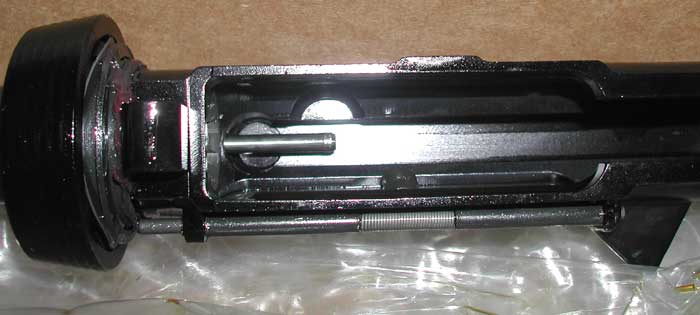
With the above out of the way, we can now get down to getting the rig to cycle in 20 practical with your hand loads. Out the gate, you using a much faster burning powder than say in 223, so even with the same overall working pressures as a 223 load, the gas port pressure as the bullet passes the gas port to pressurize the gas system is going to be much lower than if you where using a slower burning powder. Hence lighter bullet needs faster burning power that puts the peak dwell of the burn closer to the chamber/farther away from the gas port, and again, even with the rounds working pressure at 55K, you still end up with less gas port pressure. So this leaves either using a slower burning powder for the loads, or working with the buffer mass to compensate for the lower working pressure. Guessing that you have found a ideal powder that you want to stick with, so let see just how high or low the gas port pressure are (bolt unlock timing). This one is pretty easy to figure out, and it just take one shot with the ammo. Rig cleaned and lubed (including the chamber scrubbed with a chamber brush with CLP and left in a dry state, load a single round into a mag, charge and fire the round with the empty mag still in the well, and go find the spent brass. What we should have is the bolt locked back on the bolt catch, the spent case 10' to 15' out of the ejection port, and the rim of the spent case round not bent to hell. Again, spend case rim not bent to hell from the extractor. So spent case in hand to check the rim of it to see if it bent in any way, the distance that the rifle ejected the spent case, and even if the bolt locked back tells us everything we need to know. Bolt did not lock back, the spent case is bend to hell= the rig is over functioning/bolt is unlocking too soon with the bore residual pressure to high for a clean pull of the spent case out of the chamber. If this is the case, then we need to slow the bolt unlock down by going to a heaver buffer. Bolt did not lock back, the spent case rim is not bent= the bolt is unlocking too late, and we need to lighten the mass of the buffer instead. So now lets cover carbine buffers, The standard carbine buffer is 2.9 oz, while a H3 buffer is 5.40z. The only differance between the two buffer is the type of steel used in the buffer moving mass weights. The H3 has three tunsten weights, while the standard buffer has standard steel weights isntead. 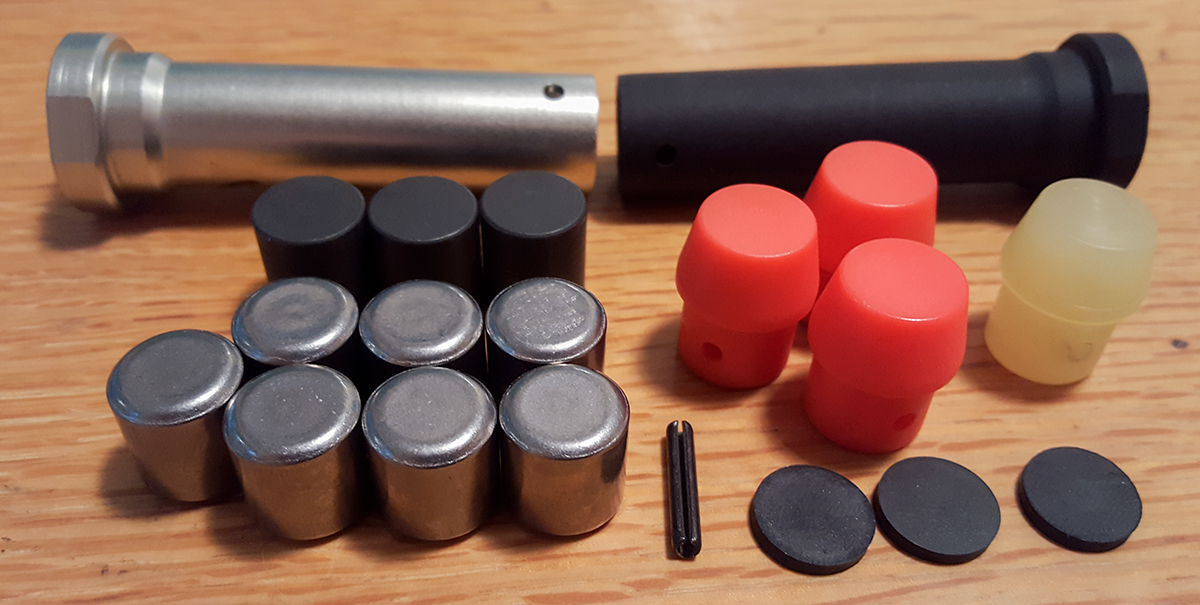
I bring this up, since you can pull the buffer bumpers the two buffers and via play with the weights, can end up with a weightless buffer that will be around 1oz, mix and match weights to come up with something between the two buffer mass, or just leave the H3 as is to end up with a buffer of 5.4. Further more, on a semi auto rifle, you do not need buffer weights in the buffer. The buffer weights at to prevent bolt bounce and this only maters in a full auto rig isntead. Hence in a semi auto rig, so long as the gas tube is correctly indexed with the key, the barrel lugs are correctly aligned with the bolt lugs, if the carrier bounces off the barrel extension, it will come back to seat against the barrel extension to fully lock up the bolt again before you even think about pulling the trigger again. So lets say that your rifle is not locking the bolt back, or just locking the bolt back with the spent cases just dribbling out of the ejection port window, but the spend case rims are not bent from the extractor on the pull. This one is really a easy fix, and all you need to do is pull the buffer bumper off the buffer, dump the weights out, then put the buffer bumper back on. This should lighten the buffer enough that the rig should cycle correctly with your hand loads. Note, with no weights in the buffer/no dead blow effect of the buffer, it will change the ejection path of the round out of the port from the normal 4:30 to 2:30 instead Also, if you find that with all the weights out, the case rims are starting to get bent on extractor, then you can start adding the weights back in one at a time, and just use cotton patches to pack the weight tight into the buffer via the end buffer bumper. Same as above, but the spent case rim is bend too hell from the extractor with the bolt unlocking too fast instead. Here, we start with the H3 buffer, and see where it takes us. If it take us back to bolt now unlocking too slow again with the case rim not bent, then we drop one of the tungsten weights out of the H3, replace it with the steel weight of the standard buffer to end up with a H2 buffer, and try again. If the bolt is still unlocking too slow, then drop another tungsten weight out, install another standard steel weight from the standard buffer, ending up with a H1 buffer and test again. To sum it up, you need to double check what you did when you installed the new barrel to make sure that you did not induce a problem with a fault in the install, and if that is all fine, you can play with the buffer mass to either slow the bolt unlock down or speed it up to get the rig to cycle correctly. One last thing, and you really need to head space the chamber with the bolt in play. If the head space is too tight, then this is going to cause over function every time. The reason, you loose the normal blow by at firing forming pressure loss, and this cause the round to go over pressure instead. |
|
Good Lord Dano..thank you so much ..this is going to take me a bit to run through your tests..I'm off to work right now but will post after I have preformed your tests..
Thank you for your expertise and taking the time to type all that..it is greatly appreciated Bobcat. Let me also throw another variable in the mix. I'm running a Syrack Ordnance adjustable gas block..that was going to be the other thing ..I thought of picking up a plain gas block change them out and see how it runs. Perhaps I should have found a reload that does what I want verify it works and accuracy was good , then change gas block.. |
|
With your caliber choice the research and development is going to fall on you and you alone. .20 Practicle barrels aren't exactly common.
Post your load data, powder and charge weight, OAL and bullet being used. Who's brass did you convert? One option is to try a slower burn rate powder. This will increase port pressure. You may need to open the gas port up one size larger than it currently is or try a lighter bullet. Lighter bullets can safely use more powder and thereby increase port pressure to operate the gun. You shouldn't need to go over maximum to get any semi-auto rifle to run. Without velocity figures from a chronograph you can only guess at real world results. Being .3 grains over book maximum may actually be .8 or more over maximum depending on how your barrel behaves with your component selection. Any velocity figures you record need to be compared to the barrel length of the data you are sourcing. You are wildcatting and experimentation is part of the process. |
|
When I had the barrel made I asked if it will run, the barrel maker said he wasn't sure and I would have to adjust my reloads due to the mid length gas system, and 18" barrel..I think it will run just need to modify something..it is superbly accurate..more accurate then my 223 Krieger 24" varmatch barrel..
The .20 practical is amazing ..I just need to get the gun to run..haha With 40 gr. Hornady v-max get up to 3500 fps but it's a hot load any faster and I blow primers, as for the 3500 fps loads I see ejector marks on the bottom of the spent brass. I need to back it off to about 3200 fps and brass looks good except for the D shape case necks after ejection.. I still haven't had time to do Dano's trouble shooting suggestions..but I'm working on it. Lake City brass Remington 7 1/2 br primer Hornady 40 gr. V-max bullet C.o.a.l. is .010" jump Most promising load is with IMR 8208 xbr, and N-135 powder both loaded to about 3200 fps. As I'm still learning about my syrac adjustable gas block..do I turn the screw out till it stops for full open? Kind of confused by there directions. |
|
What he's saying is you selected a wildcat cartridge. A Wildcat is any cartridge not supported by CIP or SAAMI. Like your gunsmith acknowledged, he has no idea if it will run or not simply because everyone who selects this cartridge (or anything else that's a wildcat) is venturing into no-man's-land. You are the R&D board when you go this route.
Most adjustable gas blocks I have used need to be turned counterclockwise to open them up. I have only had a couple and they weren't your brand. Full open is where you want to start. Based on your description I doubt you need an adjustable block, basically you aren't getting enough gas to run the rifle. An adjustable gas block is only able to reduce gas, it can never increase it. In order to get more gas to run the action reliably you will probably need to open the gas port a little at a time until your rifle works 100%. This is easily done at home because the hard work of drilling the initial gas port has already been done by the gunsmith. Measure your current gas port using the biggest drill bit that will just fit. Select the next larger drill bit available, apply plenty of cutting fluid and careful drill the gas port larger without bending the drill bit of touching the far side of the rifling. A dowel inserted in the bore can help you to not drill to deep. Reassemble the rifle and try again. Before going to this measure make sure everything is lubed really well, even the buffer and buffer spring could use some light grease. Because your rifle is new there is a break-in period before it loosens up. Because you are using an adjustable gas block you won't have to worry if you end up getting too much gas. That's what adjustable gas blocks are meant for, reducing the amount of gas entering the system. |
AR Sponsor