


AR Sponsor

Posted: 3/14/2015 4:20:34 PM EDT
|
I have registered receiver and had all the internals replaced. Everything. Took it down to the bare receiver and rebuilt it. I also have a super select-fire SOPMOD trigger from Giessele installed.
I didn't do any of this, I went to a reputable gunsmith and had it done. I have assembled semi auto lowers, but for this I wanted to get it done right (especially with the sear, never done that and didn't want to mess with it). Edit. I paid market value for this lower, so my thinking was whats another $500 (the Giessele select fire trigger was $320!) to start fresh and know the maintenance cycle on it. I am using an H2 buffer. Any rate. I am having light primer strikes on a variety of ammo and a variety of uppers. Brassed cases ammo, all indoor range safe. Ammo is coming out with the primer dimpled. Some rounds work and many do not. Just today, PMC and Samson would not ignite with this lower. However, some Winchester white box did (but not 100%). I have a factory (unmodified) Colt and factory KAC rifles and they work great with all the ammo in question. When I take these unmodified factory uppers and put them on my NFA receiver I have these issues. I am thinking it is the lower, and specifically not a strong enough hammer spring. Is that correct, or am I off base? It is my first NFA lower. |
|
What is the auto sear release gap at now and who is the receiver by (did it start it life out as a M-16, or was it a converted semi auto that was added to the registry back in 86 instead.
I"m guessing that the rig runs fine in semi, and the problem is only in full auto In spec, should be a distance gap of .084", of the front of the carrier to the back of the back of the barrel extension when the hammer is released from the auto sear. So on that note, 
Rig empty/no live ammo in play, selector on full auto, and trigger tapped all the way back, pull back on the charging handle, then walk the charging handle forward with the back of a #43 (.089') drill bit between the face of the carrier and back of the barrel extension through the front of the ejection port window, the hammer should not be released from auto sear when the drill bit is tight between the two (two gaped at .089). Now switch over to a #45 (.082 drill bit) and using the back of it between the front of the carrier and back of barrel extension again, the hammer should release from the auto sear as the carrier face and barrel extension both just about kiss the drill bit. Next, use the Colt factory Bolt and carrier out of the working Colt rifle on the questionable lower, and do the tests again. Next, pull the upper receiver off the factory colt upper and it and the factory B/C on the questionable lower, do the tests a last time. Now post back your findings (and even the specific release gaps if you have a set of # drill bits), and I can tell you which parts need to be corrected in the questionable lower. To add, if you don't have a mill, I can mill the needed parts for you to correct the timing, but will need just the parts to be milled (not the lower receiver) and a copy of your Form 4 to show proof that it is a legit RR that I am correcting parts for to begin with. |
|
Awesome post. I don't have any numbered bits. Have some nice carpenters but not a numbered set. Meaning to get a set, this maybe the opportunity to do so.
I can get strings of 3 or 4 off then a dimpled primer, sometimes only 2 go off. I also get dimpled primers in semi as well. Semi is NOT flawless, same issues. |
|
Clean the internal firing pin channel of the bolt, and firing pin (to include front head where it contacts the tail of the bolt), then check the firing pin protrusion to make sure it is a minimum of .028". Make sure the hammer spring is on correctly, so the coils are winding tighter when you cock the hammer backwards. Are you running a stock hammer spring, or something aftermarket? I recommend that you run a stock hammer spring, nothing under 4.5-LBS trigger pull. You state that you had the internals replaced, did this include the action spring (buffer spring), if not and the current one that is in there has quite a few rounds on it, then replace it?
CY6 Greg Sullivan "Sully" SLR15 Rifles TheDefensiveEdge.com (763) 712-0123 |
|
Quoted:
Clean the internal firing pin channel of the bolt, and firing pin (to include front head where it contacts the tail of the bolt), then check the firing pin protrusion to make sure it is a minimum of .028". Make sure the hammer spring is on correctly, so the coils are winding tighter when you cock the hammer backwards. Are you running a stock hammer spring, or something aftermarket? I recommend that you run a stock hammer spring, nothing under 4.5-LBS trigger pull. You state that you had the internals replaced, did this include the action spring (buffer spring), if not and the current one that is in there has quite a few rounds on it, then replace it? CY6 Greg Sullivan "Sully" SLR15 Rifles TheDefensiveEdge.com (763) 712-0123 I can most definitely clean it. I am having issues on two different uppers (KAC and Colt). No parts are being shared between the two uppers. The hammer spring is whatever shipped with the Geissele select fire trigger. From the product page it is 4.5# and 6# in full auto. The lower is an Olympic Arms PAWS. The receiver extension tube and spring were replaced as well. The lower parts kit was a Spikes, Geissele full auto trigger, full auto selector and sear. It may be ammo related. It can be he upper. But when I use my semi auto lowers, I do not have issues. Of course the are all semi. Edit: I'm looking at the lower without an upper on. If I manually seat the hammer. 1. On semi with the trigger depressed, the hammer releases (i'm not letting the hammer batter the receiver). 2. On auto with the trigger depressed, the hammer does not release. Is this normal when an upper is not on? |
|
Quoted:
Edit: I'm looking at the lower without an upper on. If I manually seat the hammer. 1. On semi with the trigger depressed, the hammer releases (i'm not letting the hammer batter the receiver). 2. On auto with the trigger depressed, the hammer does not release. Is this normal when an upper is not on? Yes, in semi auto, the selector has the auto sear cam'd out of play, and the trigger and disc sear are controlling the hammer. When the selector is set to full auto, the selector puts the auto sear back in play, and although you have the trigger pulled back, the carrier as the bolt is closing (again, auto sear release gap), will push the auto sear tab, and it will release the hammer at the bolt lock up correct timing to strike the FP. So again, for the two uppers since they are complete upper units in the them selves with there own B/C, need to know the auto sear release gaps of the two receivers. Also, would be nice have a factory colt upper with factory B/C, since this allows to first time the auto sear correctly on the lower itself, then bring the two uppers with their B/C into the correct timing as well. Hence, when the auto sear release gap is way to large, then as the hammer is released from the auto sear, and since the bolt has not locked up, the back of the carrier blocks the FP from reaching full protrusion, and you get no ignition. So the .084" release gap is ideal, since this releases the hammer to strike the FP just as the bolt is just fully locking up. If the release gap is too small instead, then the hammer is released a tad too late, and any bolt bounce of the carrier after block lock up, could have the carrier rebounding back as the hammer goes to strike the FP, and your back in the same boat at too large of a gap instead. As for a heaver buffer, may save you if the the release is say .015 out of spec one way or the other, but if your in the .105" or larger range of the release gap when the auto sear lets go of the hammer, a heaver buffer is not going to save you (such in the case of bolt bounce), since the hammer is just going to strike the FP way too early before the bolt has locked up. Bluntly, with the sear gap timed correctly, you don't have to worry about bolt bounce much, since the carrier does not have time to bounce back before the hammer strikes FP when the bolt is just locking up. |
|
Finally got some numbered bits.
If I did this correctly. With the rifle in auto, I zip tied the trigger back. Then installed the upper. Slowly walked the charging handle forward. Once forward I would lock the charging handle in place and the press the forward assist. With Colt 6940, completely stock. 1. #43 would not trip the hammer 2. #44 would not trip the hammer 3. #45 tripper the hammer. With Colt 6920. Colt upper receiver, bolt carrier and bolt. Rails have been changed. 1. #46/47 tripper the hammer With Knights upper, completely stock. 1. #48 tripped the hammer. With Colt 6920 and 6940 BCG 1. #46 worked. |
|
#44 to #46 puts you well in the hunt for the .084" gap, and will call it close enough since you may not have a machine shop.
#48 in on the .076", with means that the gap is a touch too small, and would be inclined to say that you are getting a touch more bolt bounce here. With a H2 buffer in play, this should solve the bolt bounce problems, but do change out the recoil spring in the lower to a new spring since it may have went weak, and can cause problems in itself. Also, pull the bolts off the carriers, and with just the carriers with keys, check them in each of there uppers to make sure that the gas tubes are correctly indexed with each key so there is not binding of the two on the intial lock up. Lastly, since you have the bolts off the carriers, mic the protrusion of the FP's out of the bolt's when the FP's are fully seated against the back of the bolt tails. Since you are running a match type trigger with reduced hammer spring tension, make sure that the FP protrusions out of the bolt faces are at .032". In spec for a normal hammer and standard spring is .028 to .032", but since the hammer is striking the FP will less force on the match type FCG, you need to make sure that the FP protrusion is at least .032" (use .032 to .038 as service range for the match type FCG instead). As for increasing the FP protrusions if needed, easy enough with a drill. Chuck the tail end in a drill and while spinning the FP, use a small jewers file to take metal off the FP seating collar front face to increase the protrusion of it out the bolt the needed amount. If you end up going a touch too far with the protrusion, then chuck the FP back up in the drill, and spin sand the tip of the FP down instead. As for measuring the FP protrusion, tail end of a caliper works fine. Just take a reading of the bolt face to the recess of the bolt channel depth, zero out the caliper, then take a read again to the tip of the FP pushed all the way into the bolt tail. Going to be using the depth measuring blade, and a digital caliper from harbor freight for $10 will work fine for this. 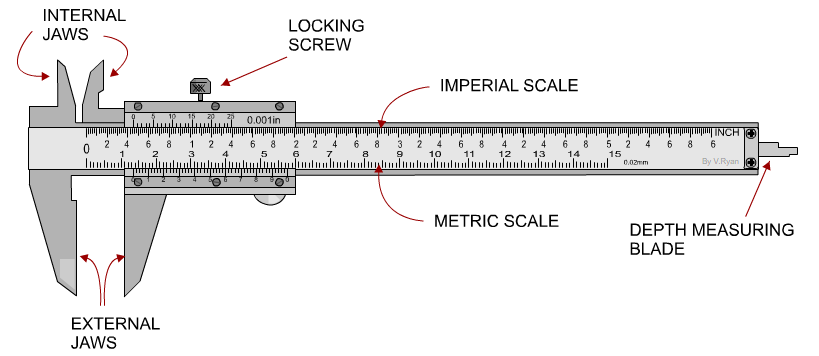
|
|
Thank you for all you help and expertise. Unfortunately I will not be able to test fire until next Saturday.
The bolt carrier and gas tubes were perfect, no issues on the 6940 or the 6920. However, the FP were depressing and enlightening. I measured several times before I did anything, and I measured often. Bolt Colt bolts were identical. I was getting a zero difference on bolt face of 0.001 - 0.0005 inches, which is easily user error. The firing pins were a different matter. 1. The 6920 FP was 0.027" I can NOT comment on the this FP since I bought it used. It may NOT be an original Colt. However, now it protrudes 0.038" 2. The 6940 FP was a perfect 0.032" I bought this new, so no surprise there. I went ahead and chucked it to 0.036" 3. I didn't look at the KAC, going to leave that alone. It is great in semi auto, just going to leave it be. Sir, as far as the buffers go. I have been using an H2. I also have an H3, so I'll try them both (bring both when I test it out). When I had everything replaced it included the recoil spring. I opted for a chrome spring. Is that an issue? I do NOT mind putting a heavier hammer spring in. I know this will negate much of the Geissele trigger, but I'm would love this to work and then tweak it. Recommendations? |
|
If you switch to the heaver tension hammer spring, then you need to take the FP's back .028-.032" instead.
The increased protrusion is a trick to get lightened hammer, and reduced hammer spring to ignite the primers correctly. As for when you are firing, make sure to police the brass and check the primers for piercing. Again, with the lightened hammer spring, should be fine with the increased protrusion, but confirm such by checking spent primers for any signs of primer piercing!!!! Chrome recoil spring should be fine, but do pull all the way back on the charging handle, and make sure that the spring is not coil binding out before the back of the buffer bumper contacts the back of the tube. Some of the springs come in a longer A2 lengths only, and they have to be clipped to the correct length for the shorter carbine receiver extensions. Myself, I just run with standard recoil springs (read dirt cheap by the dozen), and just change them out every 4K rounds of live fire (that would be every forth shooting event or less, since I'm banking that you are burning through at least 1K lots of ammo each session). Yes on the H3, just in cause you have a nasty case of bolt bounce that the H-2 is not resolving. Also for grins, bring along a standard carbine recoil spring as well. P.S, what the hell is this semi auto firing you speak of?? Even with a scoped full auto rig, I still put a two to three round burst down range. My thought, if one round "may" do the trick on target, then one or two more extra along within an inch of the first, will definitely get the job done. |
|
You stated above that you are having the fail to fire issue in both semi-auto and full-auto, this is generally a sign of too light of hammer strike, too short of firing pin protrusion, bolt carrier bounce, bad ammo or contaminated primer, bad machining tolerances, etc. I personally wouldn't recommend altering firing pins, as you don't want to make it too long due to the possibility of puncturing a primer and blowing a gun up. Did you ever make sure the hammer spring is on the correct way, as it needs to be coiling tighter when the hammer is cocking back. If a hammer spring is on backwards, you will generally see light primer strikes, and possibly the trigger pin walking out, or a combination of both. What we teaching in armorer courses is that you need at minimum of a 4.5-LBS trigger pull to get reliable primer ignition, this is due to that factory ammo is made with a rifle primer, and a rifle primer is harder than pistol primers.
CY6 Greg Sullivan "Sully" SLR15 Rifles TheDefensiveEdge.com (763) 712-0123 |
|
Sully, I guess this is were we differ, since agreed that if you are just thinking in the service rifle group thought with stock hammers and springs, then 4.5lb DCM min weight is a good bench mark for the hammer spring tension needed for a FP protrusion of .028 to .032.
On the same, but in the 7.62X39 rifles and the use of Imported ammo like wolf with harder primer cups, then the protrusion becomes .032 to .038 for reliable primer ignitions instead. Now moving to space guns, where you have lightened speed hammer's (way less hammer mass), and trigger break weight down to 2lbs with reduced hammer spring tensions as well, such will fail to ignite the primers with any kind of reliability when the FP protrusion is set between .028 to .032, and here is where longer FP protrusion of the 7.62X39 is required instead. 
Bluntly, on the Giessele select fire trigger, you have a trigger break weight in the 2.5lbs (semi), and when considering the 4.5lbs of full auto fire, this increased trigger break weight in not from the hammer spring increased tension, but from the trigger spring instead. So this moves the trigger into the space gun class of triggers due to a slightly lighter hammer to be begin with, and the reduced hammer spring tension as well, which requires the slightly longer FP protrusion for reliable primer ignitions instead. 
|
|
Quoted:
Knowing the way Geissele operates I would give them a shout out. Because it sounds like a fire control issue I just did that, thanks for the suggestion. If I understand the discussion, even if I replace the hammer spring with a heavier version it still may not be enough because of the lighter hammer? Live and learn. Edit: Didn't take it out last Saturday. I wanted a good range day so I took out the mini Uzi! 
|
|
So I wrote to Geissele. I sent some pictures of the trigger installation to them. I thought they were looking for back wards spring installation. They came back with you should remove your KNS pin set and use the ones that came with the trigger. I was skeptical, but whatever. I didn't mention it because they are pins!
Well, they were right. I took the lower to the range and and sent 4 mags through the rifle. Hardly exhaustive, but I had not a single issue. In this case I was using a factory fresh Colt 6920 SOCOM upper with NO modifications. Firing pin was total stock. Even the charging handle. The only thing I changed was I put on a T1 aim point. It worked. The 556 upper worked fine. The Diablo 7.62x39 upper did not. The new thread in the variants section. |
AR Sponsor