


AR Sponsor

Posted: 2/15/2009 8:42:20 PM EDT
|
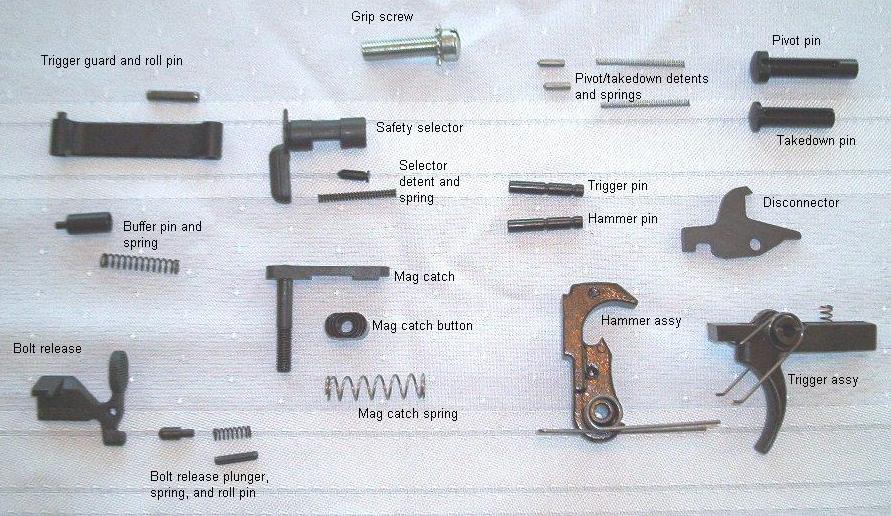
I'm building my first lower. I found an LPK at the last gun show and the vendor indicated it was an LMT LPK, though there were no markings on the bag to indicate where it came from or who the manufacturer was. Upon assembly, I found the bolt catch was bent and would not pivot. I found a replacement and finished assembling the lower last week. When dry firing the new lower I found the trigger to have more resistance at the sear point than my other two ARs. It's a heavy and hard pull. I lubed it with some Tetra sumpthin-or-other grease at the sear point and on the springs. This afternoon I put an upper on it and took it for a test run. I also had along another complete AR that I knew was functioning correctly.
First pull of the trigger and the round fired as expected. I went to pull the trigger a second time and it wouldn't budge. I manually pushed the trigger forward slightly, felt a "click", and was then able to pull the trigger and successfully fire another round. The trigger, again, failed to reset. At this point I tore it down, compared the assembly to those in my other lower, and then manually function checked the trigger again. I reassembled the rifle and the trigger resets, but it's a very harsh reset and sometimes needs to be coaxed forward. Anyone ever have this problem? Is it a new trigger issue and just needs some break-in time? Or is there something else I can check to verify this FCG is in spec and in good working order? FYI, this is a standard single stage trigger. Ed |
|
Confirm that the springs are installed correctly, the parts are pre-lubed before being installed.
Also before lubing and putting the parts back in, check the C side trigger pin channels of the trigger, and the leading edges of the disco sear and hammer back sear for burs that may need to be removed/stoned. |

|
Quoted:
I tore it down. Orientation of the springs was correct. No burrs on any parts, either. I may tear down the FCG of another AR to compare parts –– try to eyeball if there are any obvious differences in size or shape. Ed Is the spring you're referring to the one in the trigger assembly above? If so, I think it was already seated when I installed it and wasn't aware there was a "large" end vs. a narrow end. I'll have to check this out. Ed |
|
Quoted:
Just had this problem yesterday. Springs and parts are all properly installed and oriented. What is the best fix from here, file a tiny fraction of the disconnectors hook? File no, but if you find an edge bur on either sears (disco or back of hammer) that is causing the lack of release of the two, then you can use a stone to remove the burs off the edges so the sears can glide freely against each other to release at reset. Also, while you have the parts out, dry fit the disco and trigger against the trigger pin. The pin should glide/rotate freely (even with the disco spring tension), and if the pin does not, then you have a bur somewhere in the channels that needs to be corrected. |
|
Quoted:
Quoted:
I tore it down. Orientation of the springs was correct. No burrs on any parts, either. I may tear down the FCG of another AR to compare parts –– try to eyeball if there are any obvious differences in size or shape. Ed Is the spring you're referring to the one in the trigger assembly above? If so, I think it was already seated when I installed it and wasn't aware there was a "large" end vs. a narrow end. I'll have to check this out. Ed Yes, the small sping in the trigger groove. Look at the diconnector spring in this picture. It is slightly conically shaped (larger diameter on one end than the other). The wider end goes down inside the recess in the trigger. It's easy to confuse the bolt catch spring and the disconnector spring. 
|
AR Sponsor