


AR Sponsor

Posted: 11/17/2013 2:49:37 PM EDT
|
So I was reading (on wikipedia mind you) about Cold carbines and their variations. The article mentioned that the XM-177 style moderator was declared a sound suppressor in the 70's by the BATF.
Does that hold true today? I figured since third party manufacturers are making them they probably are not regulated like true suppressors. But now I'd be lying if I said I wasn't at least a little worried about it. If the moderator is pinned and welded does the BATF ruling still apply? Sorry if this is a stupid question, I just don't want to order one and have the BATF show up. |
|
Quoted:
So I was reading (on wikipedia mind you) about Cold carbines and their variations. The article mentioned that the XM-177 style moderator was declared a sound suppressor in the 70's by the BATF. Does that hold true today? I figured since third party manufacturers are making them they probably are not regulated like true suppressors. But now I'd be lying if I said I wasn't at least a little worried about it. If the moderator is pinned and welded does the BATF ruling still apply? Sorry if this is a stupid question, I just don't want to order one and have the BATF show up. http://www.innovativeindustriesllc.com/products/xm177-moderator "Requires a form 3 to the dealer of your choice" The only true replica I know of, it is a suppressor. The others are faux. |
|
What 44Echo10 said.
The ones you see for sale by various forum members are fake lookalikes. They don't have the chambers in them. They are just "tubes", so to speak, and you can see that the price of the lookalike "fakes" reflect what they are. The ones being sold that are moderators ARE regulated like any other suppressor. While the original Colt and new production moderators are not very effective at taming the blast of a 5.56 round, they would be somewhat effective if you screwed them on a .22 lr............hence the regulation by ATF. |
|
Quoted:
Someone will be along soon that has a cut open pic of one.But the original ones have baffles or chambers inside and are suppressors,albeit not that great. Thanks. I had no idea. Would definitely like to see what is inside one. Edit: Did a quick search and found this. http://www.ar15.com/forums/t_3_123/575799_.html |
|
Quoted:
Thanks. I had no idea. Would definitely like to see what is inside one. Edit: Did a quick search and found this. http://www.ar15.com/forums/t_3_123/575799_.html Quoted:
Quoted:
Someone will be along soon that has a cut open pic of one.But the original ones have baffles or chambers inside and are suppressors,albeit not that great. Thanks. I had no idea. Would definitely like to see what is inside one. Edit: Did a quick search and found this. http://www.ar15.com/forums/t_3_123/575799_.html yes, that's it. Not only were they not very effective suppressors, the chambers supposedly filled with carbon over time and became even less effective. They were excellent flash hiders though, from what I have read, as most suppressors are. |
|
IIRC, part of the reasoning behind the use of the moderator was to make the loud report of the SMG length rifles closer to that of the 20" rifle.
Not only was this much less painful to the shooter, but enemy hearing gunfire would have a harder time distinguishing SOF from conventional troops from the report of the rifles. ~Augee |
|
Quoted:
IIRC, part of the reasoning behind the use of the moderator was to make the loud report of the SMG length rifles closer to that of the 20" rifle. Not only was this much less painful to the shooter, but enemy hearing gunfire would have a harder time distinguishing SOF from conventional troops from the report of the rifles. ~Augee I forget where I read it but this is another "myth"....actual DB reduction was like, 1db? Maybe less? at the muzzle. I'm pretty sure I picked that tidbit up on some suppressor board somewhere that decided to test the theory out, and found it was bunk. It was some absurdly tiny number like that. Colt at the time hadn't figured out the whole gas port/buffer/barrel length relationship...the purpose of the moderator was to increase dwell time and make it a bit more reliable, cycle-wise...like how under-gassed guns get more gas when you slap a suppressor on; same principal. The biggest problem with the moderator wasn't that it wasn't effective at it's job of increasing dwell time (it was)...but because it's innards collected carbon like idiots collect beanie babies, it would attract moisture like there was no tomorrow, especially in humid climates. The innards only protection against corrosion and rust was it's parkerizing...which isn't a great corrosion and rust inhibitor. Sure some maintenance and wiping down with oil and such can help prevent it, but it was inside a sealed unit...short of drowning the thing in a solvent then oil after each firing, it's going to start to rust on the inside, there's no way around it. IIRC that's the main reason why the carbines stayed as a SOF-type thing and never went into wider procurement, and why we generally moved to the 653 and other 14.5" barreled carbines instead; just as reliable, just about as long, and the muzzle blast was negligibly different between the rifle and the XM moderator. The XM/629/639 carbines were arguably Colt's most popular military offering in the late 60's and 70's to other countries outside the US....the moderator being declared a suppressor, and Carter's order that we would not sell or export suppressors outside of the country both pretty much put Colt on the end-of-life watch list, since that carbine was pretty much the only thing anyone wanted from them at that time. Everyone wanted one of those handy carbines as Colt was the only game in town at the time. The only other 5.56 contenders at that time (let's call it mid-70s) were all rifle-length things, like the HK33; the Galil was brand new, and I'm not even sure anything else in 5.56 was on the market yet to be honest. The rest of the world was still chugging along on 7.62x51 or M43. I'll do some digging and see if I can't find that suppressor article again... |
|
Quoted:
The moderators drop the db level by 2-3 points at most, and for a while they didn't require a tax stamp, but I think ATF got all pissy simply because it has baffles in it. I believe part of that was also refining the regulations of a silencer to mean any reduction in the noise level from something like a noticeable reduction in noise level. |
|
Quoted:
I believe part of that was also refining the regulations of a silencer to mean any reduction in the noise level from something like a noticeable reduction in noise level. Quoted:
Quoted:
The moderators drop the db level by 2-3 points at most, and for a while they didn't require a tax stamp, but I think ATF got all pissy simply because it has baffles in it. I believe part of that was also refining the regulations of a silencer to mean any reduction in the noise level from something like a noticeable reduction in noise level. I think ATF figured out that if you had an example of the Colt moderator and screwed it on a .22lr that you had a suppresor that reduced Db by more than 1 or 2. Suppressors for .22lr's are just as regulated as a moderator for a 5.56 xm177. |
|
Quoted:
IIRC, part of the reasoning behind the use of the moderator was to make the loud report of the SMG length rifles closer to that of the 20" rifle. Not only was this much less painful to the shooter, but enemy hearing gunfire would have a harder time distinguishing SOF from conventional troops from the report of the rifles. ~Augee So it's called a moderator because it moderates the sound, or increases dwell time? I had heard the above explanation quite some time ago, but the dwell issue does make a lot of sense. It is possible the name just stuck since the assumption was the primary purpose was sound reduction/moderation. |

|
Quoted:
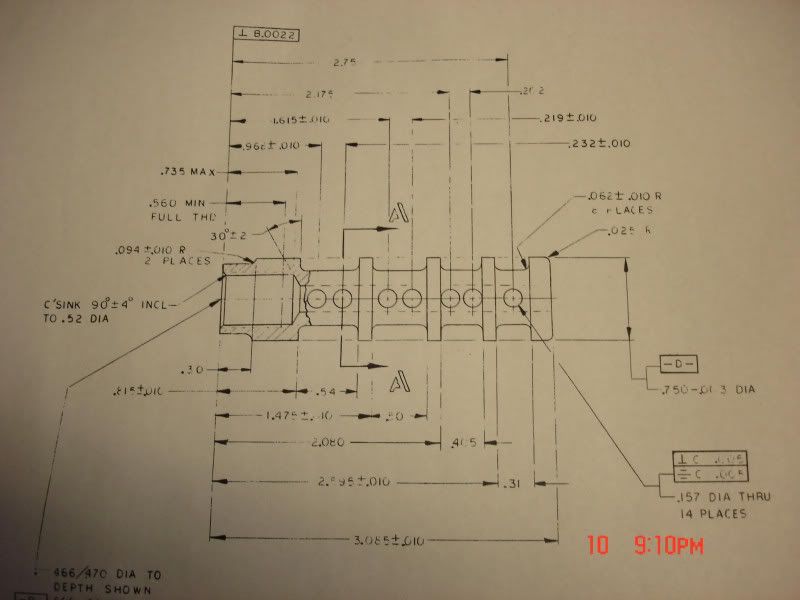
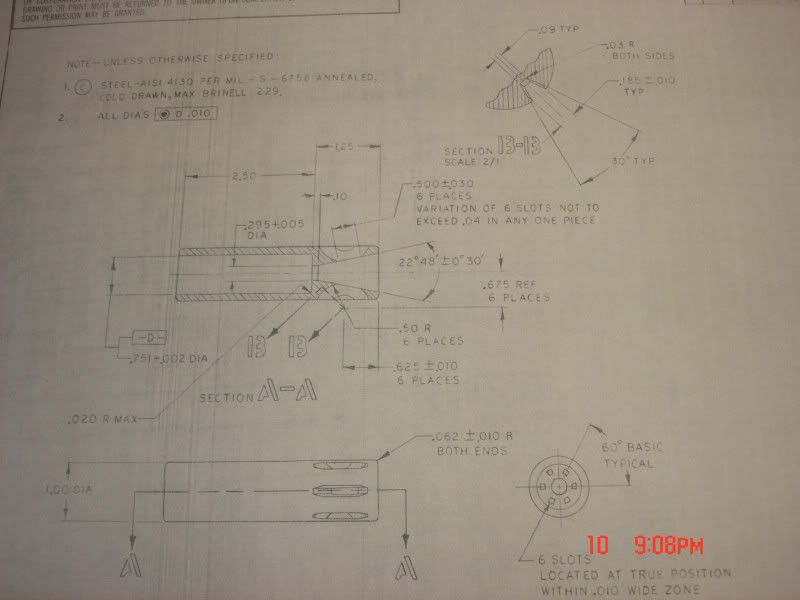
Here is a picture I found on the googles http://i1271.photobucket.com/albums/jj633/TRIMDAD/E54AD28B-D73C-457C-B77F-A74A719495EF-9156-0000056ECDB2C622_zps18411ee4.jpg I suppose if you were handy with tools and you get you're form 1 You could build one. But from what I understand it didn't offer much noise reduction , But just enough for the ATF to determine it was a. " suppressor " ..........and somewhere on the net there are the original engineering prints. I'd have to agree that the $200 dollar stamp for a form 1 to machine your own is not money well spent. If I were going to form 1 something I would want it to be worth my time. That said..........if you wanted an xm177 clone to be "all out" |
|
Quoted:
..........and somewhere on the net there are the original engineering prints. I'd have to agree that the $200 dollar stamp for a form 1 to machine your own is not money well spent. If I were going to form 1 something I would want it to be worth my time. That said..........if you wanted an xm177 clone to be "all out" Quoted:
Quoted:
Here is a picture I found on the googles http://i1271.photobucket.com/albums/jj633/TRIMDAD/E54AD28B-D73C-457C-B77F-A74A719495EF-9156-0000056ECDB2C622_zps18411ee4.jpg I suppose if you were handy with tools and you get you're form 1 You could build one. But from what I understand it didn't offer much noise reduction , But just enough for the ATF to determine it was a. " suppressor " ..........and somewhere on the net there are the original engineering prints. I'd have to agree that the $200 dollar stamp for a form 1 to machine your own is not money well spent. If I were going to form 1 something I would want it to be worth my time. That said..........if you wanted an xm177 clone to be "all out" Exactly, I had a wild hair to build the most useless rifle of all, a cutaway. And I wanted to build a 177e2 with a cutaway moderator just like the pic. But even though I was going to have a solid non working barrel,on a non working gun, It's still considered a suppressor . And from what I understand to demil a suppressor Means it has to be crushed. Still need to do more research on this |
|
Seems to me the design could be modified to screw apart into two sections, but again, why? Especially when you could buy a 'real' moderator if you really wanted to from the aforementioned company. If there were more real utility in it I could see it, but now we know how to make a shorty 10" or 11.5" carbine run fine with the right buffer and gas port. IIRC the moderators also picked up leading and they diminished the accuracy quickly.
They are really all about the 'cool' factor truthfully, especially since we are now putting what is essentially a heavy weight on the end of the barrel. Several members have noted that this slight addition in weight steadies the short barrel and they shoot better with it. Personally I think they are just cool as a historical anomaly. If you could take it apart and show people the guts, and if BATF didn't require $200 for a stamp for a real one, I think 'real' ones would sell a lot better, even at that price. |
|
Quoted:
So it's called a moderator because it moderates the sound, or increases dwell time? I had heard the above explanation quite some time ago, but the dwell issue does make a lot of sense. It is possible the name just stuck since the assumption was the primary purpose was sound reduction/moderation. Quoted:
Quoted:
IIRC, part of the reasoning behind the use of the moderator was to make the loud report of the SMG length rifles closer to that of the 20" rifle. Not only was this much less painful to the shooter, but enemy hearing gunfire would have a harder time distinguishing SOF from conventional troops from the report of the rifles. ~Augee So it's called a moderator because it moderates the sound, or increases dwell time? I had heard the above explanation quite some time ago, but the dwell issue does make a lot of sense. It is possible the name just stuck since the assumption was the primary purpose was sound reduction/moderation. Whether or not moderating the noise of the SMG-length barrel to sound more like a 20" barrel, the primary purpose was not sound reduction, but to increase backpressure from everything I've read. The attenuation of the sound to a slightly lower level might have been a "happy coincidence," or it might have been part of the initial reasoning, but it wasn't the only or primary issue. The moderator, as others have said, does not change the sound levels much, always in the 1-2 Db range from what I've heard, then again, I don't know what the difference in Dbs between a 10" or 11.5" barrel and a 20" barrel may be, and if and how the moderator affects the sound of the gunshot not from where it's usually measured (at the muzzle, at the shooter, ect.) but from say 100-200m away, as if you were hearing it from far away. It would be interesting, if they hadn't done it - to test whether an observer standing away from the firers, and not being able to see what was being fired would be able to identify which were being fired. Once again, whether it was an intentional "feature" or a happy coincidence, it would be interesting to see if the theory stands up on the range. My point by repeating that little, and possibly apocryphal factoid was to demonstrate, as the 20" barrel is still loud, and not exactly hearing safe, that the sound attenuation is not terribly significant, though, the Db scale is logarithmic, and if you've ever fired a short barreled AR carbine without a suppressor, any little bit of reduction is better than nothing, particularly if the habit is/was not to wear hearing protection. Today, we've got fun stuff like electronic "talk-through" hearing protection, back in the day, not so much. Evil_Ed - I would be very interested in seeing that article if you could find it! 
~Augee |
We have a member here who owns a real Colt moderator and gave us a little T&E on it several years back. I have CRS though and can't remember who it was. Can he please step forward?  IIRC he said he was surprised that it was as effective as it was. The article is in the archives, I'm just to lazy to look... IIRC he said he was surprised that it was as effective as it was. The article is in the archives, I'm just to lazy to look...
|

| as far as the debate on what its' primary purpose was, maybe it was multipurpose??? I dunno. I have also read that Army Brass had a big issue with the deafening report of the 607 as first presented. Read that, I believe, in the SAW report.......maybe after "studies" at Ft. Knox, where the 607 was run through the paces. Like Morg, I've got a case of CRS |
| I've heard the 20" report mimicry explanation before and it still makes me snicker. It's laughably absurd to suggest that NVA or VC would have reacted differently to hearing 11" incoming gunfire instead of 20" incoming gunfire. What exactly did they think the enemy would do? 'Dude, that's just a twenty-incher, wake me up if you hear some 11" action...." |
|
Quoted:
as far as the debate on what its' primary purpose was, maybe it was multipurpose??? I dunno. I have also read that Army Brass had a big issue with the deafening report of the 607 as first presented. Read that, I believe, in the SAW report.......maybe after "studies" at Ft. Knox, where the 607 was run through the paces. Like Morg, I've got a case of CRS Yeah, could be coincidental or collateral. |


|
Quoted:
as far as the debate on what its' primary purpose was, maybe it was multipurpose??? I dunno. I have also read that Army Brass had a big issue with the deafening report of the 607 as first presented. Read that, I believe, in the SAW report.......maybe after "studies" at Ft. Knox, where the 607 was run through the paces. Like Morg, I've got a case of CRS No CRS there. I've got the report on my computer. "Service Test of Small Arms Weapons Systems" dated December 13, 1965. Says that, "The Colt SMG weapon satisfied applicable portions of characteristics and standards furnished by test criteria except for excessive muzzle flash and blast." along with "The signature and position disclosing effects caused by the blast and flash in the C-SMG are considered a deficiency." The same report shows one of the test weapons; a 607 fitted with a 3.5 moderator. So, basically, as of 1965, the Army considered that, even with the early moderator, the carbines were too loud and produced too much flash. |
I'm still trying to find the main article I read that described the purpose of the moderator in detail but my search fu is weak tonight  That's what I get for stumbling upon it and forgetting to bookmark it... That's what I get for stumbling upon it and forgetting to bookmark it...
But, I did find a thread here about it... |
|
Quoted:
I've heard the 20" report mimicry explanation before and it still makes me snicker. It's laughably absurd to suggest that NVA or VC would have reacted differently to hearing 11" incoming gunfire instead of 20" incoming gunfire. What exactly did they think the enemy would do? 'Dude, that's just a twenty-incher, wake me up if you hear some 11" action...." Being able to distinguish what kind of unit might be operating in your area can be extremely valuable, both in terms of deciding whether or not you want to get into a fight or stay in a fight, as well as the larger intelligence picture - if SOF are operating in your area where they haven't been operating before, a good intelligence apparatus can try to determine what the enemy might be up to, especially if cross referenced with other intelligence. As individuals or as a small unit - you can decide whether it's worth giving up your position to engage or withdraw, or to simply stay put and hide, or what tactics are best suited to the composition of the enemy you're getting ready to engage. ~Augee |
| I've always wondered if the 'trumpet' flash hiders such as used on the 608 and several other carbines amplify the report enough that it sounds more like a .30 cal belt fed. I just can't for the life of me come up with any logical reason for them. I think an in depth analysis of one of them and an XM177 type moderator in comparison to a regular A1 FH would be interesting. |
|
Quoted:
I've always wondered if the 'trumpet' flash hiders such as used on the 608 and several other carbines amplify the report enough that it sounds more like a .30 cal belt fed. I just can't for the life of me come up with any logical reason for them. I think an in depth analysis of one of them and an XM177 type moderator in comparison to a regular A1 FH would be interesting. I'd always understood that the conical flash hiders were more for concealing the flash and blast from the shooter, which would be another solution to the report of a 10" carbine, not terribly different in concept than say the modern Noveske KX3 or even Levang, wherein it does little to conceal the blast and flash to an observer, if not making it more severe, but makes the flash less visible to the shooter, as well as making the blast more tolerable, which is why they were used on things like the M3 Carbine. ~Augee |

|
Quoted:
No matter what your opinion, that is some cool shit. What this forum is all about. Great discussion guys, and no one threw a tomato.Quoted:
No matter what your opinion, that is some cool shit. What this forum is all about. Great discussion guys, and no one threw a tomato.

Quoted:
I've always wondered if the 'trumpet' flash hiders such as used on the 608 and several other carbines amplify the report enough that it sounds more like a .30 cal belt fed. I just can't for the life of me come up with any logical reason for them. I think an in depth analysis of one of them and an XM177 type moderator in comparison to a regular A1 FH would be interesting. What are these 'trumpet' flash hider you speak of? I can see where changing the sound of firearms might be tactically beneficial beyond the obvious benefits to the shooter and bystanders - “Appear weak when you are strong, and strong when you are weak.” - Sun Tzu |
|
Quoted:
http://iambrony.dget.cc/mlp/gif/162979__UNOPT__.gif
What are these 'trumpet' flash hider you speak of? I can see where changing the sound of firearms might be tactically beneficial beyond the obvious benefits to the shooter and bystanders - “Appear weak when you are strong, and strong when you are weak.” - Sun Tzu Quoted:
Quoted:
No matter what your opinion, that is some cool shit. What this forum is all about. Great discussion guys, and no one threw a tomato.http://iambrony.dget.cc/mlp/gif/162979__UNOPT__.gif
Quoted:
I've always wondered if the 'trumpet' flash hiders such as used on the 608 and several other carbines amplify the report enough that it sounds more like a .30 cal belt fed. I just can't for the life of me come up with any logical reason for them. I think an in depth analysis of one of them and an XM177 type moderator in comparison to a regular A1 FH would be interesting. What are these 'trumpet' flash hider you speak of? I can see where changing the sound of firearms might be tactically beneficial beyond the obvious benefits to the shooter and bystanders - “Appear weak when you are strong, and strong when you are weak.” - Sun Tzu If you do a search of the 608 carbine, the once proposed survival rifle for pilots, and you will see a conical flash "whatever", that looks like a cone. It could spark the same conversation as the Colt moderators. Was it designed to direct sound away from the shooter, or was it designed to cnocentrate the blast towards the enemy to "scare" them? I'm guessing the former. No matter how loud it sounded to the enemy, I'm sure they could figure out it was coming from a lone shooter, not a number of arms. On another note........I've always read that teh 2nd gen moderator was just the first gen with a flash hider on the front...........I can't seem to determine where the 3.5 inch mod would come from the longer 2nd gen if you look at the prints of the 2nd gen. Maybe I need to brush up on my math........or study it when I'm not in a hurry as usual. |
|
Quoted:
If you do a search of the 608 carbine, the once proposed survival rifle for pilots, and you will see a conical flash "whatever", that looks like a cone. It could spark the same conversation as the Colt moderators. Was it designed to direct sound away from the shooter, or was it designed to cnocentrate the blast towards the enemy to "scare" them? I'm guessing the former. No matter how loud it sounded to the enemy, I'm sure they could figure out it was coming from a lone shooter, not a number of arms. On another note........I've always read that teh 2nd gen moderator was just the first gen with a flash hider on the front...........I can't seem to determine where the 3.5 inch mod would come from the longer 2nd gen if you look at the prints of the 2nd gen. Maybe I need to brush up on my math........or study it when I'm not in a hurry as usual. Quoted:
Quoted:
Quoted:
No matter what your opinion, that is some cool shit. What this forum is all about. Great discussion guys, and no one threw a tomato.http://iambrony.dget.cc/mlp/gif/162979__UNOPT__.gif
Quoted:
I've always wondered if the 'trumpet' flash hiders such as used on the 608 and several other carbines amplify the report enough that it sounds more like a .30 cal belt fed. I just can't for the life of me come up with any logical reason for them. I think an in depth analysis of one of them and an XM177 type moderator in comparison to a regular A1 FH would be interesting. What are these 'trumpet' flash hider you speak of? I can see where changing the sound of firearms might be tactically beneficial beyond the obvious benefits to the shooter and bystanders - “Appear weak when you are strong, and strong when you are weak.” - Sun Tzu If you do a search of the 608 carbine, the once proposed survival rifle for pilots, and you will see a conical flash "whatever", that looks like a cone. It could spark the same conversation as the Colt moderators. Was it designed to direct sound away from the shooter, or was it designed to cnocentrate the blast towards the enemy to "scare" them? I'm guessing the former. No matter how loud it sounded to the enemy, I'm sure they could figure out it was coming from a lone shooter, not a number of arms. On another note........I've always read that teh 2nd gen moderator was just the first gen with a flash hider on the front...........I can't seem to determine where the 3.5 inch mod would come from the longer 2nd gen if you look at the prints of the 2nd gen. Maybe I need to brush up on my math........or study it when I'm not in a hurry as usual. Yes but if the enemy though they were being shot at with a 30-06 vs a 30 carbine that may make them think the shooter was in a different location plus they may resort to tactics that would increase the lone shooter's chances of survival. |
|
THe design goes back aways though. You can still buy them for M1 Carbines, and the ZB30/ZB26 LMG had them too. I would wonder if it were a blast pressure thing, but for an M1 Carbine? This has been a mystery and debated here many times. I'm guessing the answer is buried somewhere in a patent file somewhere. Oh, and thanks for the TOmato...
|
|
Quoted:
THe design goes back aways though. You can still buy them for M1 Carbines, and the ZB30/ZB26 LMG had them too. I would wonder if it were a blast pressure thing, but for an M1 Carbine? This has been a mystery and debated here many times. I'm guessing the answer is buried somewhere in a patent file somewhere. Oh, and thanks for the TOmato...Nyuk Nyuk Nyuk. 
|

|
Quoted:
Quoted:
THe design goes back aways though. You can still buy them for M1 Carbines, and the ZB30/ZB26 LMG had them too. I would wonder if it were a blast pressure thing, but for an M1 Carbine? This has been a mystery and debated here many times. I'm guessing the answer is buried somewhere in a patent file somewhere. Oh, and thanks for the TOmato...I always thought the conical flash hider for M1/M2 Carbine was part of the early night vision package.  Yep, thought it was an accessory to the IR night vision package for the WWII carbine (the M3). The carbine FH has a pretty narrow cone in comparison with the M1 Garand detachable type, which is wider. You see them on mounted on M1Ds, but not certain they were specific to the sniper role. My impression was always that the conical shape would suppress the actual flash so the daytime sniper or night vision shooter could remain hidden. Not that I would know for sure. |
AR Sponsor